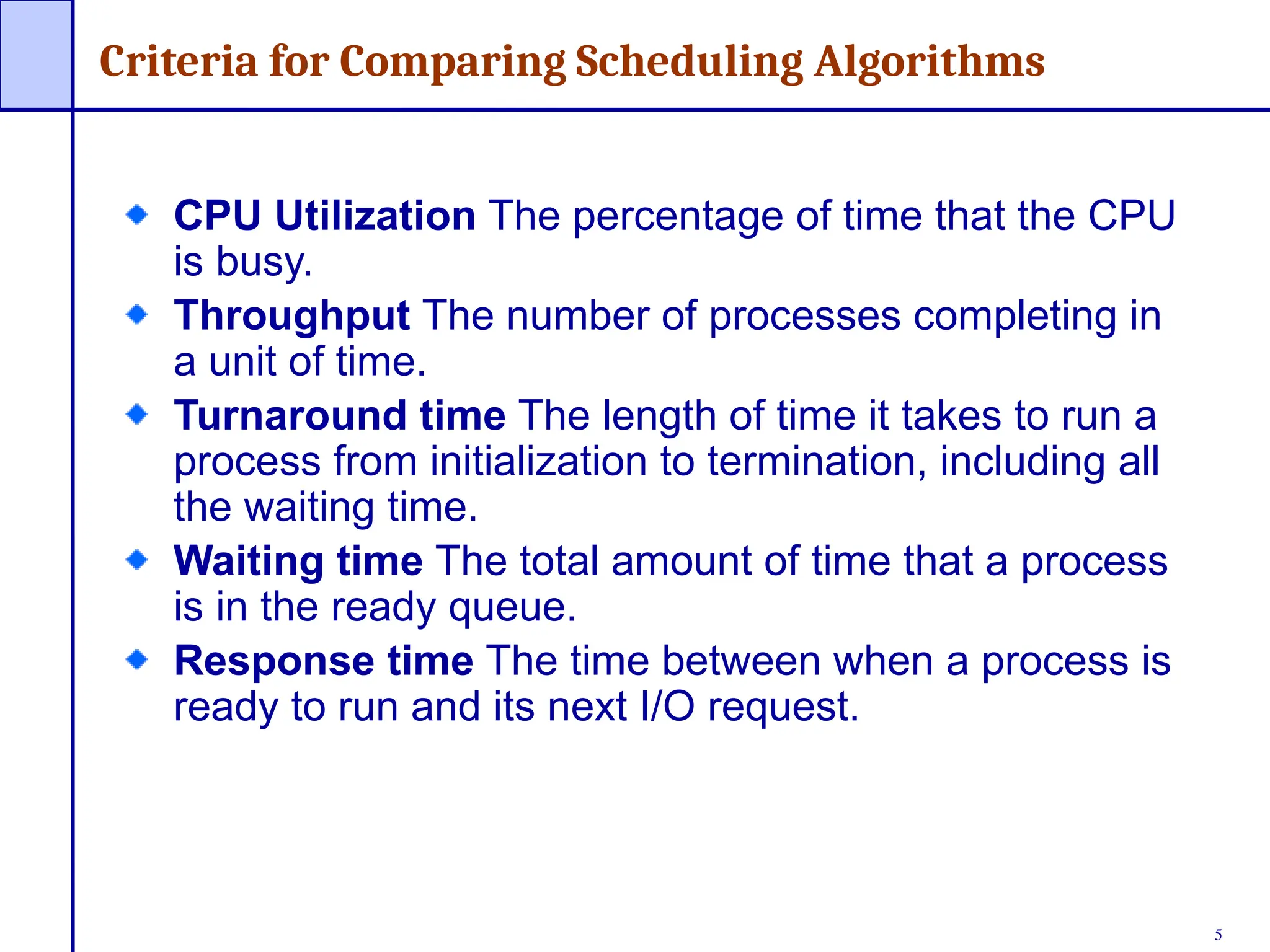
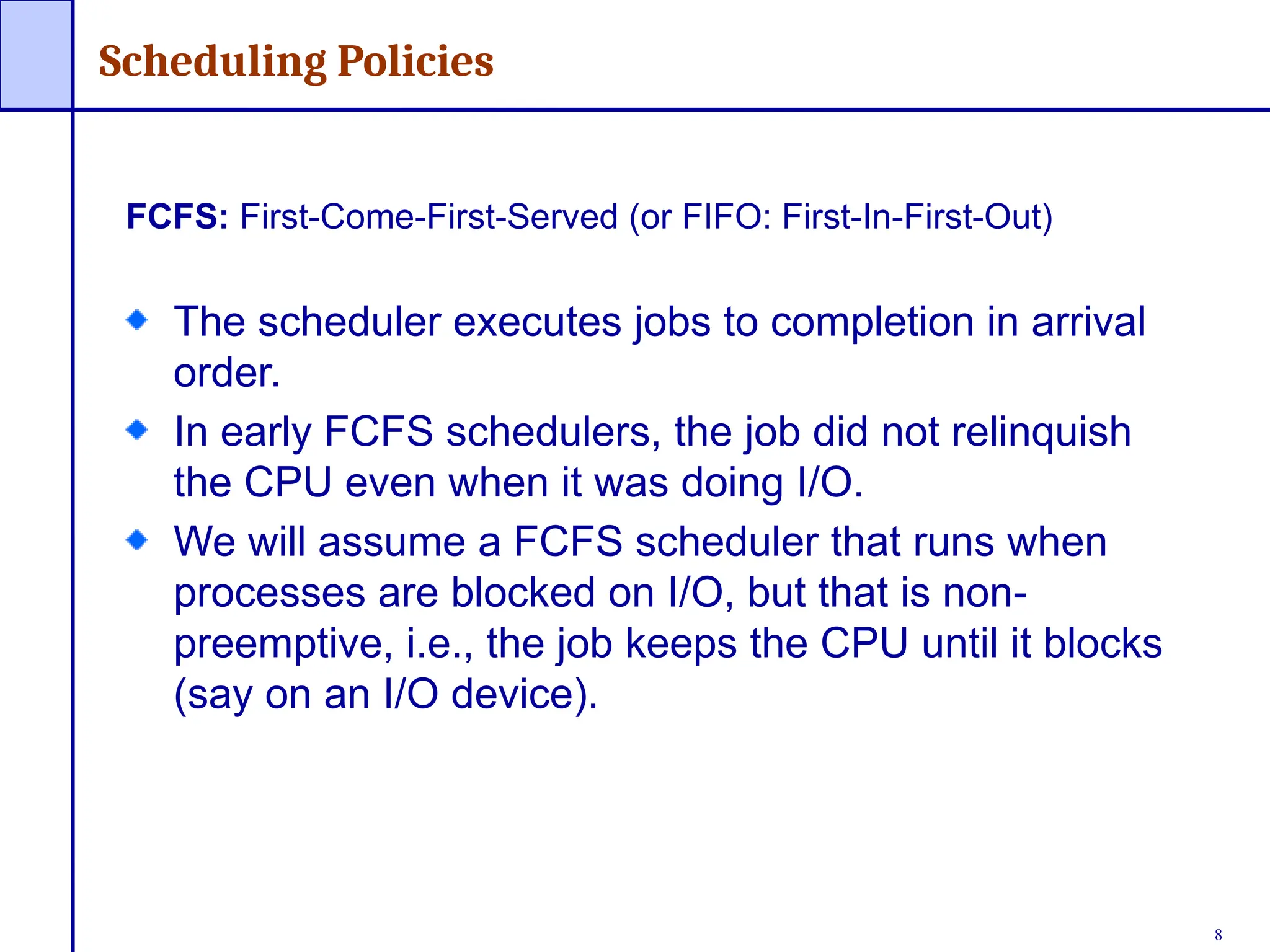
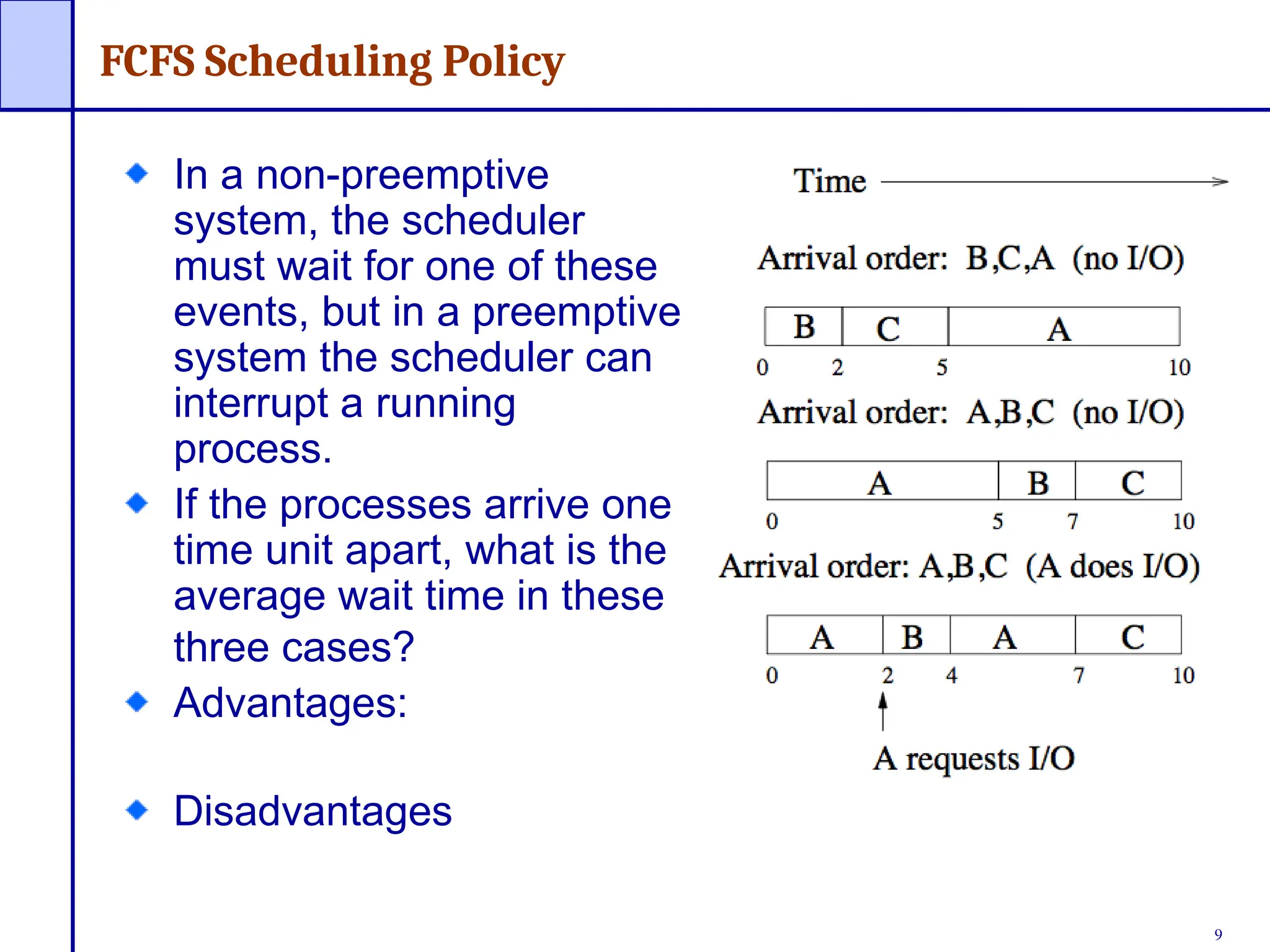
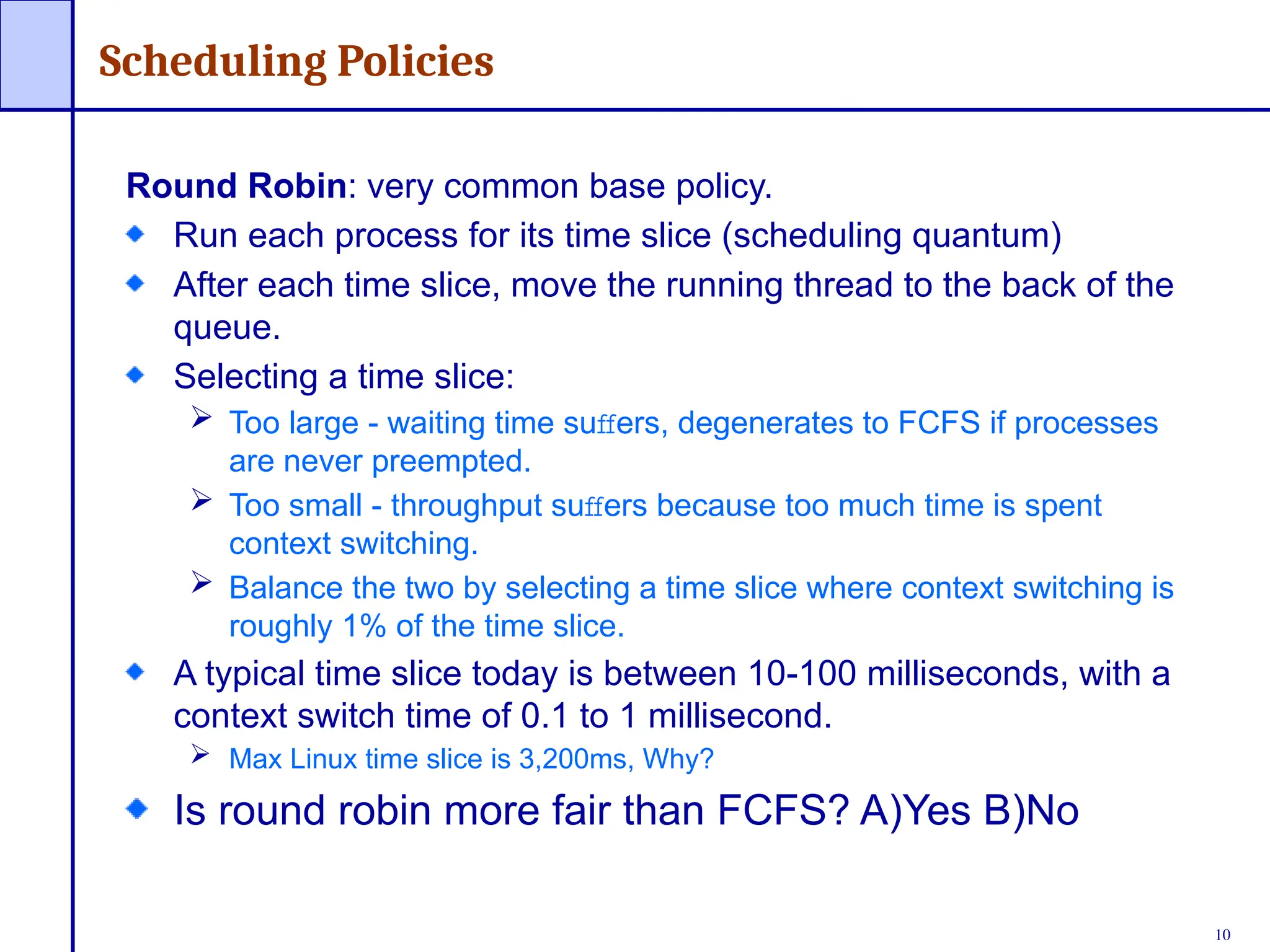
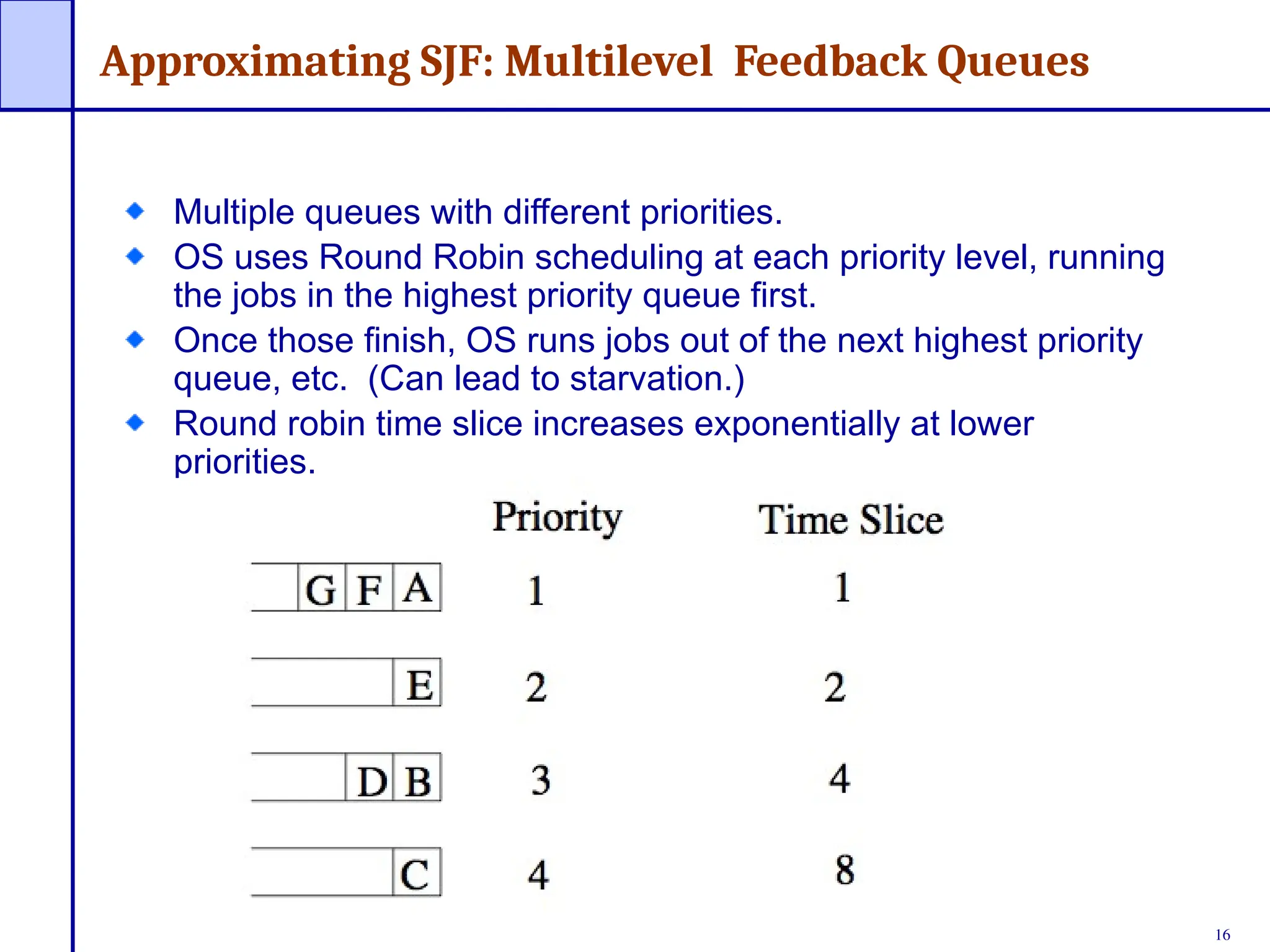
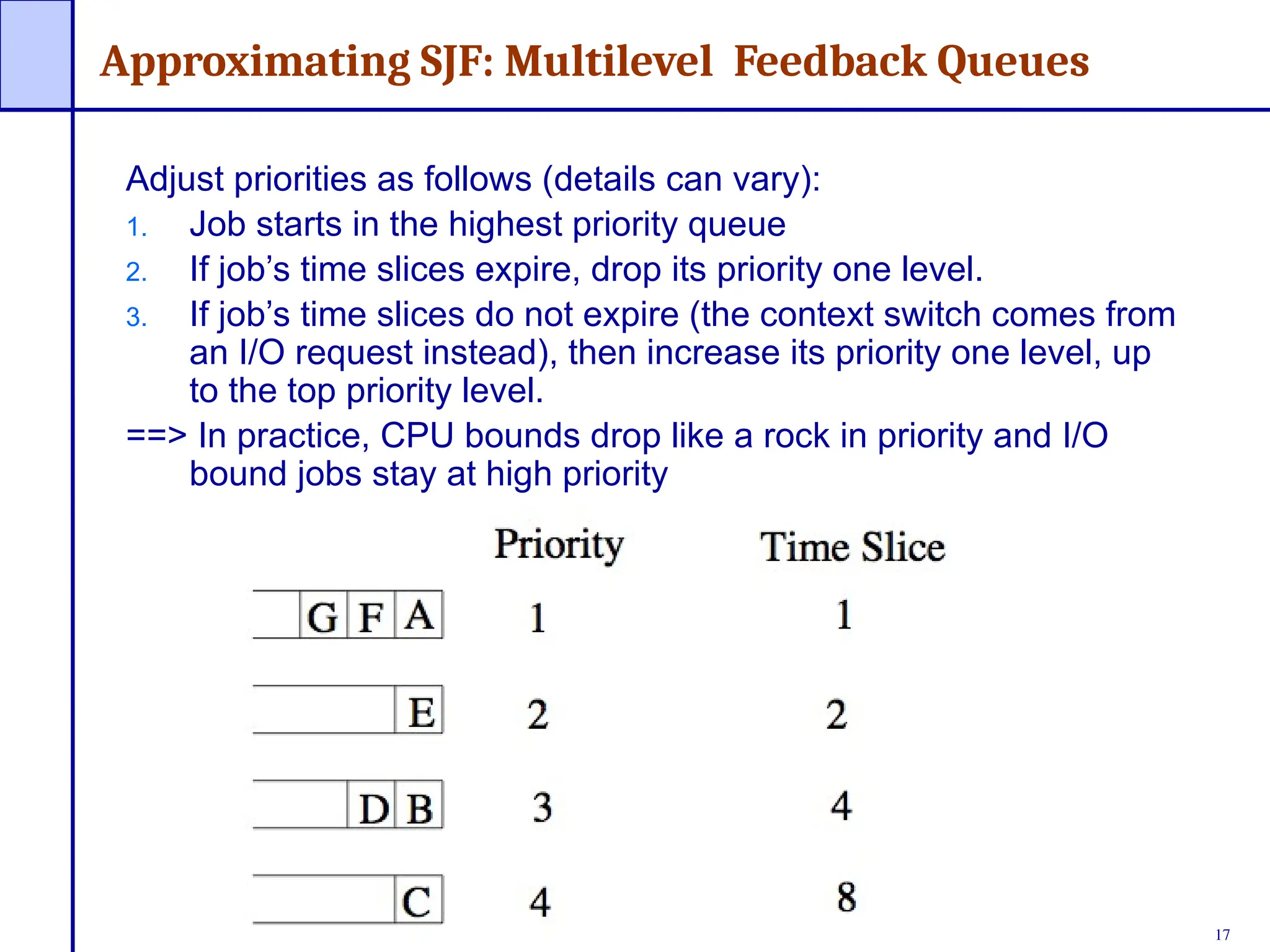
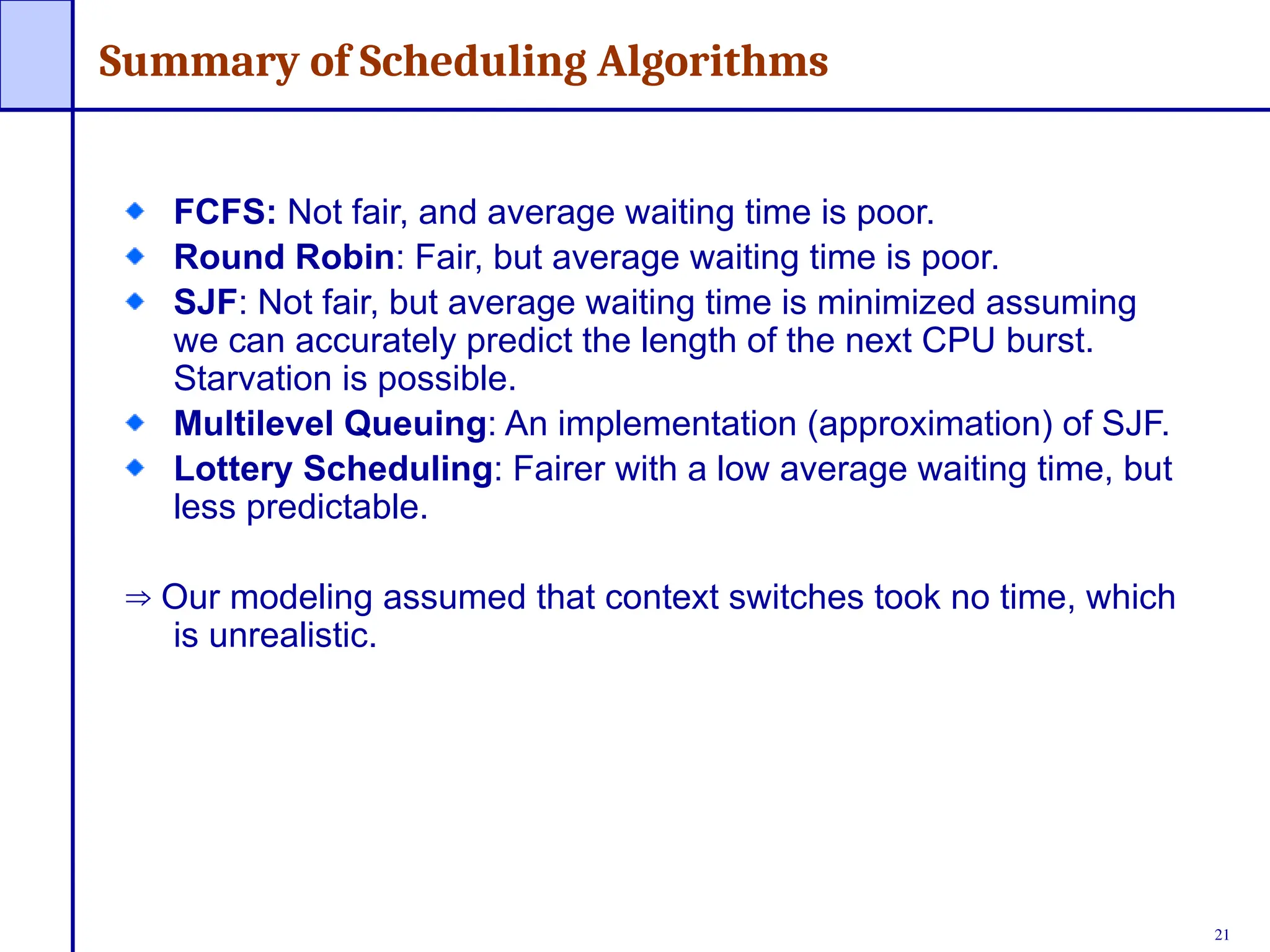
The document outlines various process scheduling mechanisms in operating systems, emphasizing the importance of the process control block (PCB) and the different types of scheduling including long-term and short-term scheduling. It discusses various scheduling algorithms such as First-Come-First-Served (FCFS), Round Robin, Shortest Job First (SJF), and Multilevel Feedback Queues, along with their advantages and disadvantages in terms of CPU utilization, throughput, waiting time, and fairness. The text also explores policy goals for optimal scheduling and introduces the concept of lottery scheduling as a method to improve fairness while minimizing waiting times.