B.V.Raghunandan, SVS College, Bantwal. Karnataka-India
Type of Merger decides the Mode of Integration Identities are retained, lost and created Involves Integration of systems, processes, procedures, strategy, reporting systems etc Most difficult aspect is integration of people Mergers prompted by efficiency may involve downsizing and consolidation Requires change of mindset, cultures & behaviour Involves redistribution of power, conflict of interest and divided loyalty
Power, Authority, designations and positions to be redistributed New designations may have to be created Style of management and working relations decide the culture in an organisation Any serious variation must be tackled
Power  - Autocratic Role  -Bureaucratic and Hierarchical Task  -Team Work and Project Assignment Persons  -Equality of Human Beings
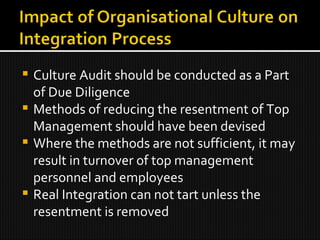
Culture Audit should be conducted as a Part of Due Diligence Methods of reducing the resentment of Top Management should have been devised Where the methods are not sufficient, it may result in turnover of top management personnel and employees Real Integration can not tart unless the resentment is removed
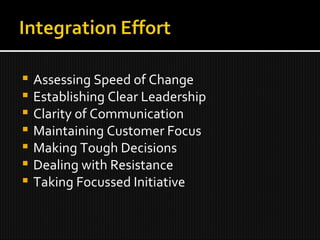
Assessing Speed of Change Establishing Clear Leadership Clarity of Communication Maintaining Customer Focus Making Tough Decisions Dealing with Resistance Taking Focussed Initiative
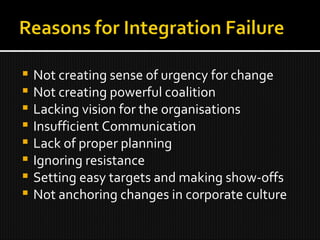
Not creating sense of urgency for change Not creating powerful coalition Lacking vision for the organisations Insufficient Communication Lack of proper planning Ignoring resistance Setting easy targets and making show-offs Not anchoring changes in corporate culture
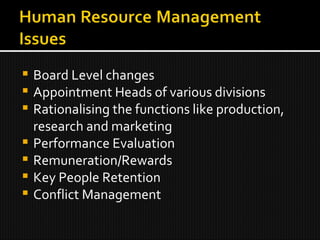
Board Level changes Appointment Heads of various divisions Rationalising the functions like production, research and marketing Performance Evaluation Remuneration/Rewards Key People Retention Conflict Management
 

Process Of Merger Integration-B.V.Raghunandan

  • 1.
    B.V.Raghunandan, SVS College,Bantwal. Karnataka-India
  • 2.
    Type of Mergerdecides the Mode of Integration Identities are retained, lost and created Involves Integration of systems, processes, procedures, strategy, reporting systems etc Most difficult aspect is integration of people Mergers prompted by efficiency may involve downsizing and consolidation Requires change of mindset, cultures & behaviour Involves redistribution of power, conflict of interest and divided loyalty
  • 3.
    Power, Authority, designationsand positions to be redistributed New designations may have to be created Style of management and working relations decide the culture in an organisation Any serious variation must be tackled
  • 4.
    Power -Autocratic Role -Bureaucratic and Hierarchical Task -Team Work and Project Assignment Persons -Equality of Human Beings
  • 5.
    Culture Audit shouldbe conducted as a Part of Due Diligence Methods of reducing the resentment of Top Management should have been devised Where the methods are not sufficient, it may result in turnover of top management personnel and employees Real Integration can not tart unless the resentment is removed
  • 6.
    Assessing Speed ofChange Establishing Clear Leadership Clarity of Communication Maintaining Customer Focus Making Tough Decisions Dealing with Resistance Taking Focussed Initiative
  • 7.
    Not creating senseof urgency for change Not creating powerful coalition Lacking vision for the organisations Insufficient Communication Lack of proper planning Ignoring resistance Setting easy targets and making show-offs Not anchoring changes in corporate culture
  • 8.
    Board Level changesAppointment Heads of various divisions Rationalising the functions like production, research and marketing Performance Evaluation Remuneration/Rewards Key People Retention Conflict Management
  • 9.