Process Analysis--- a technique that explains the steps
or sequences involved in doing
something, satisfies our need to
learn as well as our curiosity about
how the world works.
HOW TO---
How process analysis fits your purpose
and audience
• When giving step by step instructions,
showing how to do something
• When you want your readers to understand
how something happens even though they
may not actually follow the steps
DIRECTIONAL

or

INFORMATIONAL
Strategies for using process analysis
in an essay
• Formulate a thesis that clarifies your attitude
toward the process (more than announce your
subject; it should state or imply your attitude
toward the subject)
• Keep your audience in mind when deciding
what to cover (watch jargon; evaluate the
audience’s level of knowledge; don’t assume
the audience will know something just
because you do)
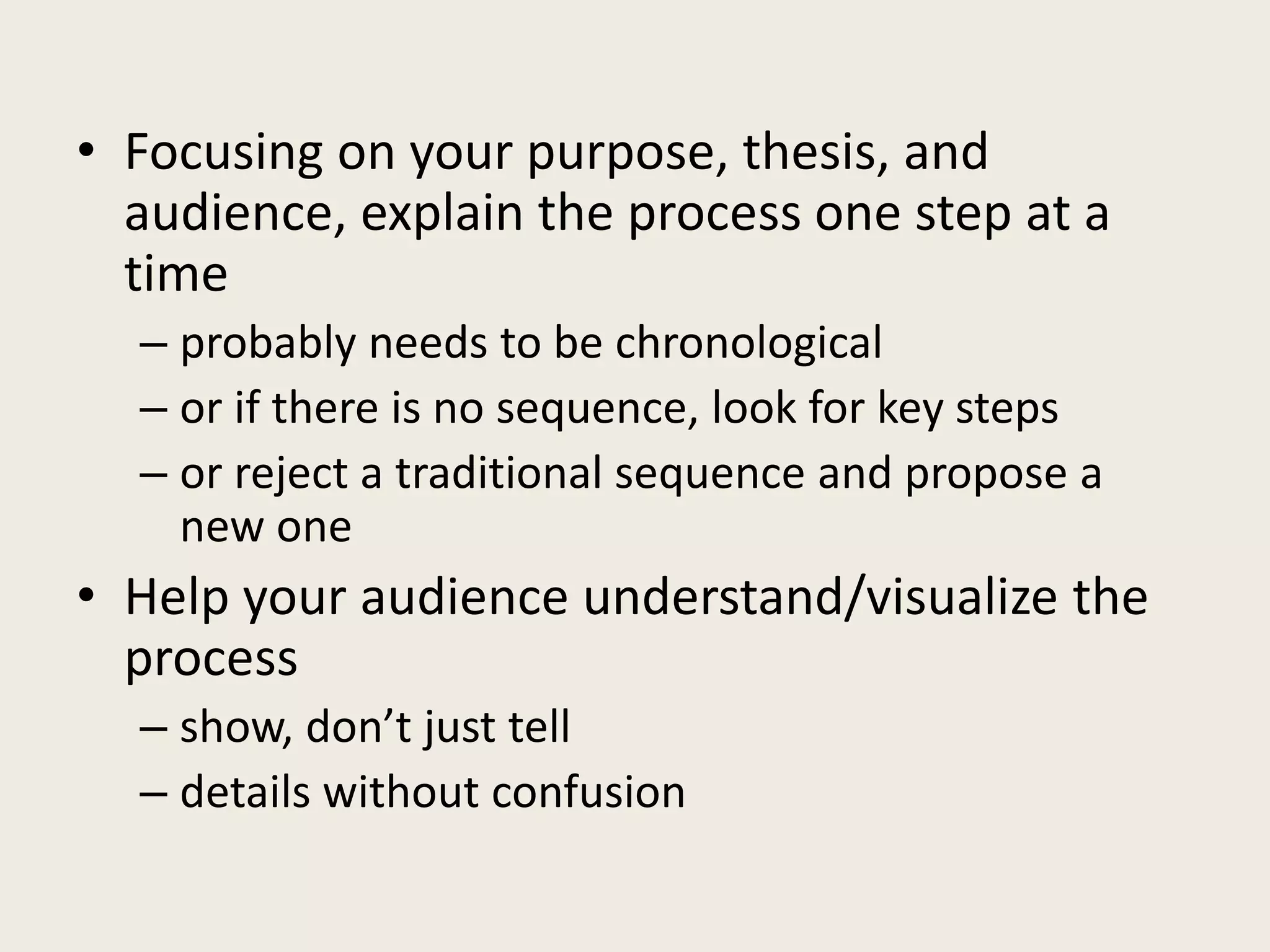
• Focusing on your purpose, thesis, and
audience, explain the process one step at a
time
– probably needs to be chronological
– or if there is no sequence, look for key steps
– or reject a traditional sequence and propose a
new one

• Help your audience understand/visualize the
process
– show, don’t just tell
– details without confusion
• Sort out directional and informational aspects
of the process analysis
– OK for second person if it’s directional (YOU
should…)
– Use first or third person if informational
– Do not shift persons in midstream
– Past tense is preferred; present adds drama and
immediacy
– Do not shift tenses in midstream
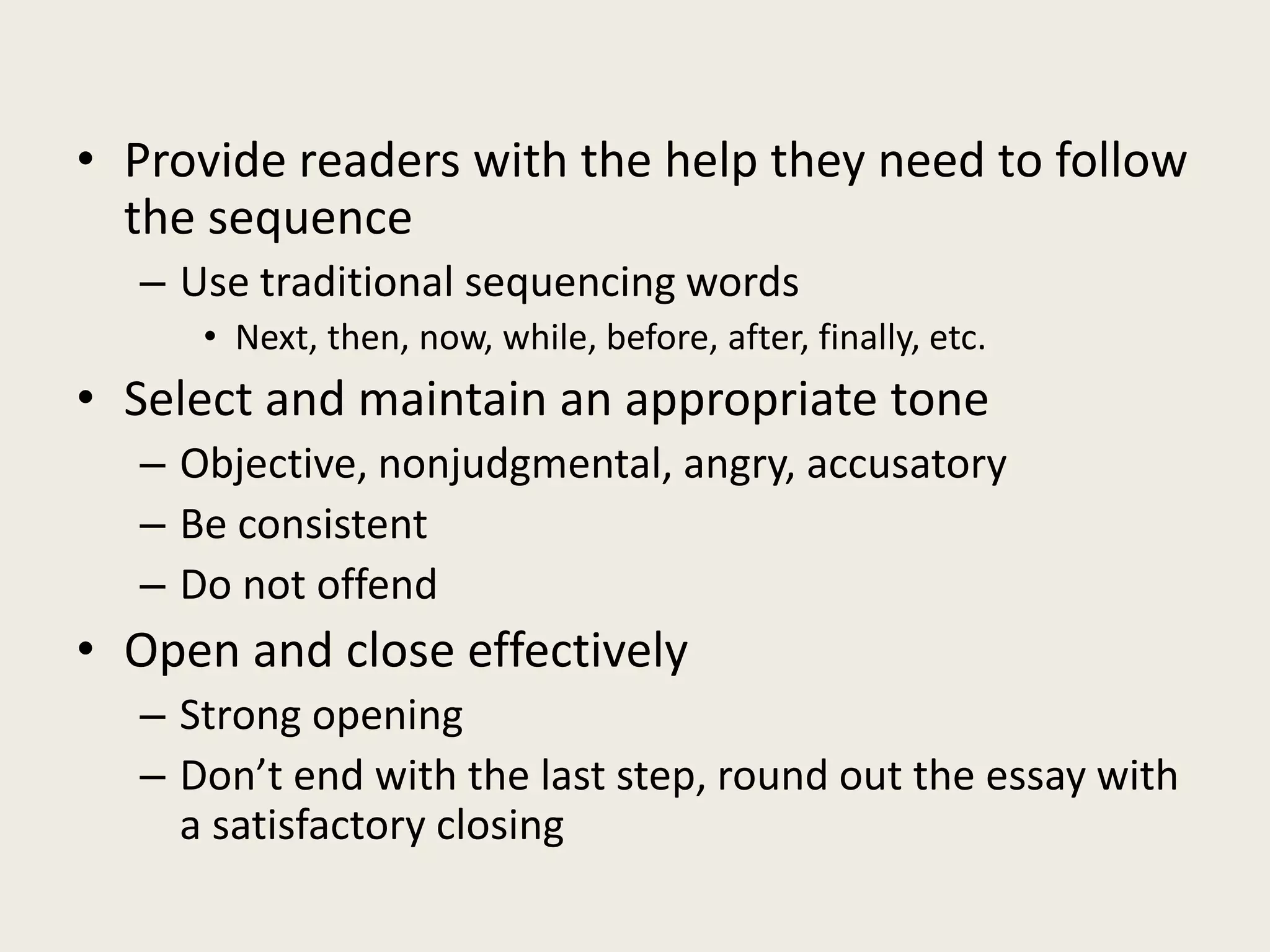
• Provide readers with the help they need to follow
the sequence
– Use traditional sequencing words
• Next, then, now, while, before, after, finally, etc.

• Select and maintain an appropriate tone
– Objective, nonjudgmental, angry, accusatory
– Be consistent
– Do not offend

• Open and close effectively
– Strong opening
– Don’t end with the last step, round out the essay with
a satisfactory closing
Suggestions for Directional:
how to do something
How to improve a course you have taken
How to make/create/construct something
How to show appreciation to others
How to look fashionable on a limited budget
How to be a responsible pet owner
How to be a friend to the outcast
How to improve the place where you work
Suggestions for Informational
how something happens
How (any machine) works
How bad habits develop
How a child develops a love for reading
How someone becomes an
internet/Facebook/video game addict
How people fall into debt
How a high school student chooses a college

Process analysis essay

  • 1.
    Process Analysis--- atechnique that explains the steps or sequences involved in doing something, satisfies our need to learn as well as our curiosity about how the world works. HOW TO---
  • 2.
    How process analysisfits your purpose and audience • When giving step by step instructions, showing how to do something • When you want your readers to understand how something happens even though they may not actually follow the steps DIRECTIONAL or INFORMATIONAL
  • 3.
    Strategies for usingprocess analysis in an essay • Formulate a thesis that clarifies your attitude toward the process (more than announce your subject; it should state or imply your attitude toward the subject) • Keep your audience in mind when deciding what to cover (watch jargon; evaluate the audience’s level of knowledge; don’t assume the audience will know something just because you do)
  • 4.
    • Focusing onyour purpose, thesis, and audience, explain the process one step at a time – probably needs to be chronological – or if there is no sequence, look for key steps – or reject a traditional sequence and propose a new one • Help your audience understand/visualize the process – show, don’t just tell – details without confusion
  • 5.
    • Sort outdirectional and informational aspects of the process analysis – OK for second person if it’s directional (YOU should…) – Use first or third person if informational – Do not shift persons in midstream – Past tense is preferred; present adds drama and immediacy – Do not shift tenses in midstream
  • 6.
    • Provide readerswith the help they need to follow the sequence – Use traditional sequencing words • Next, then, now, while, before, after, finally, etc. • Select and maintain an appropriate tone – Objective, nonjudgmental, angry, accusatory – Be consistent – Do not offend • Open and close effectively – Strong opening – Don’t end with the last step, round out the essay with a satisfactory closing
  • 7.
    Suggestions for Directional: howto do something How to improve a course you have taken How to make/create/construct something How to show appreciation to others How to look fashionable on a limited budget How to be a responsible pet owner How to be a friend to the outcast How to improve the place where you work
  • 8.
    Suggestions for Informational howsomething happens How (any machine) works How bad habits develop How a child develops a love for reading How someone becomes an internet/Facebook/video game addict How people fall into debt How a high school student chooses a college