Designed for DisasterHuman Centred Critical Incident Management Systems
Defining The Problem.....
Key Questions1. Identify the environment in which operational staff work during crisis in terms of the defining components of the environment and the pressures which operate in the environment.2. How does these forces shape the design of the environment?3. How do we assess the effectiveness of new capabilities added to the environment?
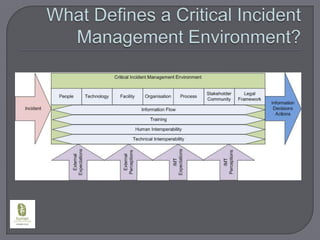
Nature of CIME EnvironmentsModern crisis response environments are complex, high workload environments.Key purpose of these environments is:Development and maintenance of individual and shared situation awareness;Decision making in support of crisis response.If a capability does not aid the incident controller to make a decision or respond – why is it there?Sometimes the best system is a notebook and pencil
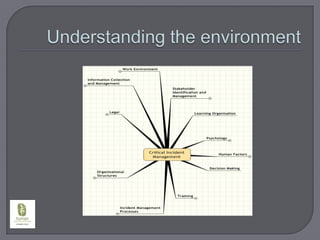
Understanding the environment
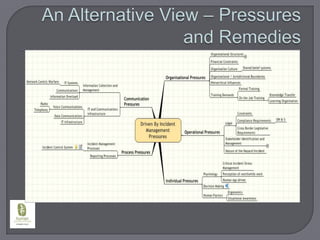
An Alternative View – Pressures and Remedies
Focussing Idea – Civil / Military Large Scale Disaster ResponseTsunami responseHurricane Katrina9/11Timor, Solomons
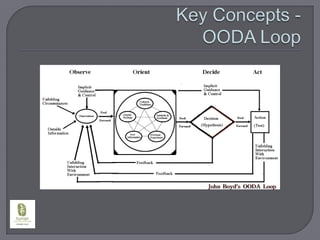
Key Concepts -   OODA Loop
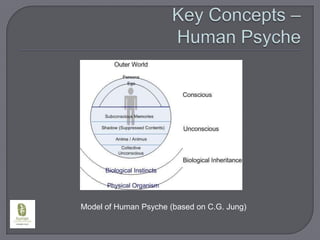
Key Concepts – Human PsycheModel of Human Psyche (based on C.G. Jung)
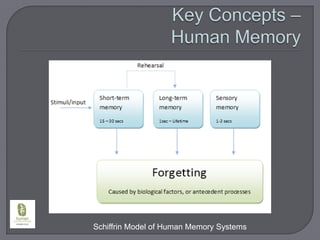
Key Concepts – Human MemorySchiffrin Model of Human Memory Systems
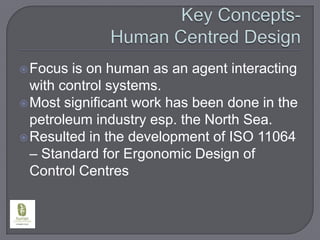
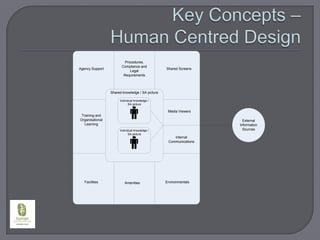
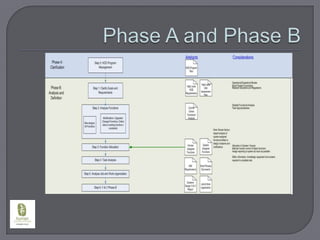
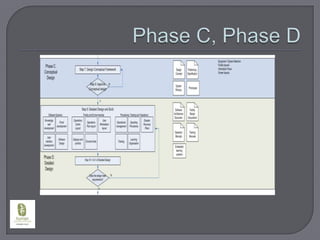
Key Concepts- Human Centred DesignFocus is on human as an agent interacting with control systems.Most significant work has been done in the petroleum industry esp. the North Sea.Resulted in the development of ISO 11064 – Standard for Ergonomic Design of Control Centres
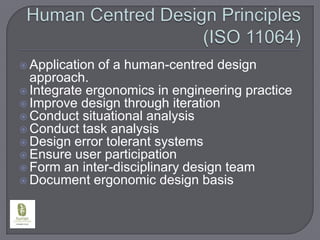
Human Centred Design Principles (ISO 11064)Application of a human-centred design approach.Integrate ergonomics in engineering practiceImprove design through iterationConduct situational analysisConduct task analysisDesign error tolerant systemsEnsure user participationForm an inter-disciplinary design teamDocument ergonomic design basis
Key Concepts –Human Centred Design
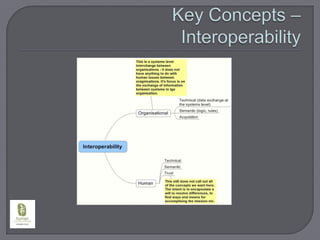
Key Concepts – Interoperability
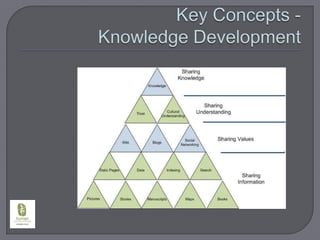
Key Concepts -  Knowledge Development
What Defines a Critical Incident Management Environment?
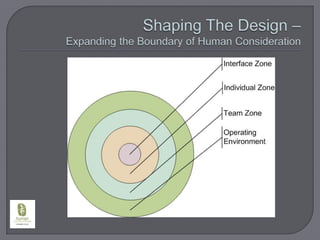
Shaping The Design – Expanding the Boundary of Human Consideration
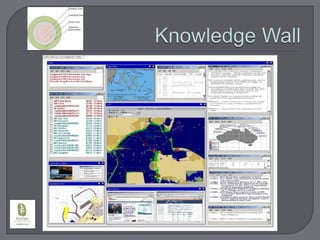
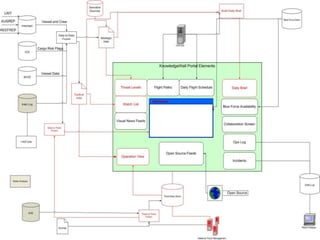
Knowledge Wall
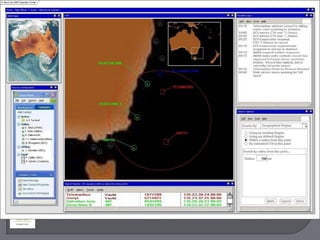
Tailorable User Interface
Fusion and Analysis
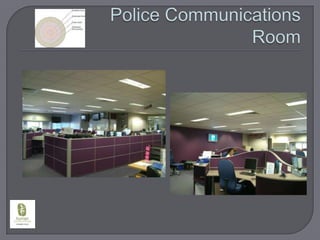
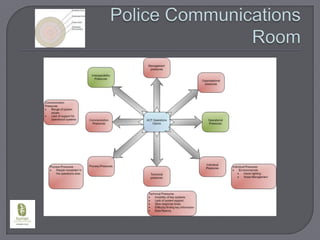
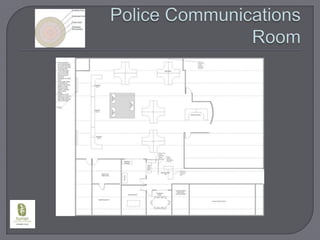
Police Communications Room
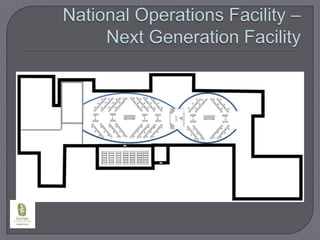
National Operations Facility –Next Generation Facility
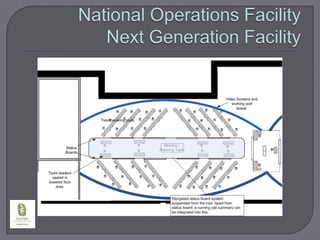
National Operations FacilityNext Generation Facility
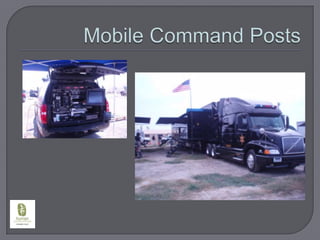
Mobile Command Posts
Assessing The Impact
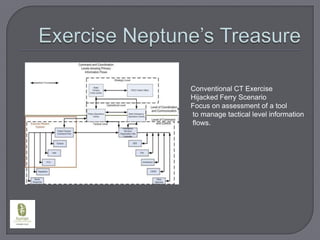
Exercise Neptune’s TreasureConventional CT ExerciseHijacked Ferry ScenarioFocus on assessment of a tool to manage tactical level information flows.
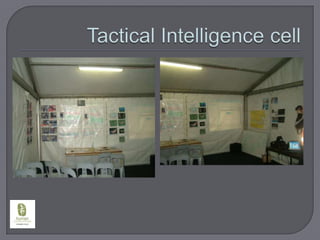
Tactical Intelligence cell
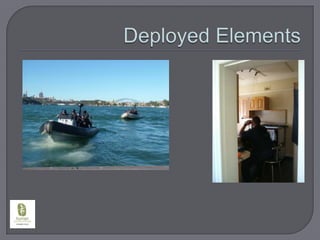
Deployed Elements
Assessment MethodsAssessment Types:Subjective: The individual or group is asked to assess it’s own SA, either through a process of direct questioning or a written evaluation without suspending the activity;Implicit: Observable improvements in performance resulted from the improved SA;Explicit: Current activity is suspended and direct probing by the evaluator to assess the understanding and SA of the individual or group at that point in the scenario.Resulting in:Qualitative data “subjective measures”Quantitative data “numeric measures”
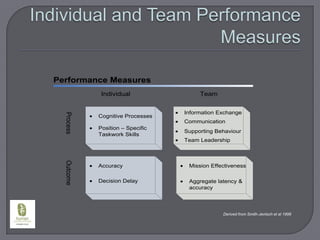
Individual and Team Performance MeasuresDerived from Smith-Jentsch et al 1998
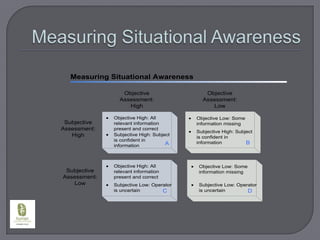
Measuring Situational Awareness
Assessment examples If I have time....
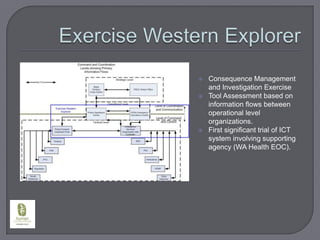
Exercise Western ExplorerConsequence Management and Investigation ExerciseTool Assessment based on information flows between operational level organizations.First significant trial of ICT system involving supporting agency (WA Health EOC).
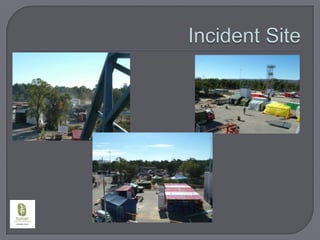
Incident Site
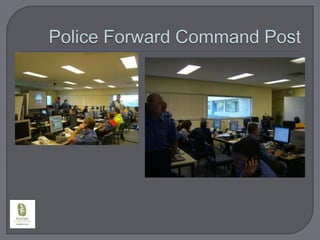
Police Forward Command Post
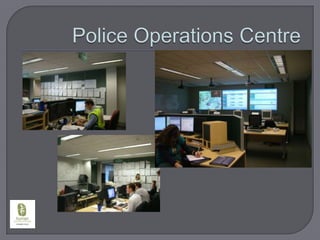
Police Operations Centre
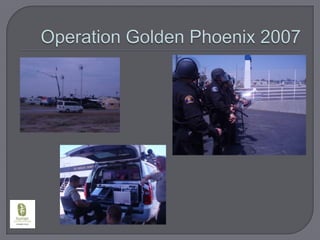
Operation Golden Phoenix 2007
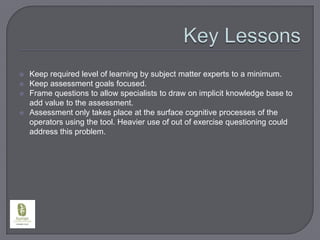
Key LessonsKeep required level of learning by subject matter experts to a minimum.Keep assessment goals focused.Frame questions to allow specialists to draw on implicit knowledge base to add value to the assessment.Assessment only takes place at the surface cognitive processes of the operators using the tool. Heavier use of out of exercise questioning could address this problem.
Current WorkHuman Interoperability EnterpriseOperation Golden Phoenix 2008Trident Warrior 2009Trust and Human Interoperability in HA/DRCivil / Military C2 Interoperability ExperimentsDeployed Environment in Support of HA/DR Operations.Improvement in Assessment Methods
Current WorkIntegration methodology for HCD in management of projects with significant human element.Resilience Networks for HA/DR response(http://dkms.ghinet.info)
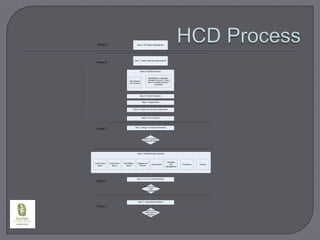
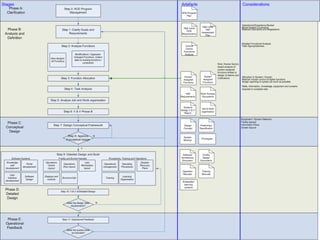
HCD Process
Phase A and Phase B
Phase C, Phase D

Adfa Itee Presentation