Composition
• Arrangementof design elements to express something
Elements of Design
• Building blocks of compositions
Principles of Design
• ways of arranging or organizing design elements to
express something.
Design principles
4.
The principlesof design are the rules a designer
must follow to create an effective and attractive
composition.
Design principles
5.
• Seven principlesencompass an interesting design.
1. Balance and Axis
2. Rhythm and repetition
3. Emphasis and Hierarchy
4. Scale and proportion
5. Datum
6. Harmony and Unity
7. Contrast and Variety
8. Movement
Design principles
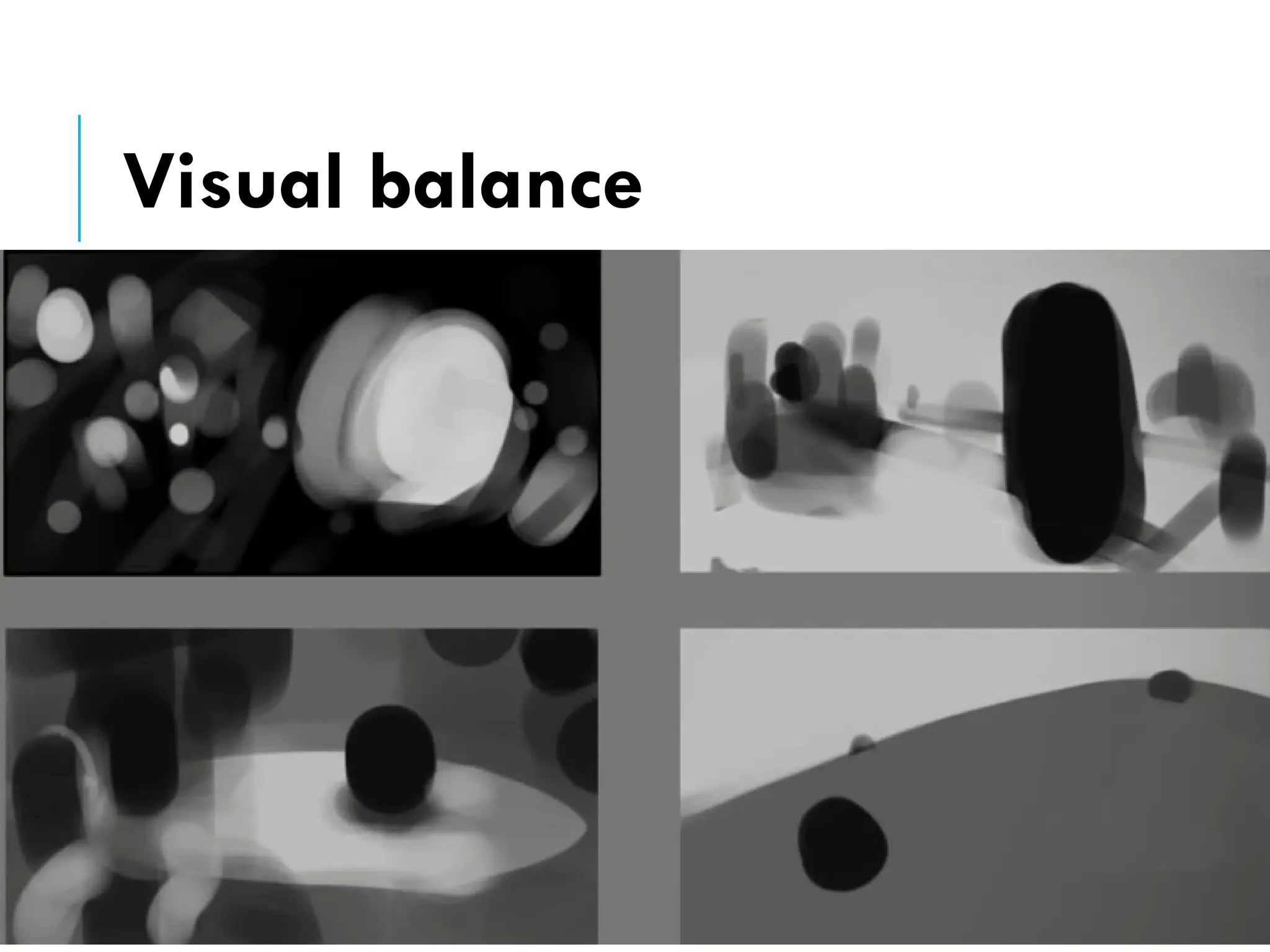
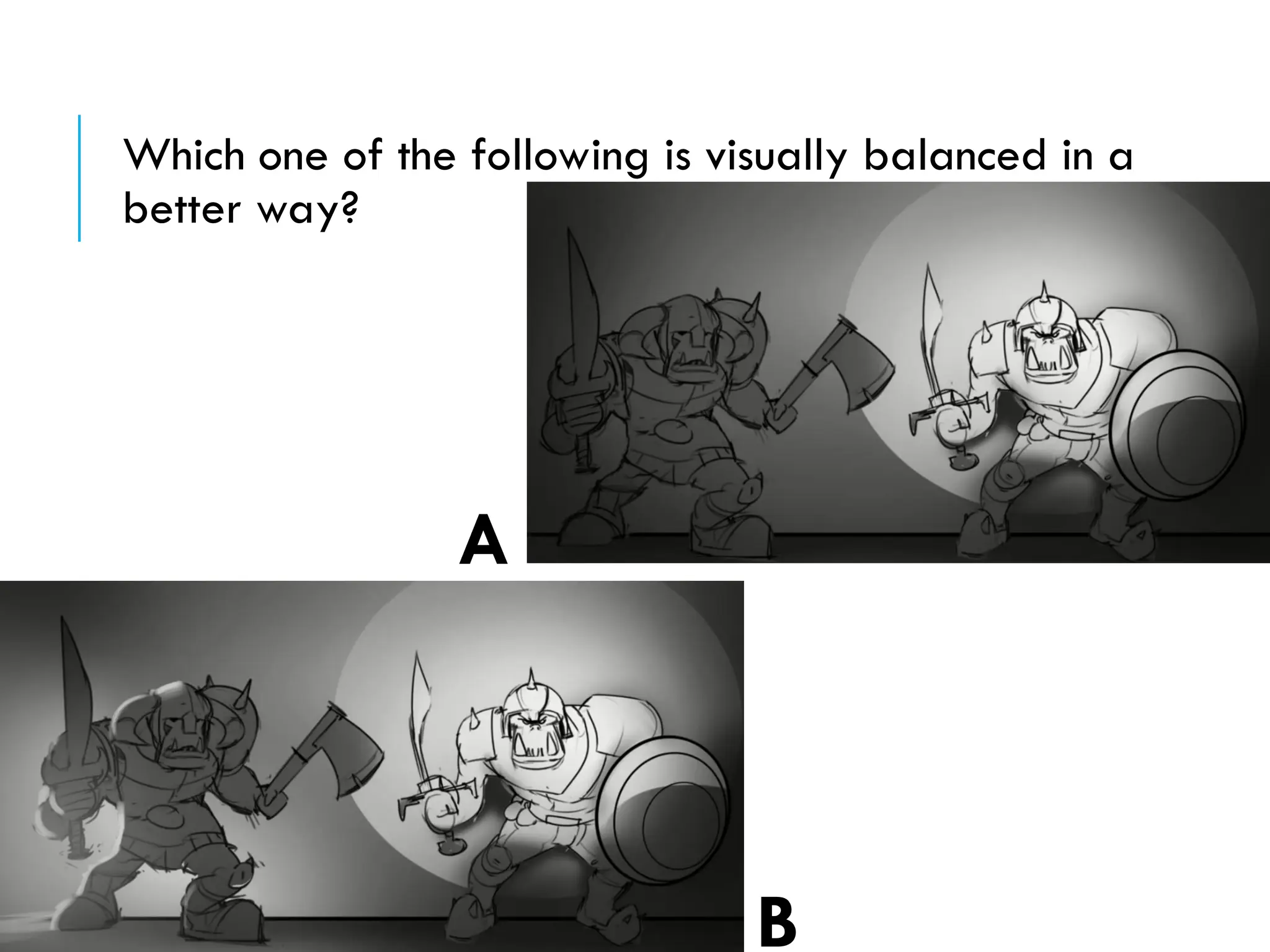
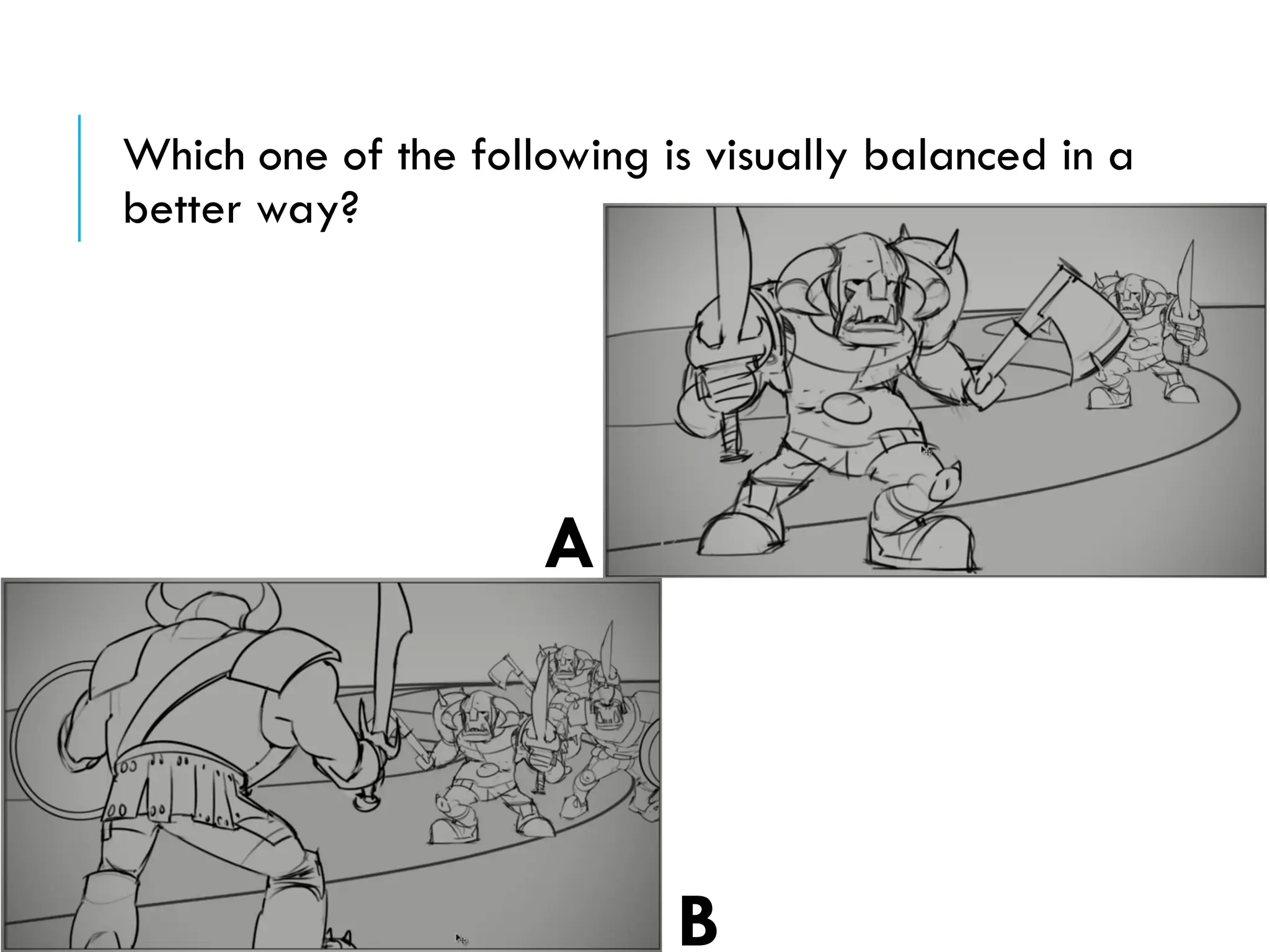
• Parts ofthe design are equally distributed to create
a sense of Stability.
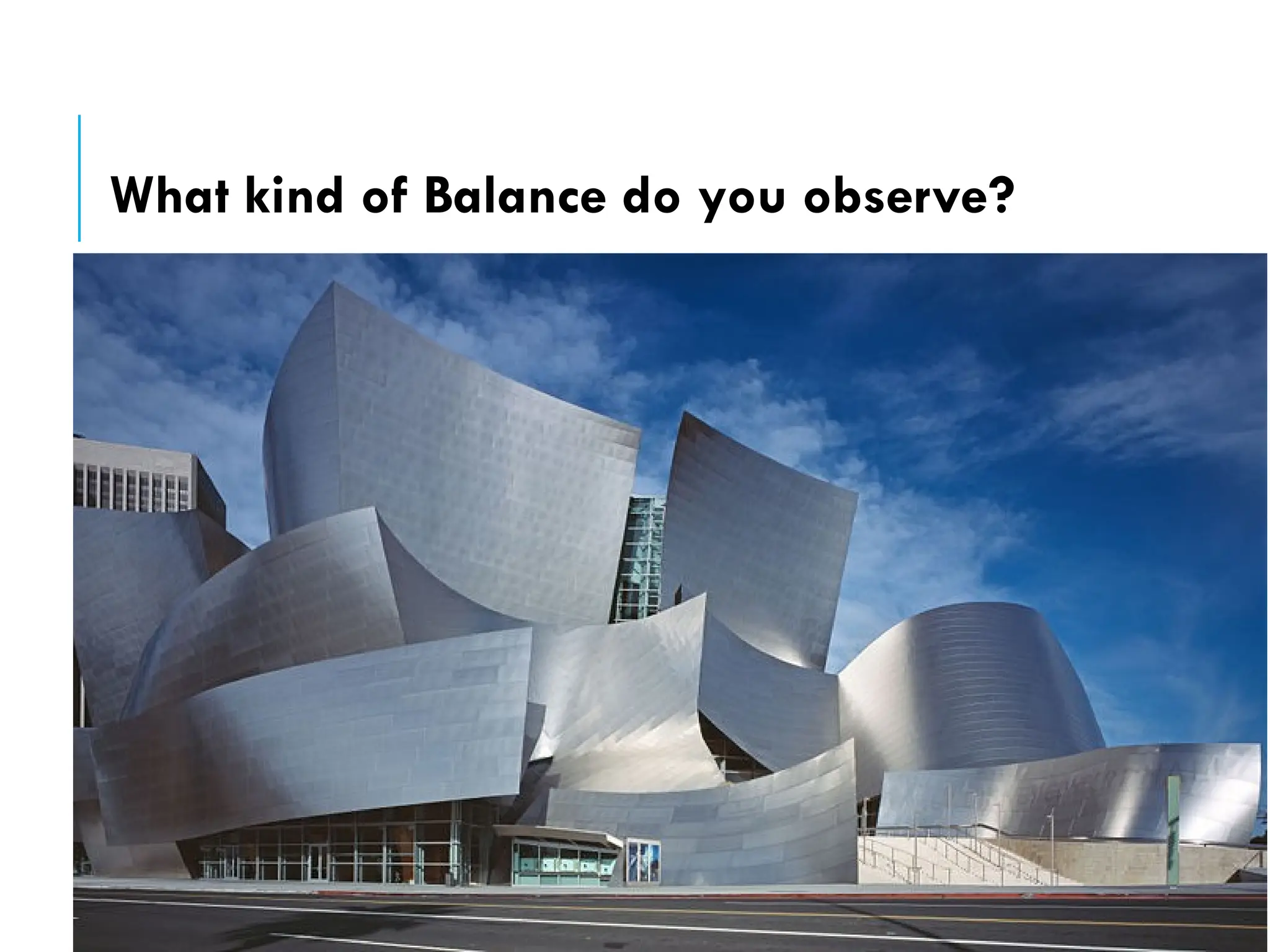
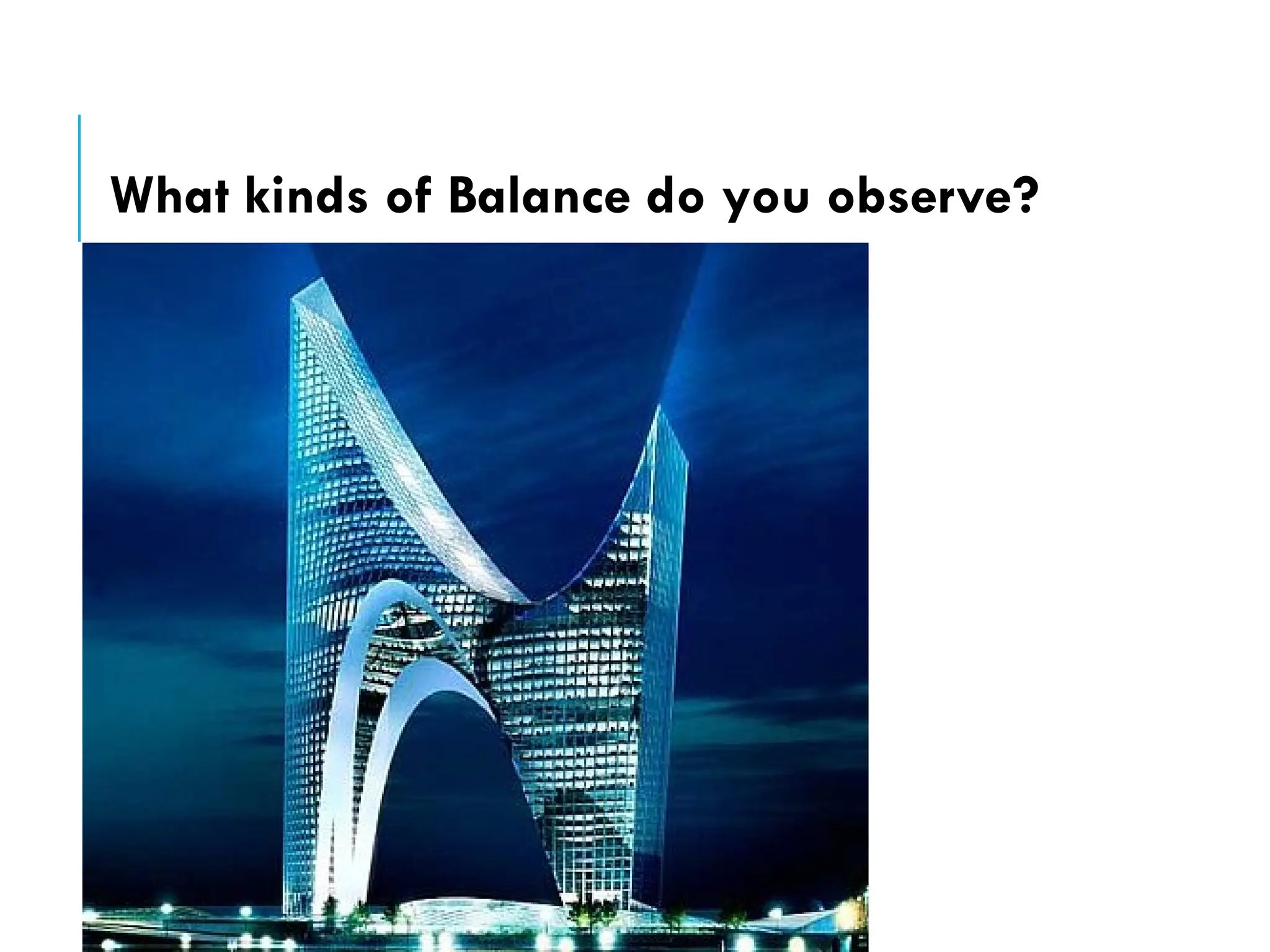
• Both physical and visual balance exist.
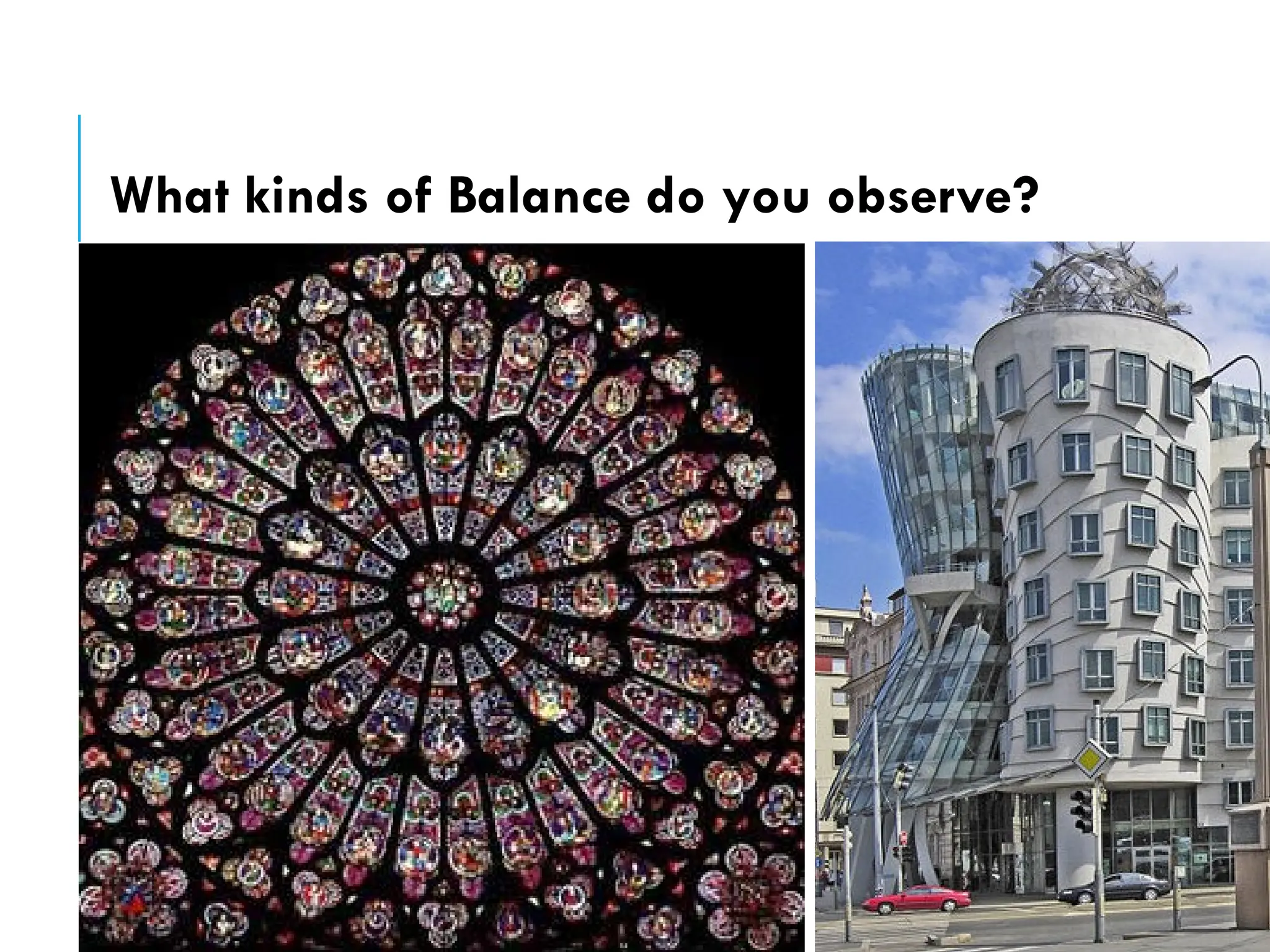
• Types
Symmetrical or formal balance
Asymmetrical or informal balance
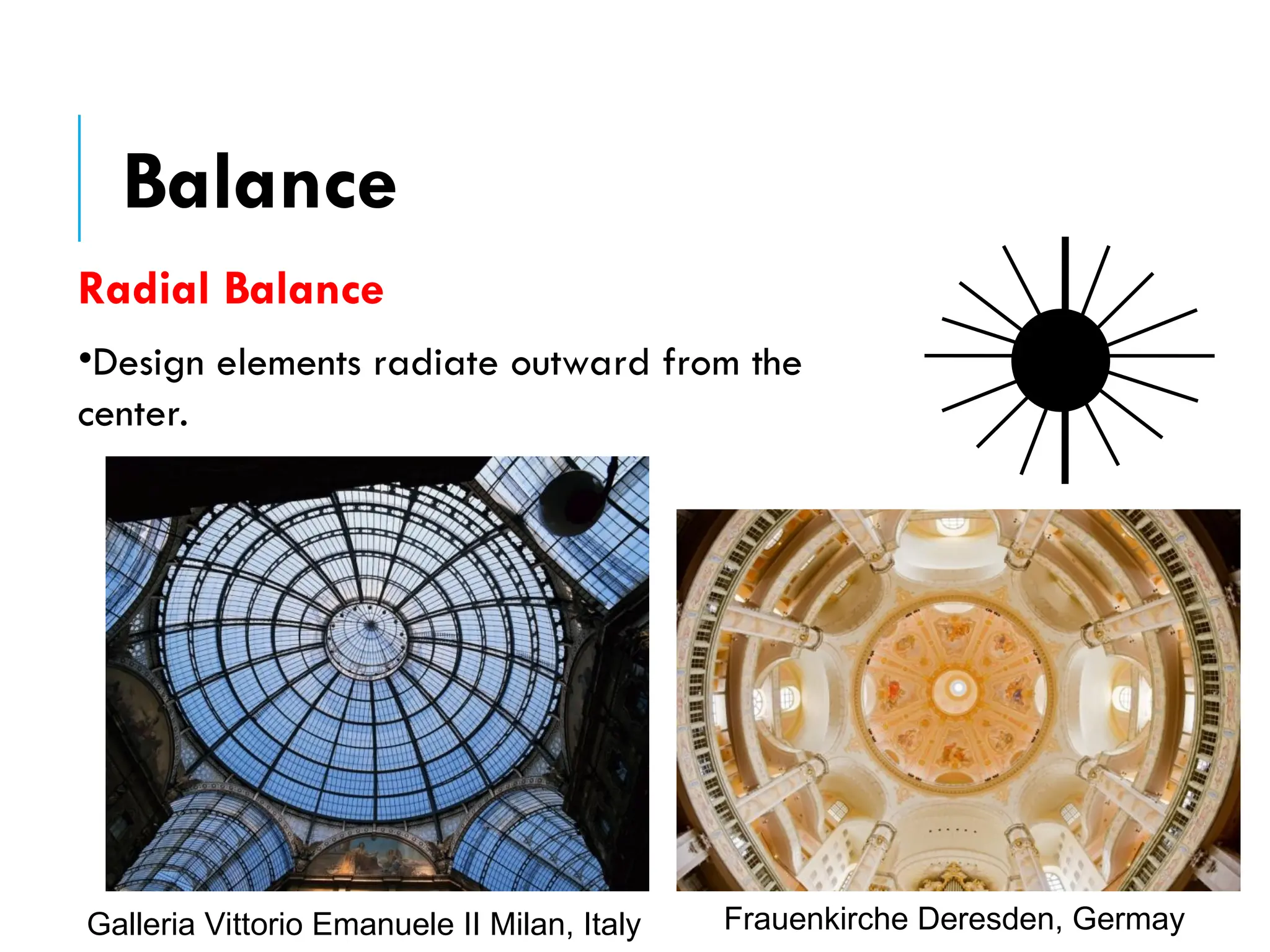
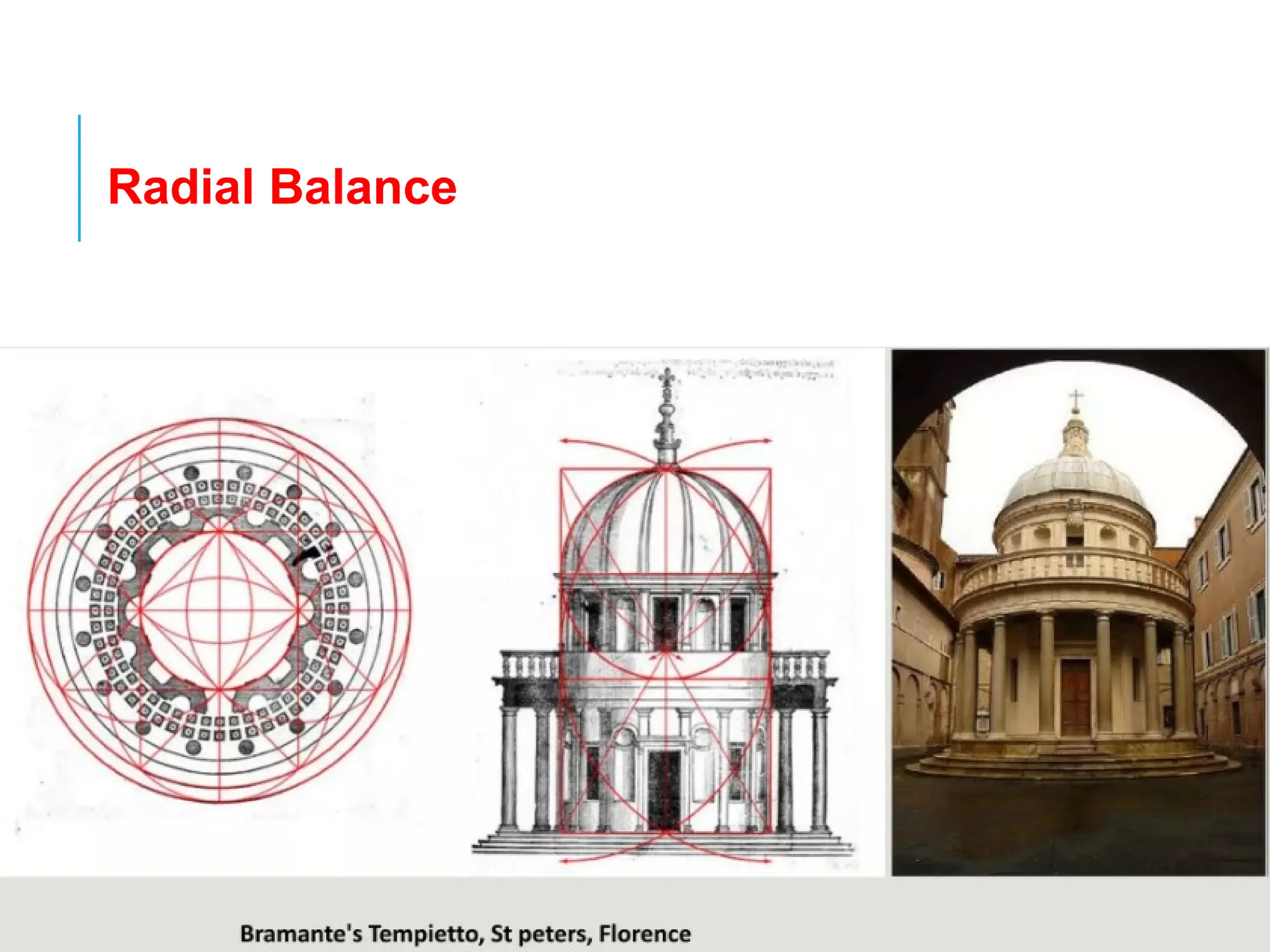
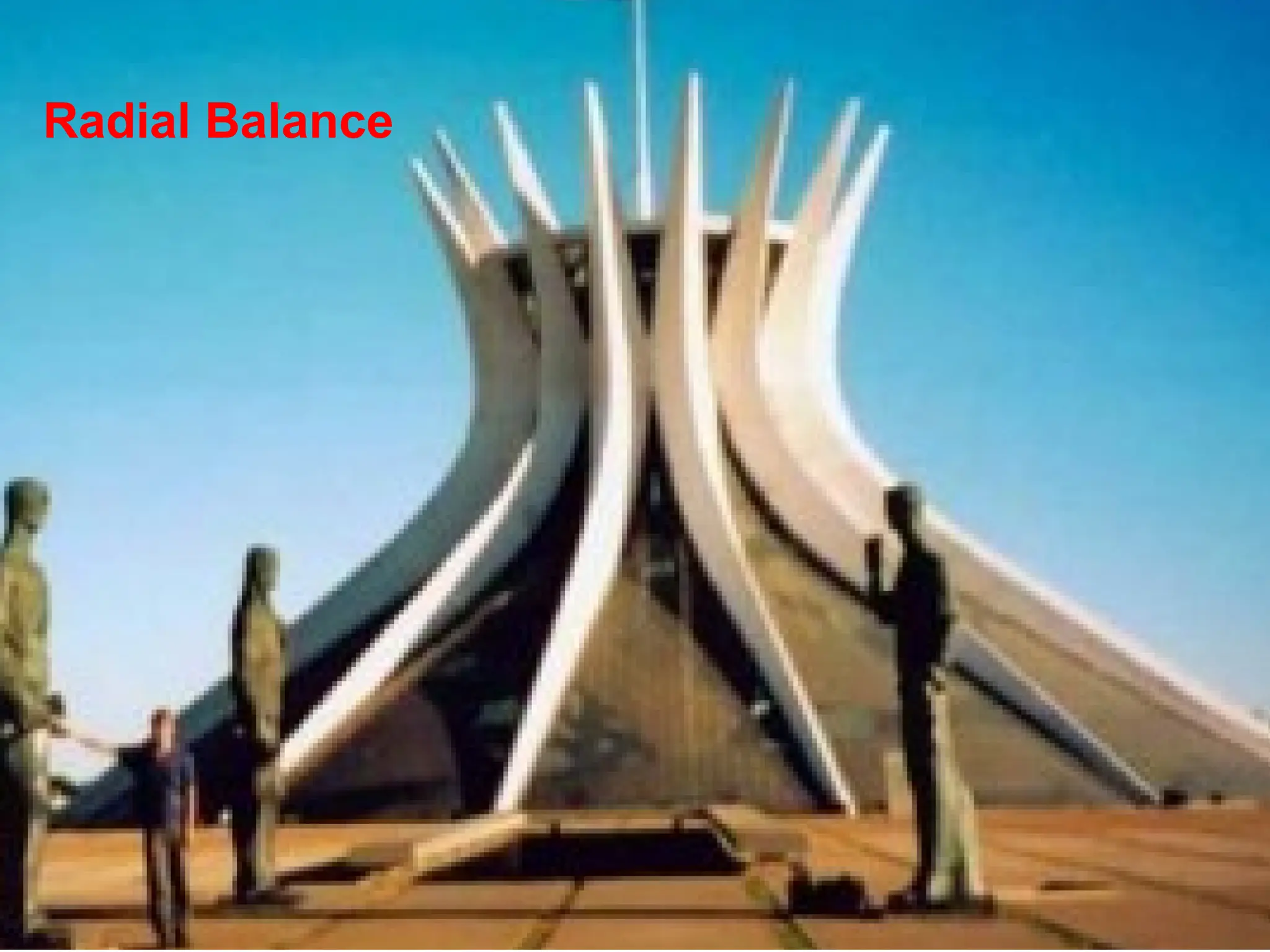
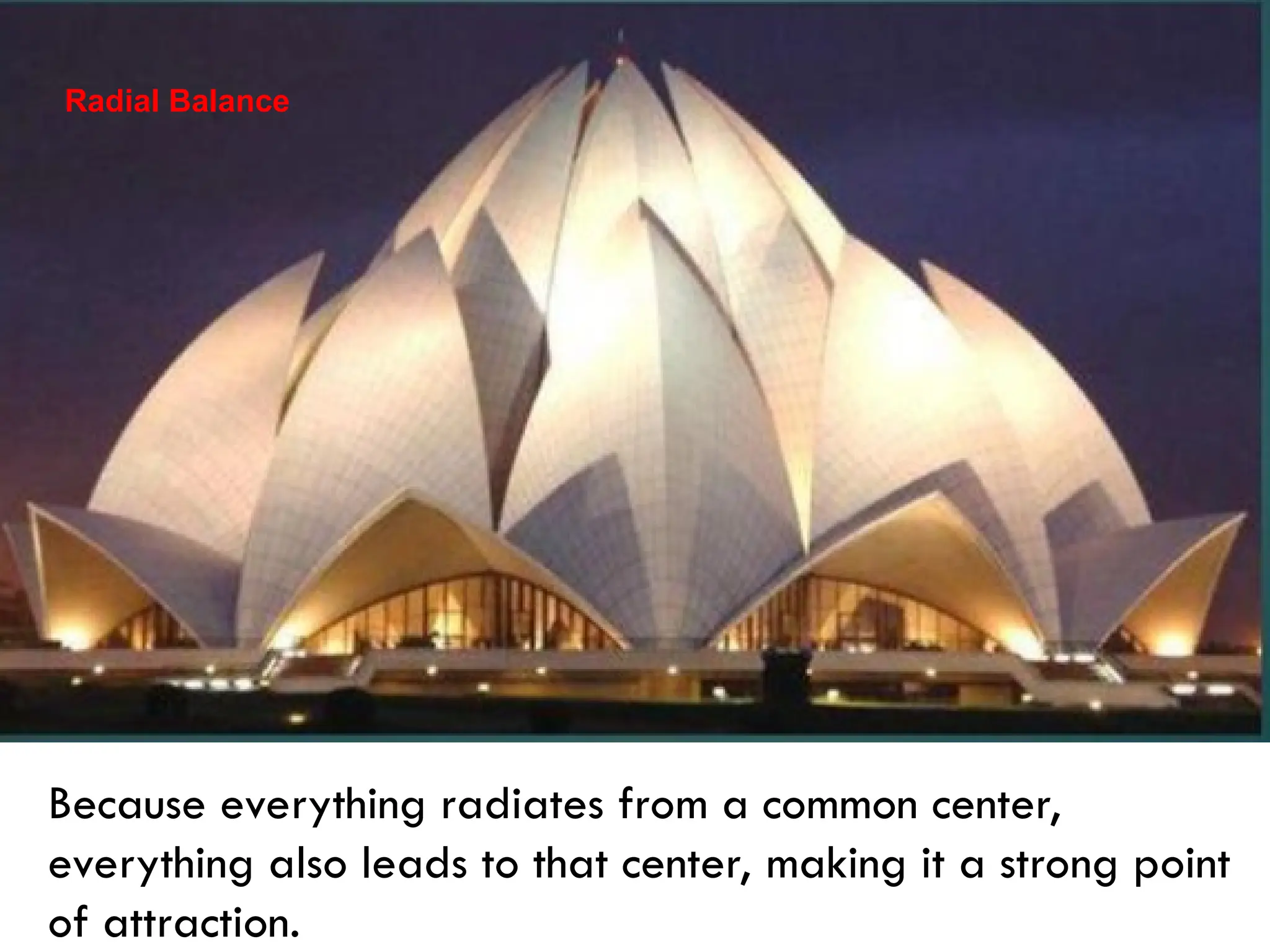
Radial balance
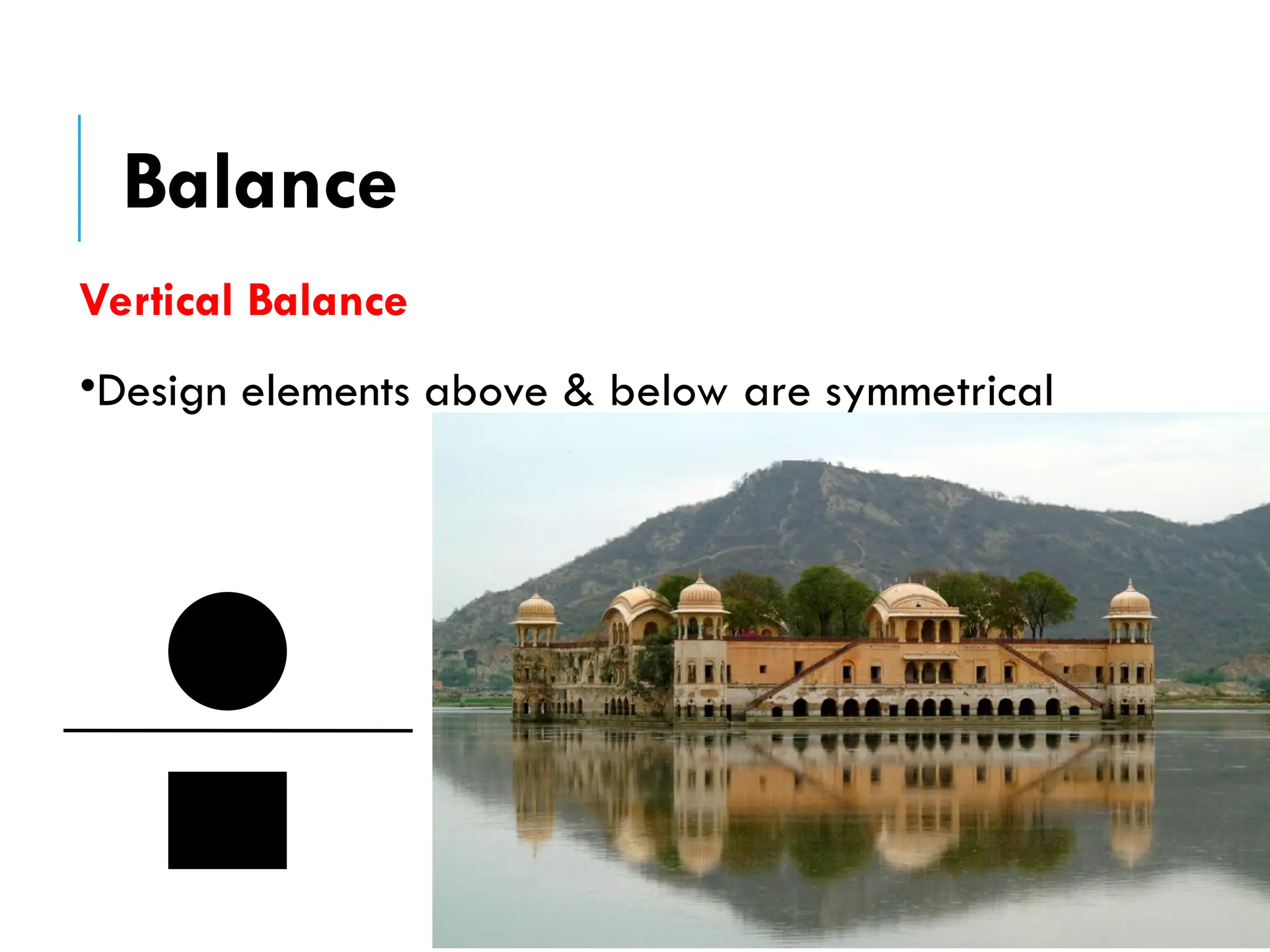
Vertical balance
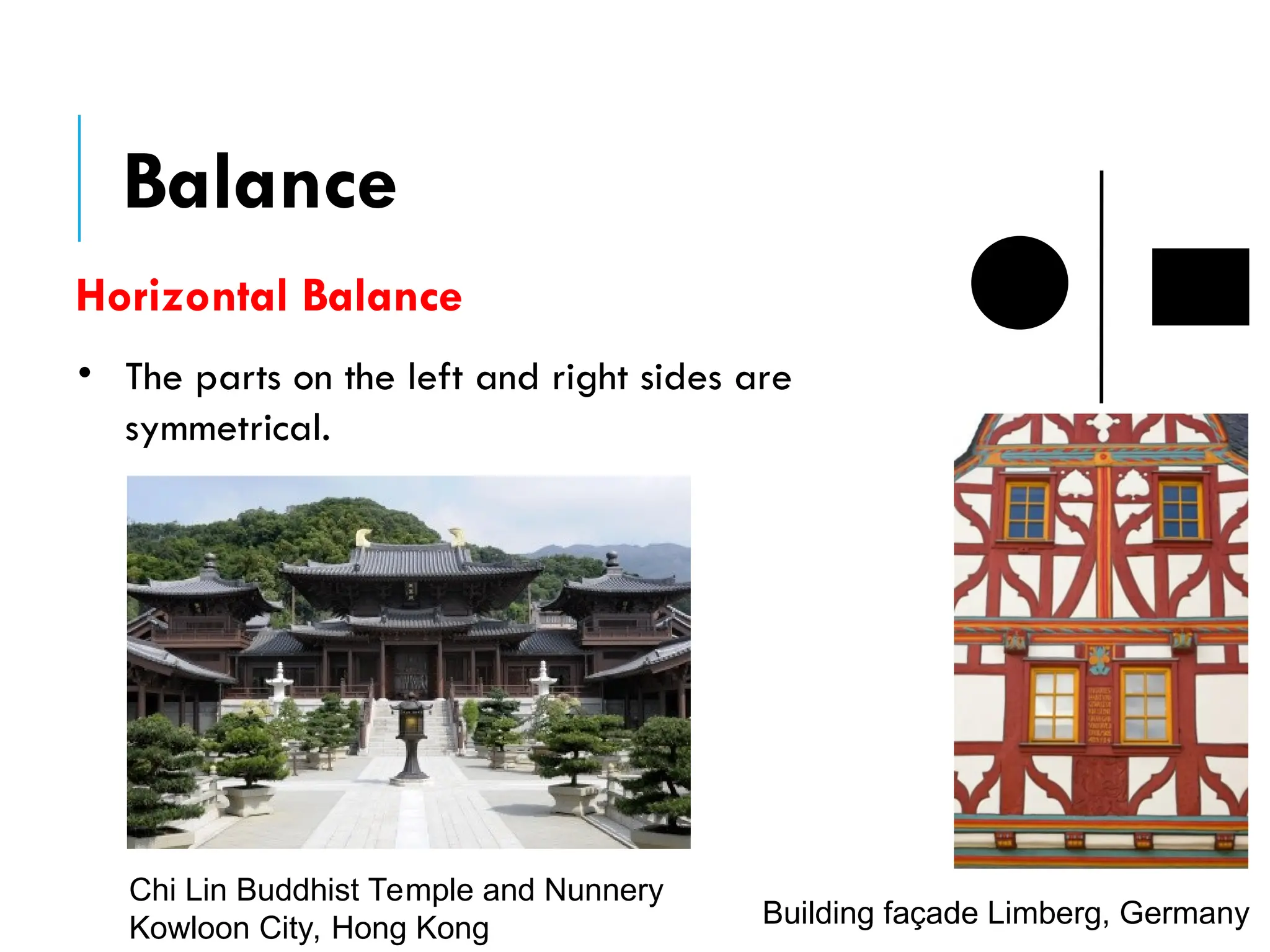
Horizontal balance
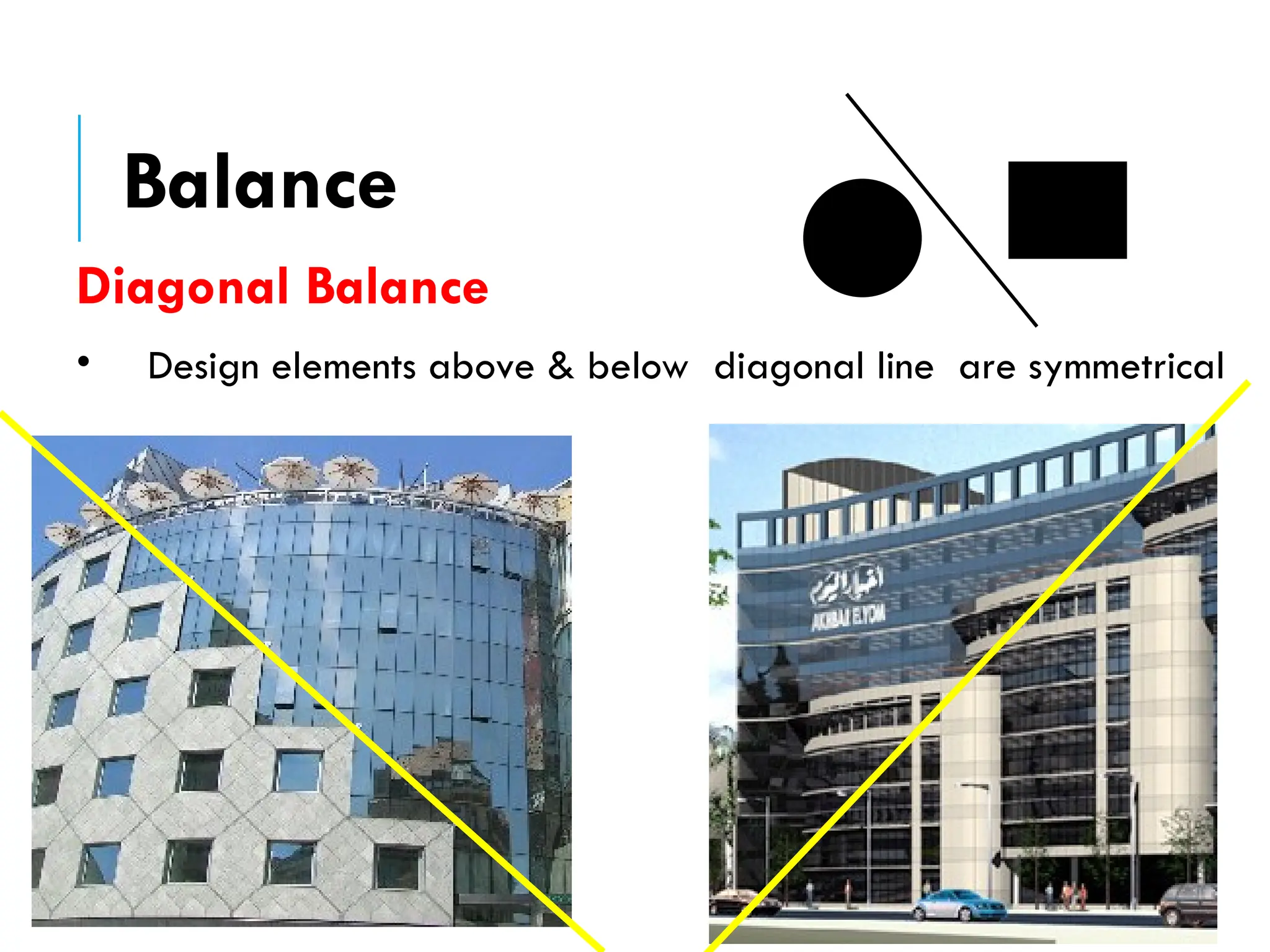
Diagonal balance
Balance
8.
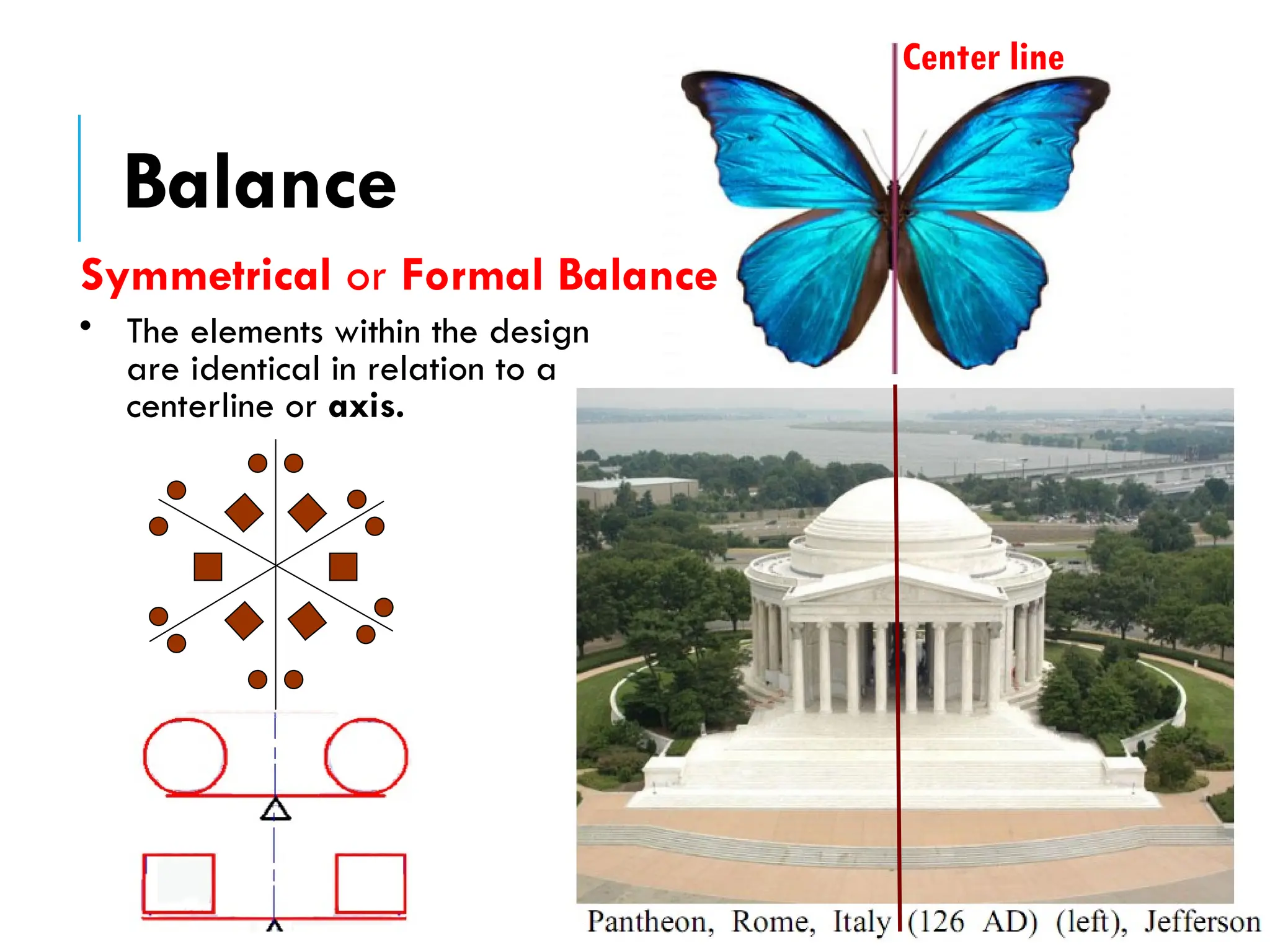
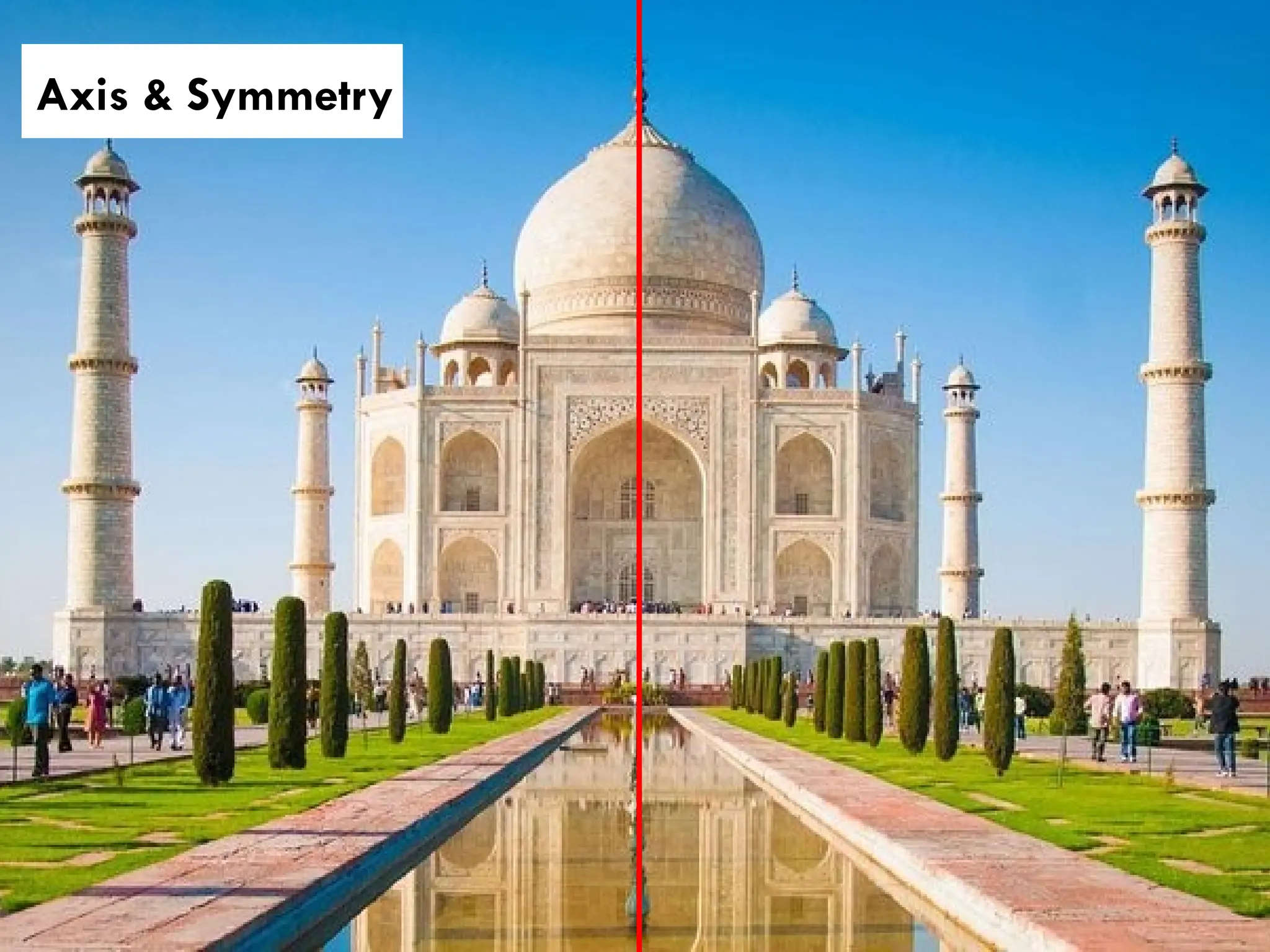
• The elementswithin the design
are identical in relation to a
centerline or axis.
Symmetrical or Formal Balance
Balance
Center line
9.
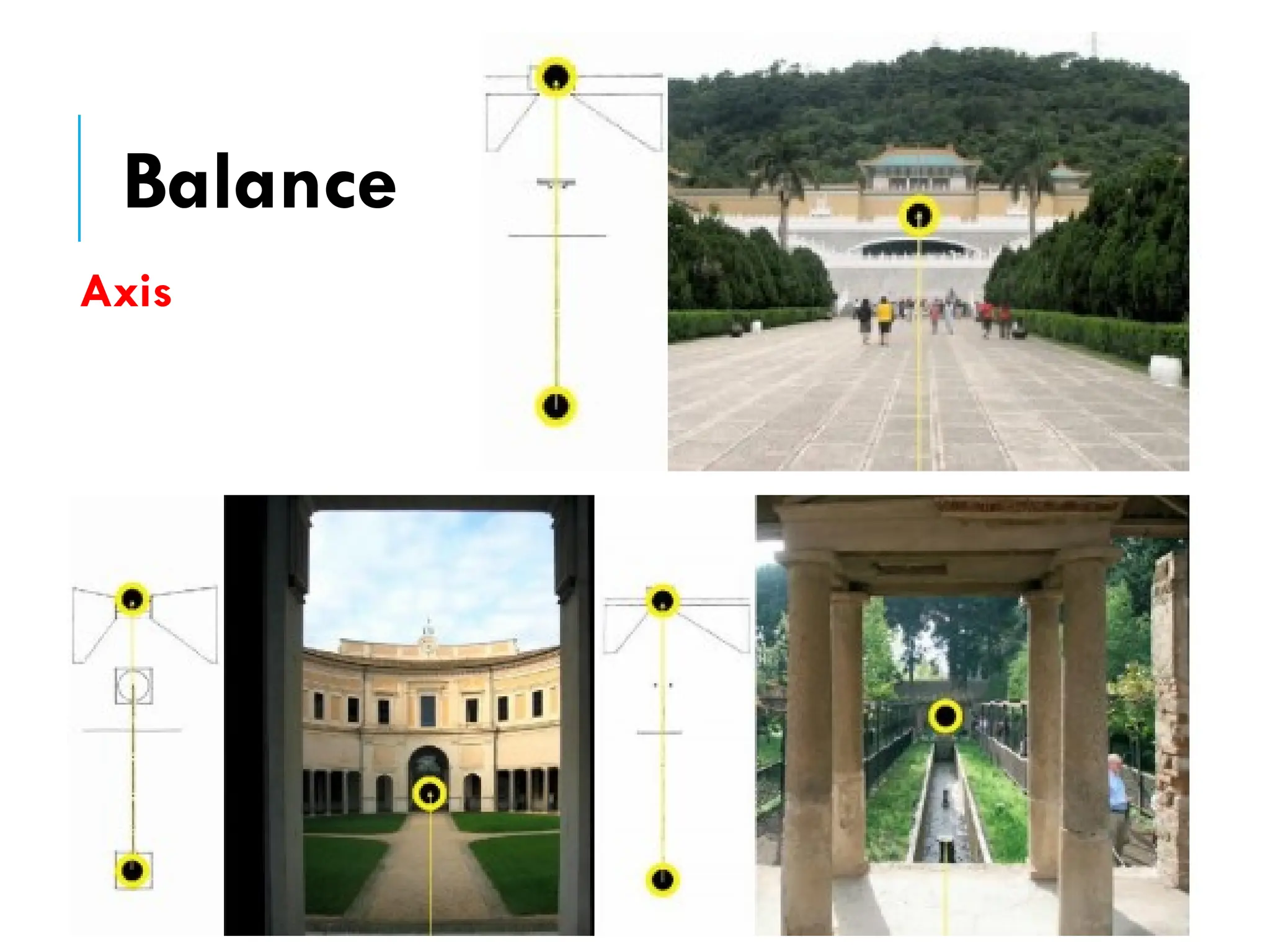
Axis
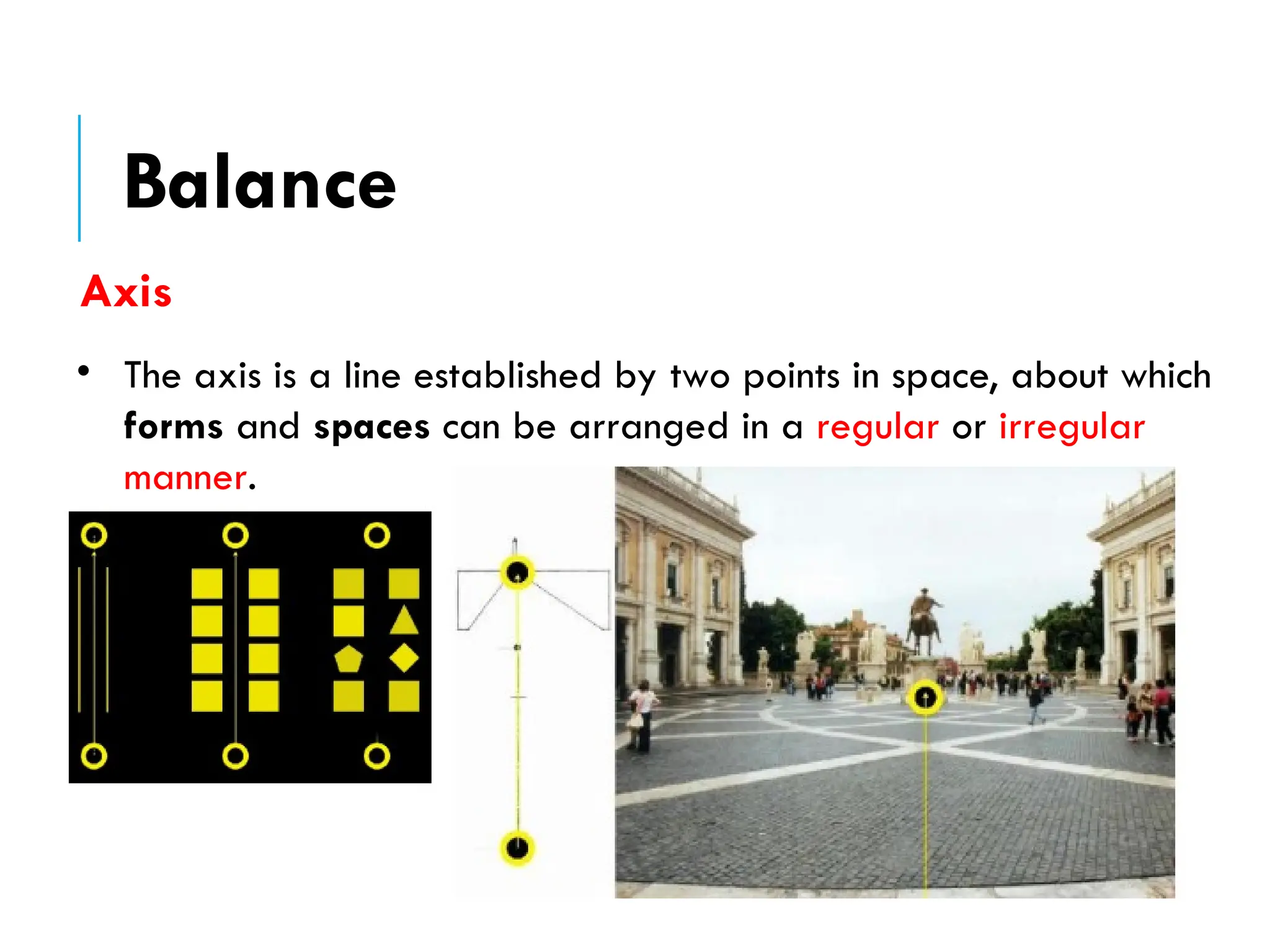
• The axisis a line established by two points in space, about which
forms and spaces can be arranged in a regular or irregular
manner.
Balance
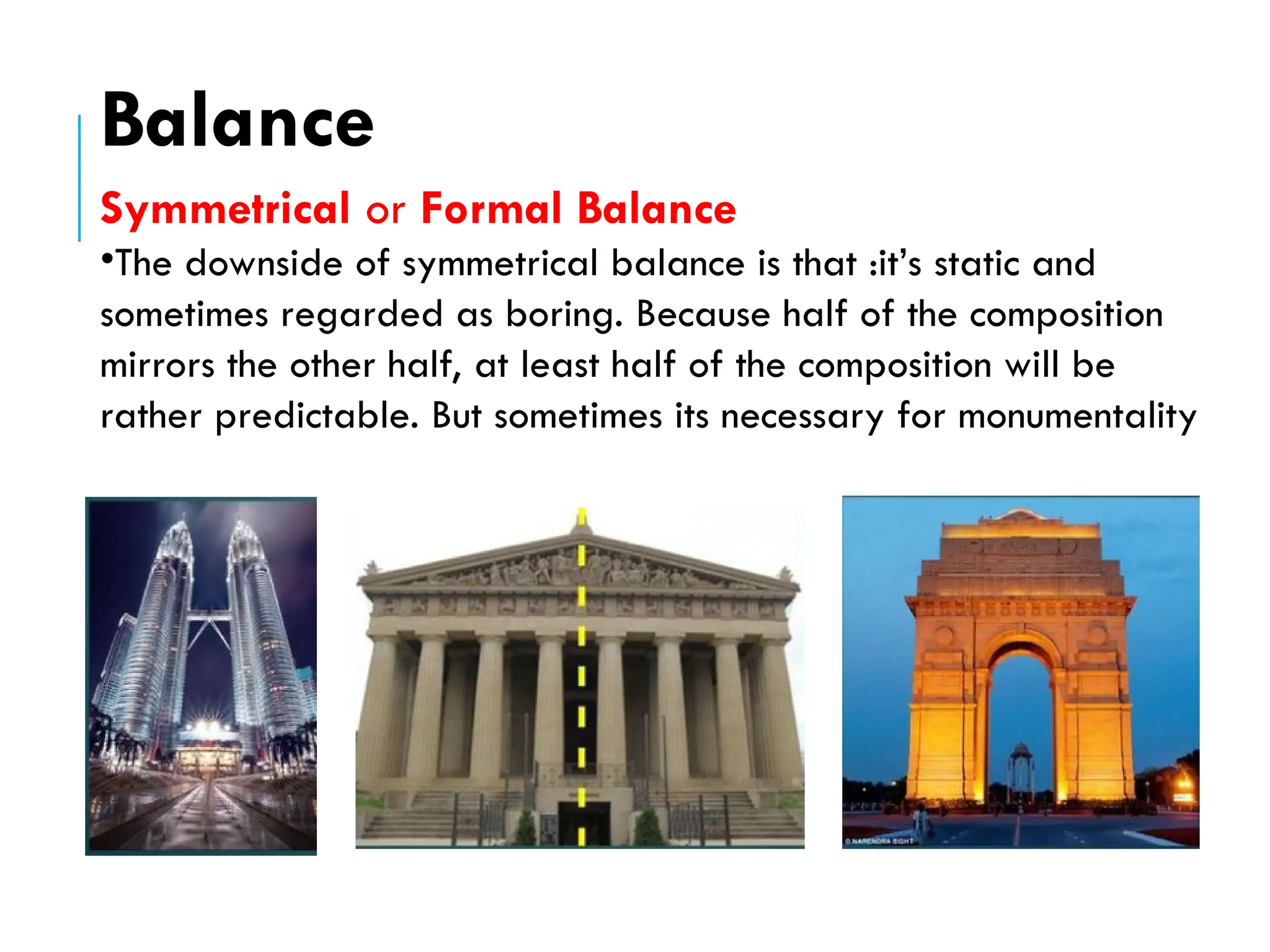
Symmetrical or FormalBalance
•The downside of symmetrical balance is that :it’s static and
sometimes regarded as boring. Because half of the composition
mirrors the other half, at least half of the composition will be
rather predictable. But sometimes its necessary for monumentality
Balance
13.
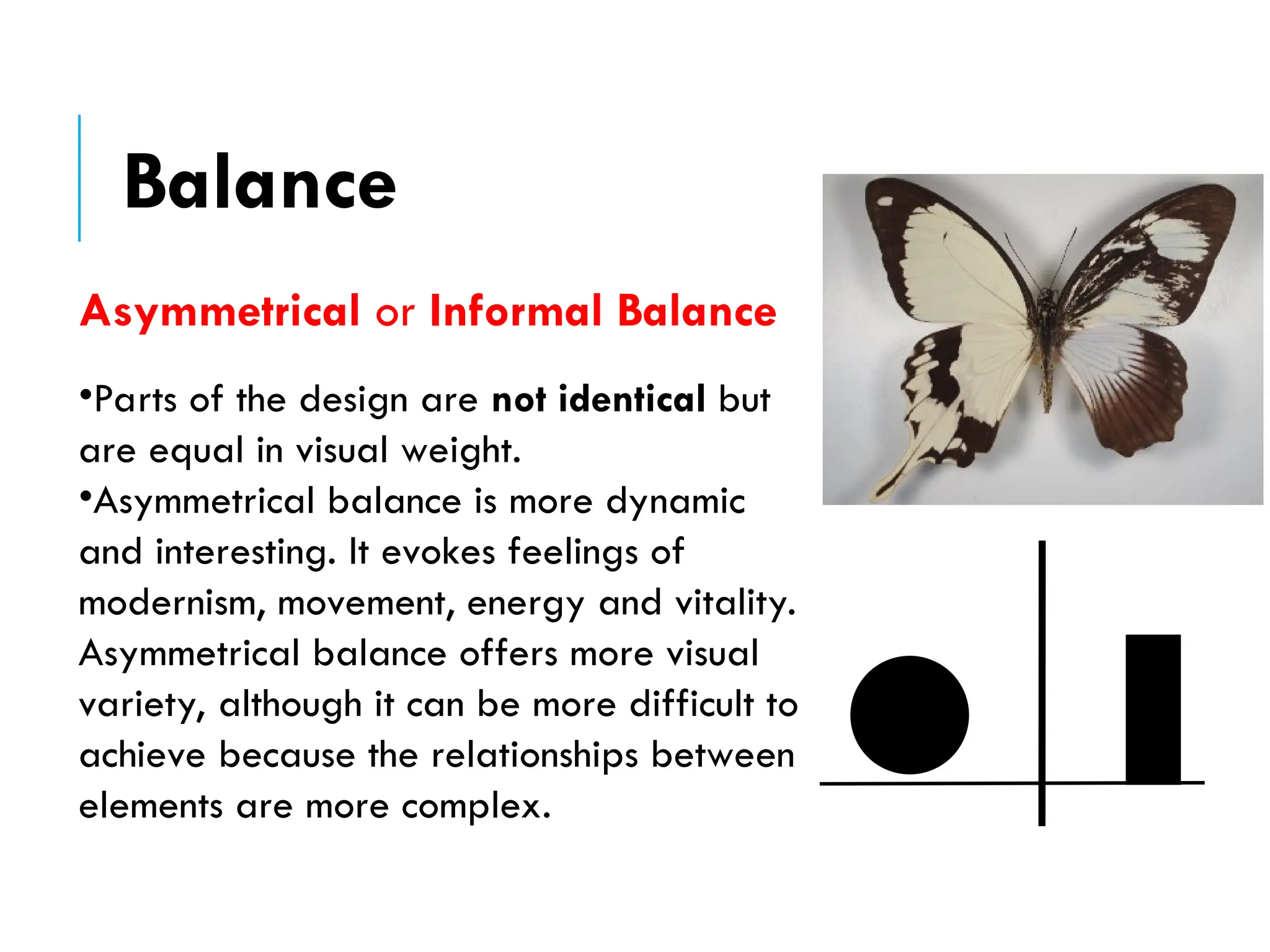
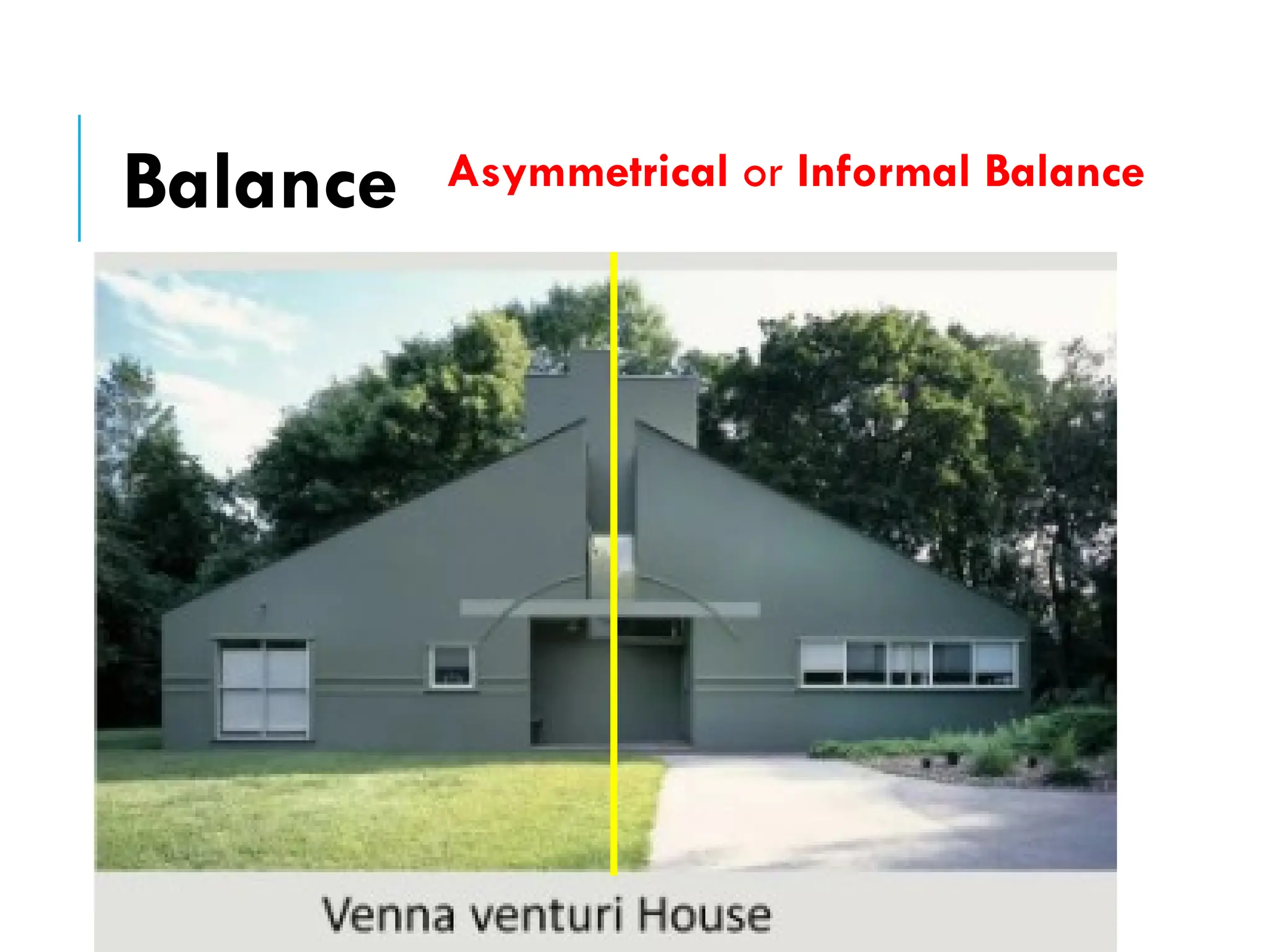
Asymmetrical or InformalBalance
•Parts of the design are not identical but
are equal in visual weight.
•Asymmetrical balance is more dynamic
and interesting. It evokes feelings of
modernism, movement, energy and vitality.
Asymmetrical balance offers more visual
variety, although it can be more difficult to
achieve because the relationships between
elements are more complex.
Balance
Balance
• The partson the left and right sides are
symmetrical.
Chi Lin Buddhist Temple and Nunnery
Kowloon City, Hong Kong Building façade Limberg, Germany
Horizontal Balance
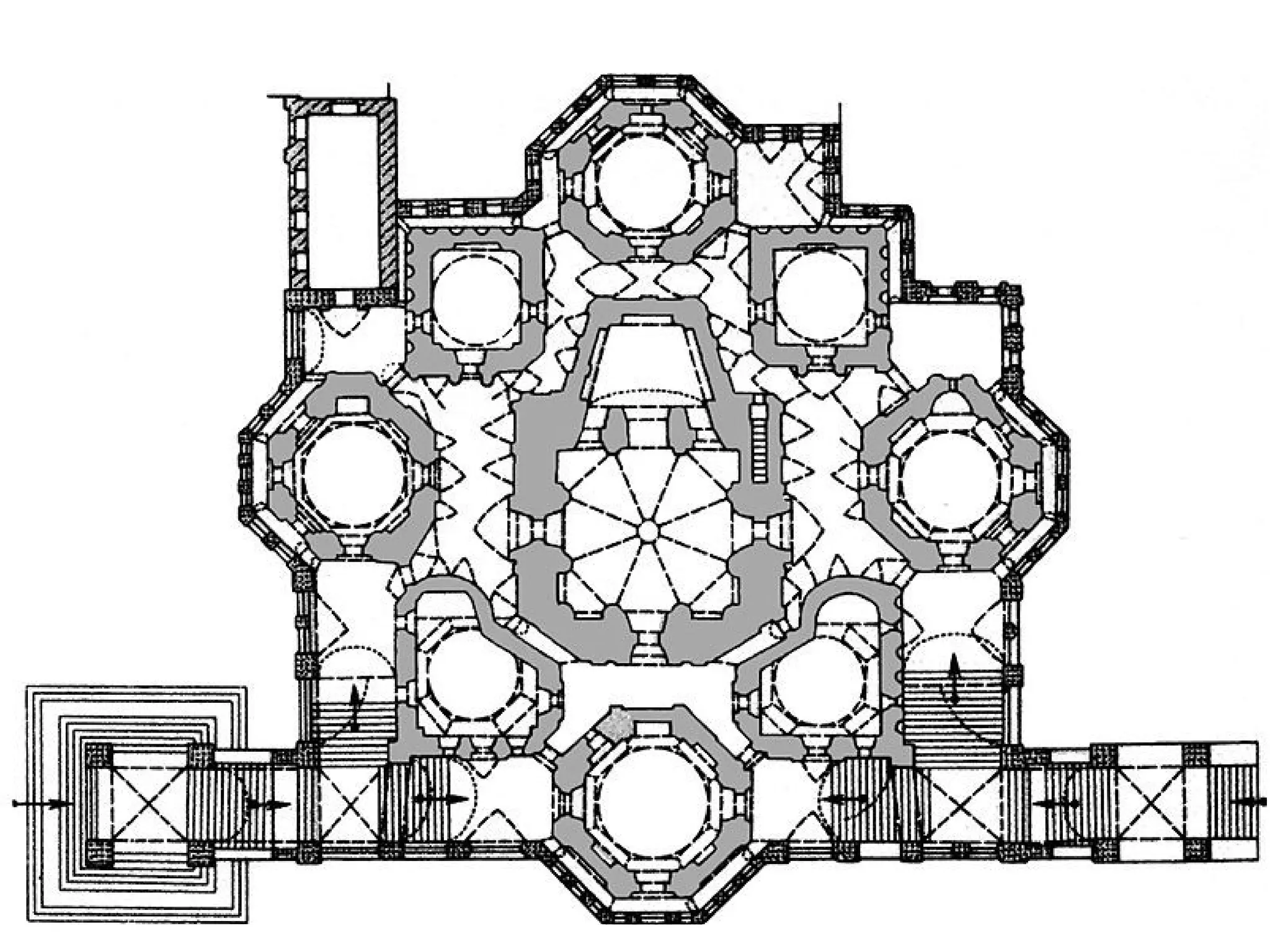
• Write-down thedifferent types of balance, that you
can see on the picture in the next page and illustrate
your answers with sketches and descriptions.
Exercise
Balance
30.
Create amodel showing the application of all the different types
of balance by using elements of design you have learned so far.
• A4 base, Max 5-10 cm ht.
• Material: The sky is the limit
• Out put: Creativity & Concept
• Submission Date: Friday/ Nov. 22, 2024
Assignment 1
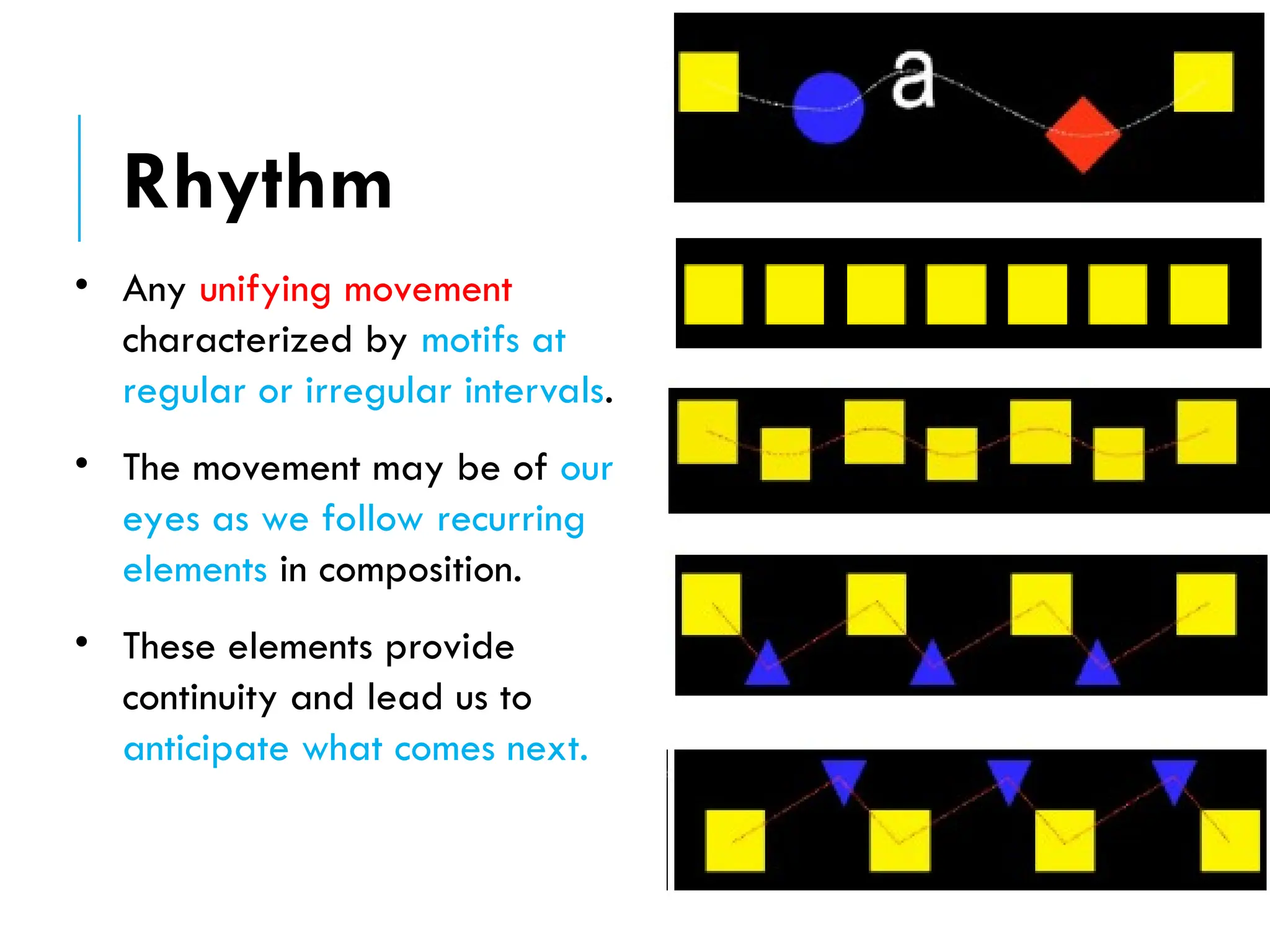
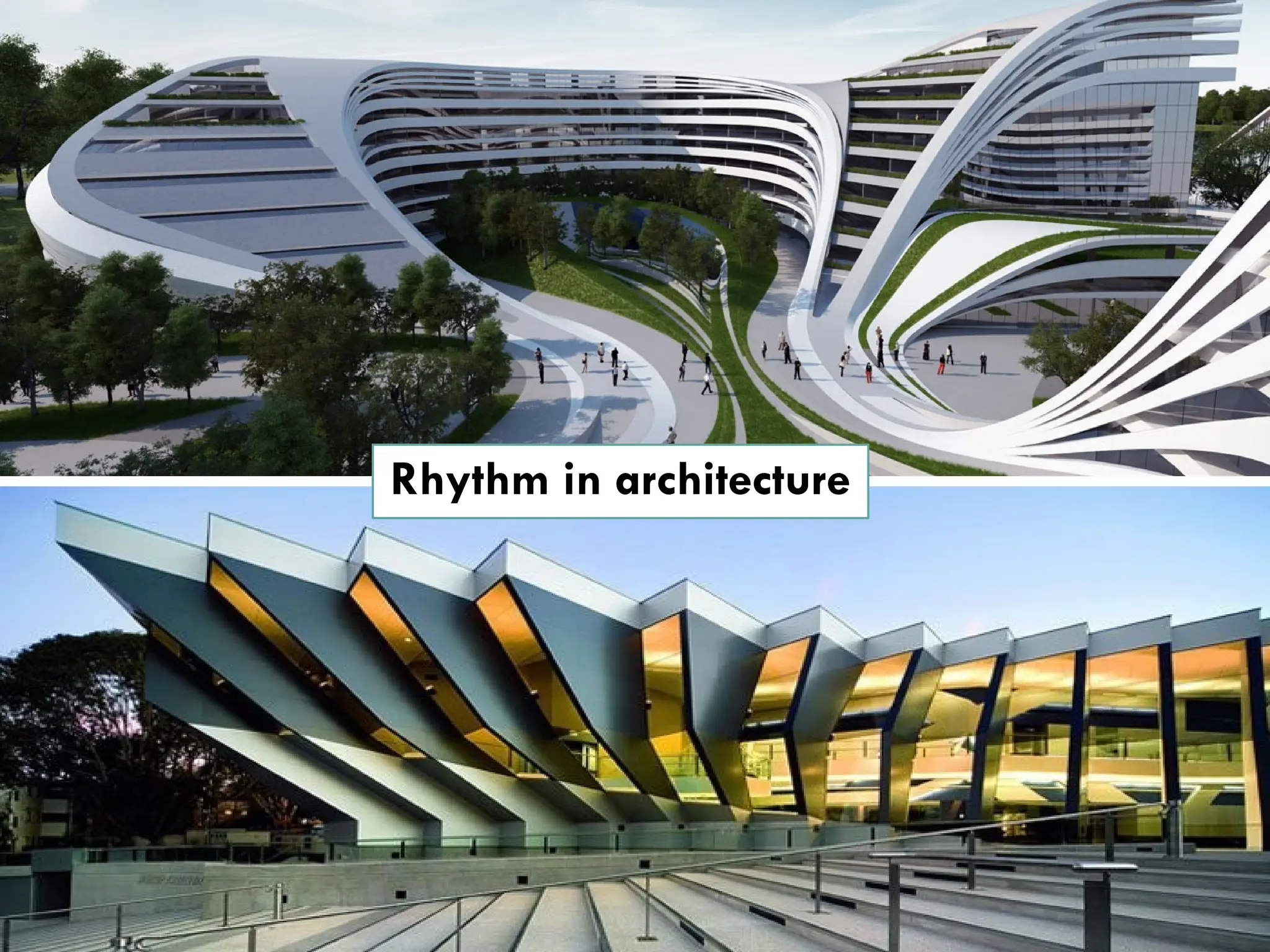
• Any unifyingmovement
characterized by motifs at
regular or irregular intervals.
• The movement may be of our
eyes as we follow recurring
elements in composition.
• These elements provide
continuity and lead us to
anticipate what comes next.
Rhythm
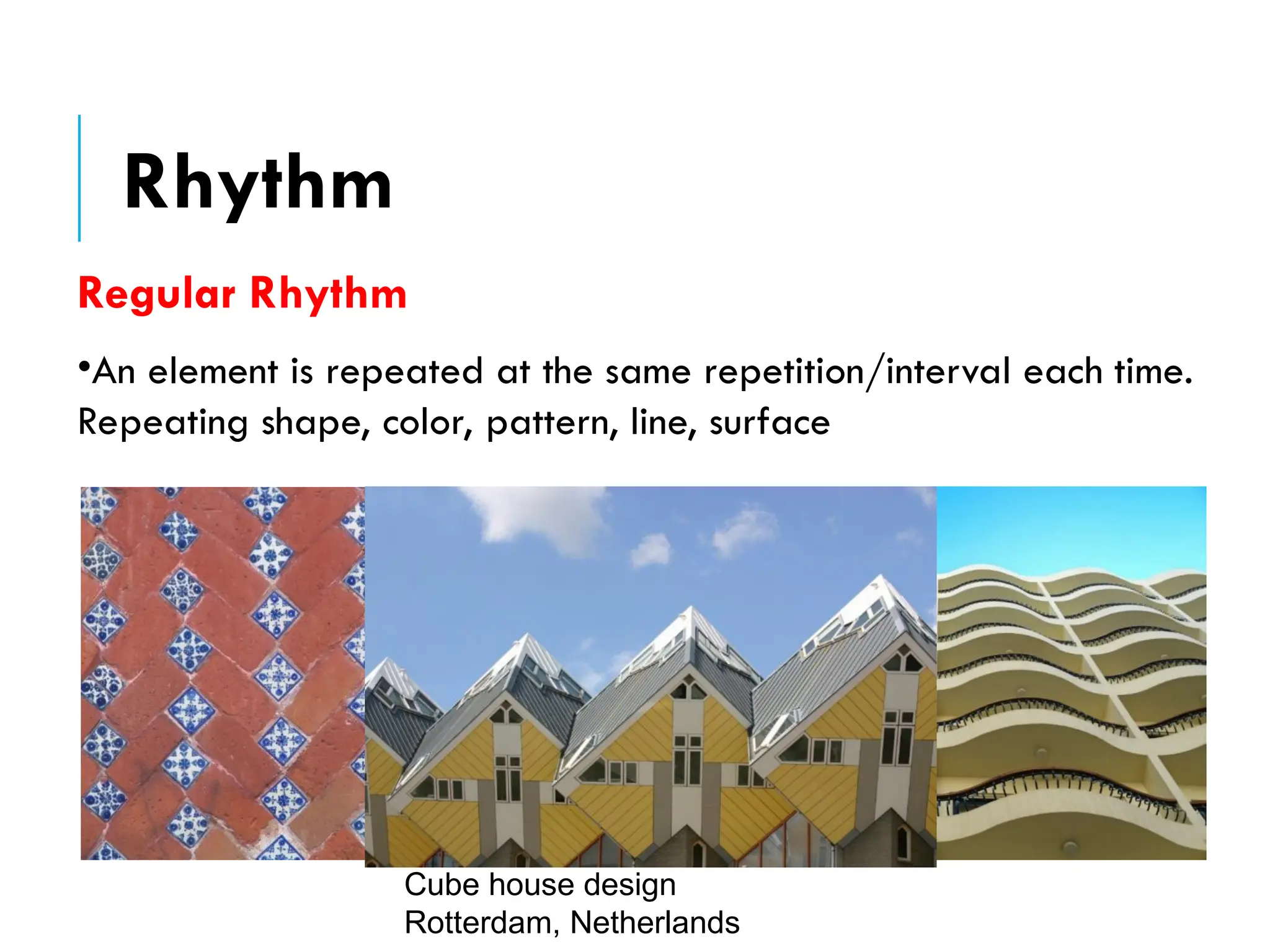
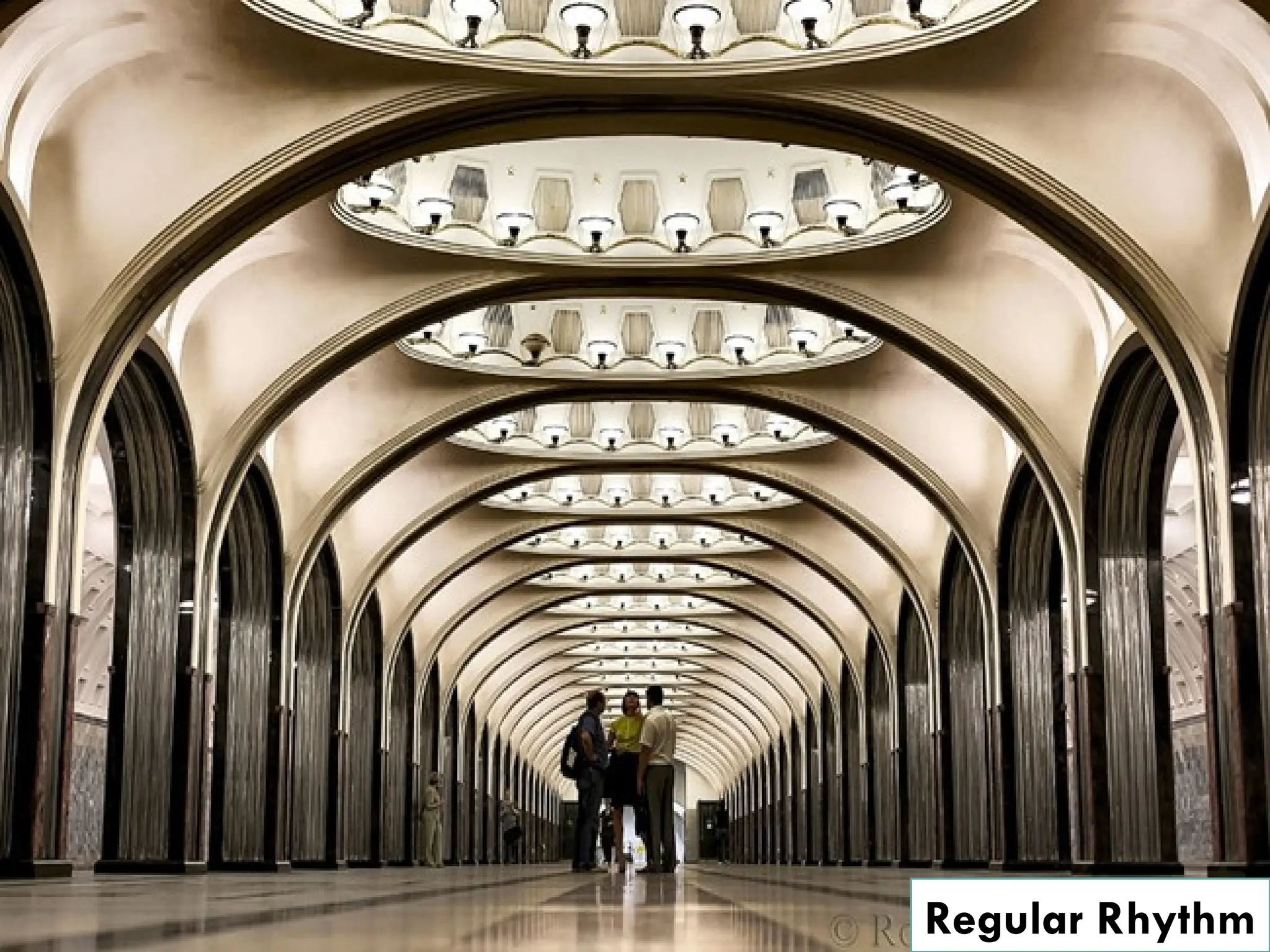
Regular Rhythm
•An elementis repeated at the same repetition/interval each time.
Repeating shape, color, pattern, line, surface
Cube house design
Rotterdam, Netherlands
Rhythm
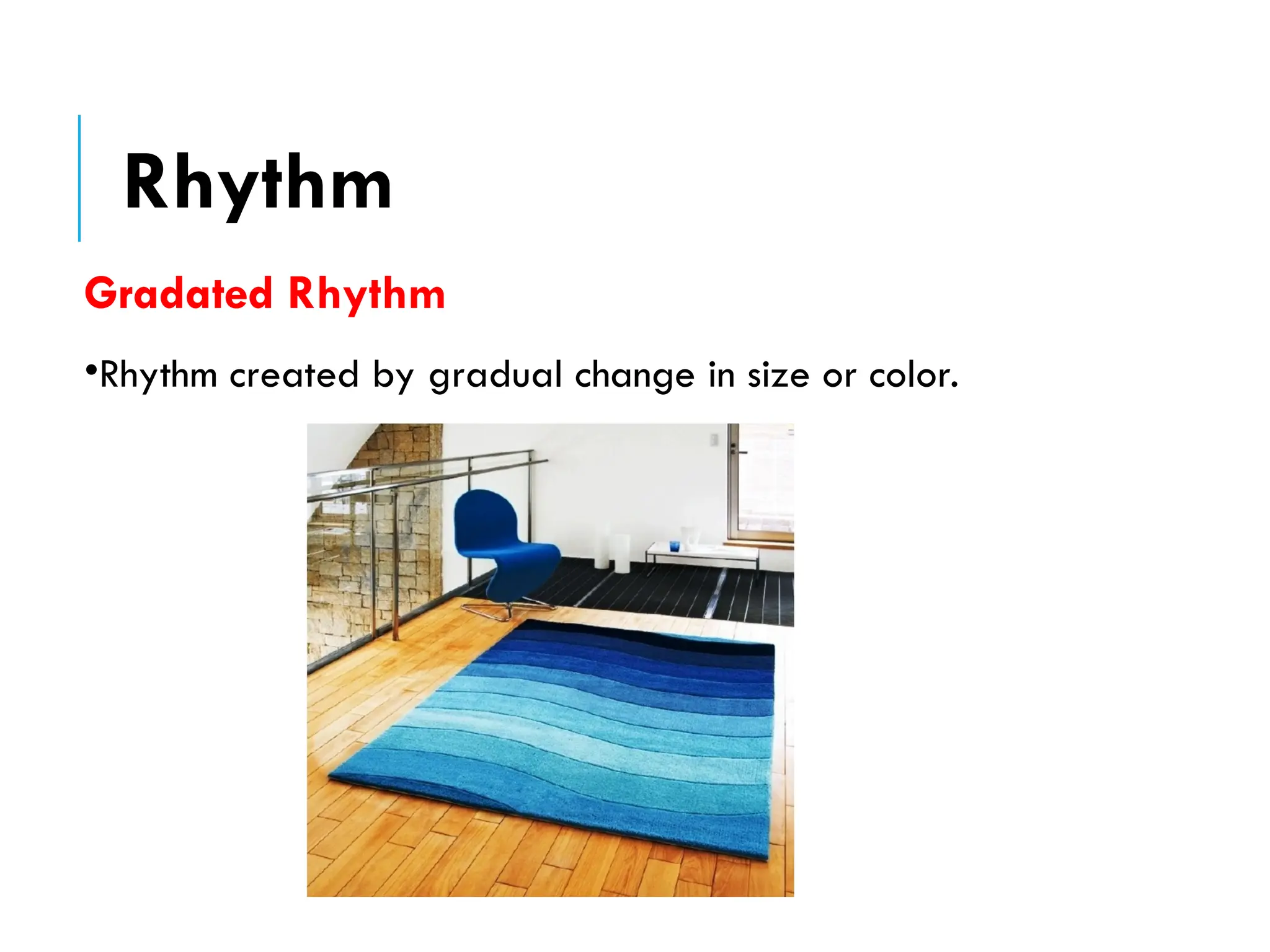
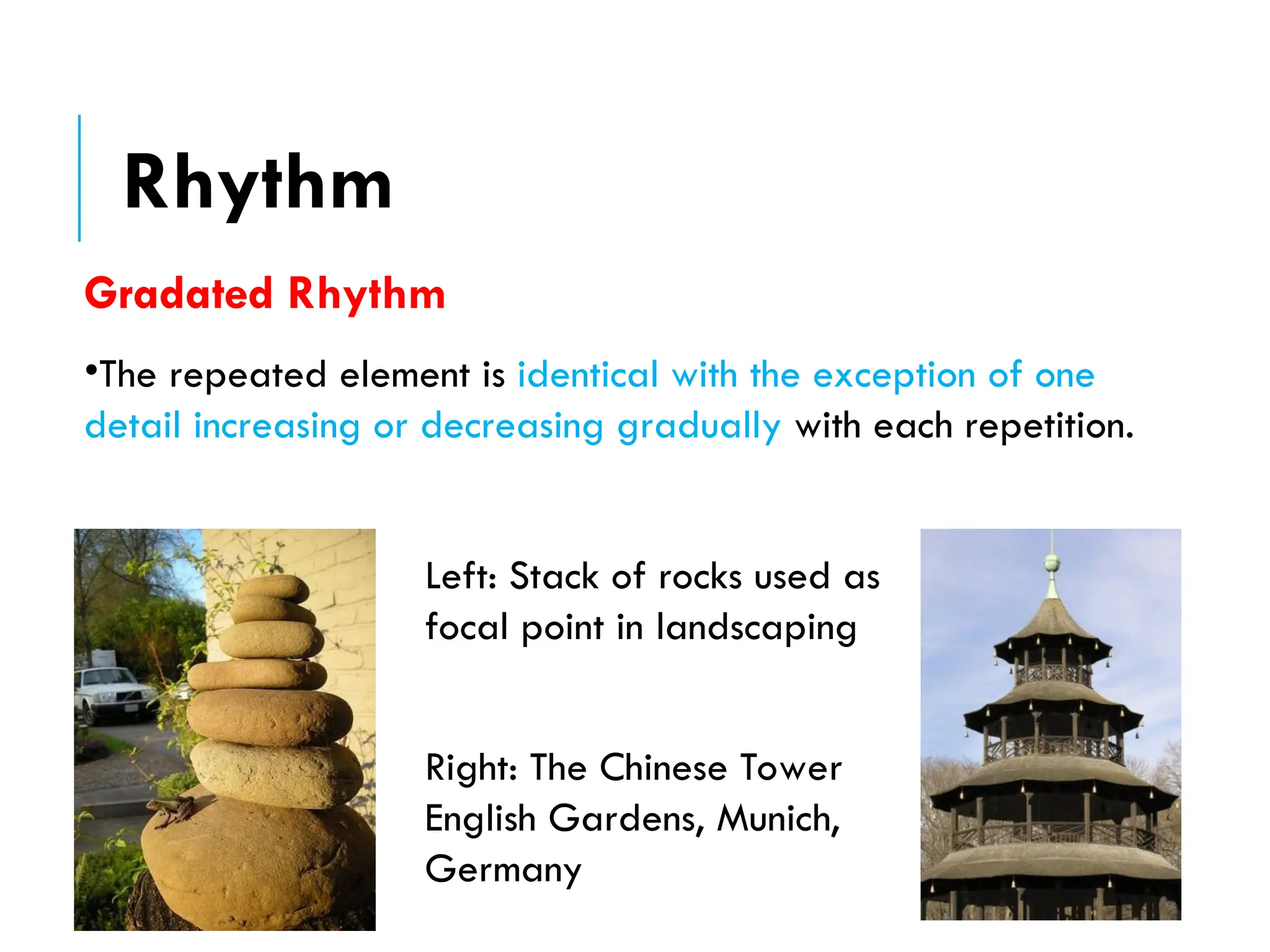
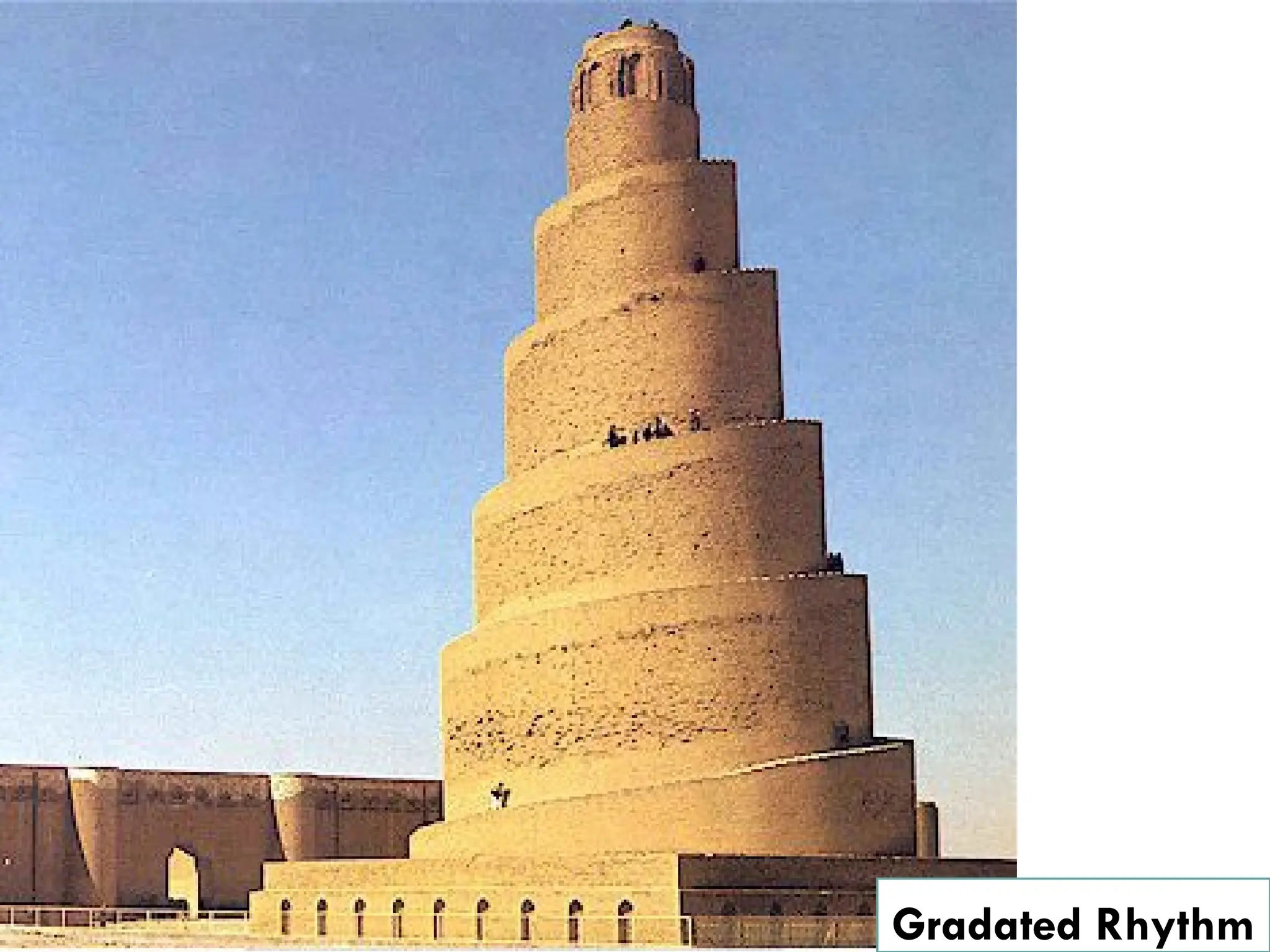
Gradated Rhythm
•The repeatedelement is identical with the exception of one
detail increasing or decreasing gradually with each repetition.
Left: Stack of rocks used as
focal point in landscaping
Right: The Chinese Tower
English Gardens, Munich,
Germany
Rhythm
Create amodel showing the application of the different
types of Rhythm by using the elements and principles of
design.
• A4 base, Max 5-10 cm ht.
• Material: The sky is the limit
• Out put: Creativity & Concept
• Submission Date: Friday/ Nov. 22 2021
Assignment 2
• Reflecting thedegree of
importance.
• The star of the show.
Emphasis
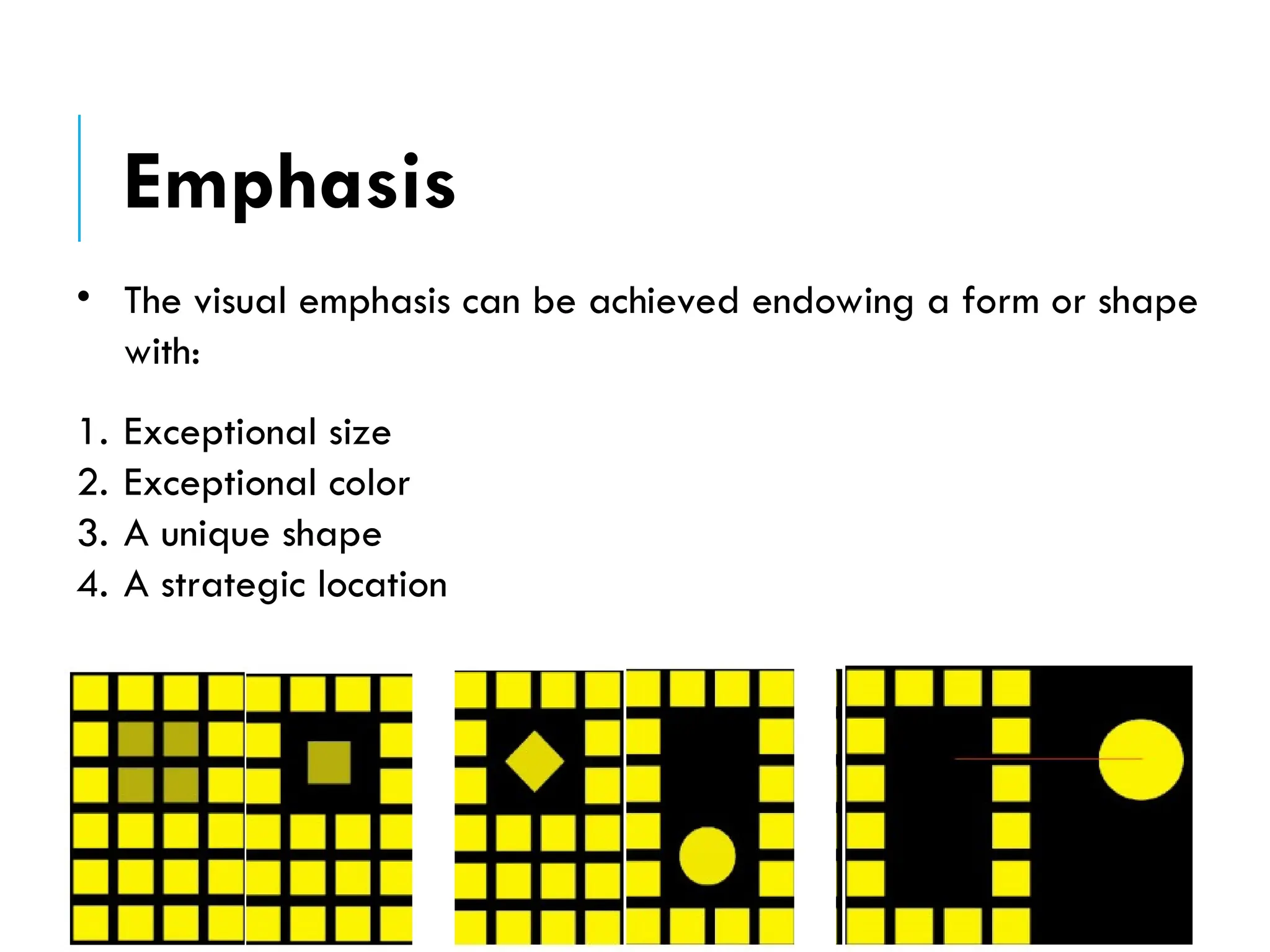
47.
• The visualemphasis can be achieved endowing a form or shape
with:
1. Exceptional size
2. Exceptional color
3. A unique shape
4. A strategic location
Emphasis
48.
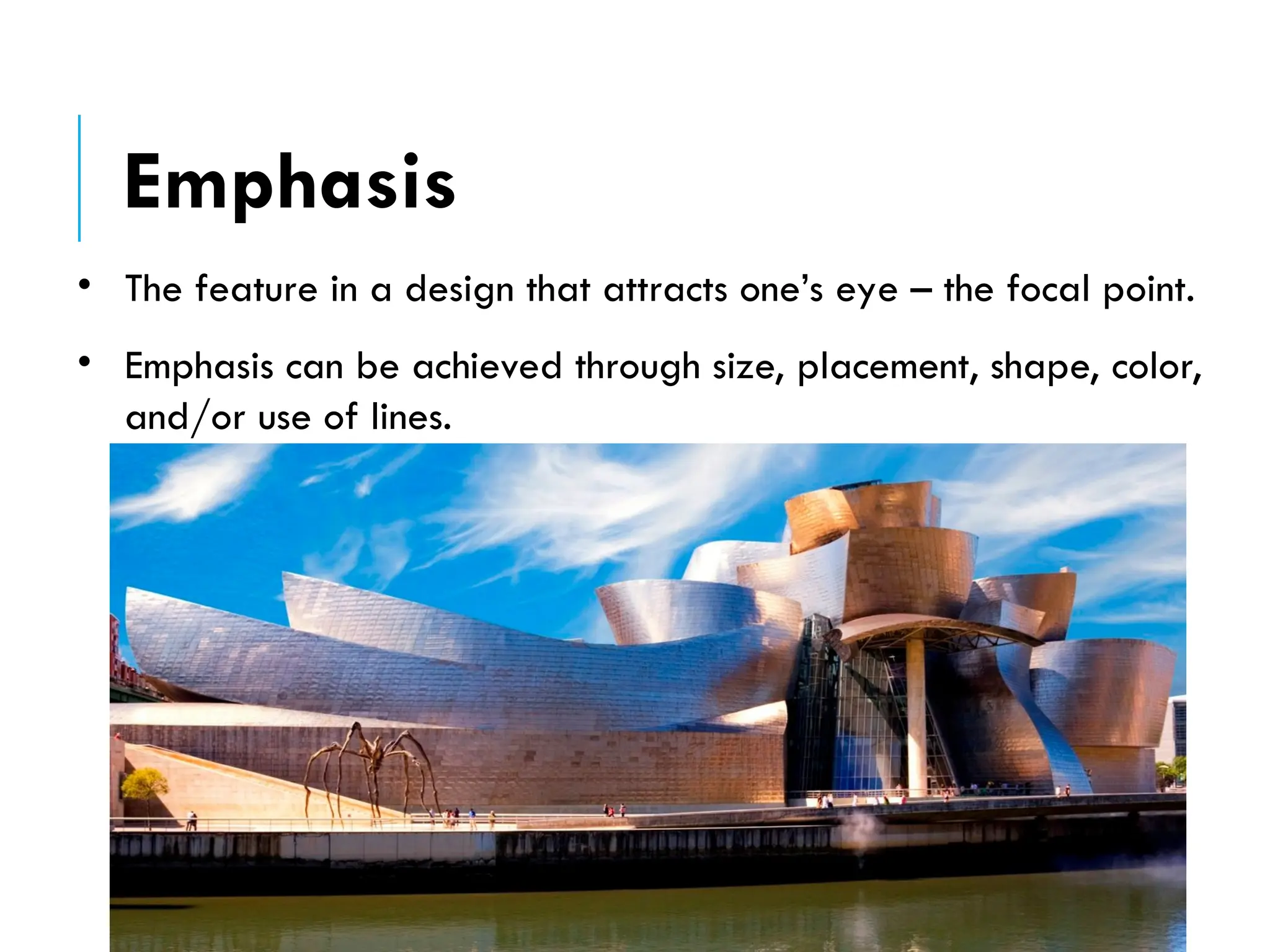
• The featurein a design that attracts one’s eye – the focal point.
• Emphasis can be achieved through size, placement, shape, color,
and/or use of lines.
Emphasis
Create amodel showing all the different methods of making
Emphasis by using the elements and principles of design.
• A4 base for each, Max 5 cm ht.
• Material: The sky is the limit
• Out put: Creativity & Concept
• Submission Date: Friday/ Nov 22, 2021
Assignment 3
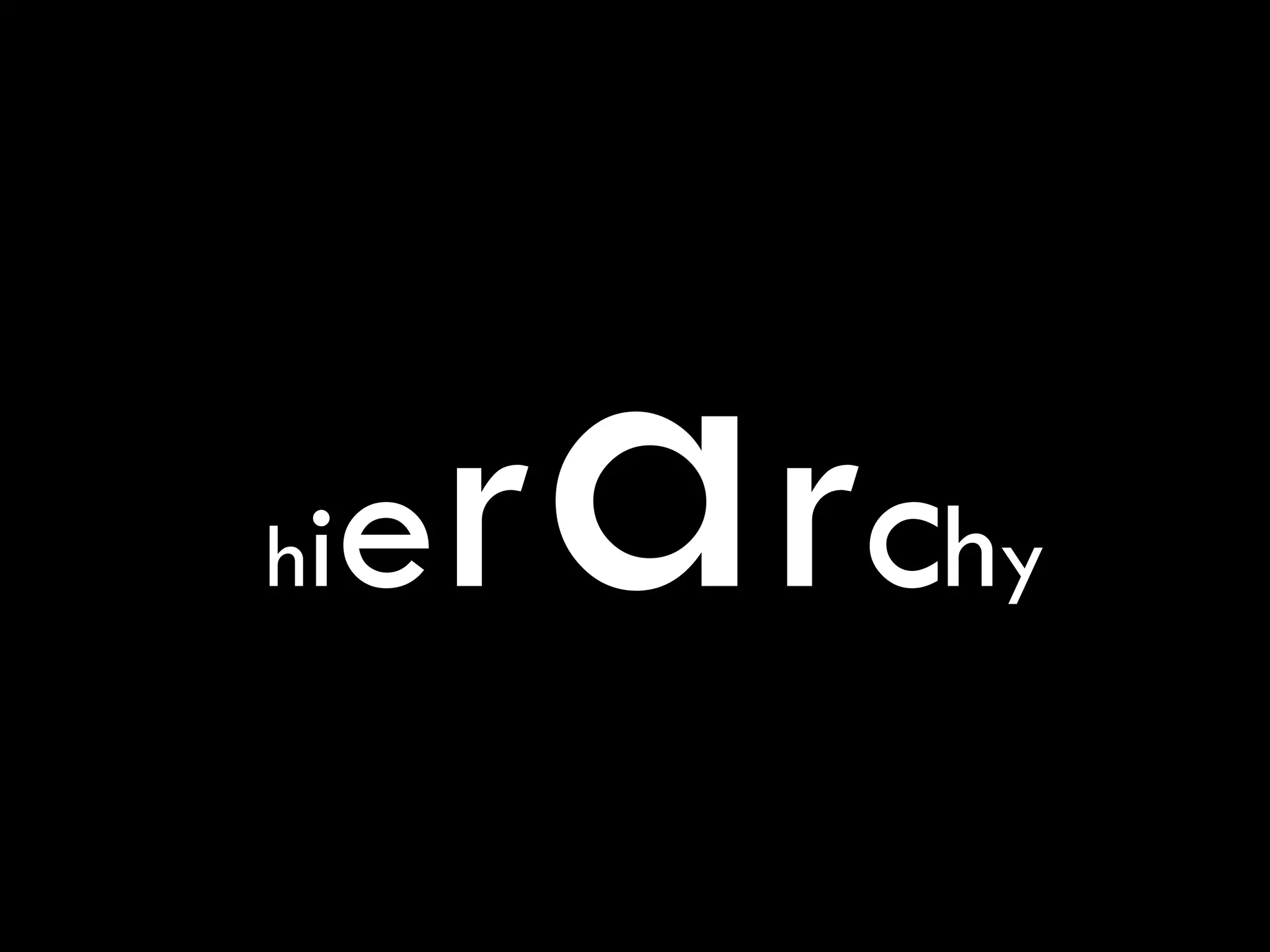
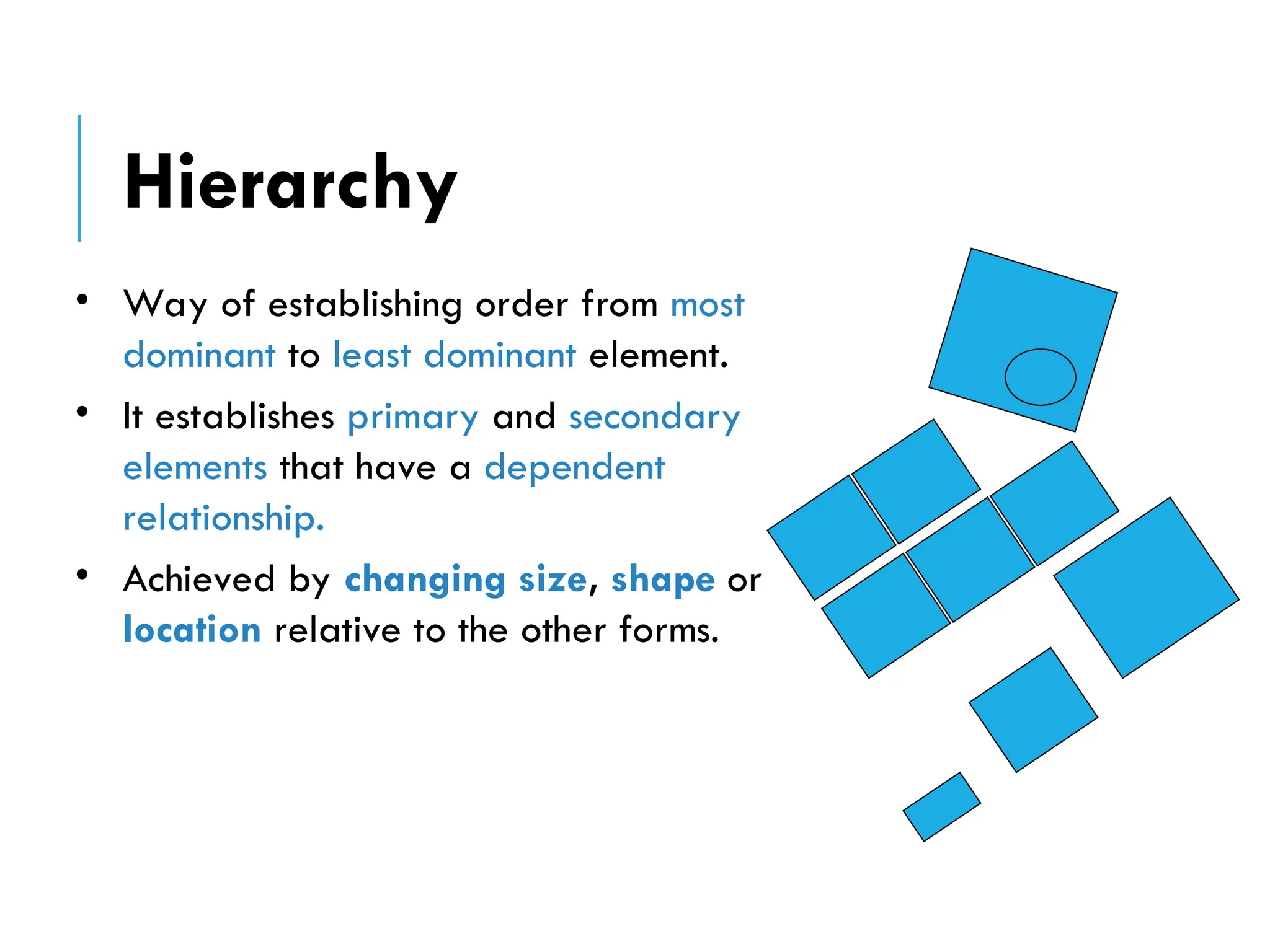
• Way ofestablishing order from most
dominant to least dominant element.
• It establishes primary and secondary
elements that have a dependent
relationship.
• Achieved by changing size, shape or
location relative to the other forms.
Hierarchy
53.
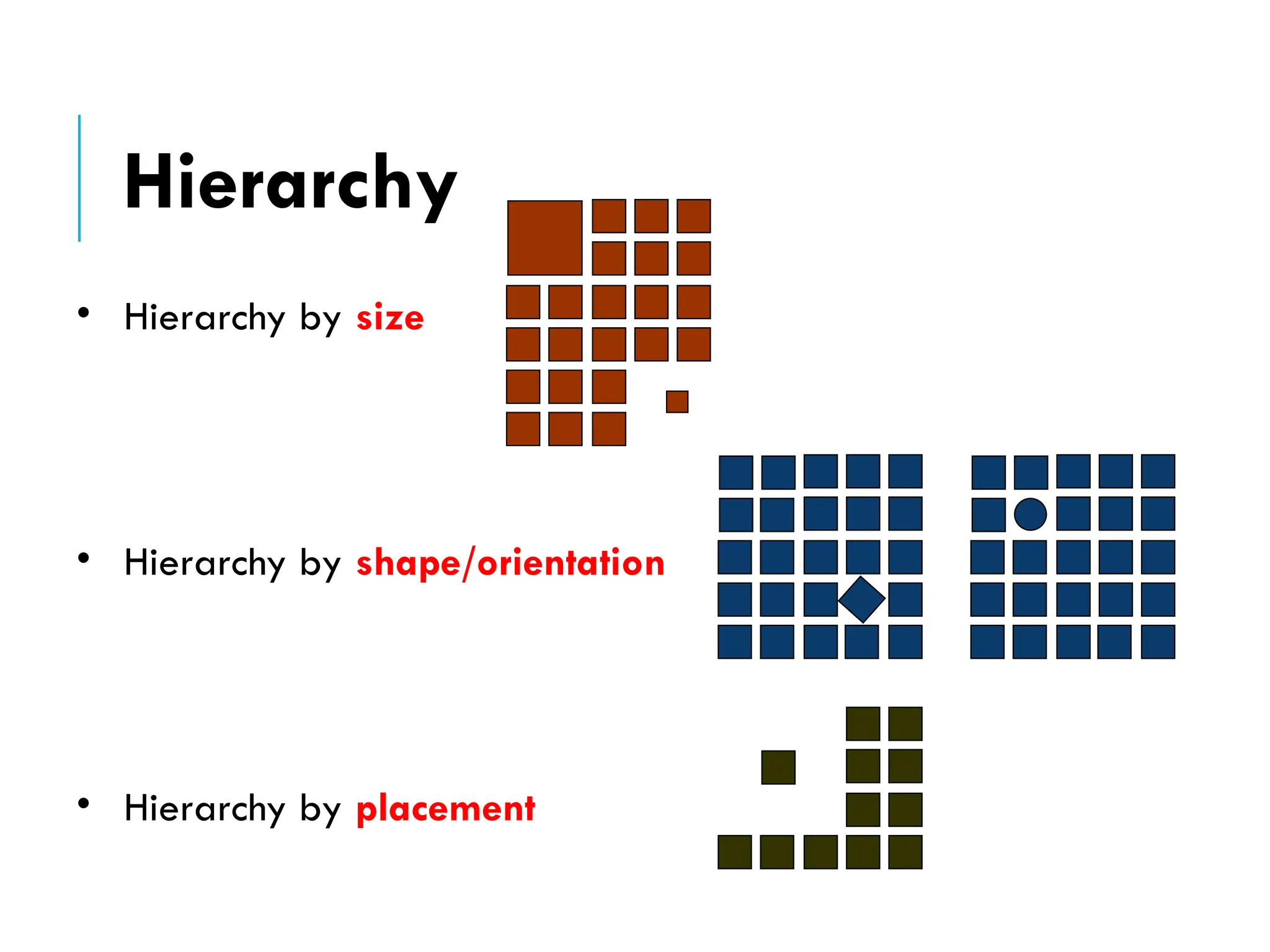
• Hierarchy bysize
• Hierarchy by shape/orientation
• Hierarchy by placement
Hierarchy
Create amodel showing all the different methods of
making Hierarchy by using the elements and principles of
design.
• A4 base for each, Max 5-10 cm ht.
• Material: The sky is the limit
• Out put: Creativity & Concept
• Submission Date: Friday/ Nov. 22, 2021
Assignment 4
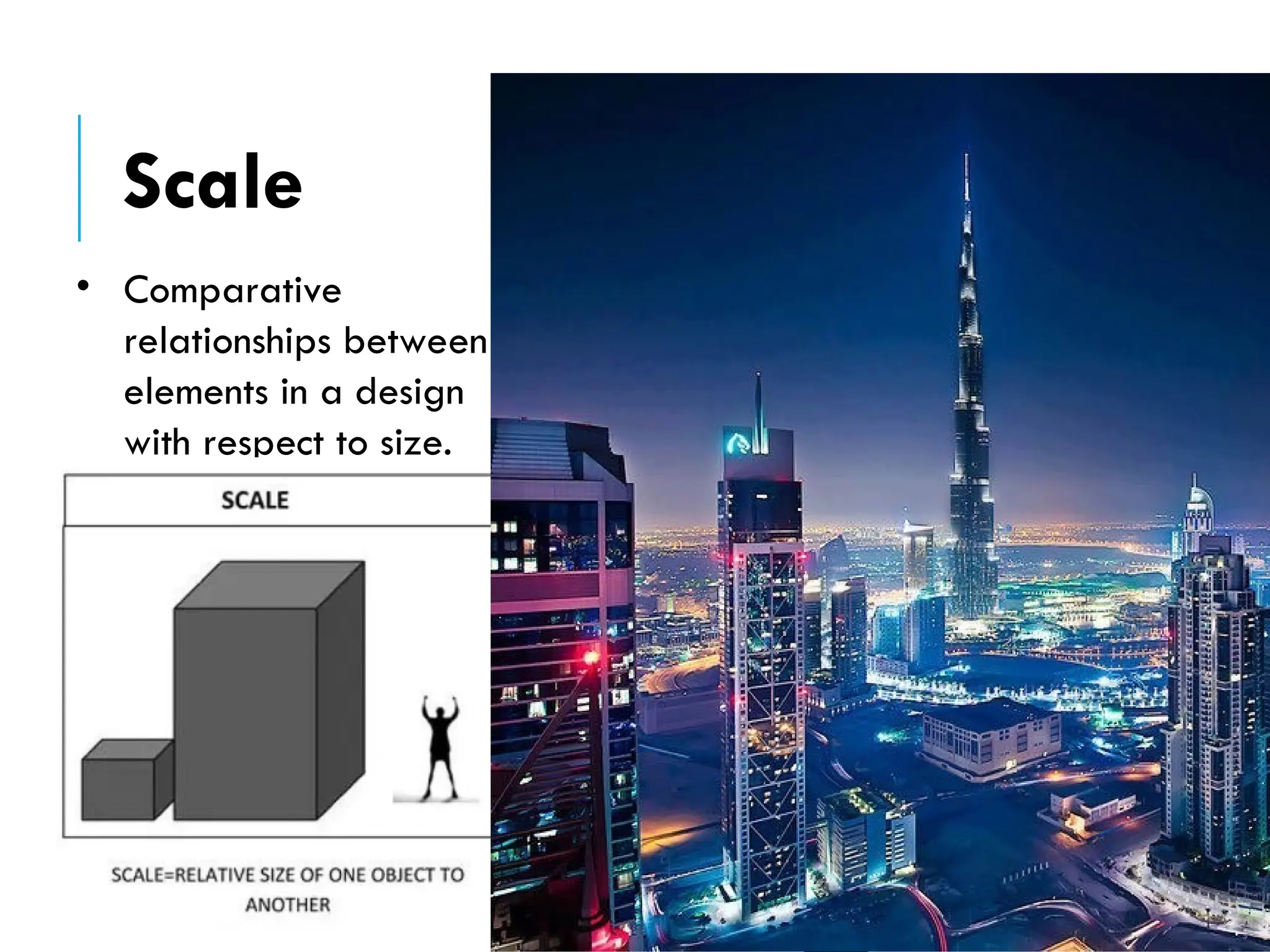
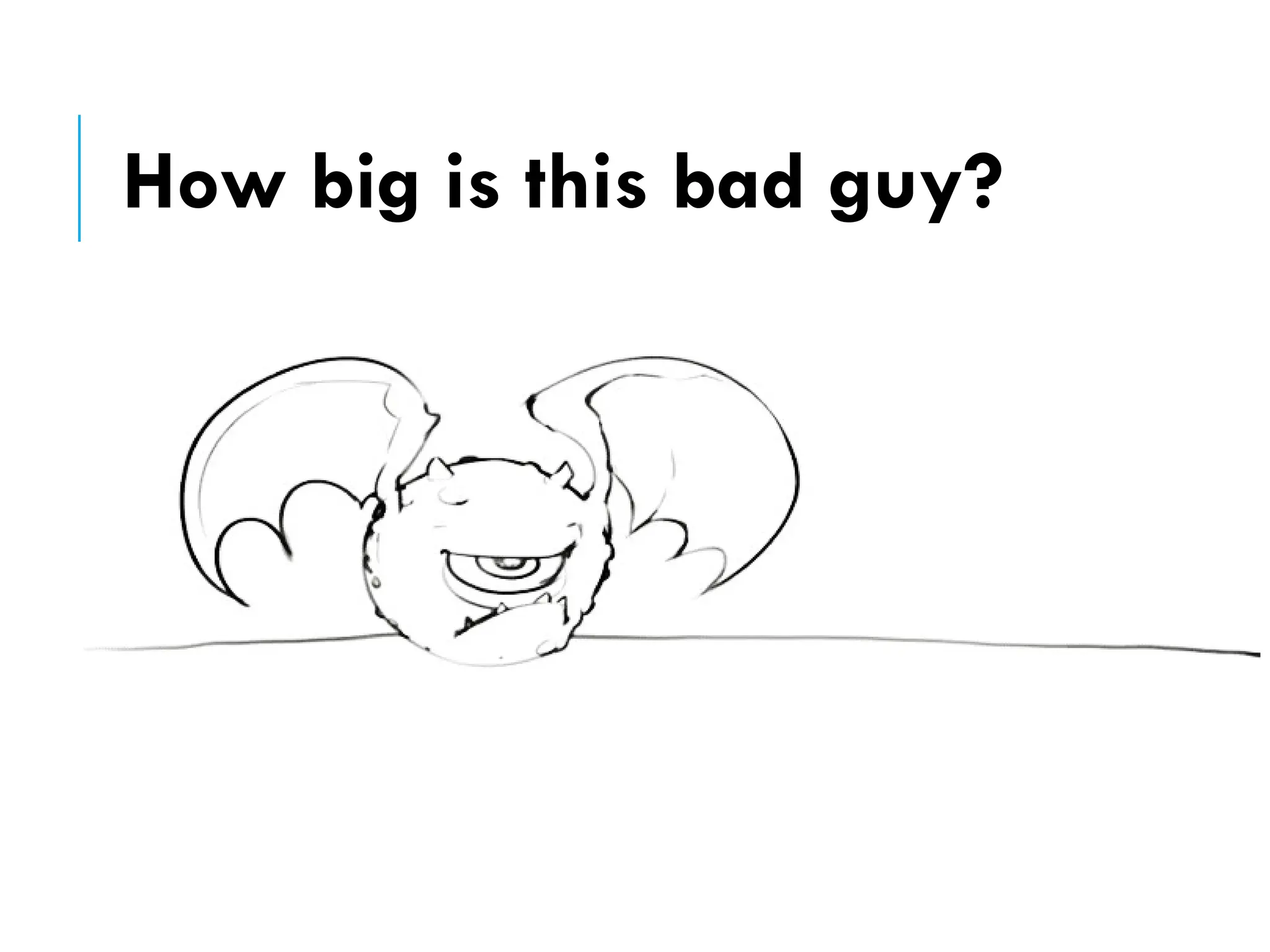
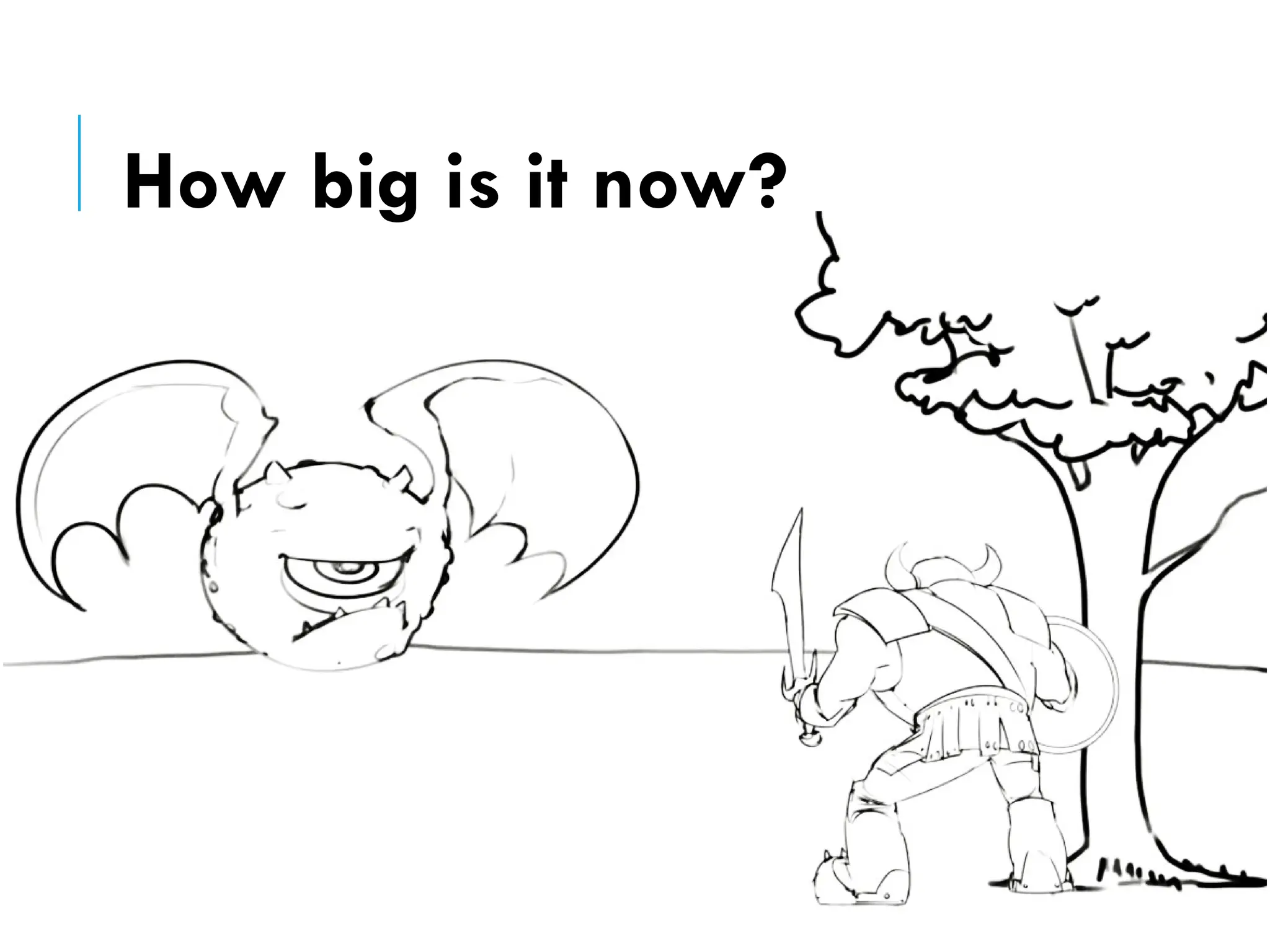
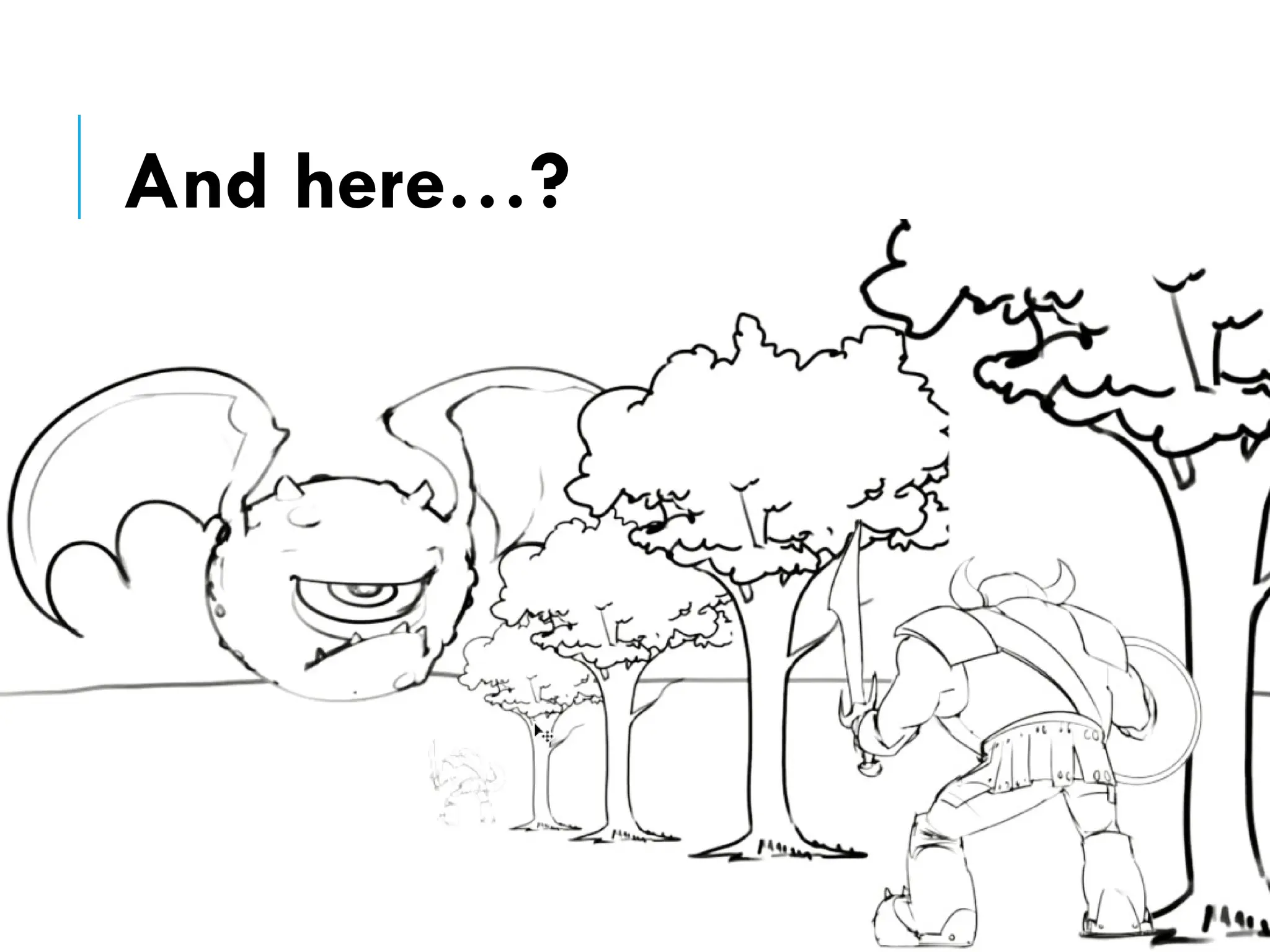
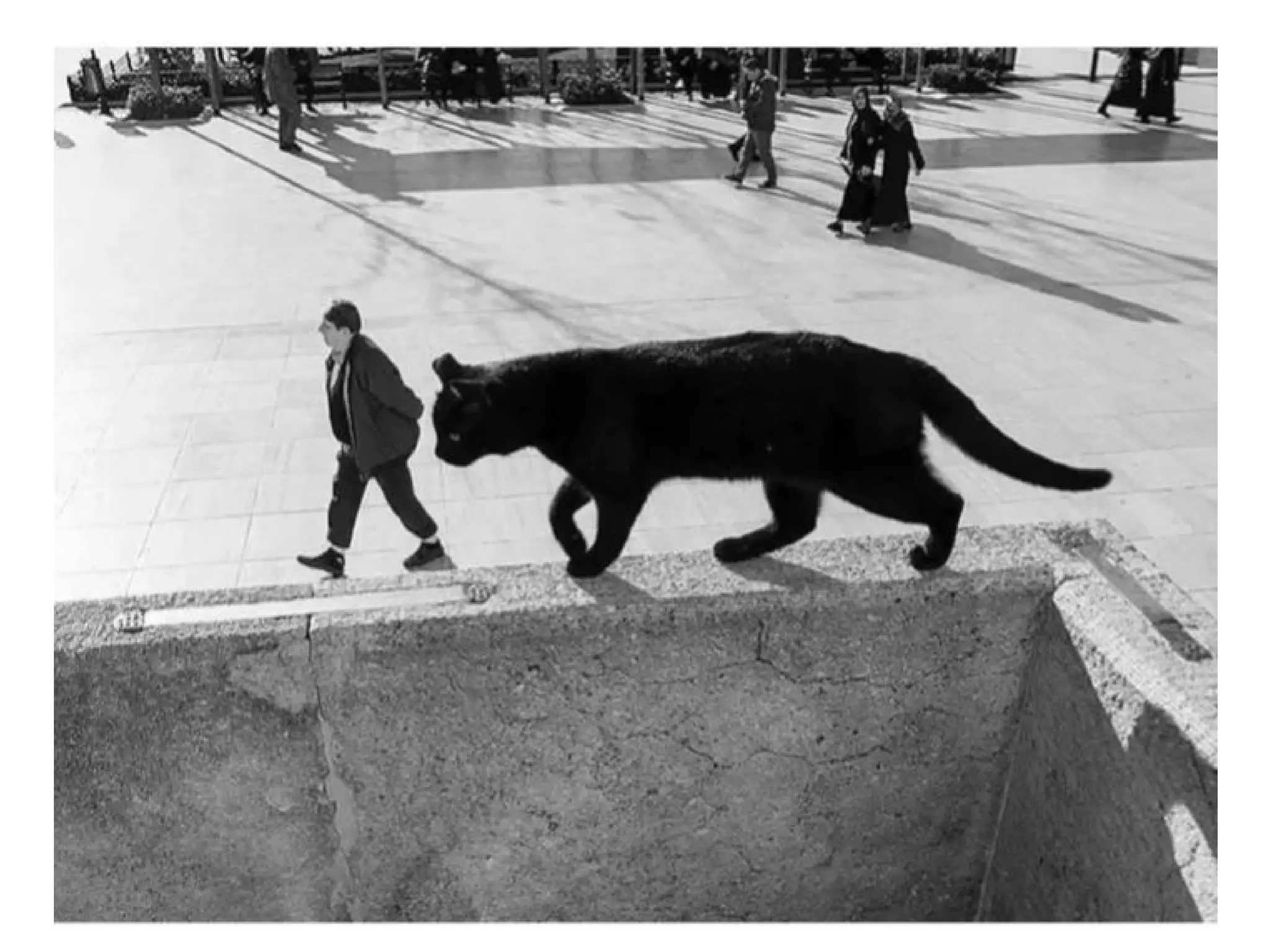
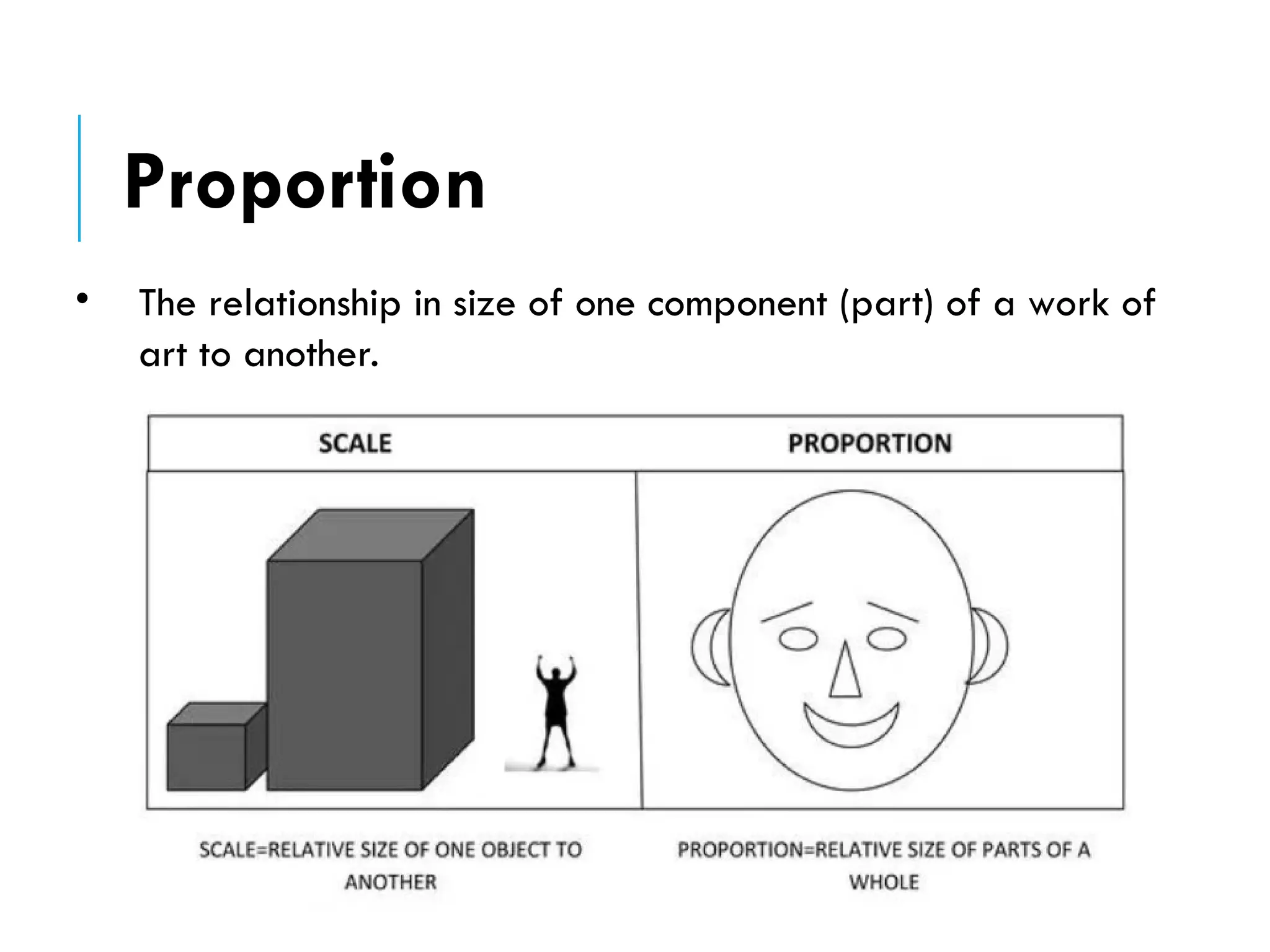
• Scale inarchitecture is the proportional representation of a real-
world object in a drawing or model. It's expressed as a ratio, like
1:100, which shows how much smaller the object is. For example,
in a 1:100 scale drawing, 1 mm on the drawing represents 100
mm in real life.
Scale
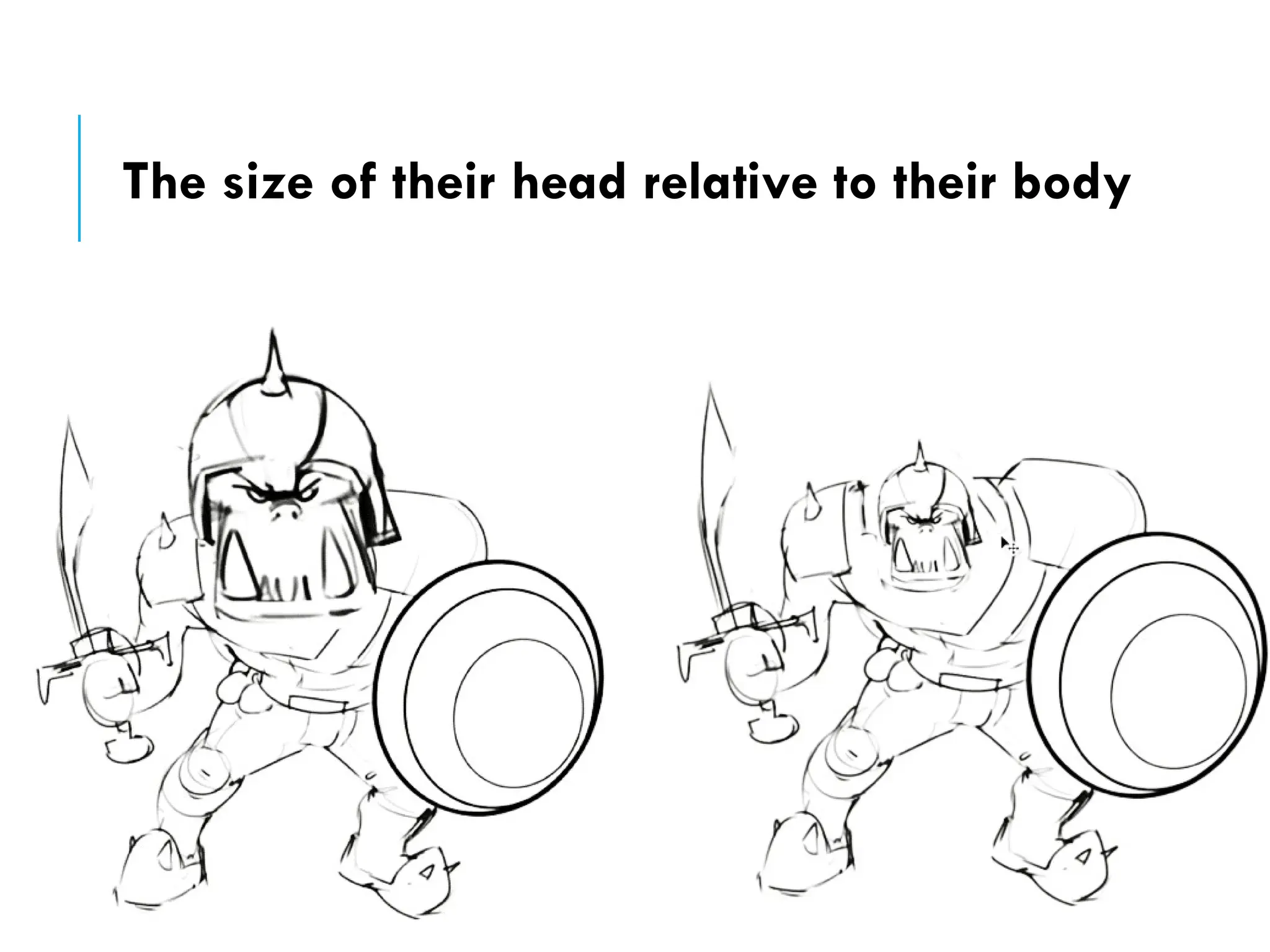
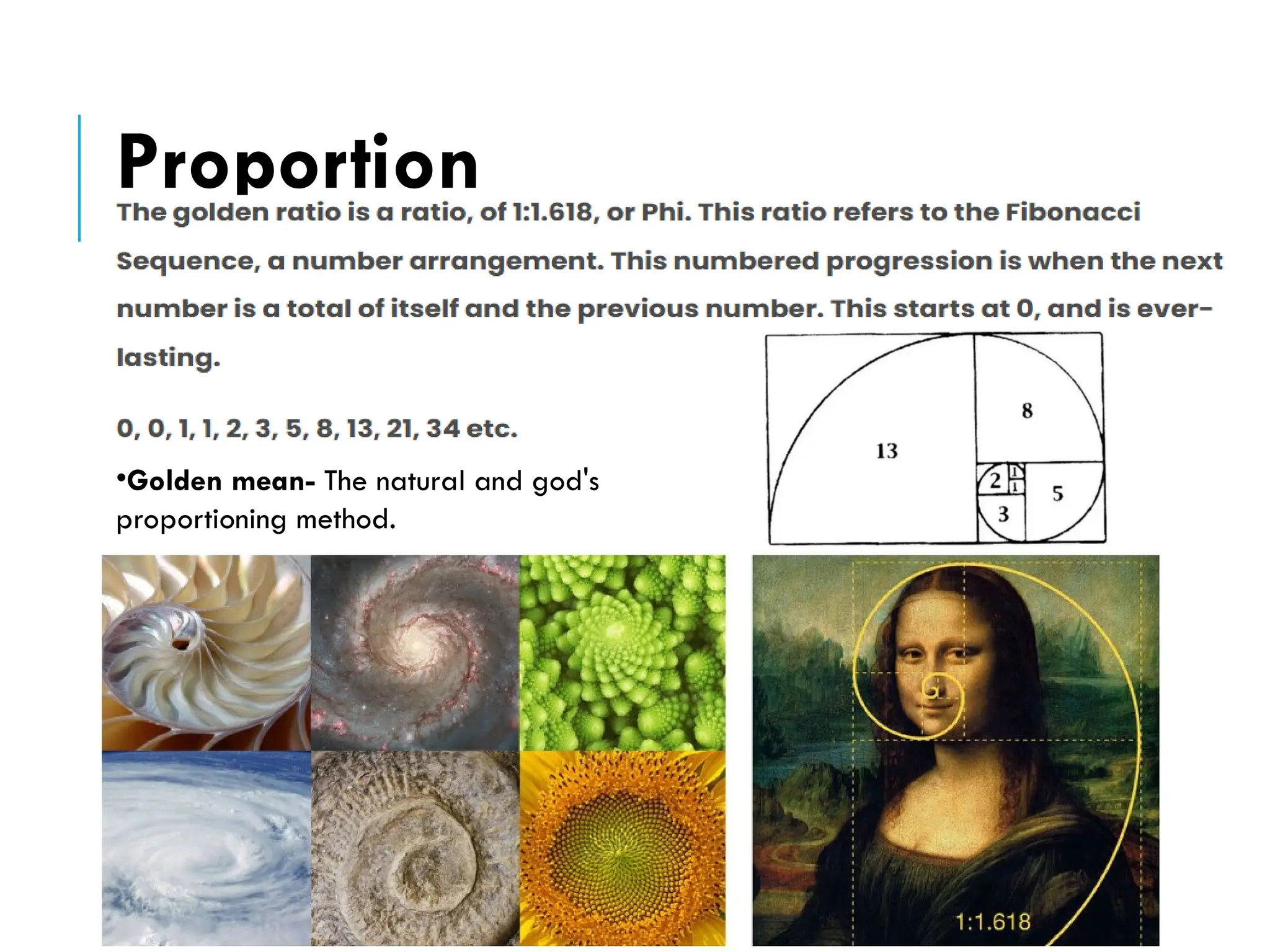
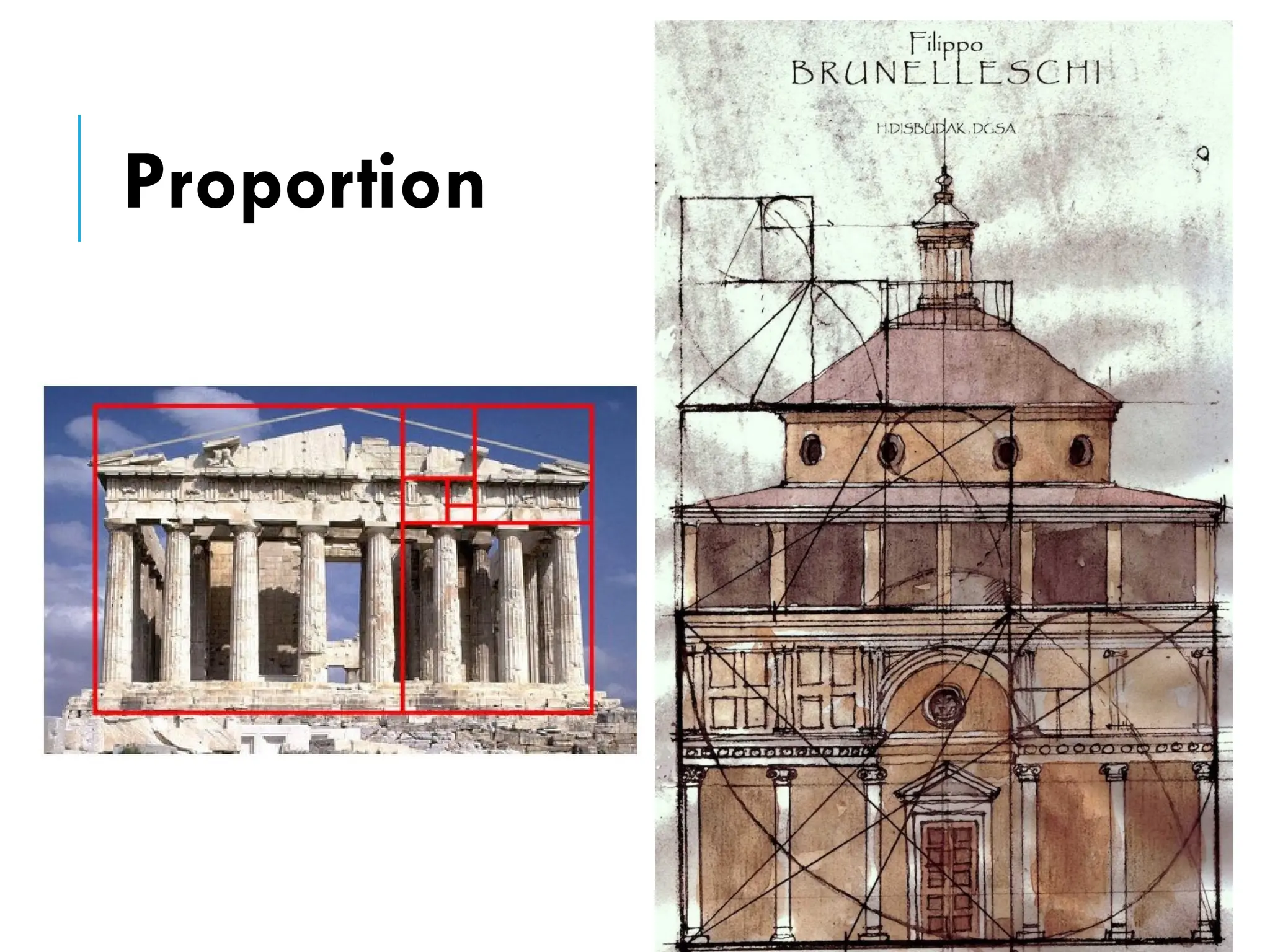
• the relationshipbetween the different parts of a building,
and how those parts relate to the whole building. It's a key
aspect of architectural design that affects the building's
aesthetics, functionality, and how it impacts its surroundings.
Proportion
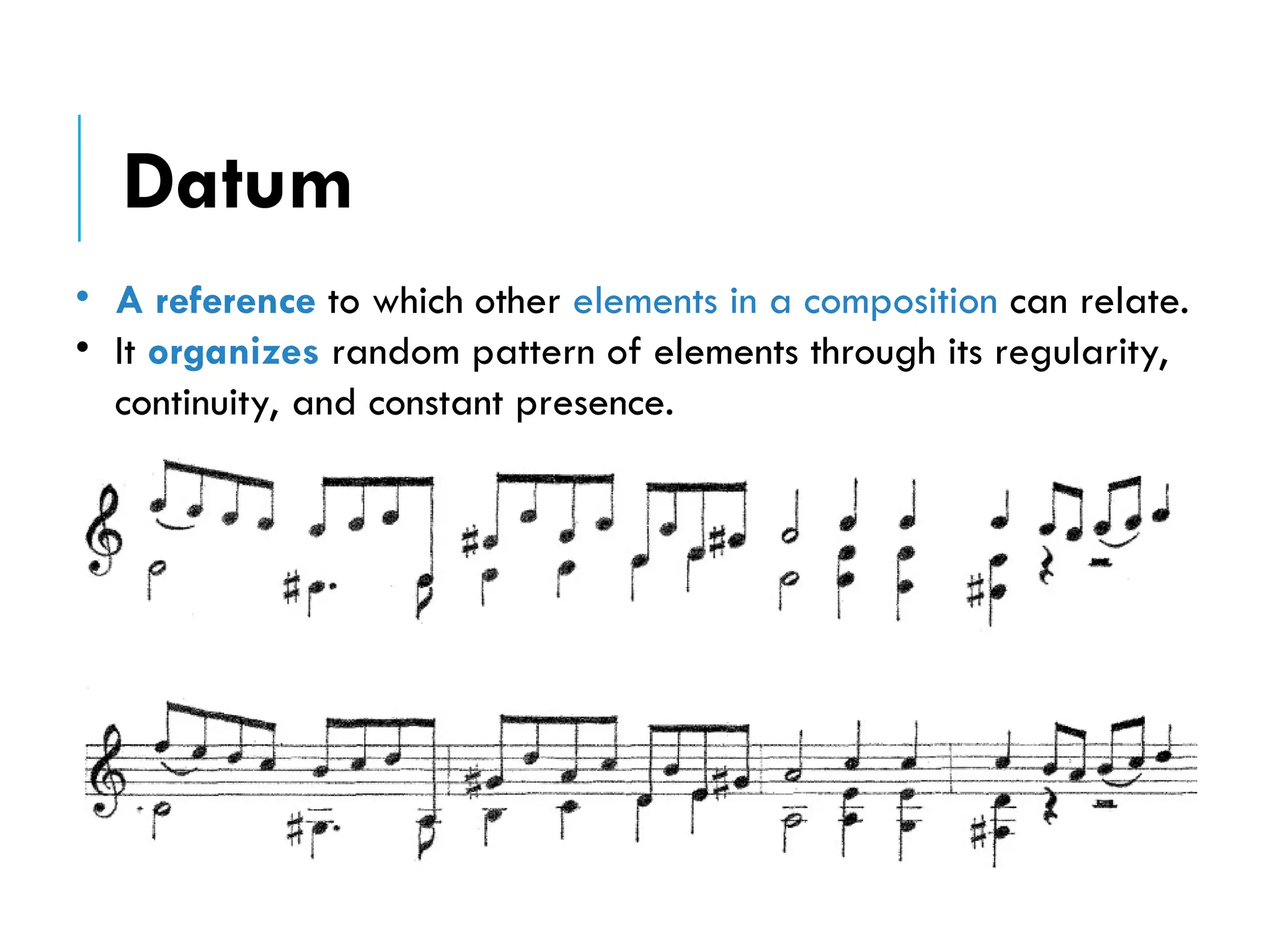
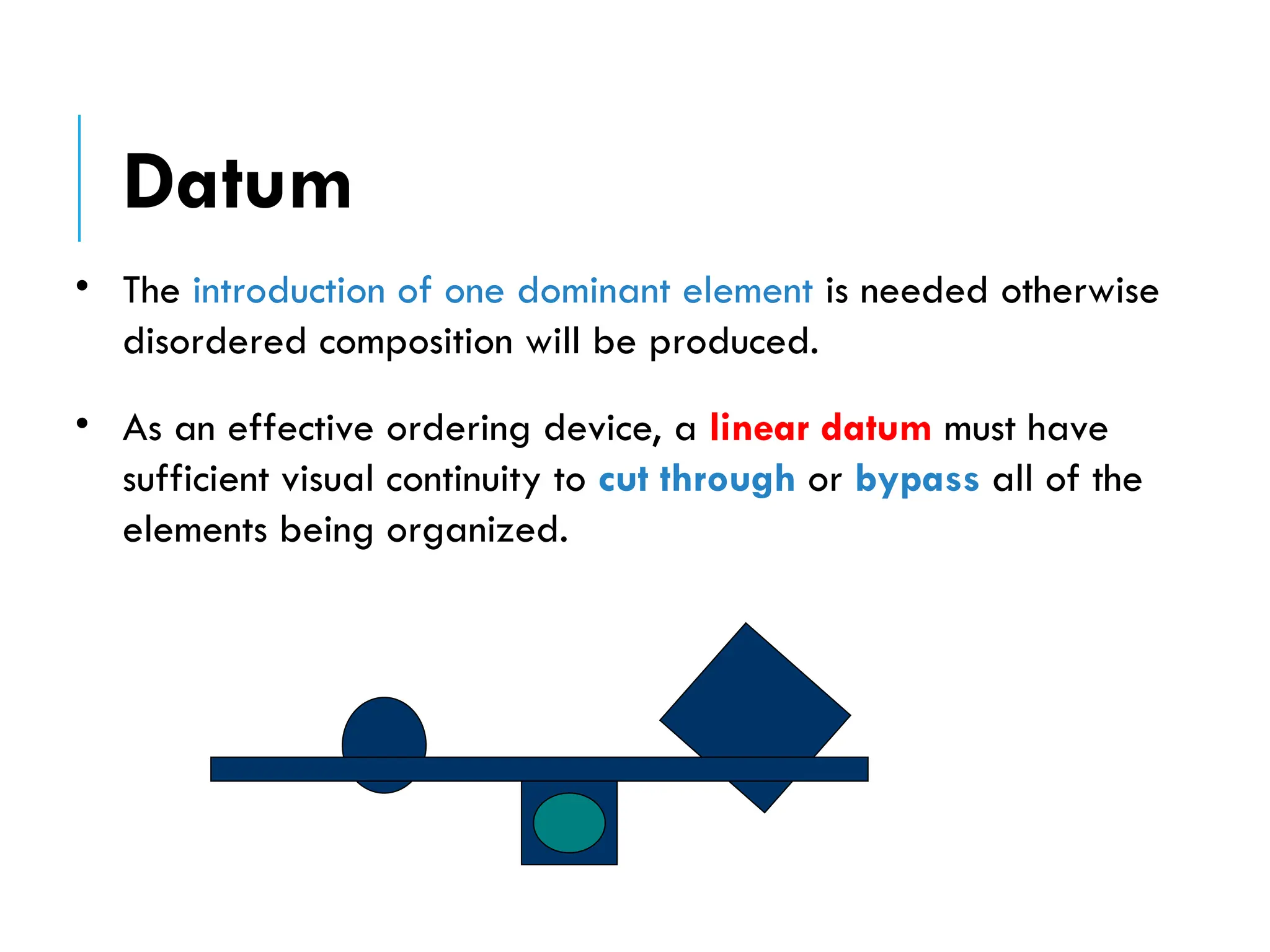
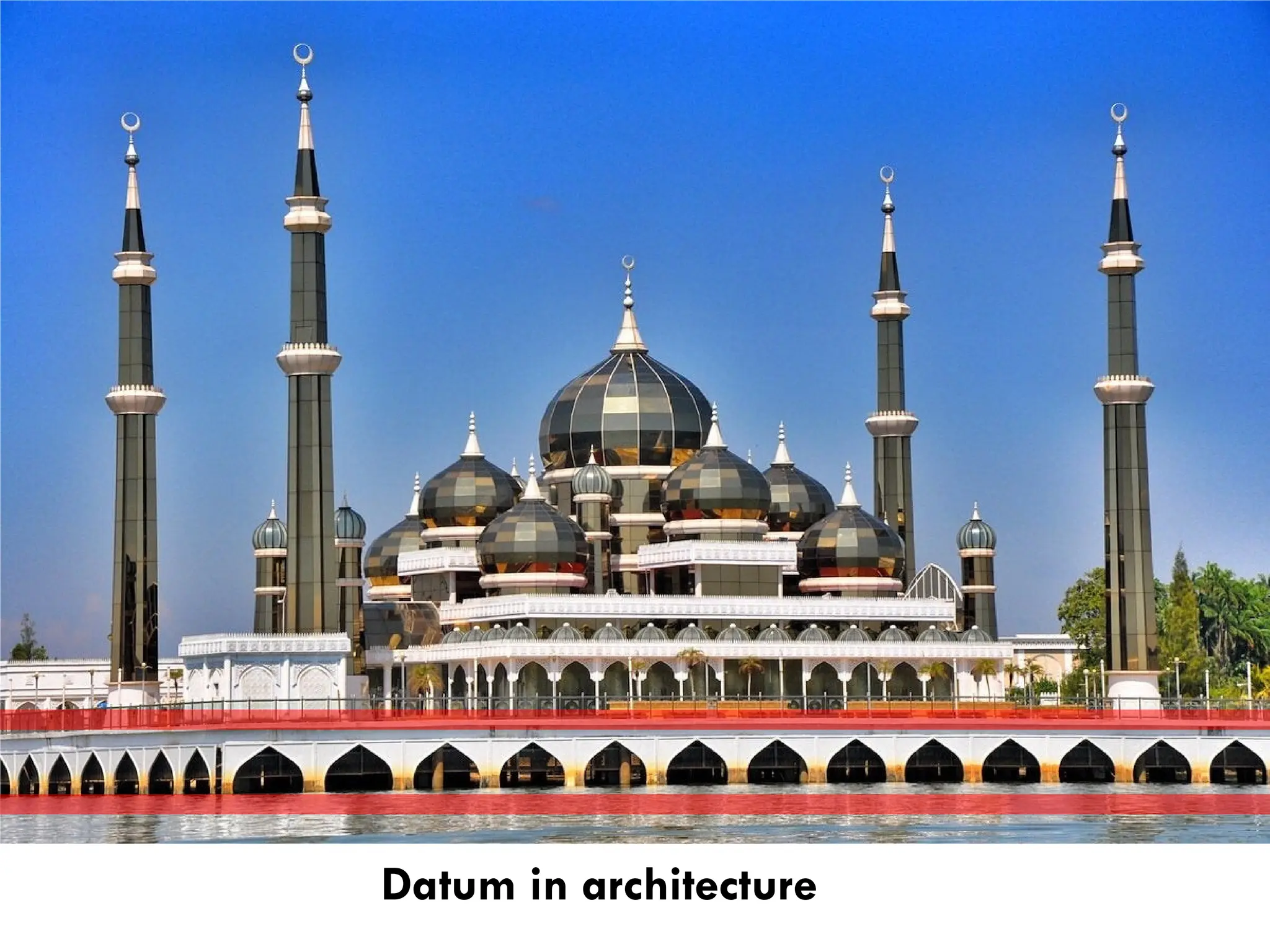
• A referenceto which other elements in a composition can relate.
• It organizes random pattern of elements through its regularity,
continuity, and constant presence.
Datum
73.
• The introductionof one dominant element is needed otherwise
disordered composition will be produced.
• As an effective ordering device, a linear datum must have
sufficient visual continuity to cut through or bypass all of the
elements being organized.
Datum
74.
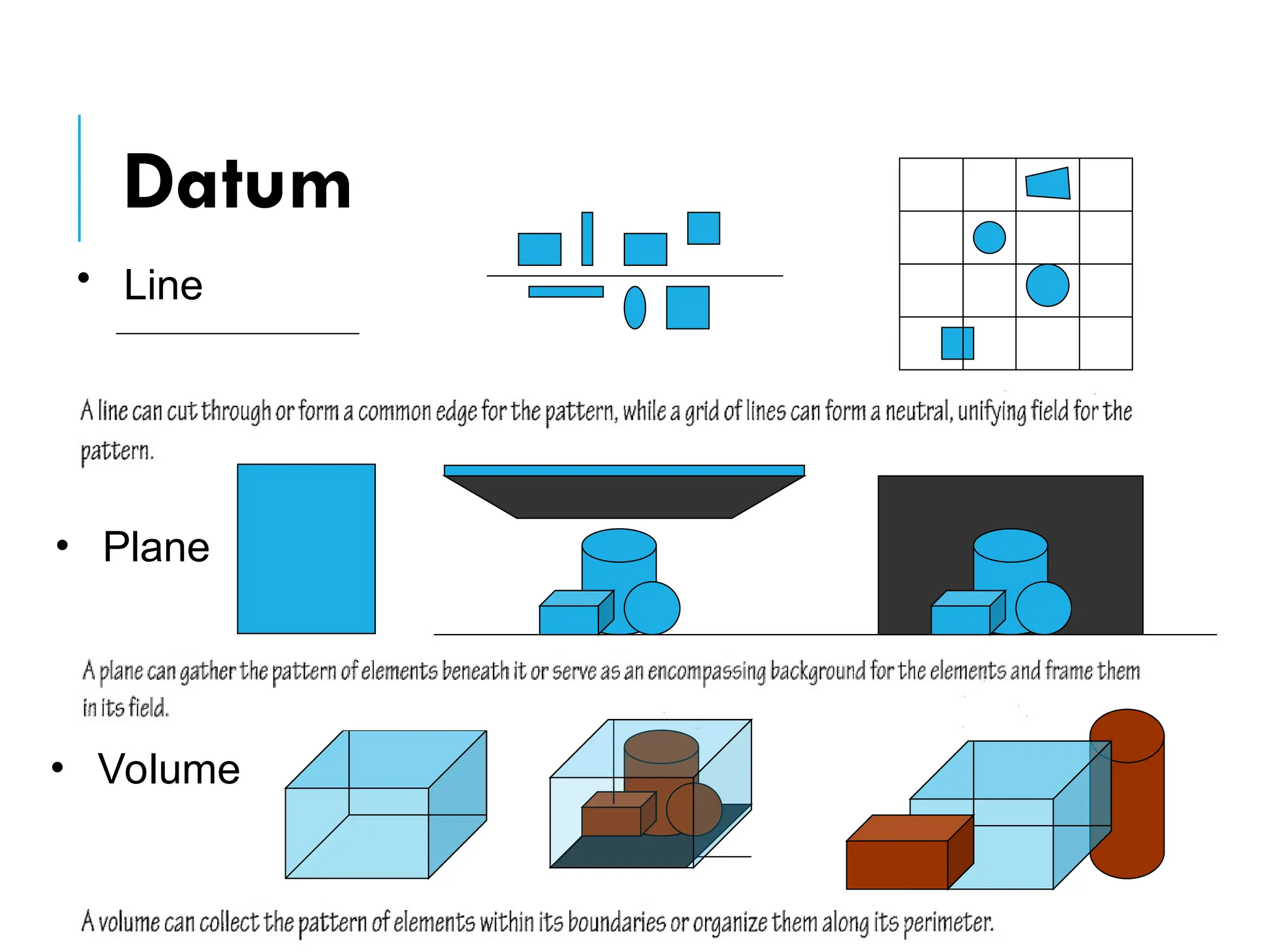
• A datum,however, need not be a straight line. It can also be
planar or volumetric in form.
• A linear datum must have sufficient visual continuity to cut
through or bypass all of the elements being organized.
• If planar or volumetric in form, a datum must have sufficient
size, closure, and regularity to be seen as a figure.
Datum
Create amodel showing datum and harmony as a
principle of design by using different contrasting elements
and principles of design.
• A4 base for each, Max 5-10 cm ht.
• Material: The sky is the limit
• Out put: Creativity & Concept
• Submission Date: Friday/ Nov. 22, 2021
Assignment 5
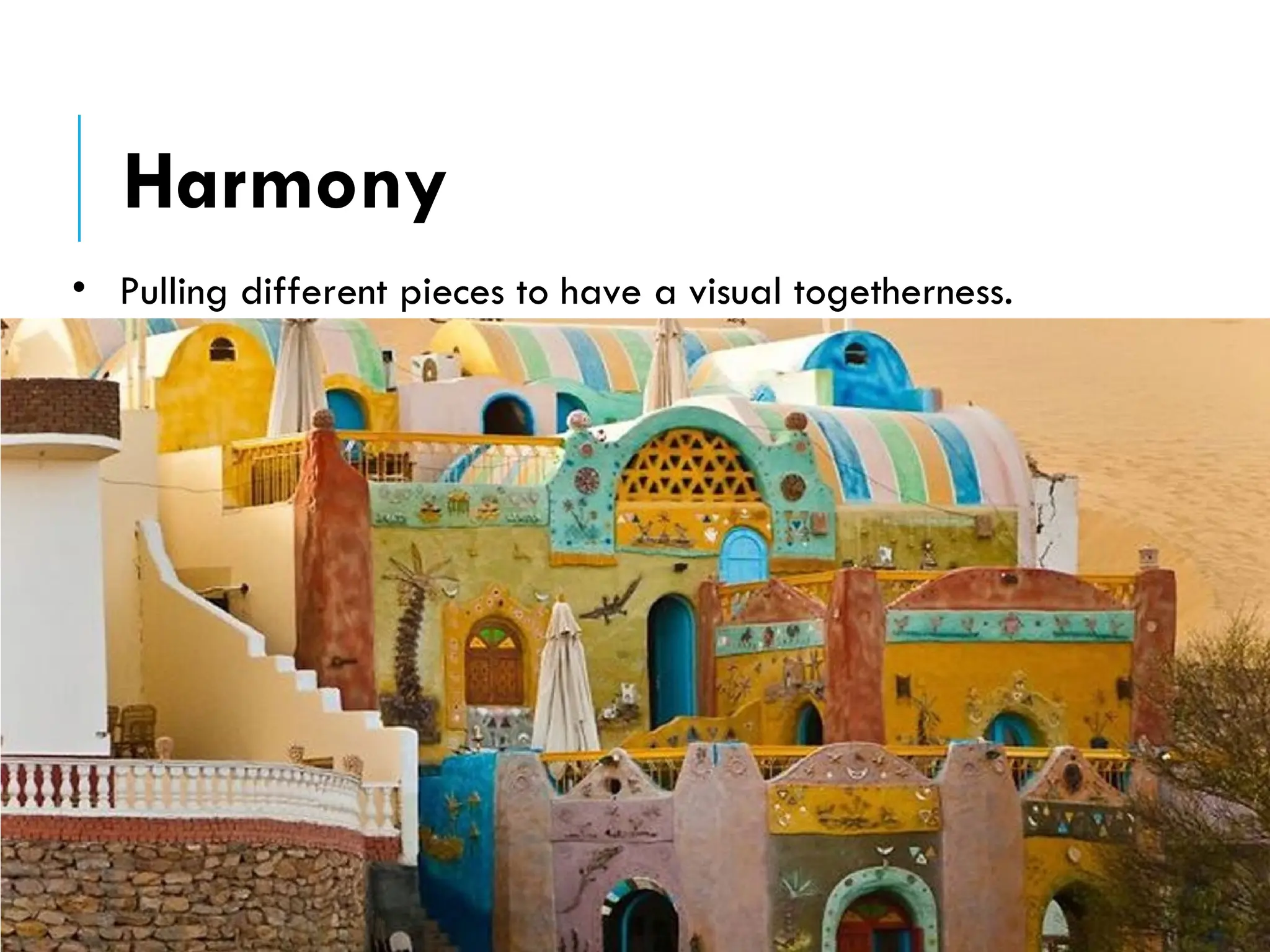
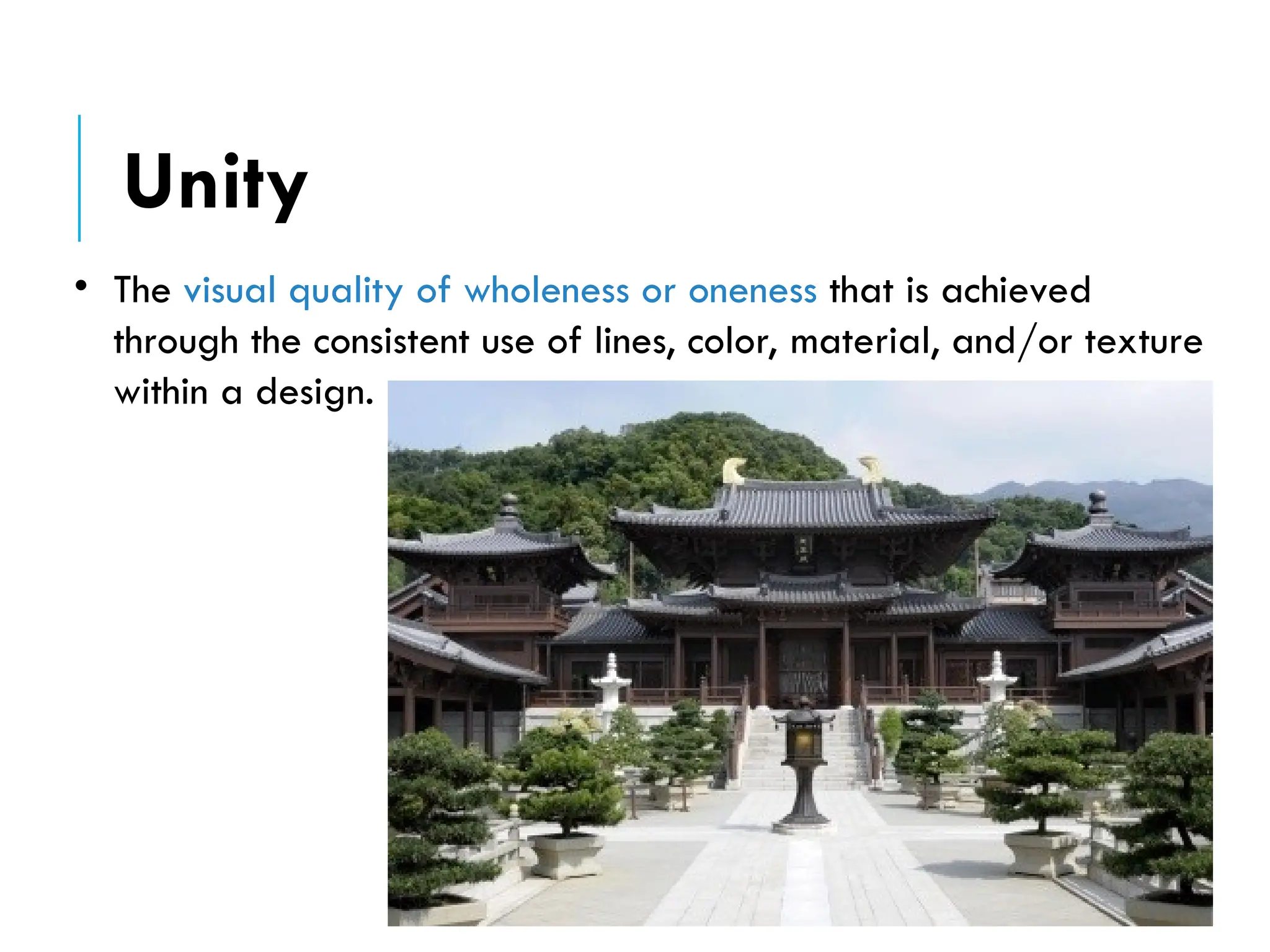
• The visualquality of wholeness or oneness that is achieved
through the consistent use of lines, color, material, and/or texture
within a design.
Unity
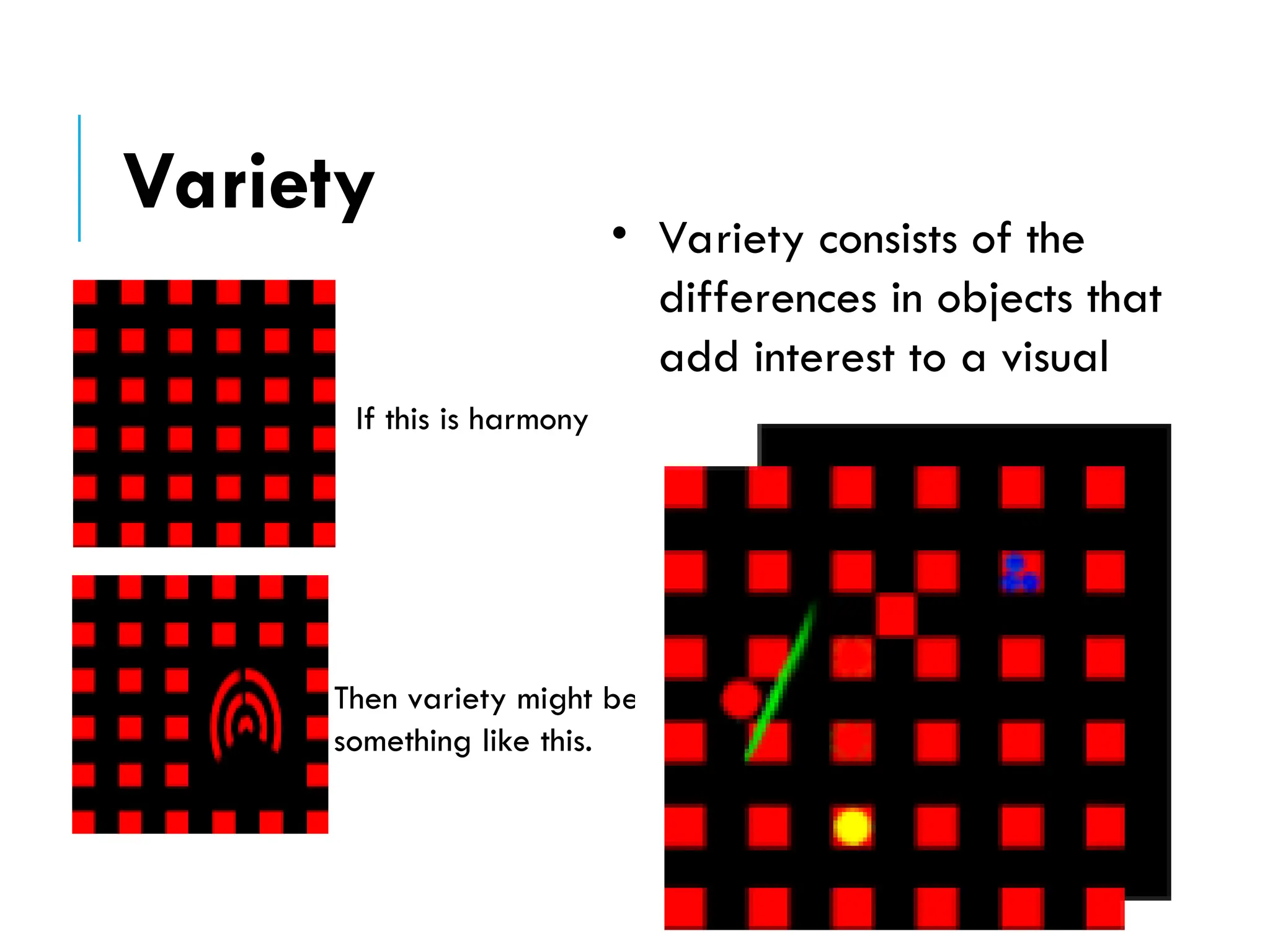
Then variety mightbe
something like this.
• Variety consists of the
differences in objects that
add interest to a visual
image.
If this is harmony
Variety
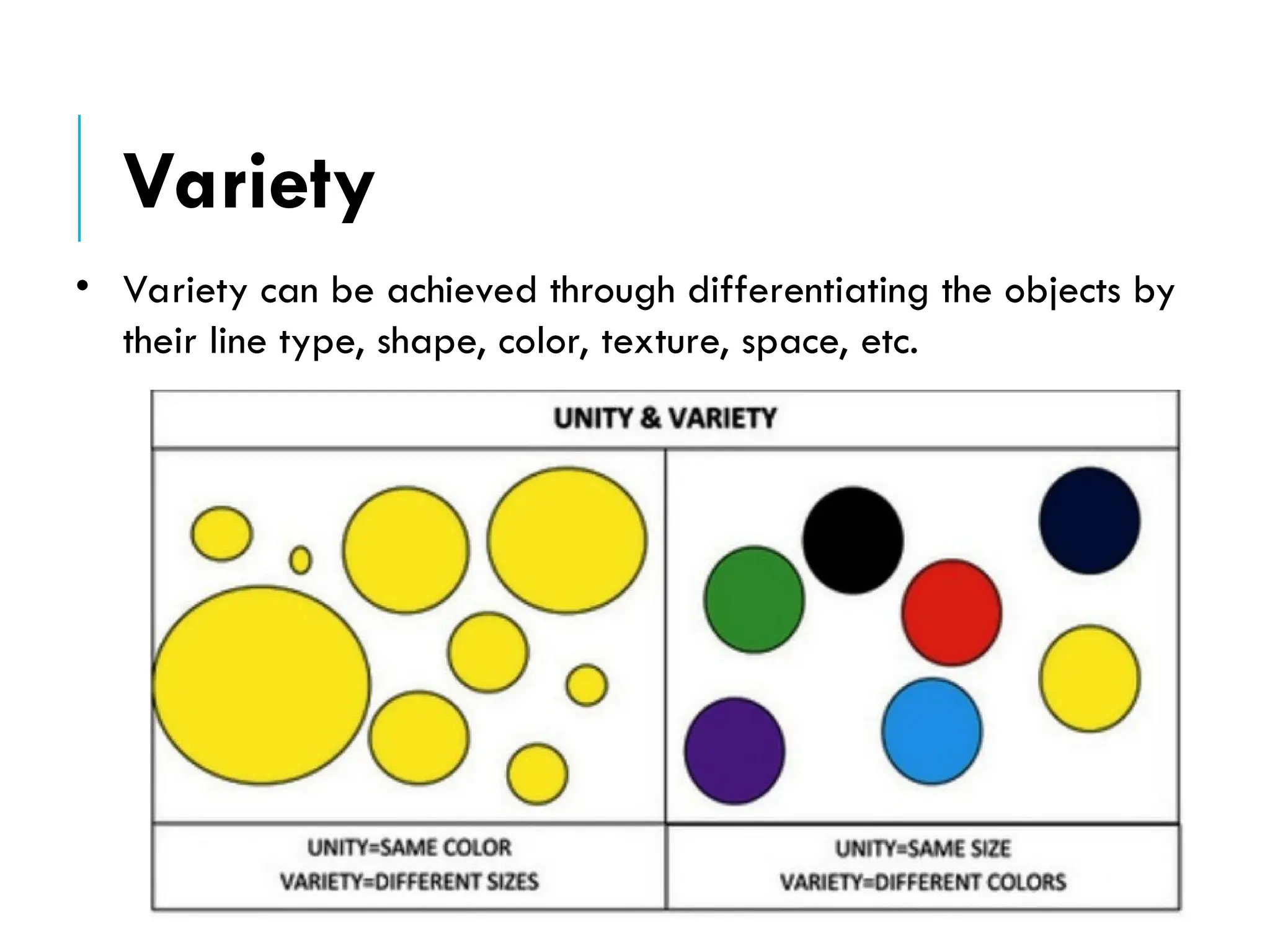
86.
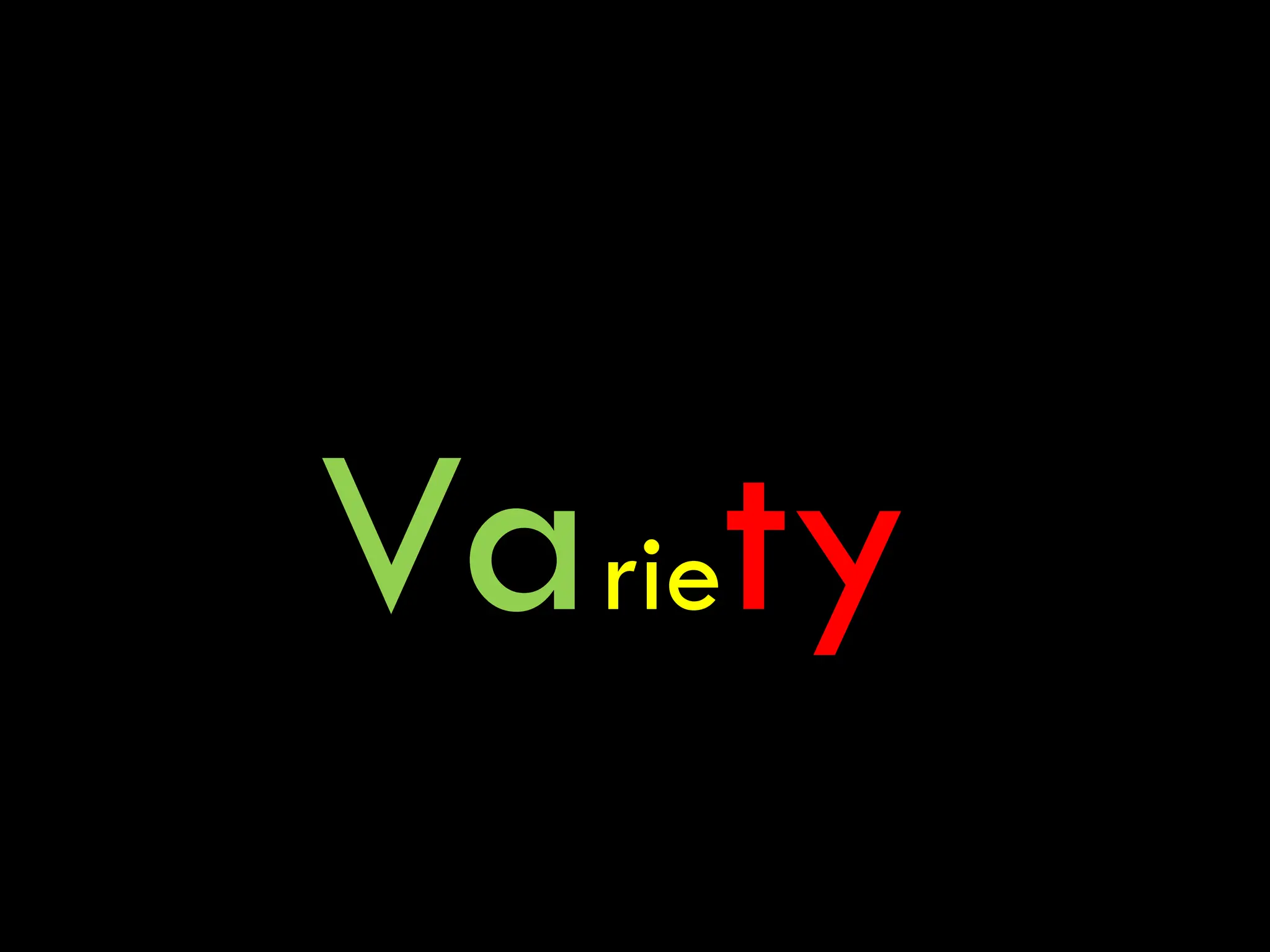
• Variety canbe achieved through differentiating the objects by
their line type, shape, color, texture, space, etc.
Variety
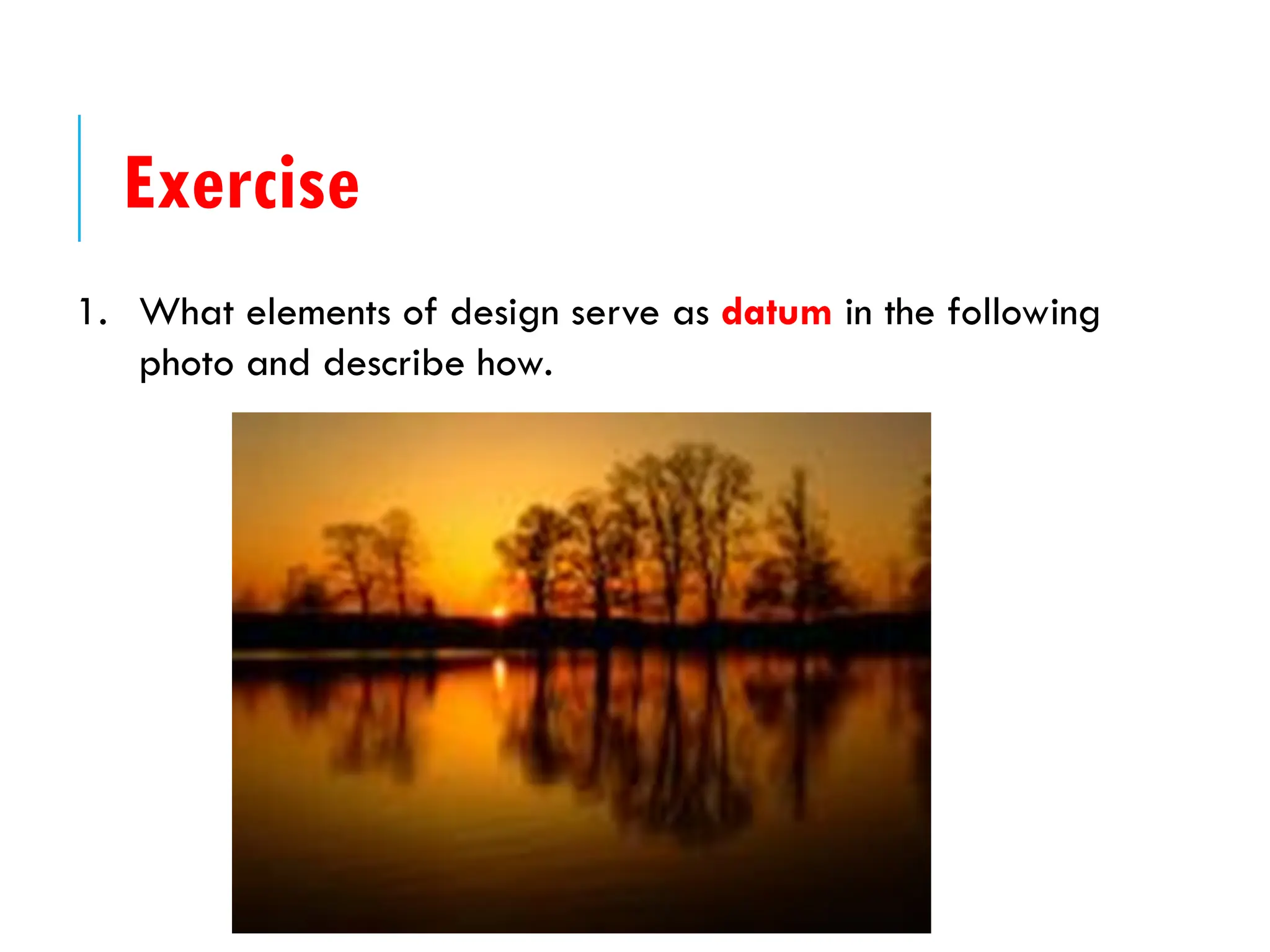
1. What elementsof design serve as datum in the following
photo and describe how.
Exercise
90.
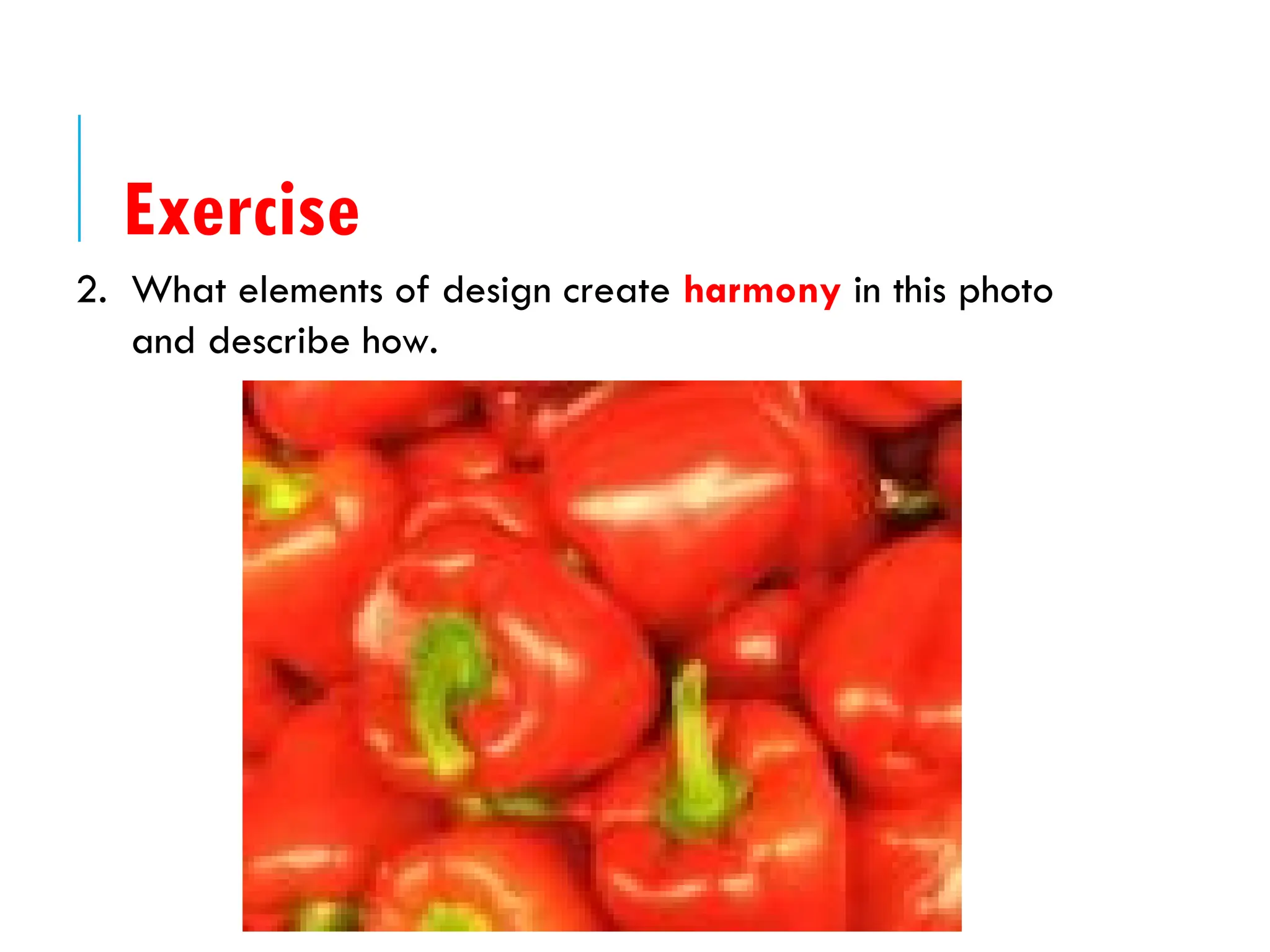
2. What elementsof design create harmony in this photo
and describe how.
Exercise
91.
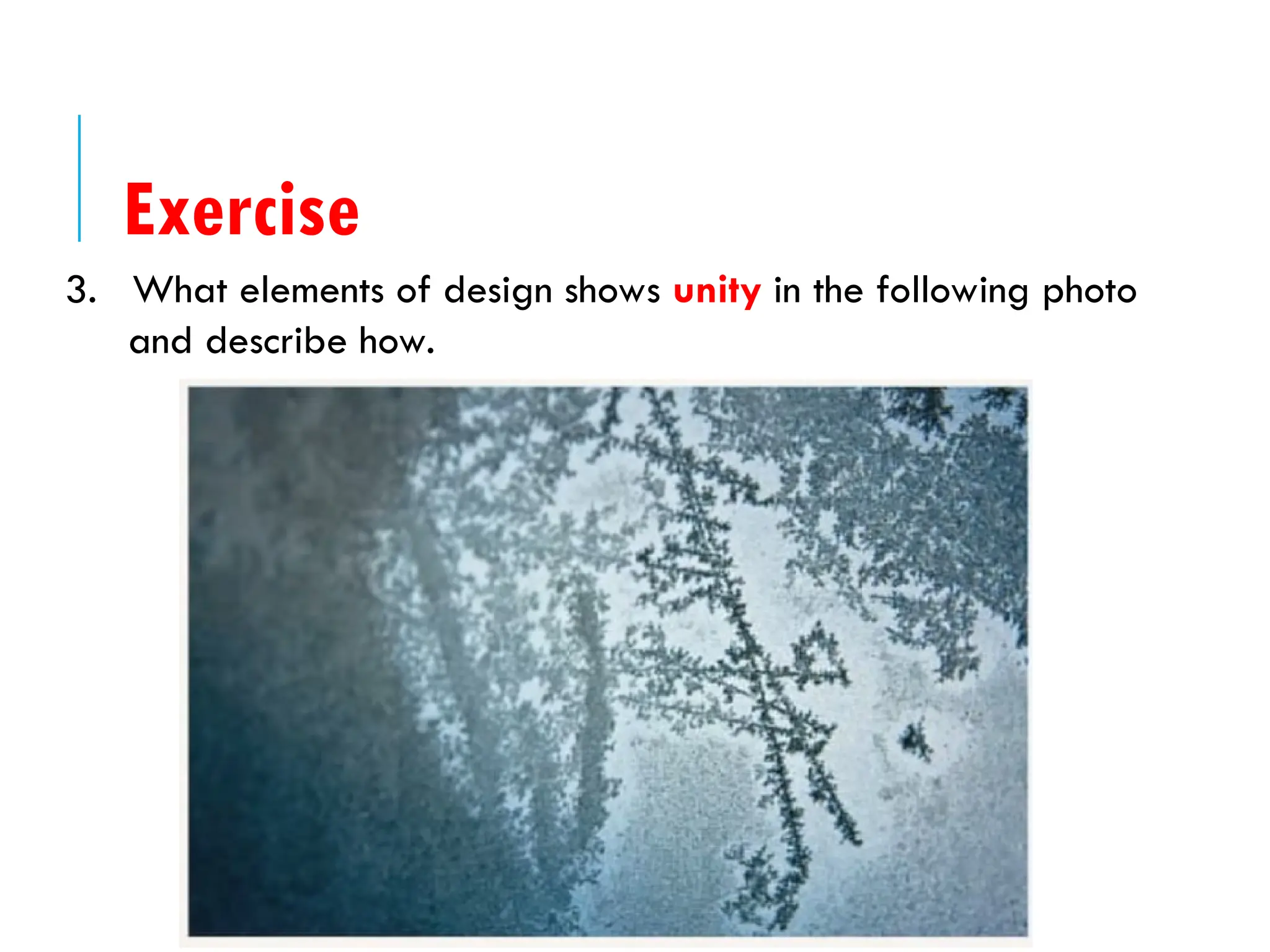
3. What elementsof design shows unity in the following photo
and describe how.
Exercise
92.
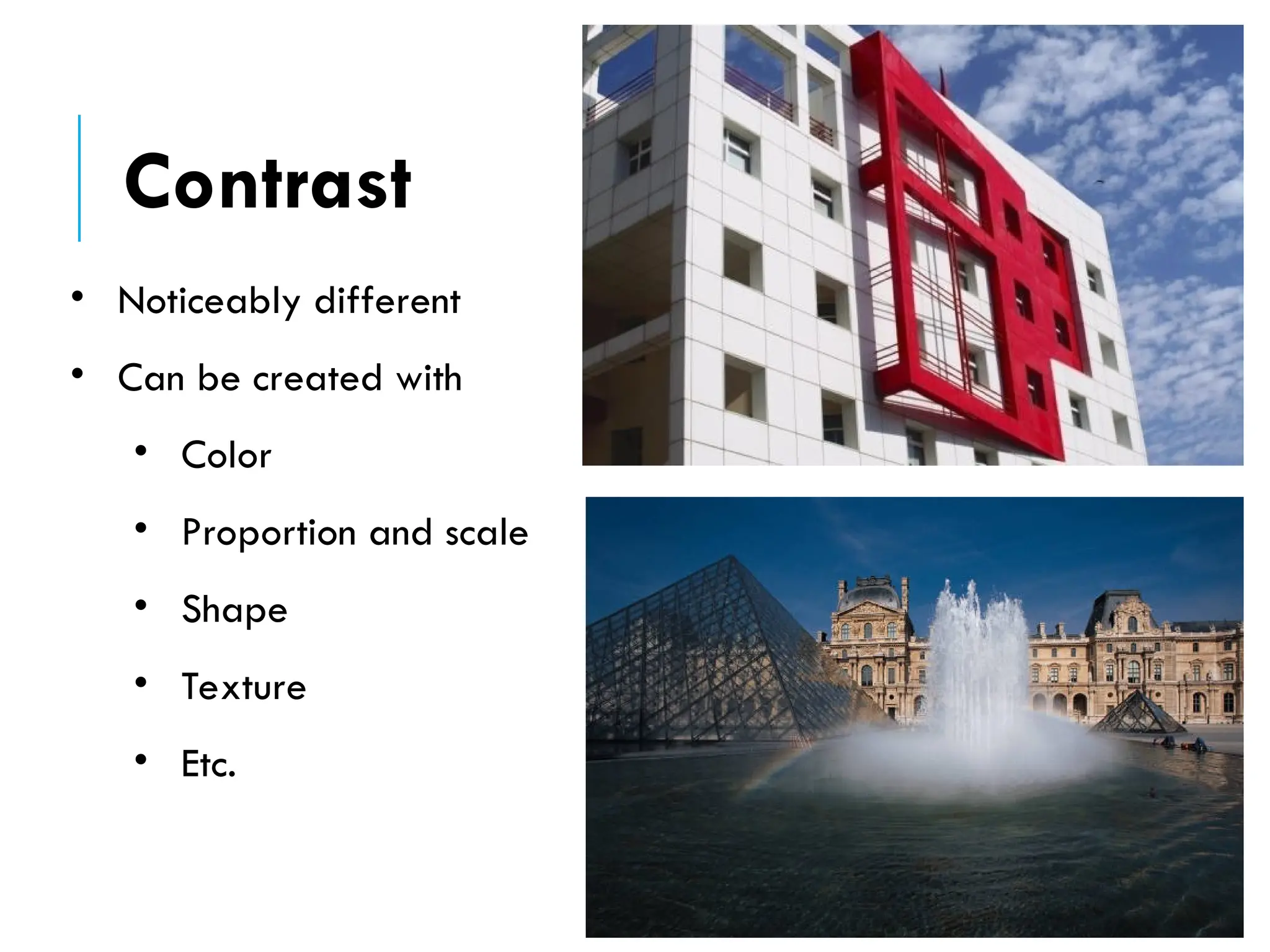
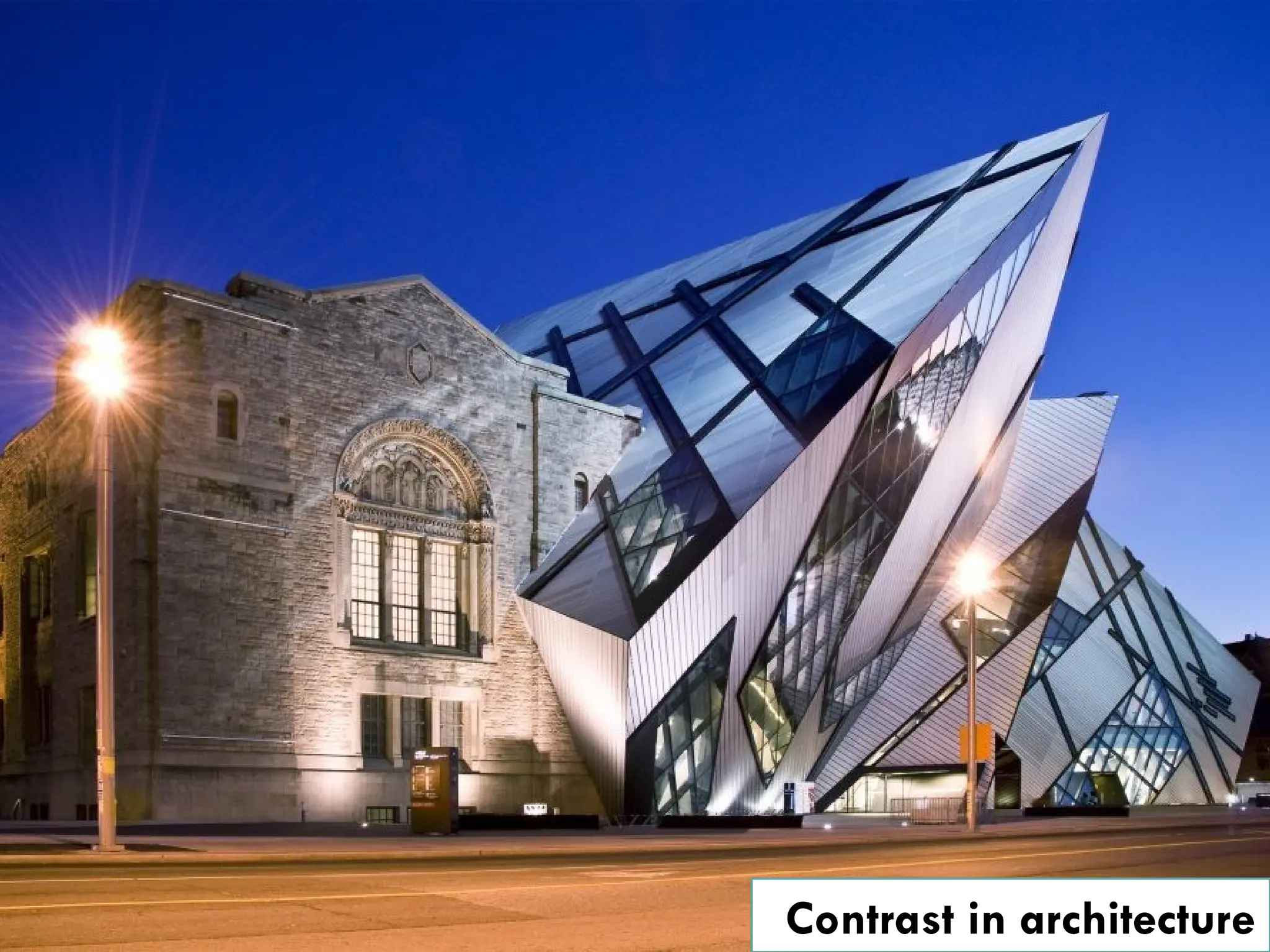
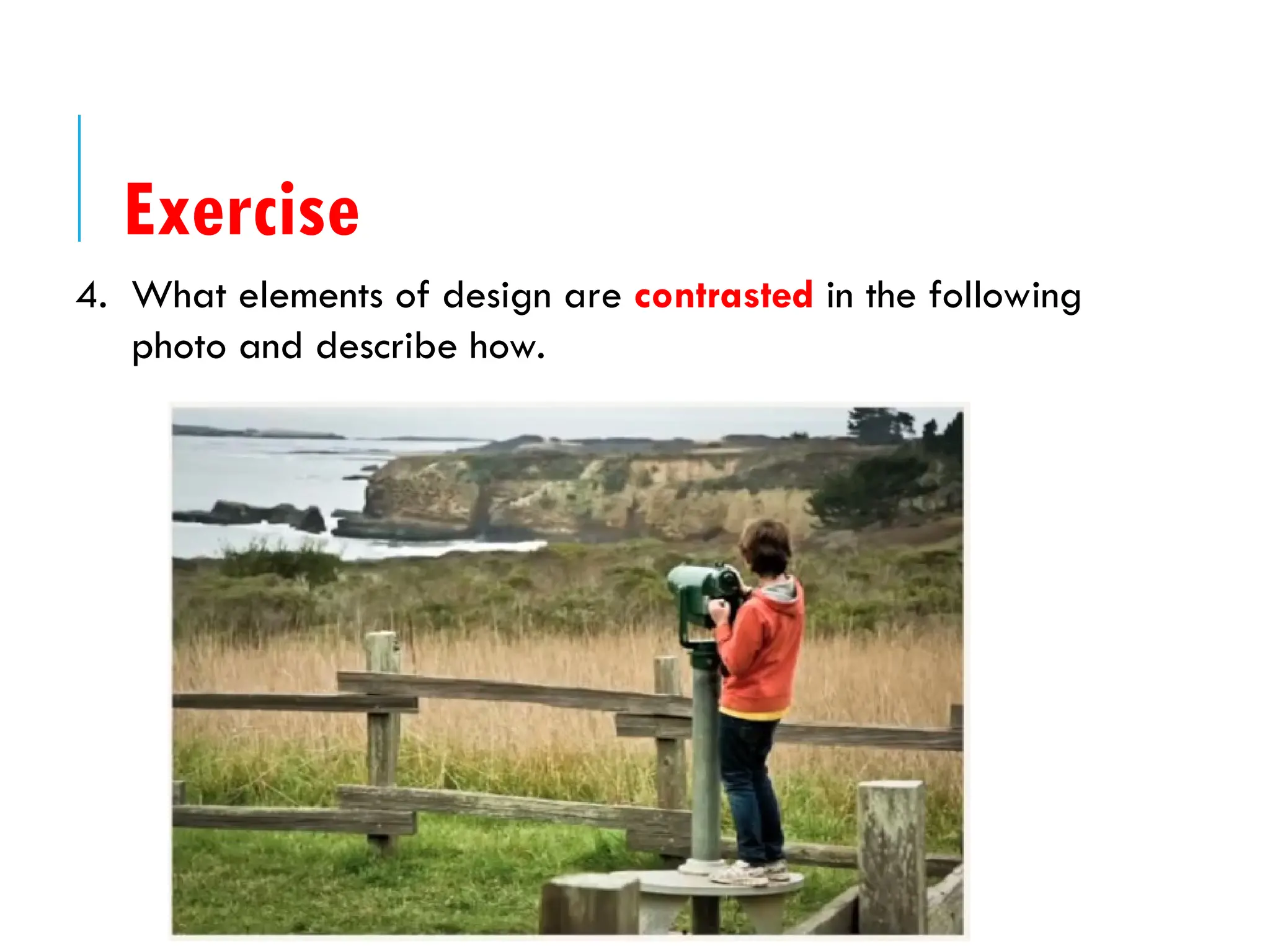
4. What elementsof design are contrasted in the following
photo and describe how.
Exercise
93.
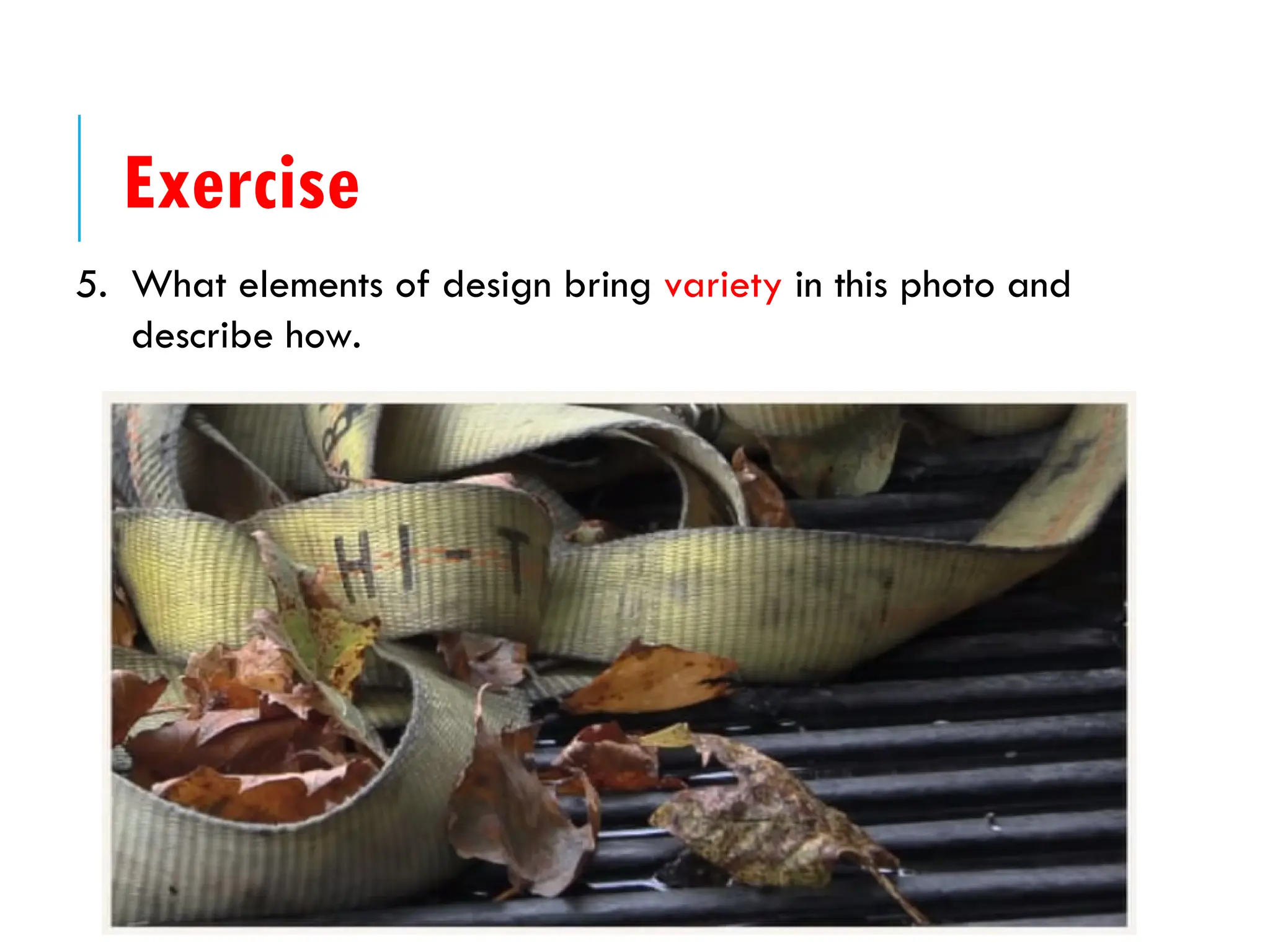
5. What elementsof design bring variety in this photo and
describe how.
Exercise
Editor's Notes
#5 Different lists of design principles are used by various occupational areas. You can make the analogy that the principles of design are similar to how you combine and utilize baking ingredients. Do you blend, whip or fold, do you fry, bake or broil, slow roast, or microwave? How much flour, salt, spice, or baking powder do you use?
#8 Taj Mahal Mausoleum was designed as a tomb by Emperor Shah Jahan for his young wife Mumatz Mahal. With the onion domes, it is a famous example of Islamic architecture.
#12 This building is asymmetrical, but because it is located quite a distance from the main section, the large boxy section far left balances the main section of the chateau.
#13 This building is asymmetrical, but because it is located quite a distance from the main section, the large boxy section far left balances the main section of the chateau.
#14 This building is asymmetrical, but because it is located quite a distance from the main section, the large boxy section far left balances the main section of the chateau.
#15 The Galleria Vittorio Emanuele II dome encloses an octagonal space formed at the intersection of two intersecting streets. Designed in 1861 and built between 1865 and 1877, it is an early formal covered street.
#18 A vertical balance is achieved by the reflection of the building in the water
#19 A vertical balance is achieved by the reflection of the building in the water
#20 A vertical balance is achieved by the reflection of the building in the water
#21 A vertical balance is achieved by the reflection of the building in the water
#28 This is the first floor plan of Saint Basil’s Cathedral. If you ignore the three entrances, the floor plan displays radial balance. Notice that the it also displays horizontal and vertical balance.
#32 This is the first floor plan of Saint Basil’s Cathedral. If you ignore the three entrances, the floor plan displays radial balance. Notice that the it also displays horizontal and vertical balance.
#33 This is the first floor plan of Saint Basil’s Cathedral. If you ignore the three entrances, the floor plan displays radial balance. Notice that the it also displays horizontal and vertical balance.
#34 A regular rhythm is created in the floor shown on the left by repeating the same pattern of bricks and tiles.
The undulating hotel balconies shown on the right are repeated at each level, creating a regular rhythm.
#35 A regular rhythm is created in the floor shown on the left by repeating the same pattern of bricks and tiles.
The undulating hotel balconies shown on the right are repeated at each level, creating a regular rhythm.
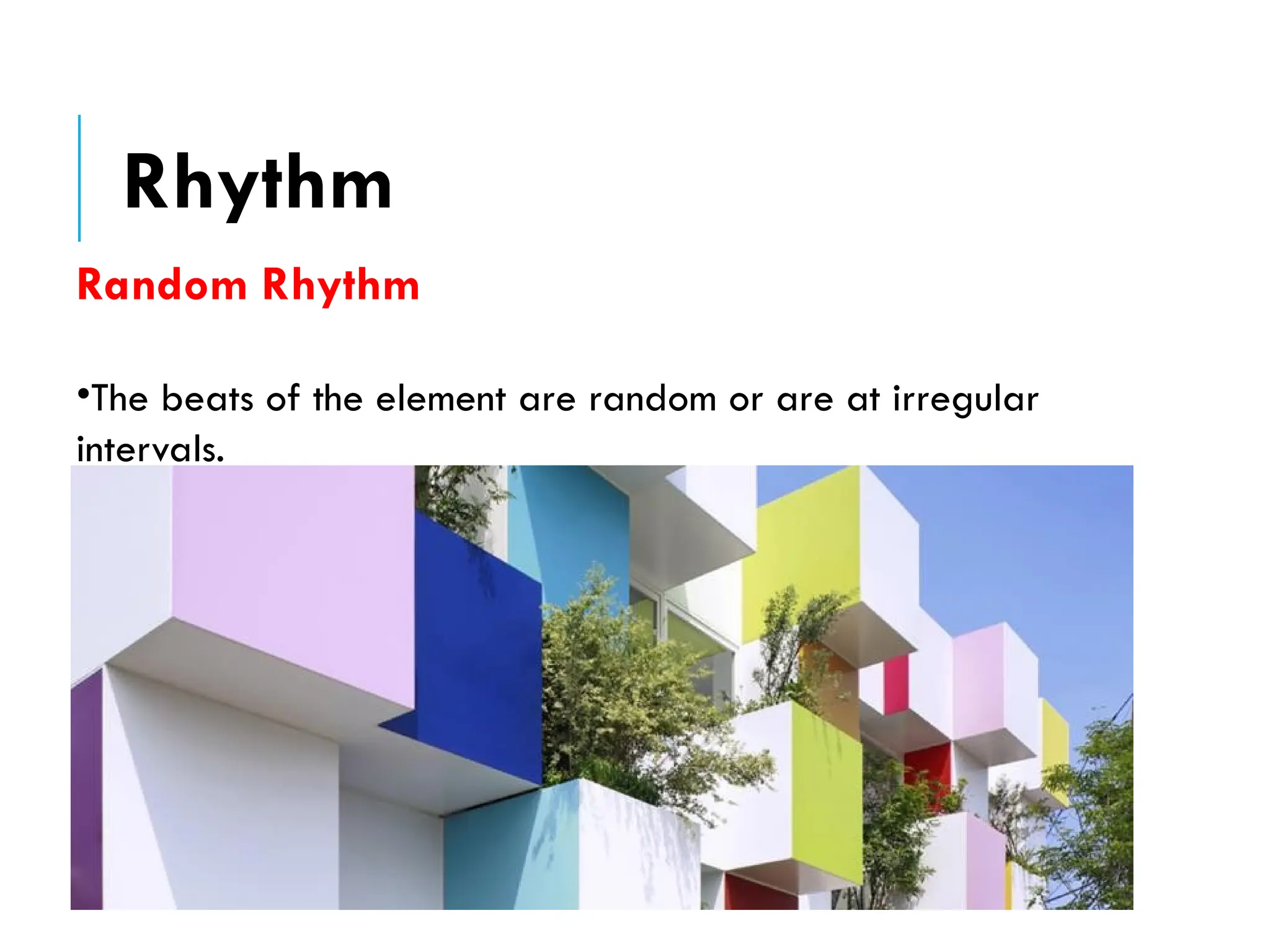
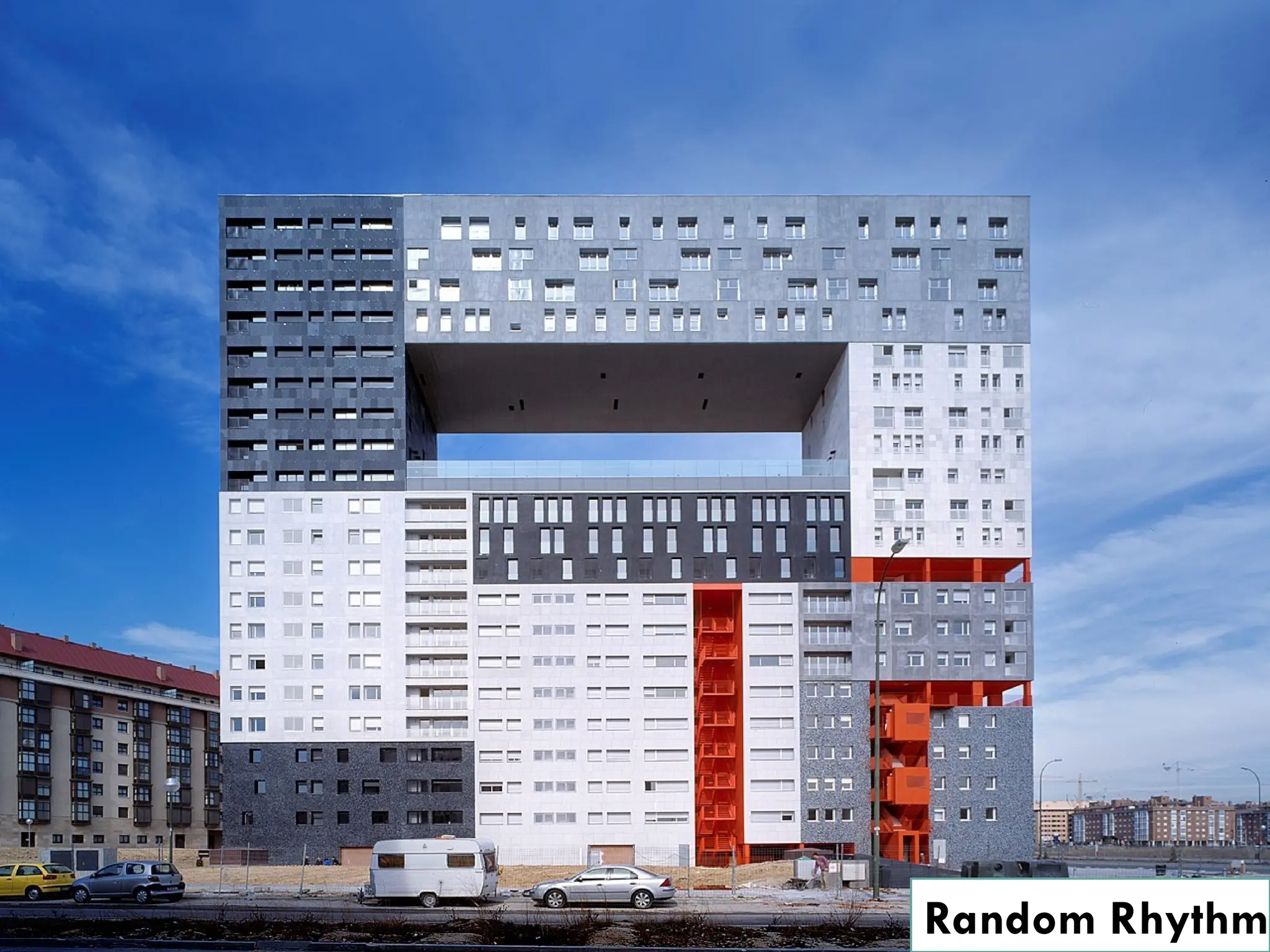
#36 The repeated use of the onion domes creates a random rhythm in the design of Saint Basil’s Cathedral.
#37 The repeated use of the onion domes creates a random rhythm in the design of Saint Basil’s Cathedral.
#40 The repeated use of the onion domes creates a random rhythm in the design of Saint Basil’s Cathedral.
#42 The repeated use of the onion domes creates a random rhythm in the design of Saint Basil’s Cathedral.
#49 What draws your attention in the image? Why? Is it size, placement, color, or use of another element?
Although the mosaic is on the ceiling in the top image, because of the bright colors (which contrast with the neutral colors of the surrounding structure), the mosaic is the focal point.
The tower of the mosque is emphasized due to colored light, its height (much taller than surrounding structure) and its shape (round form contrasts with angular edges of the rest of the building)
[click] This is a picture of the Bahai Gardens in Haifa, Israel. The domed building in the distance is emphasized here – Why?
Location – The building is centered horizontally.
Lines – All lines lead to the building including the horizon line, the stairway, and lines of trees.
Shape – The building is a geometric shape which contrasts with the surrounding organic (natural) shapes and therefore stands out.
#58 Because of its height, the Washington Monument is the most prominent structure in Washington, D.C., shown here with the Lincoln Memorial in the foreground and the U. S. Capitol building in the background. The monument is shaped like an Egyptian Obelisk and stands 555 ft - 5 1/8 in. tall.
#63 Because of its height, the Washington Monument is the most prominent structure in Washington, D.C., shown here with the Lincoln Memorial in the foreground and the U. S. Capitol building in the background. The monument is shaped like an Egyptian Obelisk and stands 555 ft - 5 1/8 in. tall.
#83 Many colleges achieve a sense of unity throughout the campus by consistently using specific materials. West Virginia University in Morgantown uses red brick. Notice that the red brick used in the buildings is also used in the landscape walls in the foreground.
In the image on the right, unity is achieved in the home interior by a consistent use of color (yellow and white) and smooth texture.







![The principles of design [autosaved]](https://cdn.slidesharecdn.com/ss_thumbnails/theprinciplesofdesignautosaved-200419193252-thumbnail.jpg?width=640&height=640&fit=bounds)


![Driver Easy Pro Key 7.1.0.2641 Full Mac Crack Free Activated Download [2026]....](https://cdn.slidesharecdn.com/ss_thumbnails/software-251207185324-b2fb71b4-thumbnail.jpg?width=640&height=640&fit=bounds)
![Wondershare Filmora 15.0.11 Crack for Mac Key Full Download [Latest] pptx](https://cdn.slidesharecdn.com/ss_thumbnails/software-251207184836-1d16ba16-thumbnail.jpg?width=640&height=640&fit=bounds)


![iStat Menus 7.20 Crack for MacOS 2026 Full Version [Latest] pptx](https://cdn.slidesharecdn.com/ss_thumbnails/softwareoverview-251207191544-22b737dc-thumbnail.jpg?width=640&height=640&fit=bounds)
![Soundtoys Mac v5.5.5.0 Crack for MacOS Full Version [Latest] pptx](https://cdn.slidesharecdn.com/ss_thumbnails/softwareoverview-251207193711-91d8ae6b-thumbnail.jpg?width=640&height=640&fit=bounds)


![AnyTrans for iOS 8.9.14.20251127 With Crack for MacOS [Latest] pptx](https://cdn.slidesharecdn.com/ss_thumbnails/softwareoverview-251207190907-2316965f-thumbnail.jpg?width=640&height=640&fit=bounds)


