SOCIAL ORGANIZATIONS: GROUPS
WITHIN SOCIETY (PRIMARY AND
SECONDARY)
PREPARED BY: MARICEL P. LLOREN, LPT
HOW SOCIETY IS ORGANIZED
• People have organized themselves
into groups with common rules of
living. The organization of such a
group is called society. Different
institutions are found in every
community, such as the family,
kin relationships, childcare, and
division of work based on gender
and age.
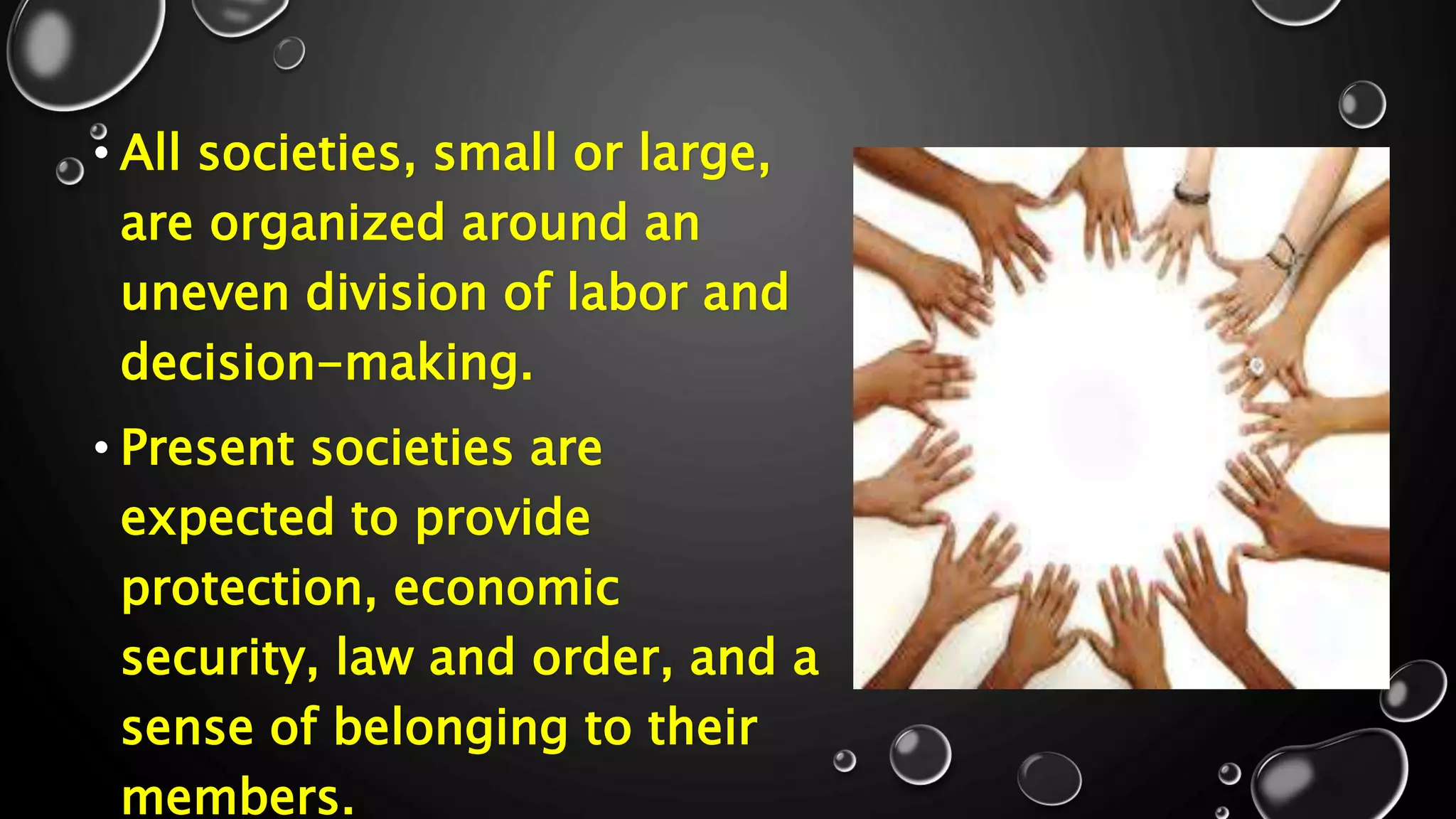
• All societies, small or large,
are organized around an
uneven division of labor and
decision-making.
• Present societies are
expected to provide
protection, economic
security, law and order, and a
sense of belonging to their
members.
•Societies usually adapt to
changes around them, like
in the environment or in
technology.
•Most changes happen
slowly, but some significant
events such as war or
revolution can completely
THE THREEFOLD NATURE OF SOCIAL LIFE
•Applying Goethe’s Method to
social life, Rudolf Steiner thought
that if we apply the
phenomenological, participatory
method to human social life as a
multifaceted, multilayered whole,
we can distinguish three different
THREE DIFFERENT SPHERES OF ACTIVITY:
1. CULTURAL– everything involving the growth
and expression of the human spirit: education,
art, science, religion, journalism, and publishing
2. LEGAL OR POLITICAL– involving human rights
and relationships between people and
organizations
3. ECONOMIC– having to do with the production,
distribution, and consumption of goods and
services
•Human society, Steiner
claimed, will only flourish if
these three spheres are
recognized and each is
organized according to its
own inherent principles,
dynamics, and ideals.
SOCIAL GROUPS AND ORGANIZATIONS
• Sometimes, organization refers to
associational groups. It includes
corporations, armies, schools, and banks.
• Society composes many of such
organizations.
• A state is considered as a political
organization, or school may represent an
educational organization, and so on. They
are all social organizations.
•Organization is a state of being
or a condition in which various
institutions in society are
functioning by their recognized
or implied purposes (Elliott and
Merrill, 1950).
•Social organization or social
system refers to the
interdependence of parts in
groups.
•These groups may differ in size
and nature. it makes possible
the complex activities where
members of a complex society
GROUPS WITHIN SOCIETY
Social groups consist of two or
more individuals who identify with
one another and regularly interact
as a result of shared norms,
values, and expectations. Being in
a group entails realizations of
activities and events in one's life
that help people build and define
their stories, interests, and
Different group categorization exists in
society. categories include primary and
secondary groups, in-groups and out-
groups and reference groups.
PRIMARY GROUP
• First formulated by Charles Horton
Cooley, the concept of a primary group
is an essential unit of social
organization and social life.
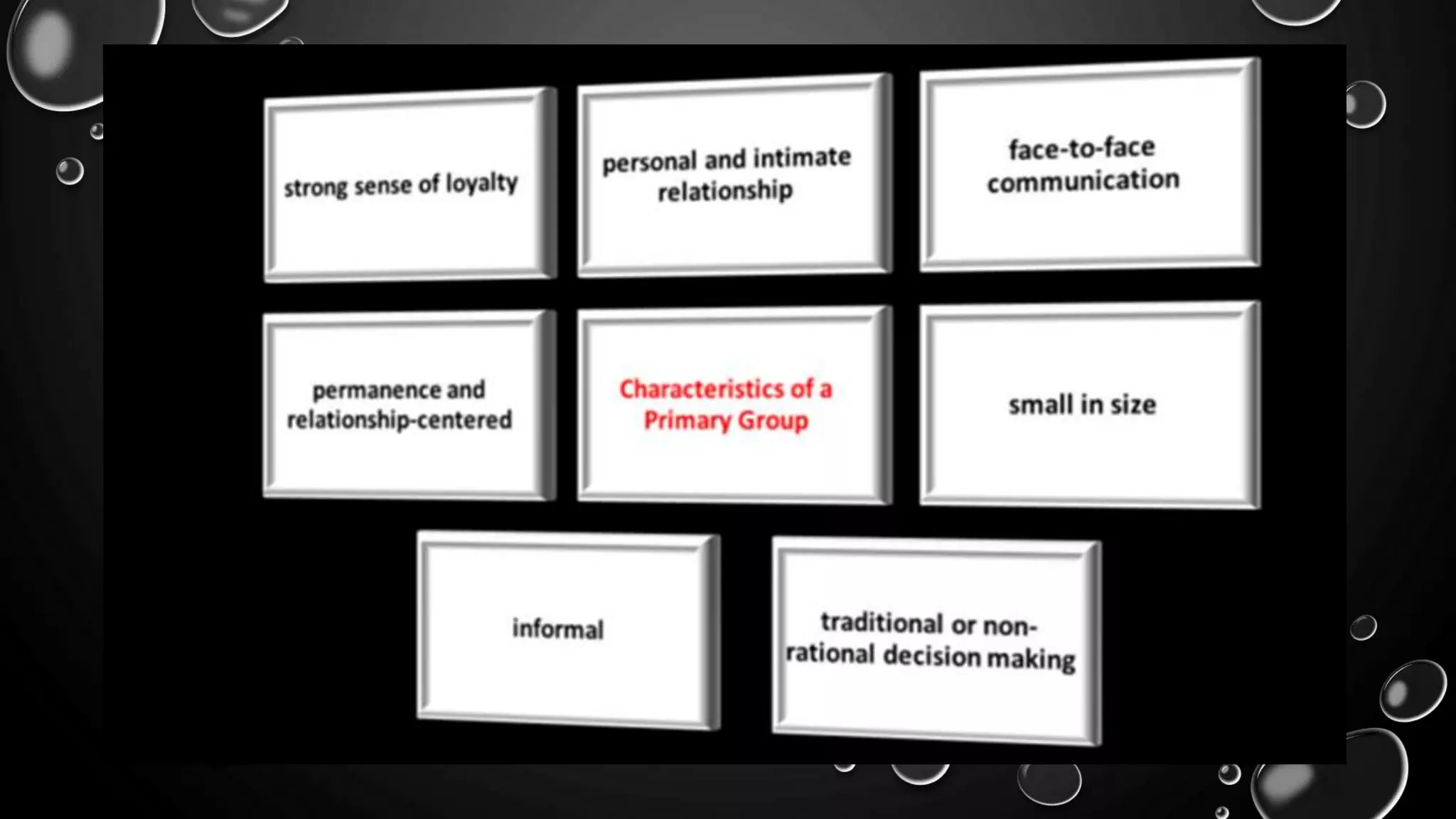
• A primary group is characterized by
personal and lasting relationships with
its members.
•It has been identified that
relationships in a primary type
of team is unconditional and
not prearranged.
•Setting aside family relations,
members of primary groups
share lots of things in
common, like interests,
•The best example of a primary
group is the nuclear family.
•Relationships and attachments
organized in this group are
permanent as one's identity,
lifestyle, and stories are tied to
this group.
•A group of close friends is
•The term 'primary' is used with these
groups because they are the primary
or main source of socialization and
relationships.
• Relationships in primary groups give
us security, love, and companionship.
• We also learn norms and values from
our family and friends that stay with
us for most of our lives.
SECONDARY GROUP
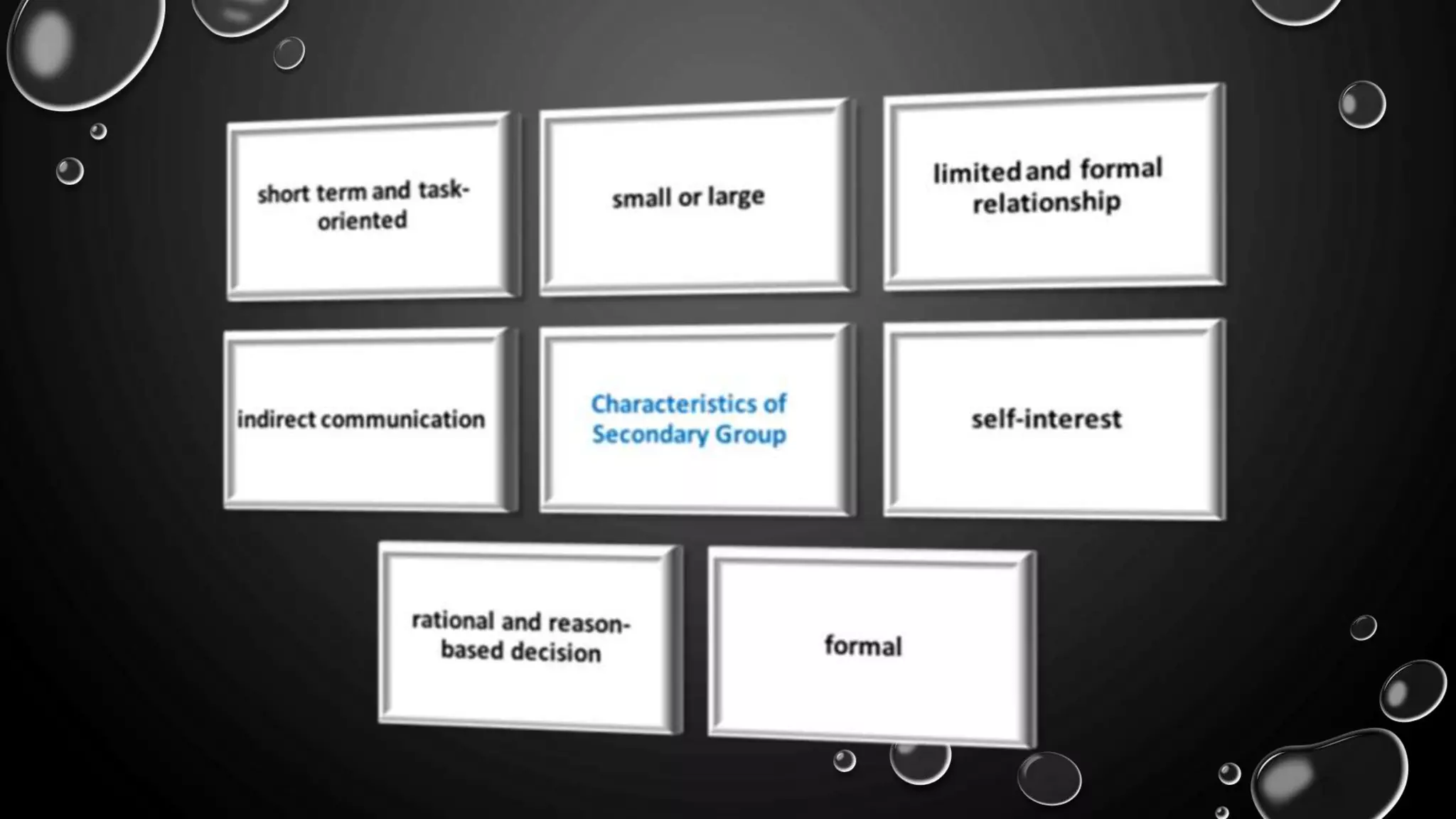
• By contrast, secondary groups are formal,
small or large, and usually short term.
these groups are typically found at work
and school.
• An example of this group is a political
party organized to plan the best campaign
for the election. Members of the board
meet infrequently and for only a short
period.
• Team members may have some similar
interests, but the main purpose of the
group is on the task instead of the
relationships.
 CLASSROOM AND WORK ENVIRONMENT
ARE OTHER EXAMPLES OF A SECONDARY
GROUP.
• Sometimes, secondary groups
become informal, and members of
the team get to know each other
well; however, even if their
friendships exist in a limited time,
they will not necessarily remain
close beyond.
• Unlike the primary group, members
play their roles in a secondary group
based on arranged and conditional
contract. members of this group need
not to convene based on shared
interests or personalities.
primary_secondary.pptx

primary_secondary.pptx

  • 1.
    SOCIAL ORGANIZATIONS: GROUPS WITHINSOCIETY (PRIMARY AND SECONDARY) PREPARED BY: MARICEL P. LLOREN, LPT
  • 2.
    HOW SOCIETY ISORGANIZED • People have organized themselves into groups with common rules of living. The organization of such a group is called society. Different institutions are found in every community, such as the family, kin relationships, childcare, and division of work based on gender and age.
  • 3.
    • All societies,small or large, are organized around an uneven division of labor and decision-making. • Present societies are expected to provide protection, economic security, law and order, and a sense of belonging to their members.
  • 4.
    •Societies usually adaptto changes around them, like in the environment or in technology. •Most changes happen slowly, but some significant events such as war or revolution can completely
  • 5.
    THE THREEFOLD NATUREOF SOCIAL LIFE •Applying Goethe’s Method to social life, Rudolf Steiner thought that if we apply the phenomenological, participatory method to human social life as a multifaceted, multilayered whole, we can distinguish three different
  • 6.
    THREE DIFFERENT SPHERESOF ACTIVITY: 1. CULTURAL– everything involving the growth and expression of the human spirit: education, art, science, religion, journalism, and publishing 2. LEGAL OR POLITICAL– involving human rights and relationships between people and organizations 3. ECONOMIC– having to do with the production, distribution, and consumption of goods and services
  • 7.
    •Human society, Steiner claimed,will only flourish if these three spheres are recognized and each is organized according to its own inherent principles, dynamics, and ideals.
  • 8.
    SOCIAL GROUPS ANDORGANIZATIONS • Sometimes, organization refers to associational groups. It includes corporations, armies, schools, and banks. • Society composes many of such organizations. • A state is considered as a political organization, or school may represent an educational organization, and so on. They are all social organizations.
  • 9.
    •Organization is astate of being or a condition in which various institutions in society are functioning by their recognized or implied purposes (Elliott and Merrill, 1950).
  • 10.
    •Social organization orsocial system refers to the interdependence of parts in groups. •These groups may differ in size and nature. it makes possible the complex activities where members of a complex society
  • 11.
    GROUPS WITHIN SOCIETY Socialgroups consist of two or more individuals who identify with one another and regularly interact as a result of shared norms, values, and expectations. Being in a group entails realizations of activities and events in one's life that help people build and define their stories, interests, and
  • 12.
    Different group categorizationexists in society. categories include primary and secondary groups, in-groups and out- groups and reference groups.
  • 13.
    PRIMARY GROUP • Firstformulated by Charles Horton Cooley, the concept of a primary group is an essential unit of social organization and social life. • A primary group is characterized by personal and lasting relationships with its members.
  • 14.
    •It has beenidentified that relationships in a primary type of team is unconditional and not prearranged. •Setting aside family relations, members of primary groups share lots of things in common, like interests,
  • 15.
    •The best exampleof a primary group is the nuclear family. •Relationships and attachments organized in this group are permanent as one's identity, lifestyle, and stories are tied to this group. •A group of close friends is
  • 16.
    •The term 'primary'is used with these groups because they are the primary or main source of socialization and relationships. • Relationships in primary groups give us security, love, and companionship. • We also learn norms and values from our family and friends that stay with us for most of our lives.
  • 18.
    SECONDARY GROUP • Bycontrast, secondary groups are formal, small or large, and usually short term. these groups are typically found at work and school. • An example of this group is a political party organized to plan the best campaign for the election. Members of the board meet infrequently and for only a short period.
  • 19.
    • Team membersmay have some similar interests, but the main purpose of the group is on the task instead of the relationships.
  • 20.
     CLASSROOM ANDWORK ENVIRONMENT ARE OTHER EXAMPLES OF A SECONDARY GROUP. • Sometimes, secondary groups become informal, and members of the team get to know each other well; however, even if their friendships exist in a limited time, they will not necessarily remain close beyond.
  • 21.
    • Unlike theprimary group, members play their roles in a secondary group based on arranged and conditional contract. members of this group need not to convene based on shared interests or personalities.