1. Depolarization of cardiac cells results in increased _____ and decreased _____.
Calcium, Chloride
Potassium, Sodium
Magnesium, Potassium
Sodium, Potassium
Sympathetic stimulation of the SA node results in release of ________ from nerve endings,
which binds to Beta 1 adrenergic receptors on pacemaker cell membranes.
Acetycholine
Ephedrine
Norepinephrine
CAMP
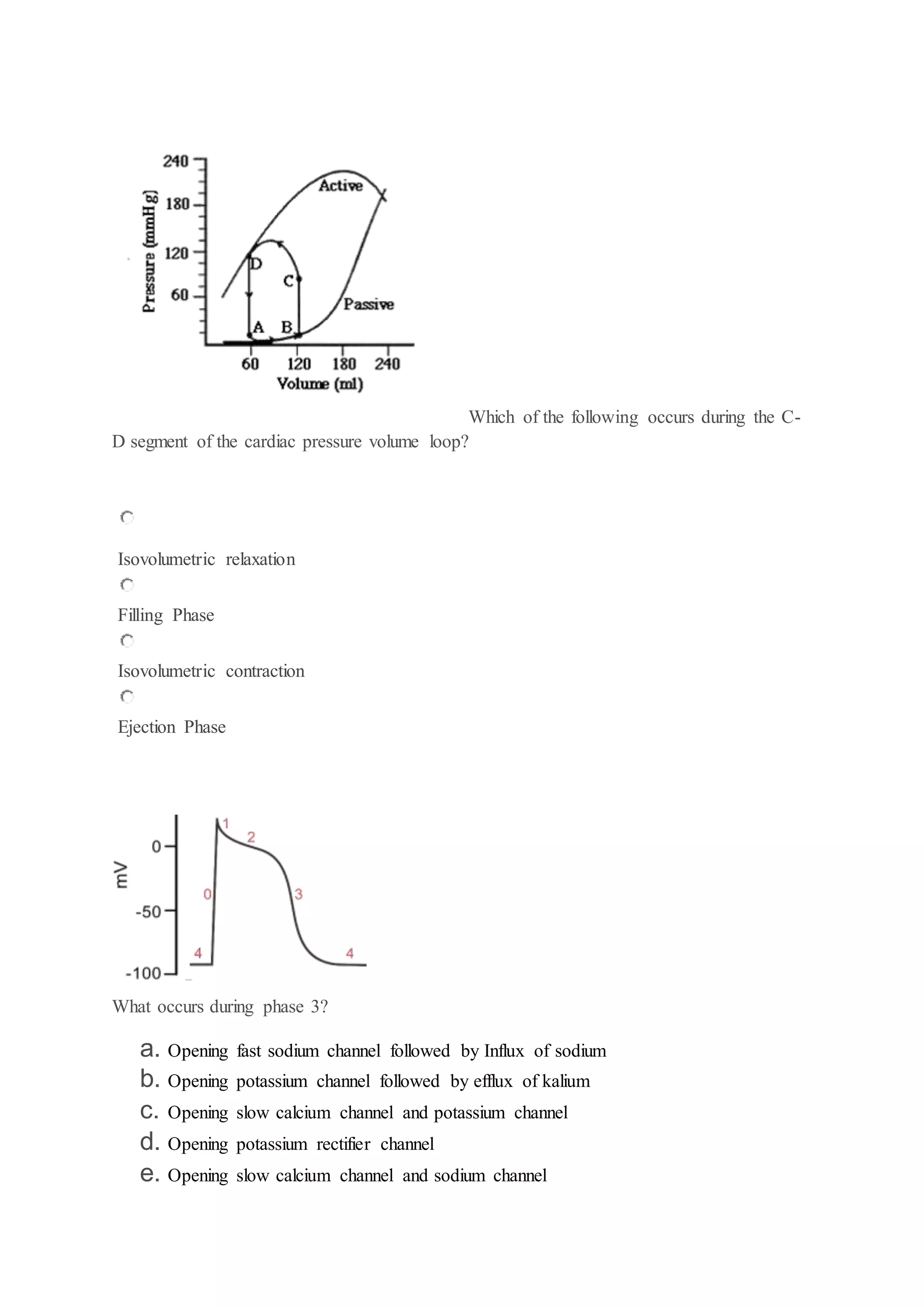
Which of the following occurs during the D-
A segment of the cardiac pressure volume loop?
Isovolumetric relaxation
Filling Phase
Isovolumetric contraction
Ejection Phase
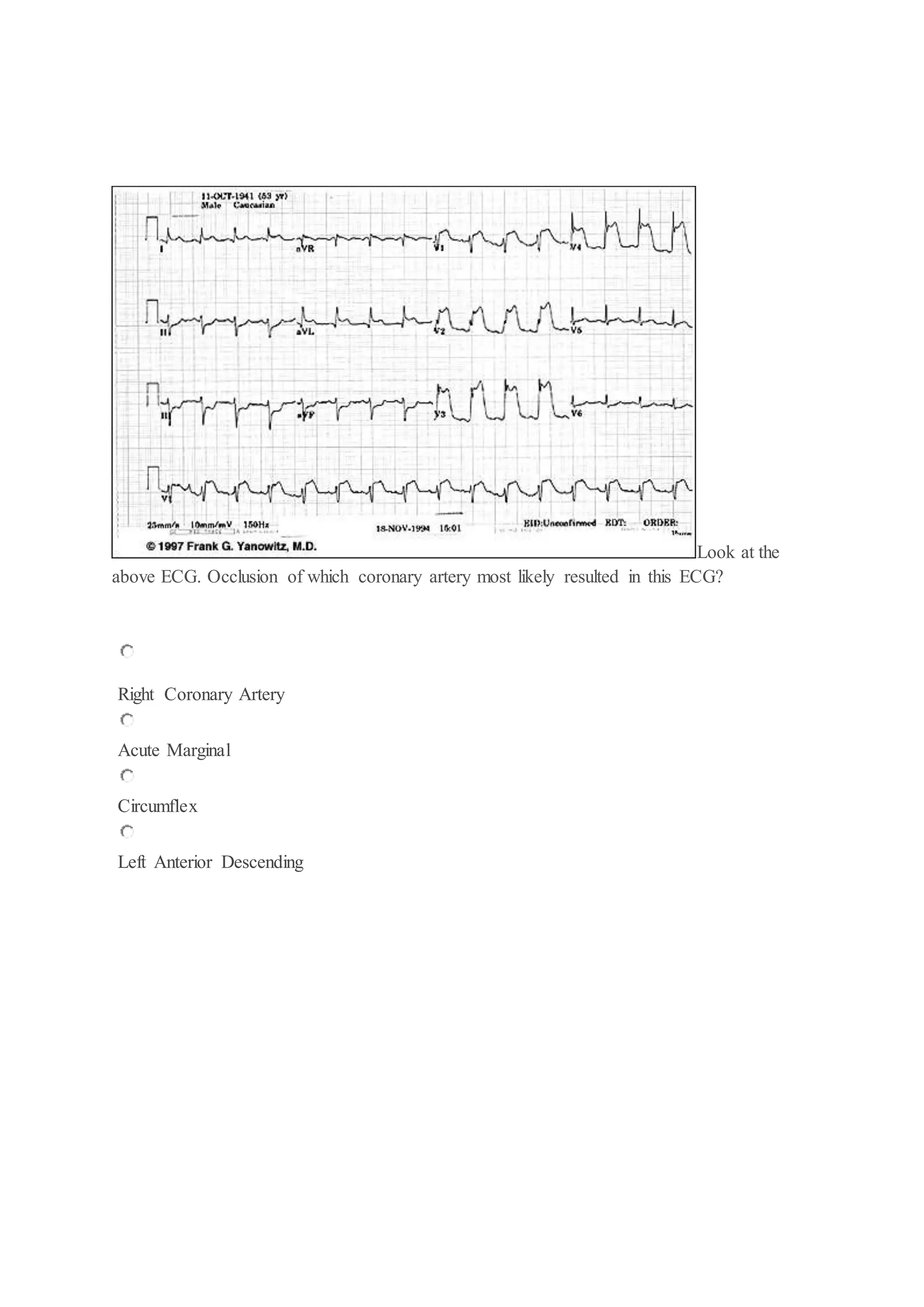
Look at the
above ECG. Occlusion of which coronary artery most likely resulted in this ECG?
Right Coronary Artery
Acute Marginal
Circumflex
Left Anterior Descending
Which of the following occurs during the C-
D segment of the cardiac pressure volume loop?
Isovolumetric relaxation
Filling Phase
Isovolumetric contraction
Ejection Phase
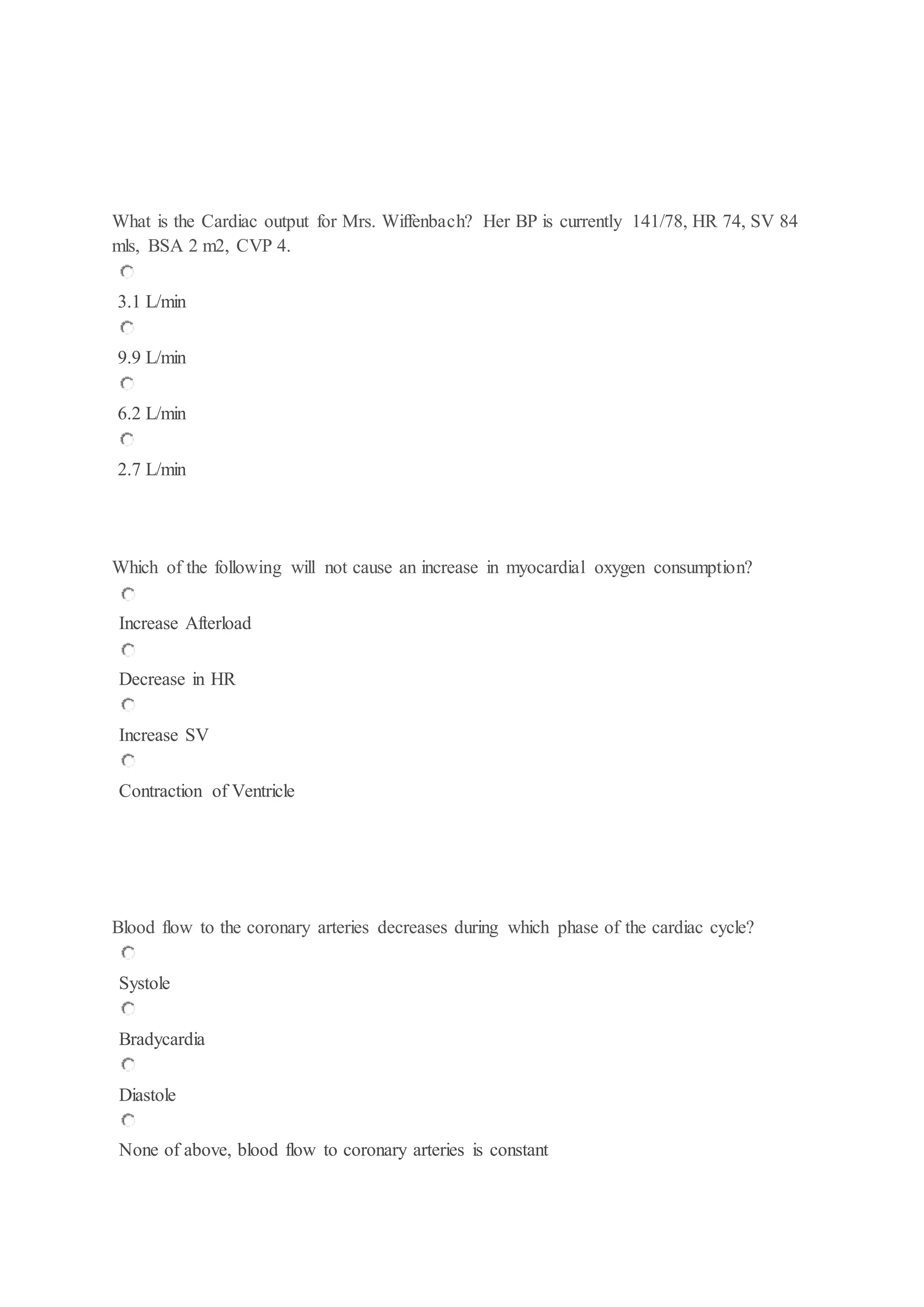
What occurs during phase 3?
a. Opening fast sodium channel followed by Influx of sodium
b. Opening potassium channel followed by efflux of kalium
c. Opening slow calcium channel and potassium channel
d. Opening potassium rectifier channel
e. Opening slow calcium channel and sodium channel
Which of the following BP's represents stage 2 hypertension?
162/100
138/86
142/90
180/112
What does Starling's Law state?
States that the greater the amount of blood entering the heart during diastole, the greater the
amount of blood ejected during systole
Relates ventricular pressure to wall tension
Demonstrates the relationship between certain pressures in the heart and differing points in
the cardiac cycle
None of above.
Which portion of the cardiac conduction system causes a delay in transmission of the action
potential?
Transitional cells
SA Node
Purkinje fibers
AV node
What is the Cardiac output for Mrs. Wiffenbach? Her BP is currently 141/78, HR 74, SV 84
mls, BSA 2 m2, CVP 4.
3.1 L/min
9.9 L/min
6.2 L/min
2.7 L/min
Which of the following will not cause an increase in myocardial oxygen consumption?
Increase Afterload
Decrease in HR
Increase SV
Contraction of Ventricle
Blood flow to the coronary arteries decreases during which phase of the cardiac cycle?
Systole
Bradycardia
Diastole
None of above, blood flow to coronary arteries is constant
Mr. Avery's BP is currently 134/80. What is his MAP?
107
98
80
76
The primary risk factor for the development of CAD is…
Family history
Aortic stenosis
Hx of DVT
Hypertension
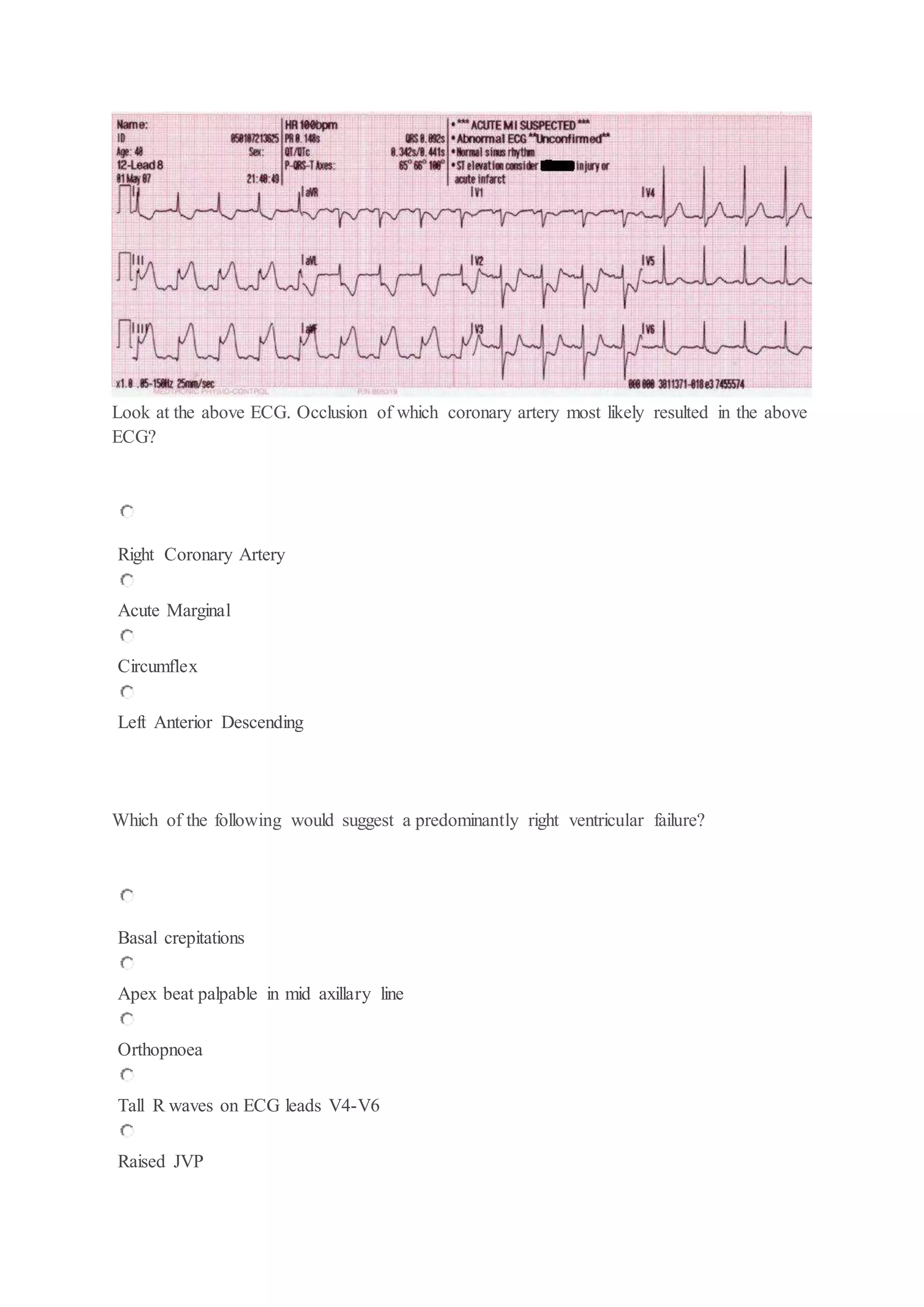
Look at the above ECG. Occlusion of which coronary artery most likely resulted in the above
ECG?
Right Coronary Artery
Acute Marginal
Circumflex
Left Anterior Descending
Which of the following would suggest a predominantly right ventricular failure?
Basal crepitations
Apex beat palpable in mid axillary line
Orthopnoea
Tall R waves on ECG leads V4-V6
Raised JVP
When attempting to listen to a prosthetic mitral valve, where is the most appropriate site for
auscultation?
2nd intercostal space left sternal edge
4th intercostal space left sternal edge
2nd intercostal space right sternal edge
5th intercostal space on left midclavicular line
3rd intercostal space on left midclavicular line
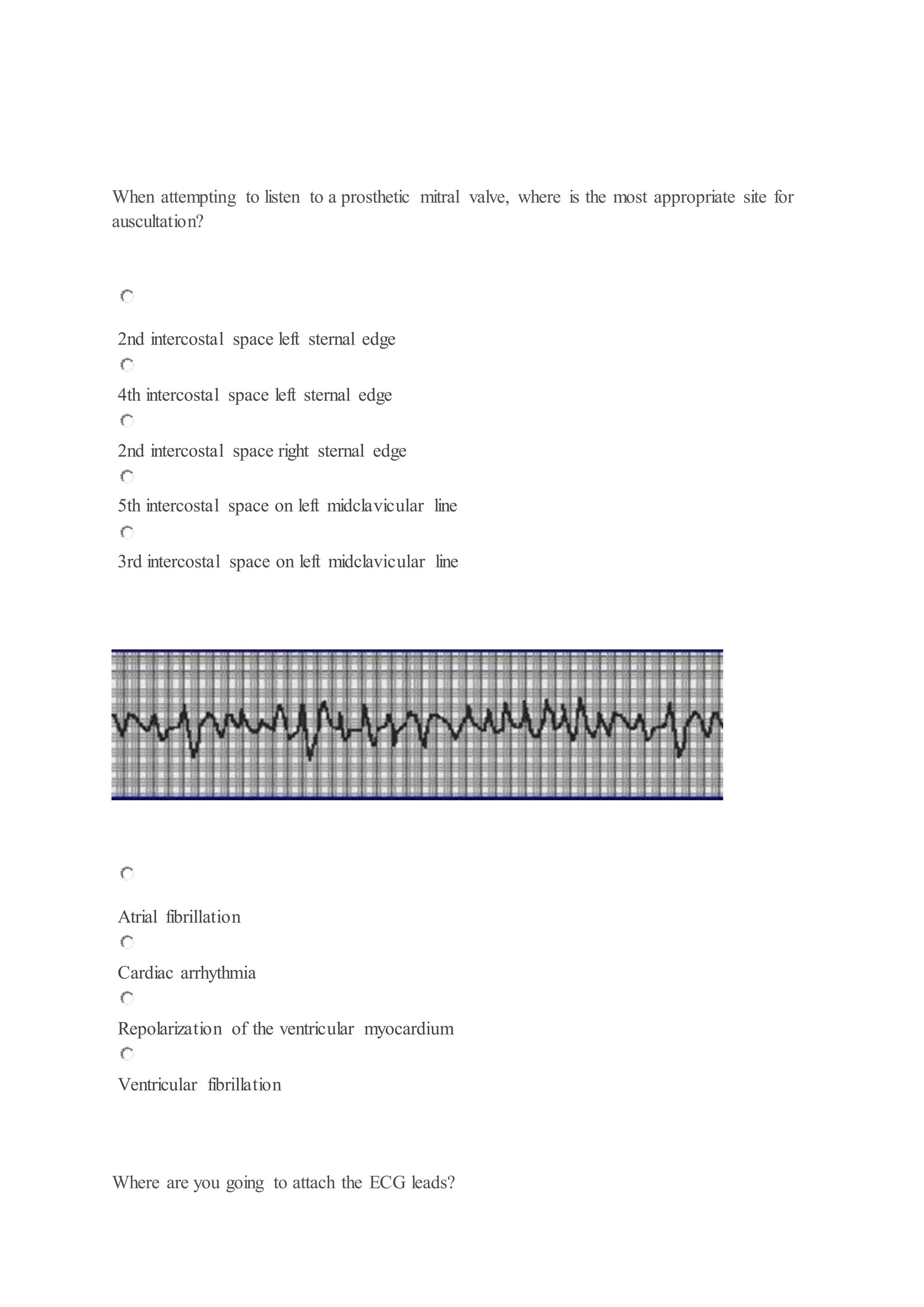
Atrial fibrillation
Cardiac arrhythmia
Repolarization of the ventricular myocardium
Ventricular fibrillation
Where are you going to attach the ECG leads?
Right arm, right leg, left leg
Right arm, left arm, left leg
Left arm, right leg, left leg
Right arm, left arm, right leg

Pretest koas

  • 1.
    1. Depolarization ofcardiac cells results in increased _____ and decreased _____. Calcium, Chloride Potassium, Sodium Magnesium, Potassium Sodium, Potassium Sympathetic stimulation of the SA node results in release of ________ from nerve endings, which binds to Beta 1 adrenergic receptors on pacemaker cell membranes. Acetycholine Ephedrine Norepinephrine CAMP Which of the following occurs during the D- A segment of the cardiac pressure volume loop? Isovolumetric relaxation Filling Phase Isovolumetric contraction Ejection Phase
  • 2.
    Look at the aboveECG. Occlusion of which coronary artery most likely resulted in this ECG? Right Coronary Artery Acute Marginal Circumflex Left Anterior Descending
  • 3.
    Which of thefollowing occurs during the C- D segment of the cardiac pressure volume loop? Isovolumetric relaxation Filling Phase Isovolumetric contraction Ejection Phase What occurs during phase 3? a. Opening fast sodium channel followed by Influx of sodium b. Opening potassium channel followed by efflux of kalium c. Opening slow calcium channel and potassium channel d. Opening potassium rectifier channel e. Opening slow calcium channel and sodium channel
  • 4.
    Which of thefollowing BP's represents stage 2 hypertension? 162/100 138/86 142/90 180/112 What does Starling's Law state? States that the greater the amount of blood entering the heart during diastole, the greater the amount of blood ejected during systole Relates ventricular pressure to wall tension Demonstrates the relationship between certain pressures in the heart and differing points in the cardiac cycle None of above. Which portion of the cardiac conduction system causes a delay in transmission of the action potential? Transitional cells SA Node Purkinje fibers AV node
  • 5.
    What is theCardiac output for Mrs. Wiffenbach? Her BP is currently 141/78, HR 74, SV 84 mls, BSA 2 m2, CVP 4. 3.1 L/min 9.9 L/min 6.2 L/min 2.7 L/min Which of the following will not cause an increase in myocardial oxygen consumption? Increase Afterload Decrease in HR Increase SV Contraction of Ventricle Blood flow to the coronary arteries decreases during which phase of the cardiac cycle? Systole Bradycardia Diastole None of above, blood flow to coronary arteries is constant
  • 6.
    Mr. Avery's BPis currently 134/80. What is his MAP? 107 98 80 76 The primary risk factor for the development of CAD is… Family history Aortic stenosis Hx of DVT Hypertension
  • 7.
    Look at theabove ECG. Occlusion of which coronary artery most likely resulted in the above ECG? Right Coronary Artery Acute Marginal Circumflex Left Anterior Descending Which of the following would suggest a predominantly right ventricular failure? Basal crepitations Apex beat palpable in mid axillary line Orthopnoea Tall R waves on ECG leads V4-V6 Raised JVP
  • 8.
    When attempting tolisten to a prosthetic mitral valve, where is the most appropriate site for auscultation? 2nd intercostal space left sternal edge 4th intercostal space left sternal edge 2nd intercostal space right sternal edge 5th intercostal space on left midclavicular line 3rd intercostal space on left midclavicular line Atrial fibrillation Cardiac arrhythmia Repolarization of the ventricular myocardium Ventricular fibrillation Where are you going to attach the ECG leads?
  • 9.
    Right arm, rightleg, left leg Right arm, left arm, left leg Left arm, right leg, left leg Right arm, left arm, right leg