PRESENT
CONTINUOUS
FORMA AFIRMATIVA
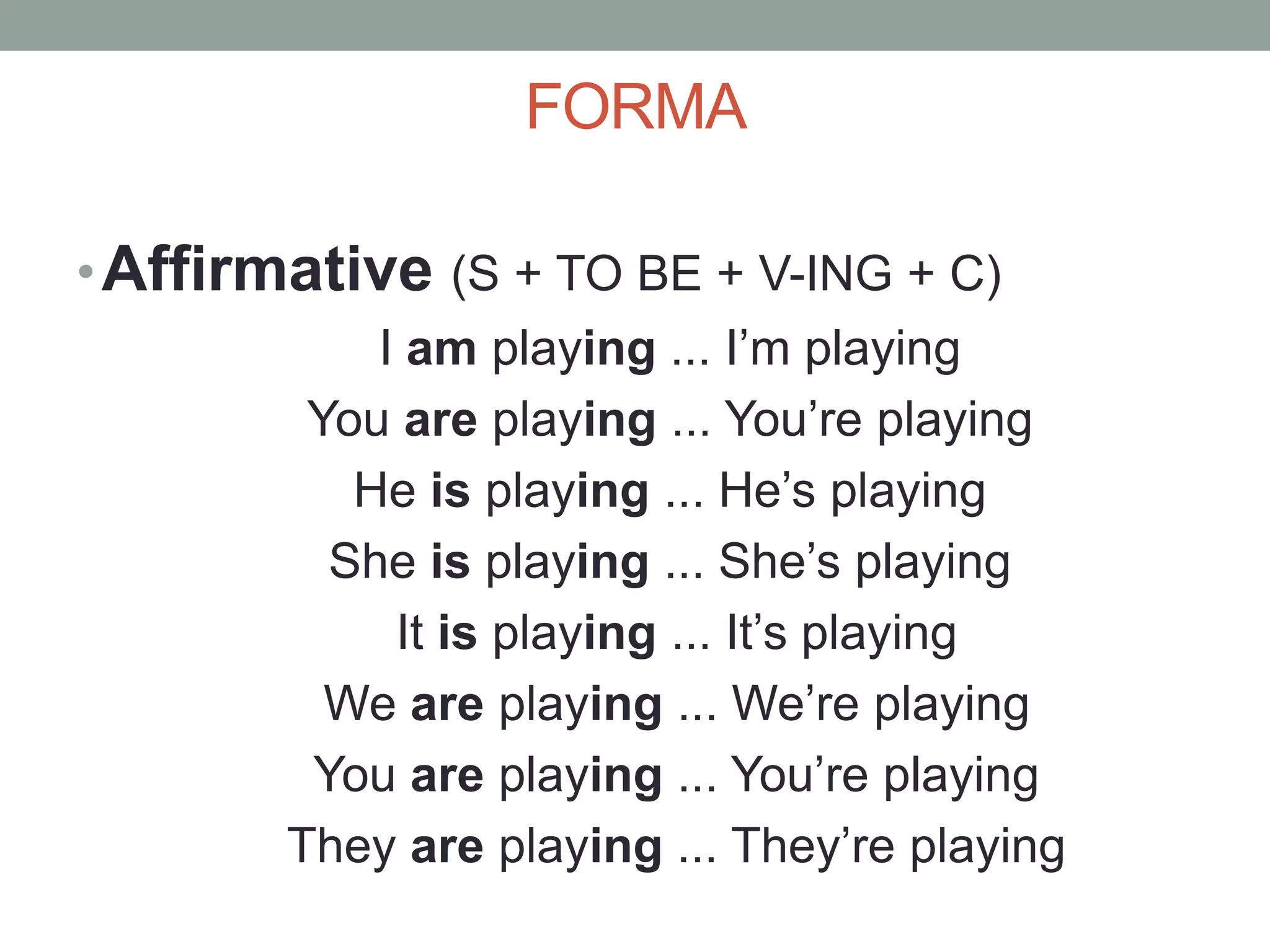
FORMA
•Affirmative (S + TO BE + V-ING + C)
I am playing ... I’m playing
You are playing ... You’re playing
He is playing ... He’s playing
She is playing ... She’s playing
It is playing ... It’s playing
We are playing ... We’re playing
You are playing ... You’re playing
They are playing ... They’re playing
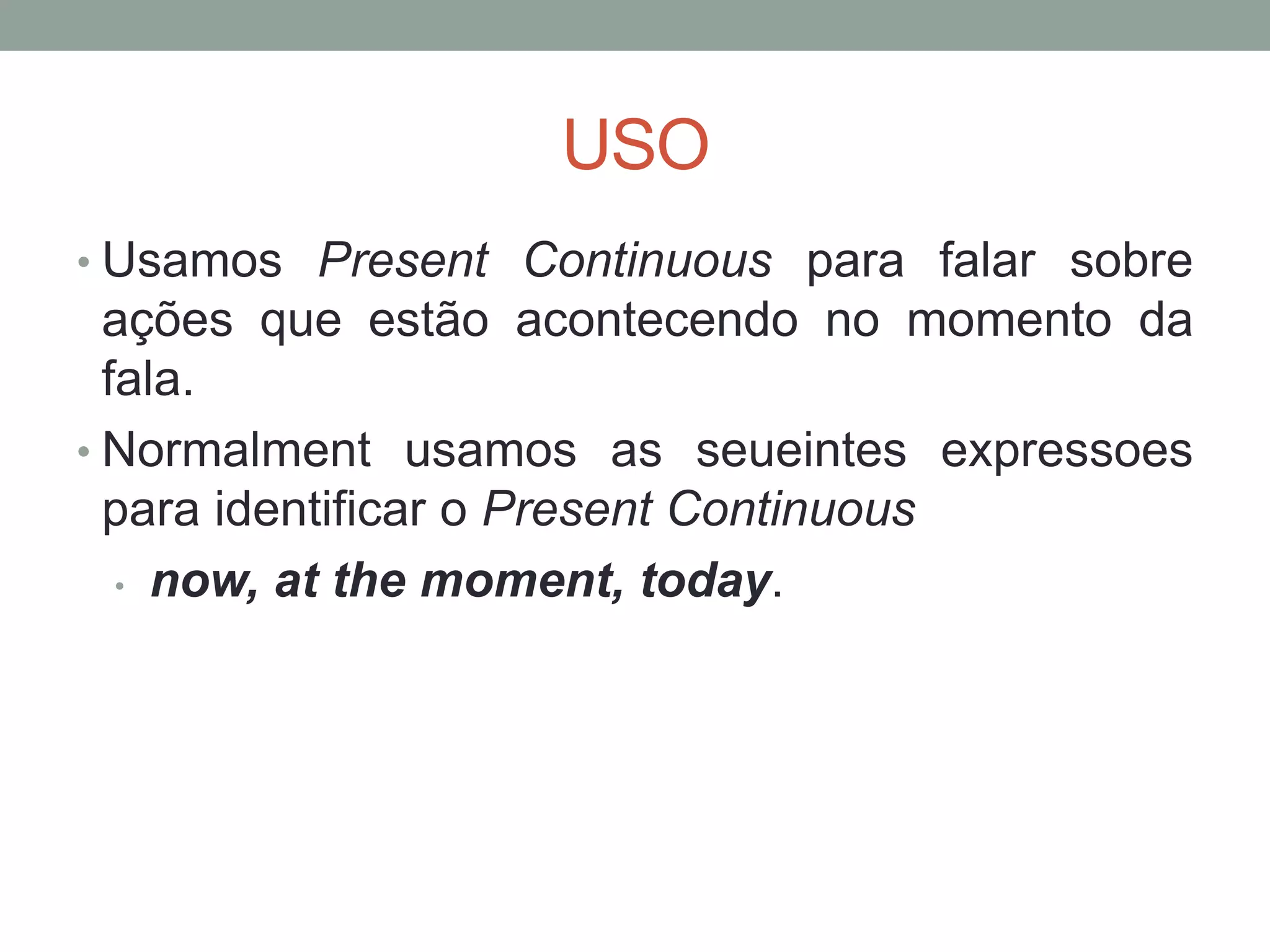
USO
• Usamos Present Continuous para falar sobre
ações que estão acontecendo no momento da
fala.
• Normalment usamos as seueintes expressoes
para identificar o Present Continuous
• now, at the moment, today.
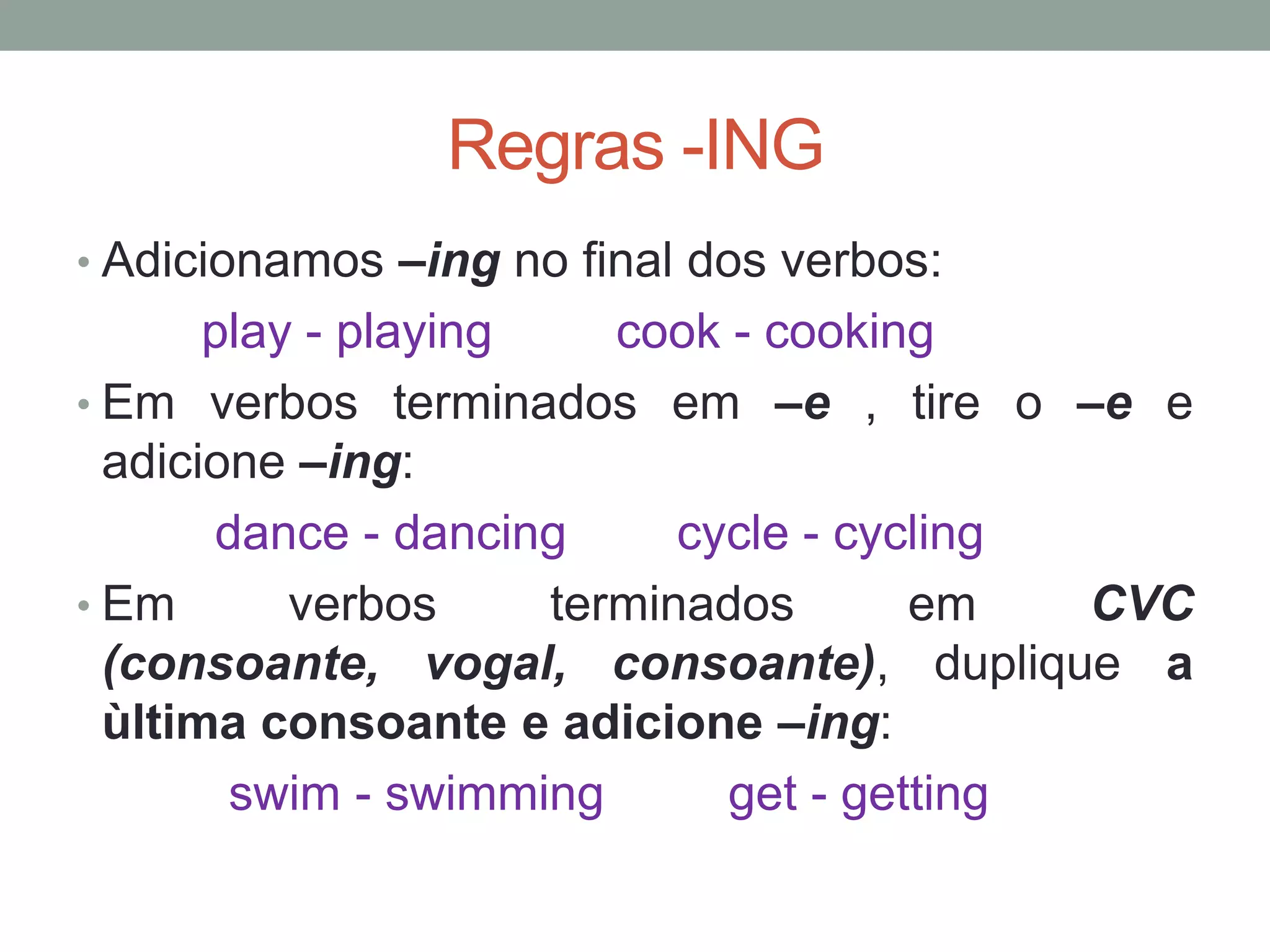
Regras -ING
• Adicionamos –ing no final dos verbos:
play - playing cook - cooking
• Em verbos terminados em –e , tire o –e e
adicione –ing:
dance - dancing cycle - cycling
• Em verbos terminados em CVC
(consoante, vogal, consoante), duplique a
ùltima consoante e adicione –ing:
swim - swimming get - getting
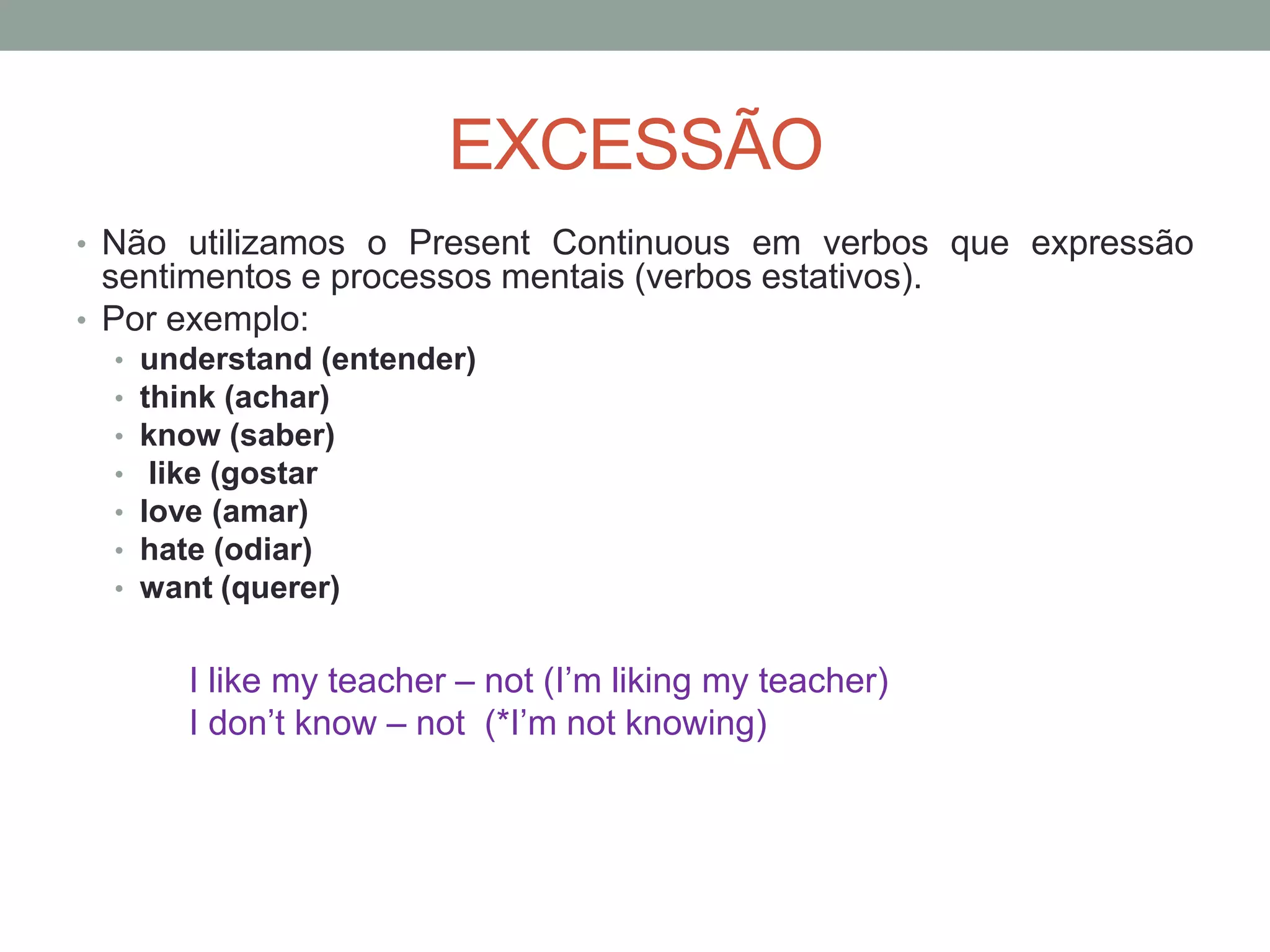
EXCESSÃO
• Não utilizamos o Present Continuous em verbos que expressão
sentimentos e processos mentais (verbos estativos).
• Por exemplo:
• understand (entender)
• think (achar)
• know (saber)
• like (gostar
• love (amar)
• hate (odiar)
• want (querer)
I like my teacher – not (I’m liking my teacher)
I don’t know – not (*I’m not knowing)

Presentcontinuousaffirmative

  • 1.
  • 2.
    FORMA •Affirmative (S +TO BE + V-ING + C) I am playing ... I’m playing You are playing ... You’re playing He is playing ... He’s playing She is playing ... She’s playing It is playing ... It’s playing We are playing ... We’re playing You are playing ... You’re playing They are playing ... They’re playing
  • 3.
    USO • Usamos PresentContinuous para falar sobre ações que estão acontecendo no momento da fala. • Normalment usamos as seueintes expressoes para identificar o Present Continuous • now, at the moment, today.
  • 4.
    Regras -ING • Adicionamos–ing no final dos verbos: play - playing cook - cooking • Em verbos terminados em –e , tire o –e e adicione –ing: dance - dancing cycle - cycling • Em verbos terminados em CVC (consoante, vogal, consoante), duplique a ùltima consoante e adicione –ing: swim - swimming get - getting
  • 5.
    EXCESSÃO • Não utilizamoso Present Continuous em verbos que expressão sentimentos e processos mentais (verbos estativos). • Por exemplo: • understand (entender) • think (achar) • know (saber) • like (gostar • love (amar) • hate (odiar) • want (querer) I like my teacher – not (I’m liking my teacher) I don’t know – not (*I’m not knowing)