Scientix Conference 
Brussels, 24-26 october 2014 
Annalisa Boniello 
PhD in Teaching Earth Science 
University of Camerino 
Science teacher in Pitagora High school – Naples (Italy)
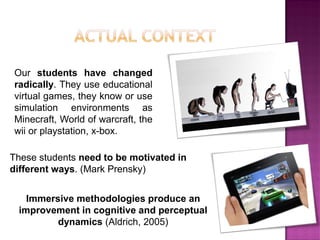
Our students have changed radically. They use educational virtual games, they know or use simulation environments as Minecraft, World of warcraft, the wii or playstation, x-box. 
These students need to be motivated in different ways. (Mark Prensky) 
Immersive methodologies produce an improvement in cognitive and perceptual dynamics (Aldrich, 2005)
The game is the preferred way of the brain to learn things! (Diane Ackerman) 
Who makes the distinction between education and entertainment does not know the first of the two! (Marshall McLuhan) 
[...] that culture, in its original phases, bears the character of a game. (Homo Ludens by Johan Huizinga)
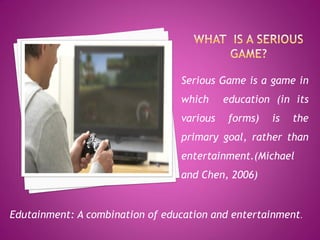
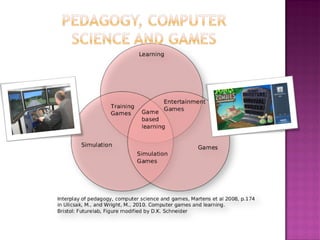
Serious Game is a game in which education (in its various forms) is the primary goal, rather than entertainment.(Michael and Chen, 2006) 
Edutainment: A combination of education and entertainment.
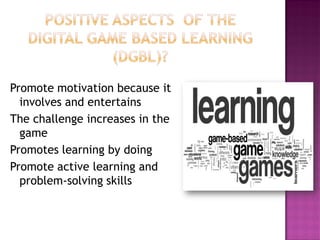
Promote motivation because it involves and entertains 
The challenge increases in the game 
Promotes learning by doing 
Promote active learning and problem-solving skills
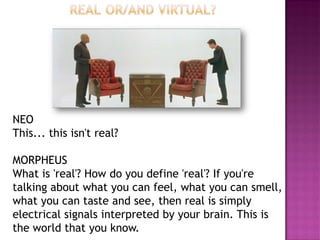
NEO This... this isn't real? MORPHEUS What is 'real'? How do you define 'real'? If you're talking about what you can feel, what you can smell, what you can taste and see, then real is simply electrical signals interpreted by your brain. This is the world that you know.
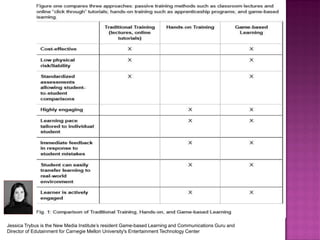
Jessica Trybus is the New Media Institute’s resident Game-based Learning and Communications Guru and Director of Edutainment for Carnegie Mellon University's Entertainment Technology Center
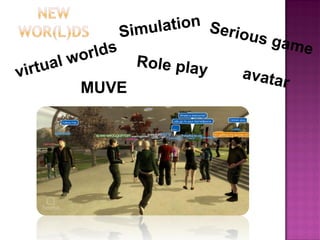
MUVE
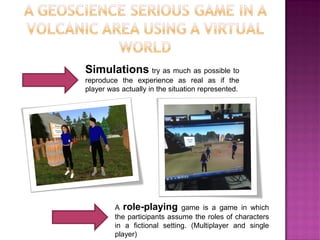
A role-playing game is a game in which the participants assume the roles of characters in a fictional setting. (Multiplayer and single player) 
Simulations try as much as possible to reproduce the experience as real as if the player was actually in the situation represented.
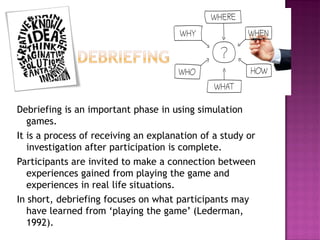
Debriefing is an important phase in using simulation games. 
It is a process of receiving an explanation of a study or investigation after participation is complete. 
Participants are invited to make a connection between experiences gained from playing the game and experiences in real life situations. 
In short, debriefing focuses on what participants may have learned from ‘playing the game’ (Lederman, 1992).
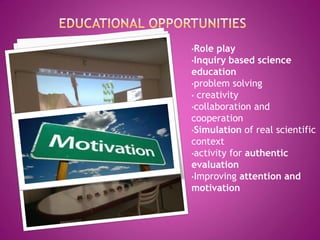
•Role play 
•Inquiry based science education 
•problem solving 
• creativity 
•collaboration and cooperation 
•Simulation of real scientific context 
•activity for authentic evaluation 
•Improving attention and motivation
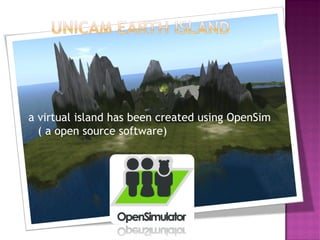
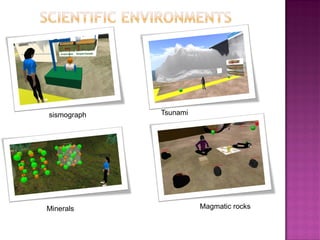
a virtual island has been created using OpenSim ( a open source software)
sismograph 
Tsunami 
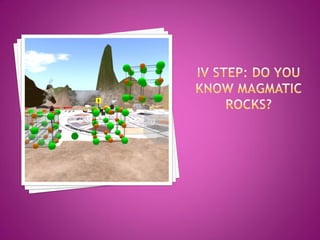
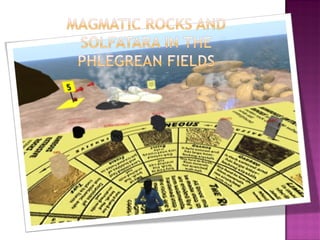
Magmatic rocks 
Minerals
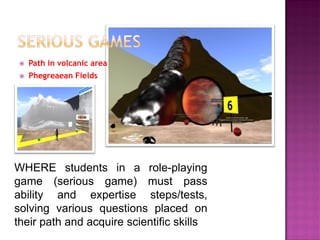
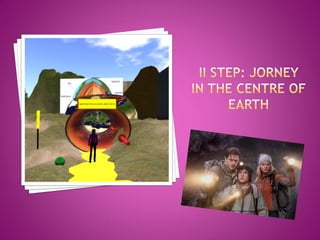
Path in volcanic area 
Phegreaean Fields 
WHERE students in a role-playing game (serious game) must pass ability and expertise steps/tests, solving various questions placed on their path and acquire scientific skills
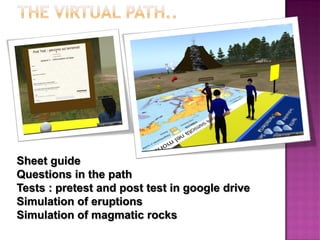
Sheet guide 
Questions in the path 
Tests : pretest and post test in google drive 
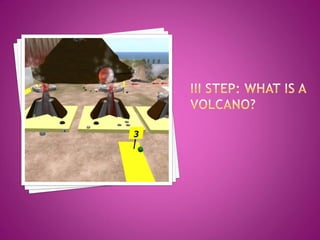
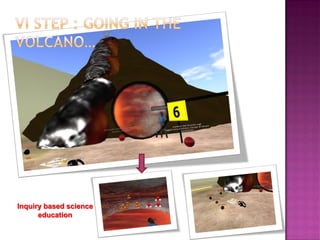
Simulation of eruptions 
Simulation of magmatic rocks
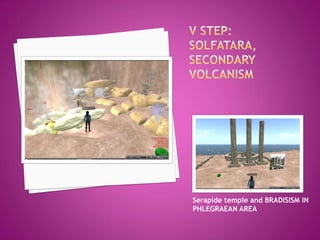
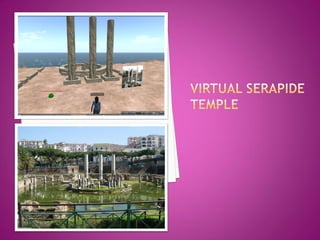
Serapide temple and BRADISISM IN PHLEGRAEAN AREA
Inquiry based science education
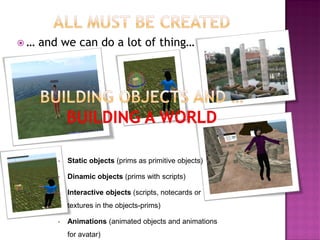
… and we can do a lot of thing… 
•Static objects (prims as primitive objects) 
•Dinamic objects (prims with scripts) 
•Interactive objects (scripts, notecards or textures in the objects-prims) 
•Animations (animated objects and animations for avatar)
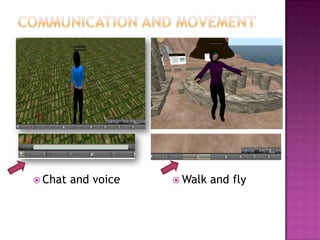
Chat and voice 
Walk and fly
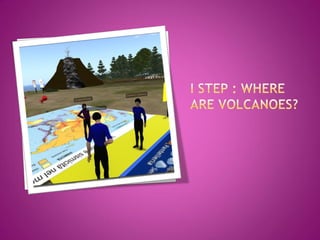
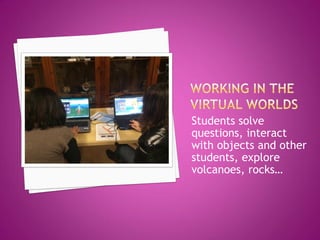
Students solve questions, interact with objects and other students, explore volcanoes, rocks…
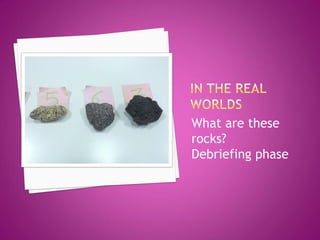
What are these rocks? 
Debriefing phase
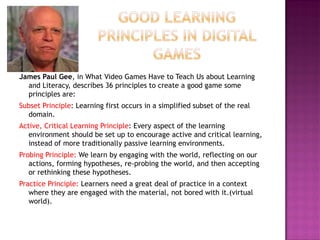
James Paul Gee, in What Video Games Have to Teach Us about Learning and Literacy, describes 36 principles to create a good game some principles are: 
Subset Principle: Learning first occurs in a simplified subset of the real domain. 
Active, Critical Learning Principle: Every aspect of the learning environment should be set up to encourage active and critical learning, instead of more traditionally passive learning environments. 
Probing Principle: We learn by engaging with the world, reflecting on our actions, forming hypotheses, re-probing the world, and then accepting or rethinking these hypotheses. 
Practice Principle: Learners need a great deal of practice in a context where they are engaged with the material, not bored with it.(virtual world).
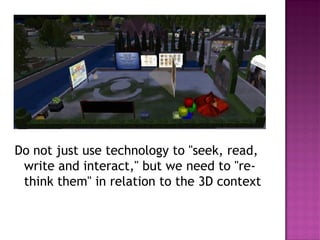
Do not just use technology to "seek, read, write and interact," but we need to "re- think them" in relation to the 3D context
Geosciences serious game: a path in a volcanic area, Annalisa Boniello

Geosciences serious game: a path in a volcanic area, Annalisa Boniello

  • 1.
    Scientix Conference Brussels,24-26 october 2014 Annalisa Boniello PhD in Teaching Earth Science University of Camerino Science teacher in Pitagora High school – Naples (Italy)
  • 2.
    Our students havechanged radically. They use educational virtual games, they know or use simulation environments as Minecraft, World of warcraft, the wii or playstation, x-box. These students need to be motivated in different ways. (Mark Prensky) Immersive methodologies produce an improvement in cognitive and perceptual dynamics (Aldrich, 2005)
  • 3.
    The game isthe preferred way of the brain to learn things! (Diane Ackerman) Who makes the distinction between education and entertainment does not know the first of the two! (Marshall McLuhan) [...] that culture, in its original phases, bears the character of a game. (Homo Ludens by Johan Huizinga)
  • 4.
    Serious Game isa game in which education (in its various forms) is the primary goal, rather than entertainment.(Michael and Chen, 2006) Edutainment: A combination of education and entertainment.
  • 5.
    Promote motivation becauseit involves and entertains The challenge increases in the game Promotes learning by doing Promote active learning and problem-solving skills
  • 6.
    NEO This... thisisn't real? MORPHEUS What is 'real'? How do you define 'real'? If you're talking about what you can feel, what you can smell, what you can taste and see, then real is simply electrical signals interpreted by your brain. This is the world that you know.
  • 8.
    Jessica Trybus isthe New Media Institute’s resident Game-based Learning and Communications Guru and Director of Edutainment for Carnegie Mellon University's Entertainment Technology Center
  • 10.
  • 11.
    A role-playing gameis a game in which the participants assume the roles of characters in a fictional setting. (Multiplayer and single player) Simulations try as much as possible to reproduce the experience as real as if the player was actually in the situation represented.
  • 12.
    Debriefing is animportant phase in using simulation games. It is a process of receiving an explanation of a study or investigation after participation is complete. Participants are invited to make a connection between experiences gained from playing the game and experiences in real life situations. In short, debriefing focuses on what participants may have learned from ‘playing the game’ (Lederman, 1992).
  • 13.
    •Role play •Inquirybased science education •problem solving • creativity •collaboration and cooperation •Simulation of real scientific context •activity for authentic evaluation •Improving attention and motivation
  • 14.
    a virtual islandhas been created using OpenSim ( a open source software)
  • 15.
  • 16.
    Path in volcanicarea Phegreaean Fields WHERE students in a role-playing game (serious game) must pass ability and expertise steps/tests, solving various questions placed on their path and acquire scientific skills
  • 18.
    Sheet guide Questionsin the path Tests : pretest and post test in google drive Simulation of eruptions Simulation of magmatic rocks
  • 24.
    Serapide temple andBRADISISM IN PHLEGRAEAN AREA
  • 26.
  • 27.
    … and wecan do a lot of thing… •Static objects (prims as primitive objects) •Dinamic objects (prims with scripts) •Interactive objects (scripts, notecards or textures in the objects-prims) •Animations (animated objects and animations for avatar)
  • 28.
    Chat and voice Walk and fly
  • 29.
    Students solve questions,interact with objects and other students, explore volcanoes, rocks…
  • 30.
    What are theserocks? Debriefing phase
  • 32.
    James Paul Gee,in What Video Games Have to Teach Us about Learning and Literacy, describes 36 principles to create a good game some principles are: Subset Principle: Learning first occurs in a simplified subset of the real domain. Active, Critical Learning Principle: Every aspect of the learning environment should be set up to encourage active and critical learning, instead of more traditionally passive learning environments. Probing Principle: We learn by engaging with the world, reflecting on our actions, forming hypotheses, re-probing the world, and then accepting or rethinking these hypotheses. Practice Principle: Learners need a great deal of practice in a context where they are engaged with the material, not bored with it.(virtual world).
  • 33.
    Do not justuse technology to "seek, read, write and interact," but we need to "re- think them" in relation to the 3D context