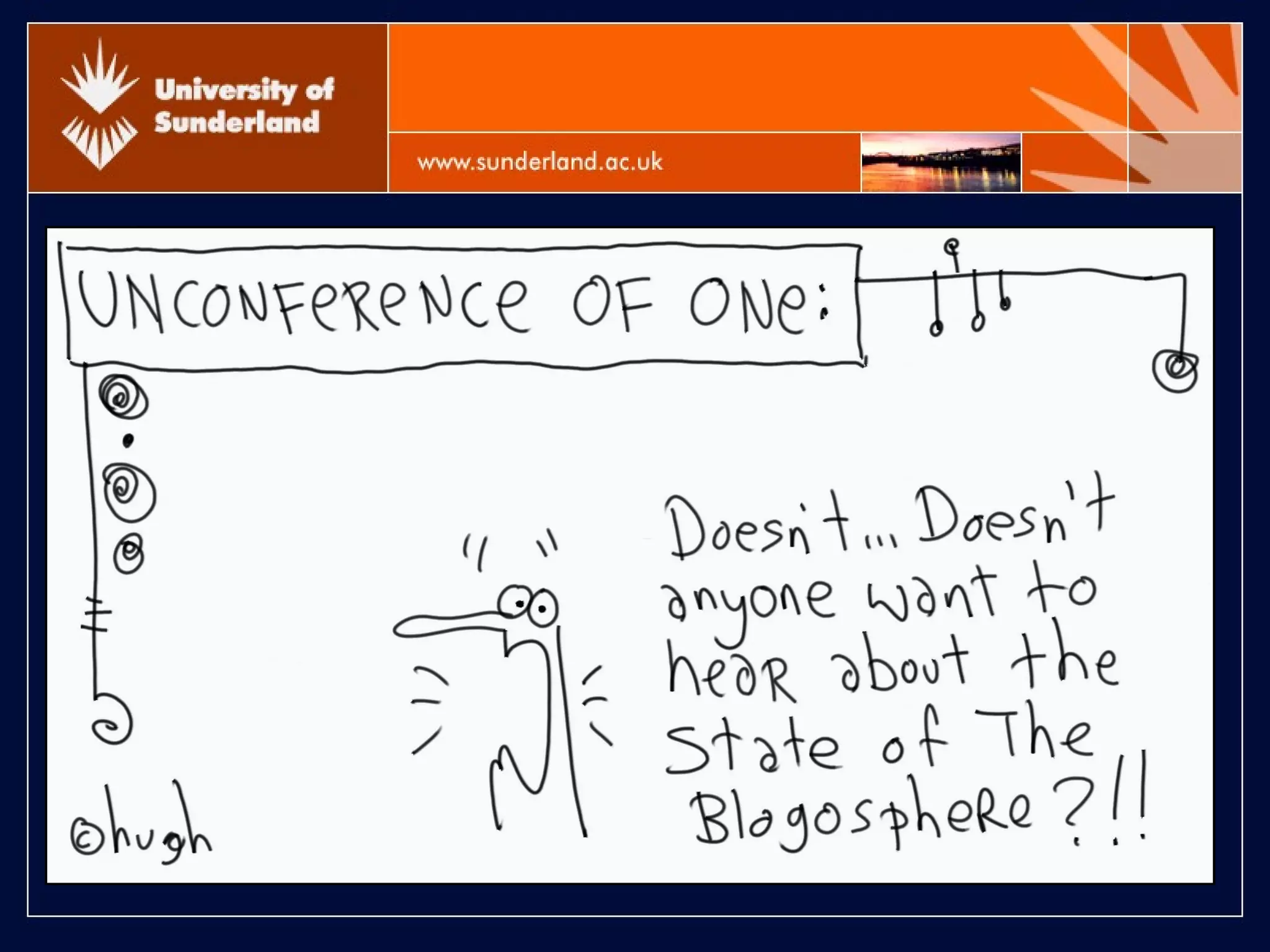
New Ways to Communicate?  Theoretical Perspectives on the Use of Social Software in Public Relations and Marketing   Philip Young University  of Sunderland
 
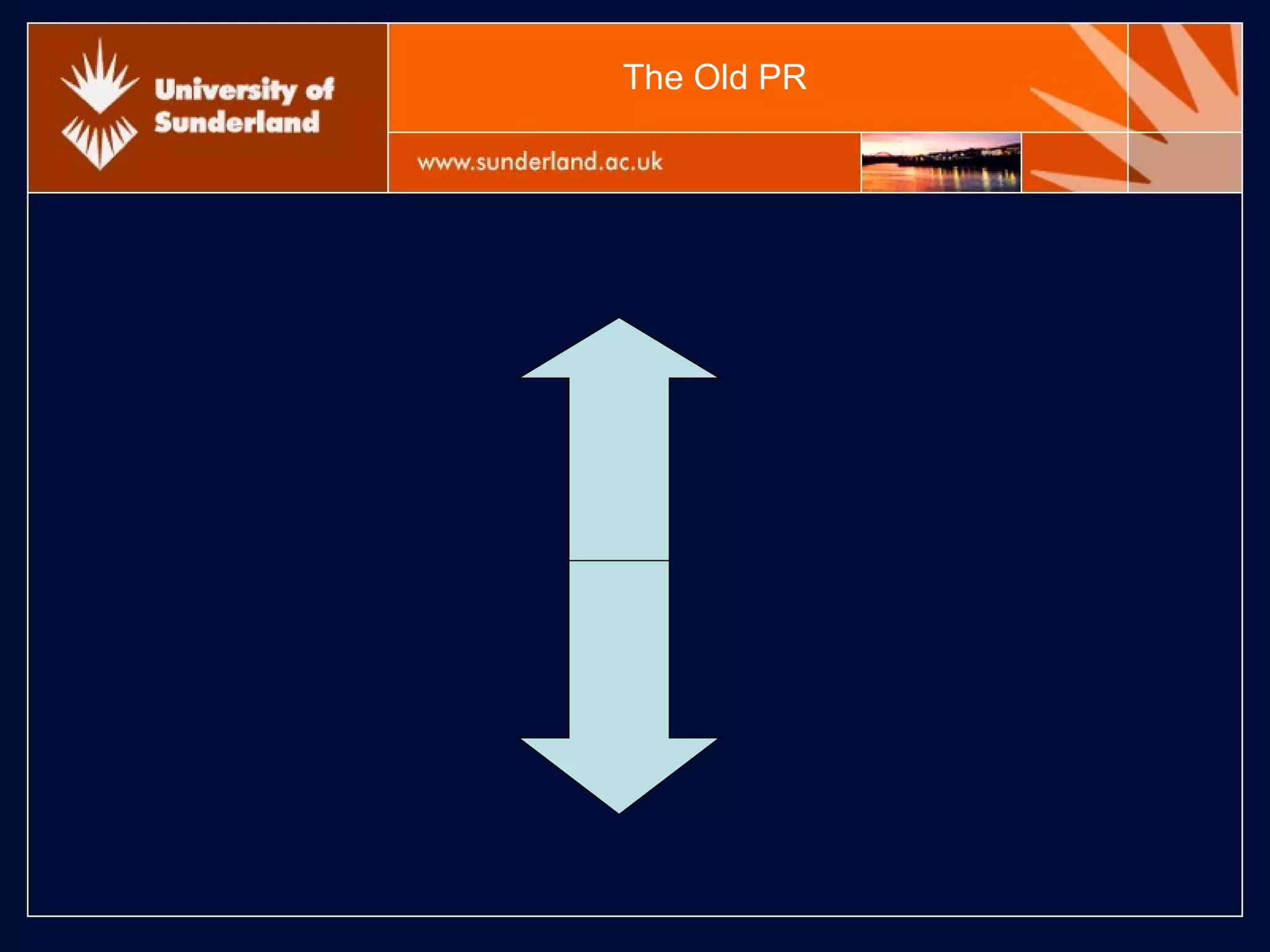
The Old PR
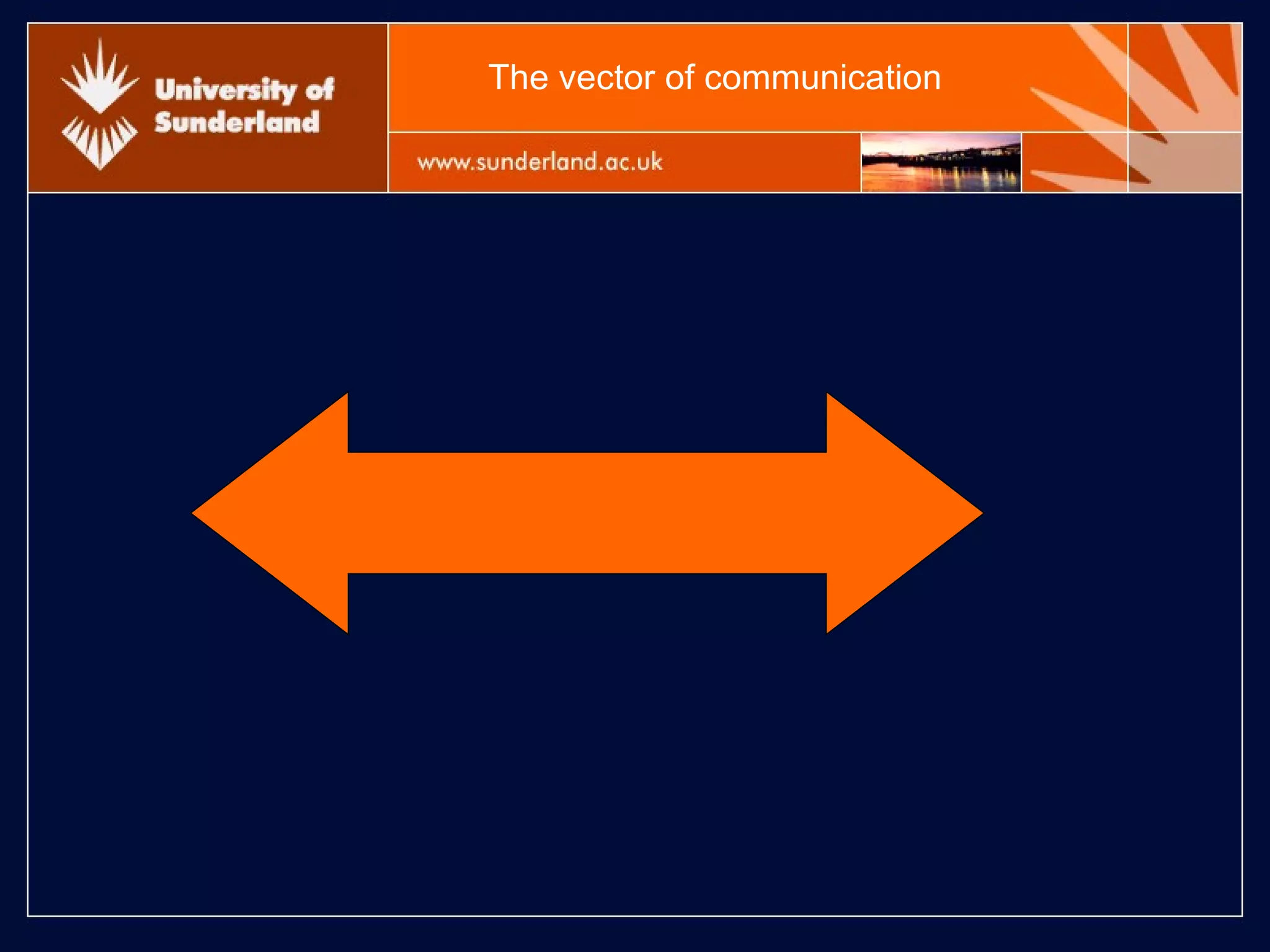
The vector of communication
What is the New PR? The news release is dead Traditional PR departments are facing extinction
Delivering the New PR Markets are conversations We are seeing the end of ‘command and control’ model of PR
The acadmic challenge Academics must assess the validity and magnitude of the claim in terms of its impact on accepted theory Does the New PR demand new theory?
The Old PR
The vector of communication
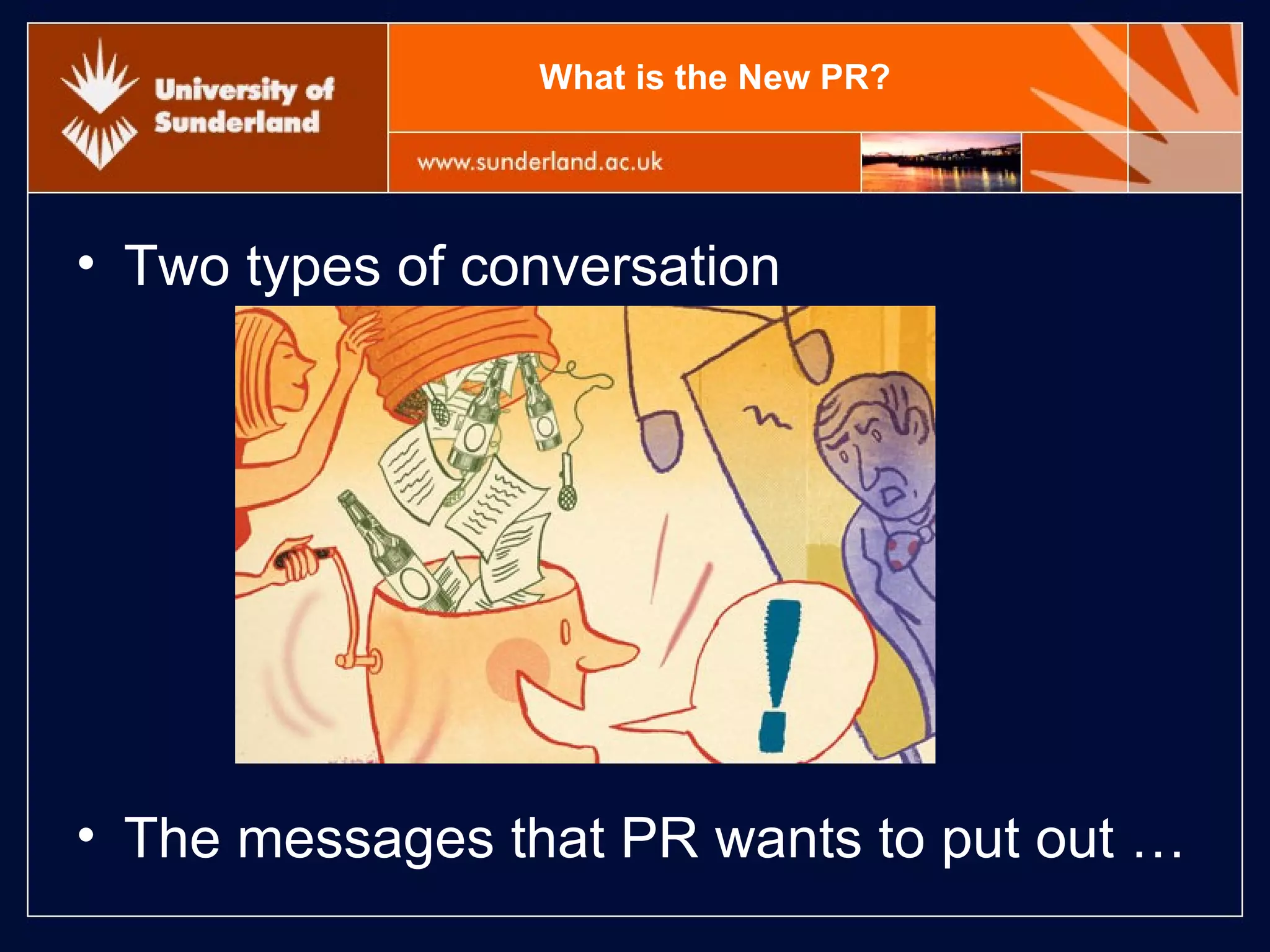
What is the New PR? Two types of conversation The messages that PR wants to put out …
Two types of conversation…. Two types of conversation…. The conversation around a product or service… whether PR likes it or not!
The Old PR
The Old PR
The vector of communication
Where reputation is formed Social softwares Social networks Facebook, Bebo Social bookmarks  Blogs, vlogs, podcasts: You Tube Stars, tips, ratings, rankings
Can theory take it? Gregory 2004 argues critical aspects of internet mediated comms  are  agency transparency  porosity  plus  reach lack of time constraints and interactivity  May not fit current theory
Aggregation Aggregation! PR is being challenged by themed aggregation of individual voices in complex, overlying and interwoven networks This is the VISIBLE manifestation of REPUTATION
It’s linear, stupid Conceptual framings of PR are most usually based on analyses of power relationships (Grunig sees  organisational success in conceding power?) Simple, linear transmission model (with feedback)
The start of something new? Is the New PR emerging though a social and structural realignment that mirrors the move from mass communications to aggregated micro communications?
Aggregated individual dialogues UK Chartered Institute of Public Relations claims: “ PR is about reputation – the result of what you do, what you say, and what others say about you.” It may be that examining and reflecting back to management in a meaningful way the consequences to a reputation forged by aggregated individual dialogues becomes the defining feature of public relations activity

PresentationPhilipYoung

  • 1.
    New Ways toCommunicate? Theoretical Perspectives on the Use of Social Software in Public Relations and Marketing Philip Young University of Sunderland
  • 2.
  • 3.
  • 4.
    The vector ofcommunication
  • 5.
    What is theNew PR? The news release is dead Traditional PR departments are facing extinction
  • 6.
    Delivering the NewPR Markets are conversations We are seeing the end of ‘command and control’ model of PR
  • 7.
    The acadmic challengeAcademics must assess the validity and magnitude of the claim in terms of its impact on accepted theory Does the New PR demand new theory?
  • 8.
  • 9.
    The vector ofcommunication
  • 10.
    What is theNew PR? Two types of conversation The messages that PR wants to put out …
  • 11.
    Two types ofconversation…. Two types of conversation…. The conversation around a product or service… whether PR likes it or not!
  • 12.
  • 13.
  • 14.
    The vector ofcommunication
  • 15.
    The vector ofcommunication
  • 16.
    Where reputation isformed Social softwares Social networks Facebook, Bebo Social bookmarks Blogs, vlogs, podcasts: You Tube Stars, tips, ratings, rankings
  • 17.
    Can theory takeit? Gregory 2004 argues critical aspects of internet mediated comms are agency transparency porosity plus reach lack of time constraints and interactivity May not fit current theory
  • 18.
    Aggregation Aggregation! PRis being challenged by themed aggregation of individual voices in complex, overlying and interwoven networks This is the VISIBLE manifestation of REPUTATION
  • 19.
    It’s linear, stupidConceptual framings of PR are most usually based on analyses of power relationships (Grunig sees organisational success in conceding power?) Simple, linear transmission model (with feedback)
  • 20.
    The start ofsomething new? Is the New PR emerging though a social and structural realignment that mirrors the move from mass communications to aggregated micro communications?
  • 21.
    Aggregated individual dialoguesUK Chartered Institute of Public Relations claims: “ PR is about reputation – the result of what you do, what you say, and what others say about you.” It may be that examining and reflecting back to management in a meaningful way the consequences to a reputation forged by aggregated individual dialogues becomes the defining feature of public relations activity