ConjugatedConjugated
HyperbilirubinemiaHyperbilirubinemia
Presented by Ri 黃纓雰
91-5-6
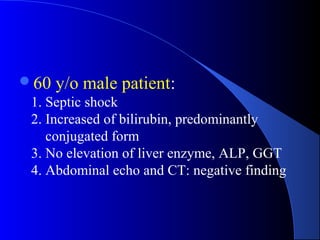
60 y/o male patient:
1. Septic shock
2. Increased of bilirubin, predominantly
conjugated form
3. No elevation of liver enzyme, ALP, GGT
4. Abdominal echo and CT: negative finding
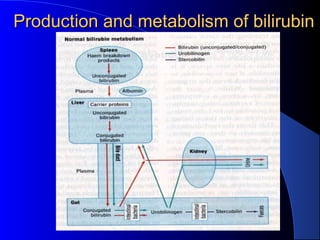
Production and metabolism of bilirubinProduction and metabolism of bilirubin
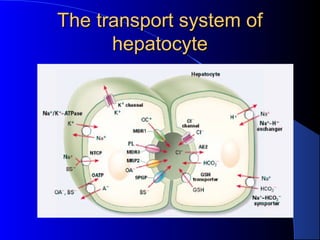
The transport system ofThe transport system of
hepatocytehepatocyte
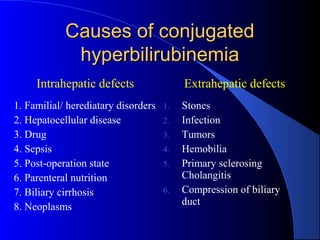
Causes of conjugatedCauses of conjugated
hyperbilirubinemiahyperbilirubinemia
Intrahepatic defects Extrahepatic defects
1. Familial/ herediatary disorders
2. Hepatocellular disease
3. Drug
4. Sepsis
5. Post-operation state
6. Parenteral nutrition
7. Biliary cirrhosis
8. Neoplasms
1. Stones
2. Infection
3. Tumors
4. Hemobilia
5. Primary sclerosing
Cholangitis
6. Compression of biliary
duct
Bile and bilirubin excretion inBile and bilirubin excretion in
relation to hepatic energy statusrelation to hepatic energy status
during hemorrhagic shock andduring hemorrhagic shock and
hapoxemia in rabbitshapoxemia in rabbits
Journal of Trauma. 39(4): 665-670, October 1995Journal of Trauma. 39(4): 665-670, October 1995
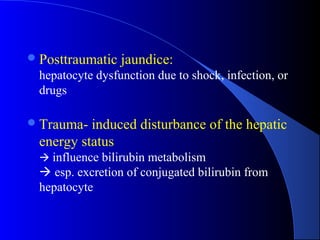
Posttraumatic jaundice:
hepatocyte dysfunction due to shock, infection, or
drugs
Trauma- induced disturbance of the hepatic
energy status
 influence bilirubin metabolism
 esp. excretion of conjugated bilirubin from
hepatocyte
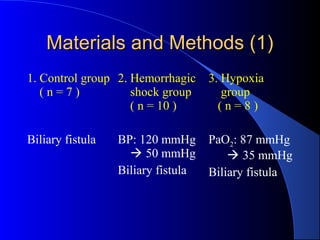
Materials and Methods (1)Materials and Methods (1)
1. Control group
( n = 7 )
2. Hemorrhagic
shock group
( n = 10 )
3. Hypoxia
group
( n = 8 )
Biliary fistula BP: 120 mmHg
 50 mmHg
Biliary fistula
PaO2: 87 mmHg
 35 mmHg
Biliary fistula
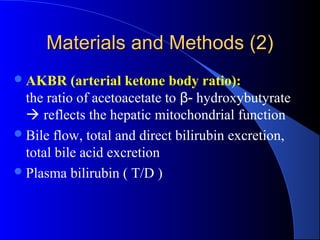
Materials and Methods (2)Materials and Methods (2)
AKBR (arterial ketone body ratio):
the ratio of acetoacetate to β- hydroxybutyrate
 reflects the hepatic mitochondrial function
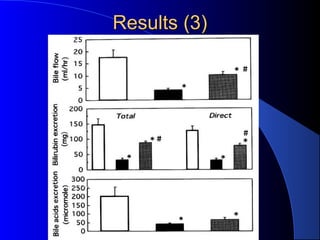
Bile flow, total and direct bilirubin excretion,
total bile acid excretion
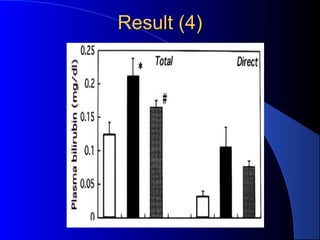
Plasma bilirubin ( T/D )
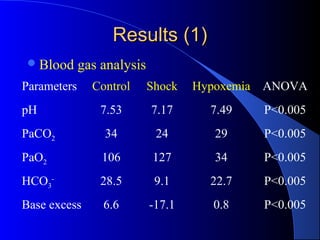
Results (1)Results (1)
Blood gas analysis
Parameters Control Shock Hypoxemia ANOVA
pH 7.53 7.17 7.49 P<0.005
PaCO2 34 24 29 P<0.005
PaO2 106 127 34 P<0.005
HCO3
-
28.5 9.1 22.7 P<0.005
Base excess 6.6 -17.1 0.8 P<0.005
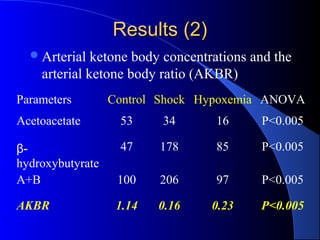
Results (2)Results (2)
Arterial ketone body concentrations and the
arterial ketone body ratio (AKBR)
Parameters Control Shock Hypoxemia ANOVA
Acetoacetate 53 34 16 P<0.005
β-
hydroxybutyrate
47 178 85 P<0.005
A+B 100 206 97 P<0.005
AKBR 1.14 0.16 0.23 P<0.005
Results (3)Results (3)
Result (4)Result (4)
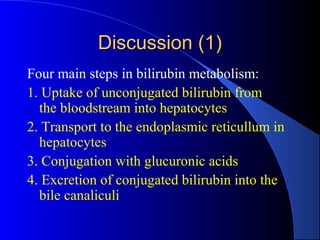
Discussion (1)Discussion (1)
Four main steps in bilirubin metabolism:
1. Uptake of unconjugated bilirubin from
the bloodstream into hepatocytes
2. Transport to the endoplasmic reticullum in
hepatocytes
3. Conjugation with glucuronic acids
4. Excretion of conjugated bilirubin into the
bile canaliculi
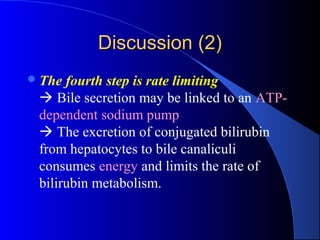
Discussion (2)Discussion (2)
The fourth step is rate limiting
 Bile secretion may be linked to an ATP-
dependent sodium pump
 The excretion of conjugated bilirubin
from hepatocytes to bile canaliculi
consumes energy and limits the rate of
bilirubin metabolism.
Discussion (3)Discussion (3)
1. The hepatic energy status can be estimated
in vivo by measuring the AKBR.
2. The bile flow and the excretion of bilirubin
and total bile acids into bile were
significantly decreased during the hepatic
energy crisis.
( clearly in hypoxia model)
Discussion (4)Discussion (4)
3. In the shock and hypoxemia groups:
AKBR and the hepatic energy decreased
 decreased bile flow and excretion of
direct bilirubin into the bile duct
4. The increase in the plasma bilirubin results
from back diffusion of water-soluble
conjugated bilirubin in hepatocytes.
Discussion (5)Discussion (5)
5. Rabbits: only 1/3 of the hemoglobin
metabolite is excreted as bilirubin.
Human: most of the hemoglobin metabolite
as bilirubin.
 Disturbed bilirubin excretion may be
more pronounced in humans.
Conjugated hyperbilirubinemia without
liver enzyme abnormalities is relatively
uncommon but can be seen in
1. Pregnancy
2. Sepsis
3. After recent surgery
~from Harrison’s Principles of Internal Medicine
Thanks for your attention!!Thanks for your attention!!

Presentation_1368627221281

  • 1.
  • 2.
    60 y/o malepatient: 1. Septic shock 2. Increased of bilirubin, predominantly conjugated form 3. No elevation of liver enzyme, ALP, GGT 4. Abdominal echo and CT: negative finding
  • 3.
    Production and metabolismof bilirubinProduction and metabolism of bilirubin
  • 4.
    The transport systemofThe transport system of hepatocytehepatocyte
  • 5.
    Causes of conjugatedCausesof conjugated hyperbilirubinemiahyperbilirubinemia Intrahepatic defects Extrahepatic defects 1. Familial/ herediatary disorders 2. Hepatocellular disease 3. Drug 4. Sepsis 5. Post-operation state 6. Parenteral nutrition 7. Biliary cirrhosis 8. Neoplasms 1. Stones 2. Infection 3. Tumors 4. Hemobilia 5. Primary sclerosing Cholangitis 6. Compression of biliary duct
  • 6.
    Bile and bilirubinexcretion inBile and bilirubin excretion in relation to hepatic energy statusrelation to hepatic energy status during hemorrhagic shock andduring hemorrhagic shock and hapoxemia in rabbitshapoxemia in rabbits Journal of Trauma. 39(4): 665-670, October 1995Journal of Trauma. 39(4): 665-670, October 1995
  • 7.
    Posttraumatic jaundice: hepatocyte dysfunctiondue to shock, infection, or drugs Trauma- induced disturbance of the hepatic energy status  influence bilirubin metabolism  esp. excretion of conjugated bilirubin from hepatocyte
  • 8.
    Materials and Methods(1)Materials and Methods (1) 1. Control group ( n = 7 ) 2. Hemorrhagic shock group ( n = 10 ) 3. Hypoxia group ( n = 8 ) Biliary fistula BP: 120 mmHg  50 mmHg Biliary fistula PaO2: 87 mmHg  35 mmHg Biliary fistula
  • 9.
    Materials and Methods(2)Materials and Methods (2) AKBR (arterial ketone body ratio): the ratio of acetoacetate to β- hydroxybutyrate  reflects the hepatic mitochondrial function Bile flow, total and direct bilirubin excretion, total bile acid excretion Plasma bilirubin ( T/D )
  • 10.
    Results (1)Results (1) Bloodgas analysis Parameters Control Shock Hypoxemia ANOVA pH 7.53 7.17 7.49 P<0.005 PaCO2 34 24 29 P<0.005 PaO2 106 127 34 P<0.005 HCO3 - 28.5 9.1 22.7 P<0.005 Base excess 6.6 -17.1 0.8 P<0.005
  • 11.
    Results (2)Results (2) Arterialketone body concentrations and the arterial ketone body ratio (AKBR) Parameters Control Shock Hypoxemia ANOVA Acetoacetate 53 34 16 P<0.005 β- hydroxybutyrate 47 178 85 P<0.005 A+B 100 206 97 P<0.005 AKBR 1.14 0.16 0.23 P<0.005
  • 12.
  • 13.
  • 14.
    Discussion (1)Discussion (1) Fourmain steps in bilirubin metabolism: 1. Uptake of unconjugated bilirubin from the bloodstream into hepatocytes 2. Transport to the endoplasmic reticullum in hepatocytes 3. Conjugation with glucuronic acids 4. Excretion of conjugated bilirubin into the bile canaliculi
  • 15.
    Discussion (2)Discussion (2) Thefourth step is rate limiting  Bile secretion may be linked to an ATP- dependent sodium pump  The excretion of conjugated bilirubin from hepatocytes to bile canaliculi consumes energy and limits the rate of bilirubin metabolism.
  • 16.
    Discussion (3)Discussion (3) 1.The hepatic energy status can be estimated in vivo by measuring the AKBR. 2. The bile flow and the excretion of bilirubin and total bile acids into bile were significantly decreased during the hepatic energy crisis. ( clearly in hypoxia model)
  • 17.
    Discussion (4)Discussion (4) 3.In the shock and hypoxemia groups: AKBR and the hepatic energy decreased  decreased bile flow and excretion of direct bilirubin into the bile duct 4. The increase in the plasma bilirubin results from back diffusion of water-soluble conjugated bilirubin in hepatocytes.
  • 18.
    Discussion (5)Discussion (5) 5.Rabbits: only 1/3 of the hemoglobin metabolite is excreted as bilirubin. Human: most of the hemoglobin metabolite as bilirubin.  Disturbed bilirubin excretion may be more pronounced in humans.
  • 19.
    Conjugated hyperbilirubinemia without liverenzyme abnormalities is relatively uncommon but can be seen in 1. Pregnancy 2. Sepsis 3. After recent surgery ~from Harrison’s Principles of Internal Medicine
  • 20.
    Thanks for yourattention!!Thanks for your attention!!