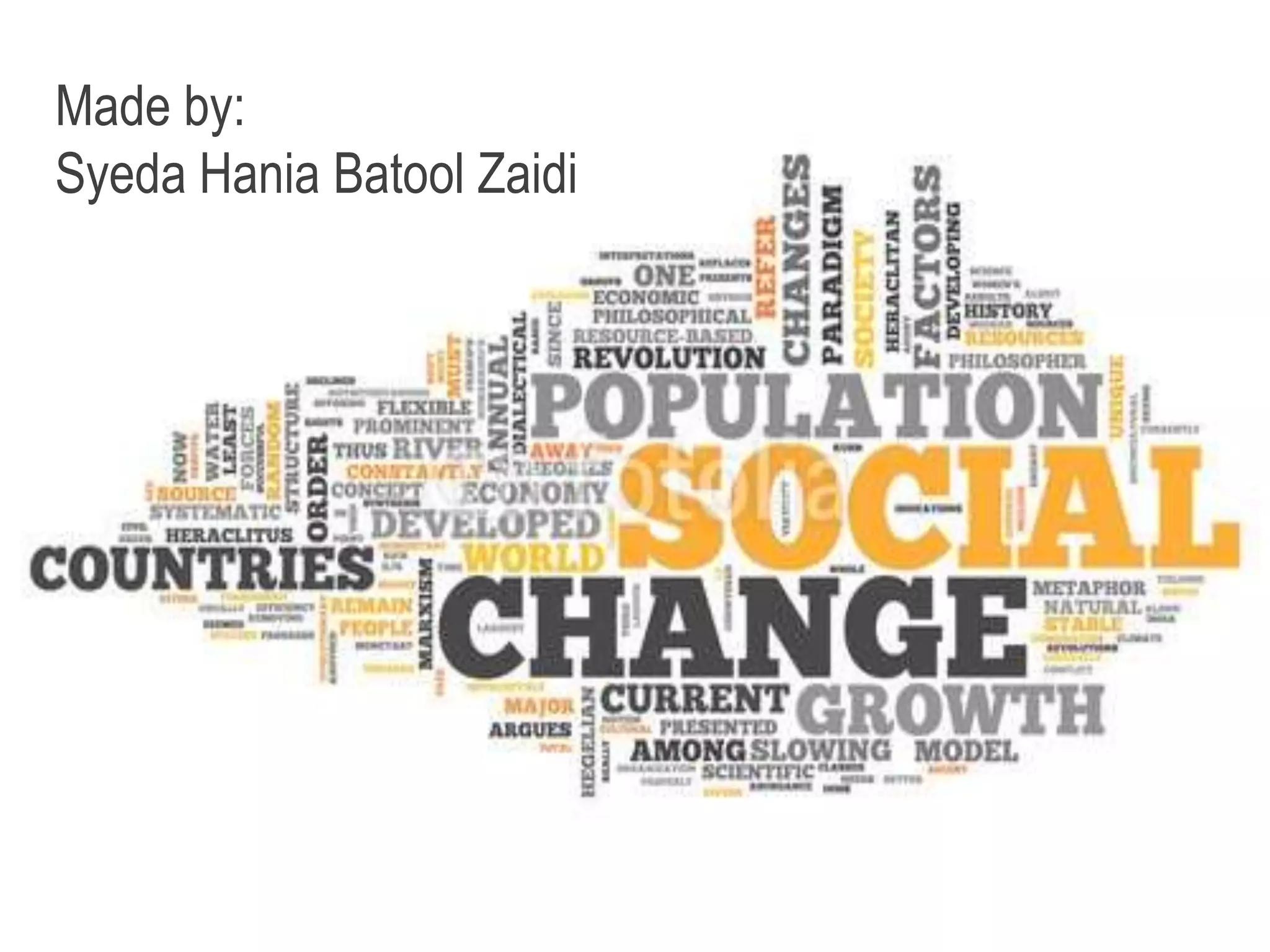


Made by: 
Syeda Hania Batool Zaidi
CONTENTS 
• DEFINITION 
• HISTORY 
• THEORIES 
• TYPES OF SOCIAL CHANGE 
• SIGNIFICANCE OF SOCIAL CHANGE 
• IMPACT ON SOCIETY 
• SOCIAL CHANGE IN INSTITUTIONS
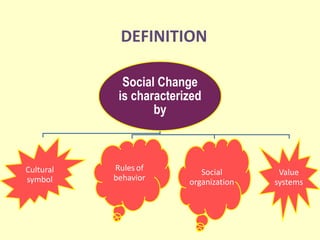
Social Change 
is characterized 
by 
Cultural 
symbol 
Rules of 
behavior 
Social 
organization 
Value 
systems 
DEFINITION
HISTORY 
• Change occurs when societies change their 
conditions according to their need. 
• Change in climate 
• Change in material 
• Change in culture 
• Change in Governance: 
• Change in environment
THEORISTS 
• Auguste Comte believed that social change 
mean towards something better. 
• Herbert Spencer argued that society itself is 
an organism. 
• Spengler , Toynbee and Sorokin proposed 
cyclic theory of social change. 
• Cyclic theory of social change focus on the rise 
and fall of civilizations.
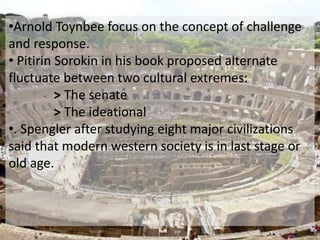
•Arnold Toynbee focus on the concept of challenge 
and response. 
• Pitirin Sorokin in his book proposed alternate 
fluctuate between two cultural extremes: 
> The senate 
> The ideational 
•. Spengler after studying eight major civilizations 
said that modern western society is in last stage or 
old age.
TYPES OF SOCIAL CHANGE 
• Ultra committed Change-Makers 
• Faith-Inspired Givers 
• Socially Conscious Consumers 
• Purposeful Participants 
• Casual Contributors 
• Social Change Spectators
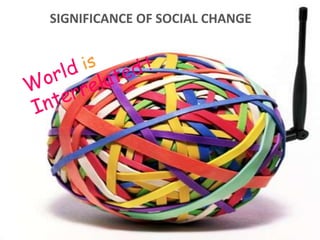
SIGNIFICANCE OF SOCIAL CHANGE
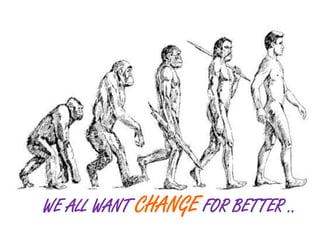
WE ALL WANT CHANGE FOR BETTER ..
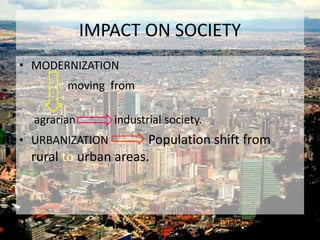
IMPACT ON SOCIETY 
• MODERNIZATION 
moving from 
agrarian industrial society. 
• URBANIZATION Population shift from 
rural to urban areas.
•TECHNOLOGY: 
New technologies influencing people’s 
lifestyles. 
•INCREASE IN KNOWLEDGE: 
Continual expansion of knowledge 
demands to adapt to changing 
circumstances. 
:
CHANGE IN INSTITUTIONS 
• As body parts performing different functions, 
on the whole maintains the body, same is the 
case with institutions. 
• if any of the institution become weaker, it 
results in destruction and disturbance in the 
society.
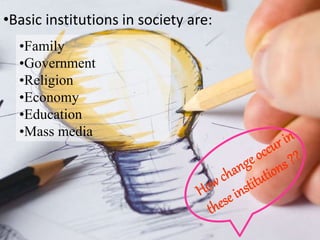
•Basic institutions in society are: 
•Family 
•Government 
•Religion 
•Economy 
•Education 
•Mass media
Presentation1

Presentation1

  • 1.
    Made by: SyedaHania Batool Zaidi
  • 2.
    CONTENTS • DEFINITION • HISTORY • THEORIES • TYPES OF SOCIAL CHANGE • SIGNIFICANCE OF SOCIAL CHANGE • IMPACT ON SOCIETY • SOCIAL CHANGE IN INSTITUTIONS
  • 3.
    Social Change ischaracterized by Cultural symbol Rules of behavior Social organization Value systems DEFINITION
  • 4.
    HISTORY • Changeoccurs when societies change their conditions according to their need. • Change in climate • Change in material • Change in culture • Change in Governance: • Change in environment
  • 5.
    THEORISTS • AugusteComte believed that social change mean towards something better. • Herbert Spencer argued that society itself is an organism. • Spengler , Toynbee and Sorokin proposed cyclic theory of social change. • Cyclic theory of social change focus on the rise and fall of civilizations.
  • 6.
    •Arnold Toynbee focuson the concept of challenge and response. • Pitirin Sorokin in his book proposed alternate fluctuate between two cultural extremes: > The senate > The ideational •. Spengler after studying eight major civilizations said that modern western society is in last stage or old age.
  • 7.
    TYPES OF SOCIALCHANGE • Ultra committed Change-Makers • Faith-Inspired Givers • Socially Conscious Consumers • Purposeful Participants • Casual Contributors • Social Change Spectators
  • 8.
  • 9.
    WE ALL WANTCHANGE FOR BETTER ..
  • 11.
    IMPACT ON SOCIETY • MODERNIZATION moving from agrarian industrial society. • URBANIZATION Population shift from rural to urban areas.
  • 12.
    •TECHNOLOGY: New technologiesinfluencing people’s lifestyles. •INCREASE IN KNOWLEDGE: Continual expansion of knowledge demands to adapt to changing circumstances. :
  • 13.
    CHANGE IN INSTITUTIONS • As body parts performing different functions, on the whole maintains the body, same is the case with institutions. • if any of the institution become weaker, it results in destruction and disturbance in the society.
  • 14.
    •Basic institutions insociety are: •Family •Government •Religion •Economy •Education •Mass media