PHYSICAL ARCHITECTURE 
LAYER DESIGN
INTRODUCTION 
An important step of design is the creation of 
the physical architecture layer design 
The plan for “how the system will be distributed 
across the computers and “what hardware and 
software will be used for each computer. 
Eg. windows, linux.
Contd… 
• It flows primarily from non-functional 
requirements such as operational, performance, 
security, etc,. 
• The deliverables from physical architectural 
layer design includes infrastructure design, 
hardware and software specifications. 
• Now-a-days most modern system span two or 
more networked computer. i.e, web based 
system.
ELEMENTS OF PHYSICAL 
ARCHITECTURE LAYER DESIGN 
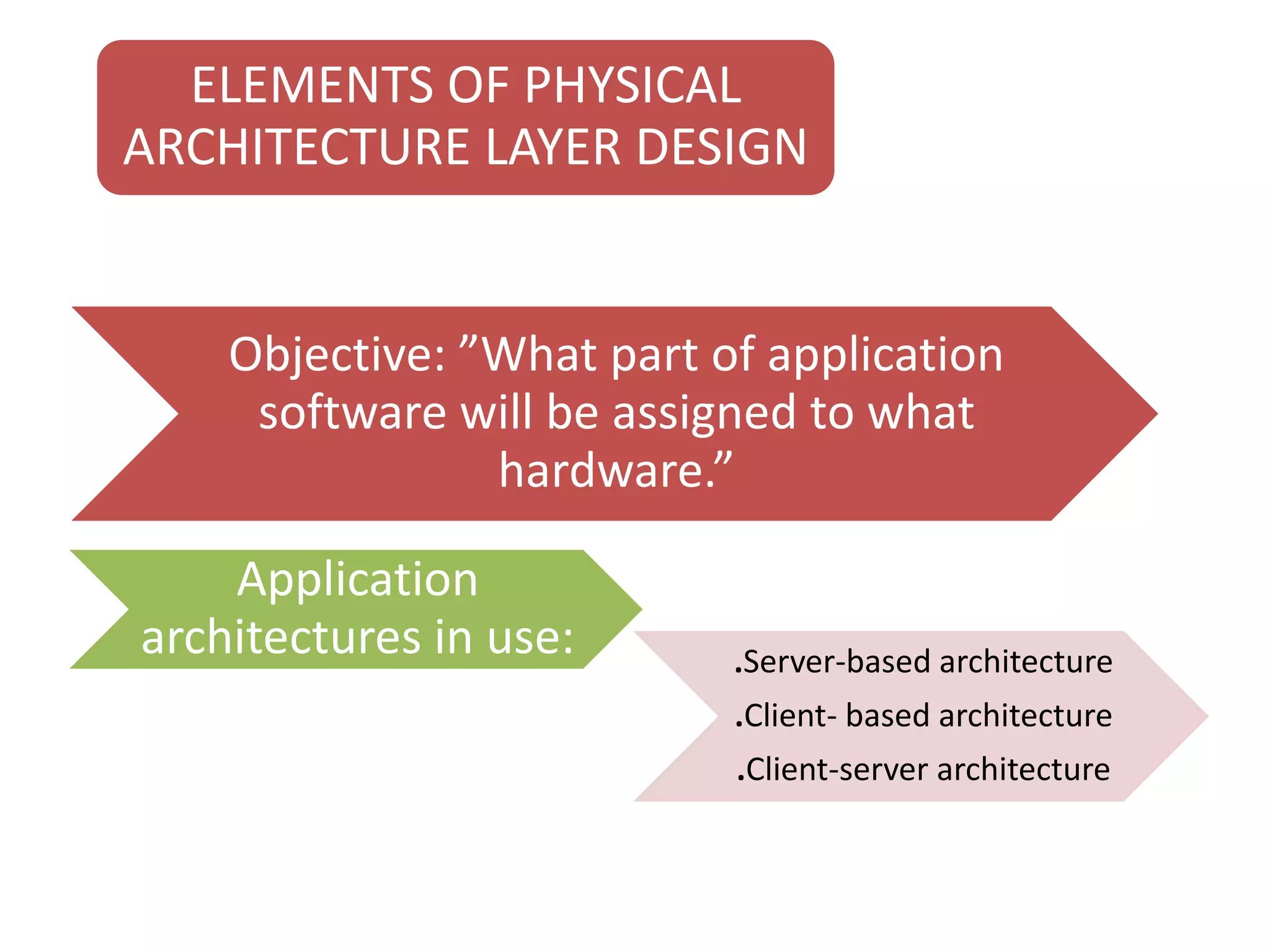
Objective: ”What part of application 
software will be assigned to what 
hardware.” 
Application 
architectures in use: .Server-based architecture 
.Client- based architecture 
.Client-server architecture
ARCHITECTURAL COMPONENTS 
• Architecture components of any system is 
“software” and “hardware”. 
• Software: The programs and other operating 
information used by a computer. 
• Hardware: The machines, wiring, and other 
physical components of a computer or other 
electronic system.
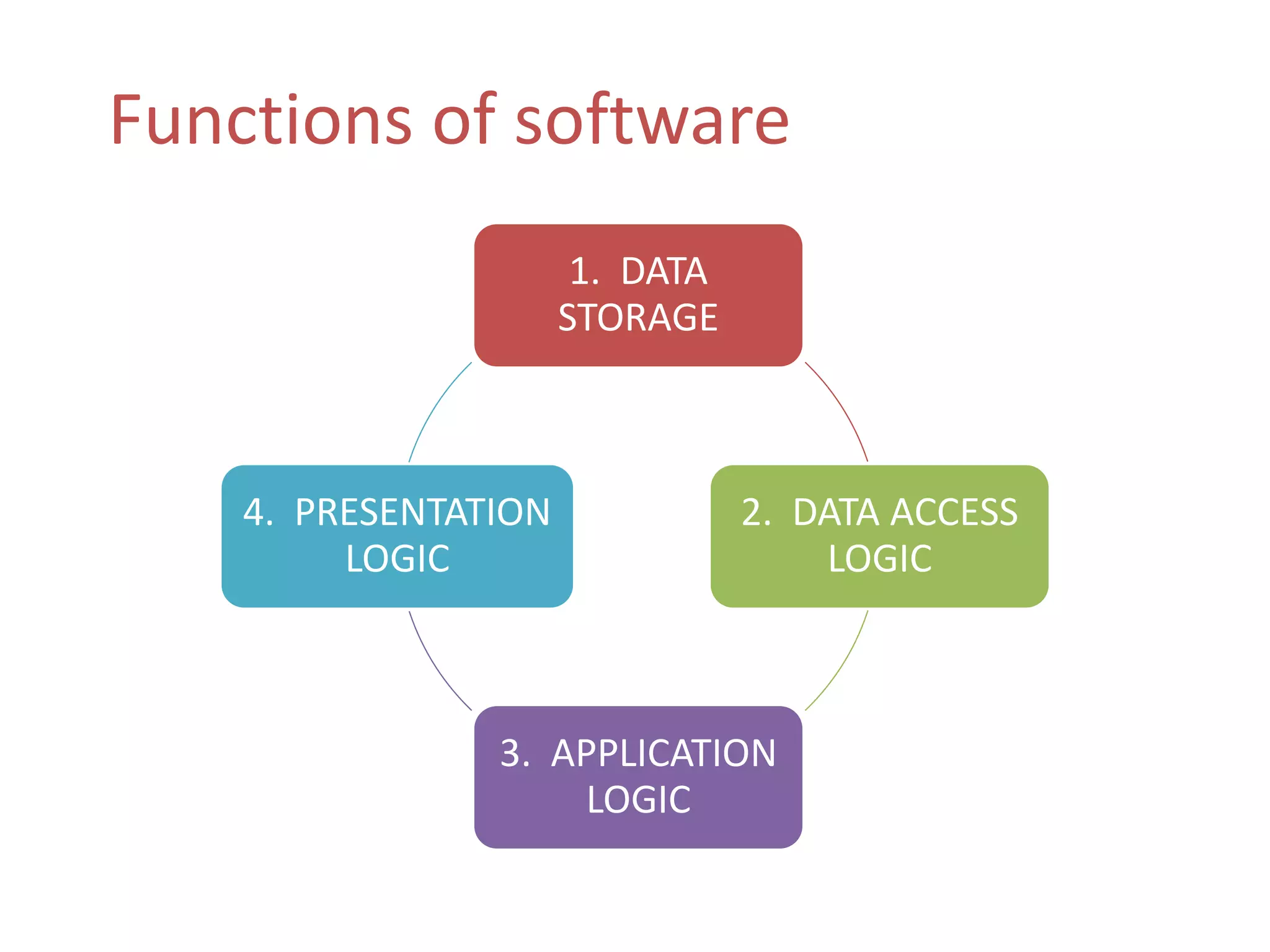
Functions of software 
1. DATA 
STORAGE 
2. DATA ACCESS 
LOGIC 
3. APPLICATION 
LOGIC 
4. PRESENTATION 
LOGIC
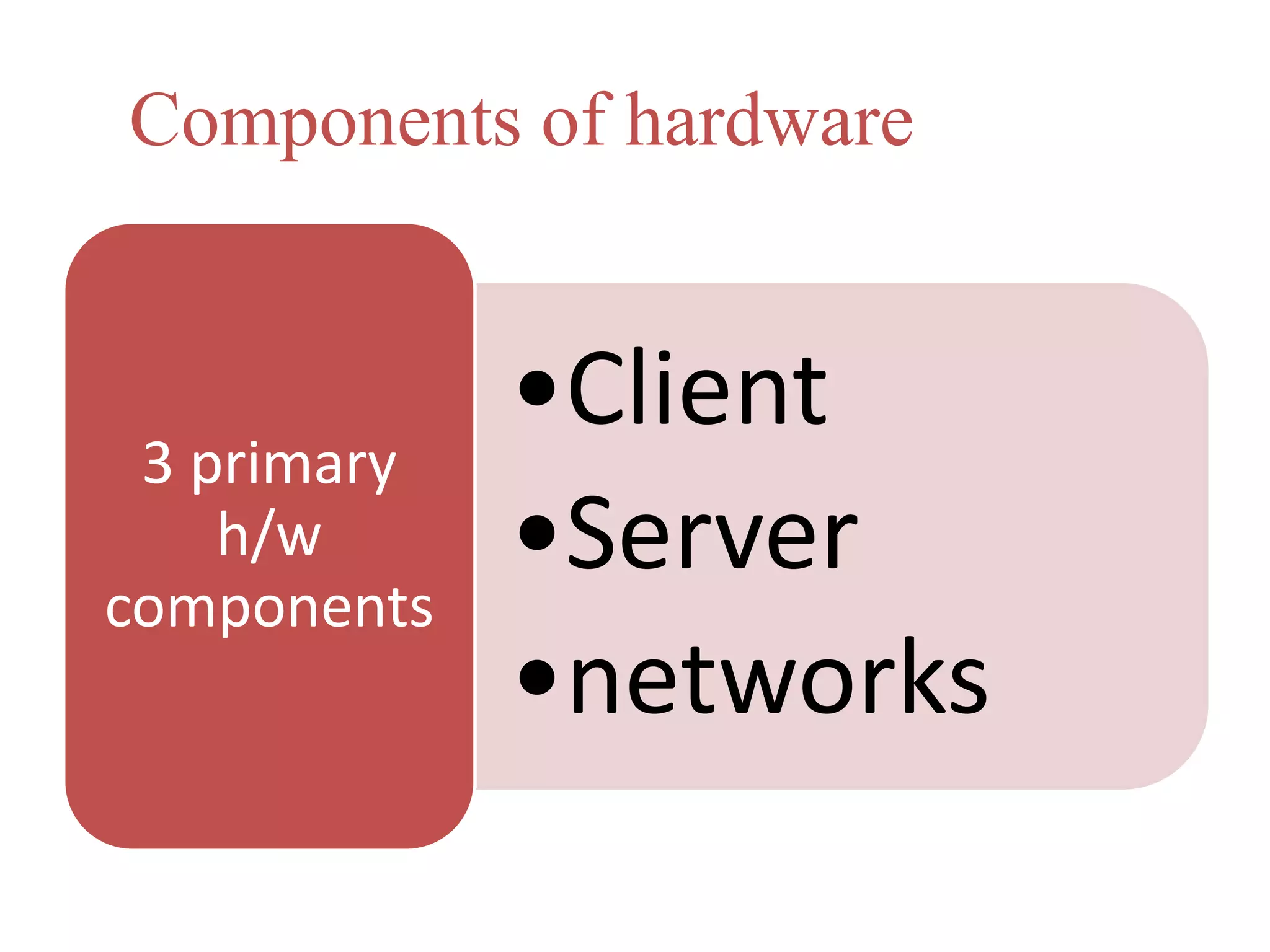
Components of hardware 
•Client 
•Server 
•networks 
3 primary 
h/w 
components
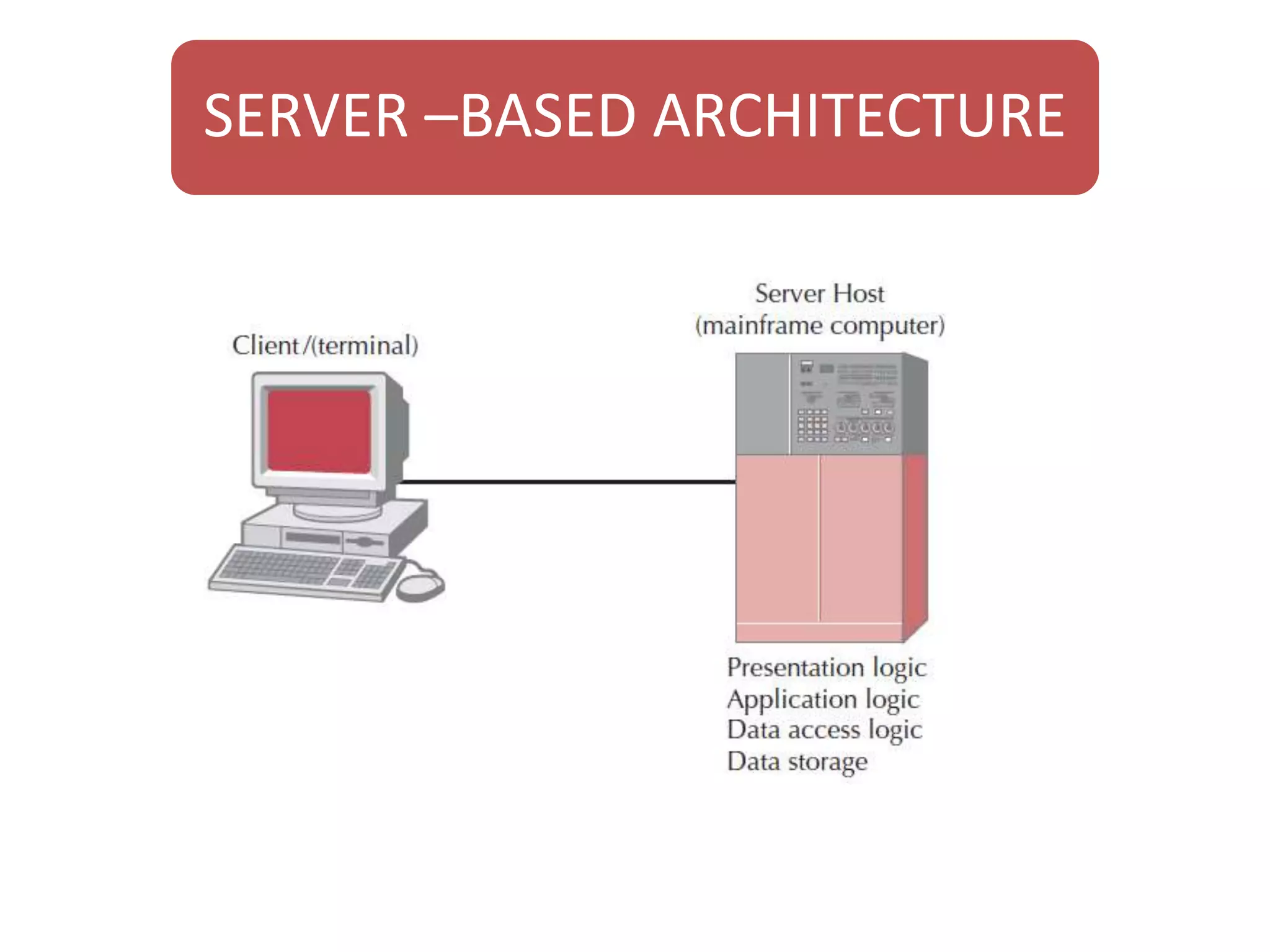
SERVER –BASED ARCHITECTURE
Drawbacks 
• Response time become slower 
• Upgrades of server computer comes in 
large increments and are more expensive. 
• Since for network manager it is difficult 
to upgrade.
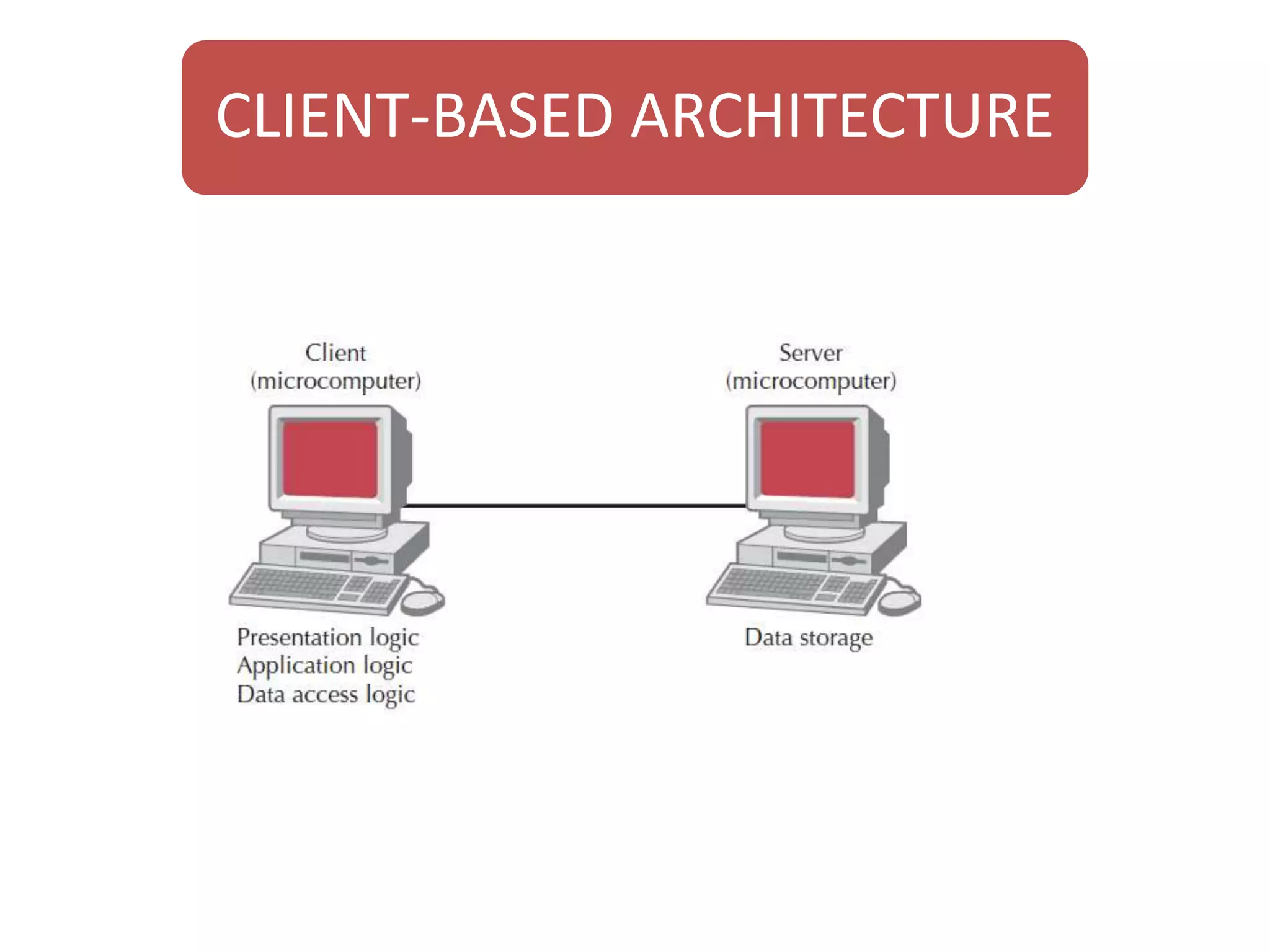
CLIENT-BASED ARCHITECTURE
Example For Client-Based Architectures 
As shown in figure client is 
personal computer running on 
local are network while server 
computer is a server on the 
same network 
For example: consider user 
want to display all list of 
employees with company life 
insurance. 
For this all the data has to 
travel from the server where 
the database is stored over 
the network to the client
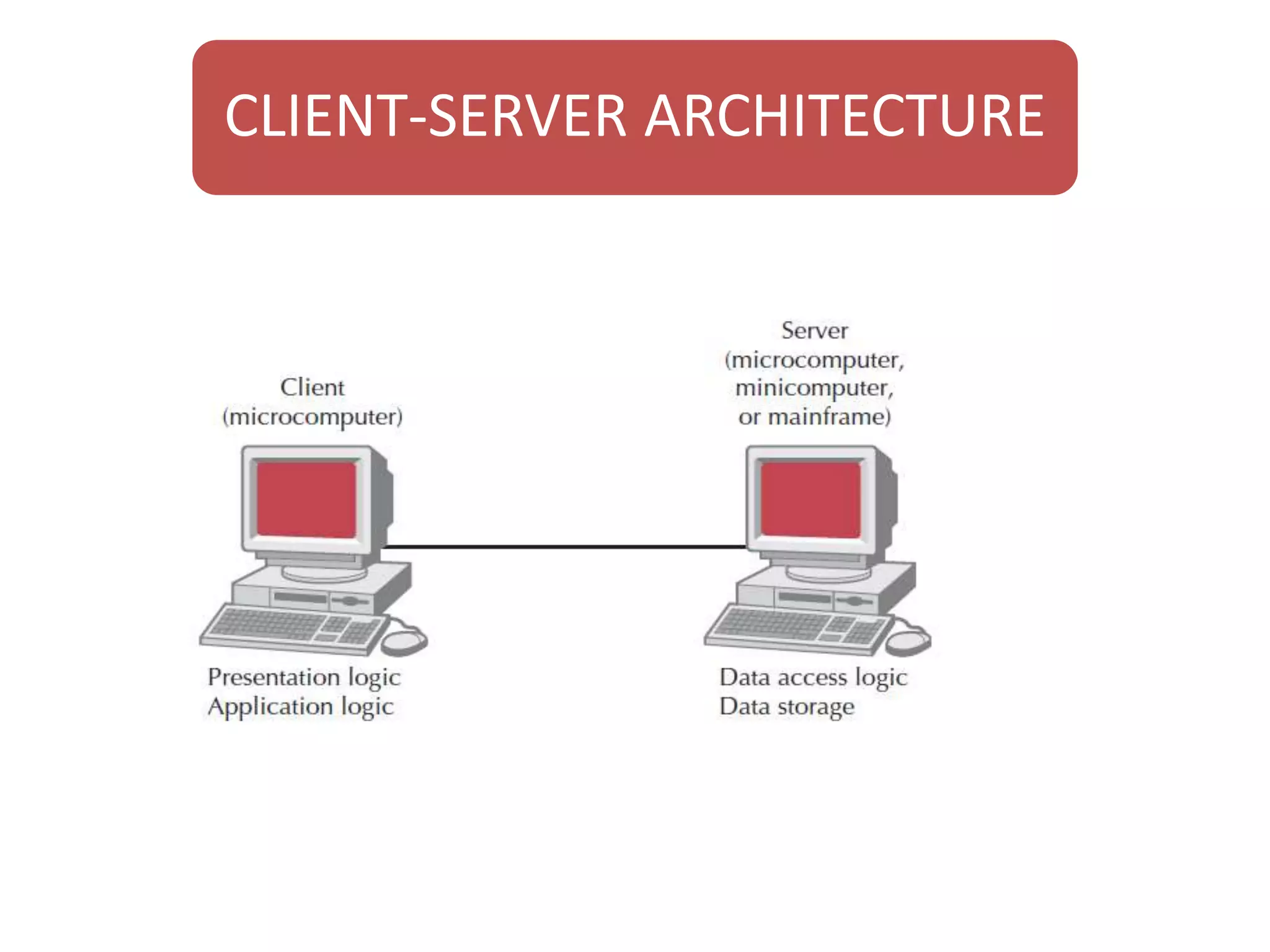
CLIENT-SERVER ARCHITECTURE
Contd… 
In client server architecture each 
computer on a network is either client or 
server 
Server are powerful computers 
dedicated to managing disk drive, 
printers etc.while clients are personal 
computer on which user runs application 
Client are server resides in the same 
system but server share resources ,client 
does not share resources. 
Example:E-mail,world wide web etc.
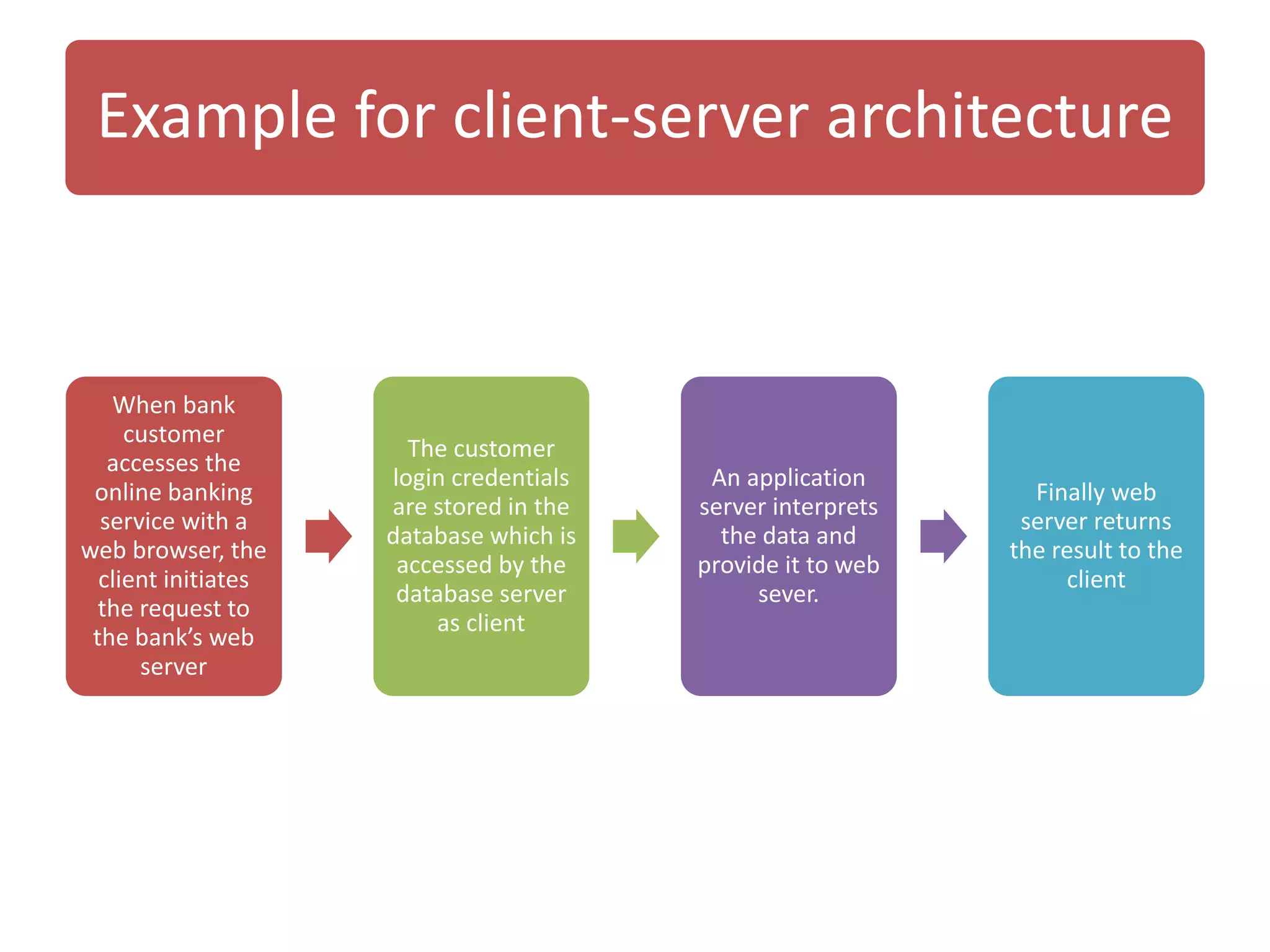
Example for client-server architecture 
When bank 
customer 
accesses the 
online banking 
service with a 
web browser, the 
client initiates 
the request to 
the bank’s web 
server 
The customer 
login credentials 
are stored in the 
database which is 
accessed by the 
database server 
as client 
An application 
server interprets 
the data and 
provide it to web 
sever. 
Finally web 
server returns 
the result to the 
client
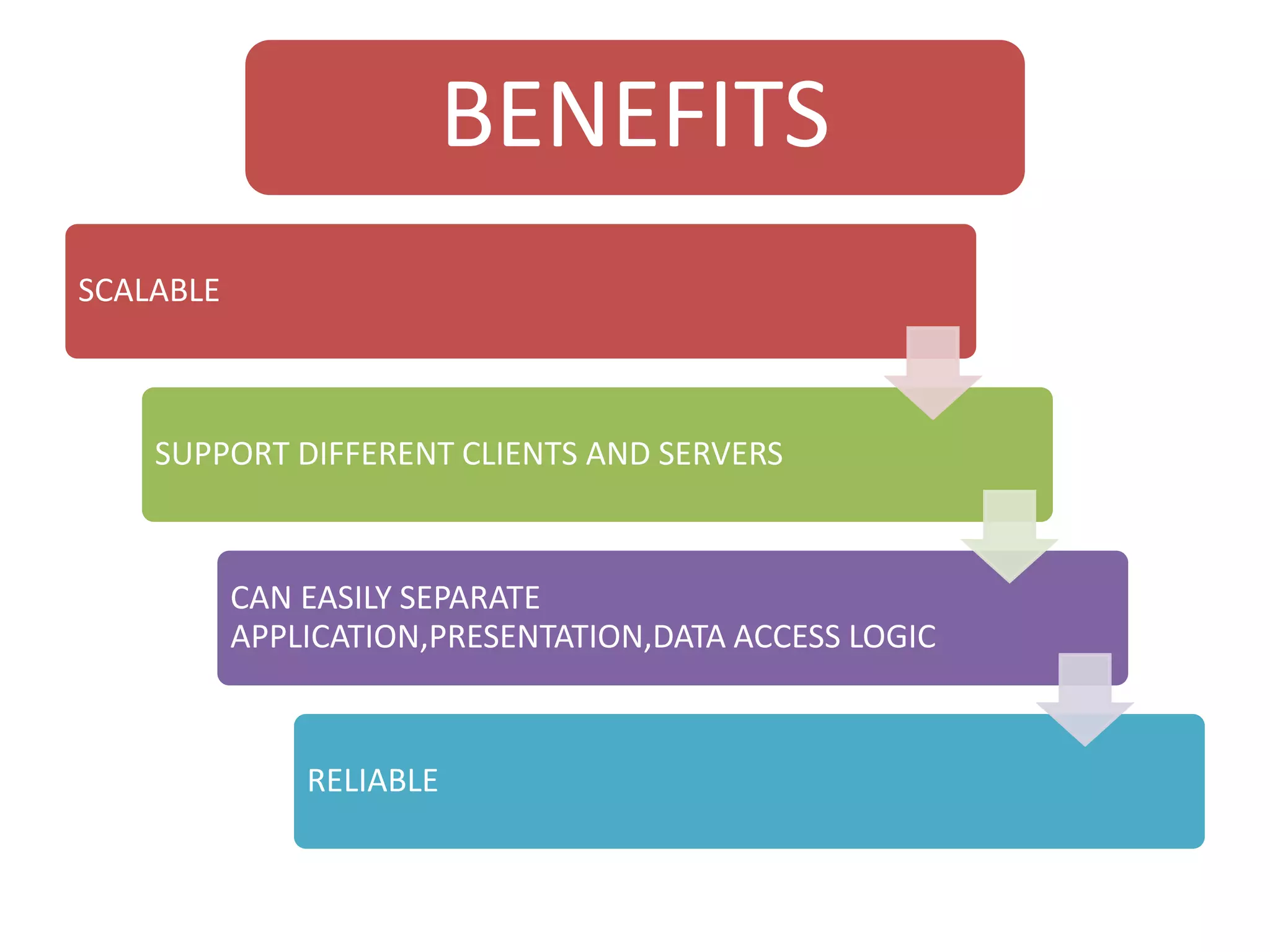
BENEFITS 
SCALABLE 
SUPPORT DIFFERENT CLIENTS AND SERVERS 
CAN EASILY SEPARATE 
APPLICATION,PRESENTATION,DATA ACCESS LOGIC 
RELIABLE
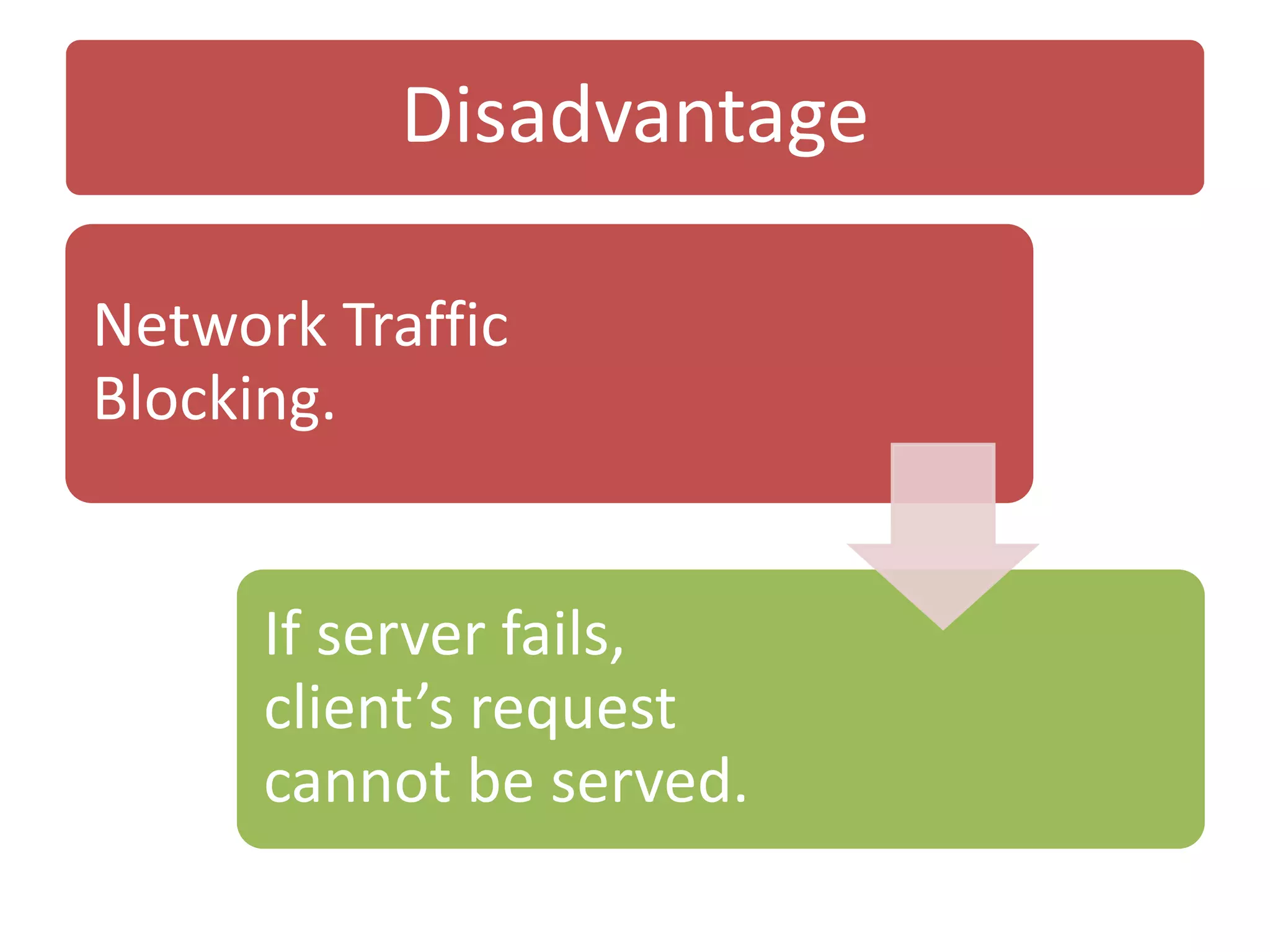
Disadvantage 
Network Traffic 
Blocking. 
If server fails, 
client’s request 
cannot be served.

Physical Architecture Layer Design

  • 1.
  • 2.
    INTRODUCTION An importantstep of design is the creation of the physical architecture layer design The plan for “how the system will be distributed across the computers and “what hardware and software will be used for each computer. Eg. windows, linux.
  • 3.
    Contd… • Itflows primarily from non-functional requirements such as operational, performance, security, etc,. • The deliverables from physical architectural layer design includes infrastructure design, hardware and software specifications. • Now-a-days most modern system span two or more networked computer. i.e, web based system.
  • 4.
    ELEMENTS OF PHYSICAL ARCHITECTURE LAYER DESIGN Objective: ”What part of application software will be assigned to what hardware.” Application architectures in use: .Server-based architecture .Client- based architecture .Client-server architecture
  • 5.
    ARCHITECTURAL COMPONENTS •Architecture components of any system is “software” and “hardware”. • Software: The programs and other operating information used by a computer. • Hardware: The machines, wiring, and other physical components of a computer or other electronic system.
  • 6.
    Functions of software 1. DATA STORAGE 2. DATA ACCESS LOGIC 3. APPLICATION LOGIC 4. PRESENTATION LOGIC
  • 7.
    Components of hardware •Client •Server •networks 3 primary h/w components
  • 8.
  • 9.
    Drawbacks • Responsetime become slower • Upgrades of server computer comes in large increments and are more expensive. • Since for network manager it is difficult to upgrade.
  • 10.
  • 11.
    Example For Client-BasedArchitectures As shown in figure client is personal computer running on local are network while server computer is a server on the same network For example: consider user want to display all list of employees with company life insurance. For this all the data has to travel from the server where the database is stored over the network to the client
  • 12.
  • 13.
    Contd… In clientserver architecture each computer on a network is either client or server Server are powerful computers dedicated to managing disk drive, printers etc.while clients are personal computer on which user runs application Client are server resides in the same system but server share resources ,client does not share resources. Example:E-mail,world wide web etc.
  • 14.
    Example for client-serverarchitecture When bank customer accesses the online banking service with a web browser, the client initiates the request to the bank’s web server The customer login credentials are stored in the database which is accessed by the database server as client An application server interprets the data and provide it to web sever. Finally web server returns the result to the client
  • 15.
    BENEFITS SCALABLE SUPPORTDIFFERENT CLIENTS AND SERVERS CAN EASILY SEPARATE APPLICATION,PRESENTATION,DATA ACCESS LOGIC RELIABLE
  • 16.
    Disadvantage Network Traffic Blocking. If server fails, client’s request cannot be served.