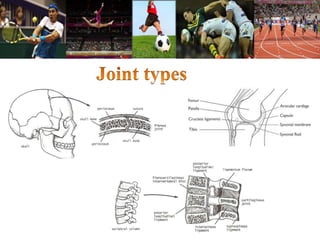
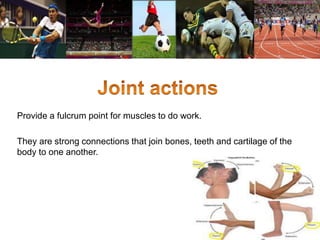
Provide a fulcrum point for muscles to do work. 
They are strong connections that join bones, teeth and cartilage of the 
body to one another.
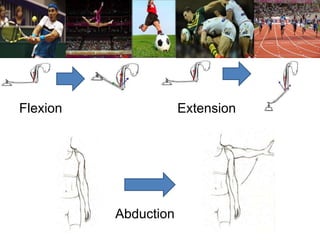
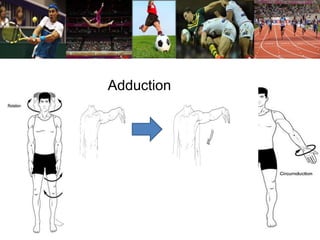
Flexion Extension 
Abduction
Adduction
How many muscles are in the human body? 
How do we determine the major muscles involved in a 
movement and related joint action?
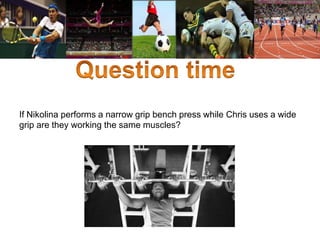
If Nikolina performs a narrow grip bench press while Chris uses a wide 
grip are they working the same muscles?
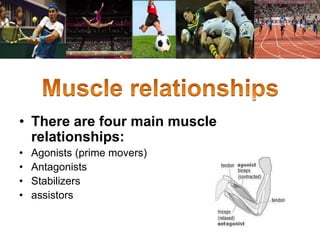
• There are four main muscle 
relationships: 
• Agonists (prime movers) 
• Antagonists 
• Stabilizers 
• assistors
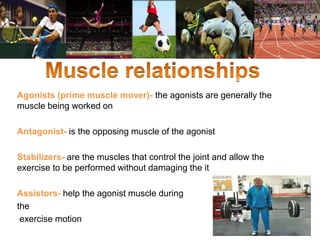
Agonists (prime muscle mover)- the agonists are generally the 
muscle being worked on 
Antagonist- is the opposing muscle of the agonist 
Stabilizers- are the muscles that control the joint and allow the 
exercise to be performed without damaging the it 
Assistors- help the agonist muscle during 
the 
exercise motion
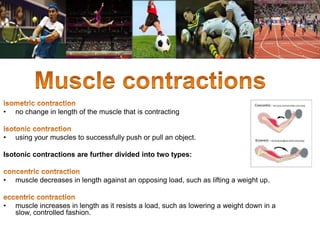
• no change in length of the muscle that is contracting 
• using your muscles to successfully push or pull an object. 
Isotonic contractions are further divided into two types: 
• muscle decreases in length against an opposing load, such as lifting a weight up. 
• muscle increases in length as it resists a load, such as lowering a weight down in a 
slow, controlled fashion.
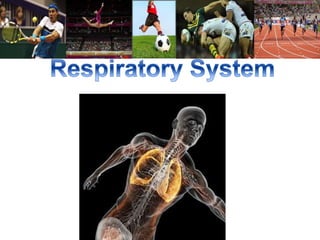
The respiratory system is the system in the human body that enables 
us to breathe. 
• inhaling and exhaling 
• absorption of oxygen from 
• discharge of carbon dioxide
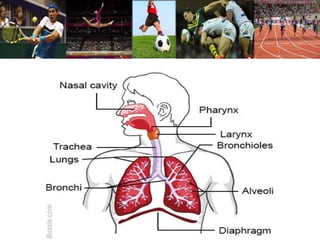
The respiratory system is divided into two parts: 
This includes the nose, mouth, and the 
beginning of the trachea (the section that takes air in and lets it out). 
This includes the trachea, the bronchi, 
broncheoli and the lungs (the act of breathing takes place in this part of the 
system).
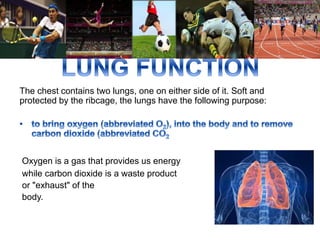
The chest contains two lungs, one on either side of it. Soft and 
protected by the ribcage, the lungs have the following purpose: 
Oxygen is a gas that provides us energy 
while carbon dioxide is a waste product 
or "exhaust" of the 
body.
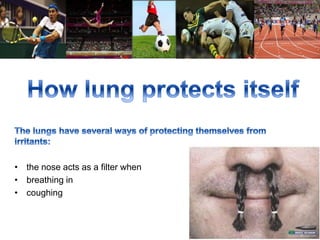
• the nose acts as a filter when 
• breathing in 
• coughing
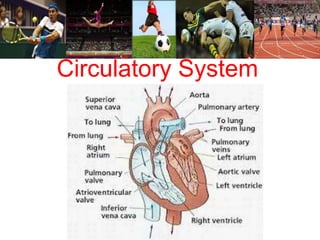
Circulatory System
Components of Blood 
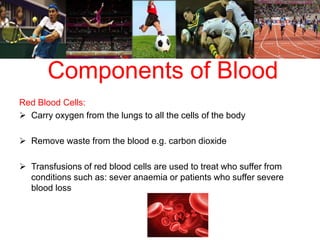
Red Blood Cells: 
 Carry oxygen from the lungs to all the cells of the body 
 Remove waste from the blood e.g. carbon dioxide 
 Transfusions of red blood cells are used to treat who suffer from 
conditions such as: sever anaemia or patients who suffer severe 
blood loss
Components of Blood 
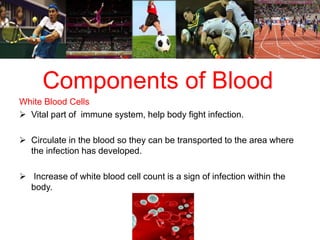
White Blood Cells 
 Vital part of immune system, help body fight infection. 
 Circulate in the blood so they can be transported to the area where 
the infection has developed. 
 Increase of white blood cell count is a sign of infection within the 
body.
Components of Blood 
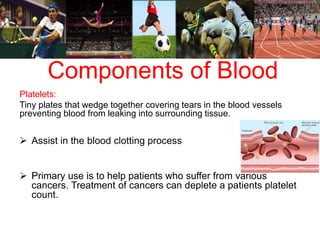
Platelets: 
Tiny plates that wedge together covering tears in the blood vessels 
preventing blood from leaking into surrounding tissue. 
 Assist in the blood clotting process 
 Primary use is to help patients who suffer from various 
cancers. Treatment of cancers can deplete a patients platelet 
count.
Components of Blood 
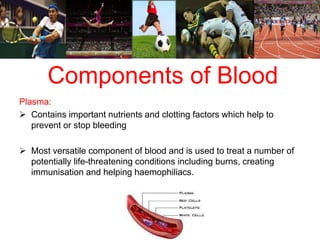
Plasma: 
 Contains important nutrients and clotting factors which help to 
prevent or stop bleeding 
 Most versatile component of blood and is used to treat a number of 
potentially life-threatening conditions including burns, creating 
immunisation and helping haemophiliacs.
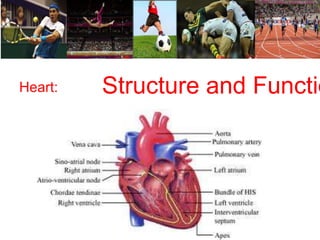
Heart: Structure and Function
Heart 
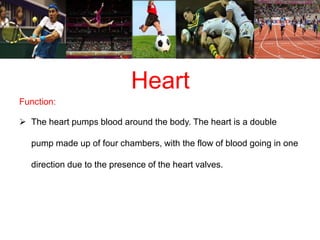
Function: 
 The heart pumps blood around the body. The heart is a double 
pump made up of four chambers, with the flow of blood going in one 
direction due to the presence of the heart valves.
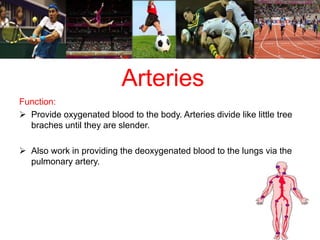
Arteries 
Function: 
 Provide oxygenated blood to the body. Arteries divide like little tree 
braches until they are slender. 
 Also work in providing the deoxygenated blood to the lungs via the 
pulmonary artery.
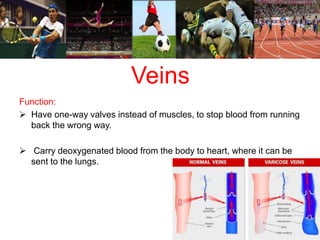
Veins 
Function: 
 Have one-way valves instead of muscles, to stop blood from running 
back the wrong way. 
 Carry deoxygenated blood from the body to heart, where it can be 
sent to the lungs.
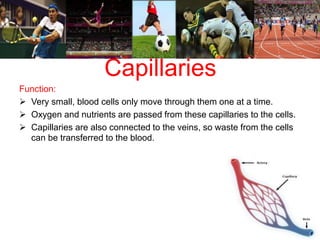
Capillaries 
Function: 
 Very small, blood cells only move through them one at a time. 
 Oxygen and nutrients are passed from these capillaries to the cells. 
 Capillaries are also connected to the veins, so waste from the cells 
can be transferred to the blood.

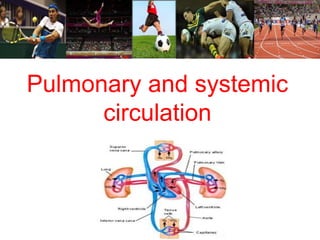
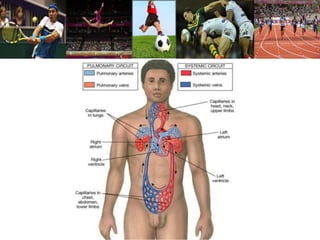
Pulmonary and systemic 
circulation
Pulmonary 
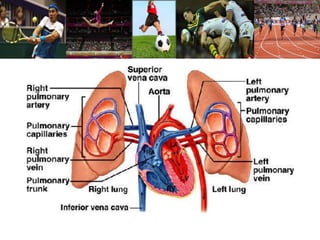
System in which oxygen is added to the blood 
Deoxygenated blood travels from heart to the lungs where it 
becomes oxygenated again 
Right atrium -right ventricle -pulmonary artery-lungs 
Pulmonary system reverses role of arteries and veins
Systemic 
Oxygenated blood travels throughout the body 
Includes deoxygenated blood returning back to the heart from the body 
Lungs-pulmonary veins-left atrium-left ventricle-aorta.
Blood pressure 
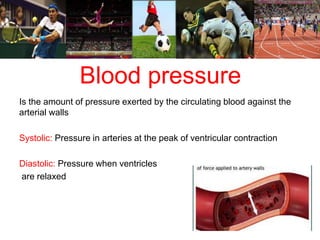
Is the amount of pressure exerted by the circulating blood against the 
arterial walls 
Systolic: Pressure in arteries at the peak of ventricular contraction 
Diastolic: Pressure when ventricles 
are relaxed
Blood Pressure measurement 
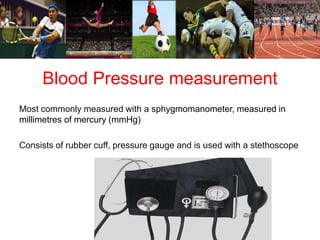
Most commonly measured with a sphygmomanometer, measured in 
millimetres of mercury (mmHg) 
Consists of rubber cuff, pressure gauge and is used with a stethoscope
Procedure 
1) Cuff is strapped around left bicep, inflated to restrict blood blow. 
2) Stethoscope is then placed under the cuff but over brachial artery. 
3) Pressure of the cuff is slowly released. 
Only two measurements are taken on the gauge: 
• Very first heartbeat/sound heard (systolic) 
• When no more sound is heard at all (diastolic)

Presentation1

  • 6.
    Provide a fulcrumpoint for muscles to do work. They are strong connections that join bones, teeth and cartilage of the body to one another.
  • 8.
  • 9.
  • 10.
    How many musclesare in the human body? How do we determine the major muscles involved in a movement and related joint action?
  • 11.
    If Nikolina performsa narrow grip bench press while Chris uses a wide grip are they working the same muscles?
  • 13.
    • There arefour main muscle relationships: • Agonists (prime movers) • Antagonists • Stabilizers • assistors
  • 14.
    Agonists (prime musclemover)- the agonists are generally the muscle being worked on Antagonist- is the opposing muscle of the agonist Stabilizers- are the muscles that control the joint and allow the exercise to be performed without damaging the it Assistors- help the agonist muscle during the exercise motion
  • 15.
    • no changein length of the muscle that is contracting • using your muscles to successfully push or pull an object. Isotonic contractions are further divided into two types: • muscle decreases in length against an opposing load, such as lifting a weight up. • muscle increases in length as it resists a load, such as lowering a weight down in a slow, controlled fashion.
  • 18.
    The respiratory systemis the system in the human body that enables us to breathe. • inhaling and exhaling • absorption of oxygen from • discharge of carbon dioxide
  • 19.
    The respiratory systemis divided into two parts: This includes the nose, mouth, and the beginning of the trachea (the section that takes air in and lets it out). This includes the trachea, the bronchi, broncheoli and the lungs (the act of breathing takes place in this part of the system).
  • 21.
    The chest containstwo lungs, one on either side of it. Soft and protected by the ribcage, the lungs have the following purpose: Oxygen is a gas that provides us energy while carbon dioxide is a waste product or "exhaust" of the body.
  • 22.
    • the noseacts as a filter when • breathing in • coughing
  • 23.
  • 24.
    Components of Blood Red Blood Cells:  Carry oxygen from the lungs to all the cells of the body  Remove waste from the blood e.g. carbon dioxide  Transfusions of red blood cells are used to treat who suffer from conditions such as: sever anaemia or patients who suffer severe blood loss
  • 25.
    Components of Blood White Blood Cells  Vital part of immune system, help body fight infection.  Circulate in the blood so they can be transported to the area where the infection has developed.  Increase of white blood cell count is a sign of infection within the body.
  • 26.
    Components of Blood Platelets: Tiny plates that wedge together covering tears in the blood vessels preventing blood from leaking into surrounding tissue.  Assist in the blood clotting process  Primary use is to help patients who suffer from various cancers. Treatment of cancers can deplete a patients platelet count.
  • 27.
    Components of Blood Plasma:  Contains important nutrients and clotting factors which help to prevent or stop bleeding  Most versatile component of blood and is used to treat a number of potentially life-threatening conditions including burns, creating immunisation and helping haemophiliacs.
  • 28.
  • 29.
    Heart Function: The heart pumps blood around the body. The heart is a double pump made up of four chambers, with the flow of blood going in one direction due to the presence of the heart valves.
  • 30.
    Arteries Function: Provide oxygenated blood to the body. Arteries divide like little tree braches until they are slender.  Also work in providing the deoxygenated blood to the lungs via the pulmonary artery.
  • 31.
    Veins Function: Have one-way valves instead of muscles, to stop blood from running back the wrong way.  Carry deoxygenated blood from the body to heart, where it can be sent to the lungs.
  • 32.
    Capillaries Function: Very small, blood cells only move through them one at a time.  Oxygen and nutrients are passed from these capillaries to the cells.  Capillaries are also connected to the veins, so waste from the cells can be transferred to the blood.
  • 33.
  • 34.
    Pulmonary System inwhich oxygen is added to the blood Deoxygenated blood travels from heart to the lungs where it becomes oxygenated again Right atrium -right ventricle -pulmonary artery-lungs Pulmonary system reverses role of arteries and veins
  • 36.
    Systemic Oxygenated bloodtravels throughout the body Includes deoxygenated blood returning back to the heart from the body Lungs-pulmonary veins-left atrium-left ventricle-aorta.
  • 39.
    Blood pressure Isthe amount of pressure exerted by the circulating blood against the arterial walls Systolic: Pressure in arteries at the peak of ventricular contraction Diastolic: Pressure when ventricles are relaxed
  • 40.
    Blood Pressure measurement Most commonly measured with a sphygmomanometer, measured in millimetres of mercury (mmHg) Consists of rubber cuff, pressure gauge and is used with a stethoscope
  • 41.
    Procedure 1) Cuffis strapped around left bicep, inflated to restrict blood blow. 2) Stethoscope is then placed under the cuff but over brachial artery. 3) Pressure of the cuff is slowly released. Only two measurements are taken on the gauge: • Very first heartbeat/sound heard (systolic) • When no more sound is heard at all (diastolic)