MACRO ANALYSIS OF INDIAN THERMAL POWER
GENERATION SECTOR


                  PROJECT GUIDE:
                   PROF.H.J.JANI
                  SUBMITTED BY:
               AKASH CHOKSI (1OM44)
               ANIL CHAUHAN (10F45)
           MADHURRAM CHUDASAMA (10M63)
                TEJAS VASAVA (10F76)
                VIREN PATEL (10M79)


 G.H.PATEL POST GRADUATE INSTITUTE OF BUSINESS MANAGEMENT
                   SARDAR PATEL UNIVERSITY
                 VALLABH VIDYANAGAR (388120)
INTRODUCTION TO POWER
GENERATION SECTOR
 Power Generation Overview

 History of Power Generation
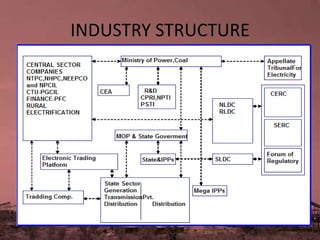
INDUSTRY STRUCTURE
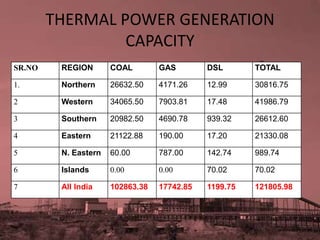
THERMAL POWER GENERATION
                 CAPACITY
SR.NO    REGION       COAL        GAS        DSL       TOTAL

1.       Northern     26632.50    4171.26    12.99     30816.75

2        Western      34065.50    7903.81    17.48     41986.79

3        Southern     20982.50    4690.78    939.32    26612.60

4        Eastern      21122.88    190.00     17.20     21330.08

5        N. Eastern   60.00       787.00     142.74    989.74

6        Islands      0.00        0.00       70.02     70.02

7        All India    102863.38   17742.85   1199.75   121805.98
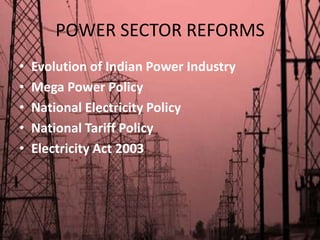
POWER SECTOR REFORMS
•   Evolution of Indian Power Industry
•   Mega Power Policy
•   National Electricity Policy
•   National Tariff Policy
•   Electricity Act 2003
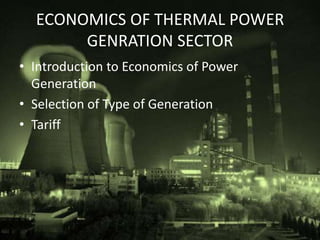
ECONOMICS OF THERMAL POWER
       GENRATION SECTOR
• Introduction to Economics of Power
  Generation
• Selection of Type of Generation
• Tariff
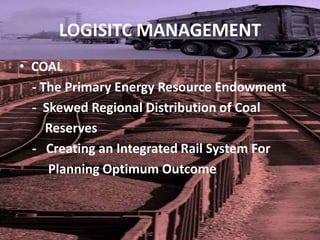
LOGISITC MANAGEMENT
• COAL
  - The Primary Energy Resource Endowment
  - Skewed Regional Distribution of Coal
     Reserves
  - Creating an Integrated Rail System For
     Planning Optimum Outcome
• Gas
  Trans National Pipelines
Current Trends in Thermal Power
            Generation Sector
•   Economics and Energy Indicators
•   Energy Consumption
•   Regional and Sect oral Variations
•   Resources Availability
•   Resources for Thermal Power Generation
TYPES AND SOURCES OF FINANCE
• Debt
• Equity
• Key Power Sector Financing
FINANCIAL ANALYSIS
•   Ratio Analysis
•   ROCE
•   RONW
•   EPS AND DPS
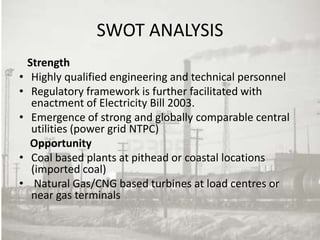
SWOT ANALYSIS
    Strength
•    Highly qualified engineering and technical personnel
•    Regulatory framework is further facilitated with
     enactment of Electricity Bill 2003.
•    Emergence of strong and globally comparable central
     utilities (power grid NTPC)
    Opportunity
•    Coal based plants at pithead or coastal locations
     (imported coal)
•     Natural Gas/CNG based turbines at load centres or
     near gas terminals
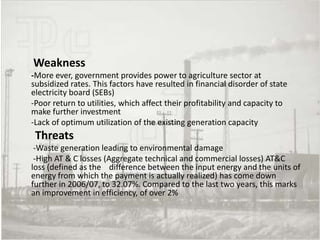
Weakness
-More ever, government provides power to agriculture sector at
subsidized rates. This factors have resulted in financial disorder of state
electricity board (SEBs)
-Poor return to utilities, which affect their profitability and capacity to
make further investment
-Lack of optimum utilization of the existing generation capacity
 Threats
 -Waste generation leading to environmental damage
 -High AT & C losses (Aggregate technical and commercial losses) AT&C
loss (defined as the difference between the input energy and the units of
energy from which the payment is actually realized) has come down
further in 2006/07, to 32.07%. Compared to the last two years, this marks
an improvement in efficiency, of over 2%
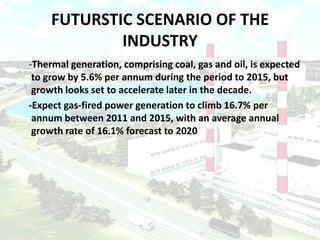
FUTURSTIC SCENARIO OF THE
             INDUSTRY
-Thermal generation, comprising coal, gas and oil, is expected
 to grow by 5.6% per annum during the period to 2015, but
 growth looks set to accelerate later in the decade.
-Expect gas-fired power generation to climb 16.7% per
 annum between 2011 and 2015, with an average annual
 growth rate of 16.1% forecast to 2020.
REFERANCES
•   Er. Nath Rakesh;Paper ‘Power sector reforms-sharing of resources is the key to
    economical growth and sucess’;Octobar 2003
•   Nag P.K. ‘Power plant engineering ‘; 2005
•   Power ministry of India; ‘Annual report 2010-11’
     Websites:
•   www.powermin.nic.in
•   planningcommission.nic.in/
•   www.coal.nic.in/
•   www.ntpcindia.com/
•   www.cercind.gov.in/
•   www.cea.nic.in
•   www.indiainfrastructure.com/
•   www.indiacore.com
•   www.kpmg.com/
•   cg.gov.in/opportunities/Annexure%203.2.pdf
•   www.indiaenergyportal.org/overview_detail.php
•   www.scribd.com › Research › Business & Economics

Presentation1

  • 1.
    MACRO ANALYSIS OFINDIAN THERMAL POWER GENERATION SECTOR PROJECT GUIDE: PROF.H.J.JANI SUBMITTED BY: AKASH CHOKSI (1OM44) ANIL CHAUHAN (10F45) MADHURRAM CHUDASAMA (10M63) TEJAS VASAVA (10F76) VIREN PATEL (10M79) G.H.PATEL POST GRADUATE INSTITUTE OF BUSINESS MANAGEMENT SARDAR PATEL UNIVERSITY VALLABH VIDYANAGAR (388120)
  • 2.
    INTRODUCTION TO POWER GENERATIONSECTOR  Power Generation Overview  History of Power Generation
  • 3.
  • 4.
    THERMAL POWER GENERATION CAPACITY SR.NO REGION COAL GAS DSL TOTAL 1. Northern 26632.50 4171.26 12.99 30816.75 2 Western 34065.50 7903.81 17.48 41986.79 3 Southern 20982.50 4690.78 939.32 26612.60 4 Eastern 21122.88 190.00 17.20 21330.08 5 N. Eastern 60.00 787.00 142.74 989.74 6 Islands 0.00 0.00 70.02 70.02 7 All India 102863.38 17742.85 1199.75 121805.98
  • 5.
    POWER SECTOR REFORMS • Evolution of Indian Power Industry • Mega Power Policy • National Electricity Policy • National Tariff Policy • Electricity Act 2003
  • 6.
    ECONOMICS OF THERMALPOWER GENRATION SECTOR • Introduction to Economics of Power Generation • Selection of Type of Generation • Tariff
  • 7.
    LOGISITC MANAGEMENT • COAL - The Primary Energy Resource Endowment - Skewed Regional Distribution of Coal Reserves - Creating an Integrated Rail System For Planning Optimum Outcome
  • 8.
    • Gas Trans National Pipelines
  • 9.
    Current Trends inThermal Power Generation Sector • Economics and Energy Indicators • Energy Consumption • Regional and Sect oral Variations • Resources Availability • Resources for Thermal Power Generation
  • 10.
    TYPES AND SOURCESOF FINANCE • Debt • Equity • Key Power Sector Financing
  • 11.
    FINANCIAL ANALYSIS • Ratio Analysis • ROCE • RONW • EPS AND DPS
  • 13.
    SWOT ANALYSIS Strength • Highly qualified engineering and technical personnel • Regulatory framework is further facilitated with enactment of Electricity Bill 2003. • Emergence of strong and globally comparable central utilities (power grid NTPC) Opportunity • Coal based plants at pithead or coastal locations (imported coal) • Natural Gas/CNG based turbines at load centres or near gas terminals
  • 14.
    Weakness -More ever, governmentprovides power to agriculture sector at subsidized rates. This factors have resulted in financial disorder of state electricity board (SEBs) -Poor return to utilities, which affect their profitability and capacity to make further investment -Lack of optimum utilization of the existing generation capacity Threats -Waste generation leading to environmental damage -High AT & C losses (Aggregate technical and commercial losses) AT&C loss (defined as the difference between the input energy and the units of energy from which the payment is actually realized) has come down further in 2006/07, to 32.07%. Compared to the last two years, this marks an improvement in efficiency, of over 2%
  • 15.
    FUTURSTIC SCENARIO OFTHE INDUSTRY -Thermal generation, comprising coal, gas and oil, is expected to grow by 5.6% per annum during the period to 2015, but growth looks set to accelerate later in the decade. -Expect gas-fired power generation to climb 16.7% per annum between 2011 and 2015, with an average annual growth rate of 16.1% forecast to 2020.
  • 16.
    REFERANCES • Er. Nath Rakesh;Paper ‘Power sector reforms-sharing of resources is the key to economical growth and sucess’;Octobar 2003 • Nag P.K. ‘Power plant engineering ‘; 2005 • Power ministry of India; ‘Annual report 2010-11’ Websites: • www.powermin.nic.in • planningcommission.nic.in/ • www.coal.nic.in/ • www.ntpcindia.com/ • www.cercind.gov.in/ • www.cea.nic.in • www.indiainfrastructure.com/ • www.indiacore.com • www.kpmg.com/ • cg.gov.in/opportunities/Annexure%203.2.pdf • www.indiaenergyportal.org/overview_detail.php • www.scribd.com › Research › Business & Economics