We have got inspiration all around us. The inspiration can
be found in a magazine, newspaper, people, plays, films
and even in books.
The idea is he most important stage out of the
12 because If you don’t have an idea there is
no film. Every film writer has an idea about the
plot of the film. Also the writer would take part
of a script to a director .If the director likes the
script he would tell the writer to bring him or
write the rest of the script.
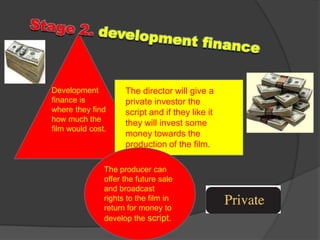
Development          The director will give a
finance is           private investor the
where they find      script and if they like it
how much the
                     they will invest some
film would cost.
                     money towards the
                     production of the film.

               The producer can
               offer the future sale
               and broadcast
               rights to the film in
               return for money to
               develop the script.
Post production.


As the processed footage comes in the editor assembles it into scenes
and creates a narrative sequence for the film.

Once the pictures is locked the sound department works on the audio
track laying creating and editing every sound.

After picture lock the rough sound mix goes to a dubbing theatre where
the sound mixer sets the final levels.

After the final cut the film reaches full lock it is now finished and ready
for duplication but who gets the final cut.
Sales


 To help her sell the film to distributors the producer secures
 the services of a sales agent a specialist in film sales.

 To help sell the film a frailer is made to show busy film buyers
 the most marketable aspects of the film.

 A high profile screening at one of the top film festivals can be
 great for generating heat around a film.

 The producer now has a hot product and can negotiate good
 deals with distributors around the world.
Marketing.


Knowing the audience is essential and the
marketing team runs test screenings to see how
the film is received.

The potential audience for the film is targeting with
posters cinema trailers TV spots and other
marketing materials.

In order to get the film to audiences the distributor
must negotiate a deal with the cinemas to screen it.
Exhibition


A high profile star studded premiere is used to launch the
film to the public with an explosion of media coverage.

The uk has more than 3500 cinema screens although not all
are British owned or show British films.

The exhibitors take their share of the box office receipts after
which the distributors recoup their marketing costs.

Once the distributors have been paid the financiers can
recover their investments as laid out in the recoupment
schedule.
Hospitality sales for hotel channels and in flight entertainment can bring in
millions in additional revenue.

Uk audiences spend more on dvds than on cinema tickets so success on
dvd can compensate for box office failure.

Television is the final source of revenue rights are sold separately for pay
TV showings and terrestrial broadcast.

Once the film has made a profit the producer and key creative people can
reap their rewards or so the theory goes.

The final income from a film is never known distribution continues in
perpetuity and it may even be re-released in the future.
Presentation1

Presentation1

  • 1.
    We have gotinspiration all around us. The inspiration can be found in a magazine, newspaper, people, plays, films and even in books.
  • 3.
    The idea ishe most important stage out of the 12 because If you don’t have an idea there is no film. Every film writer has an idea about the plot of the film. Also the writer would take part of a script to a director .If the director likes the script he would tell the writer to bring him or write the rest of the script.
  • 4.
    Development The director will give a finance is private investor the where they find script and if they like it how much the they will invest some film would cost. money towards the production of the film. The producer can offer the future sale and broadcast rights to the film in return for money to develop the script.
  • 10.
    Post production. As theprocessed footage comes in the editor assembles it into scenes and creates a narrative sequence for the film. Once the pictures is locked the sound department works on the audio track laying creating and editing every sound. After picture lock the rough sound mix goes to a dubbing theatre where the sound mixer sets the final levels. After the final cut the film reaches full lock it is now finished and ready for duplication but who gets the final cut.
  • 11.
    Sales To helpher sell the film to distributors the producer secures the services of a sales agent a specialist in film sales. To help sell the film a frailer is made to show busy film buyers the most marketable aspects of the film. A high profile screening at one of the top film festivals can be great for generating heat around a film. The producer now has a hot product and can negotiate good deals with distributors around the world.
  • 12.
    Marketing. Knowing the audienceis essential and the marketing team runs test screenings to see how the film is received. The potential audience for the film is targeting with posters cinema trailers TV spots and other marketing materials. In order to get the film to audiences the distributor must negotiate a deal with the cinemas to screen it.
  • 13.
    Exhibition A high profilestar studded premiere is used to launch the film to the public with an explosion of media coverage. The uk has more than 3500 cinema screens although not all are British owned or show British films. The exhibitors take their share of the box office receipts after which the distributors recoup their marketing costs. Once the distributors have been paid the financiers can recover their investments as laid out in the recoupment schedule.
  • 14.
    Hospitality sales forhotel channels and in flight entertainment can bring in millions in additional revenue. Uk audiences spend more on dvds than on cinema tickets so success on dvd can compensate for box office failure. Television is the final source of revenue rights are sold separately for pay TV showings and terrestrial broadcast. Once the film has made a profit the producer and key creative people can reap their rewards or so the theory goes. The final income from a film is never known distribution continues in perpetuity and it may even be re-released in the future.