12 Steps of film making
Step 1 the idea

inspiration for an idea can come from books films or conversations,
wherever the idea comes from the producer is the one who decides that
it can be adapted into a film. The director is the one who puts the scene
together. The writer takes the plot and the characters and makes a good
story out of it. The writer will then write a treatment , a description of
the characters and story. The pitch contains all of the information the
producer needs in order to sell the idea
Step 2 development finance

The producer tries to get money to develop a script by using the
treatment and the pitch. The producer approaches film production
companies for development money but they projects of their own. The
producer can offer broadcasts rights in exchange for development
money the producer can also apply to a public funding body such as the
UK council the producer can even pitch the film to private investors in
hope that they can support them in their project
Step 3 script development

First the writer comes up with a synopsis and the producer
and the writer agree or disagree with key events in the film.
the writer usually creates a step outline to plan their script.
The writers fee is conditional on delivery of the first draft.
When the writer and producer are happy the draft gets sent
to the financiers When everyone is happy with the script it
becomes a final draft and the writer gets paid. The final
stage of script development is the creation of the sales
treatment.
Step 4 packaging

The producer and director must now package the script so it is ready
for financing. One common way to make the project more commercial
is to add famous stars to the script. Heads of department carry
considerable clout with knowledgeable financiers. To turn the film into
a proper business proposition the producer must know how much it will
cost to make. Potential investors want to know how the producer plans
to raise money and how she plans to pay them back. The producer has
packaged the film into a viable commercial proposition.
Step 5 financing

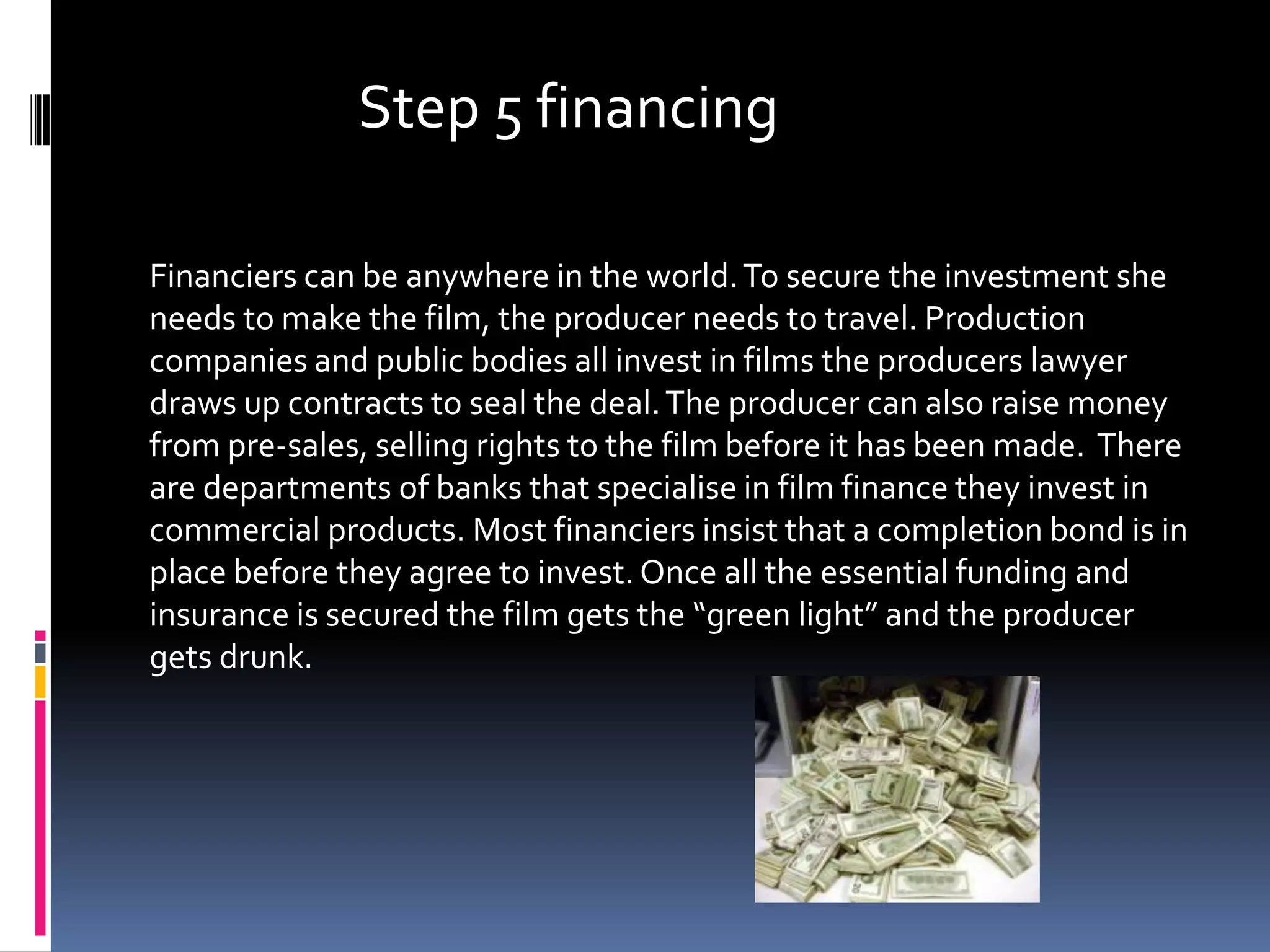
Financiers can be anywhere in the world. To secure the investment she
needs to make the film, the producer needs to travel. Production
companies and public bodies all invest in films the producers lawyer
draws up contracts to seal the deal. The producer can also raise money
from pre-sales, selling rights to the film before it has been made. There
are departments of banks that specialise in film finance they invest in
commercial products. Most financiers insist that a completion bond is in
place before they agree to invest. Once all the essential funding and
insurance is secured the film gets the “green light” and the producer
gets drunk.
Step 6 finance development

Once all the heads of department are hired, the shooting script is
circulated. The casting director and producer begins the process of the
identifying and casting of the actors. Storyboards are blueprints for the
film, where every shot is planned in advance. The production designer
how the film will look and hires designers to build each part. Effect
shots are planned in much more detail than normal shots and can take
months to design. The line producer and production manager make up
the key logistic triangle of the production.
Step 7 the shoot

This is the key moment in film production shooting begins and funding
is released the camera department is responsible for getting all the
footage that the director and editor need to tell a story once the
lighting and sound are set up and hair and make-up have been checked
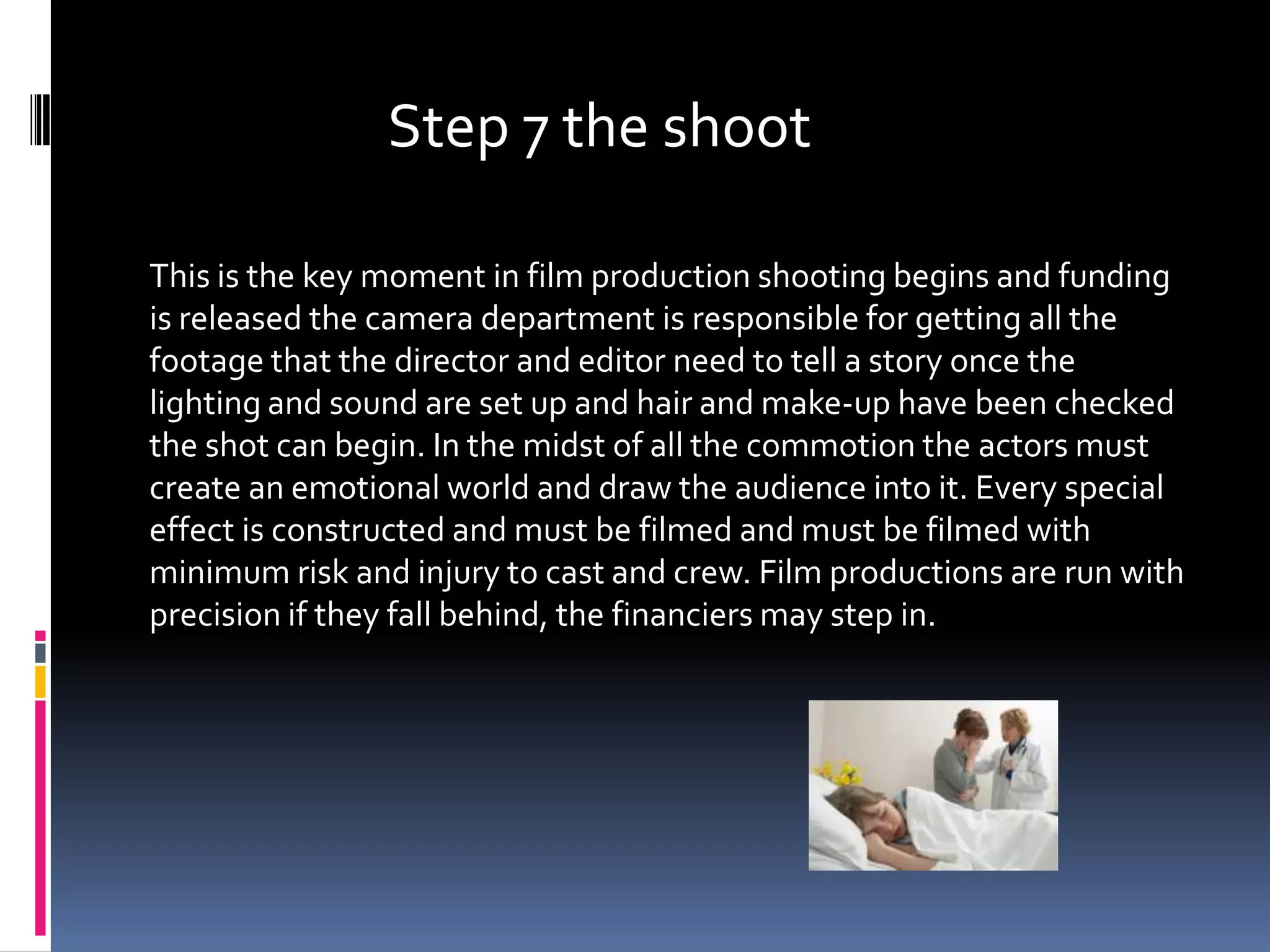
the shot can begin. In the midst of all the commotion the actors must
create an emotional world and draw the audience into it. Every special
effect is constructed and must be filmed and must be filmed with
minimum risk and injury to cast and crew. Film productions are run with
precision if they fall behind, the financiers may step in.
Step 8 Post-production

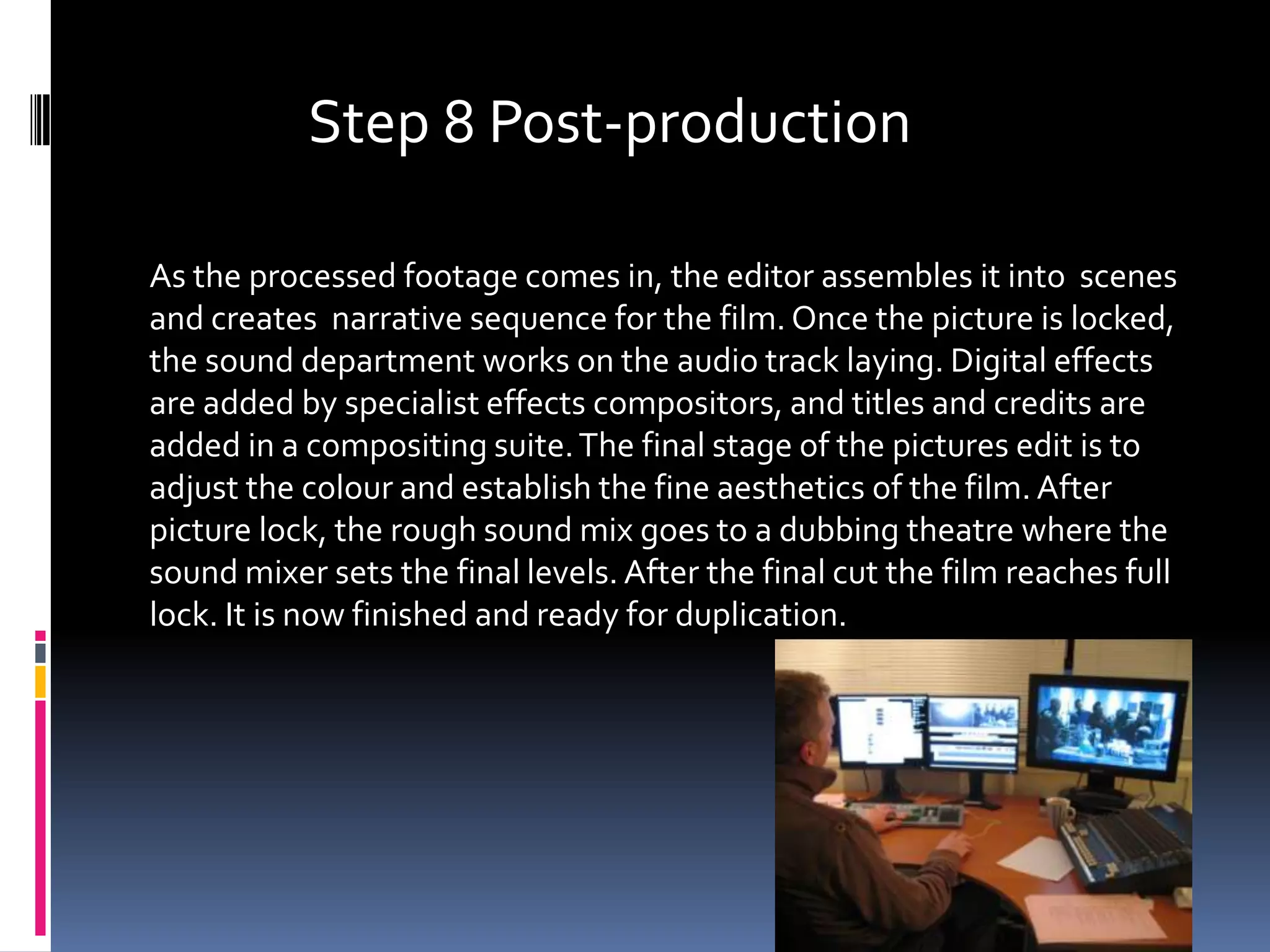
As the processed footage comes in, the editor assembles it into scenes
and creates narrative sequence for the film. Once the picture is locked,
the sound department works on the audio track laying. Digital effects
are added by specialist effects compositors, and titles and credits are
added in a compositing suite. The final stage of the pictures edit is to
adjust the colour and establish the fine aesthetics of the film. After
picture lock, the rough sound mix goes to a dubbing theatre where the
sound mixer sets the final levels. After the final cut the film reaches full
lock. It is now finished and ready for duplication.
Step 9 Sales
to help her sell the film to the distributors, the producer secures the
services of a sales agent. A trailer is made to show busy film buyers the
most marketable aspects of the film. The producer and the sales agent
collect everything they will need to sell the film to distributors. The
market is saturated with films, so the producer must go great lengths
to attract attention for her product. A high profile screening at one of
the top film festivals can be great for generating “heat” around the film.
The producer now has a hot product and can negotiate good deals with
distributors around the world.
Step 10 marketing

Knowing the audience is essential, the marketing team runs test
screenings to see how the film is received. The potential audience for
the film is targeted with posters, cinema trailers, TV spots and other
marketing materials. Television, radio, newspaper and magazines can all
help create positive word-of-mouth about a film. The birth of digital
media and the internet has flooded the world with information but has
also made niche marketing possible. In order to get the film to the
audiences, the distributor must negotiate a deal with the cinemas to
screen it.
Step 11 exhibition

A high-profile, star-studded premiere is used to launch the film to the
public with an explosion of media coverage. The UK has more than
3,500 cinema screens, although not all are British. Distributors supply
the exhibitors with prints of the film, the more screens the film is shown
on, the more prints are needed. The exhibitors take their share of the
box office receipts, after which the distributors recoup their marketing
costs. Once the distributors have been paid, the financiers can recover
their investments, as laid out in the recoupment schedule.
Step 12 Other windows

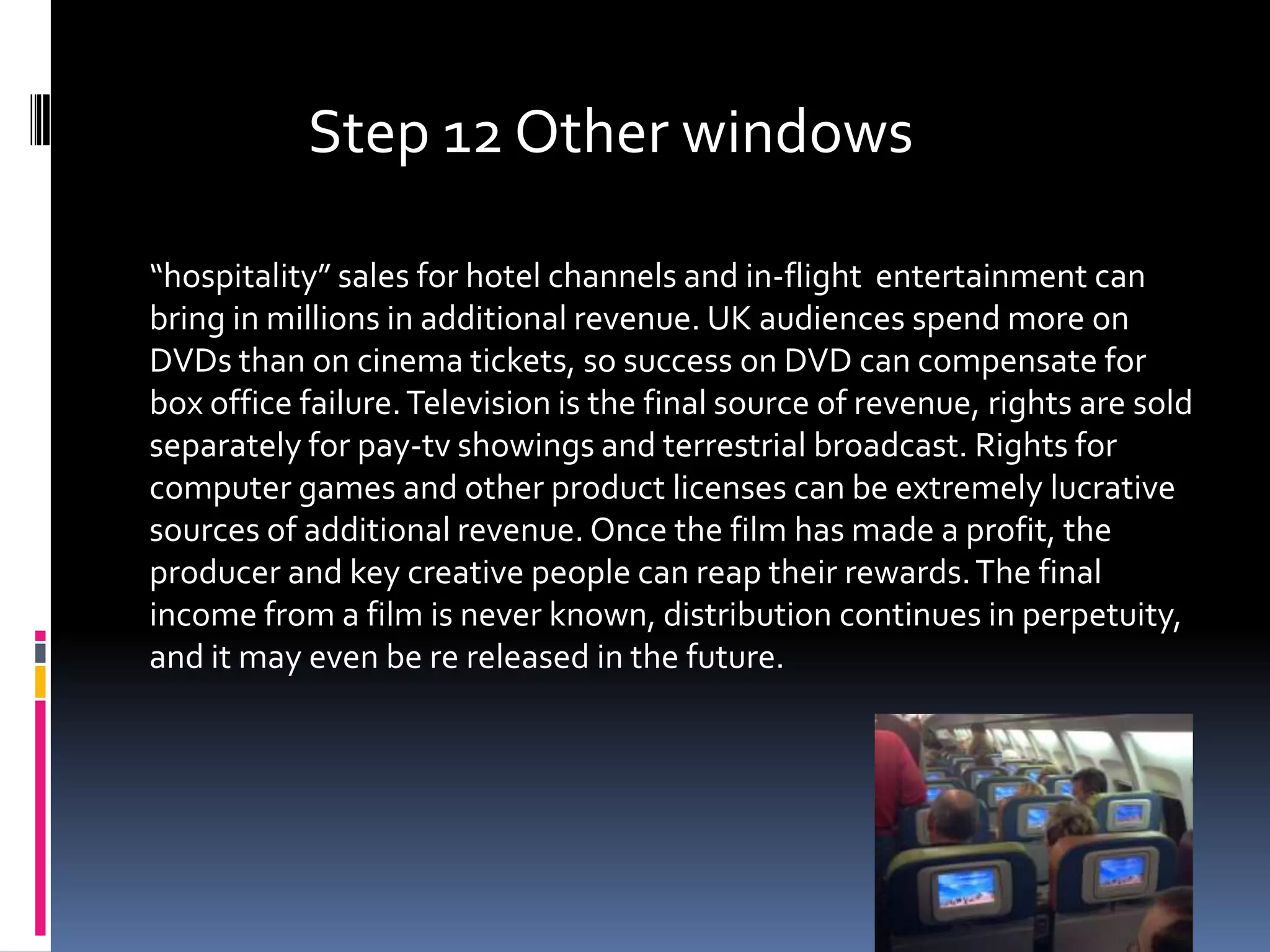
“hospitality” sales for hotel channels and in-flight entertainment can
bring in millions in additional revenue. UK audiences spend more on
DVDs than on cinema tickets, so success on DVD can compensate for
box office failure. Television is the final source of revenue, rights are sold
separately for pay-tv showings and terrestrial broadcast. Rights for
computer games and other product licenses can be extremely lucrative
sources of additional revenue. Once the film has made a profit, the
producer and key creative people can reap their rewards. The final
income from a film is never known, distribution continues in perpetuity,
and it may even be re released in the future.

Steps

  • 1.
    12 Steps offilm making
  • 2.
    Step 1 theidea inspiration for an idea can come from books films or conversations, wherever the idea comes from the producer is the one who decides that it can be adapted into a film. The director is the one who puts the scene together. The writer takes the plot and the characters and makes a good story out of it. The writer will then write a treatment , a description of the characters and story. The pitch contains all of the information the producer needs in order to sell the idea
  • 3.
    Step 2 developmentfinance The producer tries to get money to develop a script by using the treatment and the pitch. The producer approaches film production companies for development money but they projects of their own. The producer can offer broadcasts rights in exchange for development money the producer can also apply to a public funding body such as the UK council the producer can even pitch the film to private investors in hope that they can support them in their project
  • 4.
    Step 3 scriptdevelopment First the writer comes up with a synopsis and the producer and the writer agree or disagree with key events in the film. the writer usually creates a step outline to plan their script. The writers fee is conditional on delivery of the first draft. When the writer and producer are happy the draft gets sent to the financiers When everyone is happy with the script it becomes a final draft and the writer gets paid. The final stage of script development is the creation of the sales treatment.
  • 5.
    Step 4 packaging Theproducer and director must now package the script so it is ready for financing. One common way to make the project more commercial is to add famous stars to the script. Heads of department carry considerable clout with knowledgeable financiers. To turn the film into a proper business proposition the producer must know how much it will cost to make. Potential investors want to know how the producer plans to raise money and how she plans to pay them back. The producer has packaged the film into a viable commercial proposition.
  • 6.
    Step 5 financing Financierscan be anywhere in the world. To secure the investment she needs to make the film, the producer needs to travel. Production companies and public bodies all invest in films the producers lawyer draws up contracts to seal the deal. The producer can also raise money from pre-sales, selling rights to the film before it has been made. There are departments of banks that specialise in film finance they invest in commercial products. Most financiers insist that a completion bond is in place before they agree to invest. Once all the essential funding and insurance is secured the film gets the “green light” and the producer gets drunk.
  • 7.
    Step 6 financedevelopment Once all the heads of department are hired, the shooting script is circulated. The casting director and producer begins the process of the identifying and casting of the actors. Storyboards are blueprints for the film, where every shot is planned in advance. The production designer how the film will look and hires designers to build each part. Effect shots are planned in much more detail than normal shots and can take months to design. The line producer and production manager make up the key logistic triangle of the production.
  • 8.
    Step 7 theshoot This is the key moment in film production shooting begins and funding is released the camera department is responsible for getting all the footage that the director and editor need to tell a story once the lighting and sound are set up and hair and make-up have been checked the shot can begin. In the midst of all the commotion the actors must create an emotional world and draw the audience into it. Every special effect is constructed and must be filmed and must be filmed with minimum risk and injury to cast and crew. Film productions are run with precision if they fall behind, the financiers may step in.
  • 9.
    Step 8 Post-production Asthe processed footage comes in, the editor assembles it into scenes and creates narrative sequence for the film. Once the picture is locked, the sound department works on the audio track laying. Digital effects are added by specialist effects compositors, and titles and credits are added in a compositing suite. The final stage of the pictures edit is to adjust the colour and establish the fine aesthetics of the film. After picture lock, the rough sound mix goes to a dubbing theatre where the sound mixer sets the final levels. After the final cut the film reaches full lock. It is now finished and ready for duplication.
  • 10.
    Step 9 Sales tohelp her sell the film to the distributors, the producer secures the services of a sales agent. A trailer is made to show busy film buyers the most marketable aspects of the film. The producer and the sales agent collect everything they will need to sell the film to distributors. The market is saturated with films, so the producer must go great lengths to attract attention for her product. A high profile screening at one of the top film festivals can be great for generating “heat” around the film. The producer now has a hot product and can negotiate good deals with distributors around the world.
  • 11.
    Step 10 marketing Knowingthe audience is essential, the marketing team runs test screenings to see how the film is received. The potential audience for the film is targeted with posters, cinema trailers, TV spots and other marketing materials. Television, radio, newspaper and magazines can all help create positive word-of-mouth about a film. The birth of digital media and the internet has flooded the world with information but has also made niche marketing possible. In order to get the film to the audiences, the distributor must negotiate a deal with the cinemas to screen it.
  • 12.
    Step 11 exhibition Ahigh-profile, star-studded premiere is used to launch the film to the public with an explosion of media coverage. The UK has more than 3,500 cinema screens, although not all are British. Distributors supply the exhibitors with prints of the film, the more screens the film is shown on, the more prints are needed. The exhibitors take their share of the box office receipts, after which the distributors recoup their marketing costs. Once the distributors have been paid, the financiers can recover their investments, as laid out in the recoupment schedule.
  • 13.
    Step 12 Otherwindows “hospitality” sales for hotel channels and in-flight entertainment can bring in millions in additional revenue. UK audiences spend more on DVDs than on cinema tickets, so success on DVD can compensate for box office failure. Television is the final source of revenue, rights are sold separately for pay-tv showings and terrestrial broadcast. Rights for computer games and other product licenses can be extremely lucrative sources of additional revenue. Once the film has made a profit, the producer and key creative people can reap their rewards. The final income from a film is never known, distribution continues in perpetuity, and it may even be re released in the future.