

Hippos, hashtags, and
integrating social media:
What you need to know about strategic
social media use in Public Relations
Dana Lewis | @DanaMLewis | Dana.Lewis@Swedish.org
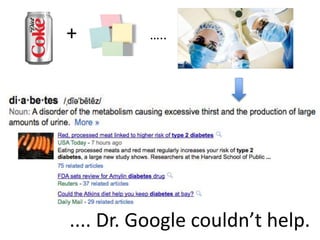
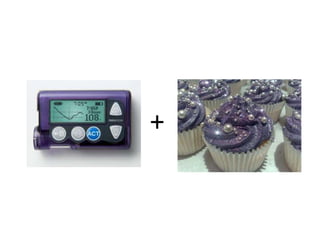
+ …..
.... Dr. Google couldn’t help.
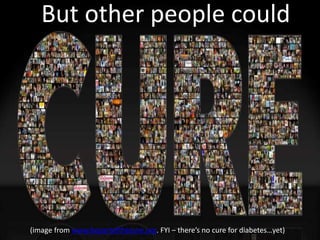
But other people could
(image from www.bepartofthecure.org. FYI – there’s no cure for diabetes…yet)
+
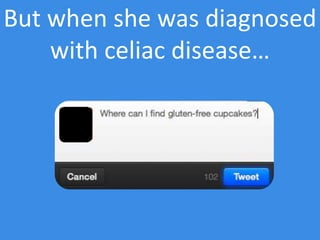
But when she was diagnosed
with celiac disease…
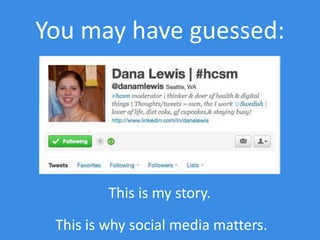
You may have guessed:
This is my story.
This is why social media matters.
#hcsm
• World’s largest health care chat
• Health care communications &
social media community
@Swedish
• Non-profit health system
• We believe in being a resource of
information, both online and off!
Integrating social media into PR
1. ENGAGE your audience
2. AUGMENT traditional thinking
3. MANAGE your digital strategy
Social media isn’t what you think it is.
(and it’s not what you think that matters.)
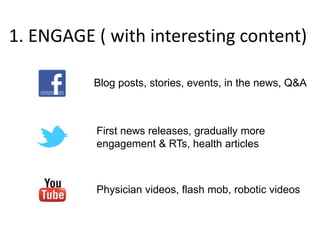
Blog posts, stories, events, in the news, Q&A
Physician videos, flash mob, robotic videos
First news releases, gradually more
engagement & RTs, health articles
1. ENGAGE ( with interesting content)
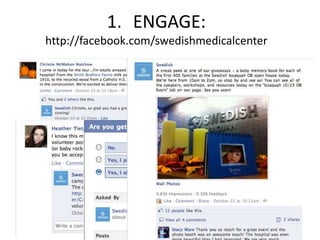
1. ENGAGE:
http://facebook.com/swedishmedicalcenter
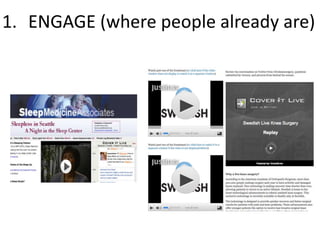
1. ENGAGE (where people already are)
Lessons learned:
Social media has a short half-life.
(Make sure to package your content)
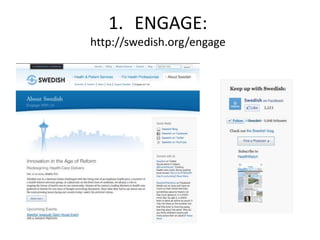
1. ENGAGE:
http://swedish.org/engage
1. ENGAGE your audience
2. AUGMENT traditional thinking
3. MANAGE your digital strategy
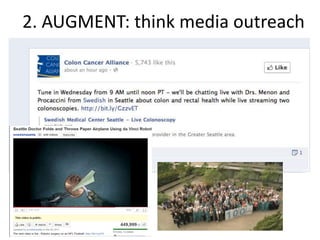
2. AUGMENT: think media outreach
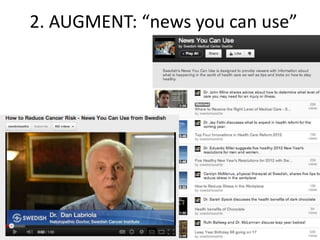
2. AUGMENT: “news you can use”
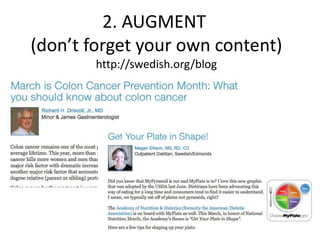
2. AUGMENT
(don’t forget your own content)
http://swedish.org/blog
Try to show (don’t tell)
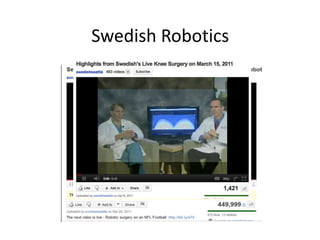
Swedish Robotics
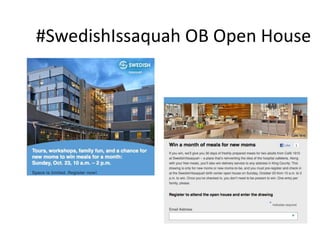
#SwedishIssaquah OB Open House
Measure this…
• Pre-registrants
• Google Analytics for tab views
• Clicks, shares, likes
• New patient signups at the event
• …how many registrants became
patients long term
…and we control the data.
Don’t forget to find your voice.
26
Why we involve employees:
• They’re on the front lines, treating patients
• Tap into incredible knowledge base
• Best brand ambassadors/advocates
• They WANT to get involved!
27
How to get employees involved:
• Education
• Internal social media group
• Ask them for ideas, content
• Involve them in planning
• Feature their stories
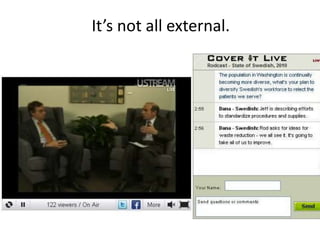
It’s not all external.
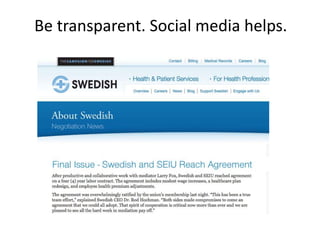
Be transparent. Social media helps.
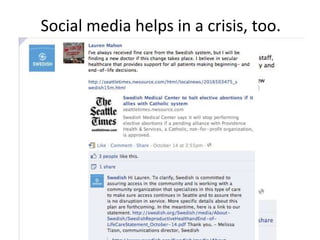
Social media helps in a crisis, too.
31
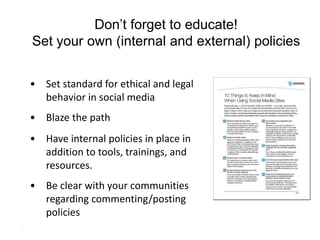
Don’t forget to educate!
Set your own (internal and external) policies
• Set standard for ethical and legal
behavior in social media
• Blaze the path
• Have internal policies in place in
addition to tools, trainings, and
resources.
• Be clear with your communities
regarding commenting/posting
policies
1. ENGAGE your audience
2. AUGMENT traditional thinking
3. MANAGE your digital strategy
• Figure out what works (not everything does)
• One size does not fit all
• Don’t be afraid to try again
Step 1: Have a vision
"The best tools in your social media
toolkit begin with 'e': education, energy,
enthusiasm, and encouragement.”
-@DanaMLewis
Step 2: Get others on board
Resources and tools for employees –
no matter how they use it
(or if they don’t)
“E”ducation
If you're not excited about what
you're doing, and willing to work hard
at it, why should anyone else?
“E”nergy
“E”nthusiasm
It's a lifelong learning process.
You never reach the "guru" stage.
Support yourself and others.
“E”ncouragement
Lessons learned:
• “Doing social media” is scary
• Those naturally interested & excited do best
• Wade in rather than dive
What to do: stop marketing
• Build your channels
• Engage
• Get off the bullhorn
What to do: stop marketing
• Facebook isn’t a bandaid
• Since you’ve built up channels, utilize them!
• Make sure your strategy for social media
aligns with bigger picture marketing, PR,
and business strategies and objectives
10 Things We’ve Learned
1. If you’re not producing content….
2. SM can lead to mainstream media
attention.
3. Connect your experts to the community via
SM.
4. Invest in SM relationships the way you
invest in mainstream media relationships.
5. Integrate SM into your campaigns.
10 Things (continued)
6. It takes a village.
7. Package your SM efforts.
8. Use SM as a listening tool.
9. Don’t be afraid to facilitate or own SM.
10. Be prepared for it to take work.
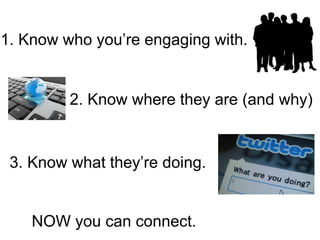
1. Know who you’re engaging with.
2. Know where they are (and why)
3. Know what they’re doing.
NOW you can connect.
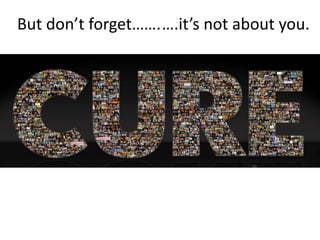
But don’t forget…….….it’s not about you.
Questions?
Dana Lewis
@danamlewis
dana.lewis@swedish.org
Engage with us online:
http://swedish.org/blog
http://swedish.org/engage
Contact:
Facebook.com/
swedishmedicalcenter
Twitter.com/Swedish
YouTube.com/
swedishseattle

Presentation to PRSA in Eugene, Oregon on April 9, 2012

  • 1.
    Hippos, hashtags, and integratingsocial media: What you need to know about strategic social media use in Public Relations Dana Lewis | @DanaMLewis | Dana.Lewis@Swedish.org
  • 2.
    + ….. .... Dr.Google couldn’t help.
  • 3.
    But other peoplecould (image from www.bepartofthecure.org. FYI – there’s no cure for diabetes…yet)
  • 4.
  • 5.
    But when shewas diagnosed with celiac disease…
  • 6.
    You may haveguessed: This is my story. This is why social media matters.
  • 7.
    #hcsm • World’s largesthealth care chat • Health care communications & social media community
  • 8.
    @Swedish • Non-profit healthsystem • We believe in being a resource of information, both online and off!
  • 9.
    Integrating social mediainto PR 1. ENGAGE your audience 2. AUGMENT traditional thinking 3. MANAGE your digital strategy
  • 10.
    Social media isn’twhat you think it is. (and it’s not what you think that matters.)
  • 11.
    Blog posts, stories,events, in the news, Q&A Physician videos, flash mob, robotic videos First news releases, gradually more engagement & RTs, health articles 1. ENGAGE ( with interesting content)
  • 12.
  • 13.
    1. ENGAGE (wherepeople already are)
  • 14.
    Lessons learned: Social mediahas a short half-life. (Make sure to package your content)
  • 15.
  • 16.
    1. ENGAGE youraudience 2. AUGMENT traditional thinking 3. MANAGE your digital strategy
  • 17.
    2. AUGMENT: thinkmedia outreach
  • 18.
    2. AUGMENT: “newsyou can use”
  • 19.
    2. AUGMENT (don’t forgetyour own content) http://swedish.org/blog
  • 20.
    Try to show(don’t tell)
  • 21.
  • 22.
  • 23.
    Measure this… • Pre-registrants •Google Analytics for tab views • Clicks, shares, likes • New patient signups at the event • …how many registrants became patients long term
  • 24.
  • 25.
    Don’t forget tofind your voice.
  • 26.
    26 Why we involveemployees: • They’re on the front lines, treating patients • Tap into incredible knowledge base • Best brand ambassadors/advocates • They WANT to get involved!
  • 27.
    27 How to getemployees involved: • Education • Internal social media group • Ask them for ideas, content • Involve them in planning • Feature their stories
  • 28.
    It’s not allexternal.
  • 29.
  • 30.
    Social media helpsin a crisis, too.
  • 31.
    31 Don’t forget toeducate! Set your own (internal and external) policies • Set standard for ethical and legal behavior in social media • Blaze the path • Have internal policies in place in addition to tools, trainings, and resources. • Be clear with your communities regarding commenting/posting policies
  • 32.
    1. ENGAGE youraudience 2. AUGMENT traditional thinking 3. MANAGE your digital strategy
  • 33.
    • Figure outwhat works (not everything does) • One size does not fit all • Don’t be afraid to try again Step 1: Have a vision
  • 34.
    "The best toolsin your social media toolkit begin with 'e': education, energy, enthusiasm, and encouragement.” -@DanaMLewis Step 2: Get others on board
  • 35.
    Resources and toolsfor employees – no matter how they use it (or if they don’t) “E”ducation
  • 36.
    If you're notexcited about what you're doing, and willing to work hard at it, why should anyone else? “E”nergy “E”nthusiasm
  • 37.
    It's a lifelonglearning process. You never reach the "guru" stage. Support yourself and others. “E”ncouragement
  • 38.
    Lessons learned: • “Doingsocial media” is scary • Those naturally interested & excited do best • Wade in rather than dive
  • 39.
    What to do:stop marketing • Build your channels • Engage • Get off the bullhorn
  • 40.
    What to do:stop marketing • Facebook isn’t a bandaid • Since you’ve built up channels, utilize them! • Make sure your strategy for social media aligns with bigger picture marketing, PR, and business strategies and objectives
  • 41.
    10 Things We’veLearned 1. If you’re not producing content…. 2. SM can lead to mainstream media attention. 3. Connect your experts to the community via SM. 4. Invest in SM relationships the way you invest in mainstream media relationships. 5. Integrate SM into your campaigns.
  • 42.
    10 Things (continued) 6.It takes a village. 7. Package your SM efforts. 8. Use SM as a listening tool. 9. Don’t be afraid to facilitate or own SM. 10. Be prepared for it to take work.
  • 43.
    1. Know whoyou’re engaging with. 2. Know where they are (and why) 3. Know what they’re doing. NOW you can connect.
  • 44.
  • 45.
    Questions? Dana Lewis @danamlewis dana.lewis@swedish.org Engage withus online: http://swedish.org/blog http://swedish.org/engage Contact: Facebook.com/ swedishmedicalcenter Twitter.com/Swedish YouTube.com/ swedishseattle