PERIPHERAL IV
CANNULATION
ANATOMY
Venous Drainage of Upper Limbs
• Superficial venous system- skin and superficial fascia
• Deep venous system- deeper fascia, muscles and bones
CANNULAE
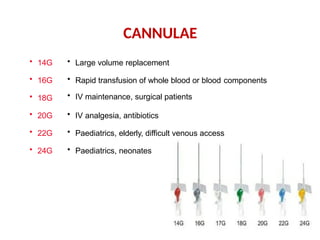
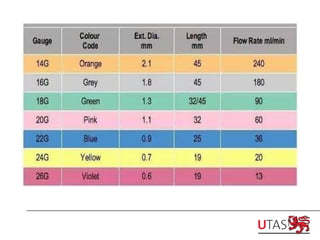
• 14G
• 16G
• 18G
• 20G
• 22G
• 24G
• Large volume replacement
• Rapid transfusion of whole blood or blood components
• IV maintenance, surgical patients
• IV analgesia, antibiotics
• Paediatrics, elderly, difficult venous access
• Paediatrics, neonates
Pre- Requisites
• Dressing pack
• Gloves (sterile)
• Alcoholic chlorhexidine
• Transparent semi permeable dressing
• Cannula (size depending on need)
• Extension set (and prescribed IV fluids)
• Syringe 2 ml with 0.9% Normal saline
• Tourniquet
• Check patient for allergies to medications, cleansing
fluids & dressings
• Assess the dominant/non-dominant side and check
the veins for suitability
• Provide a clear explanation of the procedure
ASSESSMENT
• Warm the site- rubbing, warmed towels, warm
water
• Apply torniquet
• Ask the patient to clench and unclench
• Clean the site, let it air dry
• Insert the cannula
PREPARATION
POTENTIAL COMPLICATIONS
• Extravasation
• Haematoma
• Occlusion
• Phlebitis
• Thrombophlebitis
• Infection
Haematoma
Localised collection of extravasated blood, usually
clotted, in an organ or tissue.
Cause
• Blood leaking out of the vein into the tissue due to
puncture or trauma
Signs & Symptoms
• Swelling, tenderness and discolouration
Prevention
•Pressure over site on removal of cannula
Intervention
• Apply appropriate pressure bandage, monitor
the site
Phlebitis
Inflammation of the vein
Cause
• Poor aseptic technique
• High osmolarity I.V. infusions or
drugs
• Trauma to the vein during
insertion/incorrect cannula gauge
• Prolonged use of the same site
Signs & Symptoms
• Tenderness, redness, heat and
oedema
• Advanced-induration, palpable
venous cord
Intervention
• Remove cannula
• Apply warm compress
• Observe for signs of
infection
• If phlebitis is advanced
antibiotics may be
required
Occlusion
Cause
• Cannula not flushed- fibrin formation in or
around the tip of cannula
• Kinking of the cannula
Signs & Symptoms
• Slowing or cessation of fluid
• Blood in the line
Intervention
• Check for kinks in cannula
• Raise IV higher
• Flush
• Remove cannula
Thrombophlebitis
Inflammation and formation of a thrombus
in the vein
Causes
• Injury to the vein
• Infection
• Chemical irritation
•Prolonged use of the same vein
Signs & Symptoms
• Tenderness/redness
• Heat/oedema
• Cordlike appearance of the
vein
• Slowing of the IV infusion
Intervention
• Remove cannula
• Observe for signs of
infection
Infection
Pathogen in the tissue
surrounding the I.V. site.
Cause
• Lack of asepsis
•Prolonged use of the same site
Signs & Symptoms
• Tenderness and swelling
• Erythema/purulent drainage
Intervention
• Remove cannula
• Antibiotics may
be required
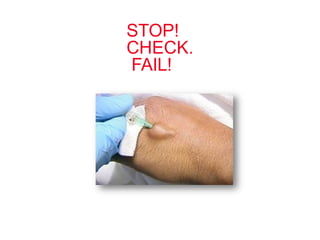
STOP!
CHECK.
FAIL!

Presentation on peripheral iv and central cannulation.pptx

  • 1.
  • 2.
    ANATOMY Venous Drainage ofUpper Limbs • Superficial venous system- skin and superficial fascia • Deep venous system- deeper fascia, muscles and bones
  • 4.
    CANNULAE • 14G • 16G •18G • 20G • 22G • 24G • Large volume replacement • Rapid transfusion of whole blood or blood components • IV maintenance, surgical patients • IV analgesia, antibiotics • Paediatrics, elderly, difficult venous access • Paediatrics, neonates
  • 6.
    Pre- Requisites • Dressingpack • Gloves (sterile) • Alcoholic chlorhexidine • Transparent semi permeable dressing • Cannula (size depending on need) • Extension set (and prescribed IV fluids) • Syringe 2 ml with 0.9% Normal saline • Tourniquet
  • 7.
    • Check patientfor allergies to medications, cleansing fluids & dressings • Assess the dominant/non-dominant side and check the veins for suitability • Provide a clear explanation of the procedure ASSESSMENT
  • 8.
    • Warm thesite- rubbing, warmed towels, warm water • Apply torniquet • Ask the patient to clench and unclench • Clean the site, let it air dry • Insert the cannula PREPARATION
  • 9.
    POTENTIAL COMPLICATIONS • Extravasation •Haematoma • Occlusion • Phlebitis • Thrombophlebitis • Infection
  • 10.
    Haematoma Localised collection ofextravasated blood, usually clotted, in an organ or tissue. Cause • Blood leaking out of the vein into the tissue due to puncture or trauma Signs & Symptoms • Swelling, tenderness and discolouration Prevention •Pressure over site on removal of cannula Intervention • Apply appropriate pressure bandage, monitor the site
  • 11.
    Phlebitis Inflammation of thevein Cause • Poor aseptic technique • High osmolarity I.V. infusions or drugs • Trauma to the vein during insertion/incorrect cannula gauge • Prolonged use of the same site Signs & Symptoms • Tenderness, redness, heat and oedema • Advanced-induration, palpable venous cord Intervention • Remove cannula • Apply warm compress • Observe for signs of infection • If phlebitis is advanced antibiotics may be required
  • 12.
    Occlusion Cause • Cannula notflushed- fibrin formation in or around the tip of cannula • Kinking of the cannula Signs & Symptoms • Slowing or cessation of fluid • Blood in the line Intervention • Check for kinks in cannula • Raise IV higher • Flush • Remove cannula
  • 13.
    Thrombophlebitis Inflammation and formationof a thrombus in the vein Causes • Injury to the vein • Infection • Chemical irritation •Prolonged use of the same vein Signs & Symptoms • Tenderness/redness • Heat/oedema • Cordlike appearance of the vein • Slowing of the IV infusion Intervention • Remove cannula • Observe for signs of infection
  • 14.
    Infection Pathogen in thetissue surrounding the I.V. site. Cause • Lack of asepsis •Prolonged use of the same site Signs & Symptoms • Tenderness and swelling • Erythema/purulent drainage Intervention • Remove cannula • Antibiotics may be required
  • 15.