Prof. A. B. Suraj
Intellecture Seminar Series
Bangalore – November 2009
Session Objectives
 To understand the “intangibility” of IPRs
 To appreciate the value of protected IP
in gaining competitive advantage
 To gain an overview of the strategic
elements towards better leverage of IP
IPRs – General Bases
 Economic (and technological) rationale
– aids overall development
 Social benefits – enriches the Public
Domain and Basic Research
 Legal monopoly – towards fair regulation
within the territory
Forms of IPRs
 Patents – Patents Act, 1970
 Copyrights – Copyright Act, 1957
 Trade Marks – Trade Marks Act, 1999
 Industrial Designs – Designs Act, 2000
Forms of IPRs …
 Layout Designs of ICs
Semiconductor Integrated Circuits Layout-
Design Act, 2000
 Geographical Indications
Geographical Indications of Goods
(Registration and Protection) Act, 1999
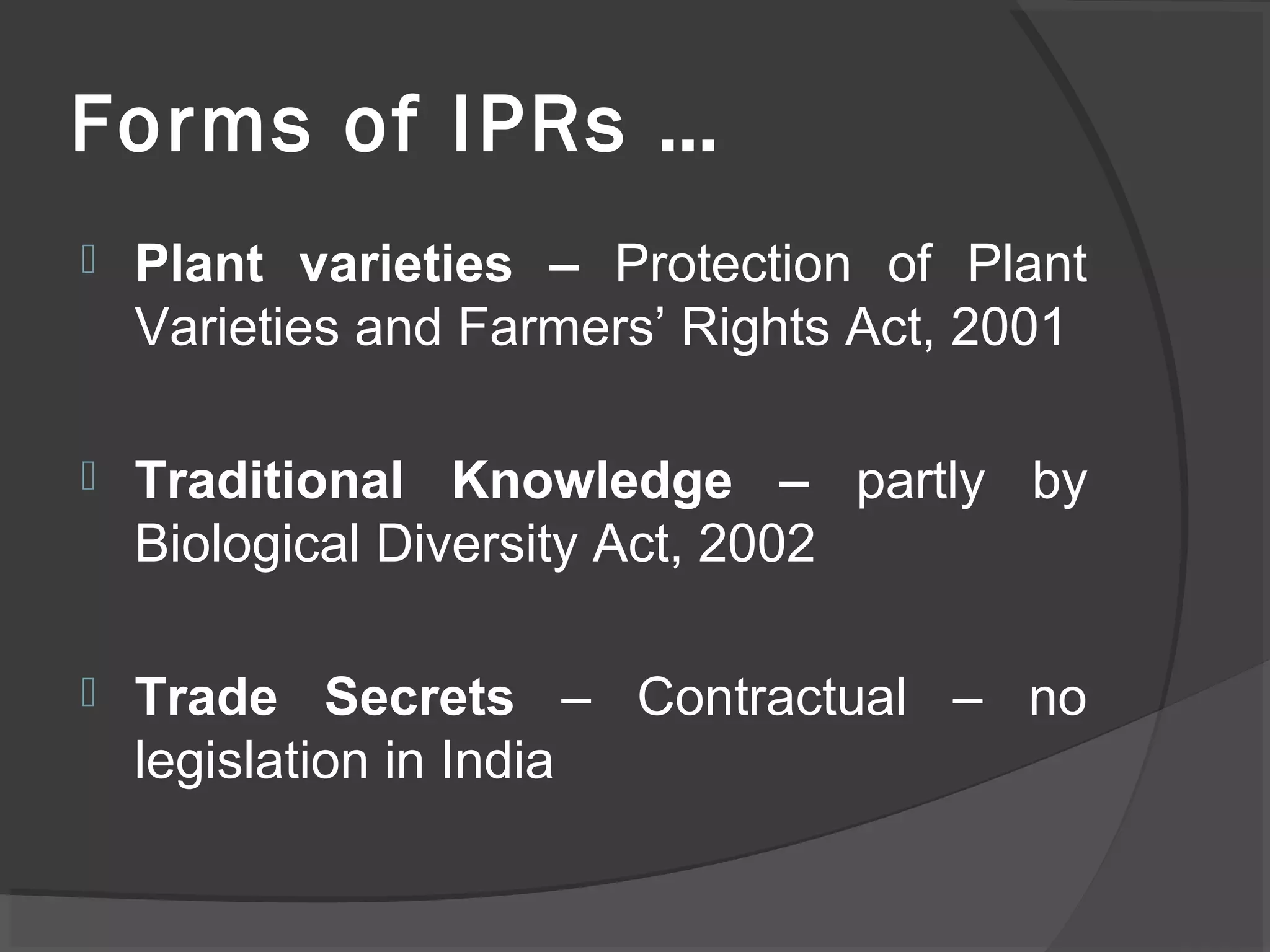
Forms of IPRs …
 Plant varieties – Protection of Plant
Varieties and Farmers’ Rights Act, 2001
 Traditional Knowledge – partly by
Biological Diversity Act, 2002
 Trade Secrets – Contractual – no
legislation in India
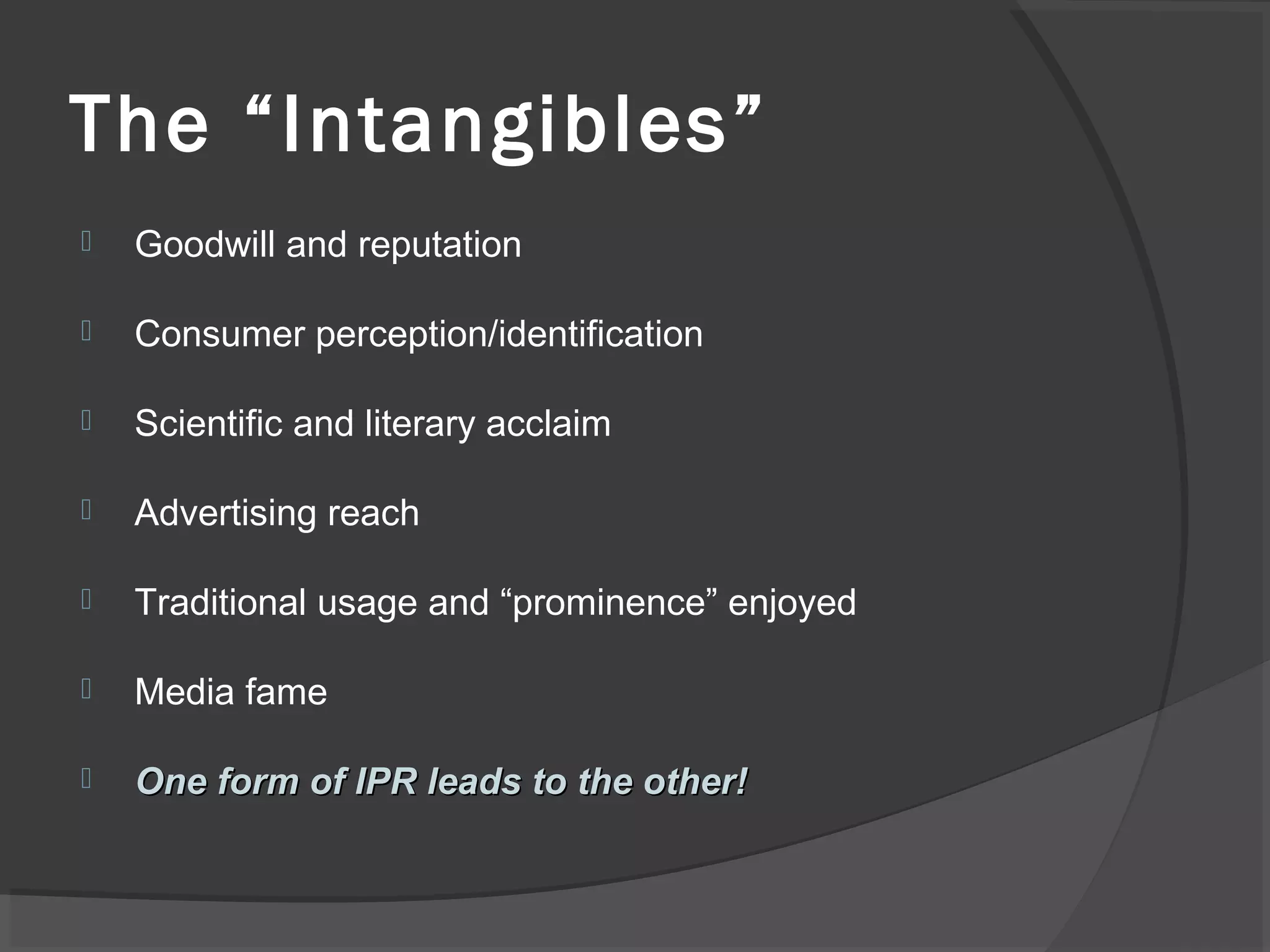
The “Intangibles”
 Goodwill and reputation
 Consumer perception/identification
 Scientific and literary acclaim
 Advertising reach
 Traditional usage and “prominence” enjoyed
 Media fame
 One form of IPR leads to the other!One form of IPR leads to the other!
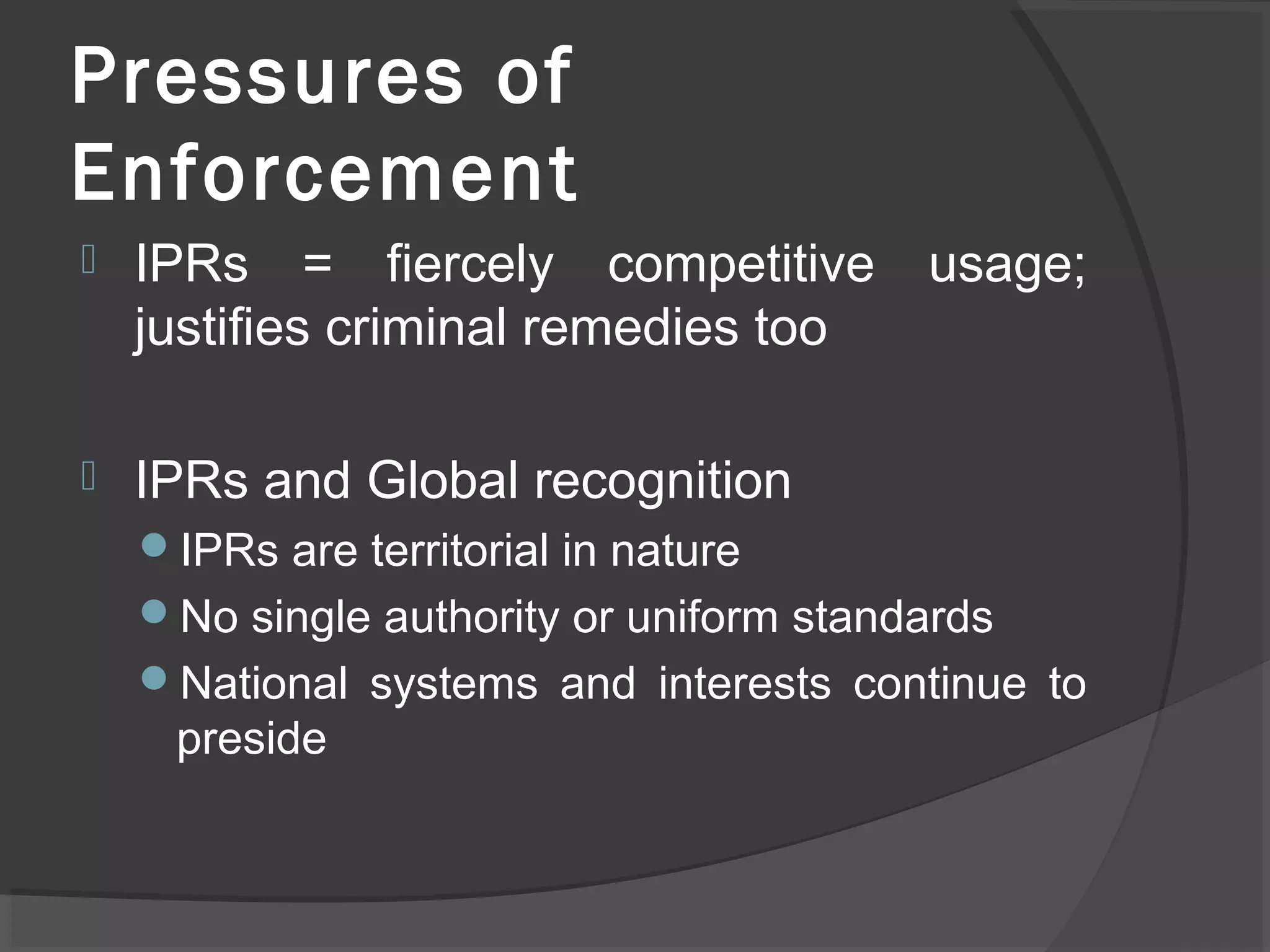
Pressures of
Enforcement
 IPRs = fiercely competitive usage;
justifies criminal remedies too
 IPRs and Global recognition
IPRs are territorial in nature
No single authority or uniform standards
National systems and interests continue to
preside
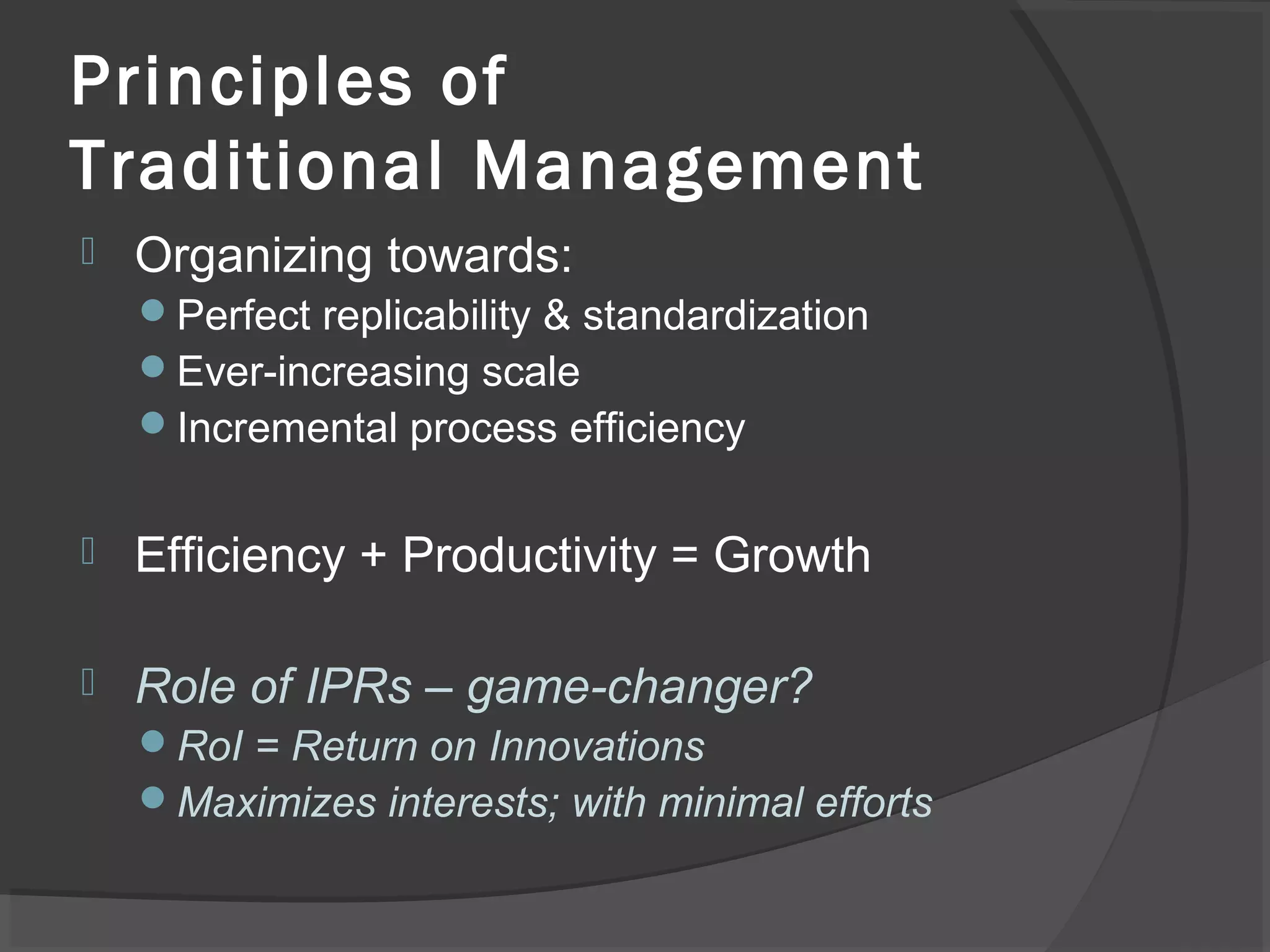
Principles of
Traditional Management
 Organizing towards:
Perfect replicability & standardization
Ever-increasing scale
Incremental process efficiency
 Efficiency + Productivity = Growth
 Role of IPRs – game-changer?
RoI = Return on Innovations
Maximizes interests; with minimal efforts
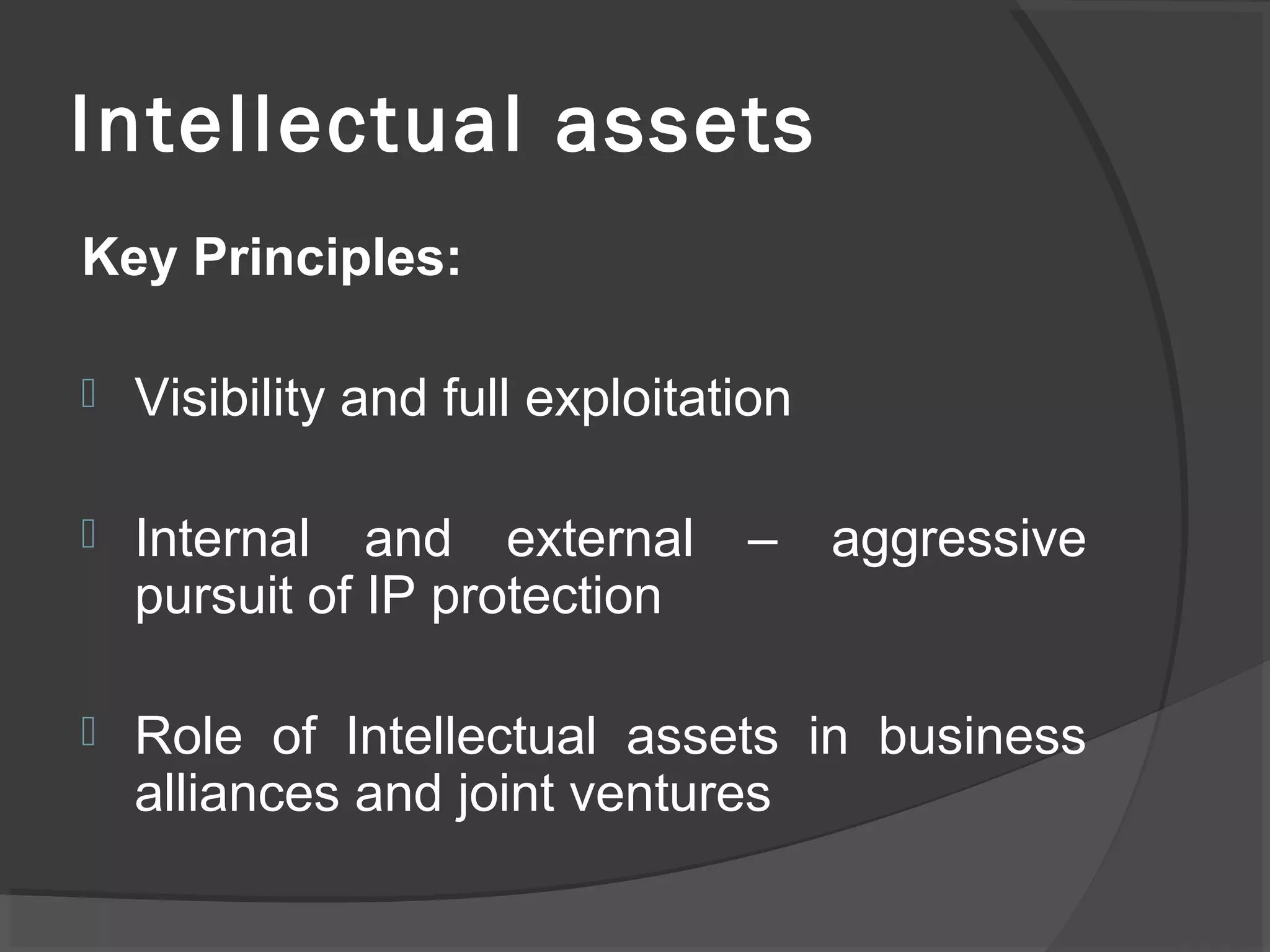
Intellectual assets
Key Principles:
 Visibility and full exploitation
 Internal and external – aggressive
pursuit of IP protection
 Role of Intellectual assets in business
alliances and joint ventures
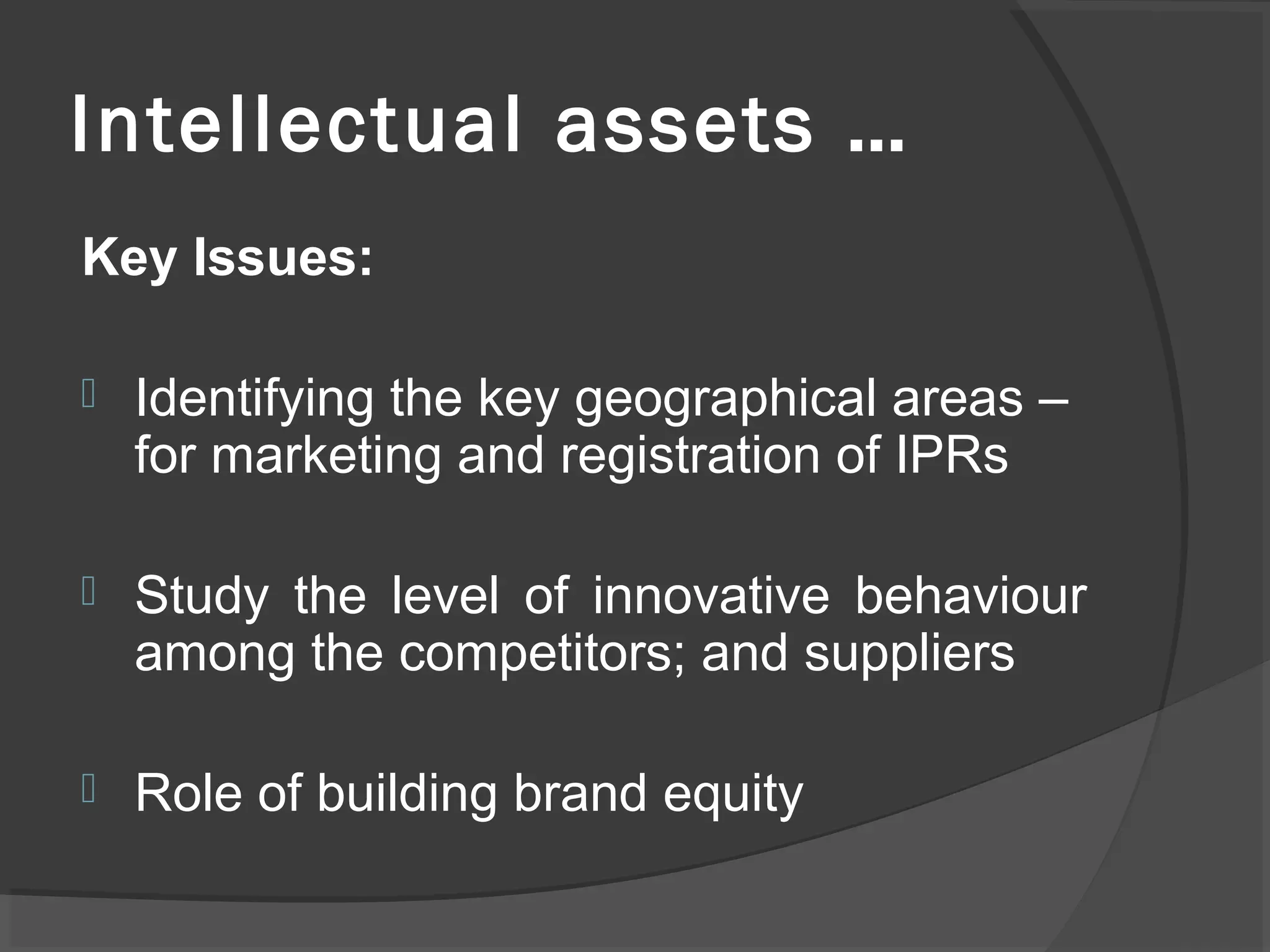
Intellectual assets …
Key Issues:
 Identifying the key geographical areas –
for marketing and registration of IPRs
 Study the level of innovative behaviour
among the competitors; and suppliers
 Role of building brand equity
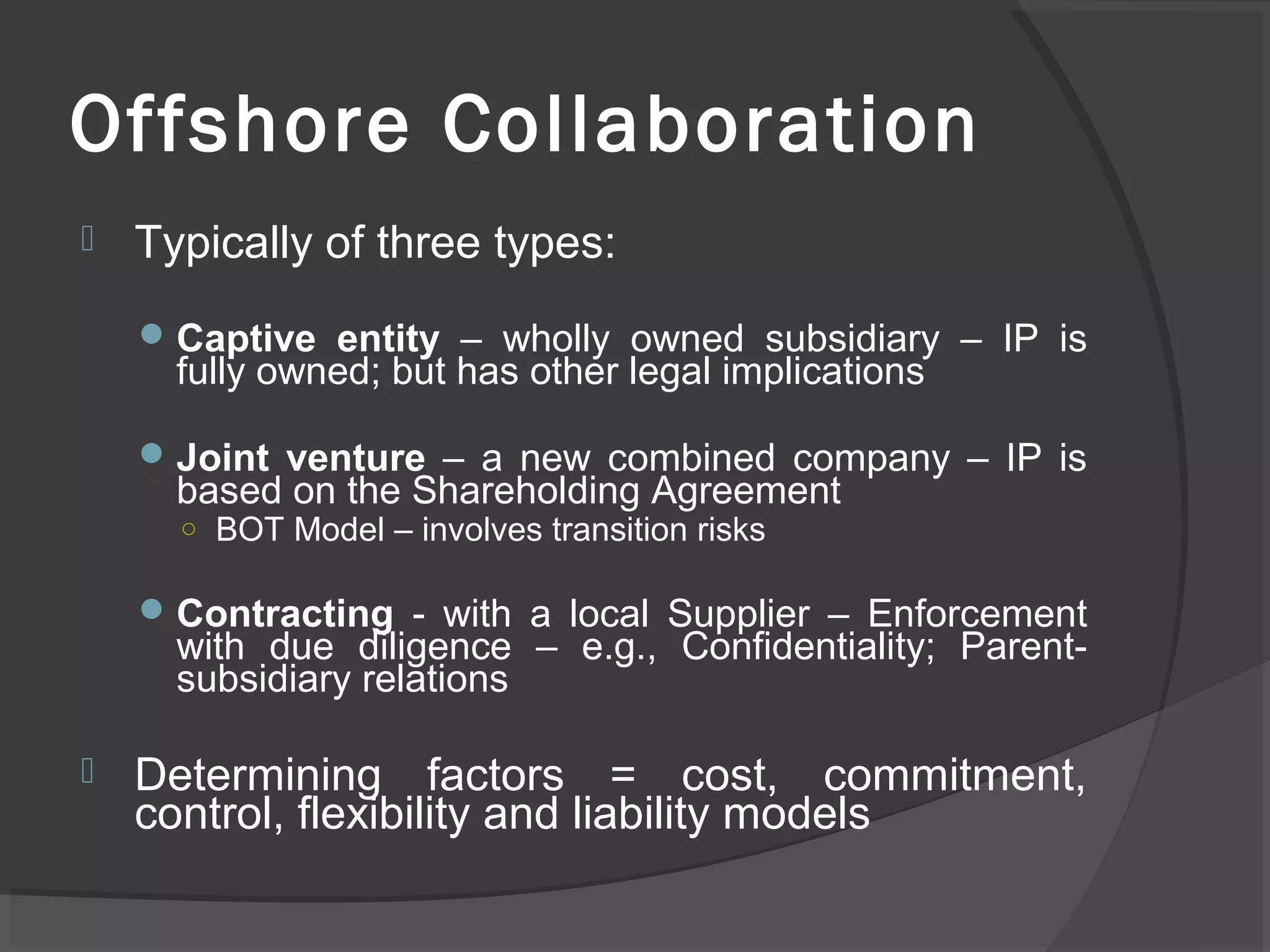
Offshore Collaboration
 Typically of three types:
Captive entity – wholly owned subsidiary – IP is
fully owned; but has other legal implications
Joint venture – a new combined company – IP is
based on the Shareholding Agreement
○ BOT Model – involves transition risks
Contracting - with a local Supplier – Enforcement
with due diligence – e.g., Confidentiality; Parent-
subsidiary relations
 Determining factors = cost, commitment,
control, flexibility and liability models
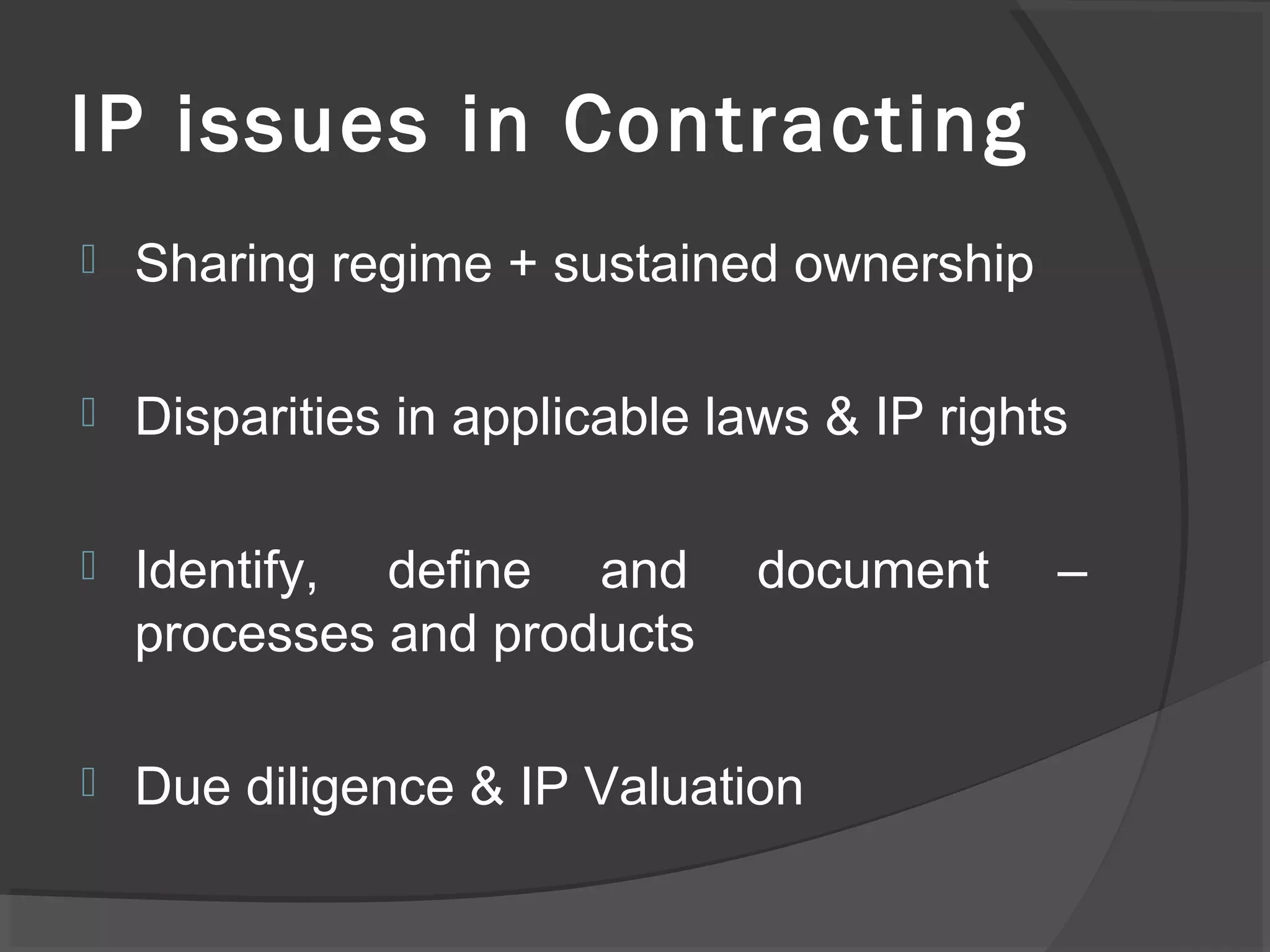
IP issues in Contracting
 Sharing regime + sustained ownership
 Disparities in applicable laws & IP rights
 Identify, define and document –
processes and products
 Due diligence & IP Valuation
IP issues …
 Enforcement – involves local issues too
 Employer-employee relations – framework
of trusteeship
 Data protection and security
 Dispute settlement and arbitral
enforcement
Emerging issues
 Licensing in IPRs
 Emerging trends in global supply chain
 Minimum level of “reasonable control” – as evidenced in
Contracts and practices
 Raises anti-trust and RTP claims as well
 Securitization of IPRs
 Methods of valuation and their accuracy
 Procedure of affirming “secured interest”
 Liability of Service Providers in E-Commerce
 Scope and content of “due diligence”
 Increasing burden on the ISPs to be “IP-Police”
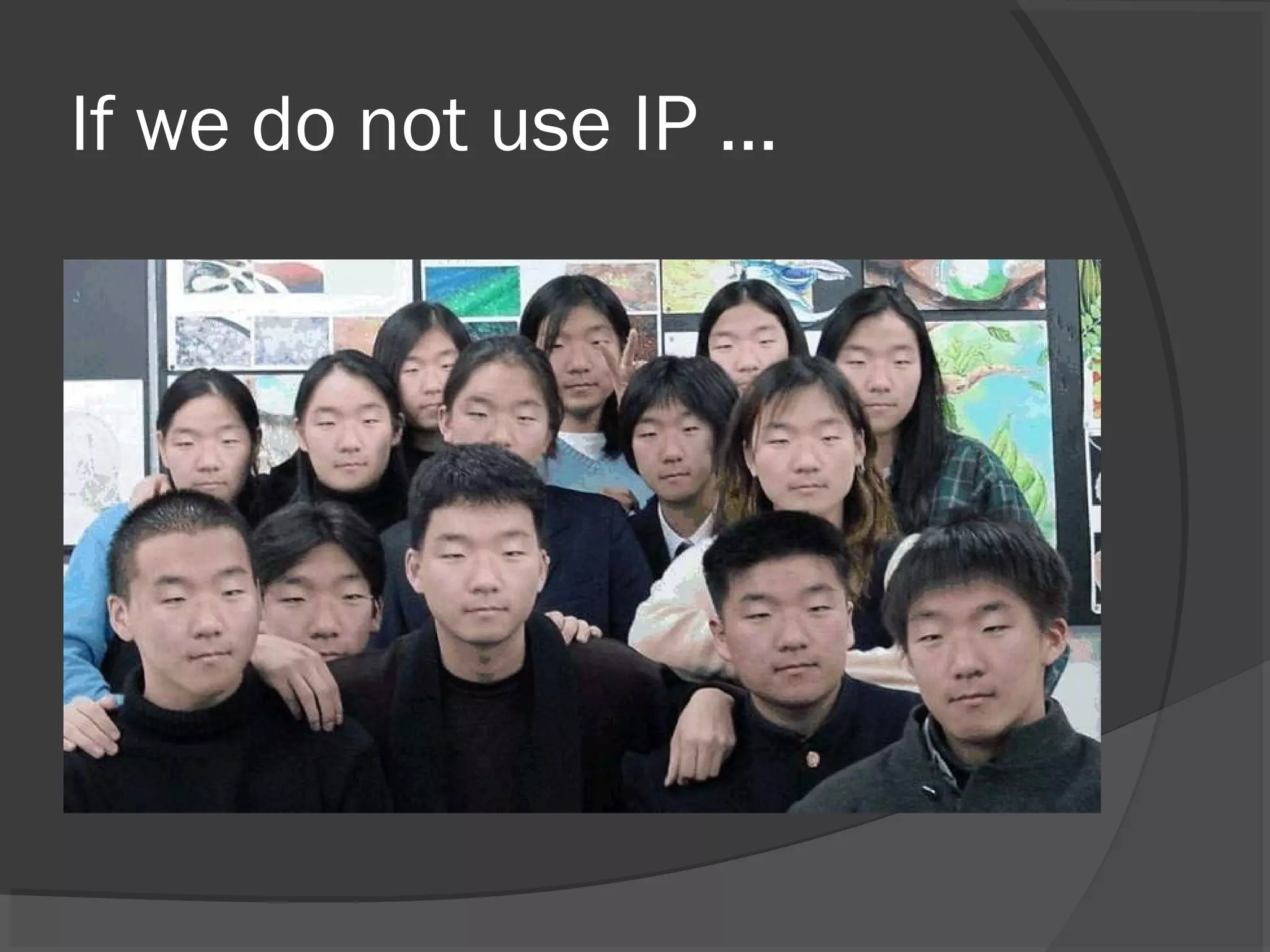
If we do not use IP …

Presentation on IP Management and Start Ups by Prof. A. B. Suraj

  • 1.
    Prof. A. B.Suraj Intellecture Seminar Series Bangalore – November 2009
  • 2.
    Session Objectives  Tounderstand the “intangibility” of IPRs  To appreciate the value of protected IP in gaining competitive advantage  To gain an overview of the strategic elements towards better leverage of IP
  • 3.
    IPRs – GeneralBases  Economic (and technological) rationale – aids overall development  Social benefits – enriches the Public Domain and Basic Research  Legal monopoly – towards fair regulation within the territory
  • 4.
    Forms of IPRs Patents – Patents Act, 1970  Copyrights – Copyright Act, 1957  Trade Marks – Trade Marks Act, 1999  Industrial Designs – Designs Act, 2000
  • 5.
    Forms of IPRs…  Layout Designs of ICs Semiconductor Integrated Circuits Layout- Design Act, 2000  Geographical Indications Geographical Indications of Goods (Registration and Protection) Act, 1999
  • 6.
    Forms of IPRs…  Plant varieties – Protection of Plant Varieties and Farmers’ Rights Act, 2001  Traditional Knowledge – partly by Biological Diversity Act, 2002  Trade Secrets – Contractual – no legislation in India
  • 7.
    The “Intangibles”  Goodwilland reputation  Consumer perception/identification  Scientific and literary acclaim  Advertising reach  Traditional usage and “prominence” enjoyed  Media fame  One form of IPR leads to the other!One form of IPR leads to the other!
  • 8.
    Pressures of Enforcement  IPRs= fiercely competitive usage; justifies criminal remedies too  IPRs and Global recognition IPRs are territorial in nature No single authority or uniform standards National systems and interests continue to preside
  • 9.
    Principles of Traditional Management Organizing towards: Perfect replicability & standardization Ever-increasing scale Incremental process efficiency  Efficiency + Productivity = Growth  Role of IPRs – game-changer? RoI = Return on Innovations Maximizes interests; with minimal efforts
  • 10.
    Intellectual assets Key Principles: Visibility and full exploitation  Internal and external – aggressive pursuit of IP protection  Role of Intellectual assets in business alliances and joint ventures
  • 11.
    Intellectual assets … KeyIssues:  Identifying the key geographical areas – for marketing and registration of IPRs  Study the level of innovative behaviour among the competitors; and suppliers  Role of building brand equity
  • 12.
    Offshore Collaboration  Typicallyof three types: Captive entity – wholly owned subsidiary – IP is fully owned; but has other legal implications Joint venture – a new combined company – IP is based on the Shareholding Agreement ○ BOT Model – involves transition risks Contracting - with a local Supplier – Enforcement with due diligence – e.g., Confidentiality; Parent- subsidiary relations  Determining factors = cost, commitment, control, flexibility and liability models
  • 13.
    IP issues inContracting  Sharing regime + sustained ownership  Disparities in applicable laws & IP rights  Identify, define and document – processes and products  Due diligence & IP Valuation
  • 14.
    IP issues … Enforcement – involves local issues too  Employer-employee relations – framework of trusteeship  Data protection and security  Dispute settlement and arbitral enforcement
  • 15.
    Emerging issues  Licensingin IPRs  Emerging trends in global supply chain  Minimum level of “reasonable control” – as evidenced in Contracts and practices  Raises anti-trust and RTP claims as well  Securitization of IPRs  Methods of valuation and their accuracy  Procedure of affirming “secured interest”  Liability of Service Providers in E-Commerce  Scope and content of “due diligence”  Increasing burden on the ISPs to be “IP-Police”
  • 16.
    If we donot use IP …