
CHANNEL DESIGN
Presented By:
Sanower Azad
MBA(2013-2015)
GGSIPU , NEW DELHI
Channel Design
WHAT IS CHANNEL DESIGN??
Designing a channel system
calls for analyzing customer
needs, establishing channel
objectives, and identifying
and evaluating the major
channel alternatives.
ANALYZING THE SERVICE OUTPUT LEVELS DESIRED BY
CUSTOMERS
• In designing the marketing
channels, the marketer
must understand the output
levels desired by the target
customers.
• Channel produce
five service outputs:
1. LOT SIZE
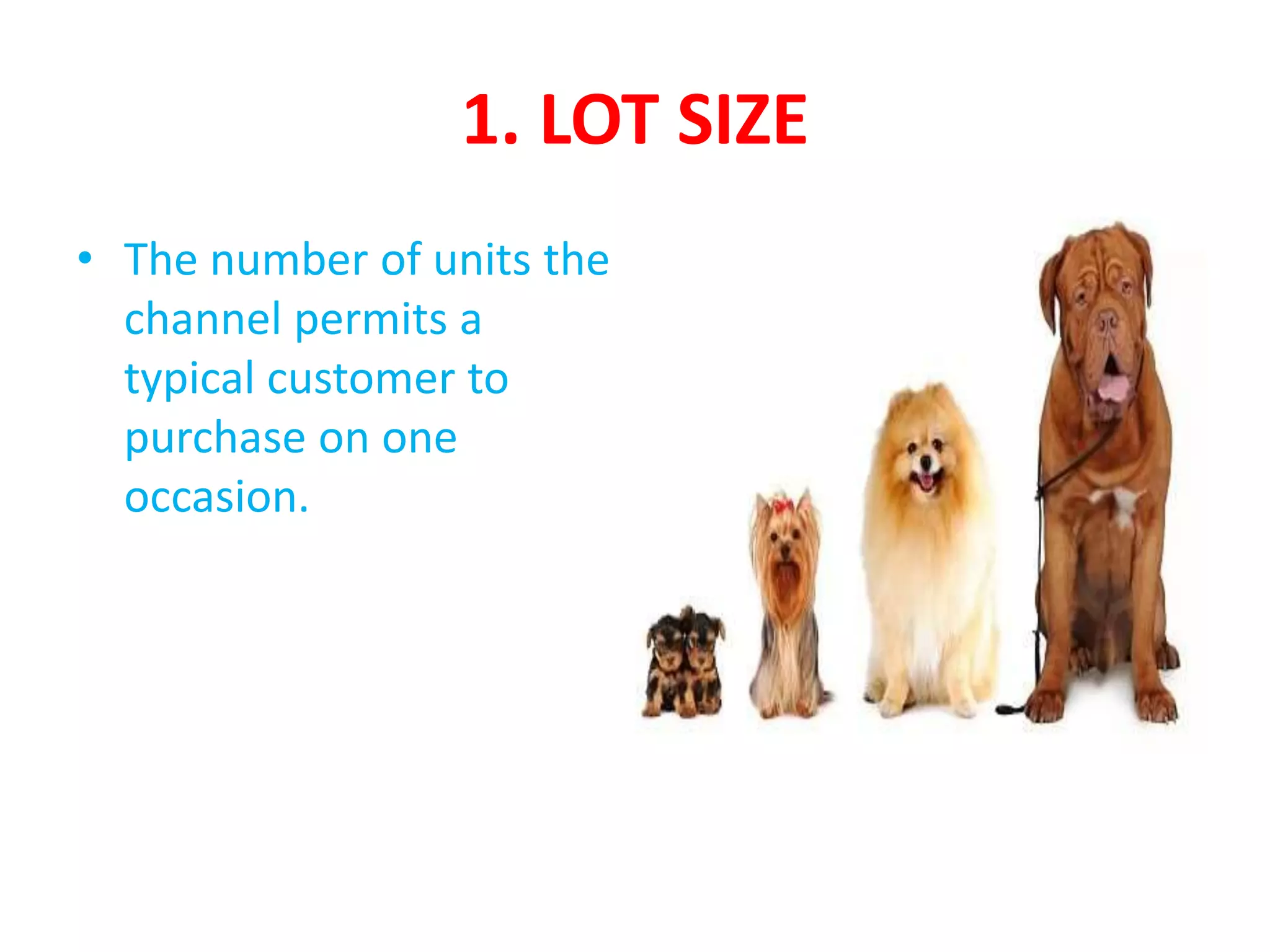
• The number of units the
channel permits a
typical customer to
purchase on one
occasion.
2. SPATIAL CONVENIENCE
• The degree to which the
marketing channel
makes it easy for
customers to purchase
the product.
3. WAITING TIME & DELIVERY TIME
• The average time customers
of that channel wait for
receipt of the goods.
SPATIAL CONVENIENCE
ANALYZING THE SERVICE
OUTPUT LEVELS DESIRED BY
CUSTOMERS cont..
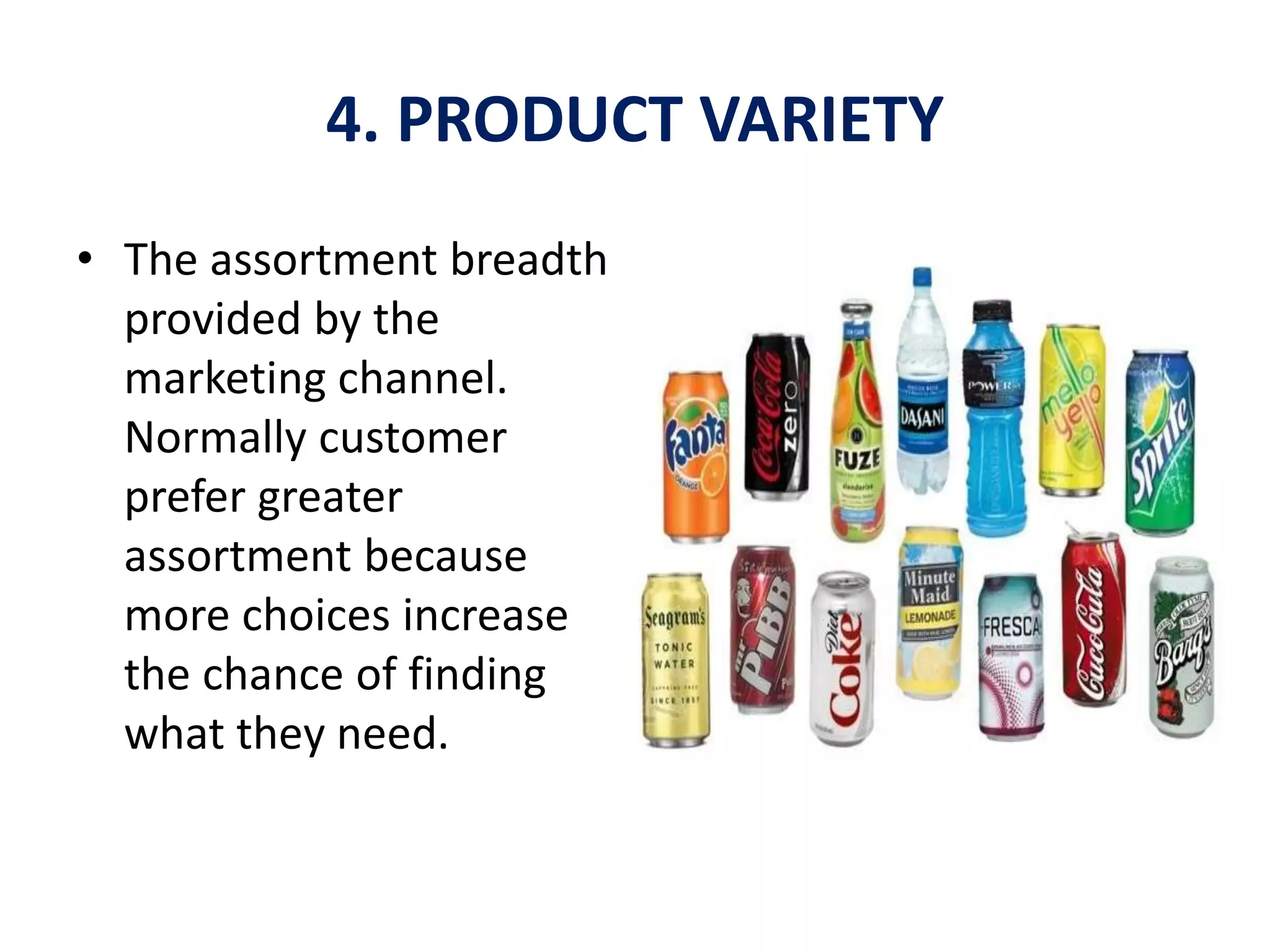
4. PRODUCT VARIETY
• The assortment breadth
provided by the
marketing channel.
Normally customer
prefer greater
assortment because
more choices increase
the chance of finding
what they need.
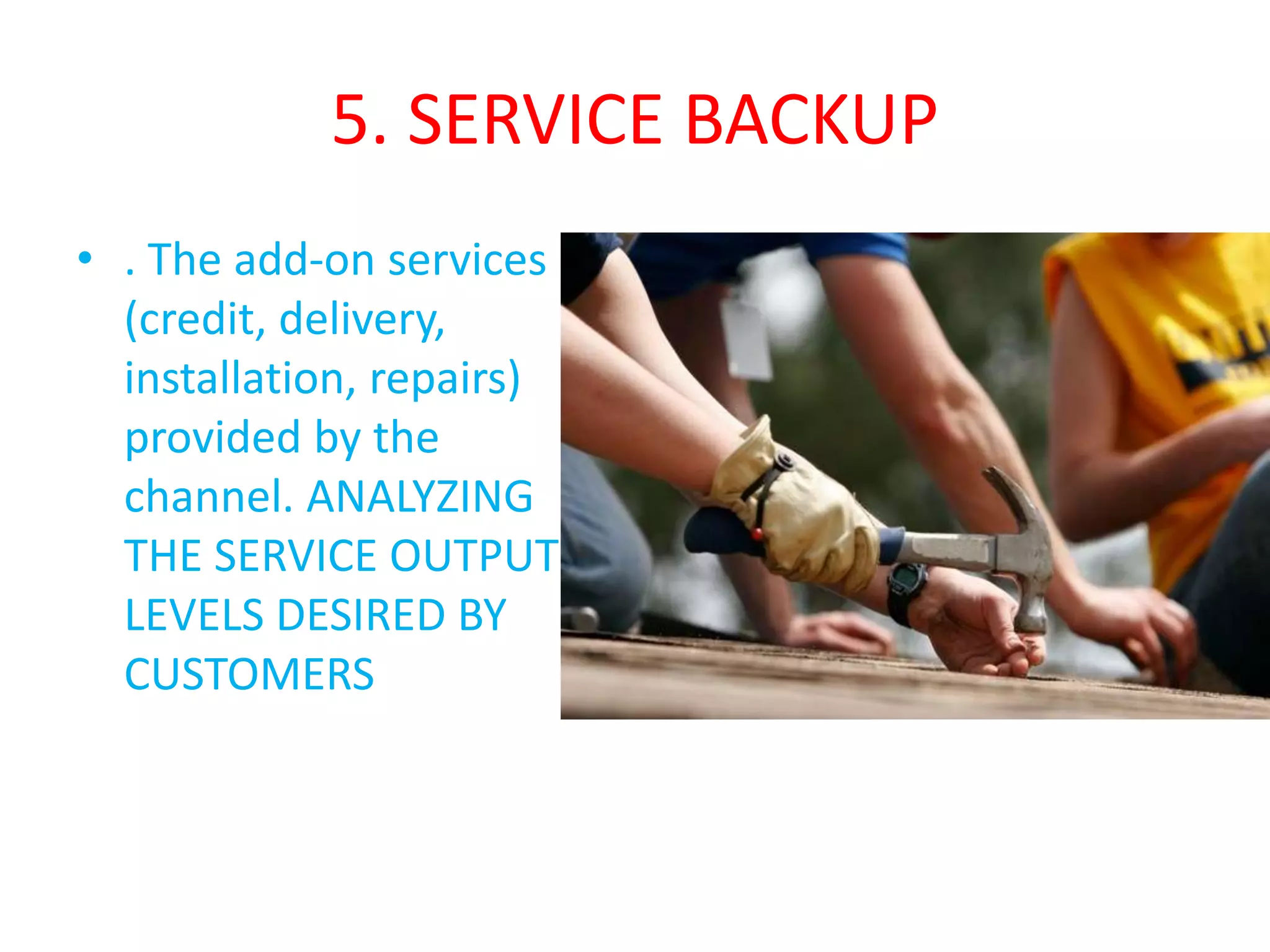
5. SERVICE BACKUP
• . The add-on services
(credit, delivery,
installation, repairs)
provided by the
channel. ANALYZING
THE SERVICE OUTPUT
LEVELS DESIRED BY
CUSTOMERS
DETERMINE THE CHANNEL OBJECTIVES AND
CONSTRAINTS
• Channel objectives should be stated in terms
of targeted service output levels. Channel
institutions should arrange their functional
tasks to minimize total channel costs with
respect to desired levels of service outputs.
IDENTIFY THE MAJOR CHANNEL
ALTERNATIVES
After the channel objective have been determined,
the company should identify its major channel
alternatives in terms of
• (1) types of intermediaries,
• (2) the number of intermediaries needed, and
• (3) the terms and responsibilities of each channel
member.
1. Four basic types of marketing
Intermediaries..
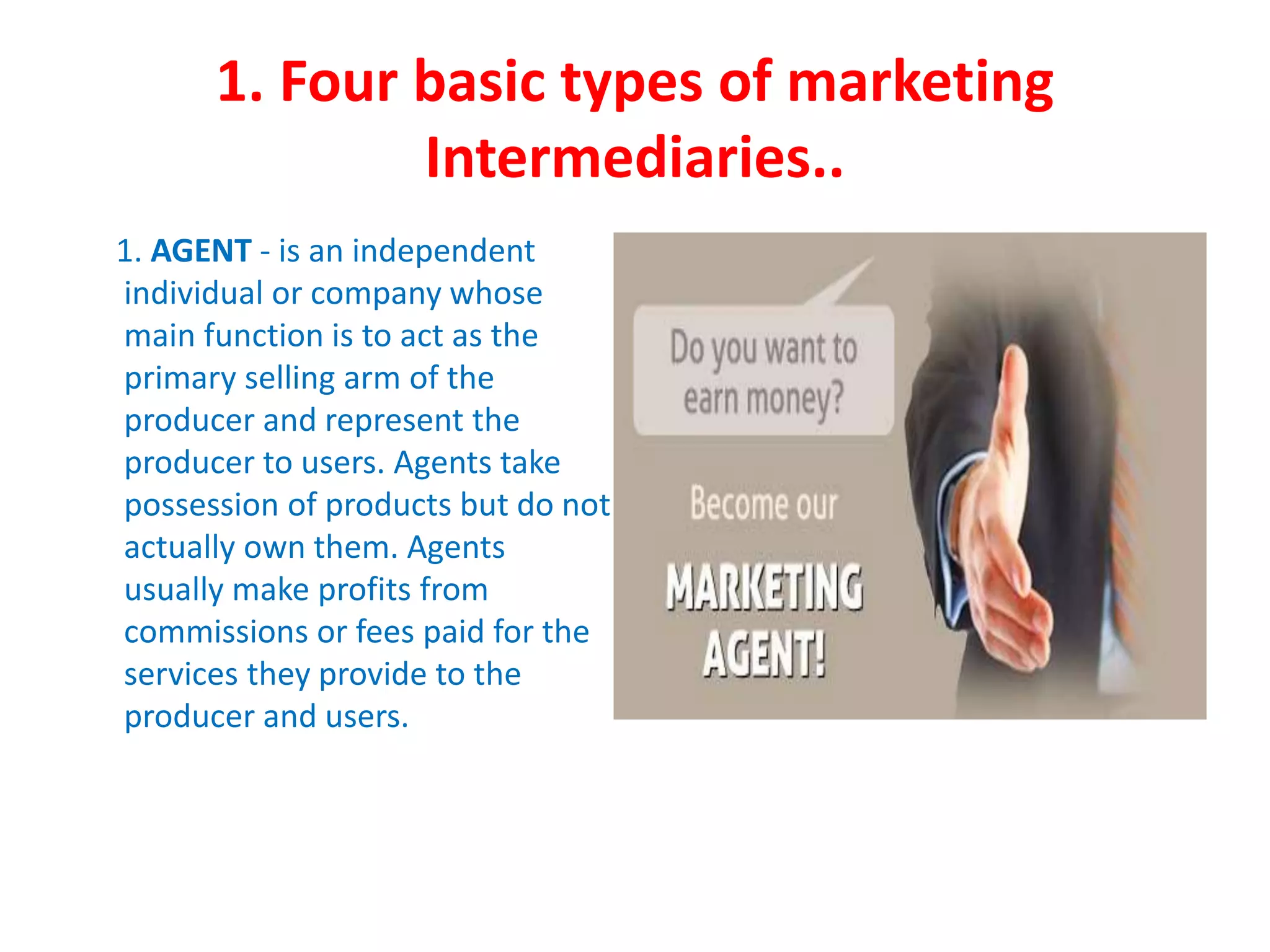
1. AGENT - is an independent
individual or company whose
main function is to act as the
primary selling arm of the
producer and represent the
producer to users. Agents take
possession of products but do not
actually own them. Agents
usually make profits from
commissions or fees paid for the
services they provide to the
producer and users.
Intermediaries..
2. WHOLESALERS - Wholesalers are
independently owned firms that
take title to the merchandise they
handle. The wholesalers own the
products they sell. Wholesalers
purchase product in bulk and
store it until they can resell it.
Wholesalers generally sell the
products they have purchased to
other intermediaries, usually
retailers, for a profit.
Intermediaries..
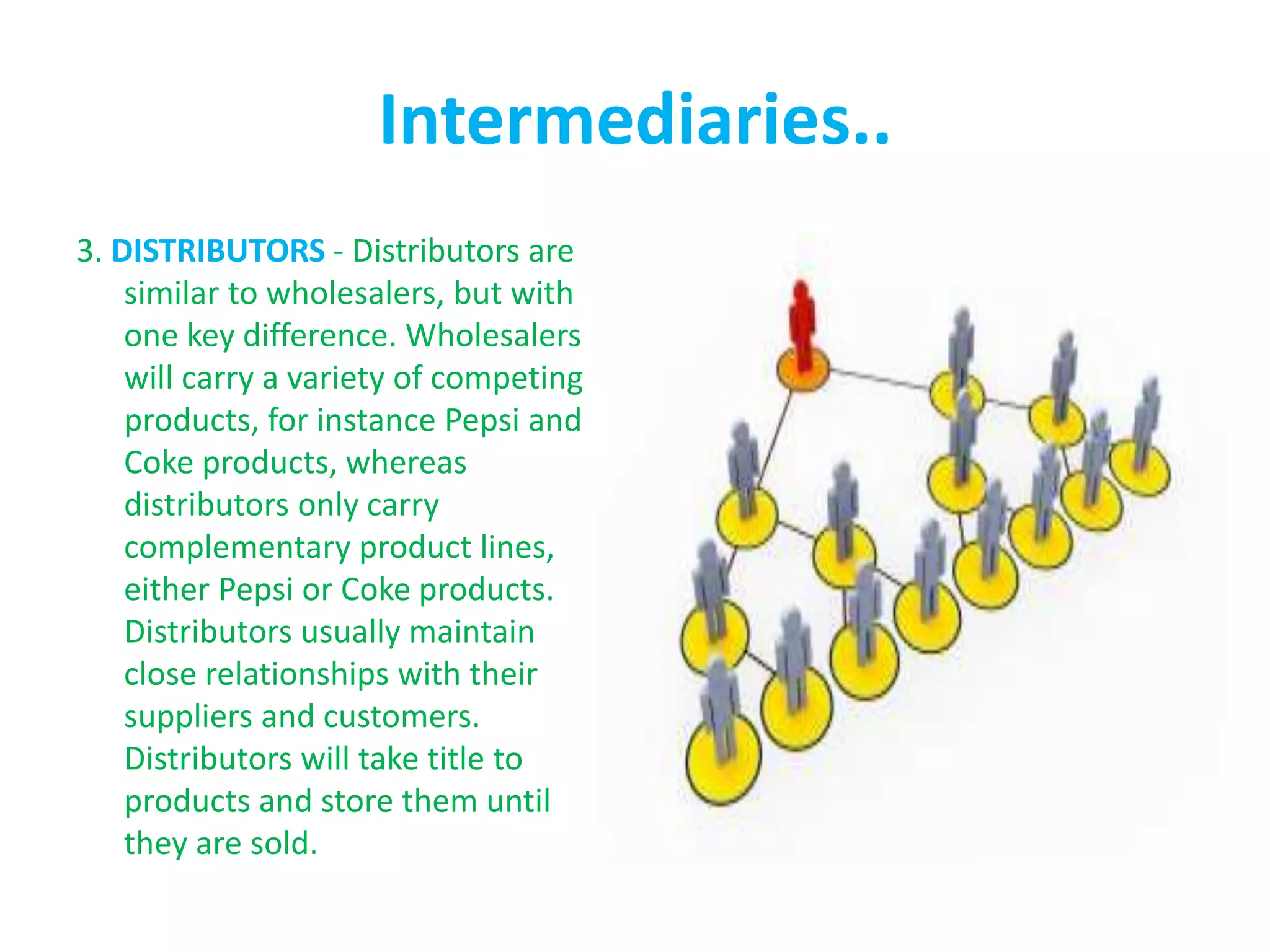
3. DISTRIBUTORS - Distributors are
similar to wholesalers, but with
one key difference. Wholesalers
will carry a variety of competing
products, for instance Pepsi and
Coke products, whereas
distributors only carry
complementary product lines,
either Pepsi or Coke products.
Distributors usually maintain
close relationships with their
suppliers and customers.
Distributors will take title to
products and store them until
they are sold.
Intermediaries
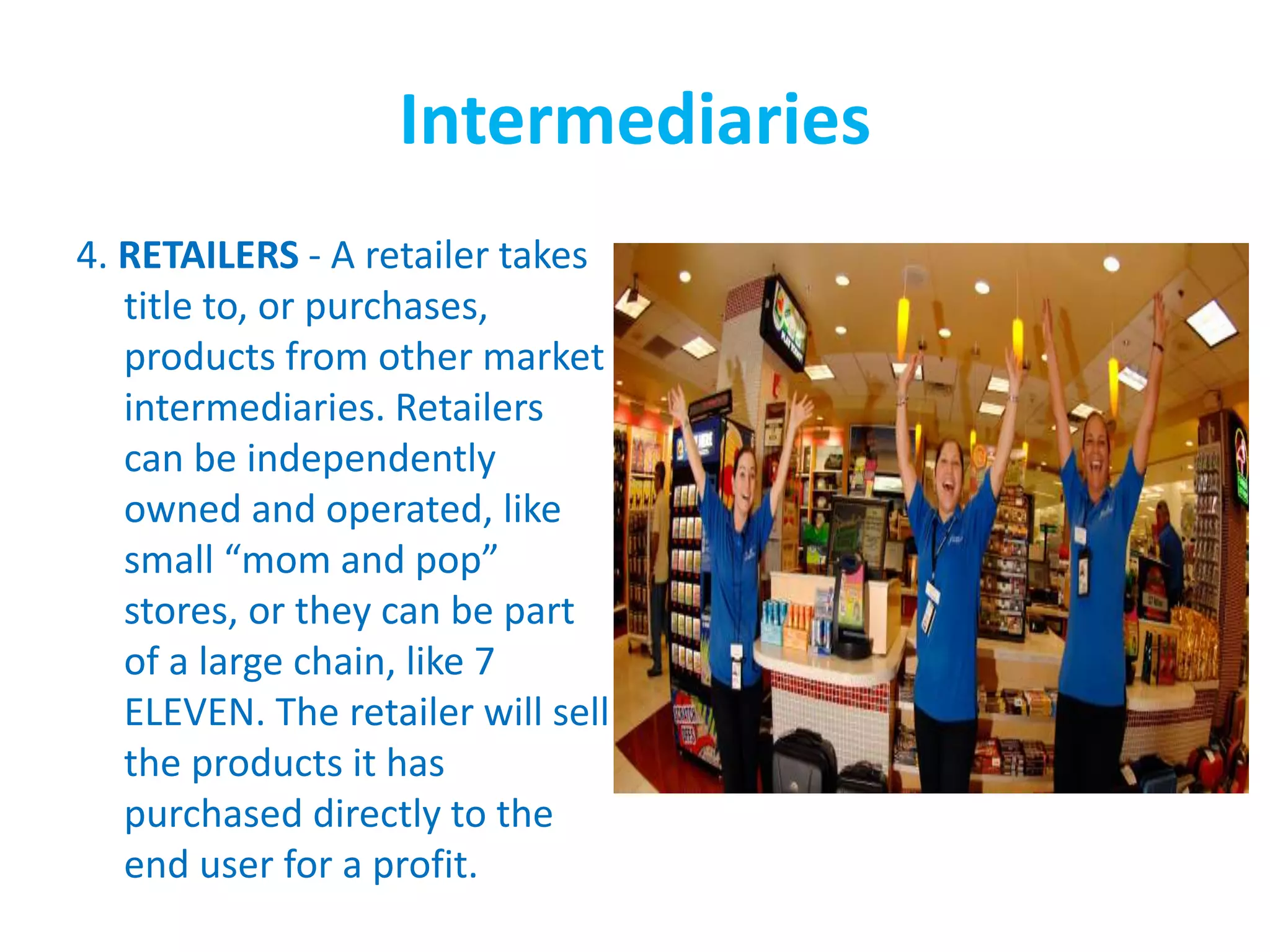
4. RETAILERS - A retailer takes
title to, or purchases,
products from other market
intermediaries. Retailers
can be independently
owned and operated, like
small “mom and pop”
stores, or they can be part
of a large chain, like 7
ELEVEN. The retailer will sell
the products it has
purchased directly to the
end user for a profit.
2. Number of intermediaries needed
Companies have to decide on the number of intermediaries to
use.
a) EXCLUSIVE DISTRIBUTION
b) SELECTIVE DISTRIBUTION
c) INTENSIVE DISTRIBUTION
EXCLUSIVE DISTRIBUTION
• Exclusive distribution is a situation in which only
certain dealers are allowed to sell a certain product.
• It involves exclusive dealing arrangement, which the
resellers agree not to carry competing brands. By
granting exclusive distribution, the producer hopes
to obtain more dedicated and knowledgeable selling.
SELECTIVE DISTRIBUTION
• Only some available outlets in area are chosen to distribute a
product.
• The company does not have to dissipate its efforts over too
many outlets, it enables the producer to gain adequate
market coverage with more control and less cost than
intensive distribution.
• It is appropriate for shopping products, which consumers are
willing to spend more time visiting several retail outlets to
compare prices, designs, styles, and other features of these
product. Nike is a good example of selective distribution.
INTENSIVE DISTRIBUTION
• Intensive distribution is the use of all available outlets to distribute a product. It is
suitable for convenience products, such as soft drinks, bread, candy, newspapers,
etc. because they have high replacement rate and require almost no service.
• Multiple channels (i.e. convenience stores, service stations, supermarkets discount
store) are used to sell these products. Availability of these products is more
important than the nature of the outlet.
• For convenience of consumers, store must be located nearby and minimum time
will be necessary to search for the product at the store.
presentation on channel design "Marketing"

presentation on channel design "Marketing"

  • 1.
    CHANNEL DESIGN Presented By: SanowerAzad MBA(2013-2015) GGSIPU , NEW DELHI
  • 2.
    Channel Design WHAT ISCHANNEL DESIGN?? Designing a channel system calls for analyzing customer needs, establishing channel objectives, and identifying and evaluating the major channel alternatives.
  • 3.
    ANALYZING THE SERVICEOUTPUT LEVELS DESIRED BY CUSTOMERS • In designing the marketing channels, the marketer must understand the output levels desired by the target customers. • Channel produce five service outputs:
  • 4.
    1. LOT SIZE •The number of units the channel permits a typical customer to purchase on one occasion.
  • 5.
    2. SPATIAL CONVENIENCE •The degree to which the marketing channel makes it easy for customers to purchase the product.
  • 6.
    3. WAITING TIME& DELIVERY TIME • The average time customers of that channel wait for receipt of the goods. SPATIAL CONVENIENCE ANALYZING THE SERVICE OUTPUT LEVELS DESIRED BY CUSTOMERS cont..
  • 7.
    4. PRODUCT VARIETY •The assortment breadth provided by the marketing channel. Normally customer prefer greater assortment because more choices increase the chance of finding what they need.
  • 8.
    5. SERVICE BACKUP •. The add-on services (credit, delivery, installation, repairs) provided by the channel. ANALYZING THE SERVICE OUTPUT LEVELS DESIRED BY CUSTOMERS
  • 9.
    DETERMINE THE CHANNELOBJECTIVES AND CONSTRAINTS • Channel objectives should be stated in terms of targeted service output levels. Channel institutions should arrange their functional tasks to minimize total channel costs with respect to desired levels of service outputs.
  • 10.
    IDENTIFY THE MAJORCHANNEL ALTERNATIVES After the channel objective have been determined, the company should identify its major channel alternatives in terms of • (1) types of intermediaries, • (2) the number of intermediaries needed, and • (3) the terms and responsibilities of each channel member.
  • 11.
    1. Four basictypes of marketing Intermediaries.. 1. AGENT - is an independent individual or company whose main function is to act as the primary selling arm of the producer and represent the producer to users. Agents take possession of products but do not actually own them. Agents usually make profits from commissions or fees paid for the services they provide to the producer and users.
  • 12.
    Intermediaries.. 2. WHOLESALERS -Wholesalers are independently owned firms that take title to the merchandise they handle. The wholesalers own the products they sell. Wholesalers purchase product in bulk and store it until they can resell it. Wholesalers generally sell the products they have purchased to other intermediaries, usually retailers, for a profit.
  • 13.
    Intermediaries.. 3. DISTRIBUTORS -Distributors are similar to wholesalers, but with one key difference. Wholesalers will carry a variety of competing products, for instance Pepsi and Coke products, whereas distributors only carry complementary product lines, either Pepsi or Coke products. Distributors usually maintain close relationships with their suppliers and customers. Distributors will take title to products and store them until they are sold.
  • 14.
    Intermediaries 4. RETAILERS -A retailer takes title to, or purchases, products from other market intermediaries. Retailers can be independently owned and operated, like small “mom and pop” stores, or they can be part of a large chain, like 7 ELEVEN. The retailer will sell the products it has purchased directly to the end user for a profit.
  • 15.
    2. Number ofintermediaries needed Companies have to decide on the number of intermediaries to use. a) EXCLUSIVE DISTRIBUTION b) SELECTIVE DISTRIBUTION c) INTENSIVE DISTRIBUTION
  • 16.
    EXCLUSIVE DISTRIBUTION • Exclusivedistribution is a situation in which only certain dealers are allowed to sell a certain product. • It involves exclusive dealing arrangement, which the resellers agree not to carry competing brands. By granting exclusive distribution, the producer hopes to obtain more dedicated and knowledgeable selling.
  • 17.
    SELECTIVE DISTRIBUTION • Onlysome available outlets in area are chosen to distribute a product. • The company does not have to dissipate its efforts over too many outlets, it enables the producer to gain adequate market coverage with more control and less cost than intensive distribution. • It is appropriate for shopping products, which consumers are willing to spend more time visiting several retail outlets to compare prices, designs, styles, and other features of these product. Nike is a good example of selective distribution.
  • 18.
    INTENSIVE DISTRIBUTION • Intensivedistribution is the use of all available outlets to distribute a product. It is suitable for convenience products, such as soft drinks, bread, candy, newspapers, etc. because they have high replacement rate and require almost no service. • Multiple channels (i.e. convenience stores, service stations, supermarkets discount store) are used to sell these products. Availability of these products is more important than the nature of the outlet. • For convenience of consumers, store must be located nearby and minimum time will be necessary to search for the product at the store.