PRESENTATION OF
MEAL MANAGEMENT DATE : 30, January 2019
Presented By
 Nabin Khadayat
MEAL MANAGEMENT
 Meal is an instance of eating in a specific time and
includes specific food.
 Meal Management is the process of controlling
every aspect of our diet from grocery store to meal
time. To manage our meals is to plan not only what
we eat, but also when we eat, and how we eat.
IMPORTANCE OF MEAL MANAGEMENT
 It is less expensive in both the short and long run to eat
freshest and the least processed foods possible in small
quantities through the day, rather than as large meal
MEAL PLANNING & VALUES IN MEAL
PLANNING
 Meal planning is the simple act of taking some time
to plan any number of our meals for the certain
time.
 For Good Health.
 For social and cultural values.
 Management of time and energy.
 Value for money and conservation.
FACTORS TO CONSIDER IN PLANNING
MENU
 Nutritional adequacy.
 Food budget.
 Difference in food habit.
 The time and skill of meal manager.
 Quality, suitability and availability of the food.
 Equipment available for the food preparation.
TYPES OF MEAL
 EARLY MORNING TEA
 BREAKFAST
 BRUNCH
 LUNCH
 HIGH TEA
 DINNER
 SUPPER
EARLY MORNING TEA
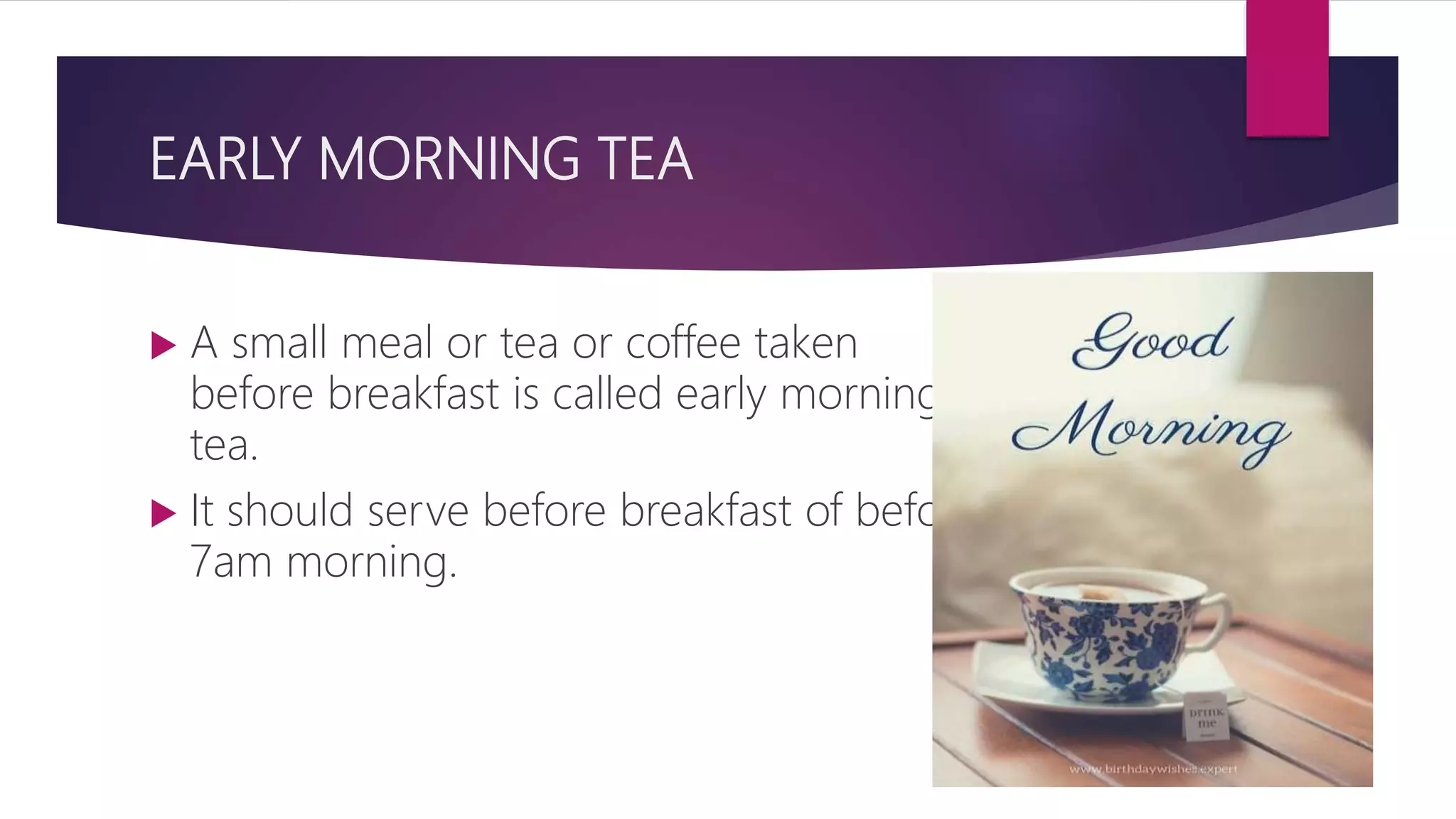
 A small meal or tea or coffee taken
before breakfast is called early morning
tea.
 It should serve before breakfast of before
7am morning.
BREAKFAST
 A meal eaten at the morning as the first
meal of the day is also known as
breakfast.
 The word breakfast refers to breaking the
fasting period of the prior night.
 It is served in the morning between 7 am
to 10 am
BRUNCH
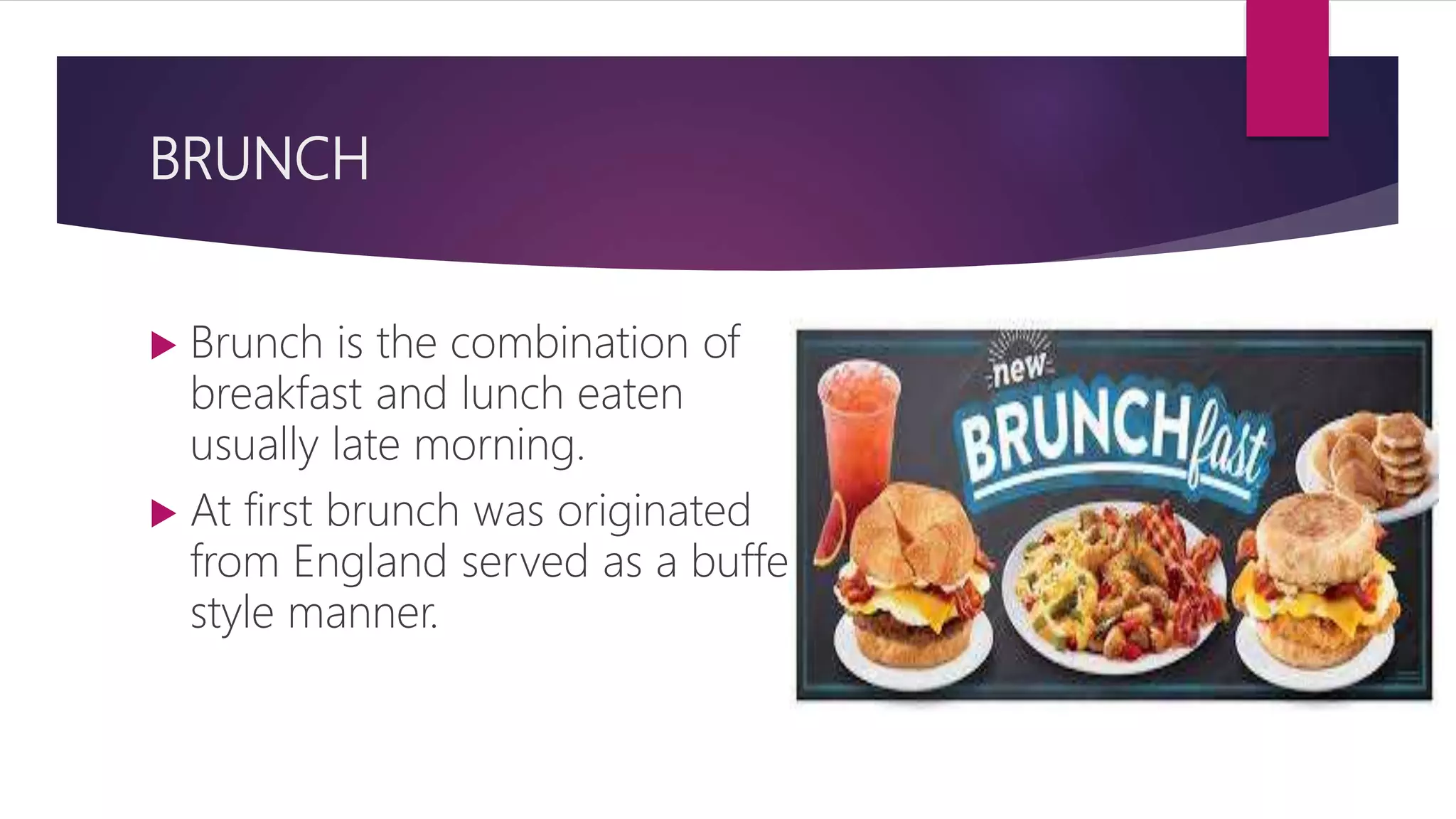
 Brunch is the combination of
breakfast and lunch eaten
usually late morning.
 At first brunch was originated
from England served as a buffet
style manner.
LUNCH
 Lunch is a middy meal of varying
size depending on the culture.
 Lunch is the second meal of the
day after breakfast.
HIGH TEA
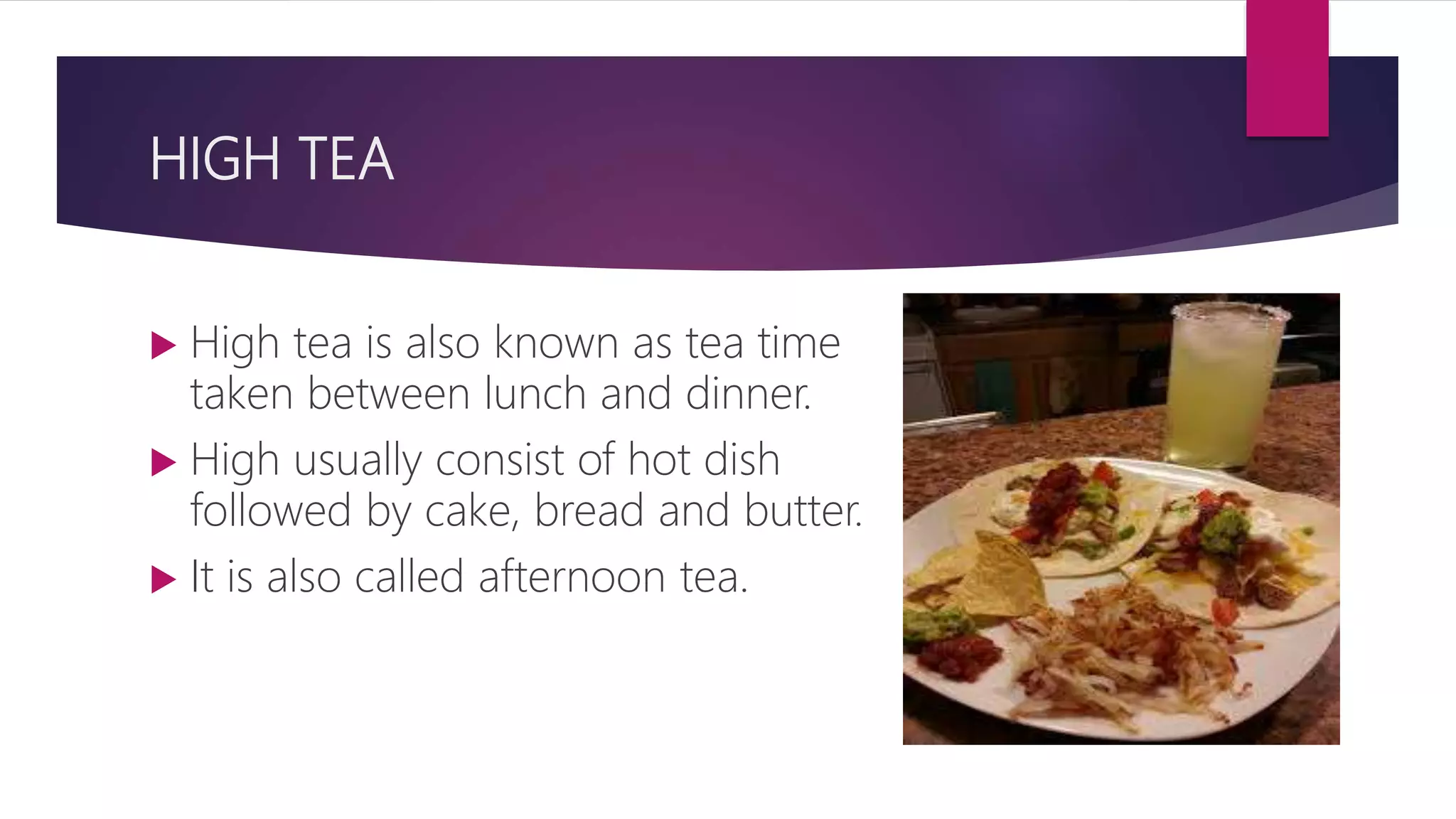
 High tea is also known as tea time
taken between lunch and dinner.
 High usually consist of hot dish
followed by cake, bread and butter.
 It is also called afternoon tea.
DINNER
 Dinner usually refers to the most
significant and important meal for
the day.
 It is also called evening meal and
large meal.
 It should be serve at 7pm to 9pm.
SUPPER
 Supper is most often a light meal.
 It can be chocolates snacks and
sweet items.
 It should served after dinner at late
night.
BREAKFAST
 The word breakfast literally refers to
breaking the fasting period of the prior
night.
 Breakfast is the first meal of a day. It is
served in the morning between 7 am to
10 am
 Most often eaten in the early morning
before undertaking the day's work. It is
the most important meal of the day.
TYPES OF BREAKFAST
 CONTINENTAL BREAKFAST
 AMERICAN BREAKFAST
 ENGLISH BREAKFAST
 INDIAN BREAKFAST
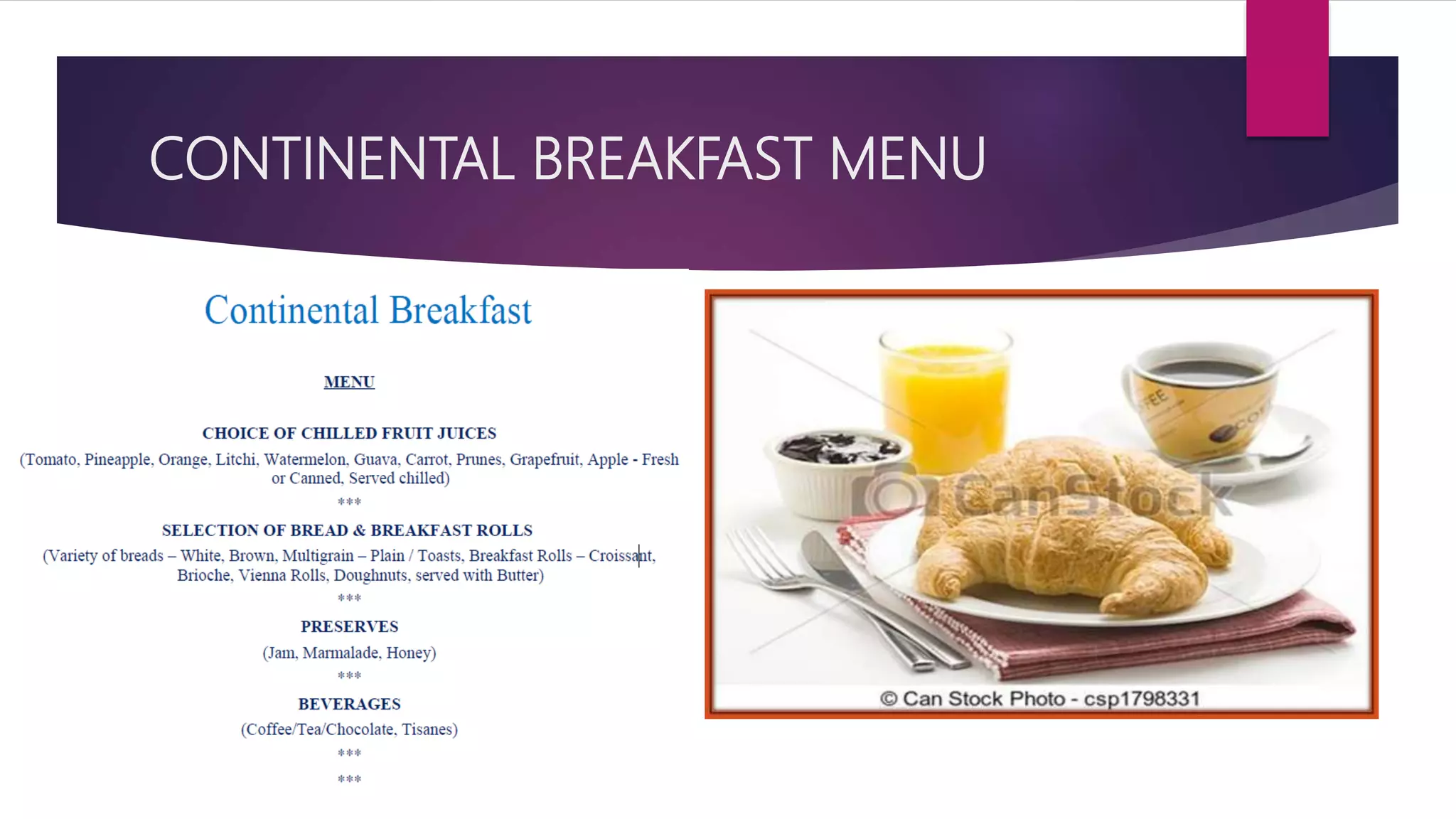
CONTINENTAL BREAKFAST MENU
AMERICAN BREAKFAST MENU
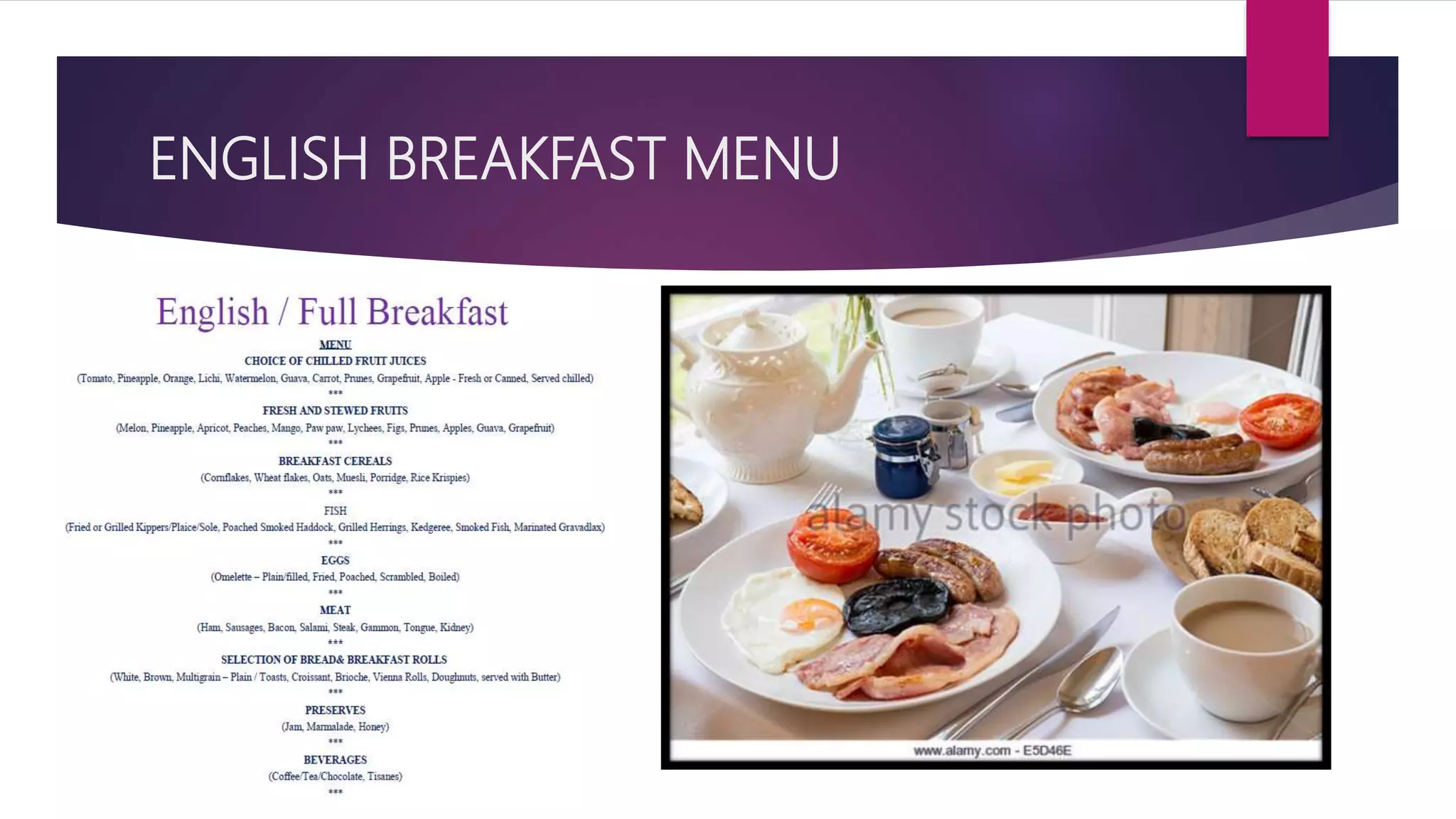
ENGLISH BREAKFAST MENU
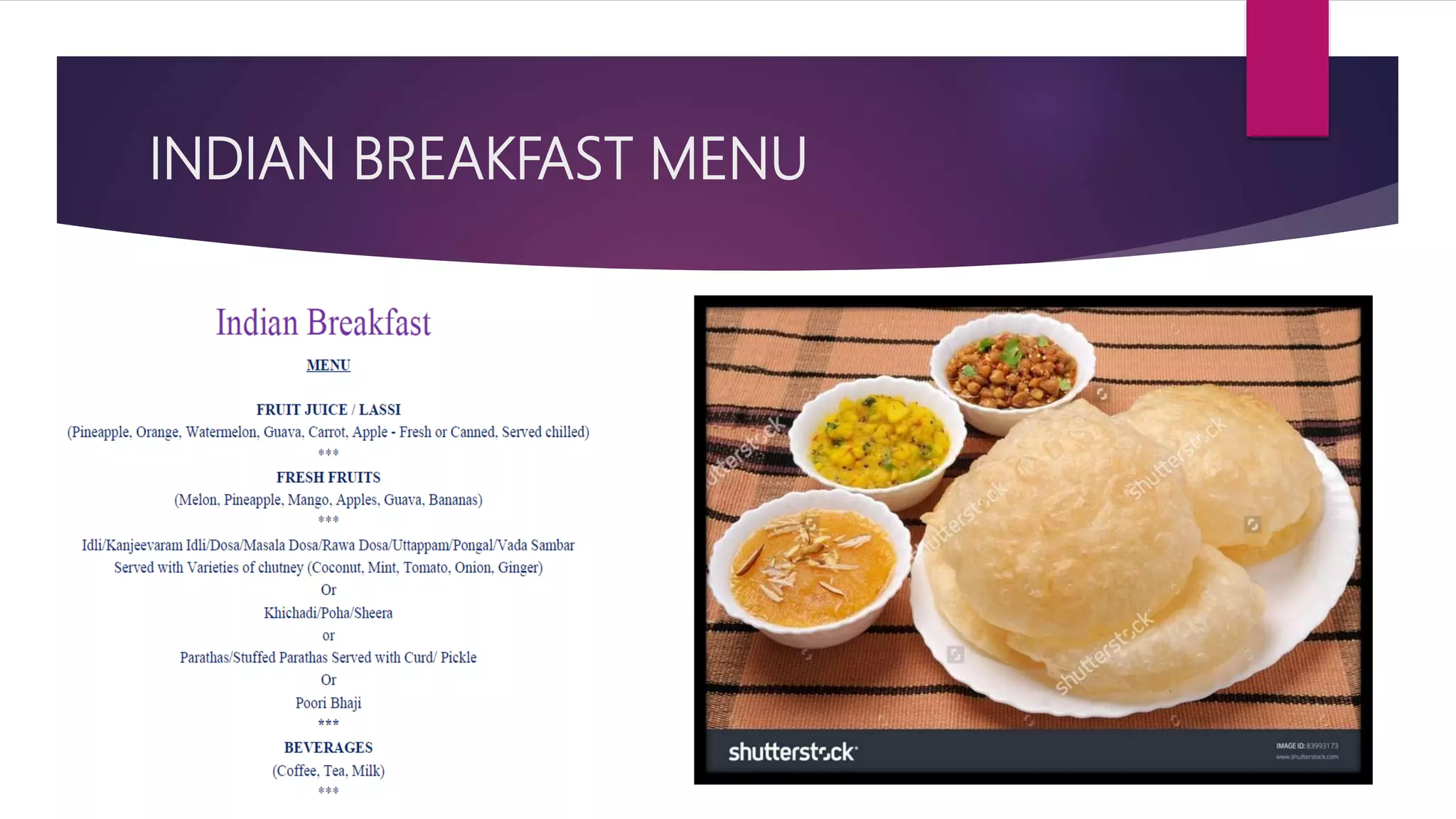
INDIAN BREAKFAST MENU
Presentation of Meal Management

Presentation of Meal Management

  • 1.
    PRESENTATION OF MEAL MANAGEMENTDATE : 30, January 2019 Presented By  Nabin Khadayat
  • 2.
    MEAL MANAGEMENT  Mealis an instance of eating in a specific time and includes specific food.  Meal Management is the process of controlling every aspect of our diet from grocery store to meal time. To manage our meals is to plan not only what we eat, but also when we eat, and how we eat.
  • 3.
    IMPORTANCE OF MEALMANAGEMENT  It is less expensive in both the short and long run to eat freshest and the least processed foods possible in small quantities through the day, rather than as large meal
  • 4.
    MEAL PLANNING &VALUES IN MEAL PLANNING  Meal planning is the simple act of taking some time to plan any number of our meals for the certain time.  For Good Health.  For social and cultural values.  Management of time and energy.  Value for money and conservation.
  • 5.
    FACTORS TO CONSIDERIN PLANNING MENU  Nutritional adequacy.  Food budget.  Difference in food habit.  The time and skill of meal manager.  Quality, suitability and availability of the food.  Equipment available for the food preparation.
  • 6.
    TYPES OF MEAL EARLY MORNING TEA  BREAKFAST  BRUNCH  LUNCH  HIGH TEA  DINNER  SUPPER
  • 7.
    EARLY MORNING TEA A small meal or tea or coffee taken before breakfast is called early morning tea.  It should serve before breakfast of before 7am morning.
  • 8.
    BREAKFAST  A mealeaten at the morning as the first meal of the day is also known as breakfast.  The word breakfast refers to breaking the fasting period of the prior night.  It is served in the morning between 7 am to 10 am
  • 9.
    BRUNCH  Brunch isthe combination of breakfast and lunch eaten usually late morning.  At first brunch was originated from England served as a buffet style manner.
  • 10.
    LUNCH  Lunch isa middy meal of varying size depending on the culture.  Lunch is the second meal of the day after breakfast.
  • 11.
    HIGH TEA  Hightea is also known as tea time taken between lunch and dinner.  High usually consist of hot dish followed by cake, bread and butter.  It is also called afternoon tea.
  • 12.
    DINNER  Dinner usuallyrefers to the most significant and important meal for the day.  It is also called evening meal and large meal.  It should be serve at 7pm to 9pm.
  • 13.
    SUPPER  Supper ismost often a light meal.  It can be chocolates snacks and sweet items.  It should served after dinner at late night.
  • 14.
    BREAKFAST  The wordbreakfast literally refers to breaking the fasting period of the prior night.  Breakfast is the first meal of a day. It is served in the morning between 7 am to 10 am  Most often eaten in the early morning before undertaking the day's work. It is the most important meal of the day.
  • 15.
    TYPES OF BREAKFAST CONTINENTAL BREAKFAST  AMERICAN BREAKFAST  ENGLISH BREAKFAST  INDIAN BREAKFAST
  • 16.
  • 17.
  • 18.
  • 19.