WASTE FOR DEVELOPMENT (W4D) PROJECT
WORLD’S EARTH DAY 22ND APRIL 2019
1. Waste Papers and Sawdust
Waste Papers and Sawdust
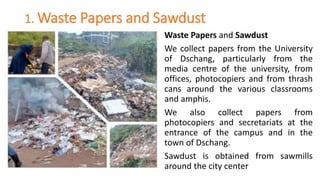
We collect papers from the University
of Dschang, particularly from the
media centre of the university, from
offices, photocopiers and from thrash
cans around the various classrooms
and amphis.
We also collect papers from
photocopiers and secretariats at the
entrance of the campus and in the
town of Dschang.
Sawdust is obtained from sawmills
around the city center
Output
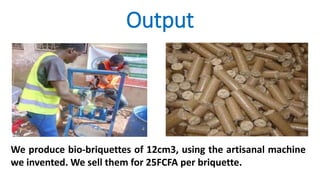
We produce bio-briquettes of 12cm3, using the artisanal machine
we invented. We sell them for 25FCFA per briquette.
Outcome
•Reduce burning of waste papers within the
campus and the locality of Dschang. (We target
0% burning by December 2019).
•Reduce the high reliance on wood as the major
source of cooking fuel.
2. Animal and Household Wastes
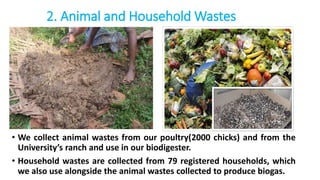
• We collect animal wastes from our poultry(2000 chicks) and from the
University’s ranch and use in our biodigester.
• Household wastes are collected from 79 registered households, which
we also use alongside the animal wastes collected to produce biogas.
Output
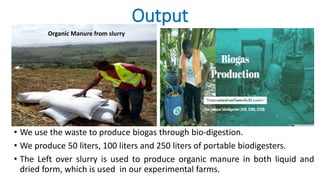
• We use the waste to produce biogas through bio-digestion.
• We produce 50 liters, 100 liters and 250 liters of portable biodigesters.
• The Left over slurry is used to produce organic manure in both liquid and
dried form, which is used in our experimental farms.
Organic Manure from slurry
Outcomes
•Provide fuel alternatives.
•Provide organic manure as a substitute to
chemical manure.
•Maintain the soil’s PH balance.
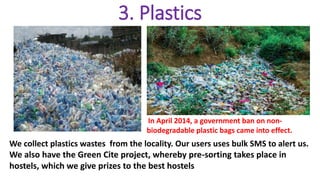
3. Plastics
In April 2014, a government ban on non-
biodegradable plastic bags came into effect.
We collect plastics wastes from the locality. Our users uses bulk SMS to alert us.
We also have the Green Cite project, whereby pre-sorting takes place in
hostels, which we give prizes to the best hostels
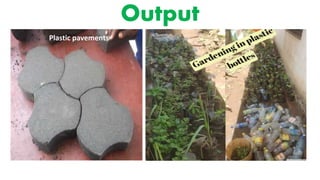
Output
Plastic pavements
Outcome
•Building materials obtained from recycled
plastics.
•Students have spices in their rooms in
exchange of plastic bottles.
•Pollution and soil degradation reduced
Sustainable Agriculture
• In Cameroon, agriculture represents more than half of the
country non-oil export revenues and employs almost 60
percent of the working population. Ninety percent of
rural households are, in one way or another, employed in
agriculture, and approximately one-third of them earn
their living from export crops.
What we do concretely
• Organic farming
• Urban farming
• Charity farming
• Aquaponics (Coming soon)
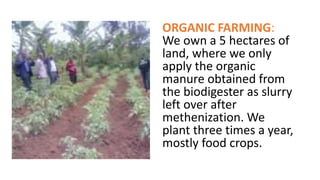
ORGANIC FARMING:
We own a 5 hectares of
land, where we only
apply the organic
manure obtained from
the biodigester as slurry
left over after
methenization. We
plant three times a year,
mostly food crops.
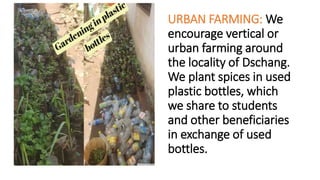
URBAN FARMING: We
encourage vertical or
urban farming around
the locality of Dschang.
We plant spices in used
plastic bottles, which
we share to students
and other beneficiaries
in exchange of used
bottles.
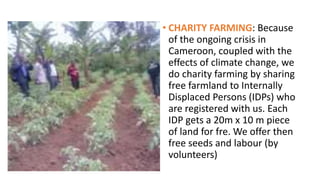
• CHARITY FARMING: Because
of the ongoing crisis in
Cameroon, coupled with the
effects of climate change, we
do charity farming by sharing
free farmland to Internally
Displaced Persons (IDPs) who
are registered with us. Each
IDP gets a 20m x 10 m piece
of land for fre. We offer then
free seeds and labour (by
volunteers)
•AQUAPONICS: We
shall set up an
aquaponic plant by
September 2019, as a
way of promoting the
blue economy.
Poultry
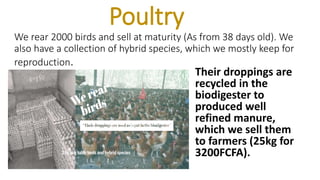
We rear 2000 birds and sell at maturity (As from 38 days old). We
also have a collection of hybrid species, which we mostly keep for
reproduction.
Their droppings are
recycled in the
biodigester to
produced well
refined manure,
which we sell them
to farmers (25kg for
3200FCFA).
THANK YOU FOR YOUR
KEEN ATTENTION
www.icadorg.com

Presentation of ICAD's activities

  • 1.
    WASTE FOR DEVELOPMENT(W4D) PROJECT WORLD’S EARTH DAY 22ND APRIL 2019
  • 2.
    1. Waste Papersand Sawdust Waste Papers and Sawdust We collect papers from the University of Dschang, particularly from the media centre of the university, from offices, photocopiers and from thrash cans around the various classrooms and amphis. We also collect papers from photocopiers and secretariats at the entrance of the campus and in the town of Dschang. Sawdust is obtained from sawmills around the city center
  • 3.
    Output We produce bio-briquettesof 12cm3, using the artisanal machine we invented. We sell them for 25FCFA per briquette.
  • 4.
    Outcome •Reduce burning ofwaste papers within the campus and the locality of Dschang. (We target 0% burning by December 2019). •Reduce the high reliance on wood as the major source of cooking fuel.
  • 5.
    2. Animal andHousehold Wastes • We collect animal wastes from our poultry(2000 chicks) and from the University’s ranch and use in our biodigester. • Household wastes are collected from 79 registered households, which we also use alongside the animal wastes collected to produce biogas.
  • 6.
    Output • We usethe waste to produce biogas through bio-digestion. • We produce 50 liters, 100 liters and 250 liters of portable biodigesters. • The Left over slurry is used to produce organic manure in both liquid and dried form, which is used in our experimental farms. Organic Manure from slurry
  • 7.
    Outcomes •Provide fuel alternatives. •Provideorganic manure as a substitute to chemical manure. •Maintain the soil’s PH balance.
  • 8.
    3. Plastics In April2014, a government ban on non- biodegradable plastic bags came into effect. We collect plastics wastes from the locality. Our users uses bulk SMS to alert us. We also have the Green Cite project, whereby pre-sorting takes place in hostels, which we give prizes to the best hostels
  • 9.
  • 10.
    Outcome •Building materials obtainedfrom recycled plastics. •Students have spices in their rooms in exchange of plastic bottles. •Pollution and soil degradation reduced
  • 11.
    Sustainable Agriculture • InCameroon, agriculture represents more than half of the country non-oil export revenues and employs almost 60 percent of the working population. Ninety percent of rural households are, in one way or another, employed in agriculture, and approximately one-third of them earn their living from export crops. What we do concretely • Organic farming • Urban farming • Charity farming • Aquaponics (Coming soon)
  • 12.
    ORGANIC FARMING: We owna 5 hectares of land, where we only apply the organic manure obtained from the biodigester as slurry left over after methenization. We plant three times a year, mostly food crops.
  • 13.
    URBAN FARMING: We encouragevertical or urban farming around the locality of Dschang. We plant spices in used plastic bottles, which we share to students and other beneficiaries in exchange of used bottles.
  • 14.
    • CHARITY FARMING:Because of the ongoing crisis in Cameroon, coupled with the effects of climate change, we do charity farming by sharing free farmland to Internally Displaced Persons (IDPs) who are registered with us. Each IDP gets a 20m x 10 m piece of land for fre. We offer then free seeds and labour (by volunteers)
  • 15.
    •AQUAPONICS: We shall setup an aquaponic plant by September 2019, as a way of promoting the blue economy.
  • 16.
    Poultry We rear 2000birds and sell at maturity (As from 38 days old). We also have a collection of hybrid species, which we mostly keep for reproduction. Their droppings are recycled in the biodigester to produced well refined manure, which we sell them to farmers (25kg for 3200FCFA).
  • 17.
    THANK YOU FORYOUR KEEN ATTENTION www.icadorg.com