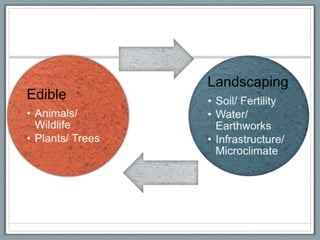
Edible Landscaping
  through ecological design
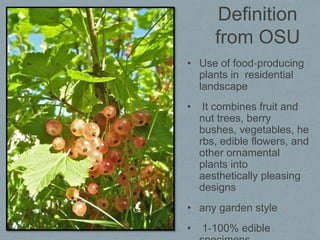
Definition
       from OSU
• Use of food‐producing
  plants in residential
  landscape
•    It combines fruit and
    nut trees, berry
    bushes, vegetables, he
    rbs, edible flowers, and
    other ornamental
    plants into
    aesthetically pleasing
    designs
• any garden style
•   1‐100% edible
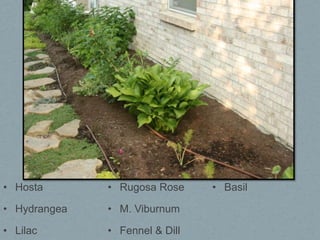
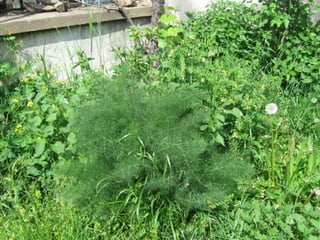
• Hosta       • Rugosa Rose     • Basil

• Hydrangea   • M. Viburnum

• Lilac       • Fennel & Dill
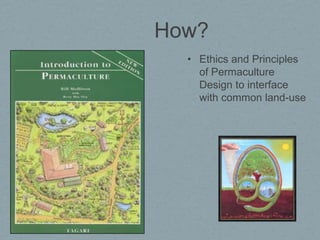
How?
  • Ethics and Principles
    of Permaculture
    Design to interface
    with common land-use
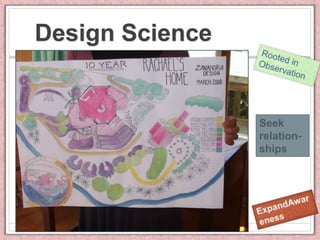
Design Science


                 Seek
                 relation-
                 ships
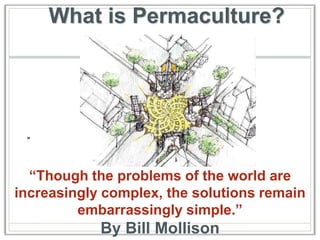
What is Permaculture?


 "


  “Though the problems of the world are
increasingly complex, the solutions remain
         embarrassingly simple.”
            By Bill Mollison
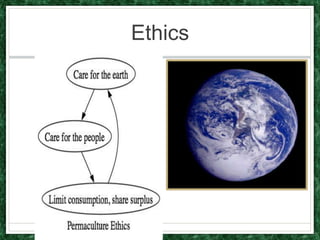
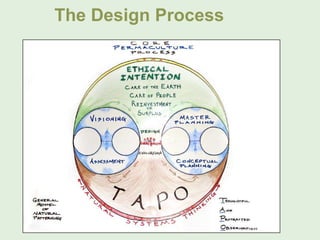
Ethics
The Design Process
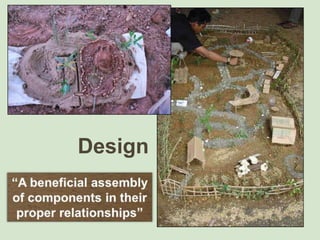
Design
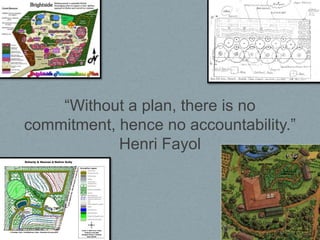
“Without a plan, there is no
commitment, hence no accountability.”
            Henri Fayol
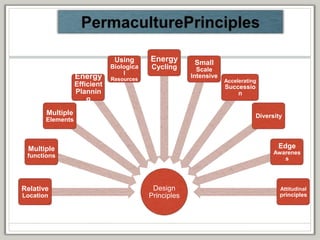
Using      Energy        Small
                              Biologica   Cycling        Scale
                                  l
                  Energy      Resources
                                                       Intensive
                                                                   Accelerating
                  Efficient                                        Successio
                  Plannin                                              n
                      g
       Multiple                                                                Diversity
       Elements


 Multiple                                                                             Edge
                                                                                     Awarenes
 functions                                                                              s


Relative                                   Design                                      Attitudinal
Location                                  Principles                                   principles
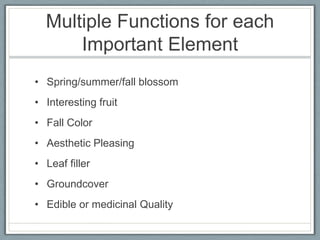
Multiple Functions for each
      Important Element
• Spring/summer/fall blossom
• Interesting fruit
• Fall Color
• Aesthetic Pleasing
• Leaf filler
• Groundcover
• Edible or medicinal Quality
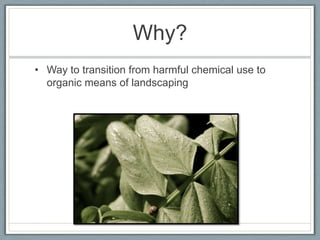
Why?
• Way to transition from harmful chemical use to
  organic means of landscaping
58 Million
                            Americans                 $30
            Largest
                                                     billion
          agricultural
                                                     every
           sector in
                                                    year to
              U.S.
                                                    maintain


    More
equipment, l                                                     23
abor, fuel, an                                                 Million
d agricultural               The                               Acres
   toxins                  American
                            Lawn
     One hour
       on a                                             Could have a
     mower= a                                            small lawn
                                                        and produce
        car                                             veggies for a
      driven                                              home of 6
     350 miles
                   Enough to
                                            270
                    water 81
                                          billion
                  million acres
                                         gallons
                   of organic
                                         of water
                   veggies all
                                         a week
                  summer long
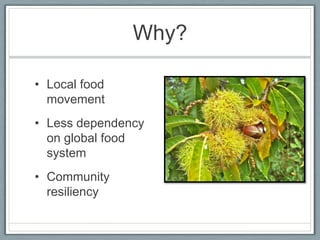
Why?

• Local food
  movement
• Less dependency
  on global food
  system
• Community
  resiliency
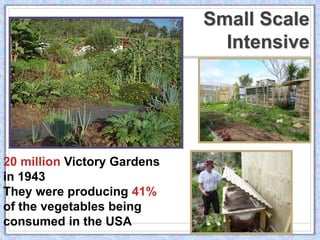
Small Scale
                               Intensive


20 million Victory Gardens
in 1943
They were producing 41%
of the vegetables being
consumed in the USA
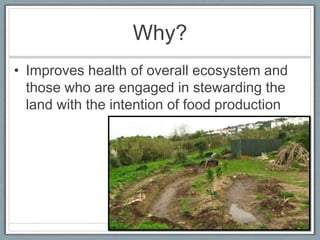
Why?
• Improves health of overall ecosystem and
  those who are engaged in stewarding the
  land with the intention of food production
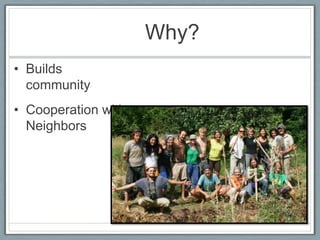
Why?
• Builds
  community
• Cooperation with
  Neighbors
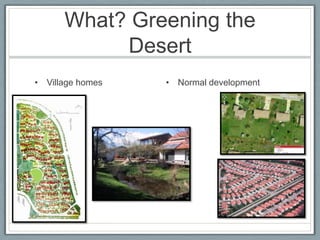
What? Greening the
           Desert
• Village homes   • Normal development
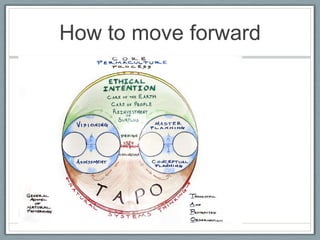
How to move forward
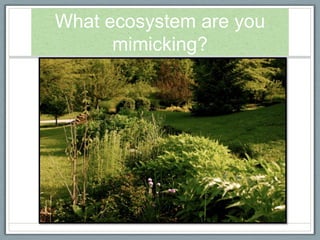
What ecosystem are you
      mimicking?
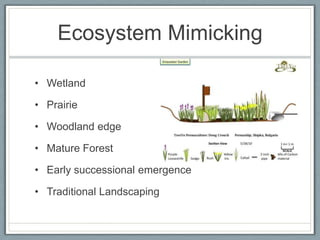
Ecosystem Mimicking

• Wetland

• Prairie

• Woodland edge

• Mature Forest

• Early successional emergence

• Traditional Landscaping
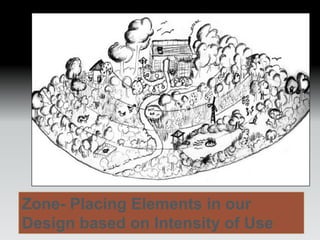
zones


Zone- Placing Elements in our
Design based on Intensity of Use
Water

• Conserve strategies
• Reuse strategies
• Zero runoff strategies
• Earthworks percolation
• Storage in tanks and cisterns
• Succession Enhancement
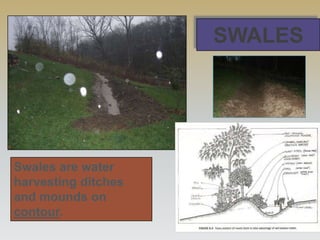
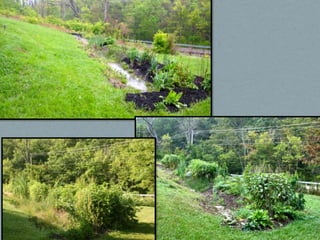
SWALES


Swales are water
harvesting ditches
and mounds on
contour.
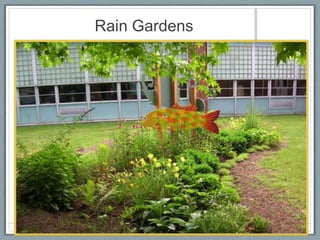
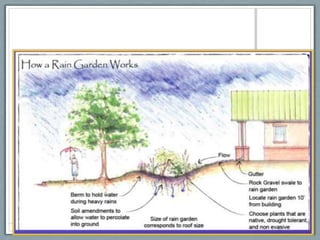
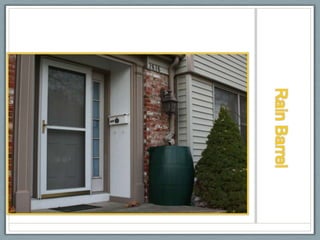
Rain Gardens
Rain Barrel
Plants/ Forests

• Stacking in Space and Time
• Diversity breeds resiliency
• Develop nucleus and expand to connect
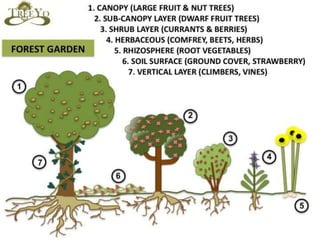
• Food Forests
• Annual Vegetables
• Perennial Vegetables
• Ornamental
• Integrated Pest Management
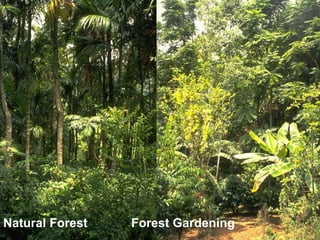
Natural Forest   Diversity
                  Forest Gardening
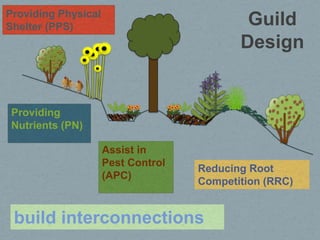
Providing Physical
Shelter (PPS)                               Guild
                                           Design


 Providing
 Nutrients (PN)

                     Assist in
                     Pest Control
                                    Reducing Root
                     (APC)
                                    Competition (RRC)


 build interconnections
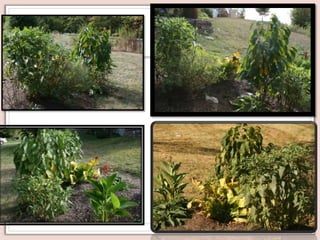
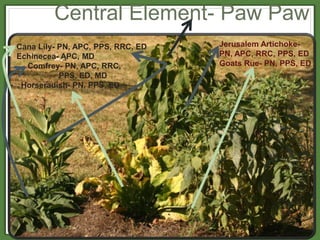
Central Element- Paw Paw
Cana Lily- PN, APC, PPS, RRC, ED   Jerusalem Artichoke-
Echinecea- APC, MD                 PN, APC, RRC, PPS, ED
  Comfrey- PN, APC, RRC,           Goats Rue- PN, PPS, ED
           PPS, ED, MD
 Horseradish- PN, PPS, ED

Edible landscaping 1

  • 1.
    Edible Landscaping through ecological design
  • 2.
    Definition from OSU • Use of food‐producing plants in residential landscape • It combines fruit and nut trees, berry bushes, vegetables, he rbs, edible flowers, and other ornamental plants into aesthetically pleasing designs • any garden style • 1‐100% edible
  • 3.
    • Hosta • Rugosa Rose • Basil • Hydrangea • M. Viburnum • Lilac • Fennel & Dill
  • 4.
    How? •Ethics and Principles of Permaculture Design to interface with common land-use
  • 5.
    Design Science Seek relation- ships
  • 6.
    What is Permaculture? " “Though the problems of the world are increasingly complex, the solutions remain embarrassingly simple.” By Bill Mollison
  • 7.
  • 8.
  • 9.
  • 10.
    “Without a plan,there is no commitment, hence no accountability.” Henri Fayol
  • 11.
    Using Energy Small Biologica Cycling Scale l Energy Resources Intensive Accelerating Efficient Successio Plannin n g Multiple Diversity Elements Multiple Edge Awarenes functions s Relative Design Attitudinal Location Principles principles
  • 12.
    Multiple Functions foreach Important Element • Spring/summer/fall blossom • Interesting fruit • Fall Color • Aesthetic Pleasing • Leaf filler • Groundcover • Edible or medicinal Quality
  • 13.
    Why? • Way totransition from harmful chemical use to organic means of landscaping
  • 14.
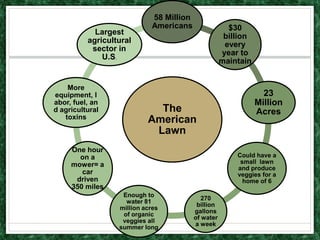
    58 Million Americans $30 Largest billion agricultural every sector in year to U.S. maintain More equipment, l 23 abor, fuel, an Million d agricultural The Acres toxins American Lawn One hour on a Could have a mower= a small lawn and produce car veggies for a driven home of 6 350 miles Enough to 270 water 81 billion million acres gallons of organic of water veggies all a week summer long
  • 15.
    Why? • Local food movement • Less dependency on global food system • Community resiliency
  • 16.
    Small Scale Intensive 20 million Victory Gardens in 1943 They were producing 41% of the vegetables being consumed in the USA
  • 17.
    Why? • Improves healthof overall ecosystem and those who are engaged in stewarding the land with the intention of food production
  • 18.
    Why? • Builds community • Cooperation with Neighbors
  • 19.
    What? Greening the Desert • Village homes • Normal development
  • 21.
    How to moveforward
  • 22.
    What ecosystem areyou mimicking?
  • 23.
    Ecosystem Mimicking • Wetland •Prairie • Woodland edge • Mature Forest • Early successional emergence • Traditional Landscaping
  • 25.
    zones Zone- Placing Elementsin our Design based on Intensity of Use
  • 27.
    Water • Conserve strategies •Reuse strategies • Zero runoff strategies • Earthworks percolation • Storage in tanks and cisterns • Succession Enhancement
  • 28.
    SWALES Swales are water harvestingditches and mounds on contour.
  • 30.
  • 32.
  • 33.
    Plants/ Forests • Stackingin Space and Time • Diversity breeds resiliency • Develop nucleus and expand to connect • Food Forests • Annual Vegetables • Perennial Vegetables • Ornamental • Integrated Pest Management
  • 35.
    Natural Forest Diversity Forest Gardening
  • 38.
    Providing Physical Shelter (PPS) Guild Design Providing Nutrients (PN) Assist in Pest Control Reducing Root (APC) Competition (RRC) build interconnections
  • 39.
    Central Element- PawPaw Cana Lily- PN, APC, PPS, RRC, ED Jerusalem Artichoke- Echinecea- APC, MD PN, APC, RRC, PPS, ED Comfrey- PN, APC, RRC, Goats Rue- PN, PPS, ED PPS, ED, MD Horseradish- PN, PPS, ED