CULTURE AND THE CONSUMER BEHAVIOR
PRESENTED BY
Mir Mosharraf Hosain.
ID No : 16234801002.
Batch : 3rd Batch(Dhaka Campus)
Program : MBA(Evening)
Bangladesh Open University
PRESENTED TO
Md. Tarikul Islam
Assistant Professor(Marketing)
School of Business
Bangladesh Open University
What is the CULTURE?
• Culture is a comprehensive
concept, which includes almost
everything around us and also
influences individual’s thought
processes and behavior.
• According to Karl Marx, Culture is
the way in which humans
negotiate and reproduce the
relationship between economy
and ideology. The "means of
production" so often referenced
have very much to do with
culture. Unfortunately, culture is
also the level at which class
inequality occurs and is acted out.
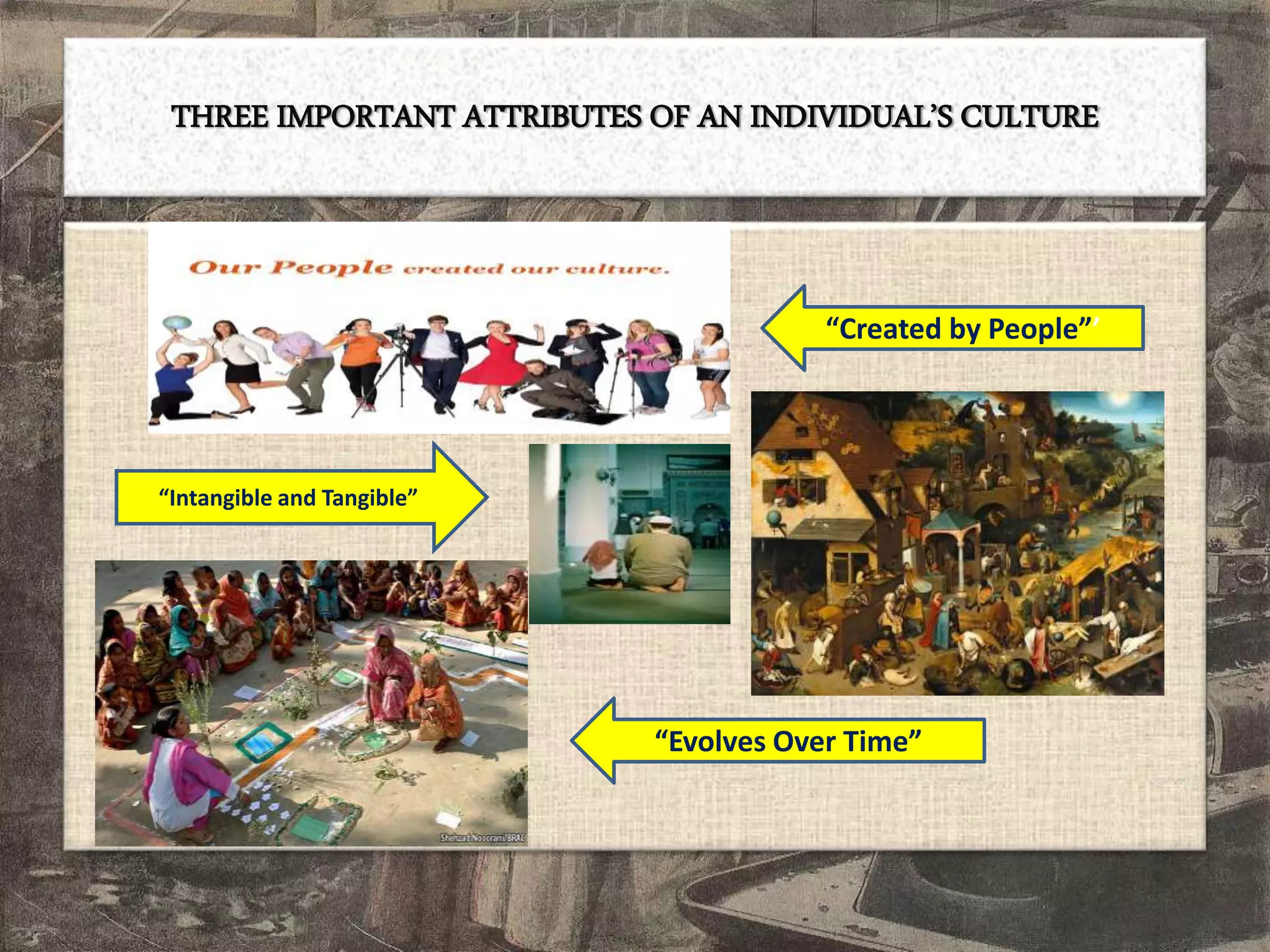
THREE IMPORTANT ATTRIBUTES OF AN INDIVIDUAL’S CULTURE
“Intangible and Tangible”
“Created by People”’
“Evolves Over Time”
THREE ASPECT OF CULTURE
Pattern
Learned Transmitted
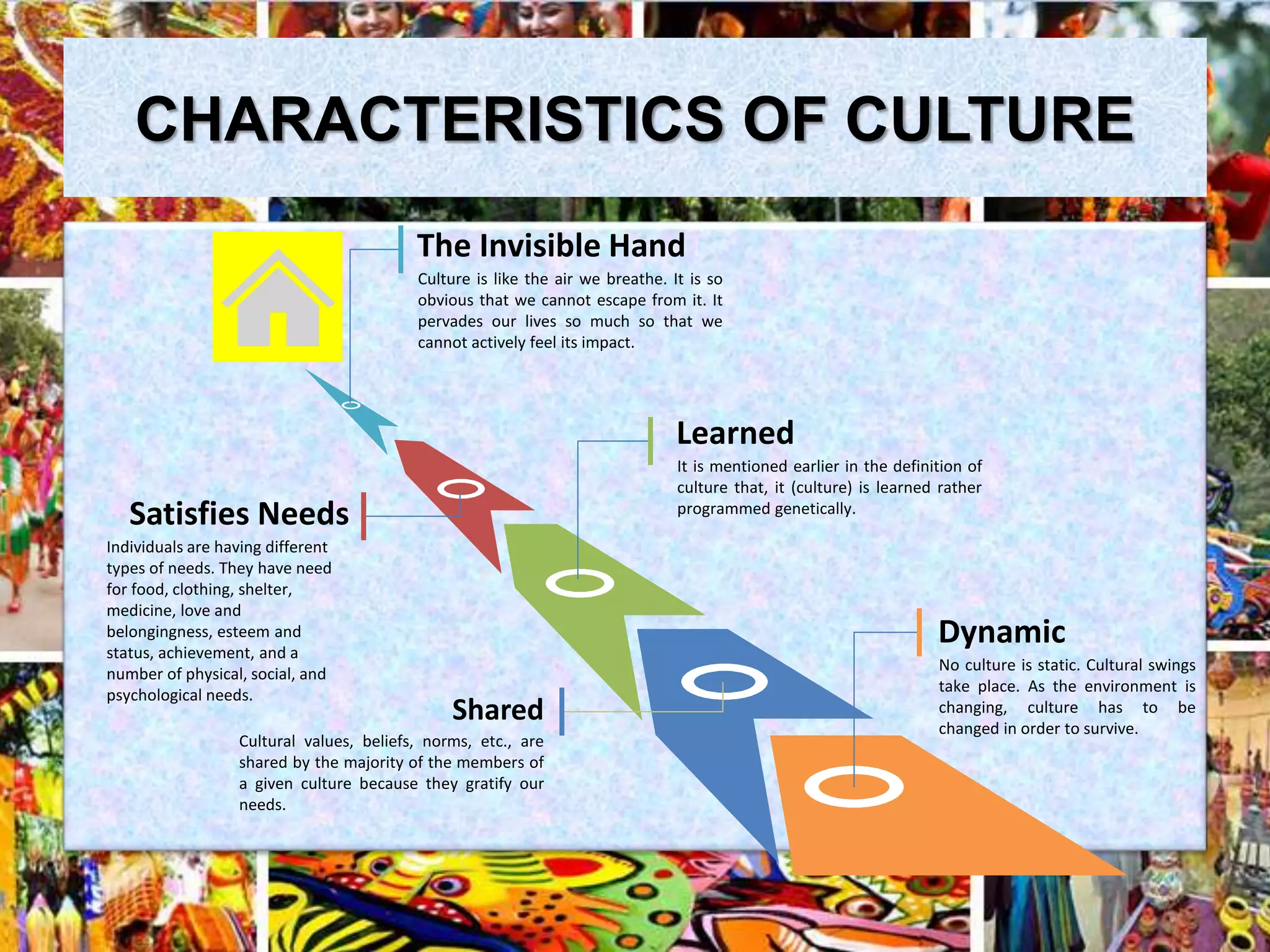
CHARACTERISTICS OF CULTURE
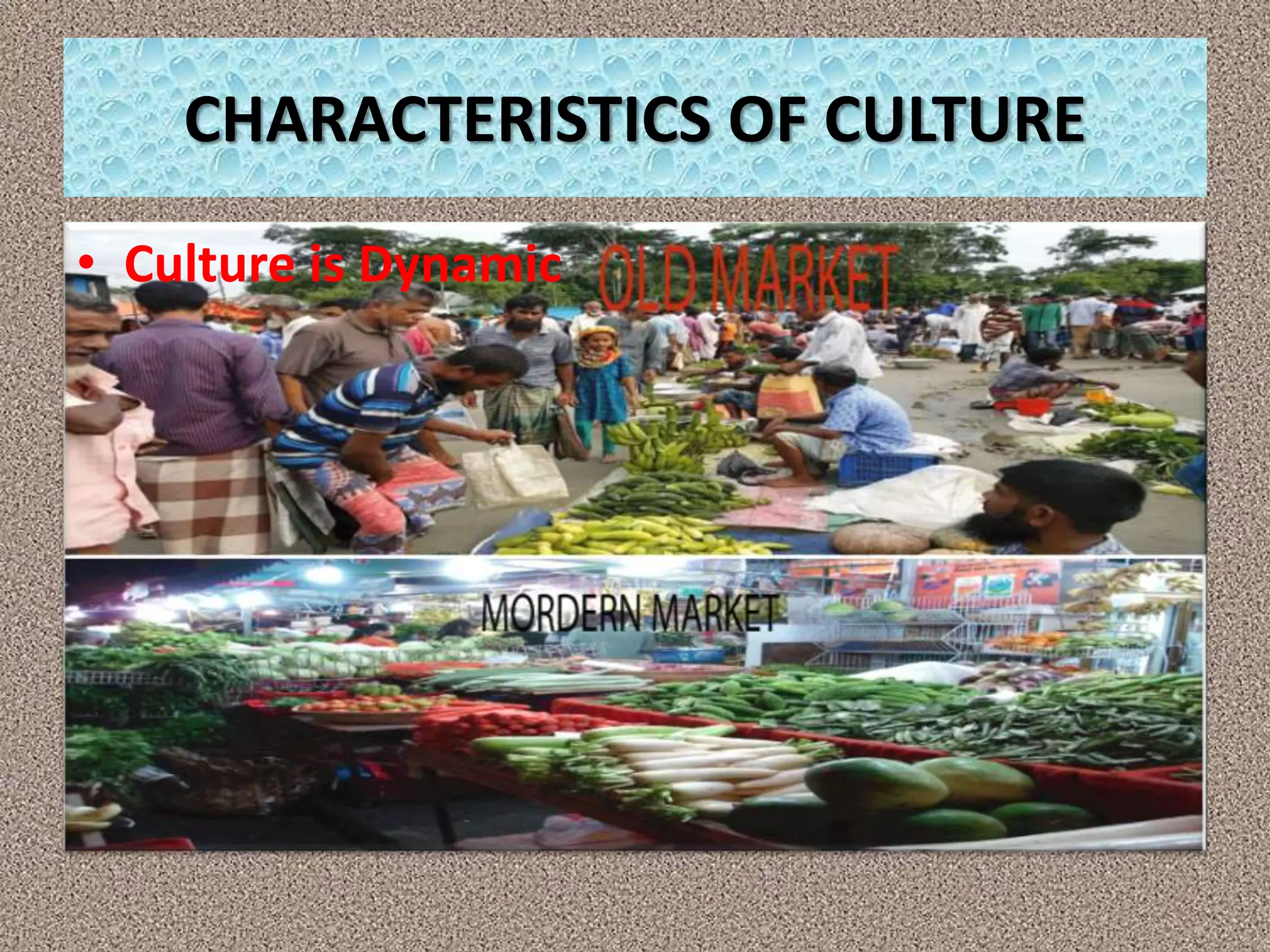
Dynamic
No culture is static. Cultural swings
take place. As the environment is
changing, culture has to be
changed in order to survive.
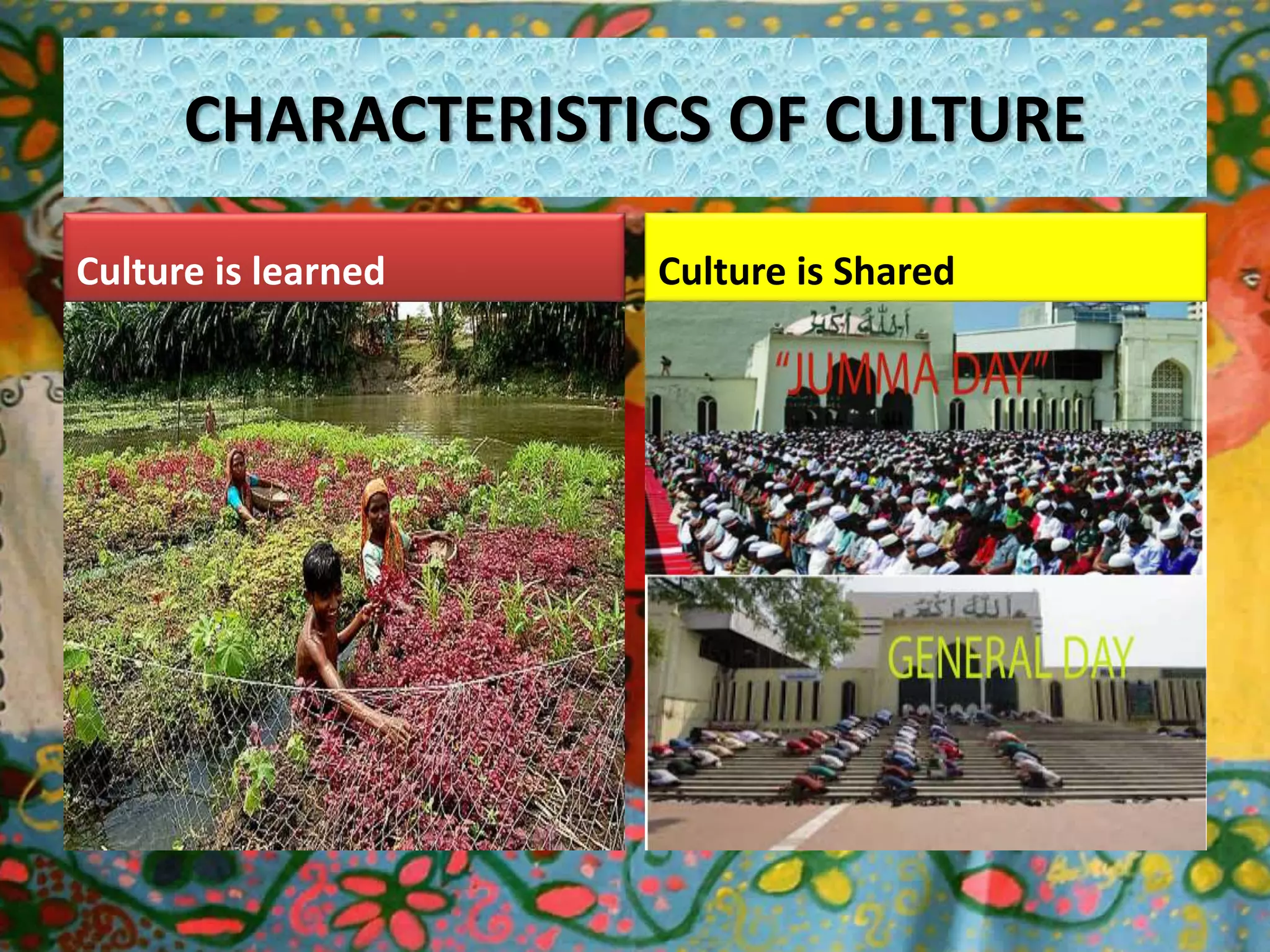
Shared
Cultural values, beliefs, norms, etc., are
shared by the majority of the members of
a given culture because they gratify our
needs.
Satisfies Needs
Individuals are having different
types of needs. They have need
for food, clothing, shelter,
medicine, love and
belongingness, esteem and
status, achievement, and a
number of physical, social, and
psychological needs.
Learned
It is mentioned earlier in the definition of
culture that, it (culture) is learned rather
programmed genetically.
The Invisible Hand
Culture is like the air we breathe. It is so
obvious that we cannot escape from it. It
pervades our lives so much so that we
cannot actively feel its impact.
CHARACTERISTICS OF CULTURE
The Invisible Hand of Culture Culture Satisfies Needs
CHARACTERISTICS OF CULTURE
Culture is learned Culture is Shared
CHARACTERISTICS OF CULTURE
• Culture is Dynamic
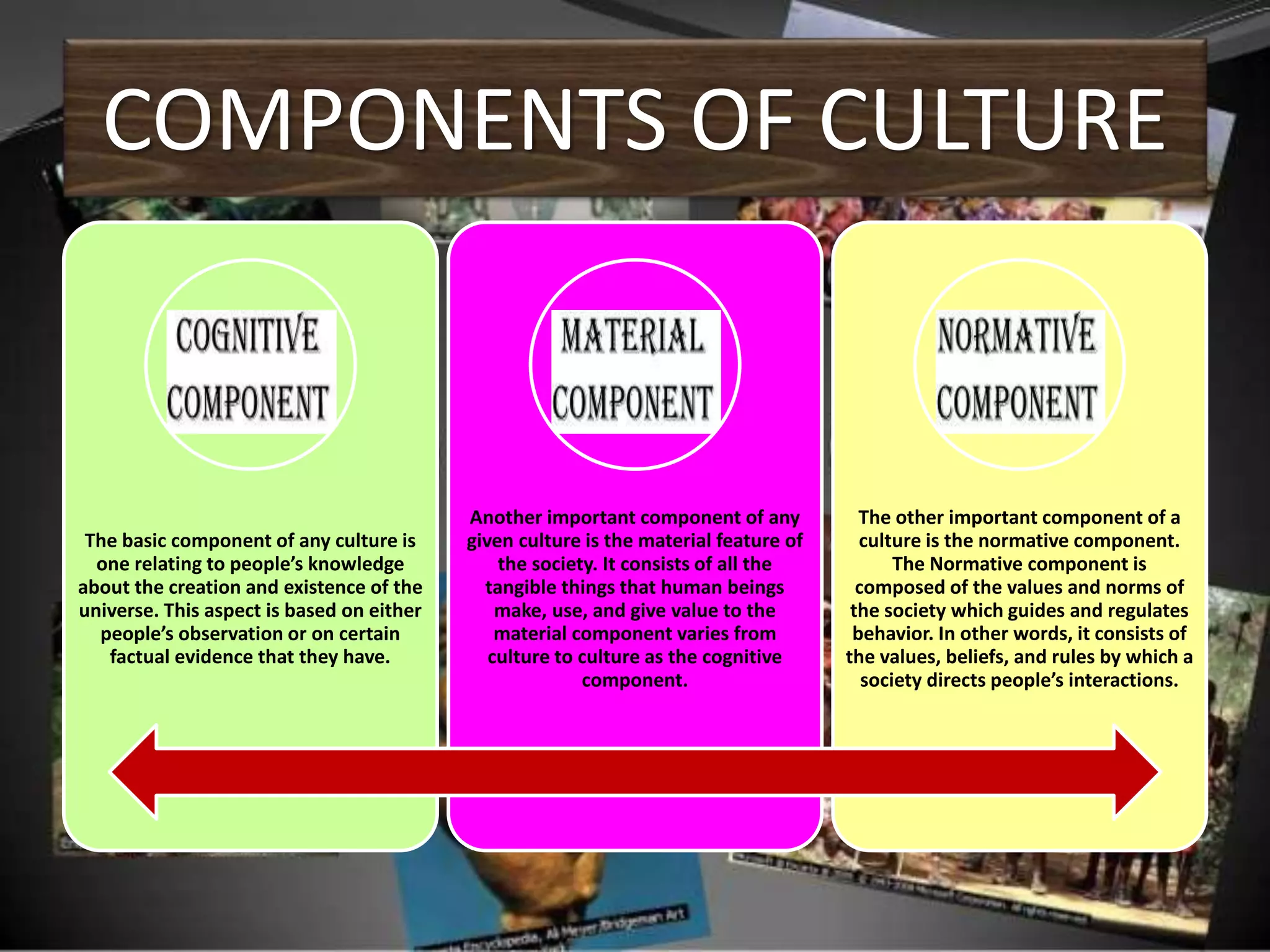
COMPONENTS OF CULTURE
The basic component of any culture is
one relating to people’s knowledge
about the creation and existence of the
universe. This aspect is based on either
people’s observation or on certain
factual evidence that they have.
Another important component of any
given culture is the material feature of
the society. It consists of all the
tangible things that human beings
make, use, and give value to the
material component varies from
culture to culture as the cognitive
component.
The other important component of a
culture is the normative component.
The Normative component is
composed of the values and norms of
the society which guides and regulates
behavior. In other words, it consists of
the values, beliefs, and rules by which a
society directs people’s interactions.
COMPONENTS OF CULTURE
CULTURAL CHANGE
• Exposure to Another Culture’s Values
03
02
01
Technological Changes
Technology is changing everyday
bringing new products to the
marketplace. The availability of these
new products has radically changed
our lifestyles and consumption
pattern.
People’s consumption behavior also changes because of
the exposure to other cultures. This is known as cultural
diffusion. Cultural diffusion basically means the changes
that take place in people’s consumption and lifestyles as
their cultures are exposed to others.
Conflicts Between Existing
Values
Values are also changing among
cultures. For example, one of the
core values of our culture is parent
oriented family and family
dominated by males. With
modernization and increased
urbanization, this value is eroding.
Dramatic Events
Events or happenings that are not
anticipated may be termed as
dramatic events. Happening of
such events in a particular culture
has impacts on marketing
decisions as they affect consumer
behavior.
04
CULTURAL CHANGE
Technological Changes Conflicts Between Existing Values
CULTURAL CHANGE
Exposure to Another Culture’s
Values Dramatic Events
Presentation of culture and the consumer behavior

Presentation of culture and the consumer behavior

  • 1.
    CULTURE AND THECONSUMER BEHAVIOR PRESENTED BY Mir Mosharraf Hosain. ID No : 16234801002. Batch : 3rd Batch(Dhaka Campus) Program : MBA(Evening) Bangladesh Open University PRESENTED TO Md. Tarikul Islam Assistant Professor(Marketing) School of Business Bangladesh Open University
  • 2.
    What is theCULTURE? • Culture is a comprehensive concept, which includes almost everything around us and also influences individual’s thought processes and behavior. • According to Karl Marx, Culture is the way in which humans negotiate and reproduce the relationship between economy and ideology. The "means of production" so often referenced have very much to do with culture. Unfortunately, culture is also the level at which class inequality occurs and is acted out.
  • 3.
    THREE IMPORTANT ATTRIBUTESOF AN INDIVIDUAL’S CULTURE “Intangible and Tangible” “Created by People”’ “Evolves Over Time”
  • 4.
    THREE ASPECT OFCULTURE Pattern Learned Transmitted
  • 5.
    CHARACTERISTICS OF CULTURE Dynamic Noculture is static. Cultural swings take place. As the environment is changing, culture has to be changed in order to survive. Shared Cultural values, beliefs, norms, etc., are shared by the majority of the members of a given culture because they gratify our needs. Satisfies Needs Individuals are having different types of needs. They have need for food, clothing, shelter, medicine, love and belongingness, esteem and status, achievement, and a number of physical, social, and psychological needs. Learned It is mentioned earlier in the definition of culture that, it (culture) is learned rather programmed genetically. The Invisible Hand Culture is like the air we breathe. It is so obvious that we cannot escape from it. It pervades our lives so much so that we cannot actively feel its impact.
  • 6.
    CHARACTERISTICS OF CULTURE TheInvisible Hand of Culture Culture Satisfies Needs
  • 7.
    CHARACTERISTICS OF CULTURE Cultureis learned Culture is Shared
  • 8.
  • 9.
    COMPONENTS OF CULTURE Thebasic component of any culture is one relating to people’s knowledge about the creation and existence of the universe. This aspect is based on either people’s observation or on certain factual evidence that they have. Another important component of any given culture is the material feature of the society. It consists of all the tangible things that human beings make, use, and give value to the material component varies from culture to culture as the cognitive component. The other important component of a culture is the normative component. The Normative component is composed of the values and norms of the society which guides and regulates behavior. In other words, it consists of the values, beliefs, and rules by which a society directs people’s interactions.
  • 10.
  • 11.
    CULTURAL CHANGE • Exposureto Another Culture’s Values 03 02 01 Technological Changes Technology is changing everyday bringing new products to the marketplace. The availability of these new products has radically changed our lifestyles and consumption pattern. People’s consumption behavior also changes because of the exposure to other cultures. This is known as cultural diffusion. Cultural diffusion basically means the changes that take place in people’s consumption and lifestyles as their cultures are exposed to others. Conflicts Between Existing Values Values are also changing among cultures. For example, one of the core values of our culture is parent oriented family and family dominated by males. With modernization and increased urbanization, this value is eroding. Dramatic Events Events or happenings that are not anticipated may be termed as dramatic events. Happening of such events in a particular culture has impacts on marketing decisions as they affect consumer behavior. 04
  • 12.
    CULTURAL CHANGE Technological ChangesConflicts Between Existing Values
  • 13.
    CULTURAL CHANGE Exposure toAnother Culture’s Values Dramatic Events