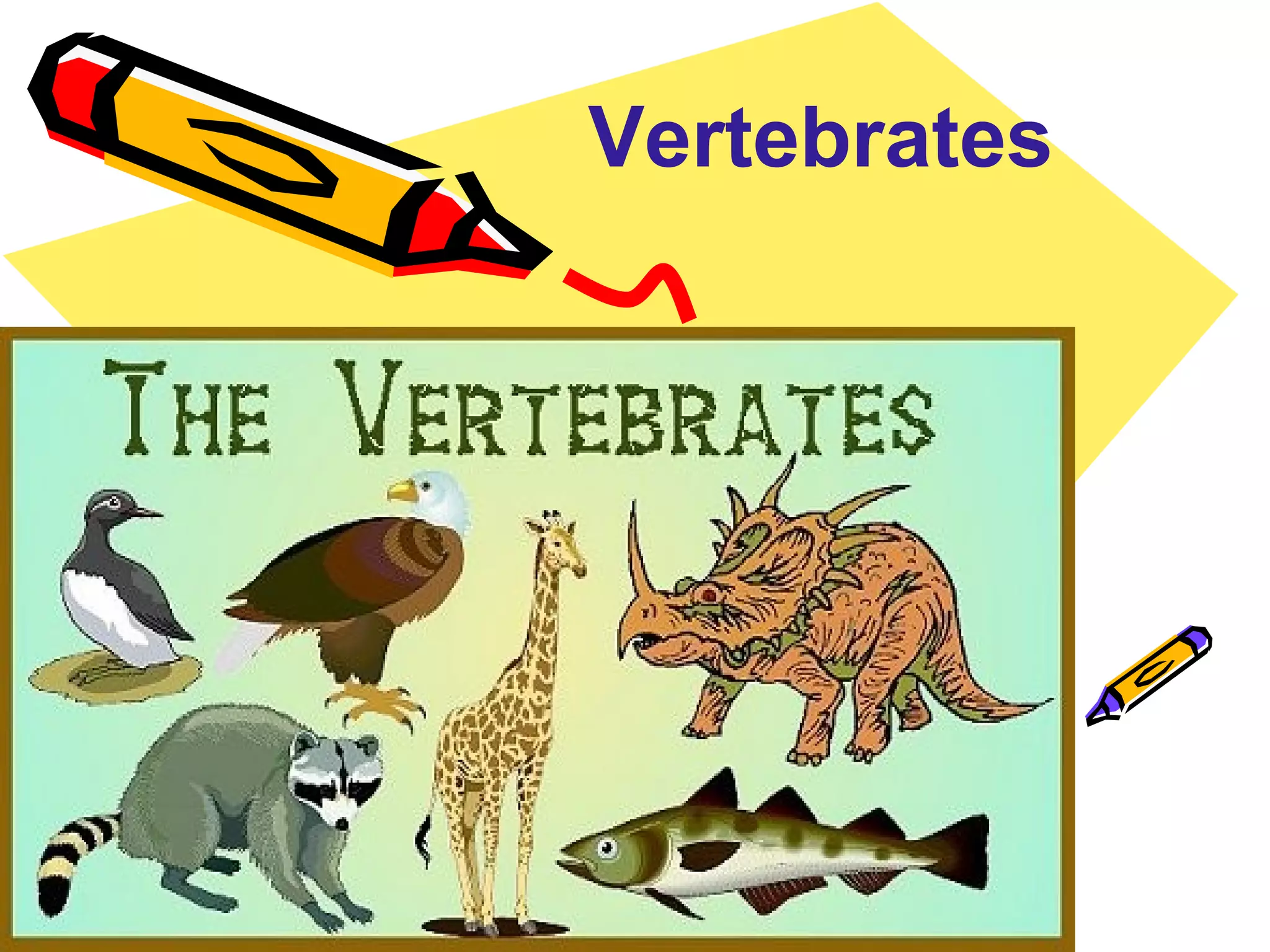

Vertebrates
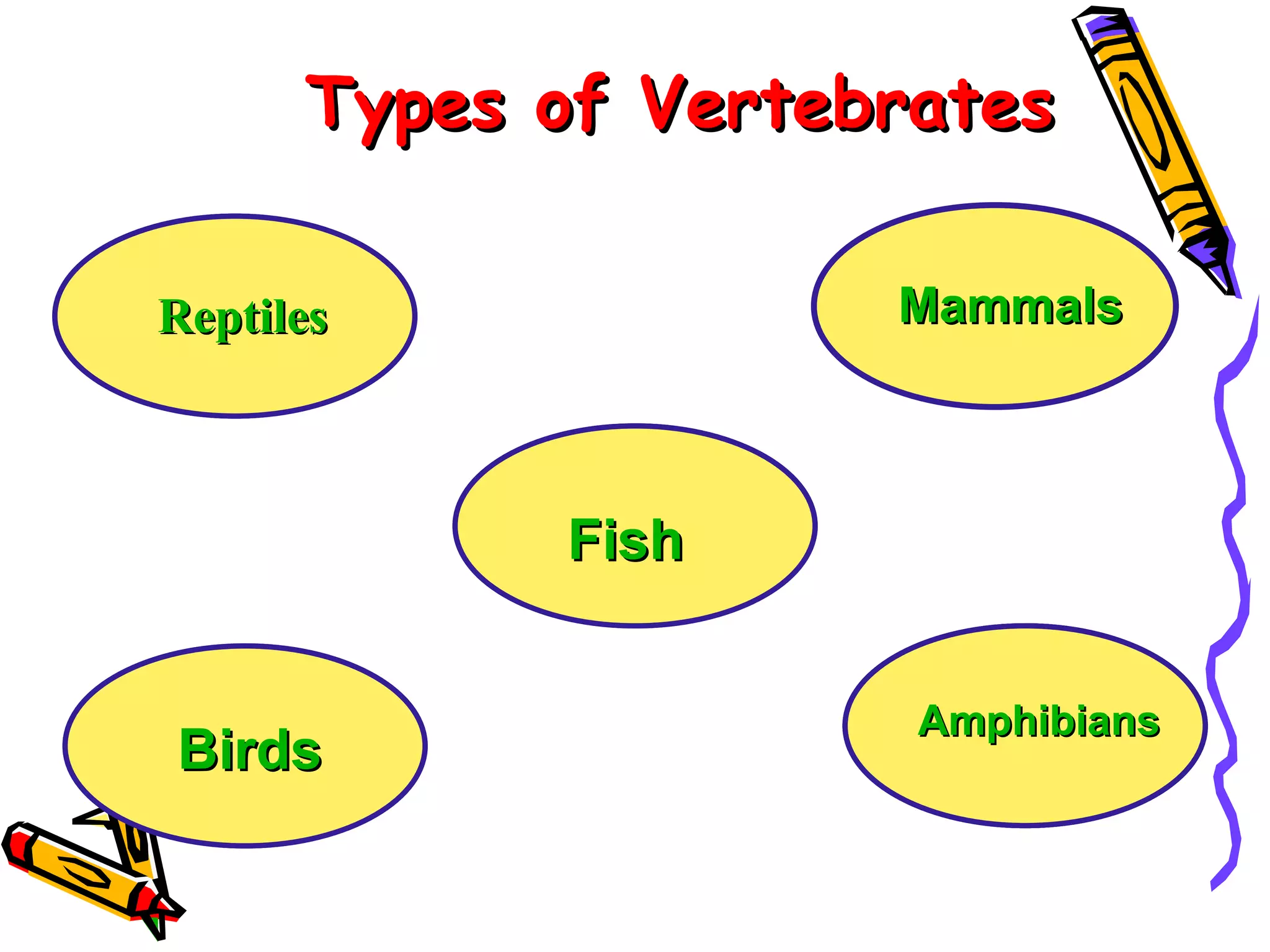
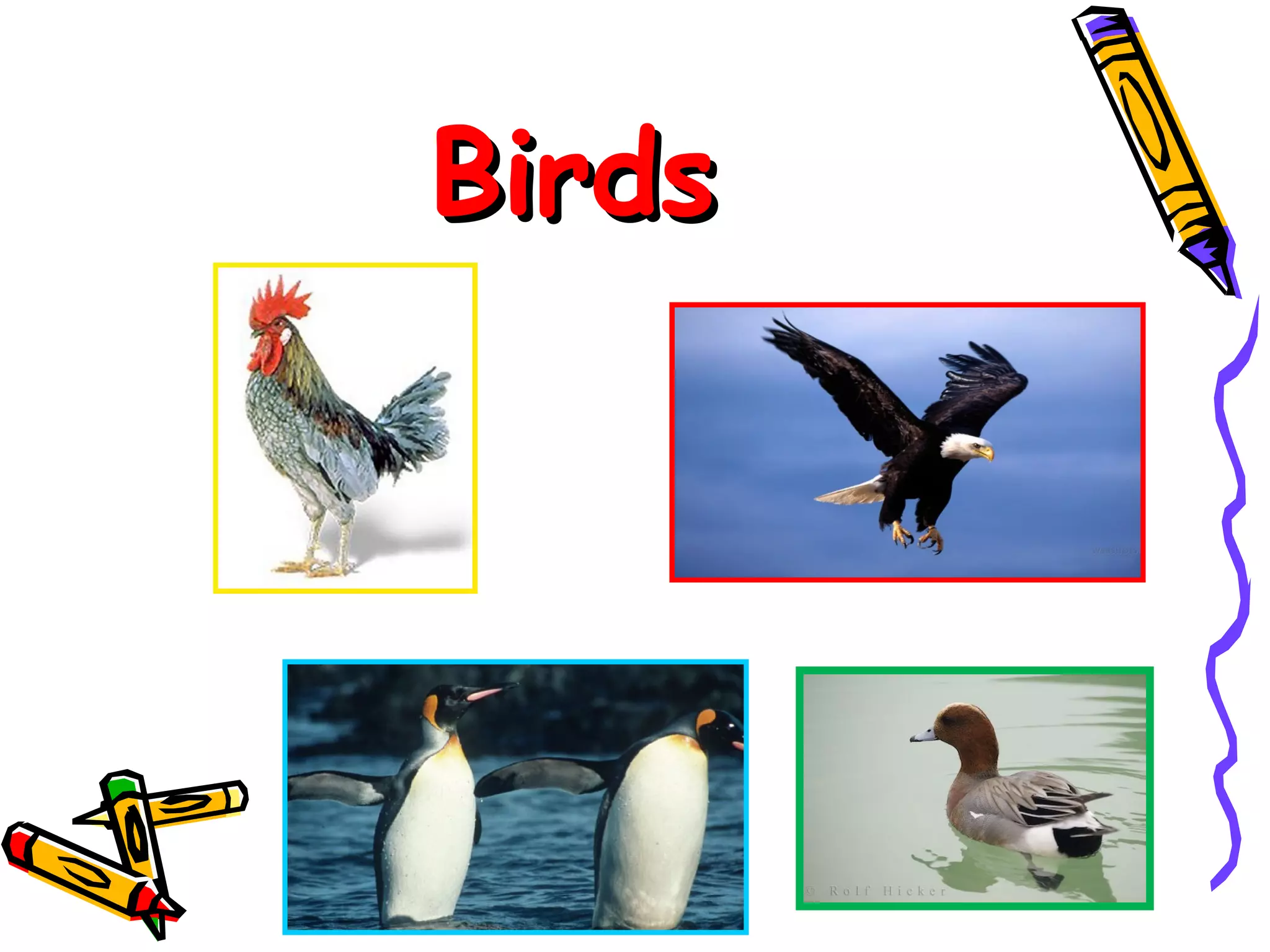
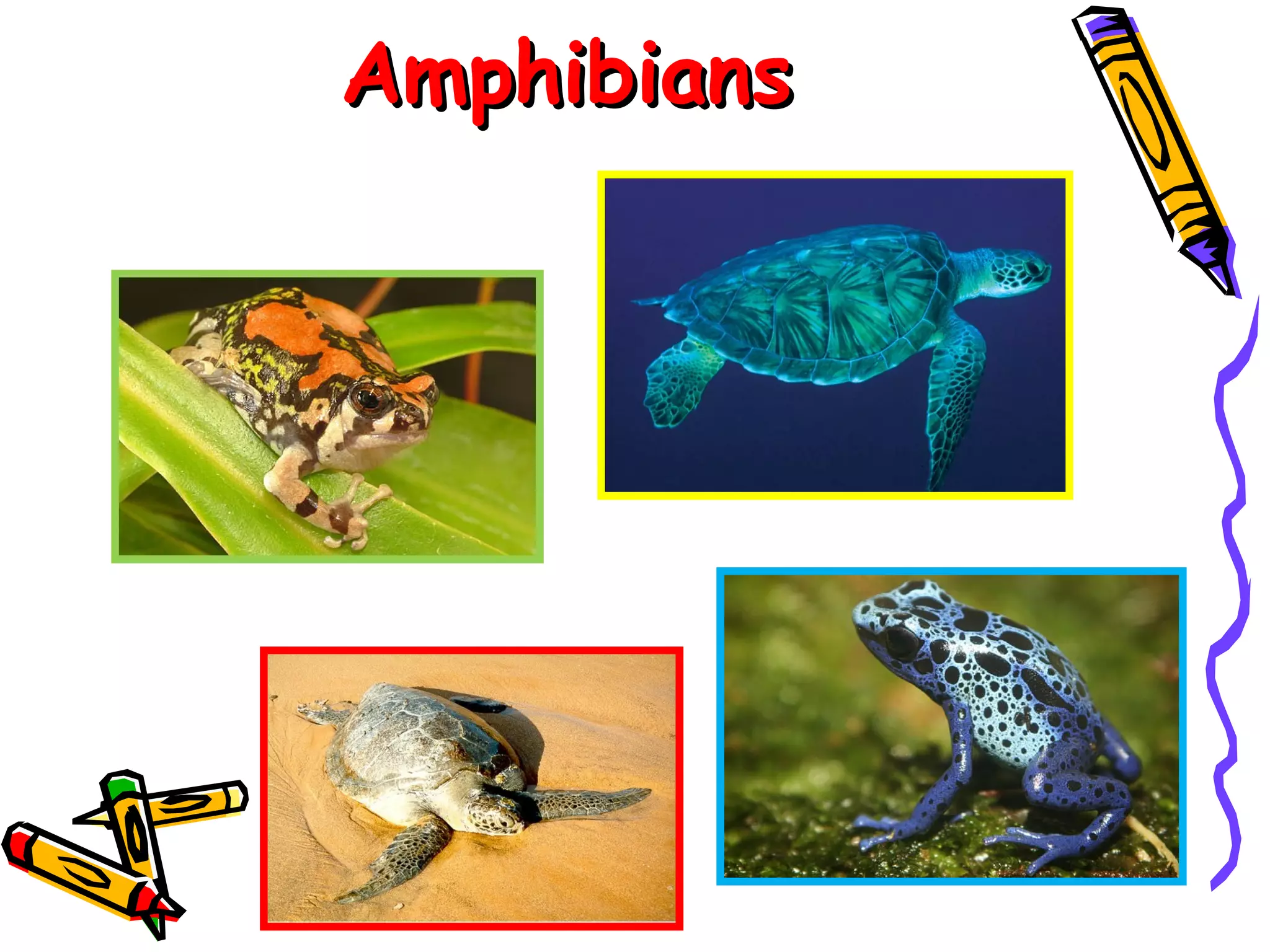
Types of Vertebrates Amphibians Mammals Birds Fish Reptiles Birds Mammals Mammals Mammals Amphibians Amphibians Reptiles Mammals Mammals Amphibians Fish Birds Reptiles
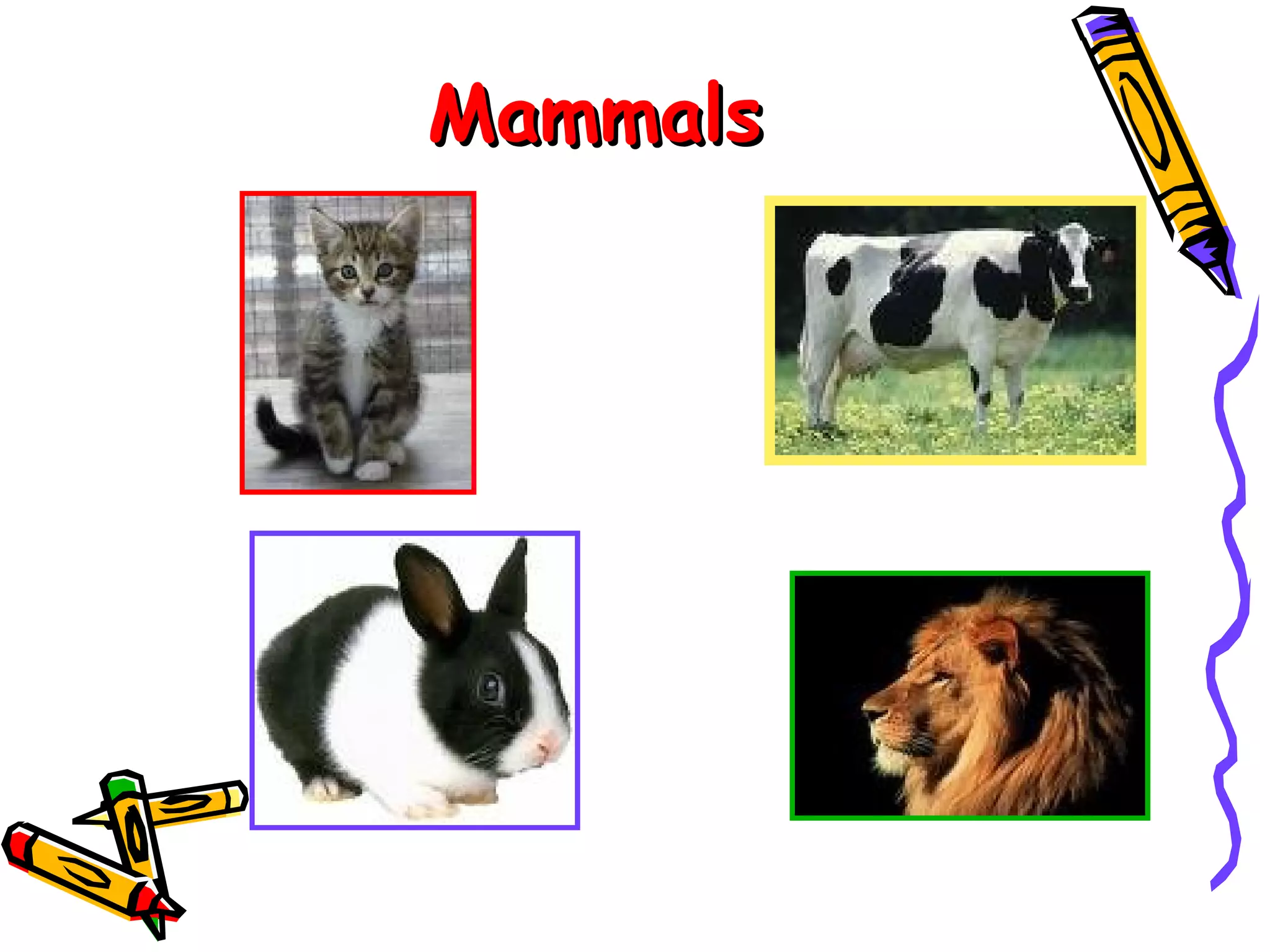
Mammals
Features  milk secreted from mammary glands hair; conserves body heat permitting even tiny mammals to be warm-blooded . teeth specialized for cutting (incisors), tearing (canines) and grinding (molars) their food . about 4,600 species living today .
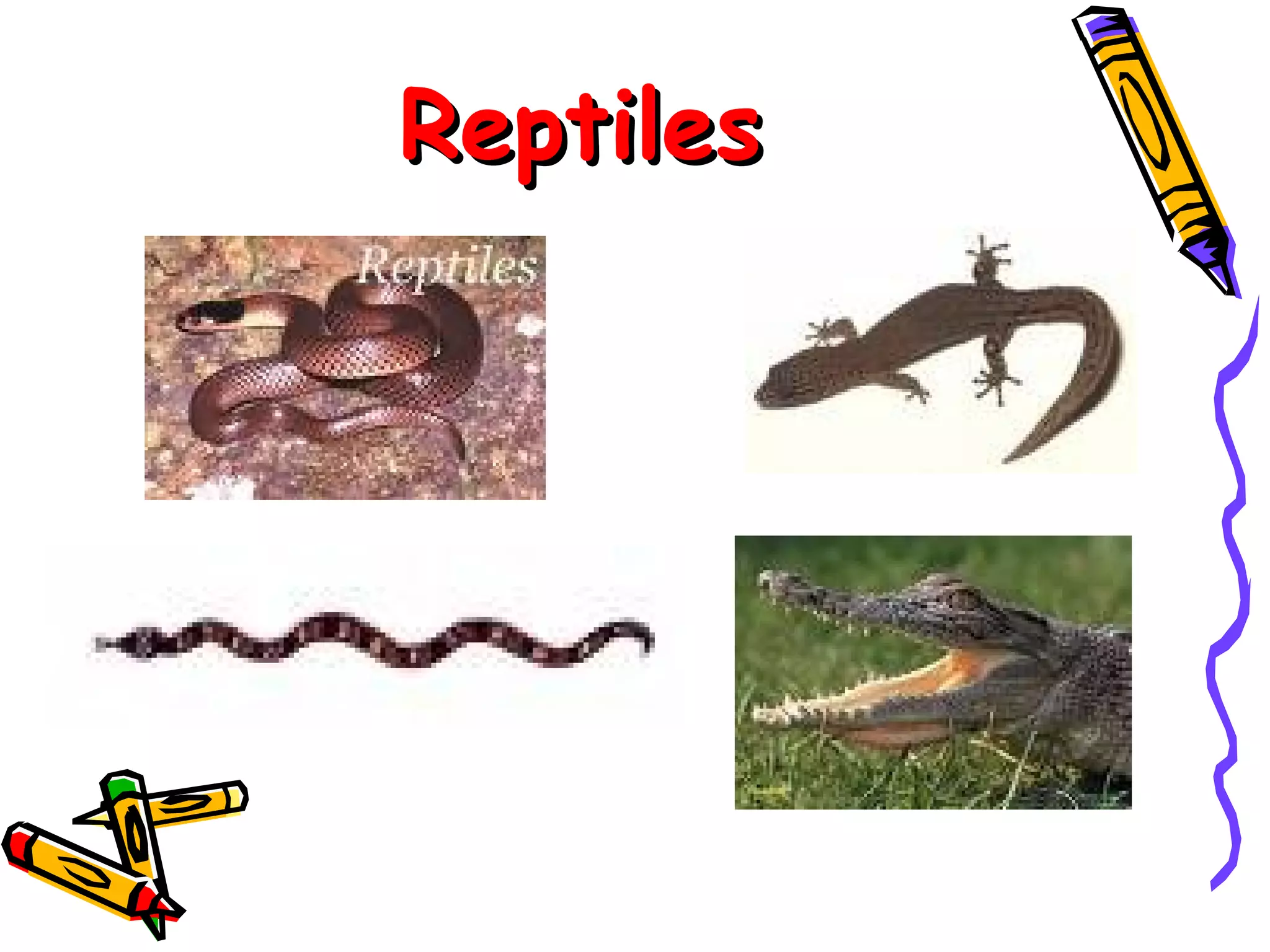
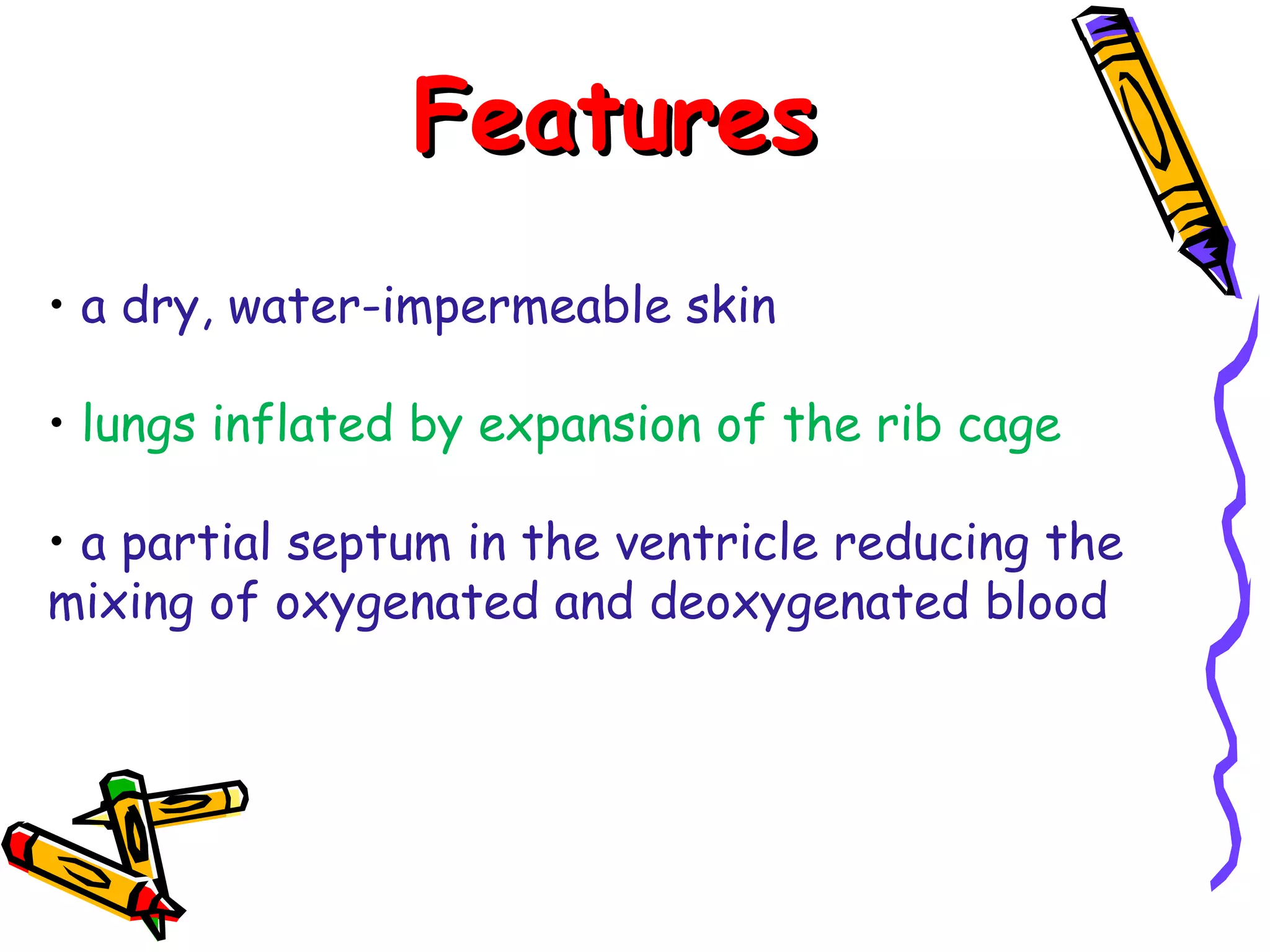
Reptiles
Features  a dry, water-impermeable skin  lungs inflated by expansion of the rib cage   a partial septum in the ventricle reducing the mixing of oxygenated and deoxygenated blood
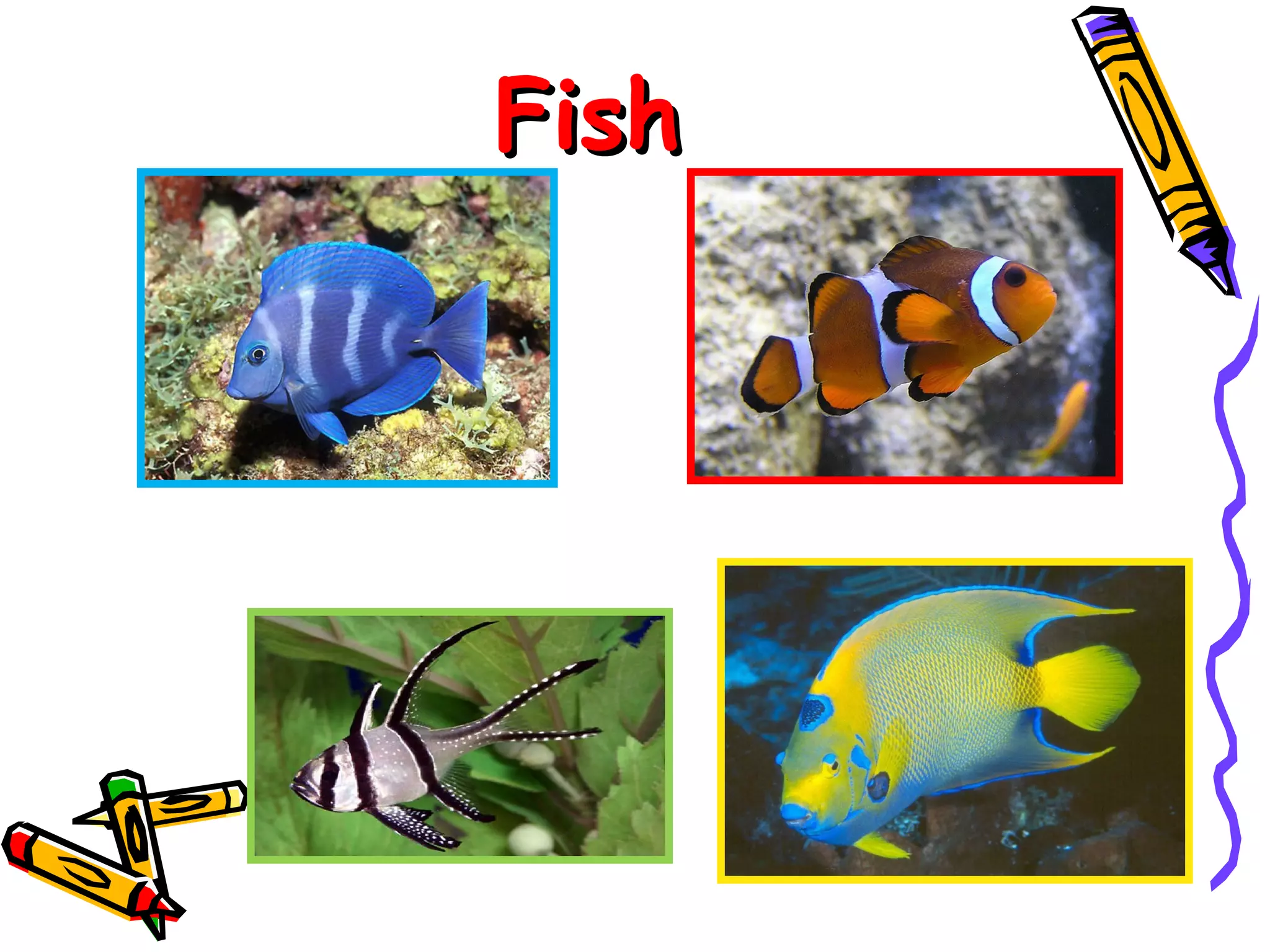
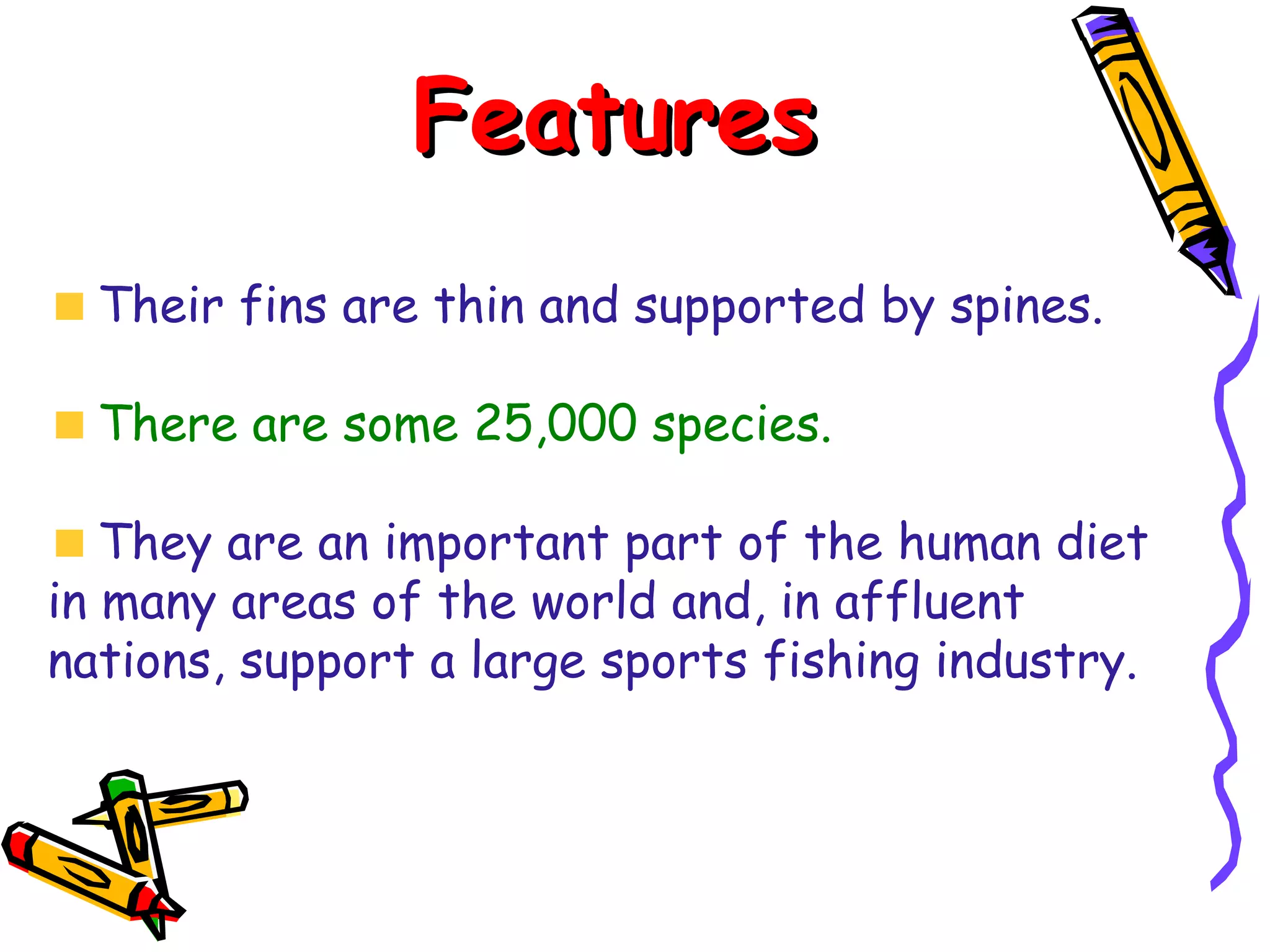
Fish
Features  Their fins are thin and supported by spines. There are some 25,000 species. They are an important part of the human diet in many areas of the world and, in affluent nations, support a large sports fishing industry.
Birds
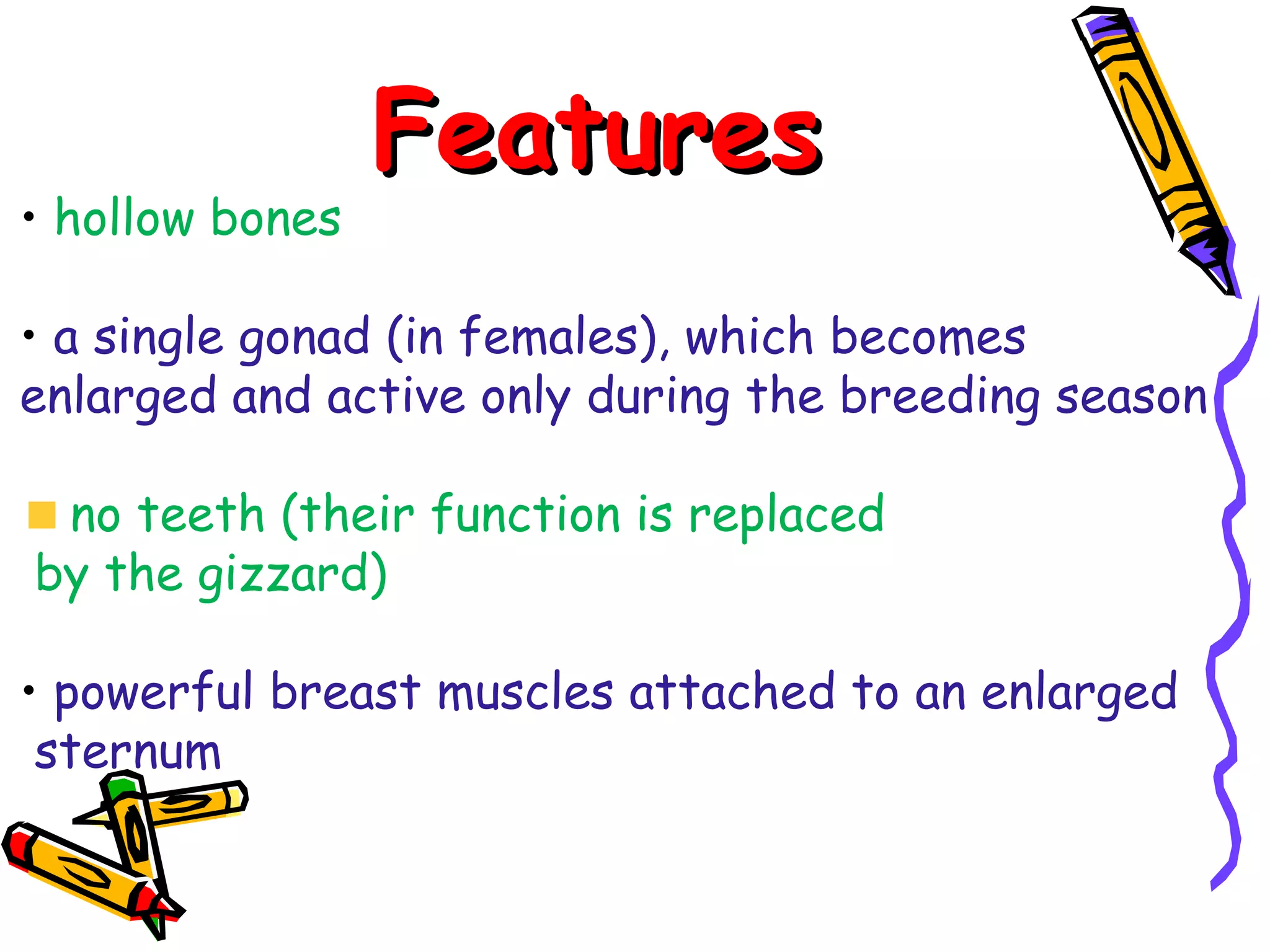
Features  hollow bones  a single gonad (in females), which becomes  enlarged and active only during the breeding season no teeth (their function is replaced by the gizzard)  powerful breast muscles attached to an enlarged sternum
Amphibians
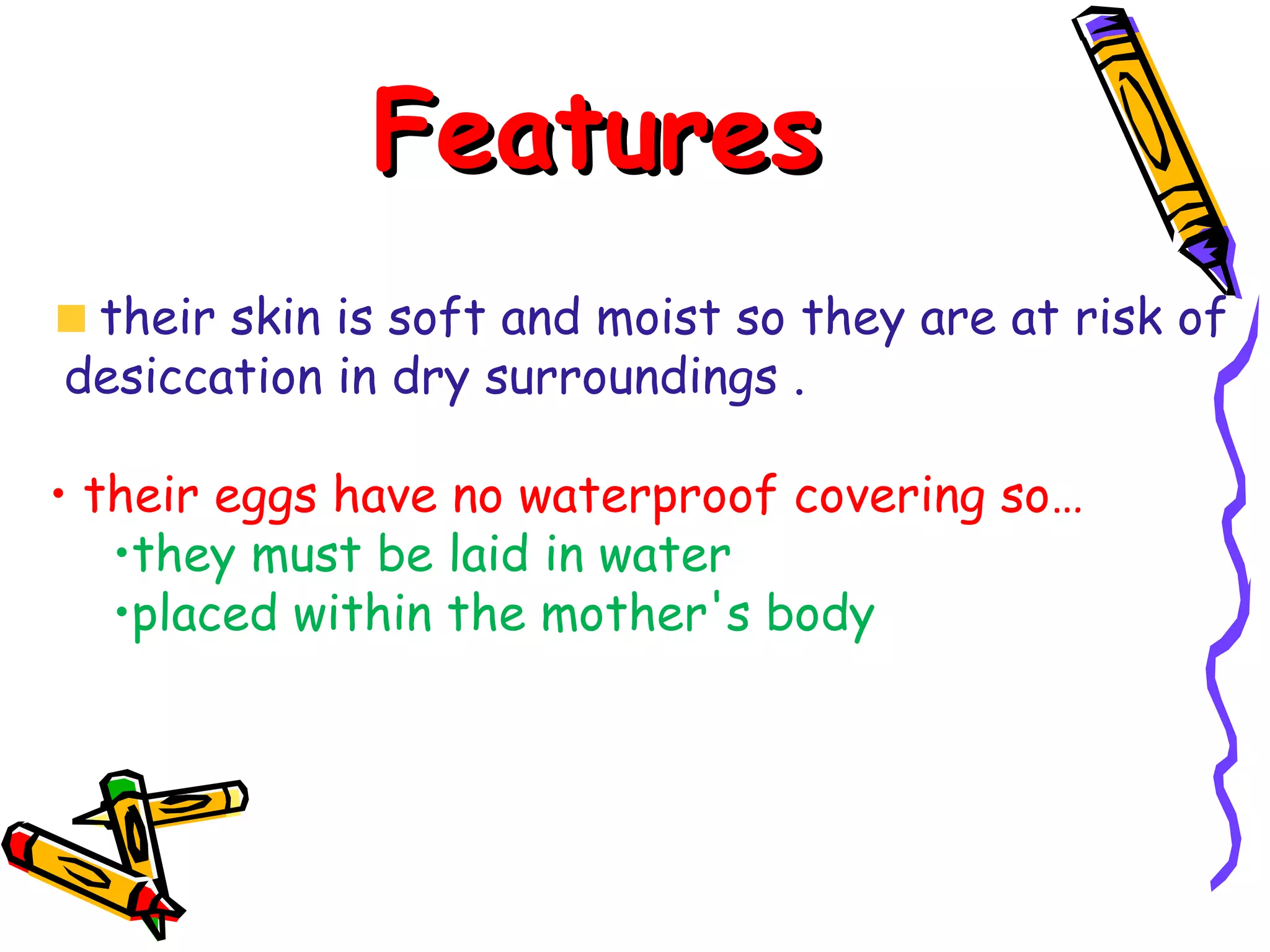
Features  their skin is soft and moist so they are at risk of desiccation in dry surroundings . their eggs have no waterproof covering so… they must be laid in water placed within the mother's body
The End

Presentation Ic

  • 1.
  • 2.
    Types of VertebratesAmphibians Mammals Birds Fish Reptiles Birds Mammals Mammals Mammals Amphibians Amphibians Reptiles Mammals Mammals Amphibians Fish Birds Reptiles
  • 3.
  • 4.
    Features milksecreted from mammary glands hair; conserves body heat permitting even tiny mammals to be warm-blooded . teeth specialized for cutting (incisors), tearing (canines) and grinding (molars) their food . about 4,600 species living today .
  • 5.
  • 6.
    Features adry, water-impermeable skin lungs inflated by expansion of the rib cage a partial septum in the ventricle reducing the mixing of oxygenated and deoxygenated blood
  • 7.
  • 8.
    Features Theirfins are thin and supported by spines. There are some 25,000 species. They are an important part of the human diet in many areas of the world and, in affluent nations, support a large sports fishing industry.
  • 9.
  • 10.
    Features hollowbones a single gonad (in females), which becomes enlarged and active only during the breeding season no teeth (their function is replaced by the gizzard) powerful breast muscles attached to an enlarged sternum
  • 11.
  • 12.
    Features theirskin is soft and moist so they are at risk of desiccation in dry surroundings . their eggs have no waterproof covering so… they must be laid in water placed within the mother's body
  • 13.