 Neither the labourers nor the engineers realised
that those burnt bricks were the remains of a
great civilization that existed centuries back.
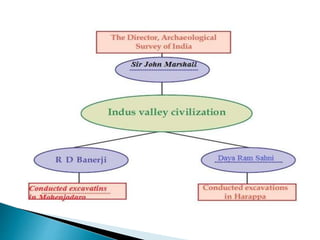
 Later, when Sir John Marshall was the director
of the Archaeological Survey of India, an
excavation was undertaken in 1921.
 It revealed that the bricks were the ruins of a
great civilization.
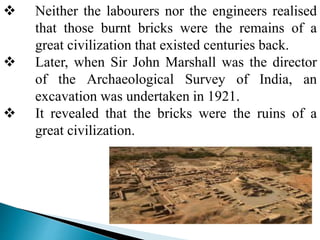
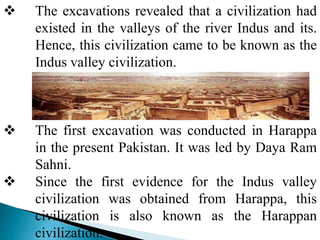
 The excavations revealed that a civilization had
existed in the valleys of the river Indus and its.
Hence, this civilization came to be known as the
Indus valley civilization.
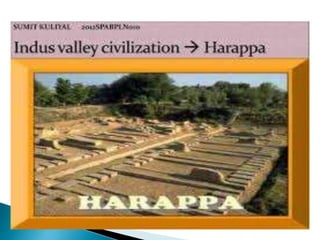
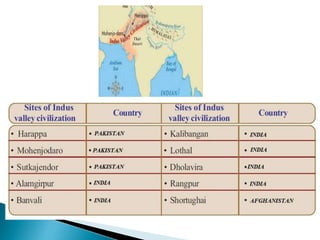
 The first excavation was conducted in Harappa
in the present Pakistan. It was led by Daya Ram
Sahni.
 Since the first evidence for the Indus valley
civilization was obtained from Harappa, this
civilization is also known as the Harappan
civilization.
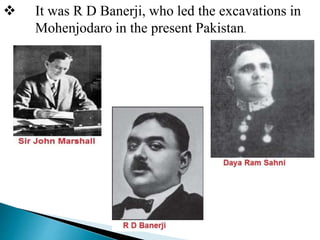
 It was R D Banerji, who led the excavations in
Mohenjodaro in the present Pakistan.
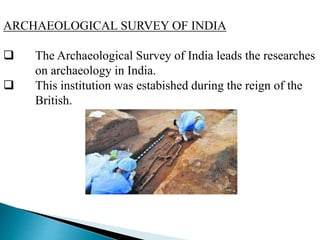
ARCHAEOLOGICAL SURVEY OF INDIA
 The Archaeological Survey of India leads the researches
on archaeology in India.
 This institution was estabished during the reign of the
British.
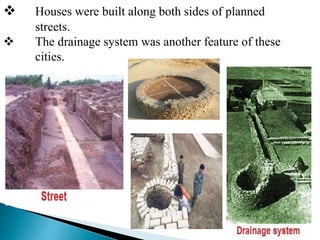
 Houses were built along both sides of planned
streets.
 The drainage system was another feature of these
cities.
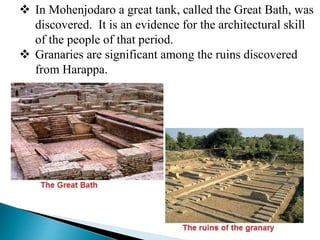
 In Mohenjodaro a great tank, called the Great Bath, was
discovered. It is an evidence for the architectural skill
of the people of that period.
 Granaries are significant among the ruins discovered
from Harappa.
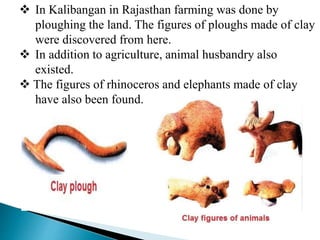
 In Kalibangan in Rajasthan farming was done by
ploughing the land. The figures of ploughs made of clay
were discovered from here.
 In addition to agriculture, animal husbandry also
existed.
 The figures of rhinoceros and elephants made of clay
have also been found.
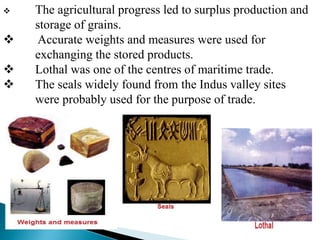
 The agricultural progress led to surplus production and
storage of grains.
 Accurate weights and measures were used for
exchanging the stored products.
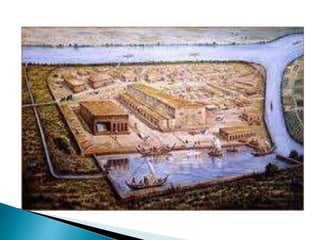
 Lothal was one of the centres of maritime trade.
 The seals widely found from the Indus valley sites
were probably used for the purpose of trade.
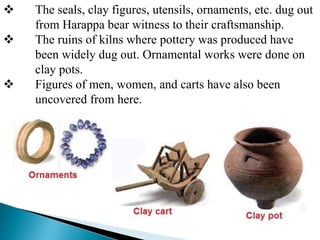
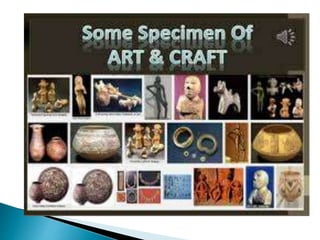
 The seals, clay figures, utensils, ornaments, etc. dug out
from Harappa bear witness to their craftsmanship.
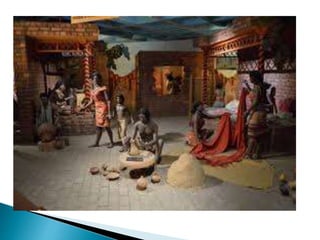
 The ruins of kilns where pottery was produced have
been widely dug out. Ornamental works were done on
clay pots.
 Figures of men, women, and carts have also been
uncovered from here.
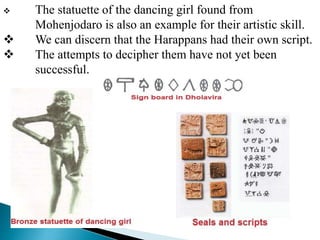
 The statuette of the dancing girl found from
Mohenjodaro is also an example for their artistic skill.
 We can discern that the Harappans had their own script.
 The attempts to decipher them have not yet been
successful.
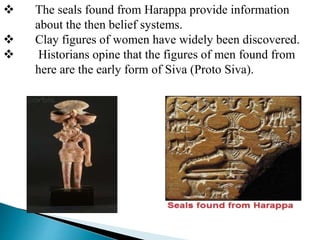
 The seals found from Harappa provide information
about the then belief systems.
 Clay figures of women have widely been discovered.
 Historians opine that the figures of men found from
here are the early form of Siva (Proto Siva).
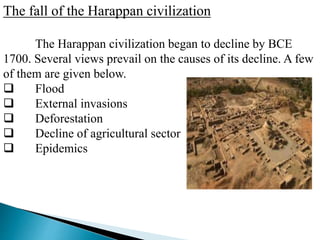
The fall of the Harappan civilization
The Harappan civilization began to decline by BCE
1700. Several views prevail on the causes of its decline. A few
of them are given below.
 Flood
 External invasions
 Deforestation
 Decline of agricultural sector
 Epidemics
Presentation harappa

Presentation harappa

  • 4.
     Neither thelabourers nor the engineers realised that those burnt bricks were the remains of a great civilization that existed centuries back.  Later, when Sir John Marshall was the director of the Archaeological Survey of India, an excavation was undertaken in 1921.  It revealed that the bricks were the ruins of a great civilization.
  • 5.
     The excavationsrevealed that a civilization had existed in the valleys of the river Indus and its. Hence, this civilization came to be known as the Indus valley civilization.  The first excavation was conducted in Harappa in the present Pakistan. It was led by Daya Ram Sahni.  Since the first evidence for the Indus valley civilization was obtained from Harappa, this civilization is also known as the Harappan civilization.
  • 6.
     It wasR D Banerji, who led the excavations in Mohenjodaro in the present Pakistan.
  • 8.
    ARCHAEOLOGICAL SURVEY OFINDIA  The Archaeological Survey of India leads the researches on archaeology in India.  This institution was estabished during the reign of the British.
  • 11.
     Houses werebuilt along both sides of planned streets.  The drainage system was another feature of these cities.
  • 12.
     In Mohenjodaroa great tank, called the Great Bath, was discovered. It is an evidence for the architectural skill of the people of that period.  Granaries are significant among the ruins discovered from Harappa.
  • 13.
     In Kalibanganin Rajasthan farming was done by ploughing the land. The figures of ploughs made of clay were discovered from here.  In addition to agriculture, animal husbandry also existed.  The figures of rhinoceros and elephants made of clay have also been found.
  • 14.
     The agriculturalprogress led to surplus production and storage of grains.  Accurate weights and measures were used for exchanging the stored products.  Lothal was one of the centres of maritime trade.  The seals widely found from the Indus valley sites were probably used for the purpose of trade.
  • 16.
     The seals,clay figures, utensils, ornaments, etc. dug out from Harappa bear witness to their craftsmanship.  The ruins of kilns where pottery was produced have been widely dug out. Ornamental works were done on clay pots.  Figures of men, women, and carts have also been uncovered from here.
  • 17.
     The statuetteof the dancing girl found from Mohenjodaro is also an example for their artistic skill.  We can discern that the Harappans had their own script.  The attempts to decipher them have not yet been successful.
  • 20.
     The sealsfound from Harappa provide information about the then belief systems.  Clay figures of women have widely been discovered.  Historians opine that the figures of men found from here are the early form of Siva (Proto Siva).
  • 21.
    The fall ofthe Harappan civilization The Harappan civilization began to decline by BCE 1700. Several views prevail on the causes of its decline. A few of them are given below.  Flood  External invasions  Deforestation  Decline of agricultural sector  Epidemics