By
Paul Marsden
Risk Management
‘Risk assessment is a systematic
approach to hazard identification
and control.’
1. Part of day to day operations but may
not be documented.
2.Important to systematically review all
risks.
3.Courts can’t second guess after the event
if risk management has been
professionally implemented.
4.Can prevent critical failures.
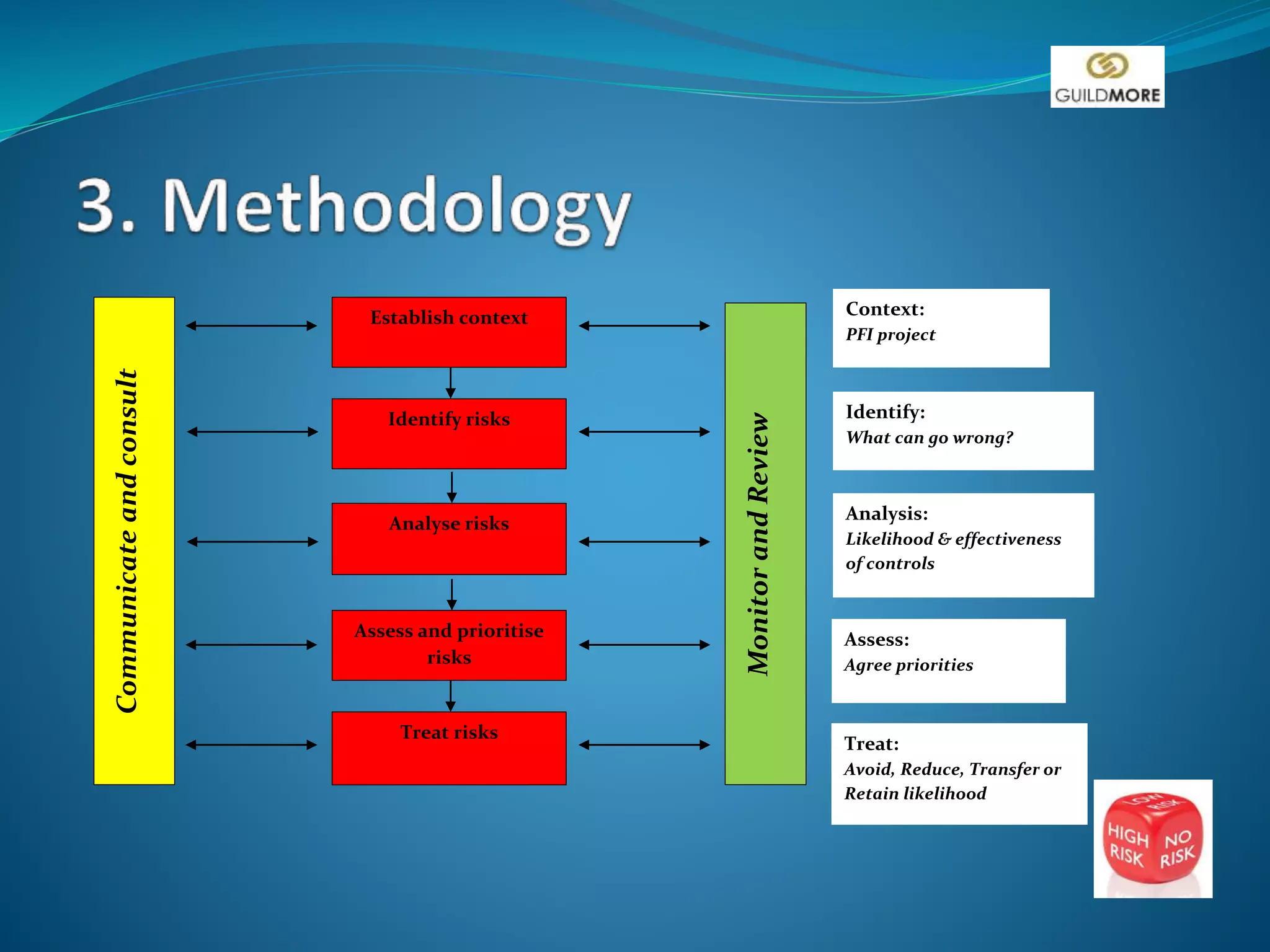
Establish context
Identify risks
Analyse risks
Assess and prioritise
risks
Treat risks
Communicateandconsult
MonitorandReview
Context:
PFI project
Identify:
What can go wrong?
Analysis:
Likelihood & effectiveness
of controls
Assess:
Agree priorities
Treat:
Avoid, Reduce, Transfer or
Retain likelihood
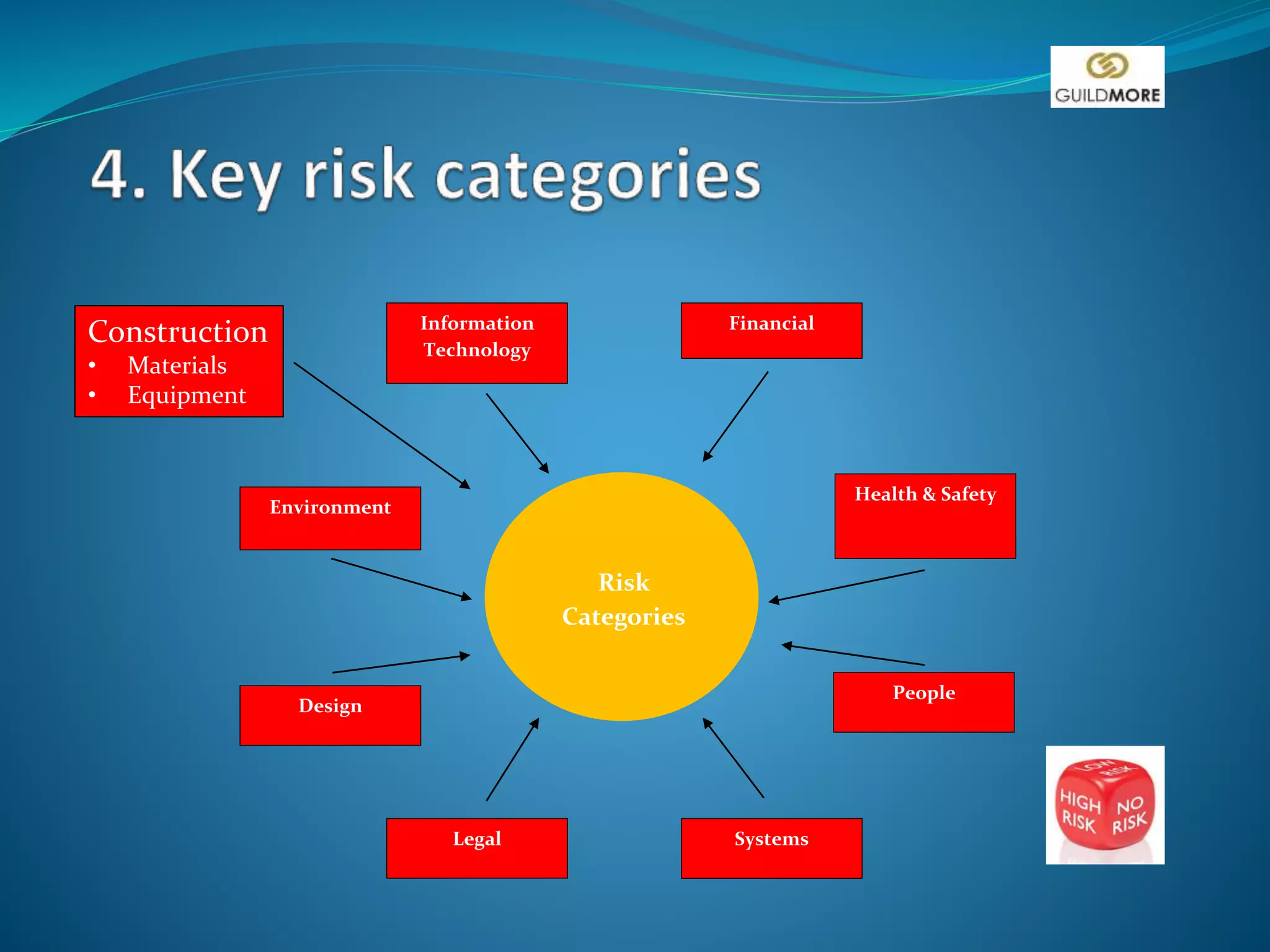
Information
Technology
Financial
Environment
Health & Safety
People
Design
Legal Systems
Risk
Categories
Construction
• Materials
• Equipment
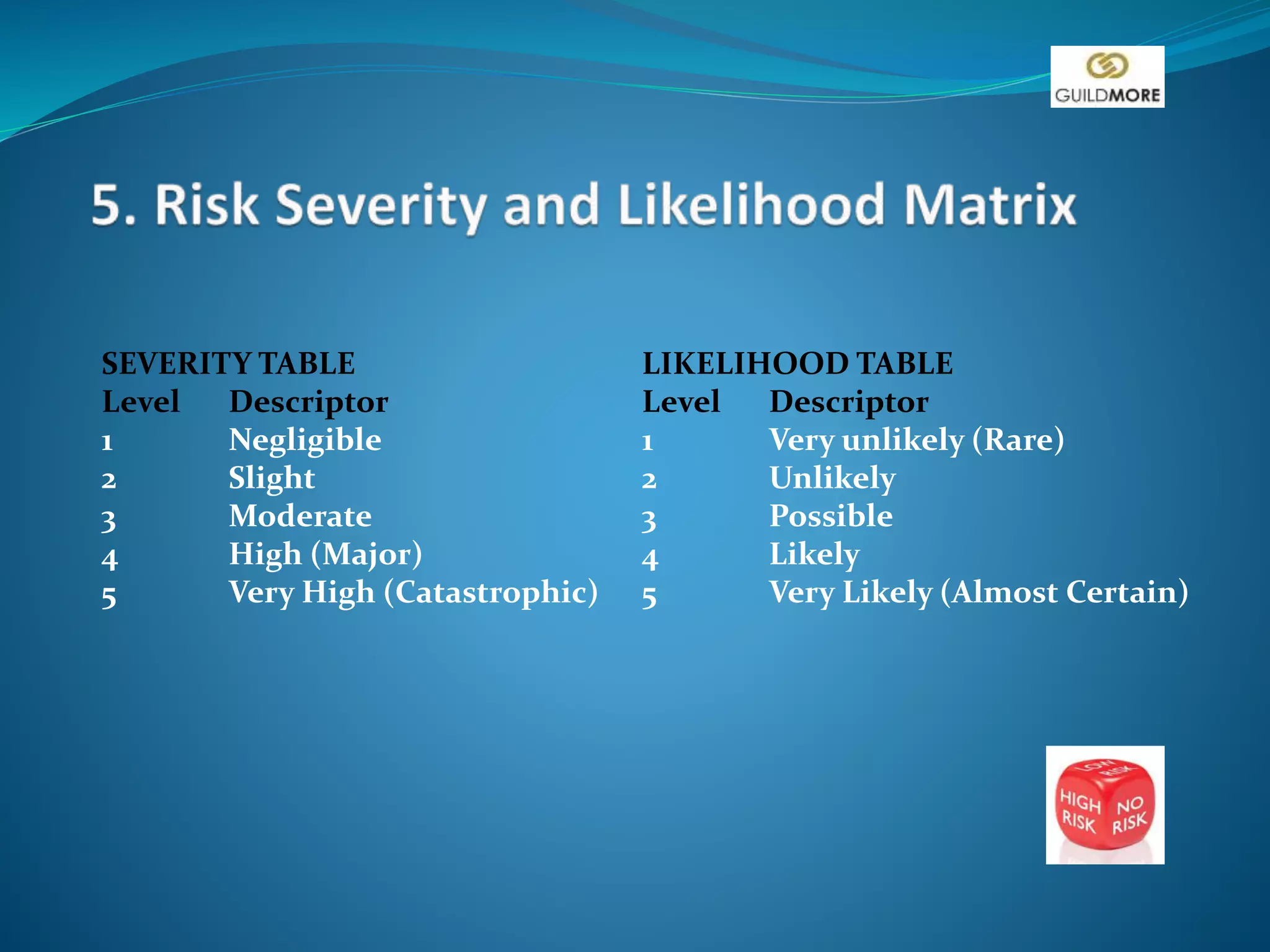
SEVERITY TABLE
Level Descriptor
1 Negligible
2 Slight
3 Moderate
4 High (Major)
5 Very High (Catastrophic)
LIKELIHOOD TABLE
Level Descriptor
1 Very unlikely (Rare)
2 Unlikely
3 Possible
4 Likely
5 Very Likely (Almost Certain)
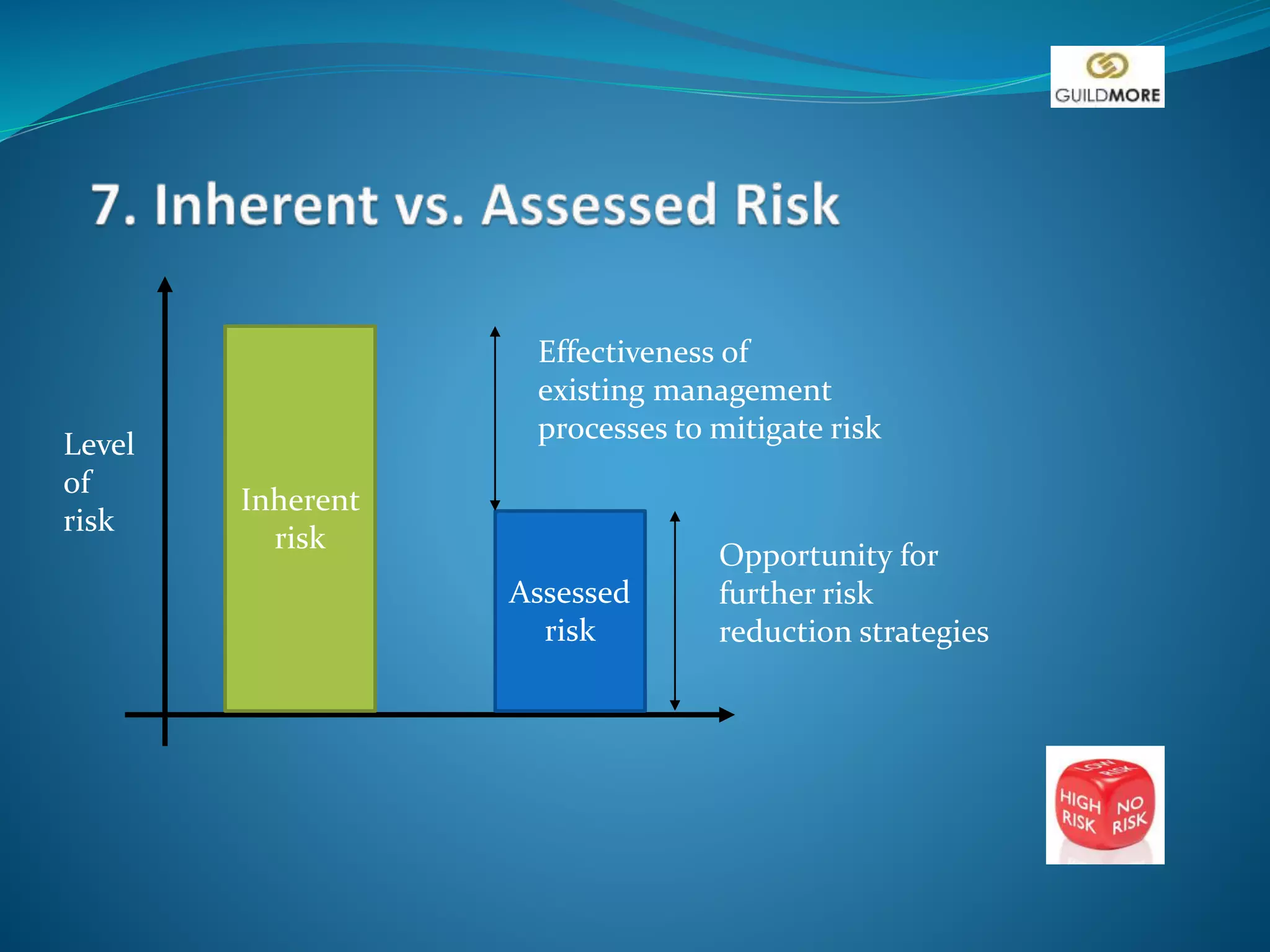
Level
of
risk
Inherent
risk
Assessed
risk
Effectiveness of
existing management
processes to mitigate risk
Opportunity for
further risk
reduction strategies
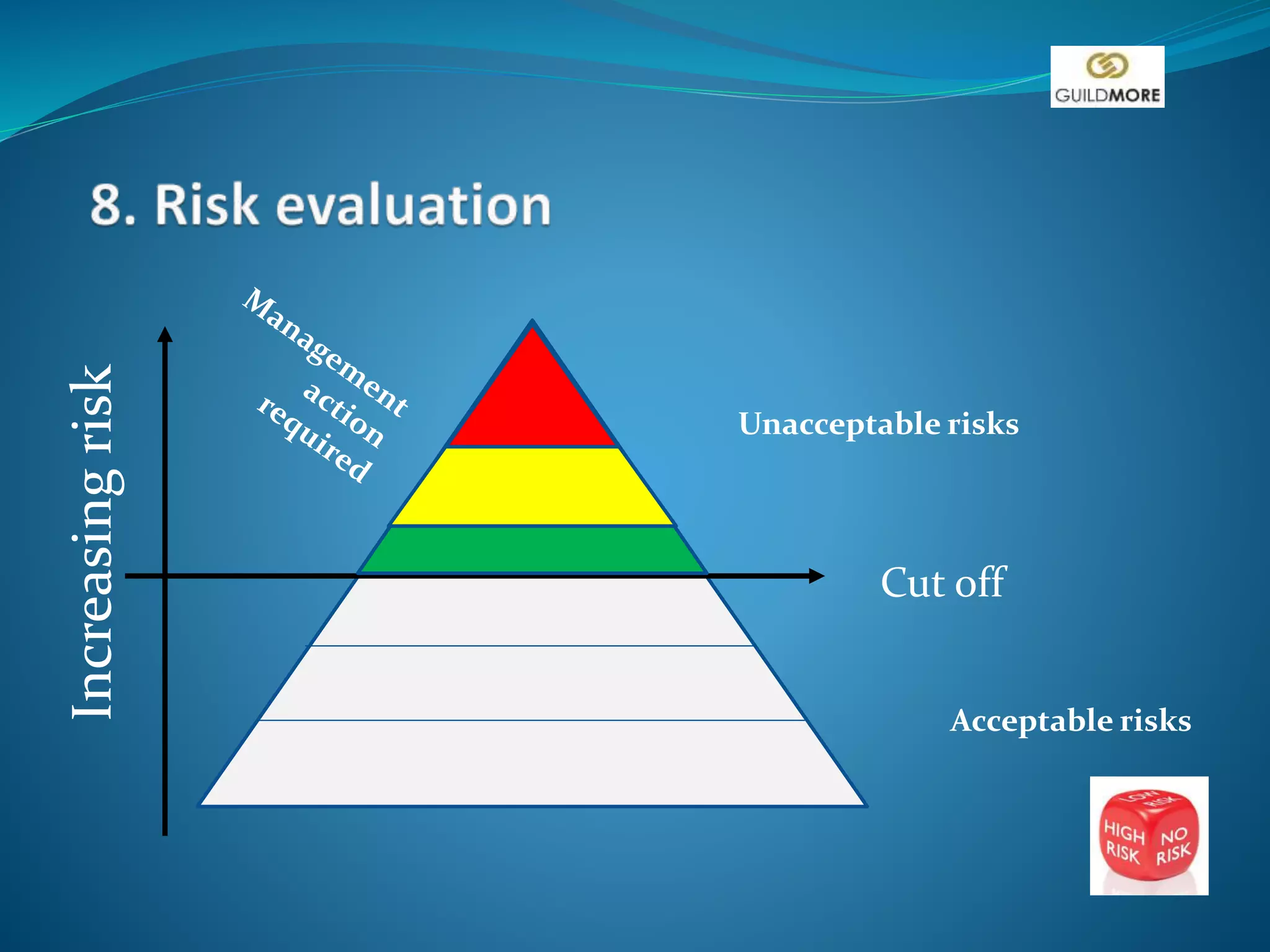
Increasingrisk
Cut off
Unacceptable risks
Acceptable risks
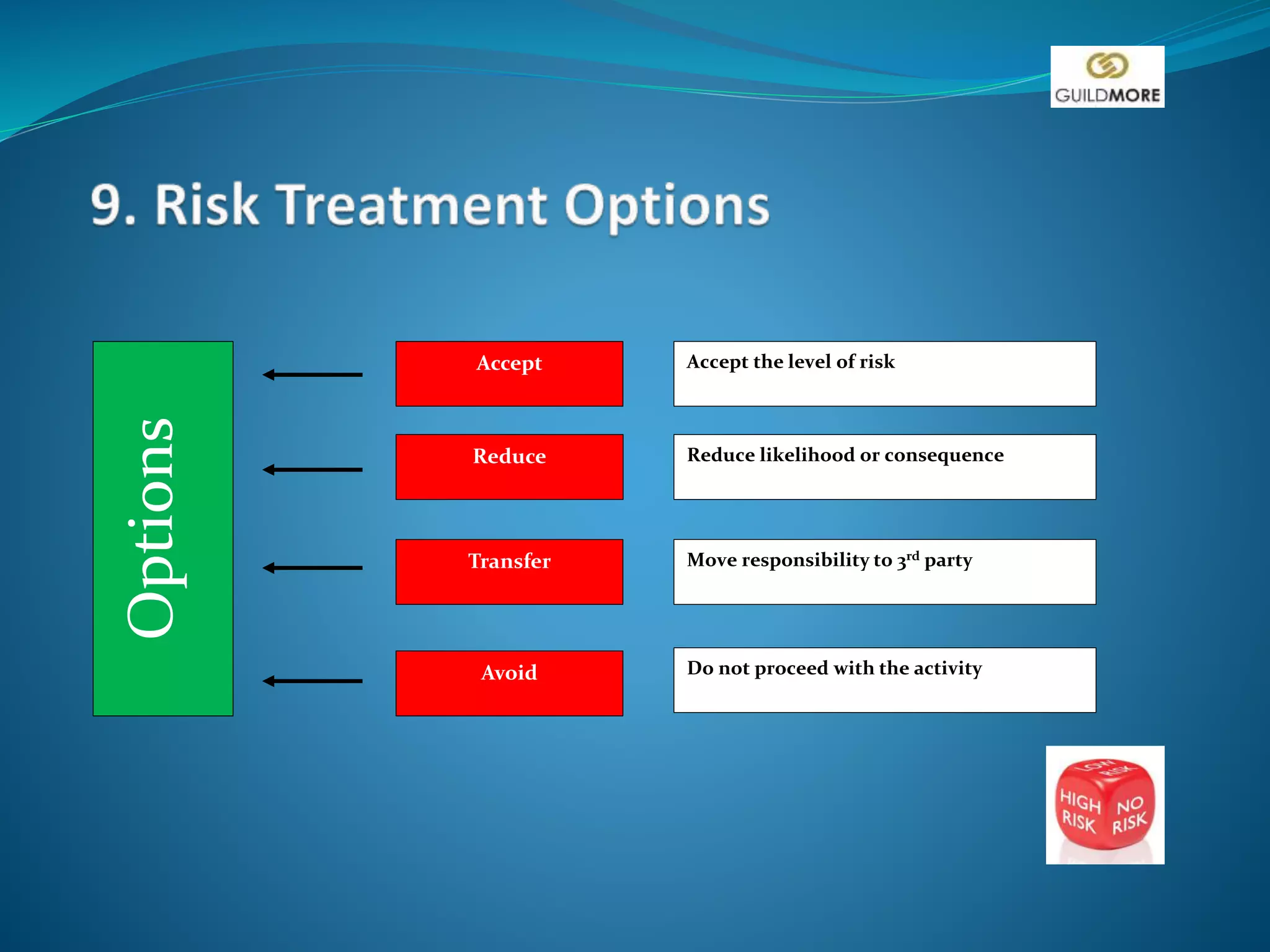
Reduce
Accept
Transfer
Avoid
Accept the level of risk
Reduce likelihood or consequence
Move responsibility to 3rd party
Do not proceed with the activity
Options
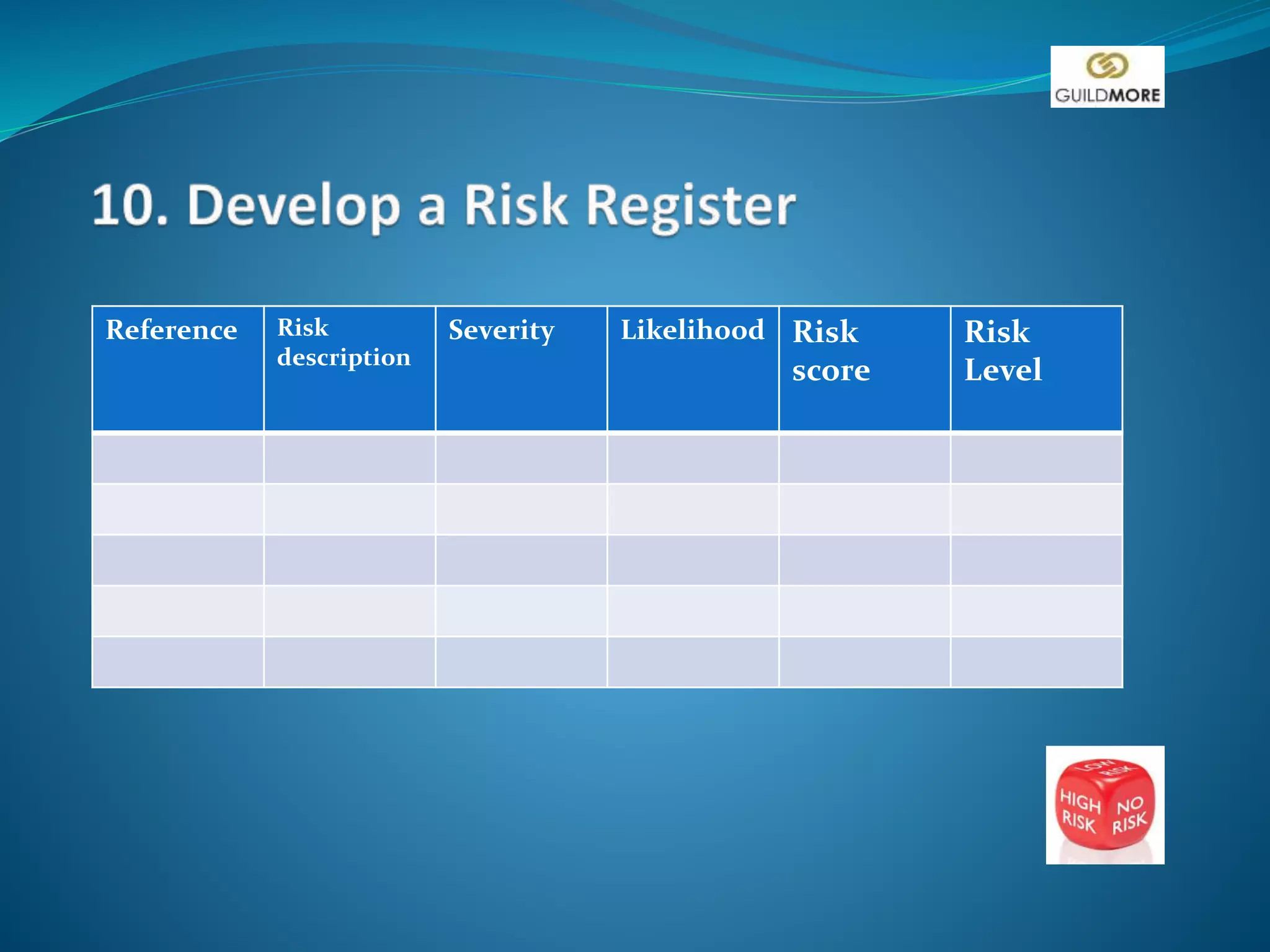
Reference Risk
description
Severity Likelihood Risk
score
Risk
Level
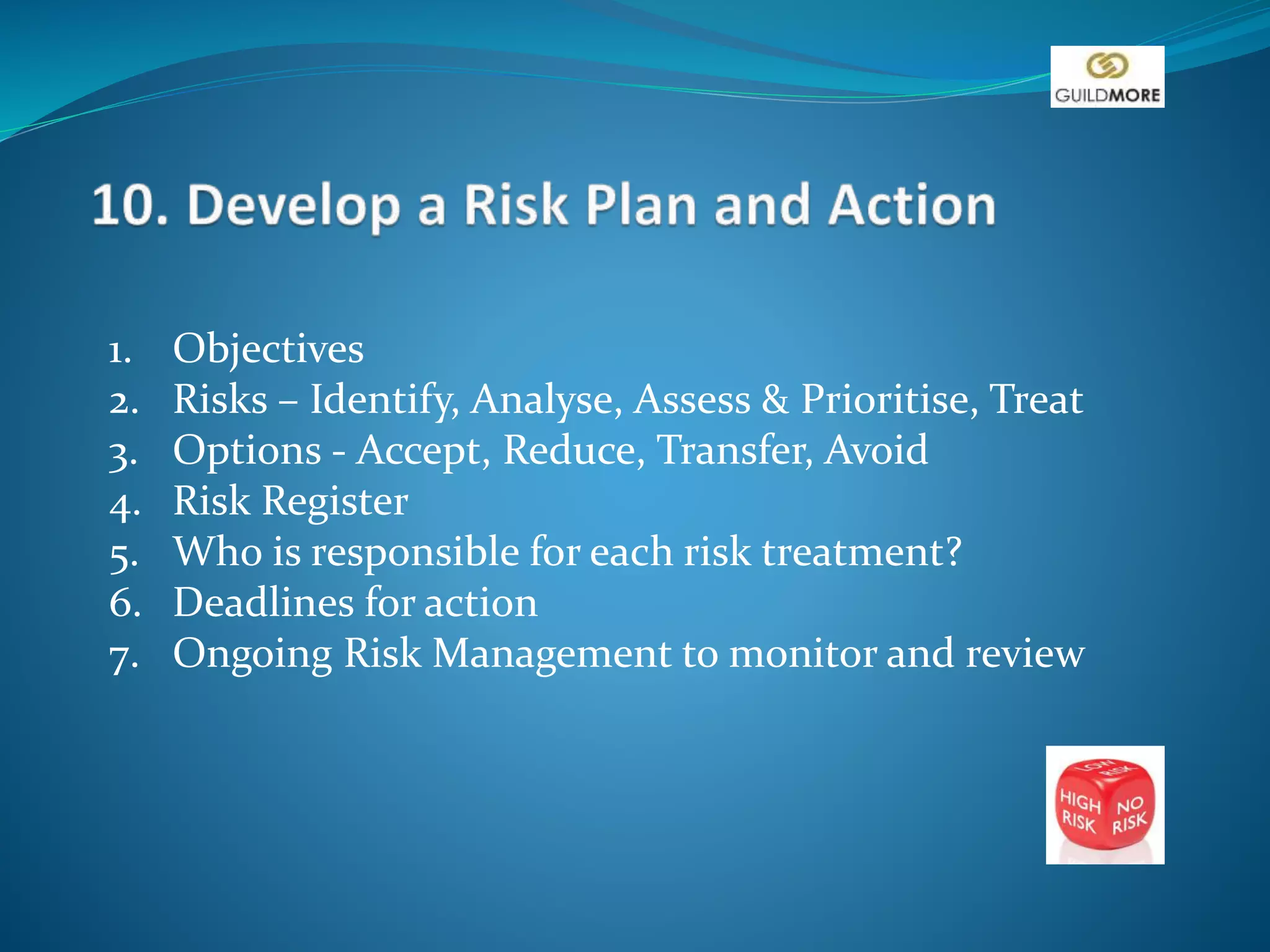
1. Objectives
2. Risks – Identify, Analyse, Assess & Prioritise, Treat
3. Options - Accept, Reduce, Transfer, Avoid
4. Risk Register
5. Who is responsible for each risk treatment?
6. Deadlines for action
7. Ongoing Risk Management to monitor and review

Presentation Guildmore Risk Mgt Mar 2014