Download as PDF, PPTX



The document provides an overview of the General Data Protection Regulation (GDPR), which aims to unify and strengthen data protection for individuals within the European Union (EU) while ensuring compliance from organizations that handle personal data. GDPR, effective from May 25, 2018, outlines the responsibilities of data controllers and processors, the rights of data subjects, and the penalties for non-compliance, emphasizing principles such as privacy by design and explicit consent. Various measures, including regular audits and the use of pseudonymization, are recommended for organizations to achieve compliance and protect personal data.
Introduction to GDPR compliance with a focus on data protection for individuals in the EU.
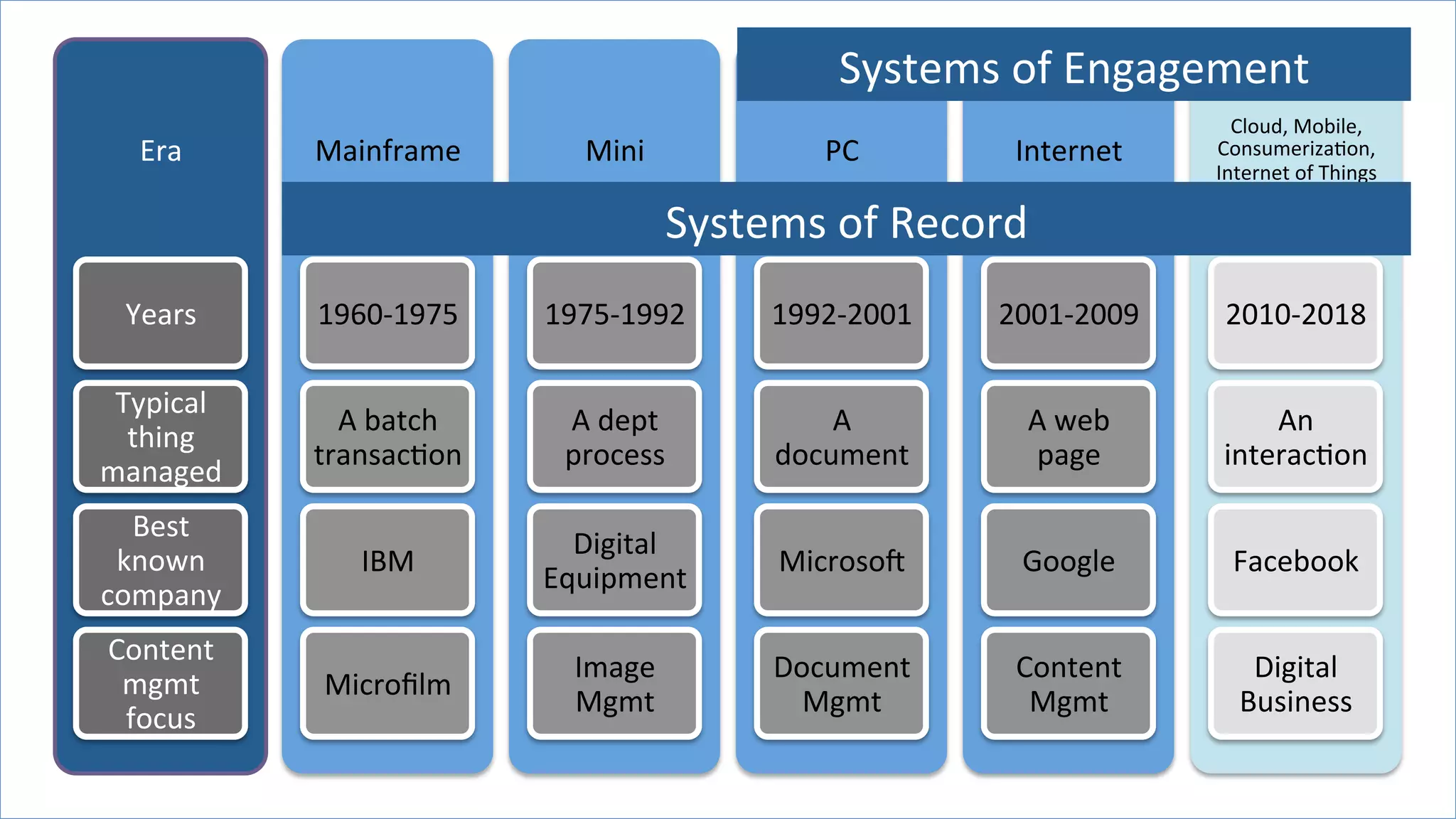
History of content management systems from mainframes to digital business models across various years.
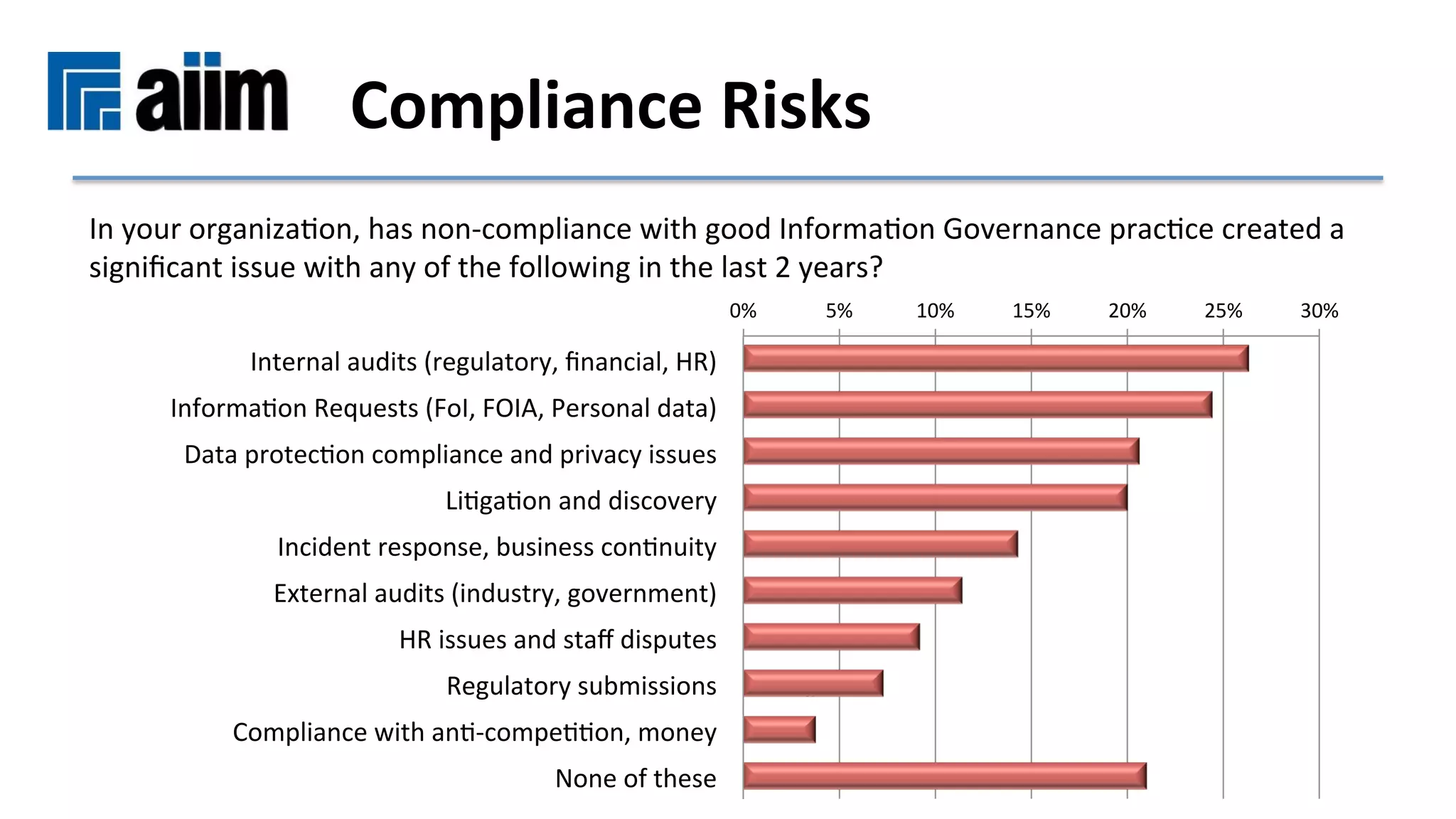
Assessment of issues arising from non-compliance with information governance practices in organizations.
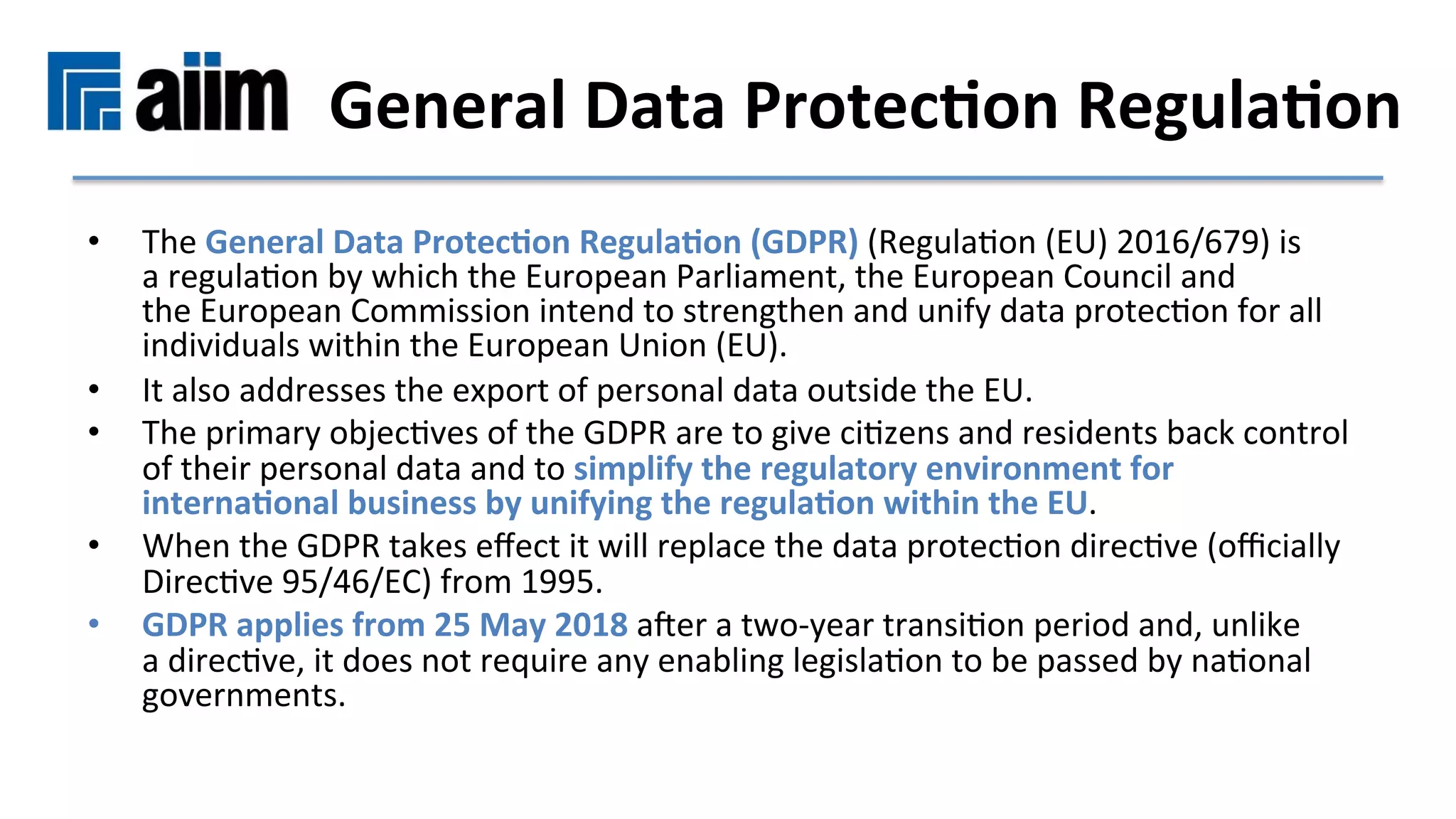
Description of GDPR objectives, application, and its effect on personal data management.
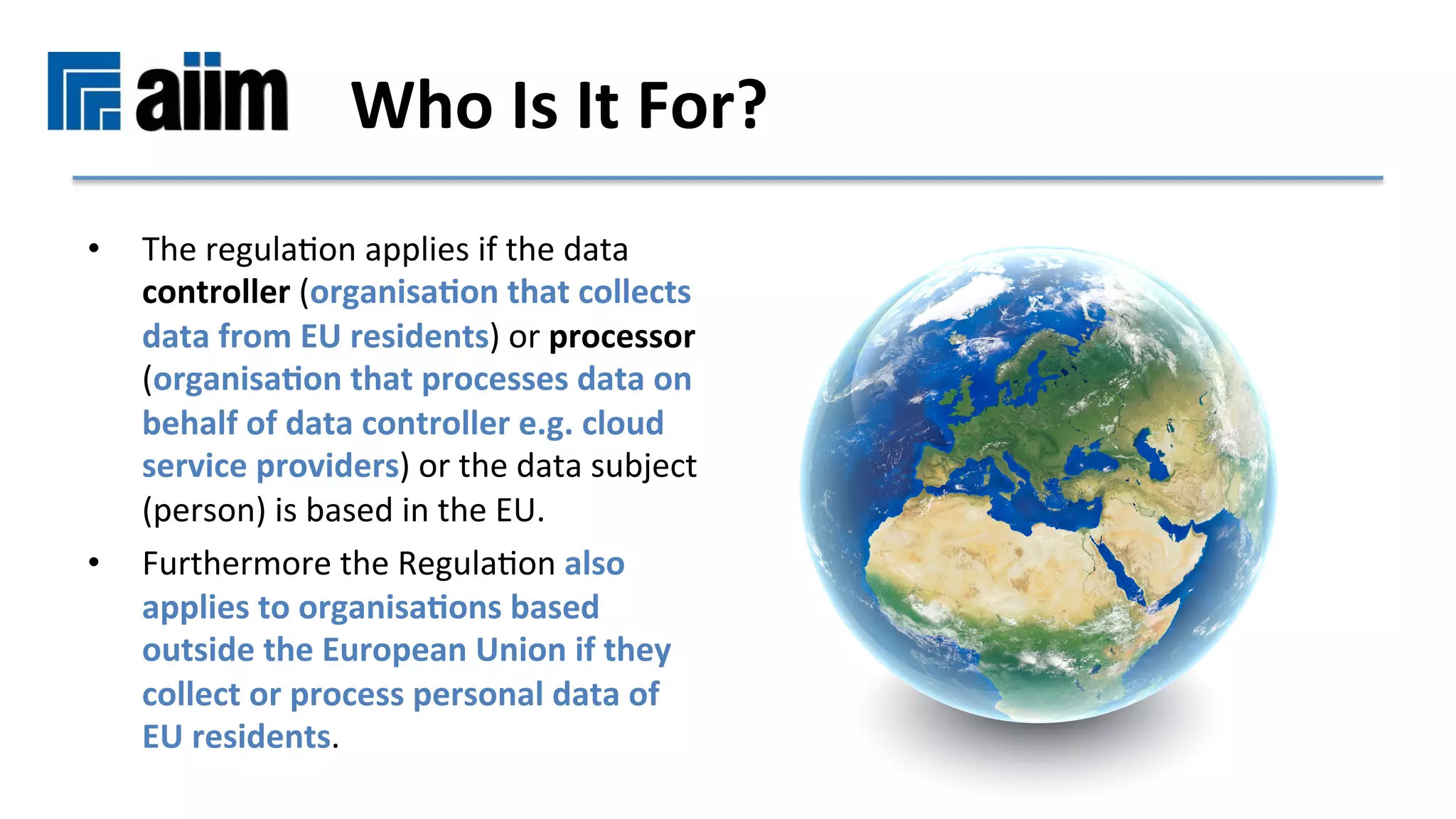
Explanation of who is impacted by GDPR, including entities both inside and outside the EU.
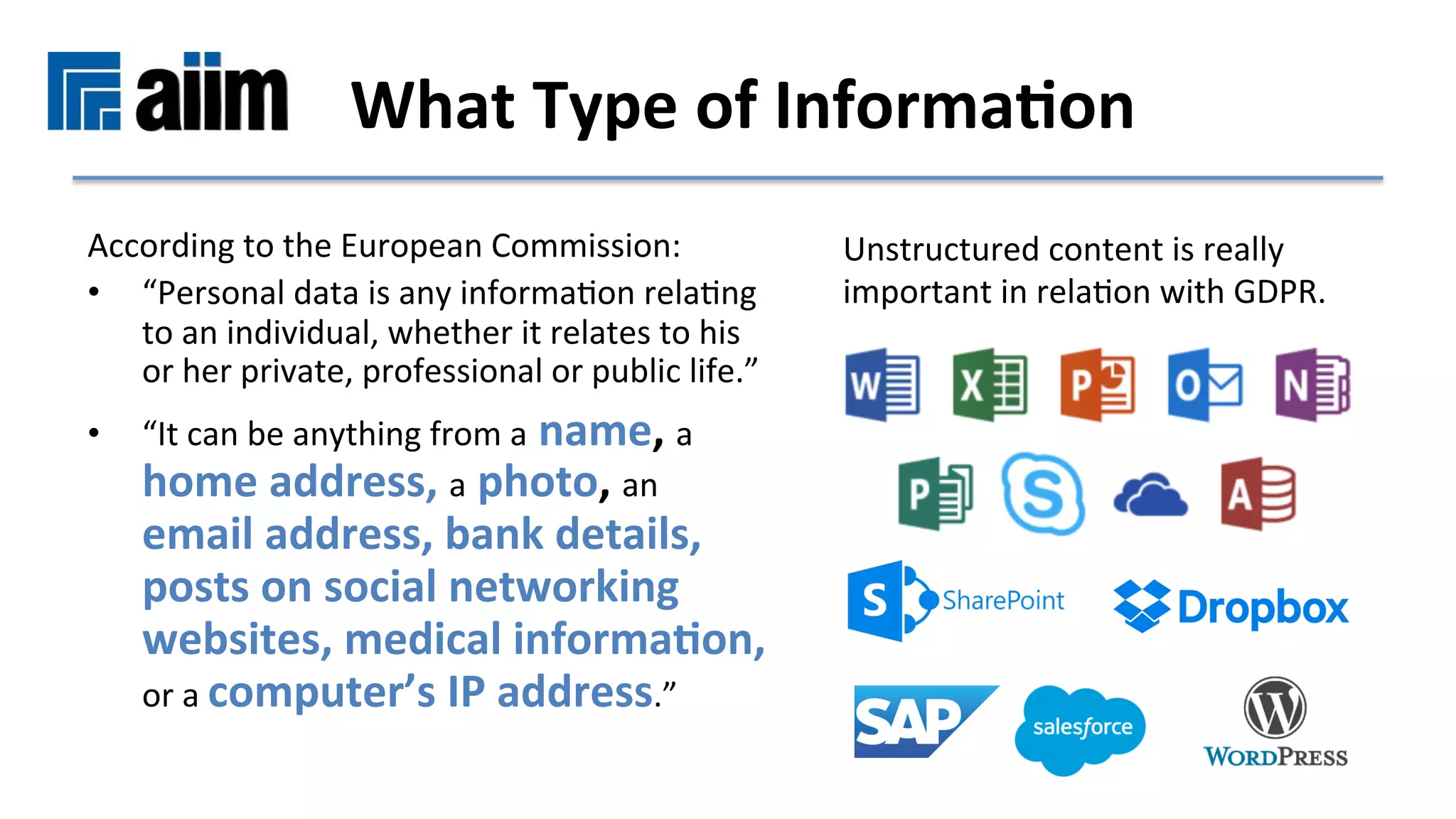
Definition and examples of personal data as outlined by the European Commission.
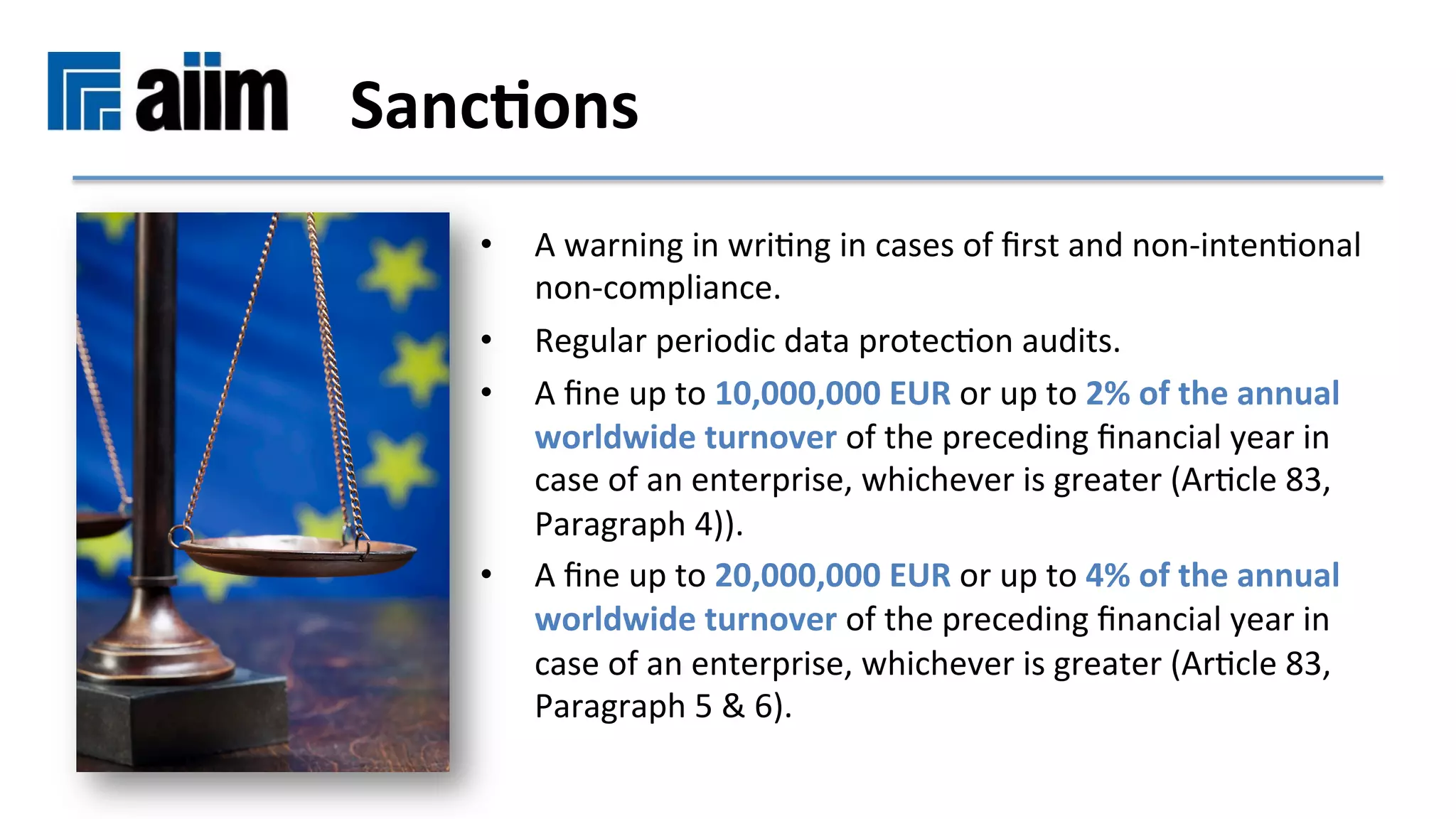
Overview of sanctions and fines for non-compliance, including significant financial penalties.
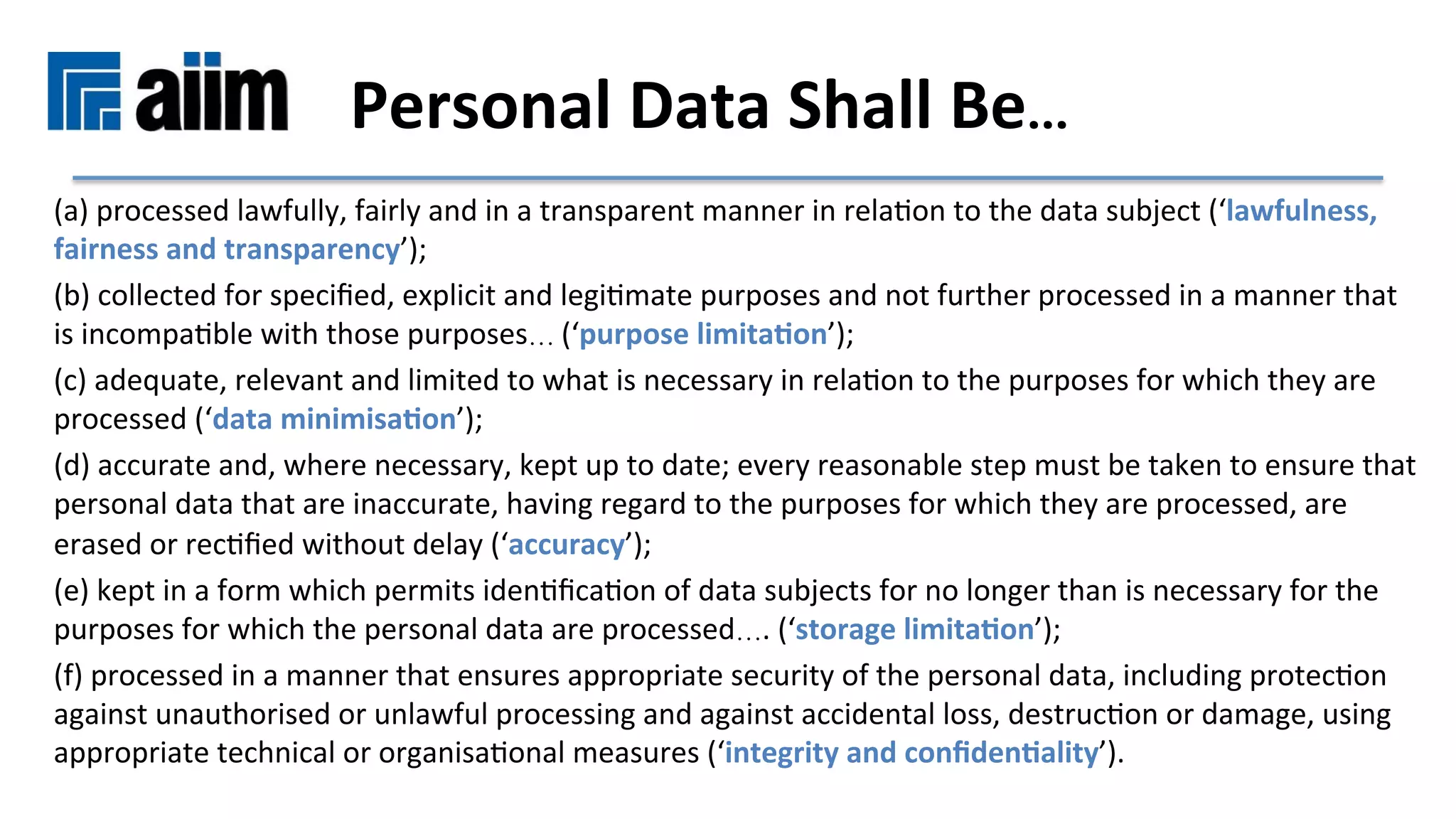
Key principles governing the processing of personal data including legality, purpose limitation, and data minimization.
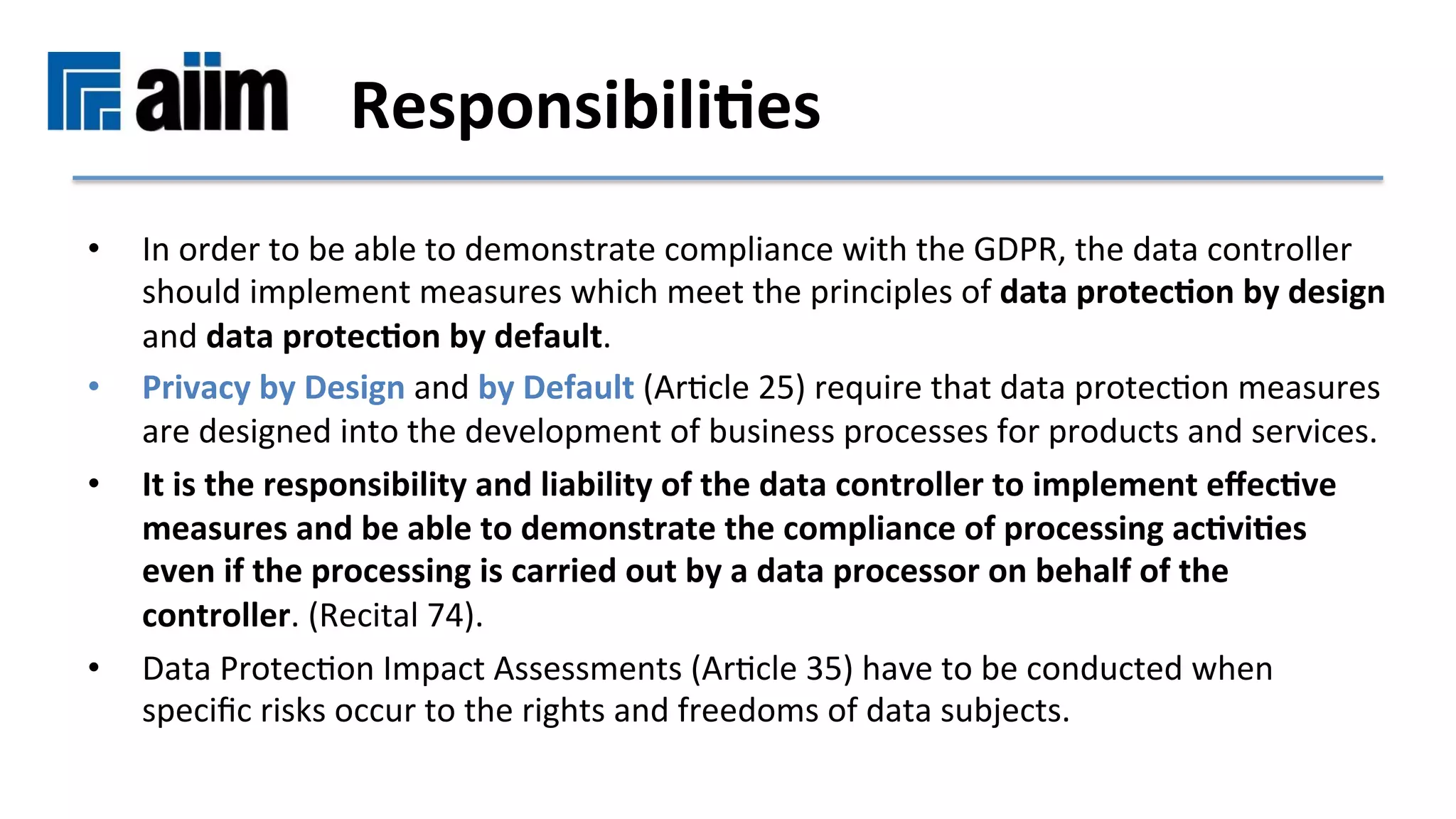
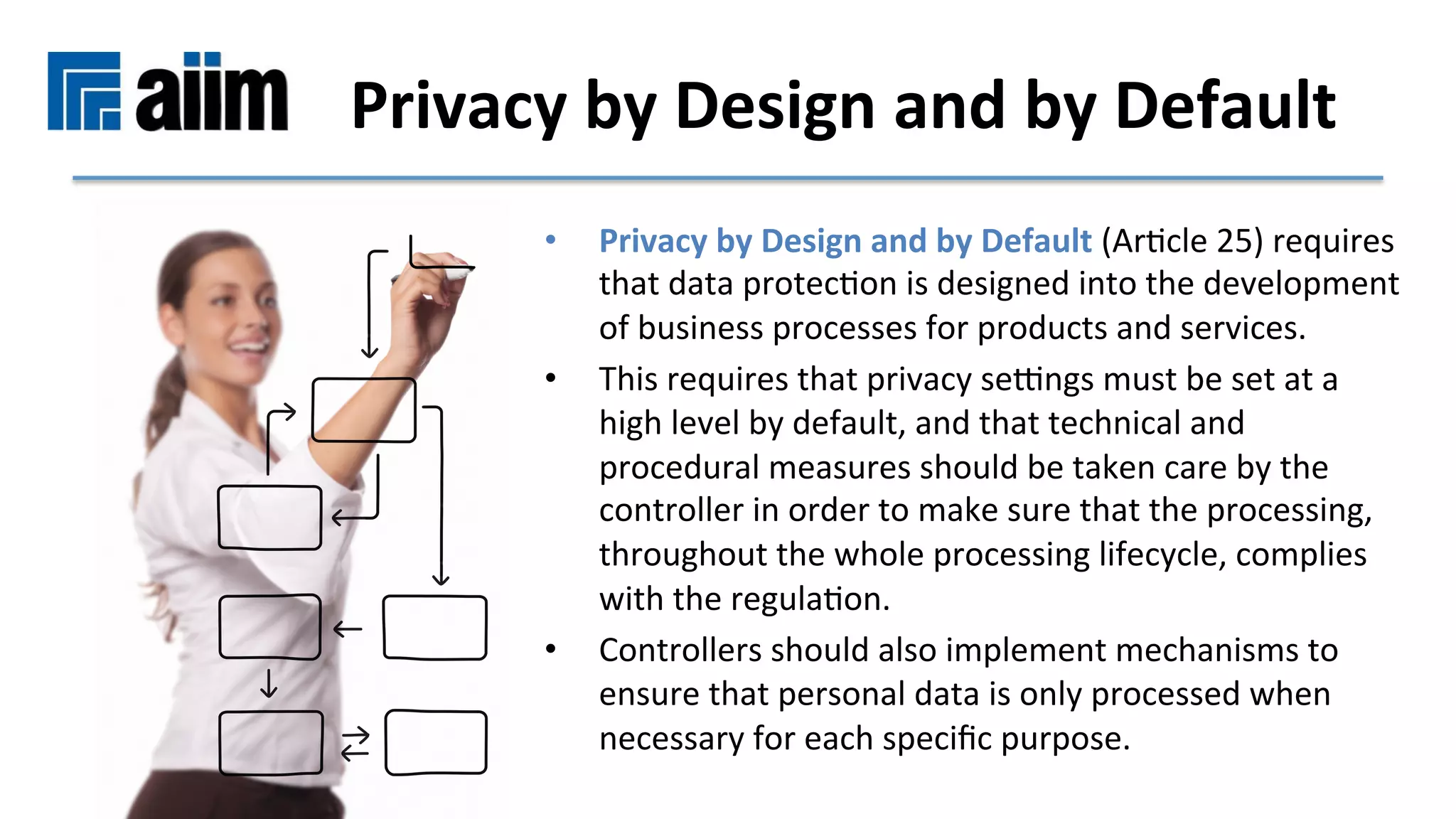
Responsibilities of data controllers regarding compliance, privacy by design, and impact assessments.
Requirements for valid consent under GDPR focusing on explicitness and parental consent for children.
Discussion on pseudonymization and its role in compliance, emphasizing security through encryption.
Rights of individuals to request the erasure of personal data under specific conditions.
Entitlements for individuals to transfer their data smoothly between different systems.
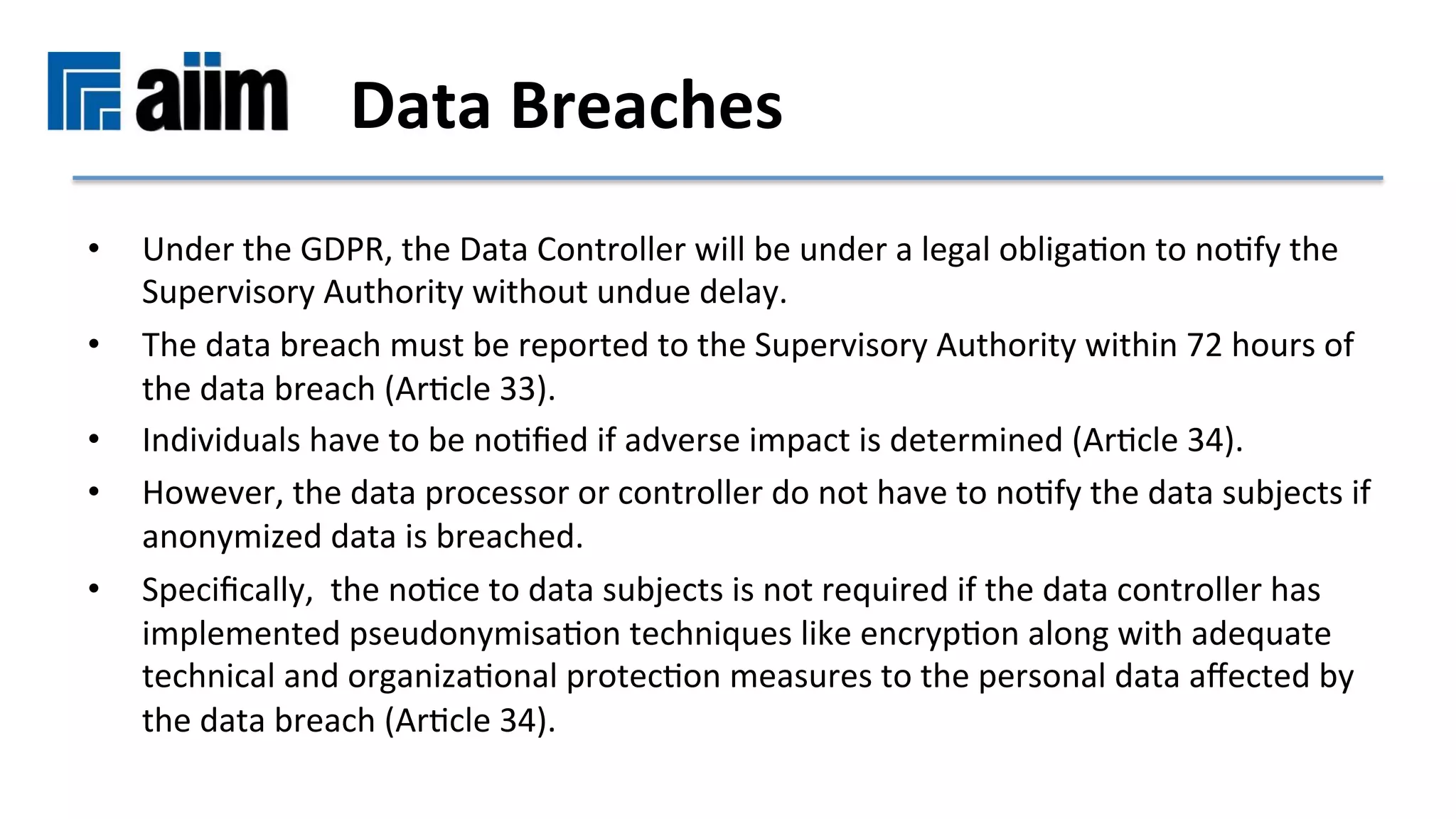
Obligations for data controllers to notify authorities and individuals in case of data breaches.
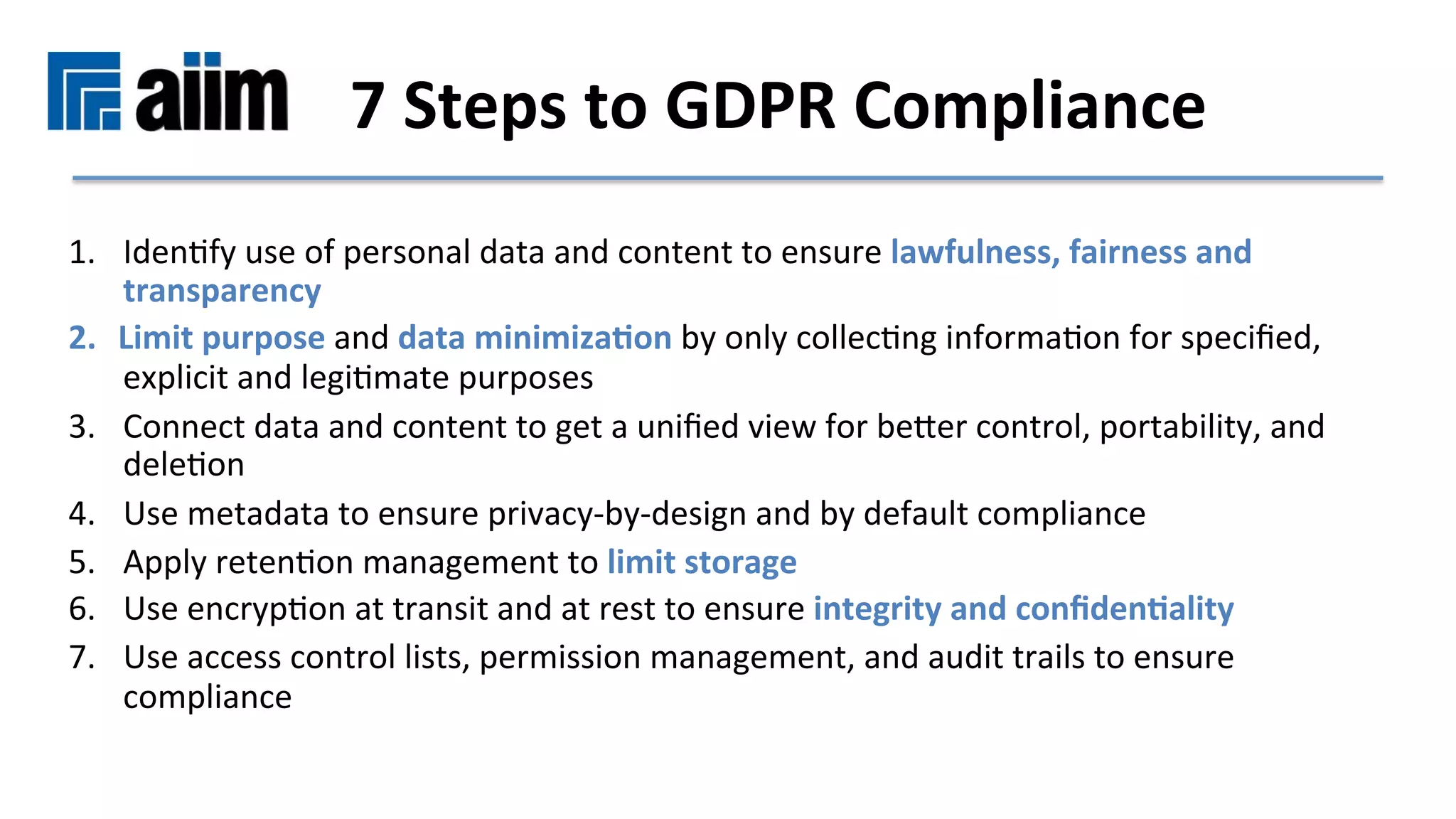
Seven outlined steps to achieve compliance with GDPR emphasizing key management practices.
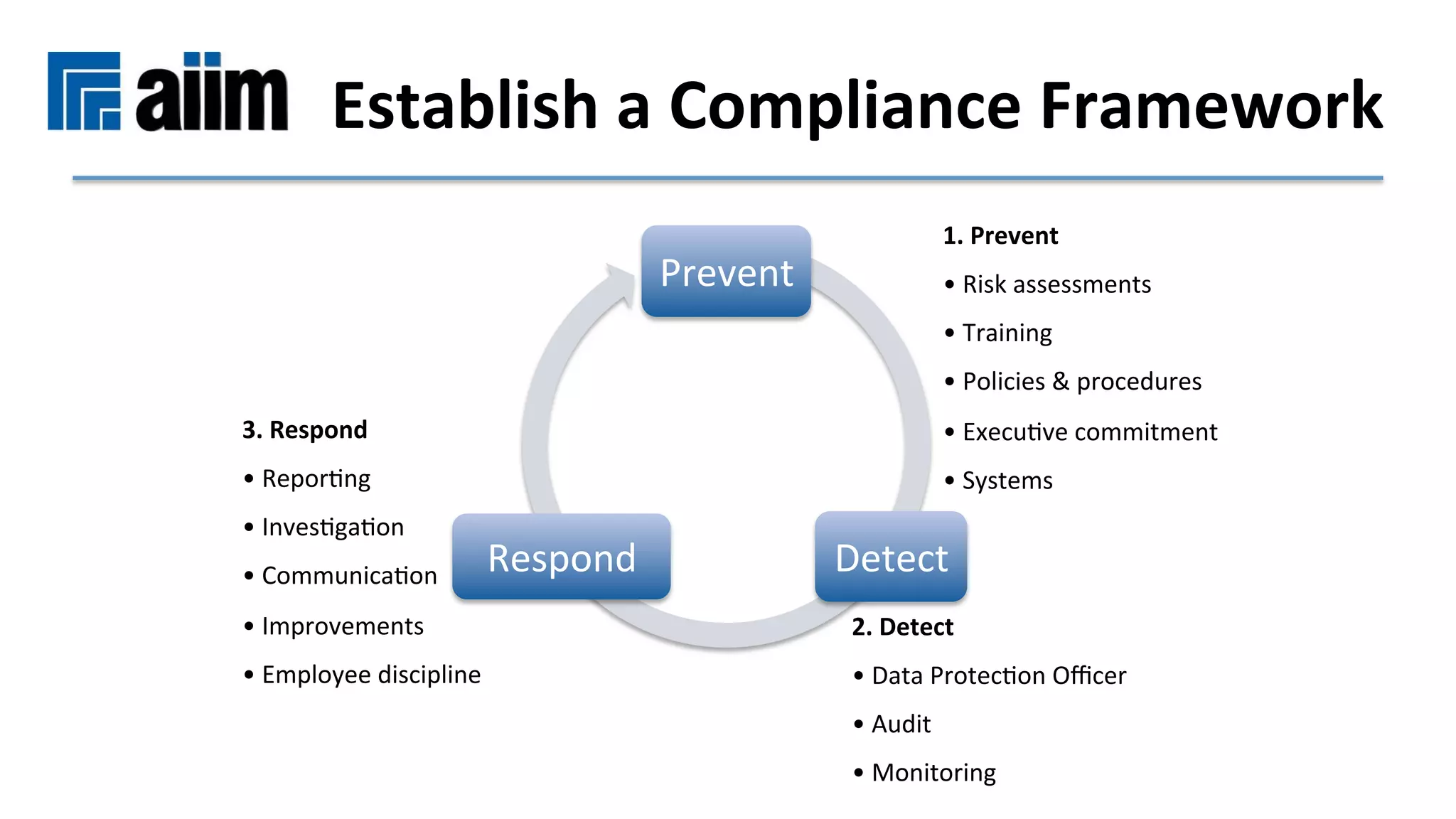
Framework to prevent, detect, and respond to data protection issues within organizations.
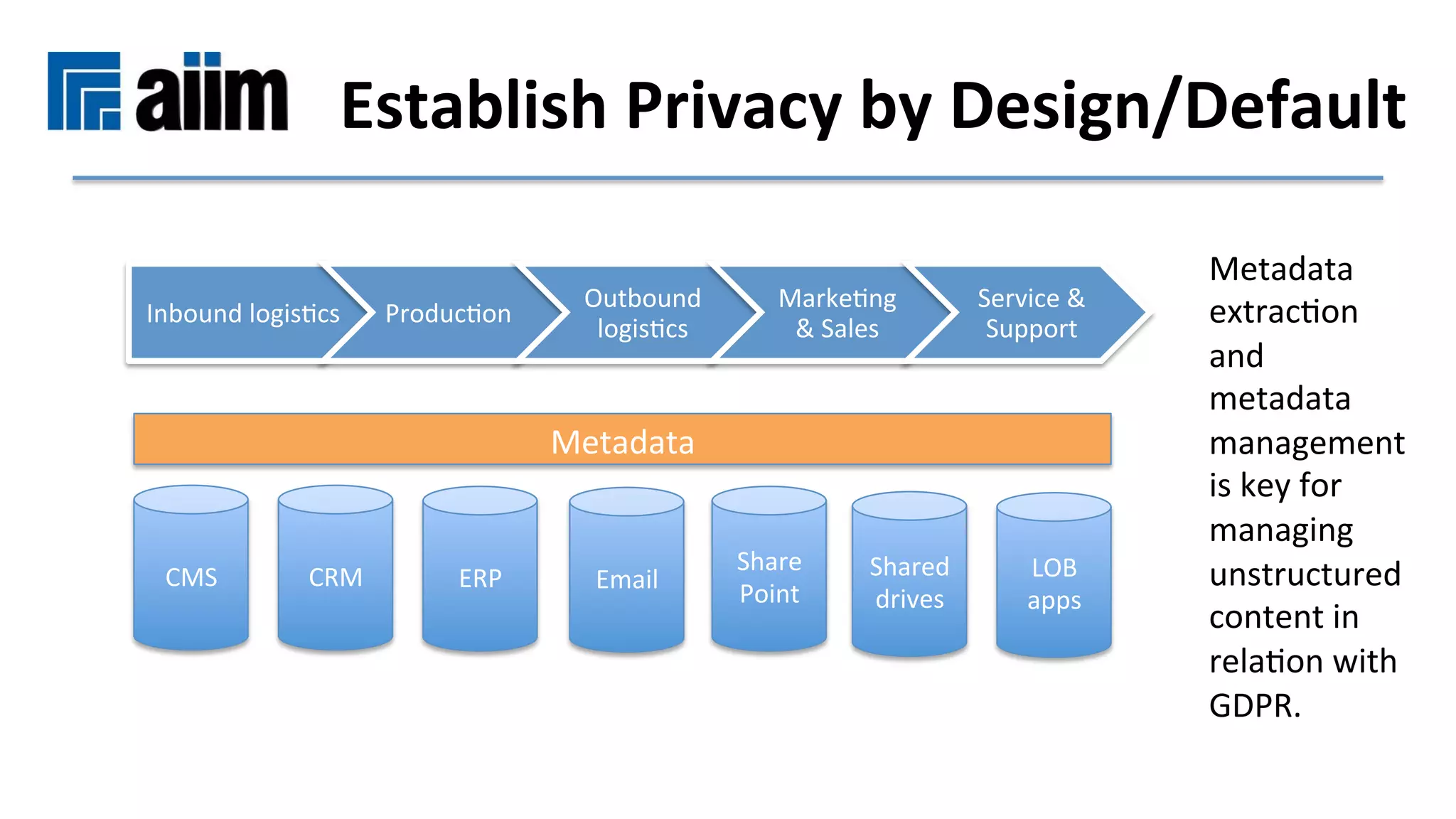
Importance of metadata management in compliance with GDPR across various systems.
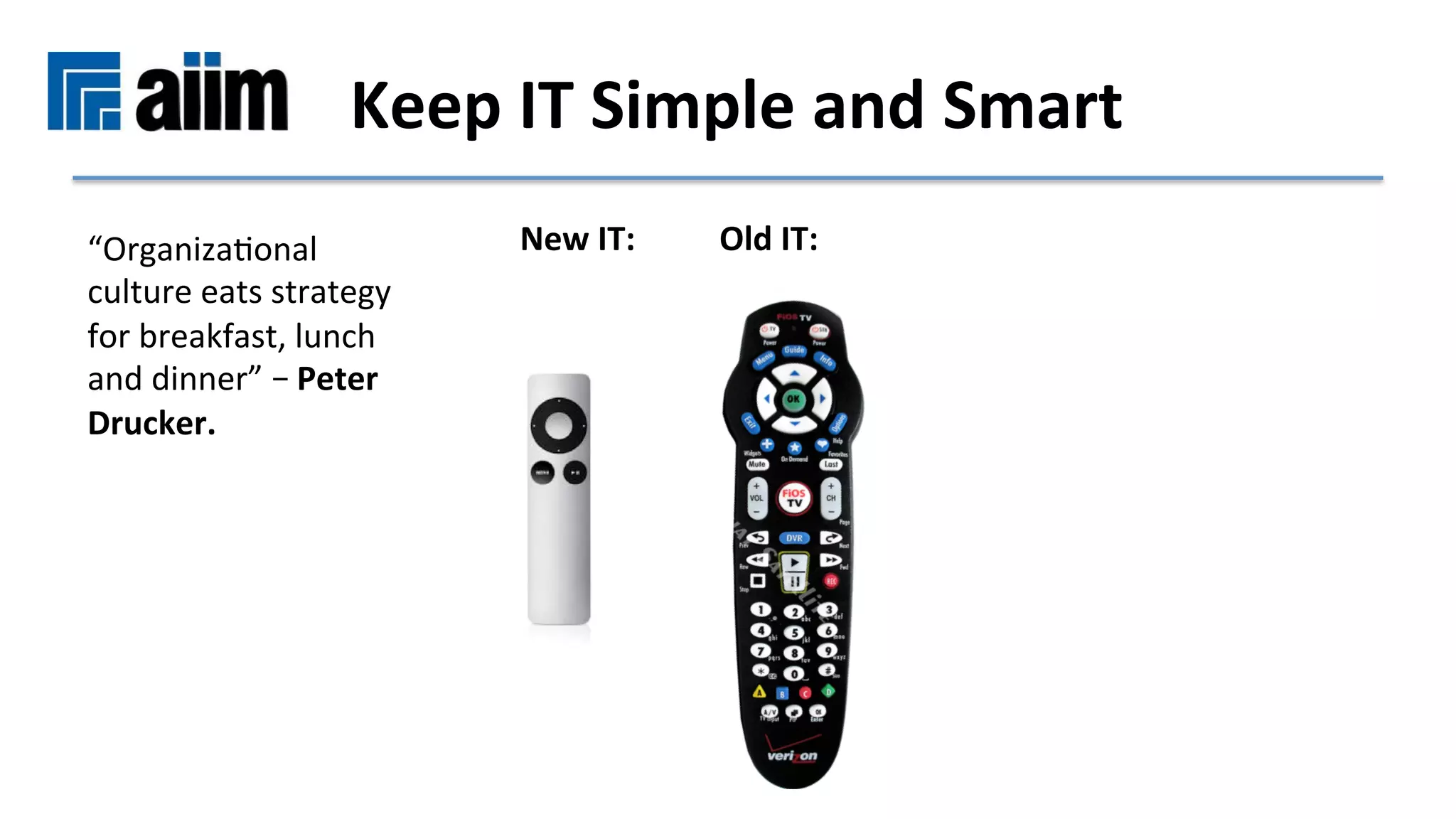
Emphasis on cultivating a practical and simplistic IT approach for effective GDPR compliance.


![[Webinar Slides] Maximizing Workforce Capacity - Proven Practices for Saving ...](https://cdn.slidesharecdn.com/ss_thumbnails/maximizingworkforcecapacityprovenpracticesforsavingtimemoneyandeffort-200528143451-thumbnail.jpg?width=640&height=640&fit=bounds)
![[Webinar Slides] When Your Current Systems No Longer Help You Do Your Job, It...](https://cdn.slidesharecdn.com/ss_thumbnails/whenyourcurrentsystemsnolongerhelpyoudoyourjobitstimeforarevolutioncom-200406135243-thumbnail.jpg?width=640&height=640&fit=bounds)
![[Webinar Slides] Information Access and Information Control: Two Cloud Conten...](https://cdn.slidesharecdn.com/ss_thumbnails/informationaccessandinformationcontrol-twocloudcontentmanagementsuccessstories-200326165820-thumbnail.jpg?width=640&height=640&fit=bounds)
![[Webinar Slides] Data Privacy for the IM Practitioner - Practical Advice for ...](https://cdn.slidesharecdn.com/ss_thumbnails/dataprivacyfortheimpractitioner-200227185912-thumbnail.jpg?width=640&height=640&fit=bounds)
![[Webinar Slides] New Approaches to Classification and Retention for Organizat...](https://cdn.slidesharecdn.com/ss_thumbnails/newapproachestoclassificationandretentionfororganizationalintelligence-200130155211-thumbnail.jpg?width=640&height=640&fit=bounds)
![[Webinar Slides] Driving Digital Change With O365 & Intelligent Information M...](https://cdn.slidesharecdn.com/ss_thumbnails/20191120-aiimwebinar-v6-191121181355-thumbnail.jpg?width=640&height=640&fit=bounds)
![[Webinar Slides] Working Faster and Smarter in a Digital Transforming World W...](https://cdn.slidesharecdn.com/ss_thumbnails/20191106-aiimwebinar-v2-191106204930-thumbnail.jpg?width=640&height=640&fit=bounds)
![[Webinar Slides] Using AI to Easily Automate All of Your Correspondence Channels](https://cdn.slidesharecdn.com/ss_thumbnails/20191009-aiimwebinar-v6-191010231303-thumbnail.jpg?width=640&height=640&fit=bounds)
![[Webinar Slides] Capture Leaders & Their Projects: We Asked, They Answered. D...](https://cdn.slidesharecdn.com/ss_thumbnails/20190424-slideshare-3-190429170112-thumbnail.jpg?width=640&height=640&fit=bounds)
![[Webinar Slides] eSignatures: Learn How This Technology Can Revolutionize You...](https://cdn.slidesharecdn.com/ss_thumbnails/20190213-aiimwebinar-v3-190214220024-thumbnail.jpg?width=640&height=640&fit=bounds)
![[Webinar Slides] Your 2019 Information Management Resolution: Part Two](https://cdn.slidesharecdn.com/ss_thumbnails/20181213-aiimwebinar-v3-181214192614-thumbnail.jpg?width=640&height=640&fit=bounds)
![[Webinar Slides] Data Explosion in Your Organization? Harness It with a Compr...](https://cdn.slidesharecdn.com/ss_thumbnails/20181010-aiimwebinar-v7-181025012246-thumbnail.jpg?width=640&height=640&fit=bounds)
![[Webinar Slides] It All Starts Here— Effectively Capturing Paper and Digital ...](https://cdn.slidesharecdn.com/ss_thumbnails/20180919-aiimwebinar-v6-180919220541-thumbnail.jpg?width=640&height=640&fit=bounds)
![[Webinar Slides] Improving your Organization’s Collaborative and Case-Centric...](https://cdn.slidesharecdn.com/ss_thumbnails/20180607-aiimwebinar-v5slideshare-180607151715-thumbnail.jpg?width=640&height=640&fit=bounds)
![[Webinar Slides] Modern Problems Require Modern Solutions](https://cdn.slidesharecdn.com/ss_thumbnails/20180606-aiimwebinar-v3pdf-180607023225-thumbnail.jpg?width=640&height=640&fit=bounds)
![[Webinar Slides] Dreading Your Data Migration Project? 3 Ways Robotic Process...](https://cdn.slidesharecdn.com/ss_thumbnails/20180510-aiimwebinar-v6-180514164150-thumbnail.jpg?width=640&height=640&fit=bounds)
![[AIIM18] Beyond Human Capacity: Using analytics to scale your everyday inform...](https://cdn.slidesharecdn.com/ss_thumbnails/auto-classificationstevenclark-180427055725-thumbnail.jpg?width=640&height=640&fit=bounds)


