Greening Development:
   Rio+ 20 and beyond
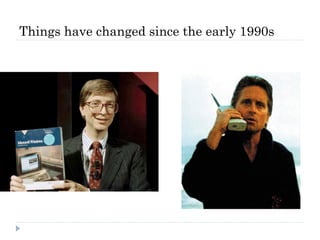
Things have changed since the early 1990s
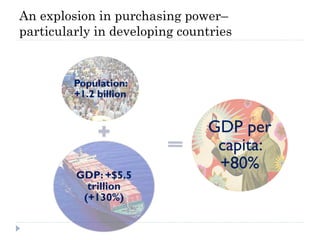
An explosion in purchasing power–
particularly in developing countries


         Population:
         +1.2 billion


                               GDP per
                                capita:
                                +80%
         GDP: +$5.5
           trillion
          (+130%)
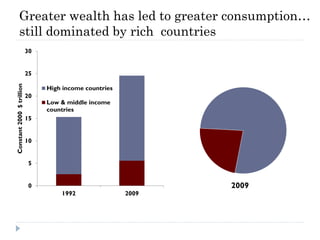
Greater wealth has led to greater consumption…
         still dominated by rich countries
                           30


                           25
Constant 2000 $ trillion


                                High income countries
                           20
                                Low & middle income
                                countries
                           15


                           10


                            5


                            0                                  2009
                                    1992                2009
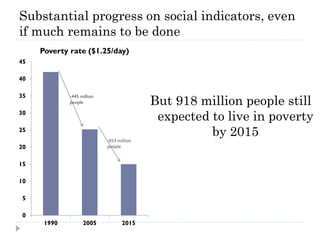
Substantial progress on social indicators, even
if much remains to be done
     Poverty rate ($1.25/day)
45

40

35
                                           But 918 million people still
             -445 million
             people

30
                                            expected to live in poverty
25
                            -453 million
                                                     by 2015
20                          people


15

10

 5

 0
      1990         2005            2015
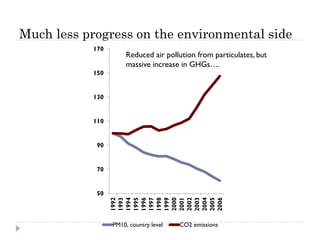
Much less progress on the environmental side
           170
                      Reduced air pollution from particulates, but
                      massive increase in GHGs….
           150


           130


           110


            90


            70


            50
                 1993
                 1994
                 1992


                 1995
                 1996
                 1997
                 1998
                 1999
                 2000
                 2001
                 2002
                 2003
                 2004
                 2005
                 2006
                 PM10, country level   CO2 emissions
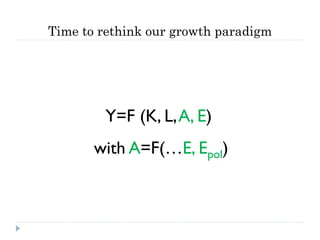
Time to rethink our growth paradigm


        Y=F (K, L, A, E)
       with A=F(…E, Epol)
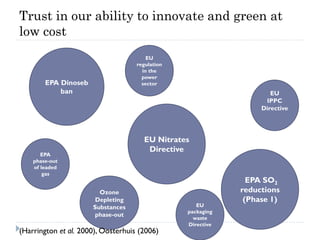
Trust in our ability to innovate and green at
low cost
                                        EU
                                    regulation
                                      in the
                                      power
        EPA Dinoseb                   sector
            ban                                                      EU
                                                                   IPPC
                                                                  Directive


                                      EU Nitrates
                                       Directive
       EPA
    phase-out
    of leaded
        gas
                                                               EPA SO2
                        Ozone                                reductions
                       Depleting                              (Phase 1)
                      Substances                    EU
                                                 packaging
                       phase-out
                                                   waste
                                                 Directive
(Harrington et al. 2000), Oosterhuis (2006)
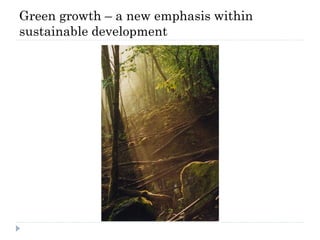
Green growth – a new emphasis within
sustainable development
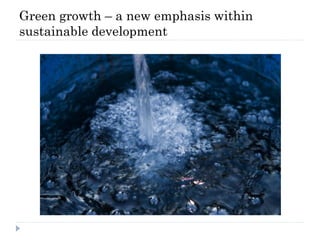
Green growth – a new emphasis within
sustainable development
Why might
this work now?
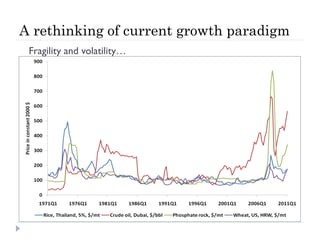
A rethinking of current growth paradigm
 Fragility and volatility…
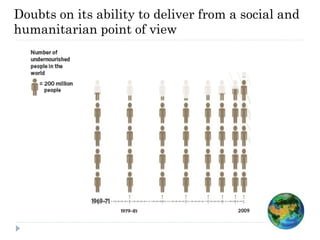
Doubts on its ability to deliver from a social and
humanitarian point of view


                               20
              36
       64                             80
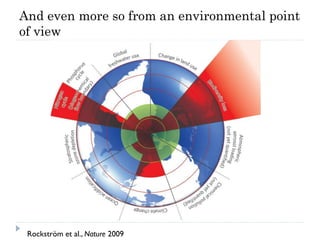
And even more so from an environmental point
of view


 Rockström et al., Nature 2009
How to make
 it happen?
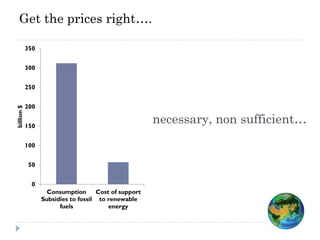
Get the prices right….

            350


            300


            250


            200
billion $


            150
                                                     necessary, non sufficient…
            100


            50


             0
                    Consumption Cost of support
                  Subsidies to fossil to renewable
                        fuels            energy
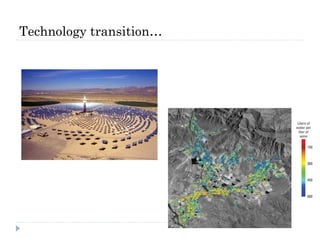
Technology transition…
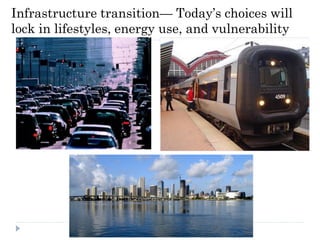
Infrastructure transition— Today’s choices will
lock in lifestyles, energy use, and vulnerability
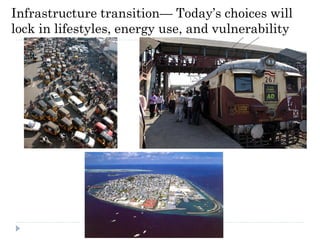
Infrastructure transition— Today’s choices will
lock in lifestyles, energy use, and vulnerability
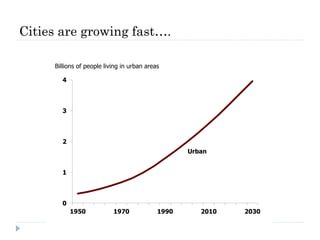
Cities are growing fast….

     Billions of people living in urban areas

       4


       3


       2
                                                   Urban


       1


       0
           1950            1970             1990      2010   2030
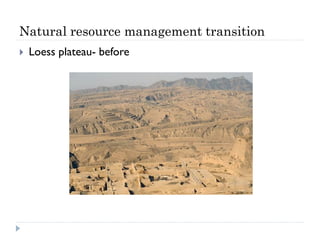
Natural resource management transition
   Loess plateau- before
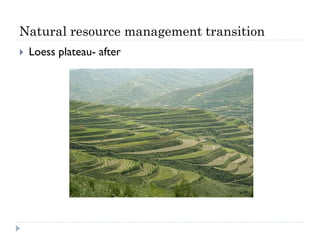
Natural resource management transition
   Loess plateau- after
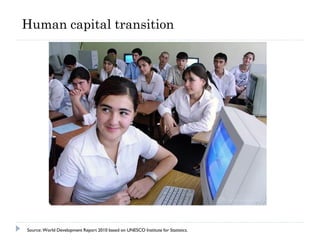
Human capital transition


Source: World Development Report 2010 based on UNESCO Institute for Statistics.
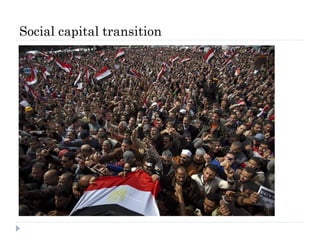
Social capital transition
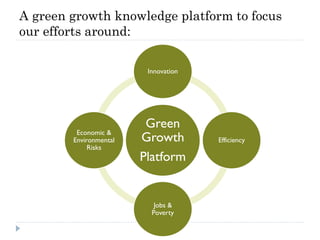
A green growth knowledge platform to focus
our efforts around:

                         Innovation


                         Green
         Economic &
        Environmental   Growth        Efficiency
             Risks
                        Platform


                           Jobs &
                          Poverty

Greening Development: Inger Andersen, 7 March 2011

  • 1.
    Greening Development: Rio+ 20 and beyond
  • 2.
    Things have changedsince the early 1990s
  • 3.
    An explosion inpurchasing power– particularly in developing countries Population: +1.2 billion GDP per capita: +80% GDP: +$5.5 trillion (+130%)
  • 4.
    Greater wealth hasled to greater consumption… still dominated by rich countries 30 25 Constant 2000 $ trillion High income countries 20 Low & middle income countries 15 10 5 0 2009 1992 2009
  • 5.
    Substantial progress onsocial indicators, even if much remains to be done Poverty rate ($1.25/day) 45 40 35 But 918 million people still -445 million people 30 expected to live in poverty 25 -453 million by 2015 20 people 15 10 5 0 1990 2005 2015
  • 6.
    Much less progresson the environmental side 170 Reduced air pollution from particulates, but massive increase in GHGs…. 150 130 110 90 70 50 1993 1994 1992 1995 1996 1997 1998 1999 2000 2001 2002 2003 2004 2005 2006 PM10, country level CO2 emissions
  • 7.
    Time to rethinkour growth paradigm Y=F (K, L, A, E) with A=F(…E, Epol)
  • 8.
    Trust in ourability to innovate and green at low cost EU regulation in the power EPA Dinoseb sector ban EU IPPC Directive EU Nitrates Directive EPA phase-out of leaded gas EPA SO2 Ozone reductions Depleting (Phase 1) Substances EU packaging phase-out waste Directive (Harrington et al. 2000), Oosterhuis (2006)
  • 9.
    Green growth –a new emphasis within sustainable development
  • 10.
    Green growth –a new emphasis within sustainable development
  • 11.
  • 12.
    A rethinking ofcurrent growth paradigm Fragility and volatility…
  • 13.
    Doubts on itsability to deliver from a social and humanitarian point of view 20 36 64 80
  • 14.
    And even moreso from an environmental point of view Rockström et al., Nature 2009
  • 15.
    How to make it happen?
  • 16.
    Get the pricesright…. 350 300 250 200 billion $ 150 necessary, non sufficient… 100 50 0 Consumption Cost of support Subsidies to fossil to renewable fuels energy
  • 17.
  • 18.
    Infrastructure transition— Today’schoices will lock in lifestyles, energy use, and vulnerability
  • 19.
    Infrastructure transition— Today’schoices will lock in lifestyles, energy use, and vulnerability
  • 20.
    Cities are growingfast…. Billions of people living in urban areas 4 3 2 Urban 1 0 1950 1970 1990 2010 2030
  • 21.
    Natural resource managementtransition  Loess plateau- before
  • 22.
    Natural resource managementtransition  Loess plateau- after
  • 23.
    Human capital transition Source:World Development Report 2010 based on UNESCO Institute for Statistics.
  • 24.
  • 25.
    A green growthknowledge platform to focus our efforts around: Innovation Green Economic & Environmental Growth Efficiency Risks Platform Jobs & Poverty