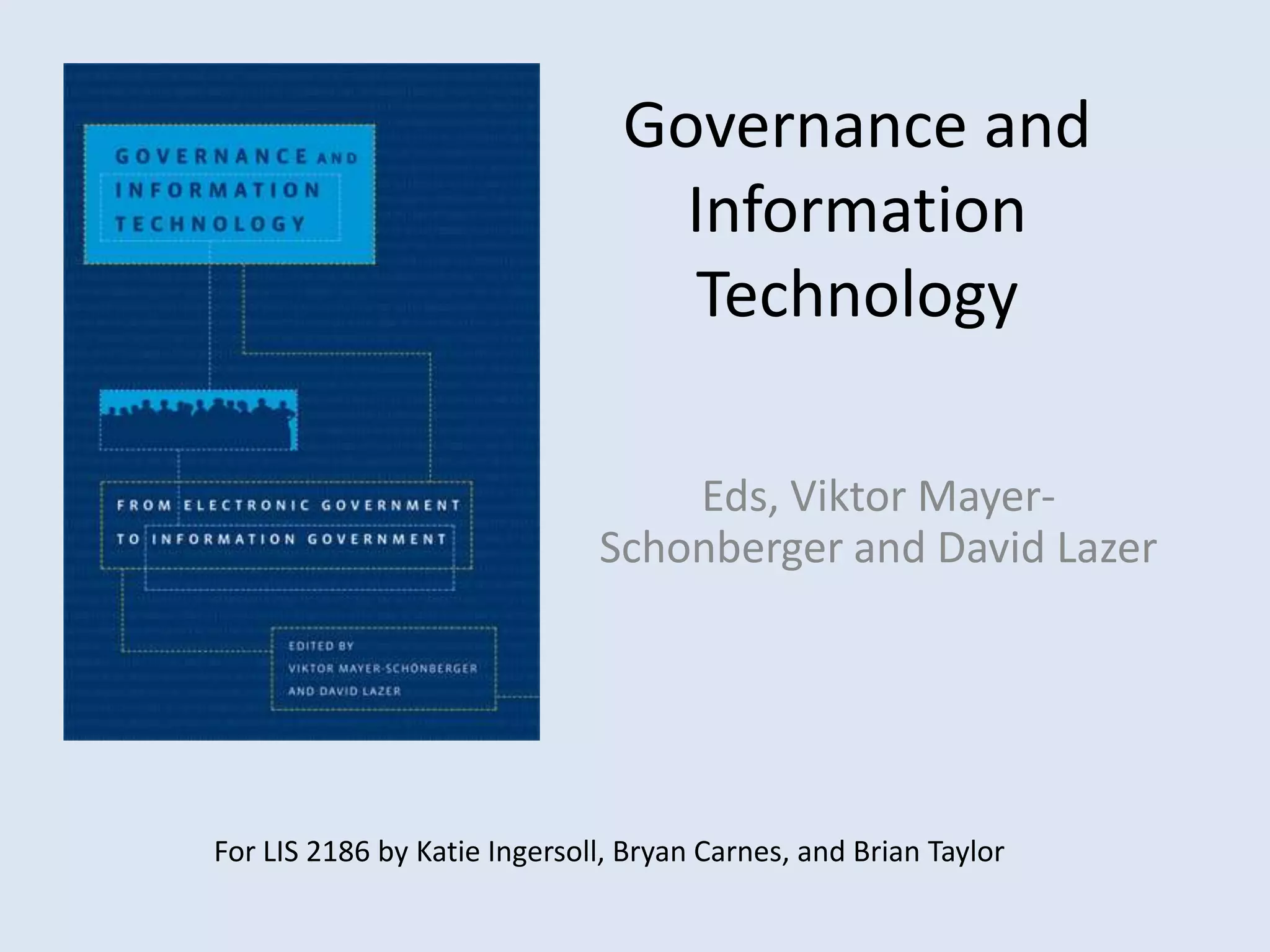
Governance and Information Technology Eds, Viktor Mayer-Schonbergerand David LazerFor LIS 2186 by Katie Ingersoll, Bryan Carnes, and Brian Taylor
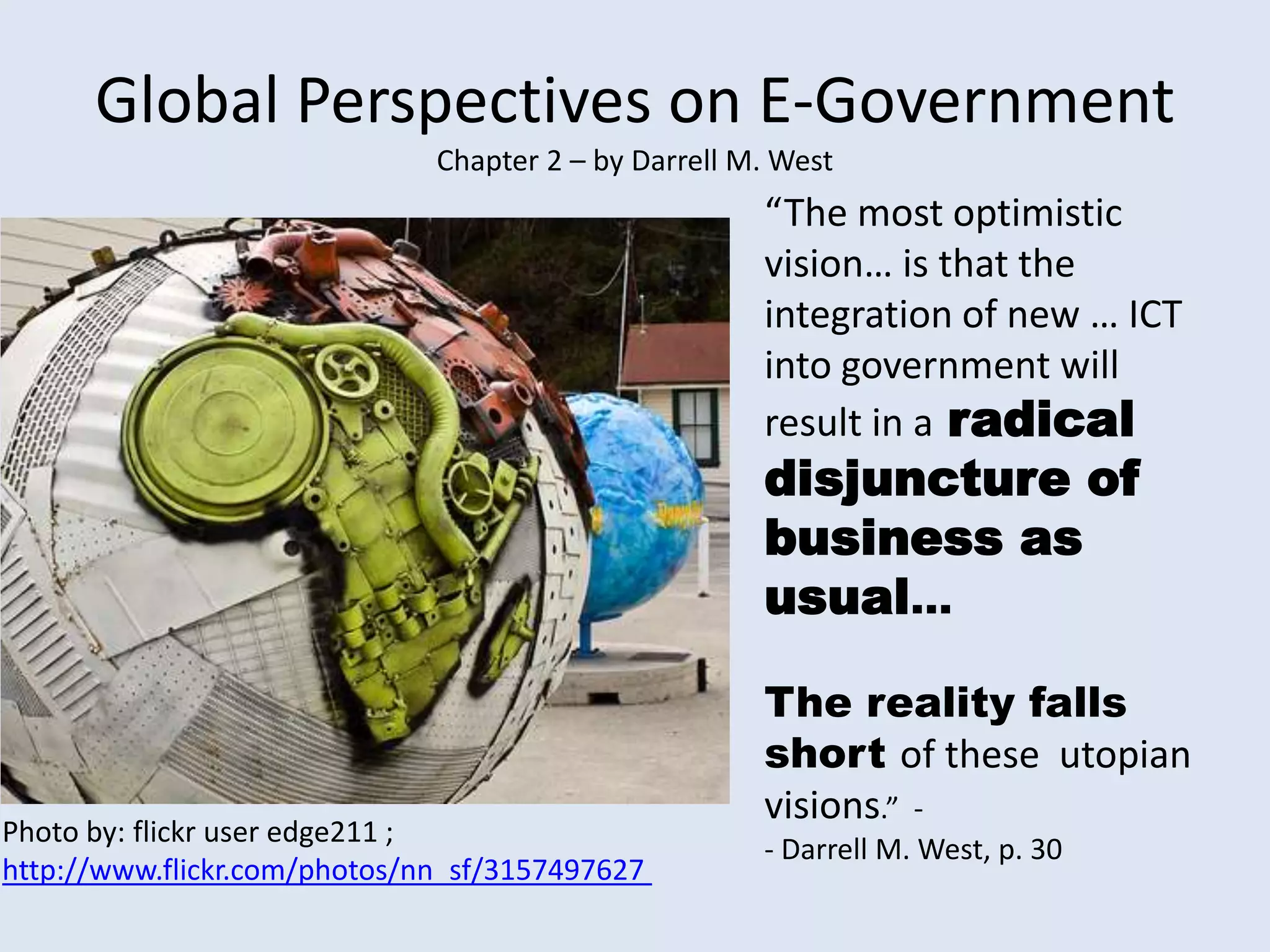
Global Perspectives on E-Government Chapter 2 – by Darrell M. West“The most optimistic vision… is that the integration of new … ICT into governmentwill result in aradical disjuncture of business as usual…The reality falls short of these  utopian visions.”  -- Darrell M. West, p. 30Photo by: flickr user edge211 ; http://www.flickr.com/photos/nn_sf/3157497627
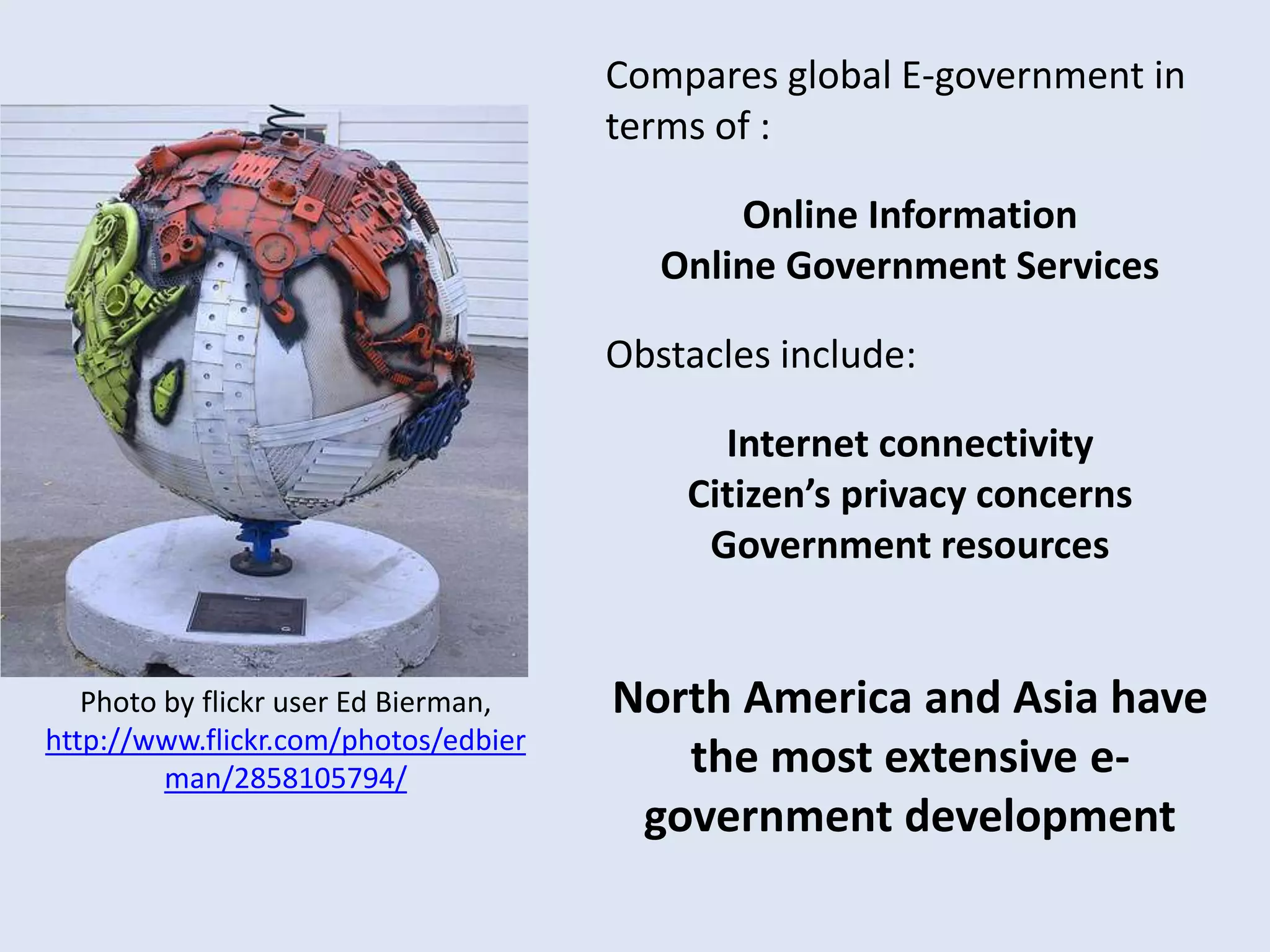
Compares global E-government in terms of : Online InformationOnline Government ServicesObstacles include: Internet connectivityCitizen’s privacy concernsGovernment resourcesNorth America and Asia have the most extensive e-government developmentPhoto by flickr user Ed Bierman, http://www.flickr.com/photos/edbierman/2858105794/
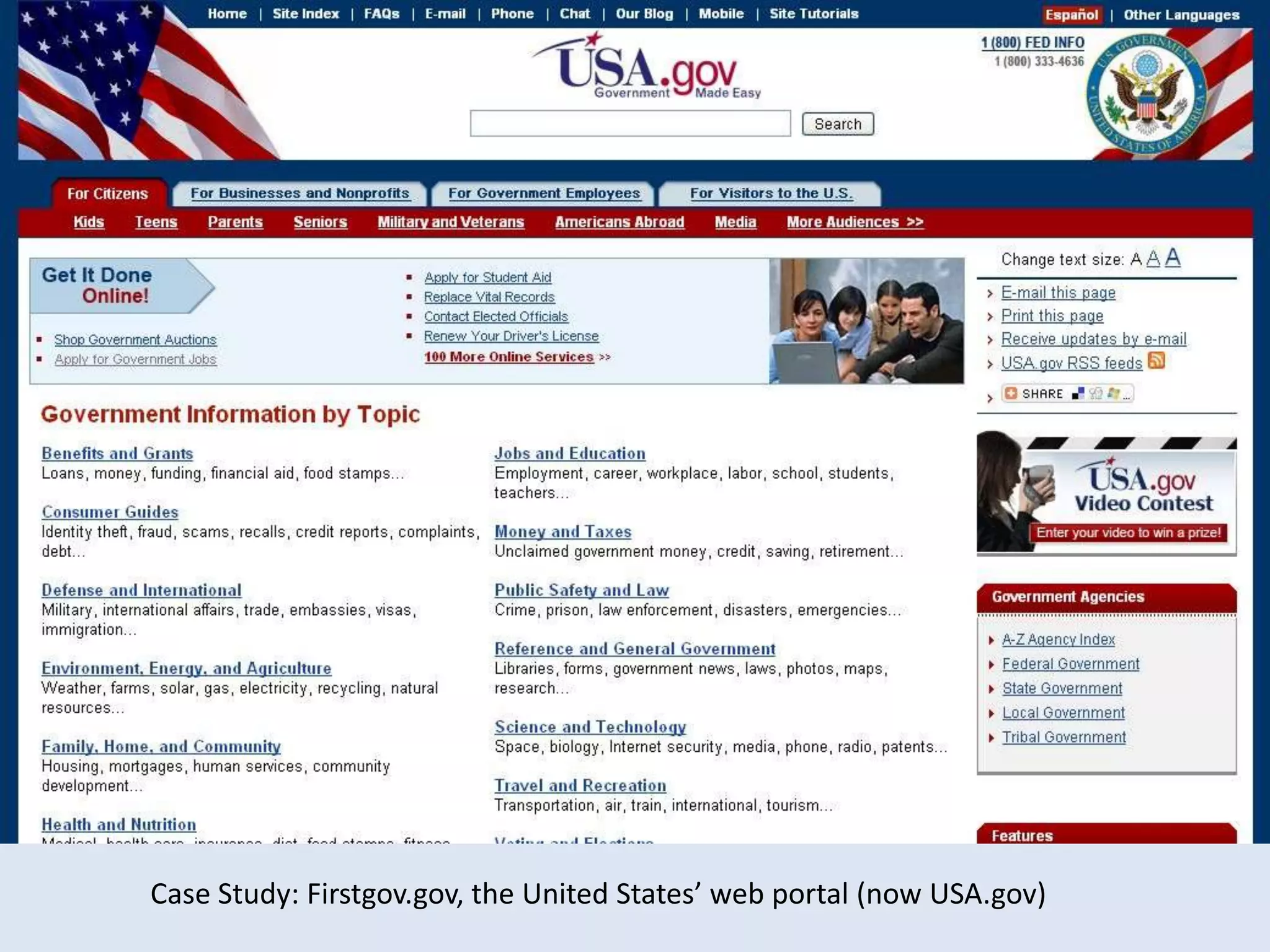
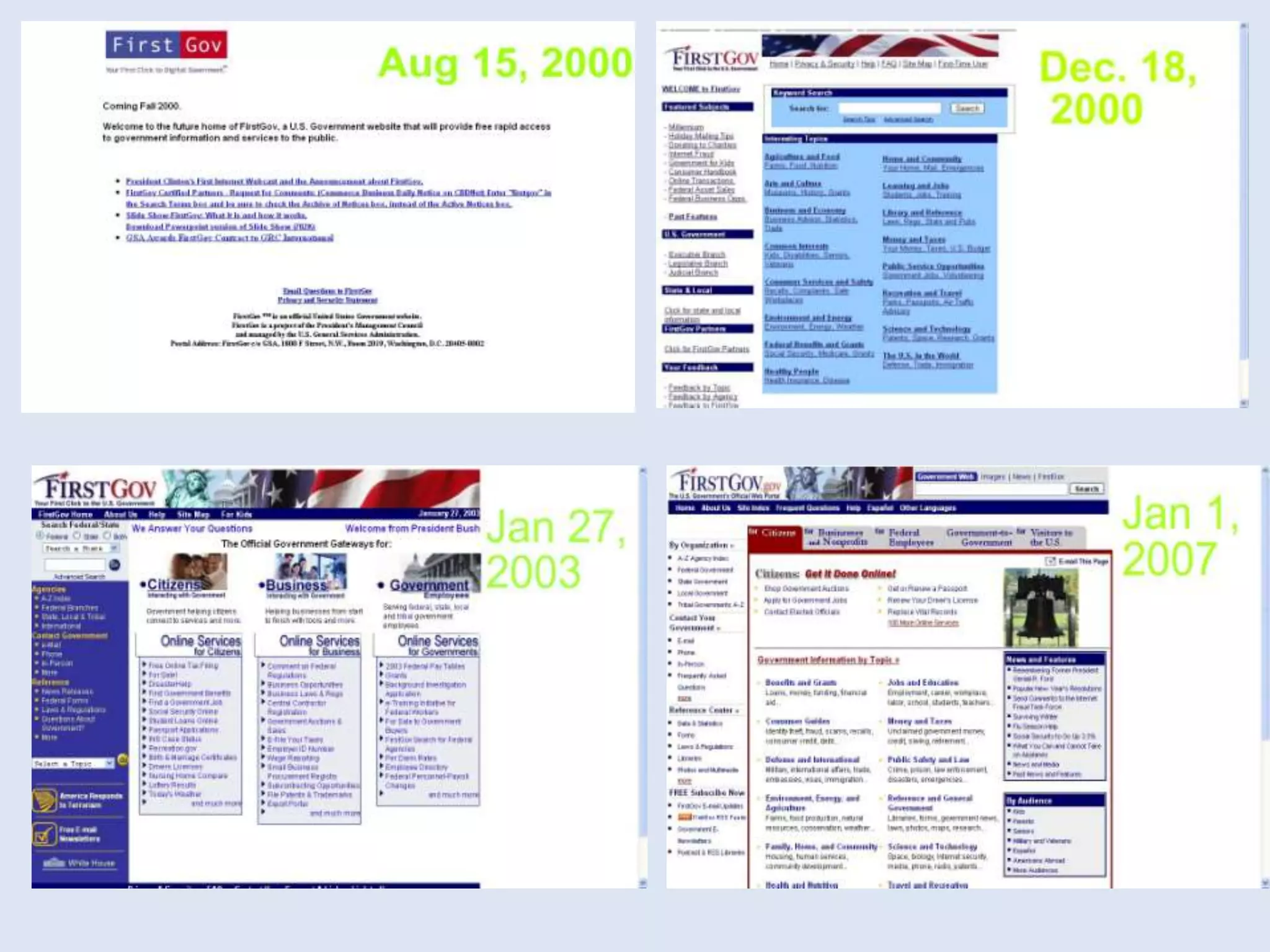
Case Study: Firstgov.gov, the United States’ web portal (now USA.gov)
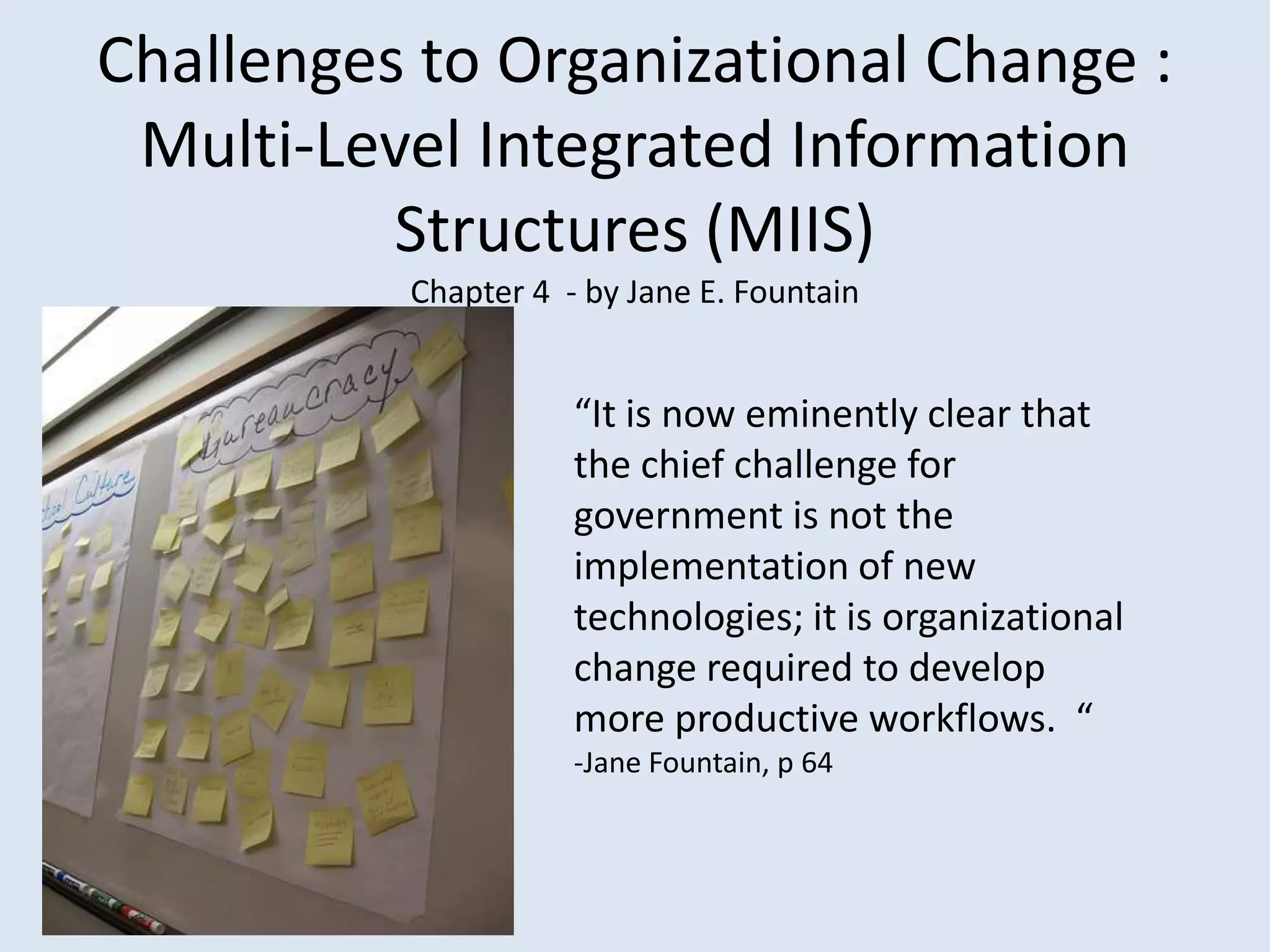
Challenges to Organizational Change : Multi-Level Integrated Information Structures (MIIS) Chapter 4  - by Jane E. Fountain“It is now eminently clear that the chief challenge for government is not the implementation of new technologies; it is organizational change required to develop more productive workflows.  “-Jane Fountain, p 64
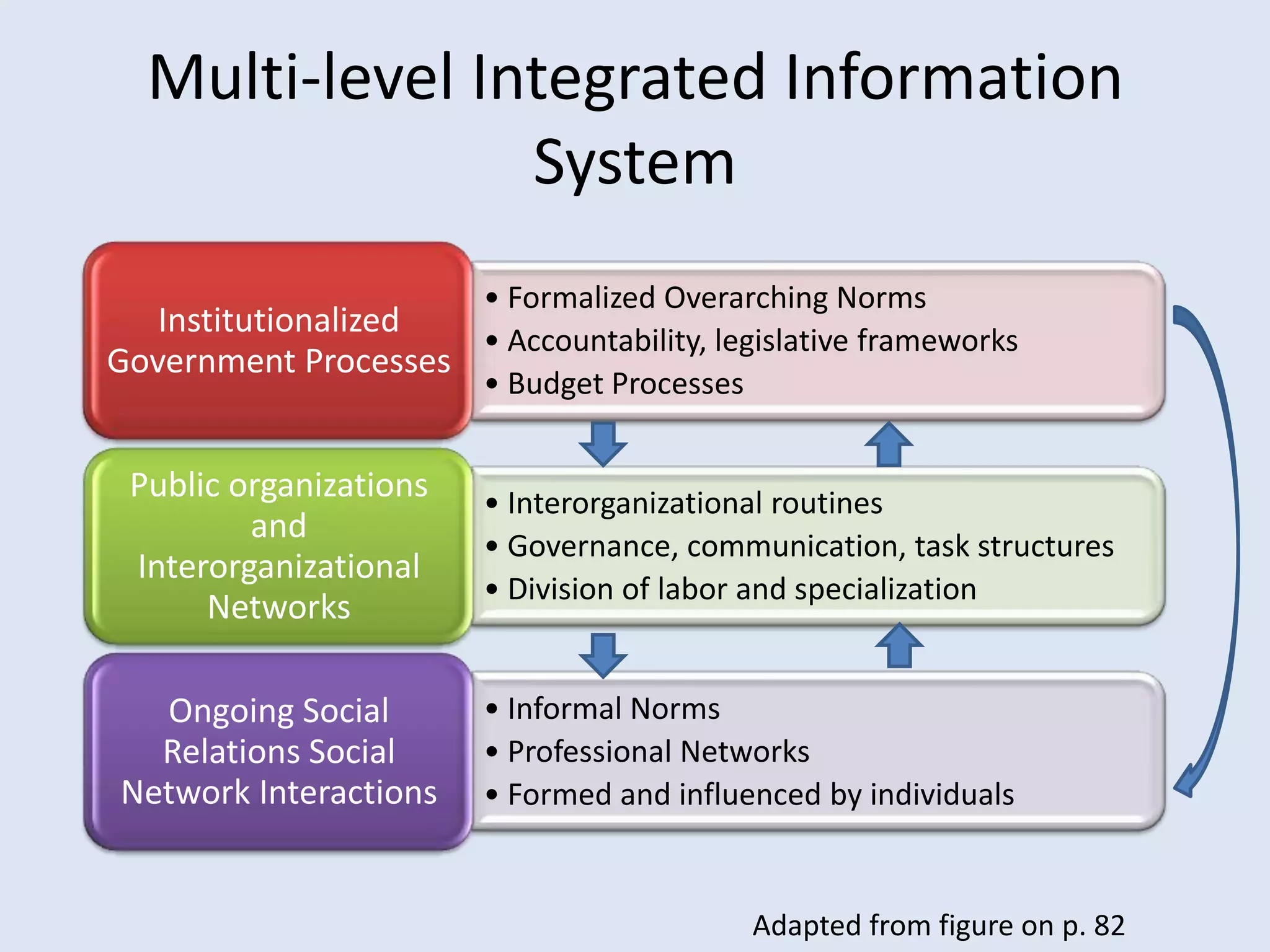
Multi-level Integrated Information System Adapted from figure on p. 82
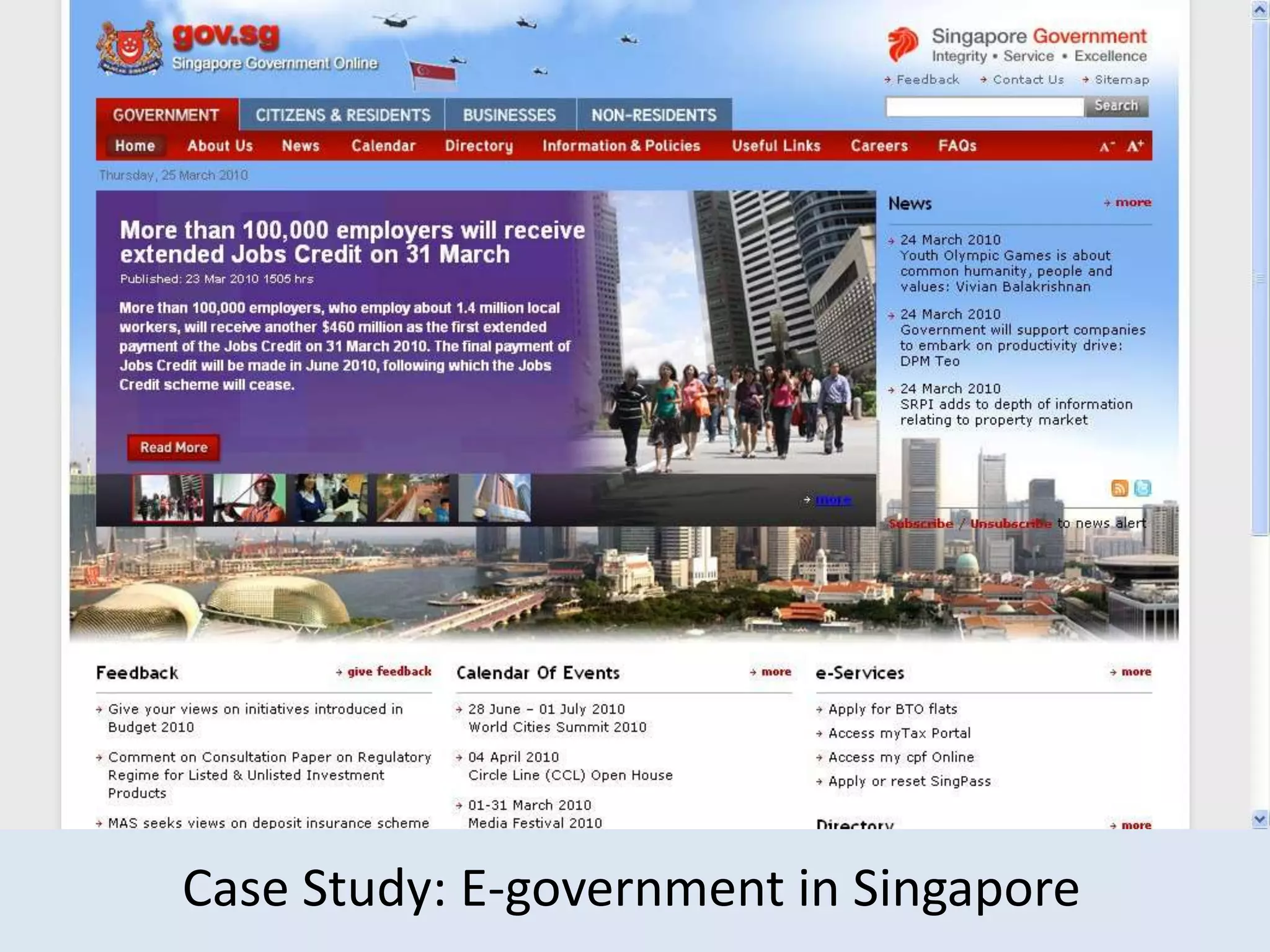
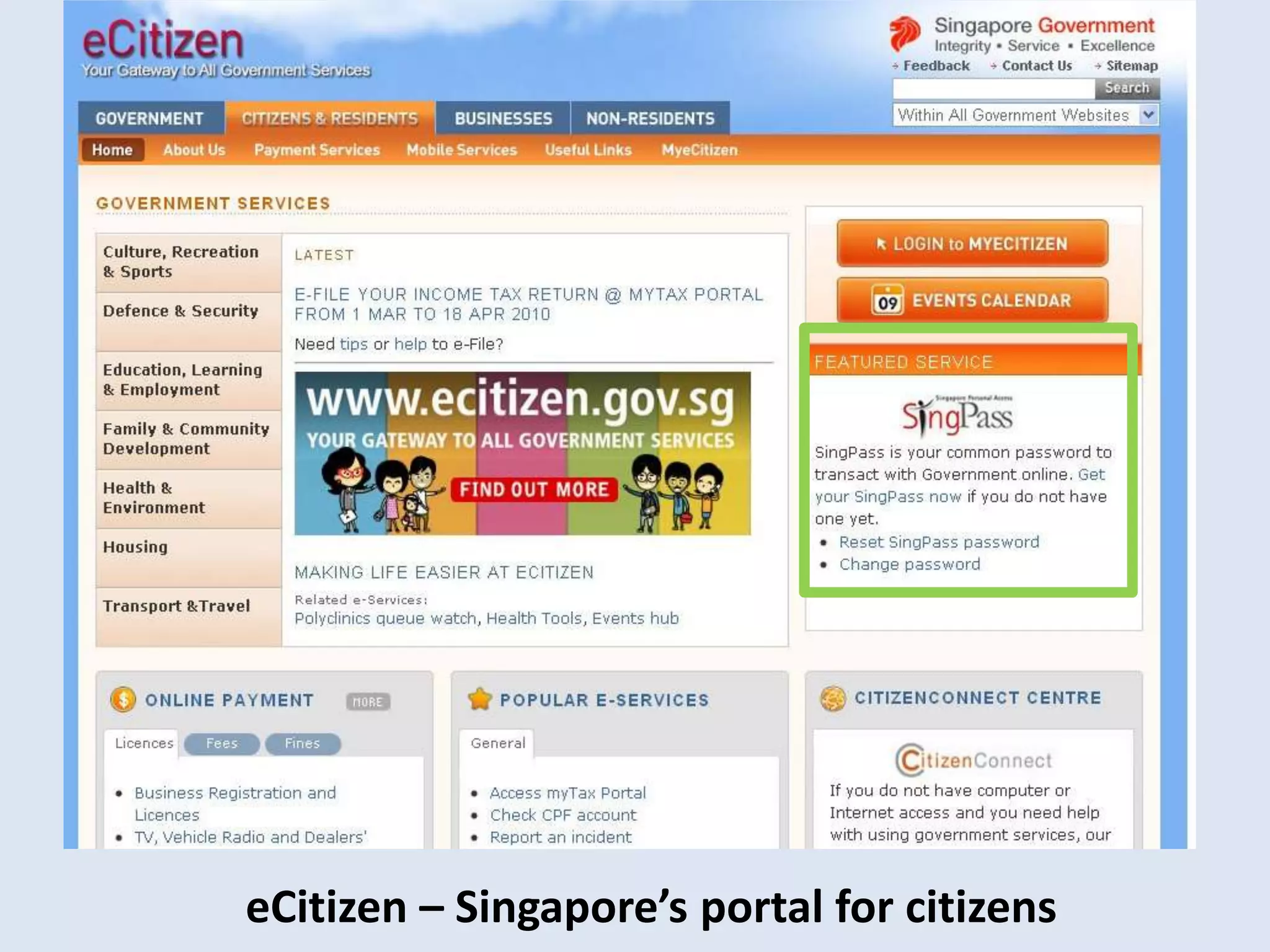
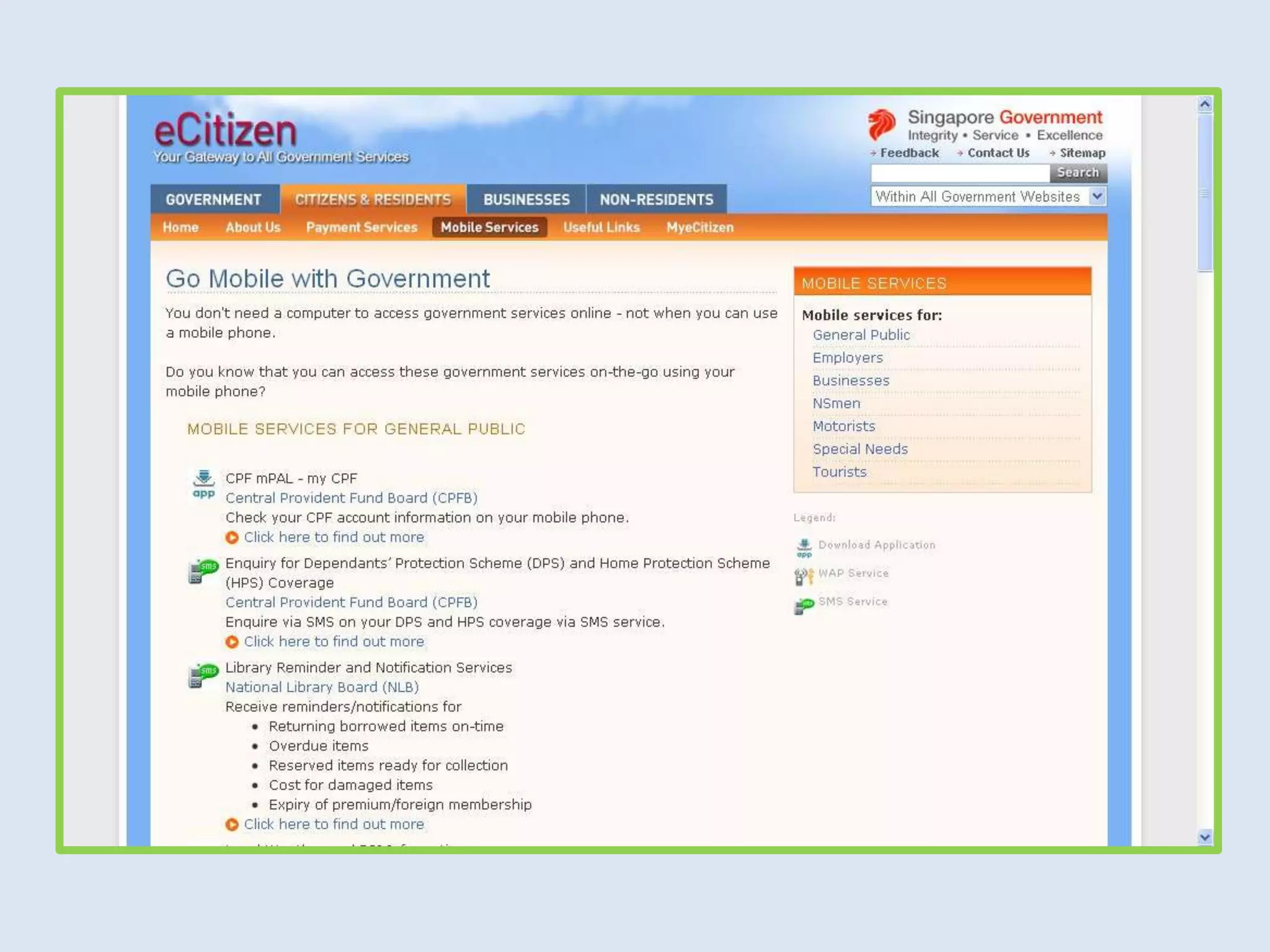
Case Study: E-government in Singapore
eCitizen– Singapore’s portal for citizens
Weak Democracy Strong Information: The Role of Information Technology in the Rulemaking ProcessChapter 5  - by Cary CoglianeseDirect strategies to Legitimize rulemaking by unelected bodies:Strong DemocracyInterest Group PluralismPhoto by Flickr user pasukaru76 http://www.flickr.com/photos/pasukaru76/3629601725/Technology is more likely to bring about pluralism than true strong democracy
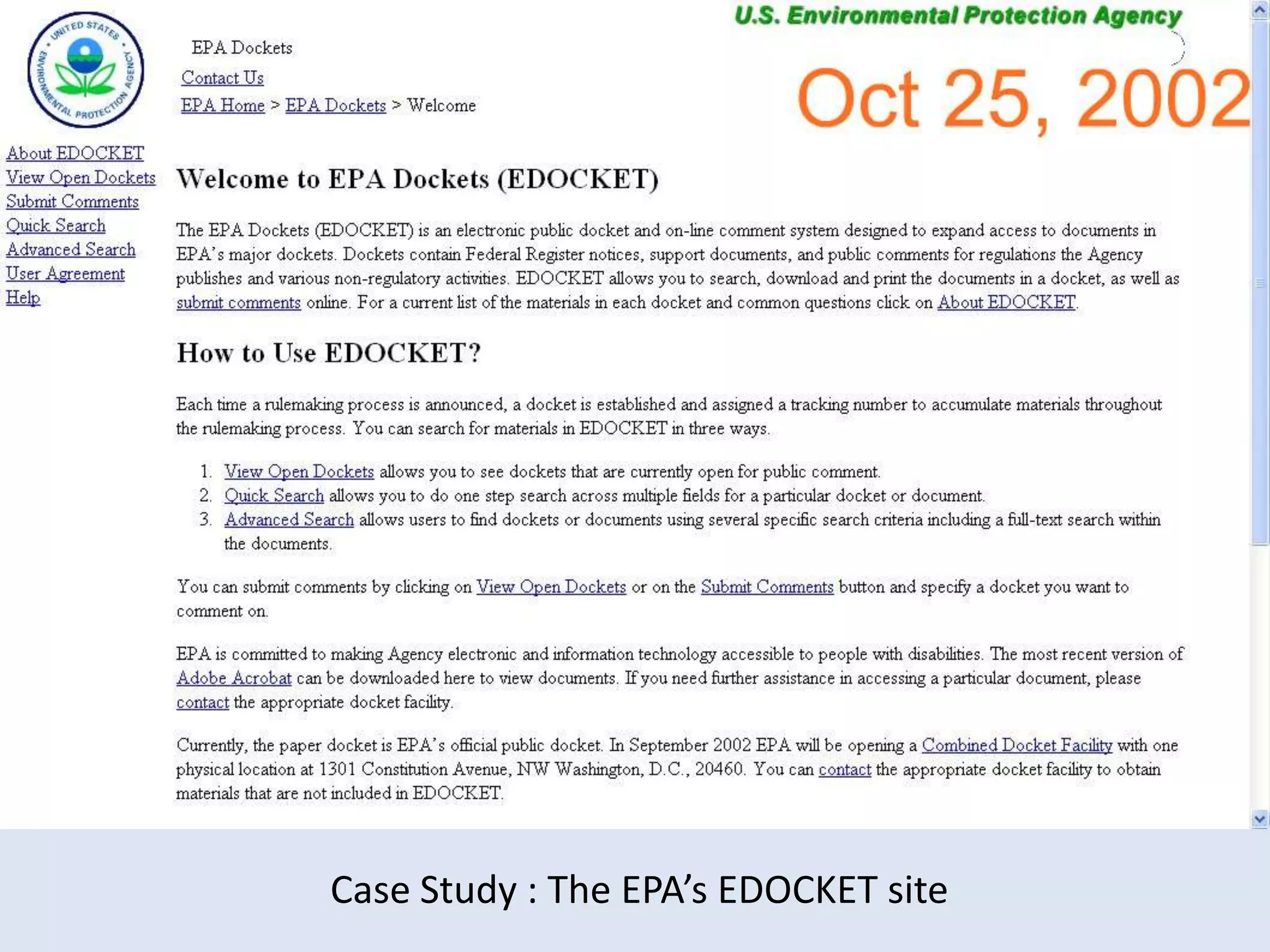
Case Study : The EPA’s EDOCKET site
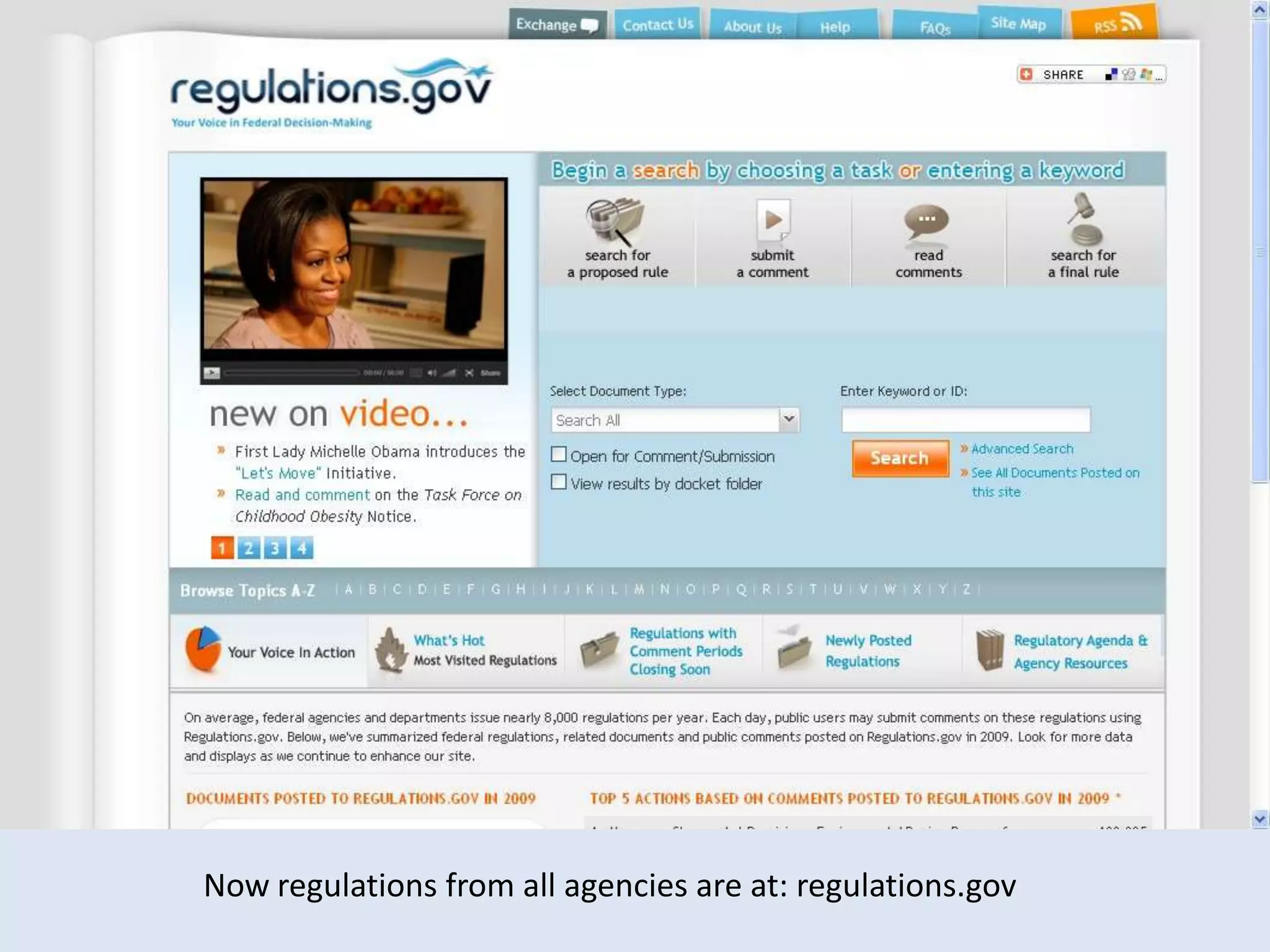
Now regulations from all agencies are at: regulations.gov
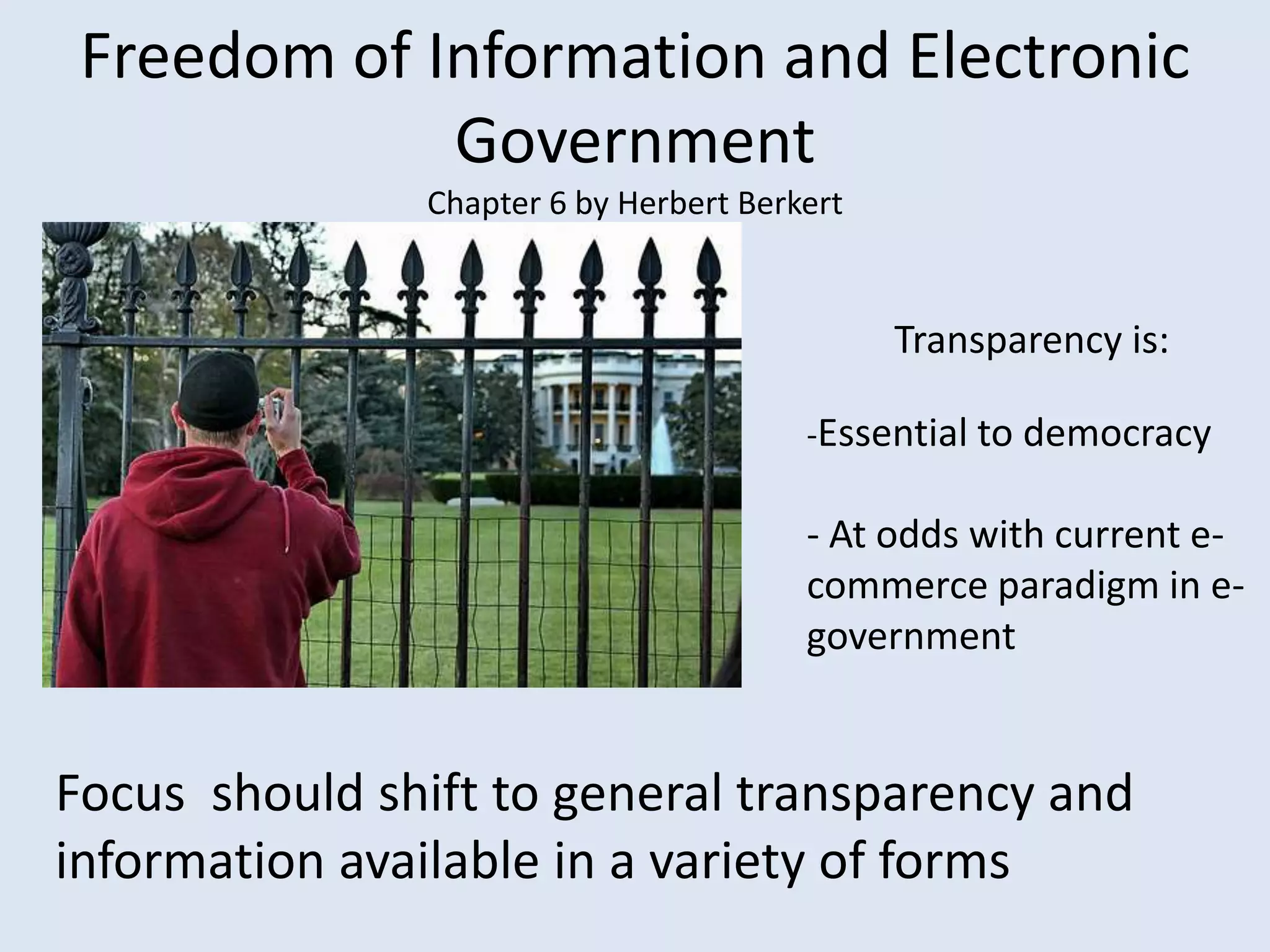
Freedom of Information and Electronic Government Chapter 6 by Herbert BerkertTransparency is: -Essential to democracy- At odds with current e-commerce paradigm in e-governmentFocus  should shift to general transparency and information available in a variety of forms
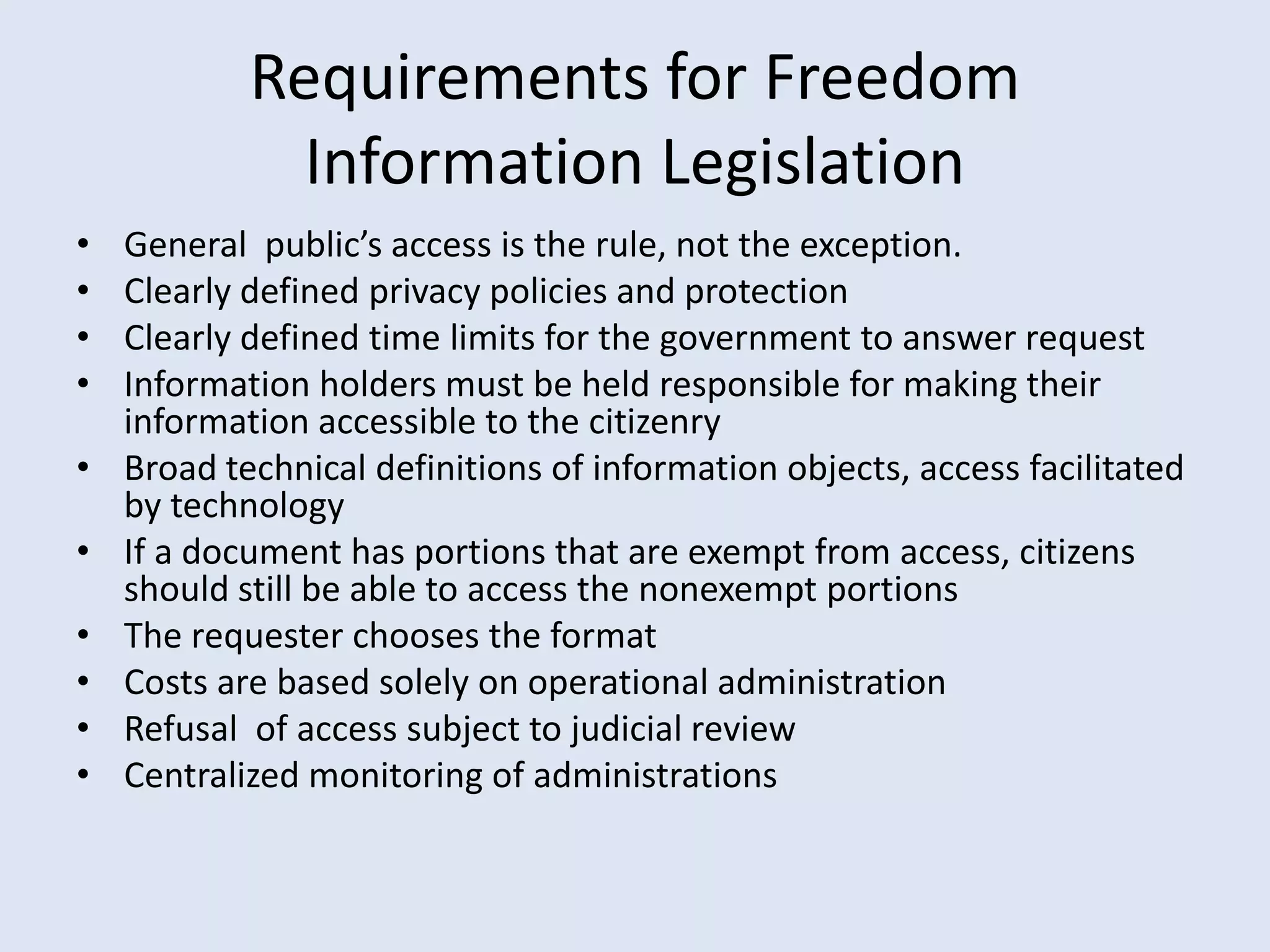
Requirements for Freedom Information LegislationGeneral  public’s access is the rule, not the exception.Clearly defined privacy policies and protectionClearly defined time limits for the government to answer requestInformation holders must be held responsible for making their information accessible to the citizenryBroad technical definitions of information objects, access facilitated by technologyIf a document has portions that are exempt from access, citizens should still be able to access the nonexempt portionsThe requester chooses the formatCosts are based solely on operational administrationRefusal  of access subject to judicial reviewCentralized monitoring of administrations
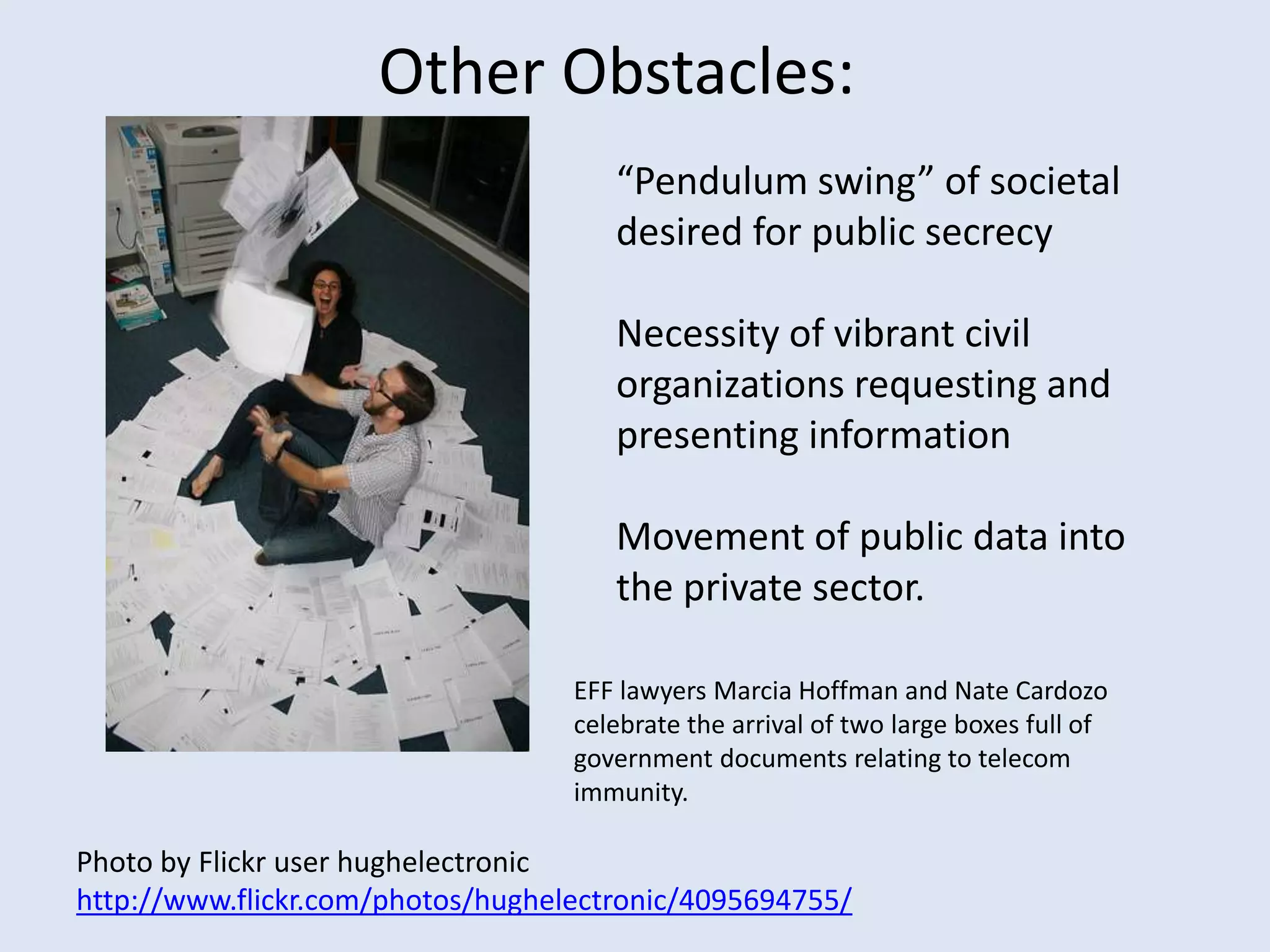
Other Obstacles: “Pendulum swing” of societal desired for public secrecyNecessity of vibrant civil organizations requesting and presenting informationMovement of public data into the private sector.  EFF lawyers Marcia Hoffman and Nate Cardozo celebrate the arrival of two large boxes full of government documents relating to telecom immunity. Photo by Flickr user hughelectronichttp://www.flickr.com/photos/hughelectronic/4095694755/
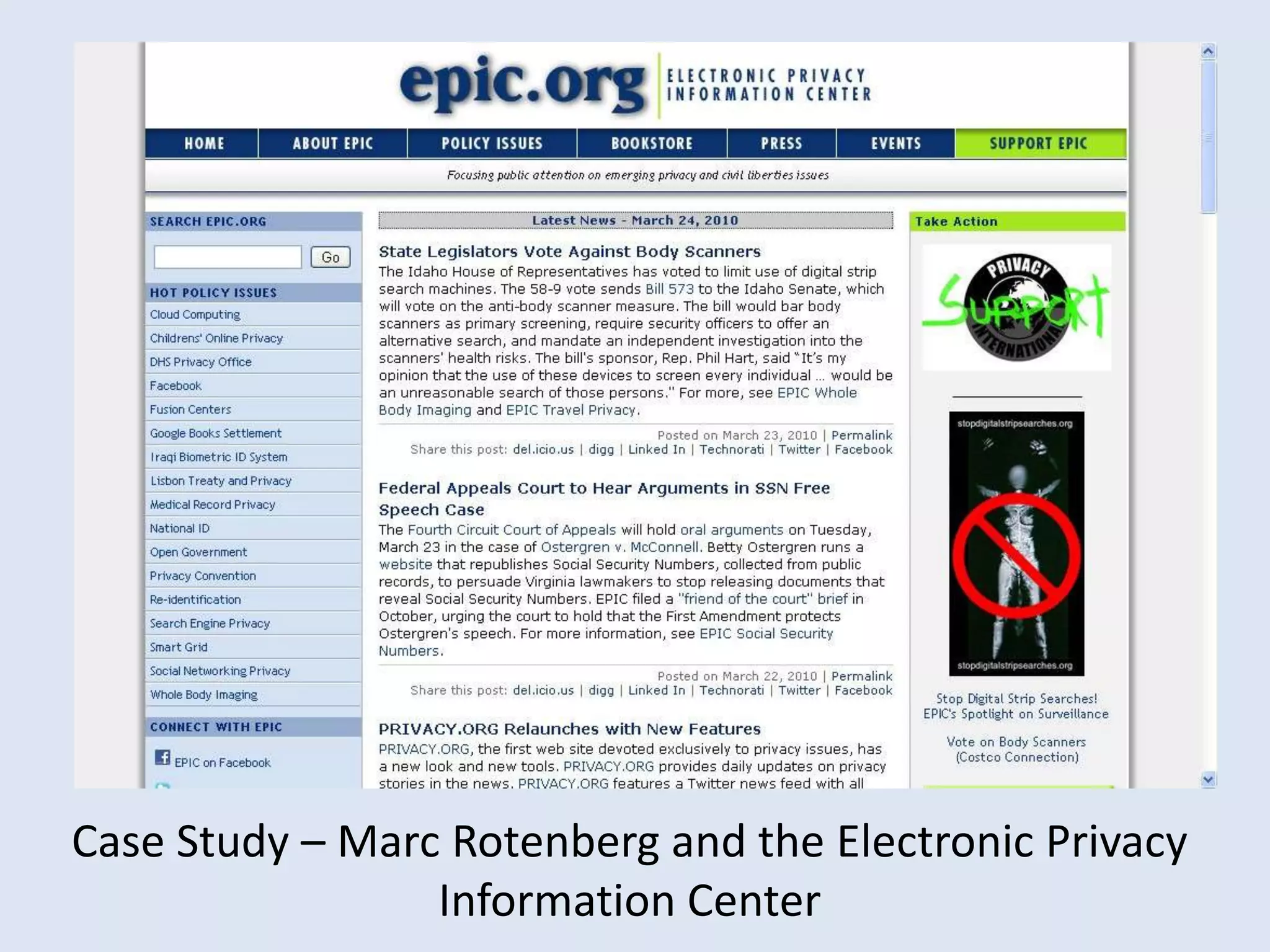
Case Study – Marc Rotenberg and the Electronic Privacy Information Center
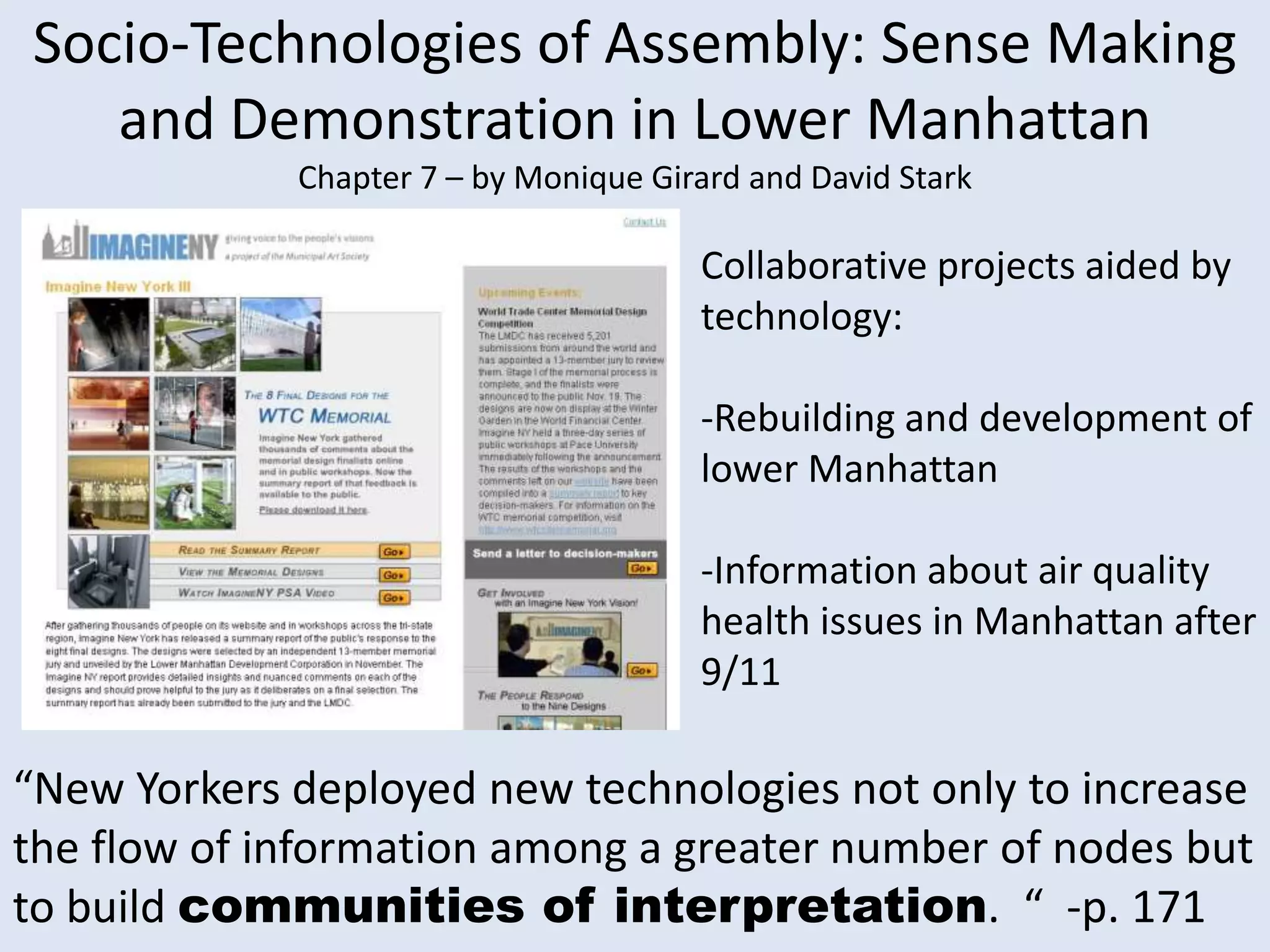
Socio-Technologies of Assembly: Sense Making and Demonstration in Lower Manhattan Chapter 7 – by Monique Girard and David Stark Collaborative projects aided by technology: -Rebuilding and development of lower Manhattan-Information about air quality health issues in Manhattan after 9/11“New Yorkers deployed new technologies not only to increase the flow of information among a greater number of nodes but to build communities of interpretation.  “  -p. 171

Governance and Information Technology

  • 1.
    Governance and InformationTechnology Eds, Viktor Mayer-Schonbergerand David LazerFor LIS 2186 by Katie Ingersoll, Bryan Carnes, and Brian Taylor
  • 2.
    Global Perspectives onE-Government Chapter 2 – by Darrell M. West“The most optimistic vision… is that the integration of new … ICT into governmentwill result in aradical disjuncture of business as usual…The reality falls short of these utopian visions.” -- Darrell M. West, p. 30Photo by: flickr user edge211 ; http://www.flickr.com/photos/nn_sf/3157497627
  • 3.
    Compares global E-governmentin terms of : Online InformationOnline Government ServicesObstacles include: Internet connectivityCitizen’s privacy concernsGovernment resourcesNorth America and Asia have the most extensive e-government developmentPhoto by flickr user Ed Bierman, http://www.flickr.com/photos/edbierman/2858105794/
  • 4.
    Case Study: Firstgov.gov,the United States’ web portal (now USA.gov)
  • 6.
    Challenges to OrganizationalChange : Multi-Level Integrated Information Structures (MIIS) Chapter 4 - by Jane E. Fountain“It is now eminently clear that the chief challenge for government is not the implementation of new technologies; it is organizational change required to develop more productive workflows. “-Jane Fountain, p 64
  • 7.
    Multi-level Integrated InformationSystem Adapted from figure on p. 82
  • 8.
  • 9.
  • 11.
    Weak Democracy StrongInformation: The Role of Information Technology in the Rulemaking ProcessChapter 5 - by Cary CoglianeseDirect strategies to Legitimize rulemaking by unelected bodies:Strong DemocracyInterest Group PluralismPhoto by Flickr user pasukaru76 http://www.flickr.com/photos/pasukaru76/3629601725/Technology is more likely to bring about pluralism than true strong democracy
  • 12.
    Case Study :The EPA’s EDOCKET site
  • 13.
    Now regulations fromall agencies are at: regulations.gov
  • 14.
    Freedom of Informationand Electronic Government Chapter 6 by Herbert BerkertTransparency is: -Essential to democracy- At odds with current e-commerce paradigm in e-governmentFocus should shift to general transparency and information available in a variety of forms
  • 15.
    Requirements for FreedomInformation LegislationGeneral public’s access is the rule, not the exception.Clearly defined privacy policies and protectionClearly defined time limits for the government to answer requestInformation holders must be held responsible for making their information accessible to the citizenryBroad technical definitions of information objects, access facilitated by technologyIf a document has portions that are exempt from access, citizens should still be able to access the nonexempt portionsThe requester chooses the formatCosts are based solely on operational administrationRefusal of access subject to judicial reviewCentralized monitoring of administrations
  • 16.
    Other Obstacles: “Pendulumswing” of societal desired for public secrecyNecessity of vibrant civil organizations requesting and presenting informationMovement of public data into the private sector. EFF lawyers Marcia Hoffman and Nate Cardozo celebrate the arrival of two large boxes full of government documents relating to telecom immunity. Photo by Flickr user hughelectronichttp://www.flickr.com/photos/hughelectronic/4095694755/
  • 17.
    Case Study –Marc Rotenberg and the Electronic Privacy Information Center
  • 18.
    Socio-Technologies of Assembly:Sense Making and Demonstration in Lower Manhattan Chapter 7 – by Monique Girard and David Stark Collaborative projects aided by technology: -Rebuilding and development of lower Manhattan-Information about air quality health issues in Manhattan after 9/11“New Yorkers deployed new technologies not only to increase the flow of information among a greater number of nodes but to build communities of interpretation. “ -p. 171

Editor's Notes

  • #8 Emphasizes the importance of all of these layers in determining interactionsInstitutions – legislature and law can influence cooperationTalks about obstacles to cooperation – cooperating effectively isn’t always in the best interests of agencies institutions and defined relationships between agencies can help with thisIndividuals and their social networks are important in maintaining momentum, leaders and champions are important for big projects