1
BY MNKC
 Habits or routines
ex. I get up at 7 am every morning.
 Permanent situations
ex. My father works for a building firm
 General truths
ex. Water freezes at 0º C
 Timetables
ex. The flight arrives at 10:30
2
 Proberbs
ex. Opportunity makes the thief
 Descriptions
ex. I mix flour with baking powder, I add
sugar, I beat eggs separately.
 Abilities or capacities
ex. She plays the piano beautifully.
3
 Frequency Adverbs
 Always, never, sometimes, often, usually,
frequently, rarely, seldom, occasionally,
hardly ever
 Every day, every night, every Monday,
every month, every week, every year,
every January, every summer, etc.
 Once a day, once a week, once a
month, once a year
4
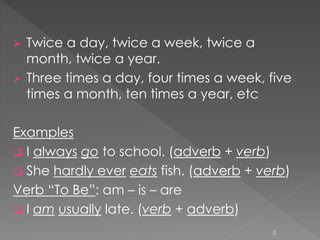
 Twice a day, twice a week, twice a
month, twice a year.
 Three times a day, four times a week, five
times a month, ten times a year, etc
Examples
 I always go to school. (adverb + verb)
 She hardly ever eats fish. (adverb + verb)
Verb “To Be”: am – is – are
 I am usually late. (verb + adverb)
5
 He is never tired. (verb + adverb)
 They are often ill. (verb + adverb)
 Adverbial phrases
 We visit our friends twice a week
6
 RULES
Affirmative: He – She – It
Add “S” to the verbs: works , paints, eats
or “ES” if the verbs end in:
 Goes Watches
 Mixes Misses
 Washes Fizzes
7
 If the verbs end in “y” after consonant
change “y” to “i” and add “ES”
 Carry > carries
 Study > studies
But if the verbs end in “y” after vowel, they
add only “S”
 Plays
 Stays
8
I work
You work
He works
She works
It works
We work
You work
They work
9
I do not work
You do not work
He does not work
She does not work
It does not work
We do not work
You do not work
They do not work
10
DO NOT = DON’T /// DOES NOT = DOESN’T
= don’t
= doesn’t
= don’t
Do I work?
Do you work?
Does he work?
Does she work?
Does it work?
Do we work?
Do you work?
Do they work?
11

Present simple

  • 1.
  • 2.
     Habits orroutines ex. I get up at 7 am every morning.  Permanent situations ex. My father works for a building firm  General truths ex. Water freezes at 0º C  Timetables ex. The flight arrives at 10:30 2
  • 3.
     Proberbs ex. Opportunitymakes the thief  Descriptions ex. I mix flour with baking powder, I add sugar, I beat eggs separately.  Abilities or capacities ex. She plays the piano beautifully. 3
  • 4.
     Frequency Adverbs Always, never, sometimes, often, usually, frequently, rarely, seldom, occasionally, hardly ever  Every day, every night, every Monday, every month, every week, every year, every January, every summer, etc.  Once a day, once a week, once a month, once a year 4
  • 5.
     Twice aday, twice a week, twice a month, twice a year.  Three times a day, four times a week, five times a month, ten times a year, etc Examples  I always go to school. (adverb + verb)  She hardly ever eats fish. (adverb + verb) Verb “To Be”: am – is – are  I am usually late. (verb + adverb) 5
  • 6.
     He isnever tired. (verb + adverb)  They are often ill. (verb + adverb)  Adverbial phrases  We visit our friends twice a week 6
  • 7.
     RULES Affirmative: He– She – It Add “S” to the verbs: works , paints, eats or “ES” if the verbs end in:  Goes Watches  Mixes Misses  Washes Fizzes 7
  • 8.
     If theverbs end in “y” after consonant change “y” to “i” and add “ES”  Carry > carries  Study > studies But if the verbs end in “y” after vowel, they add only “S”  Plays  Stays 8
  • 9.
    I work You work Heworks She works It works We work You work They work 9
  • 10.
    I do notwork You do not work He does not work She does not work It does not work We do not work You do not work They do not work 10 DO NOT = DON’T /// DOES NOT = DOESN’T = don’t = doesn’t = don’t
  • 11.
    Do I work? Doyou work? Does he work? Does she work? Does it work? Do we work? Do you work? Do they work? 11