
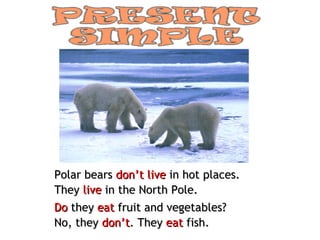


Polar bears  don’t live  in hot places. They  live  in the North Pole. Do  they  eat  fruit and vegetables? No, they  don’t . They  eat  fish.
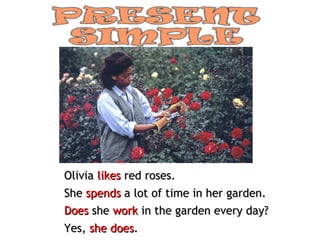
Olivia  likes  red roses. She  spends  a lot of time in her garden. Does  she  work  in the garden every day? Yes,  she does .
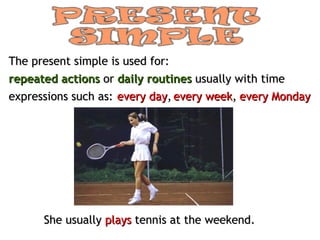
The present simple is used for: repeated actions   or  daily routines  usually with time expressions such as: every day , every week , every Monday She usually  plays  tennis at the weekend.
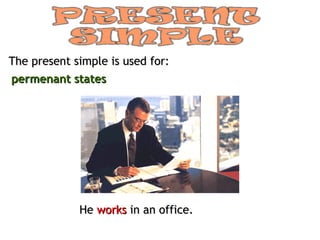
The present simple is used for: permenant states He  works  in an office.
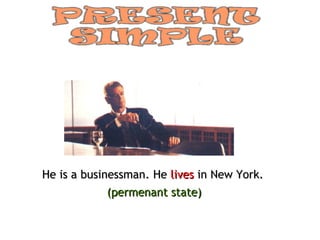
He is a businessman. He  lives  in New York. (permenant state)
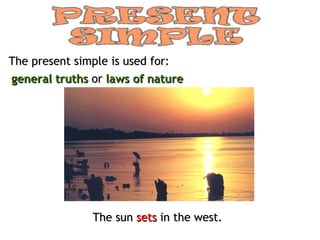
The present simple is used for: general truths  or  laws of nature The sun  sets  in the west.
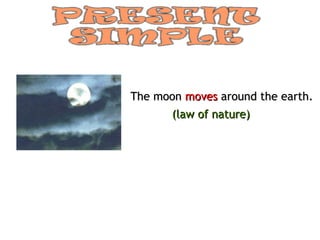
The moon  moves  around the earth. (law of nature)
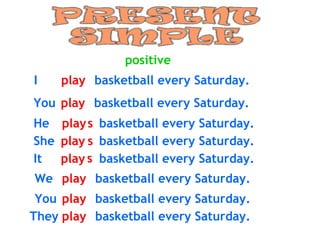
positive I play basketball every Saturday. You play basketball every Saturday. He play basketball every Saturday. She play basketball every Saturday. It play basketball every Saturday. We play basketball every Saturday. You play basketball every Saturday. They play basketball every Saturday. s s s
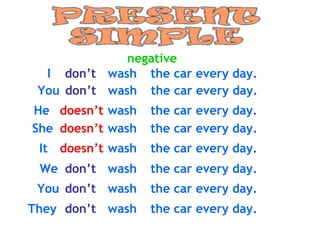
negative I don’t wash the car every day. You don’t wash the car every day. He doesn’t wash the car every day. She doesn’t wash the car every day. It doesn’t wash the car every day. We don’t wash the car every day. You don’t wash the car every day. They don’t wash the car every day.
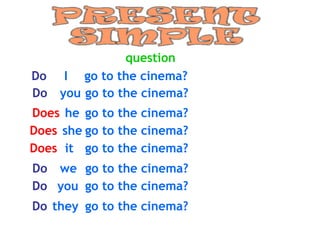
question Do I go to the cinema? Do you go to the cinema? Does he go to the cinema? Does she go to the cinema? Does it go to the cinema? Do we go to the cinema? Do you go to the cinema? Do they go to the cinema?
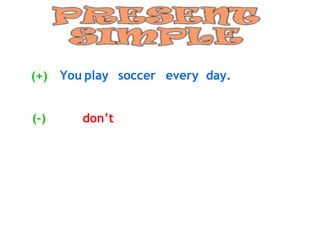
You play soccer every day. (+) (-) don’t
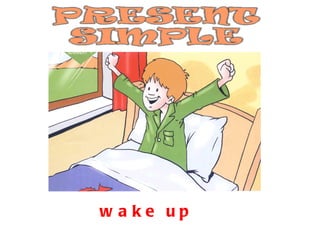
wake up
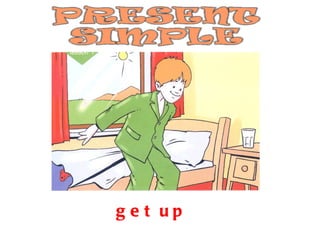
get up
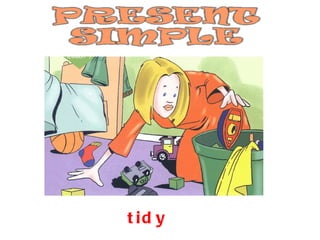
tidy
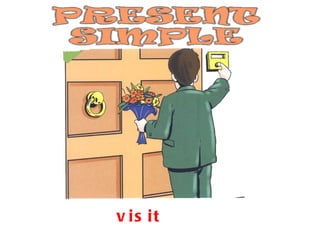
visit
 
He plays basketball every Saturday.
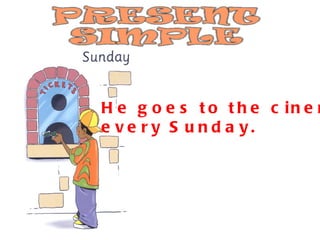
He goes to the cinema  every   Sunday.
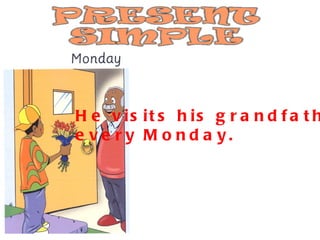
He visits his grandfather  every Monday.
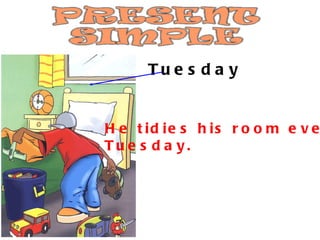
Tuesday He tidies his room every  Tuesday.
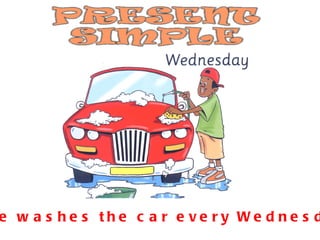
He washes the car every Wednesday.
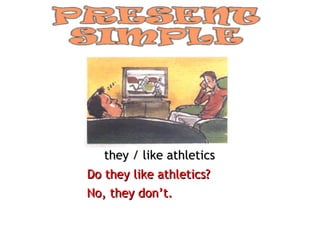
they / like athletics Do they like athletics? No, they don’t.
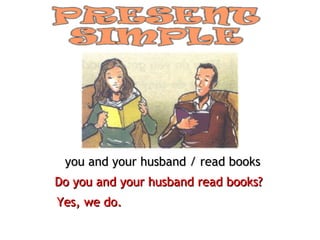
you and your husband / read books Do you and your husband read books? Yes, we do.
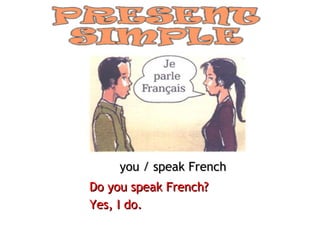
you / speak French Do you speak French? Yes, I do.
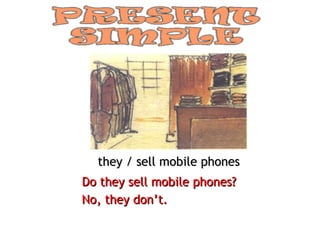
they / sell mobile phones Do they sell mobile phones? No, they don’t.
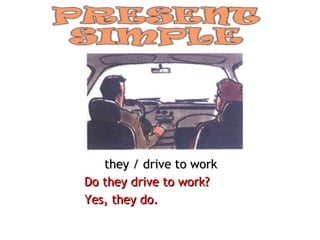
they / drive to work Do they drive to work? Yes, they do.
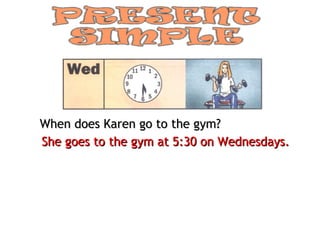
When does Karen go to the gym? She goes to the gym at 5:30 on Wednesdays.
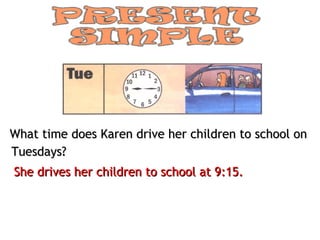
What time does Karen drive her children to school on Tuesdays? She drives her children to school at 9:15.
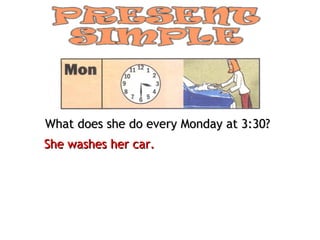
What does she do every Monday at 3:30? She washes her car.
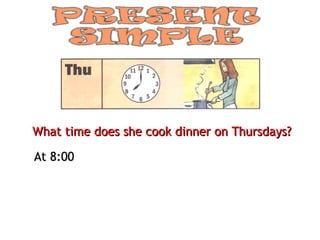
What time does she cook dinner on Thursdays? At 8:00
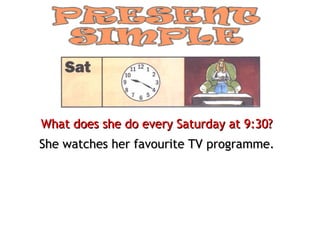
What does she do every Saturday at 9:30? She watches her favourite TV programme.
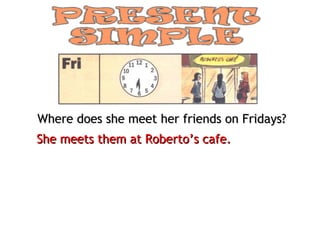
Where does she meet her friends on Fridays? She meets them at Roberto’s cafe.
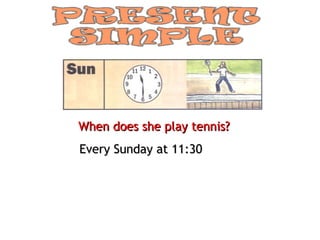
When does she play tennis? Every Sunday at 11:30
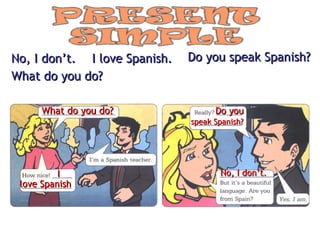
No, I don’t. I love Spanish. Do you speak Spanish? What do you do? What do you do? I love Spanish Do you speak Spanish? No, I don’t.
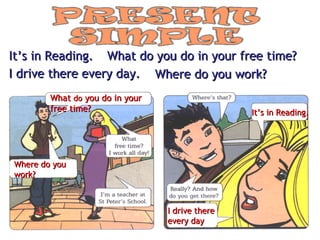
It’s in Reading. What do you do in your free time? I drive there every day. Where do you work? What  do  you do in your  free time? Where do you  work? It’s in Reading. I drive there  every day
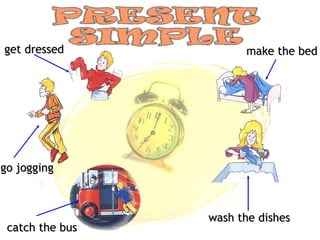
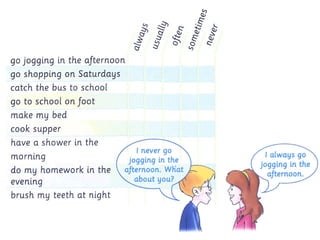
get dressed go jogging catch the bus wash the dishes make the bed
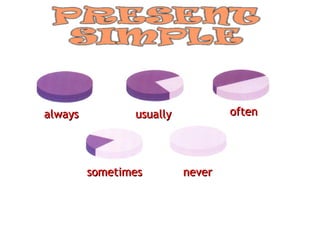
always usually often sometimes never
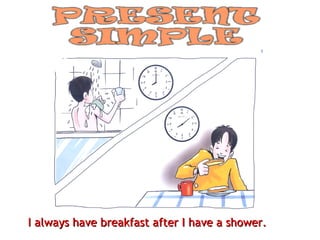
I always have breakfast after I have a shower.
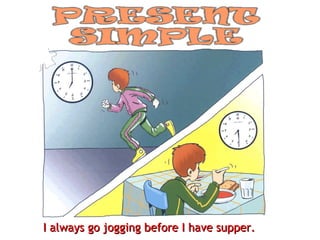
I always go jogging before I have supper.
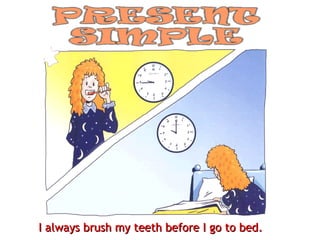
I always brush my teeth before I go to bed.
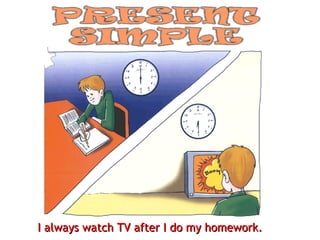
I always watch TV after I do my homework.
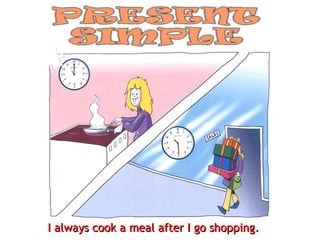
I always cook a meal after I go shopping.
 
 
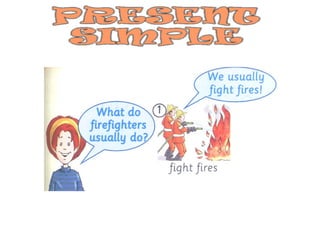
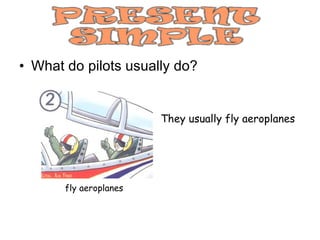
What do pilots usually do? fly aeroplanes They usually fly aeroplanes
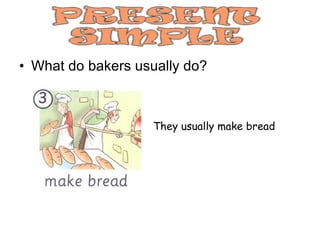
What do bakers usually do? They usually make bread
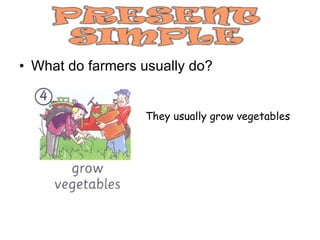
What do farmers usually do? They usually grow vegetables
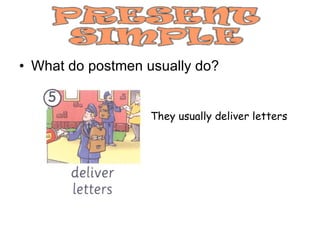
What do postmen usually do? They usually deliver letters
 
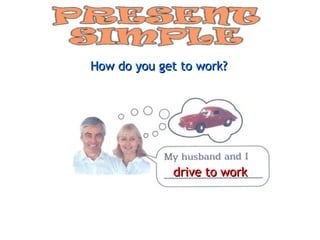
How do you get to work? drive to work
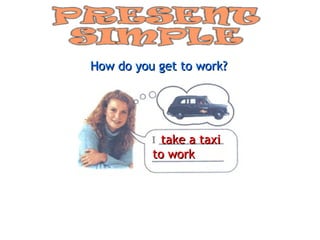
How do you get to work? take a taxi to work
How do you get to school? take the bus to school.
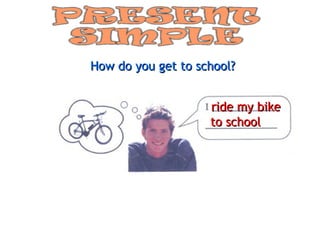
How do you get to school? ride my bike to school
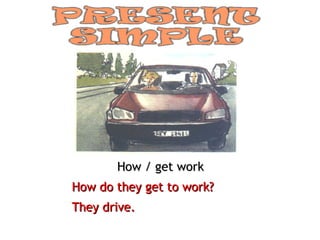
How / get work How do they get to work? They drive.
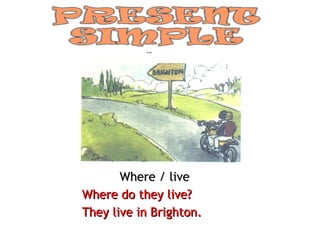
Where / live Where do they live? They live in Brighton.
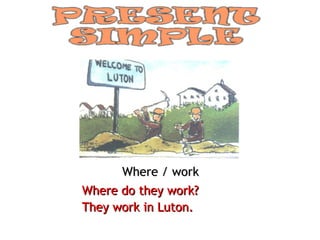
Where / work Where do they work? They work in Luton.
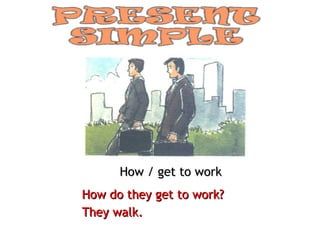
How / get to work How do they get to work? They walk.
 

Present simple

  • 1.
  • 2.
    Polar bears don’t live in hot places. They live in the North Pole. Do they eat fruit and vegetables? No, they don’t . They eat fish.
  • 3.
    Olivia likes red roses. She spends a lot of time in her garden. Does she work in the garden every day? Yes, she does .
  • 4.
    The present simpleis used for: repeated actions or daily routines usually with time expressions such as: every day , every week , every Monday She usually plays tennis at the weekend.
  • 5.
    The present simpleis used for: permenant states He works in an office.
  • 6.
    He is abusinessman. He lives in New York. (permenant state)
  • 7.
    The present simpleis used for: general truths or laws of nature The sun sets in the west.
  • 8.
    The moon moves around the earth. (law of nature)
  • 9.
    positive I playbasketball every Saturday. You play basketball every Saturday. He play basketball every Saturday. She play basketball every Saturday. It play basketball every Saturday. We play basketball every Saturday. You play basketball every Saturday. They play basketball every Saturday. s s s
  • 10.
    negative I don’twash the car every day. You don’t wash the car every day. He doesn’t wash the car every day. She doesn’t wash the car every day. It doesn’t wash the car every day. We don’t wash the car every day. You don’t wash the car every day. They don’t wash the car every day.
  • 11.
    question Do Igo to the cinema? Do you go to the cinema? Does he go to the cinema? Does she go to the cinema? Does it go to the cinema? Do we go to the cinema? Do you go to the cinema? Do they go to the cinema?
  • 12.
    You play soccerevery day. (+) (-) don’t
  • 13.
  • 14.
  • 15.
  • 16.
  • 17.
  • 18.
    He plays basketballevery Saturday.
  • 19.
    He goes tothe cinema every Sunday.
  • 20.
    He visits hisgrandfather every Monday.
  • 21.
    Tuesday He tidieshis room every Tuesday.
  • 22.
    He washes thecar every Wednesday.
  • 23.
    they / likeathletics Do they like athletics? No, they don’t.
  • 24.
    you and yourhusband / read books Do you and your husband read books? Yes, we do.
  • 25.
    you / speakFrench Do you speak French? Yes, I do.
  • 26.
    they / sellmobile phones Do they sell mobile phones? No, they don’t.
  • 27.
    they / driveto work Do they drive to work? Yes, they do.
  • 28.
    When does Karengo to the gym? She goes to the gym at 5:30 on Wednesdays.
  • 29.
    What time doesKaren drive her children to school on Tuesdays? She drives her children to school at 9:15.
  • 30.
    What does shedo every Monday at 3:30? She washes her car.
  • 31.
    What time doesshe cook dinner on Thursdays? At 8:00
  • 32.
    What does shedo every Saturday at 9:30? She watches her favourite TV programme.
  • 33.
    Where does shemeet her friends on Fridays? She meets them at Roberto’s cafe.
  • 34.
    When does sheplay tennis? Every Sunday at 11:30
  • 35.
    No, I don’t.I love Spanish. Do you speak Spanish? What do you do? What do you do? I love Spanish Do you speak Spanish? No, I don’t.
  • 36.
    It’s in Reading.What do you do in your free time? I drive there every day. Where do you work? What do you do in your free time? Where do you work? It’s in Reading. I drive there every day
  • 37.
    get dressed gojogging catch the bus wash the dishes make the bed
  • 38.
    always usually oftensometimes never
  • 39.
    I always havebreakfast after I have a shower.
  • 40.
    I always gojogging before I have supper.
  • 41.
    I always brushmy teeth before I go to bed.
  • 42.
    I always watchTV after I do my homework.
  • 43.
    I always cooka meal after I go shopping.
  • 44.
  • 45.
  • 46.
    What do pilotsusually do? fly aeroplanes They usually fly aeroplanes
  • 47.
    What do bakersusually do? They usually make bread
  • 48.
    What do farmersusually do? They usually grow vegetables
  • 49.
    What do postmenusually do? They usually deliver letters
  • 50.
  • 51.
    How do youget to work? drive to work
  • 52.
    How do youget to work? take a taxi to work
  • 53.
    How do youget to school? take the bus to school.
  • 54.
    How do youget to school? ride my bike to school
  • 55.
    How / getwork How do they get to work? They drive.
  • 56.
    Where / liveWhere do they live? They live in Brighton.
  • 57.
    Where / workWhere do they work? They work in Luton.
  • 58.
    How / getto work How do they get to work? They walk.
  • 59.