To the present simple galaxy! Please
enjoy and do your best to practice hard!
• VOCABULARY:
• ACTIVITY FOR VOCABULARY
• TIME EXPRESSIONS
• TIME EXPRESSIONS - KNOWLEDGE CHECK.
• PRESENT SIMPLE IN THE GALAXY
• READING
• EXERCISES FOR READING
• LISTENING
• EXERCISES FOR LISTENING AND GRAMMAR
Lets hit the first stage!
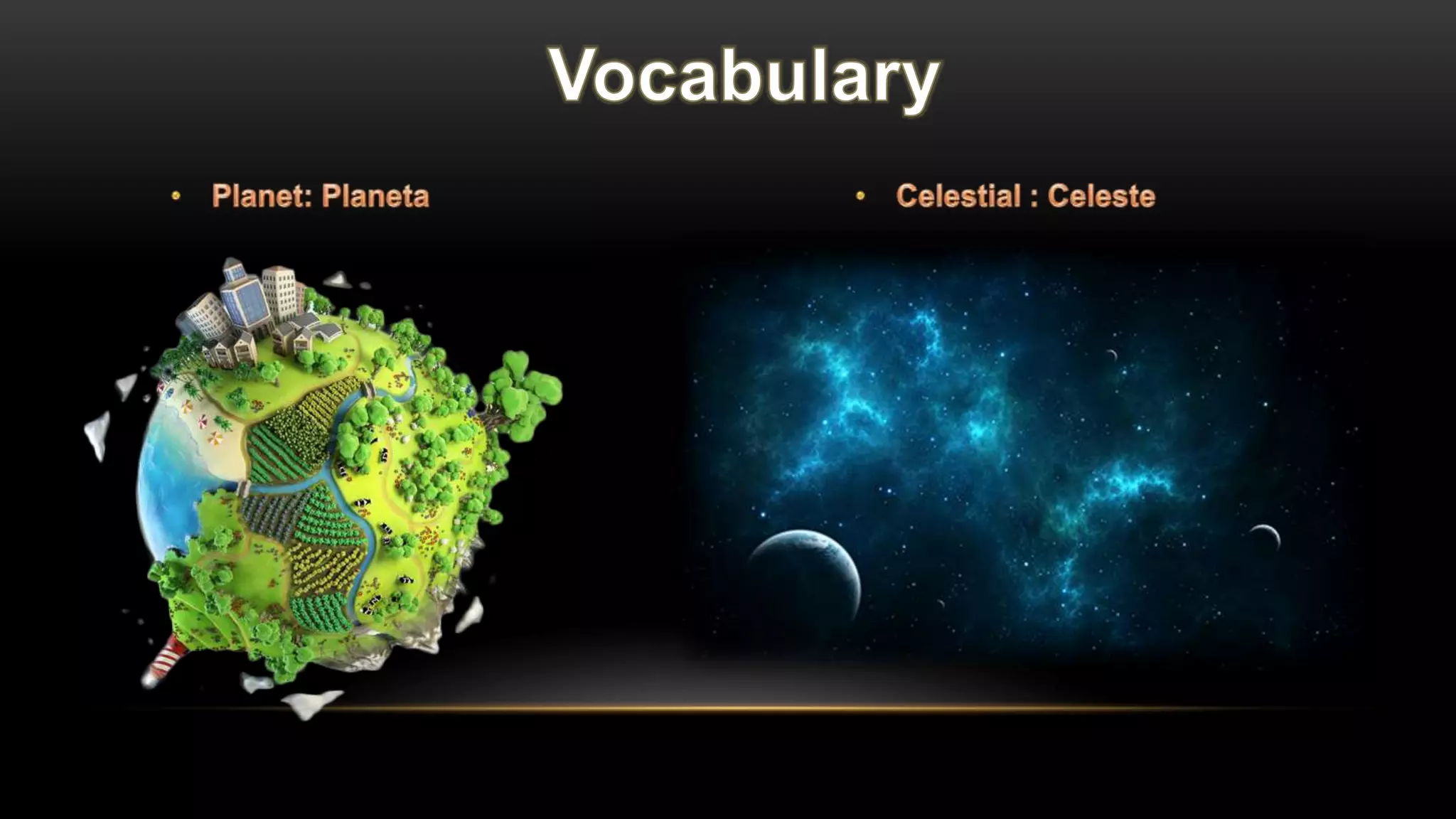
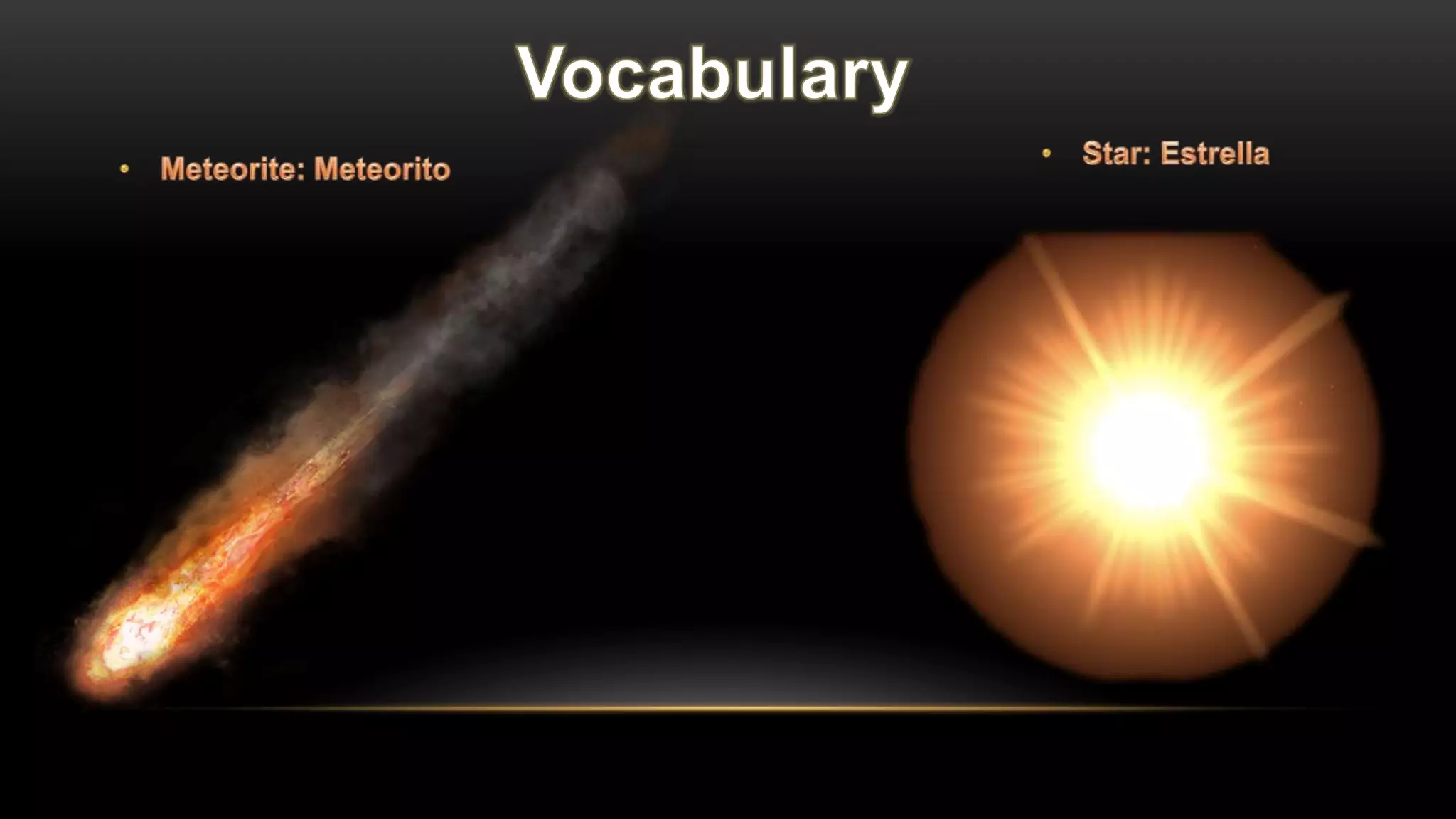
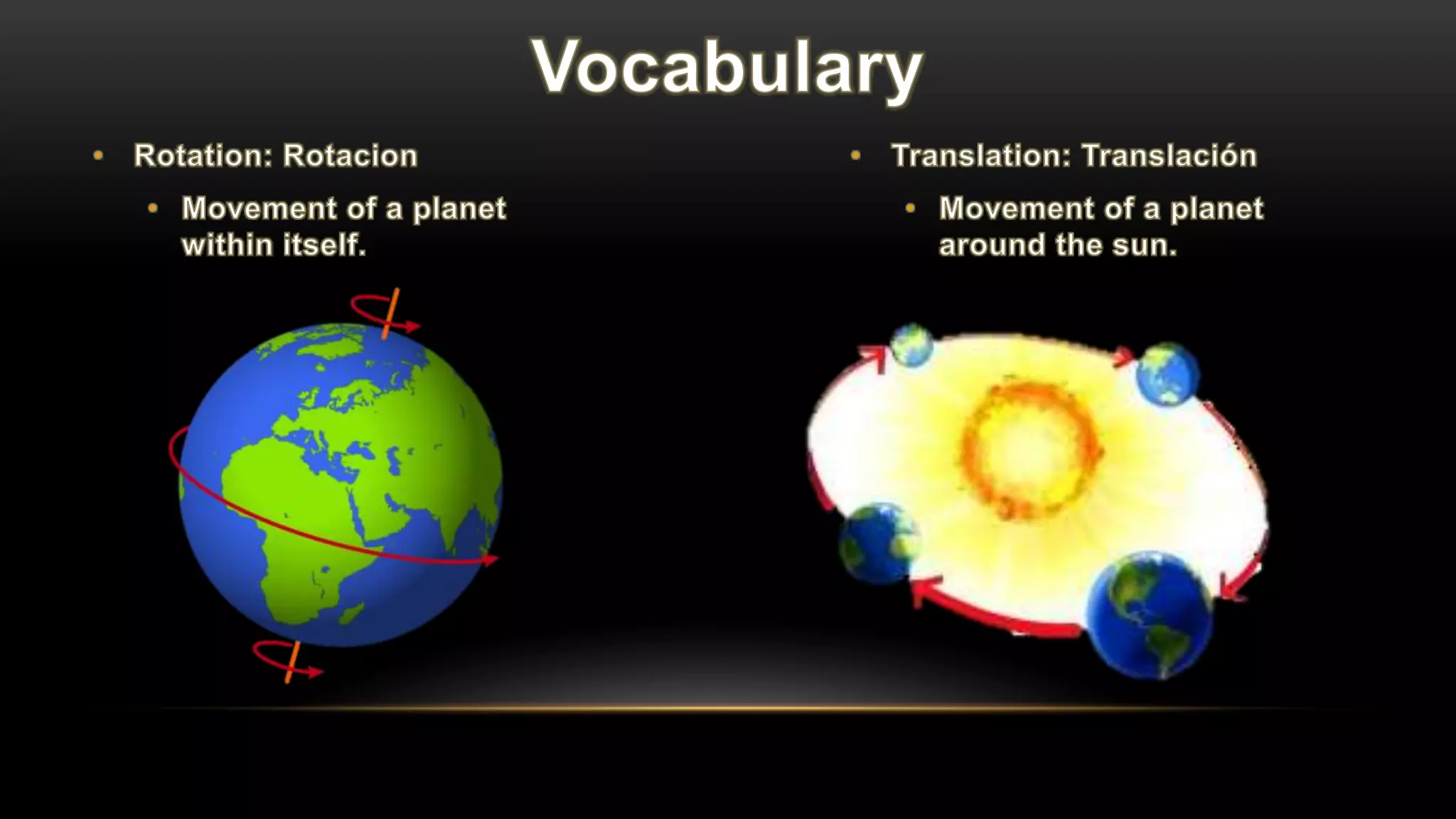
Now we will identify the main vocabulary related to the solar
system!
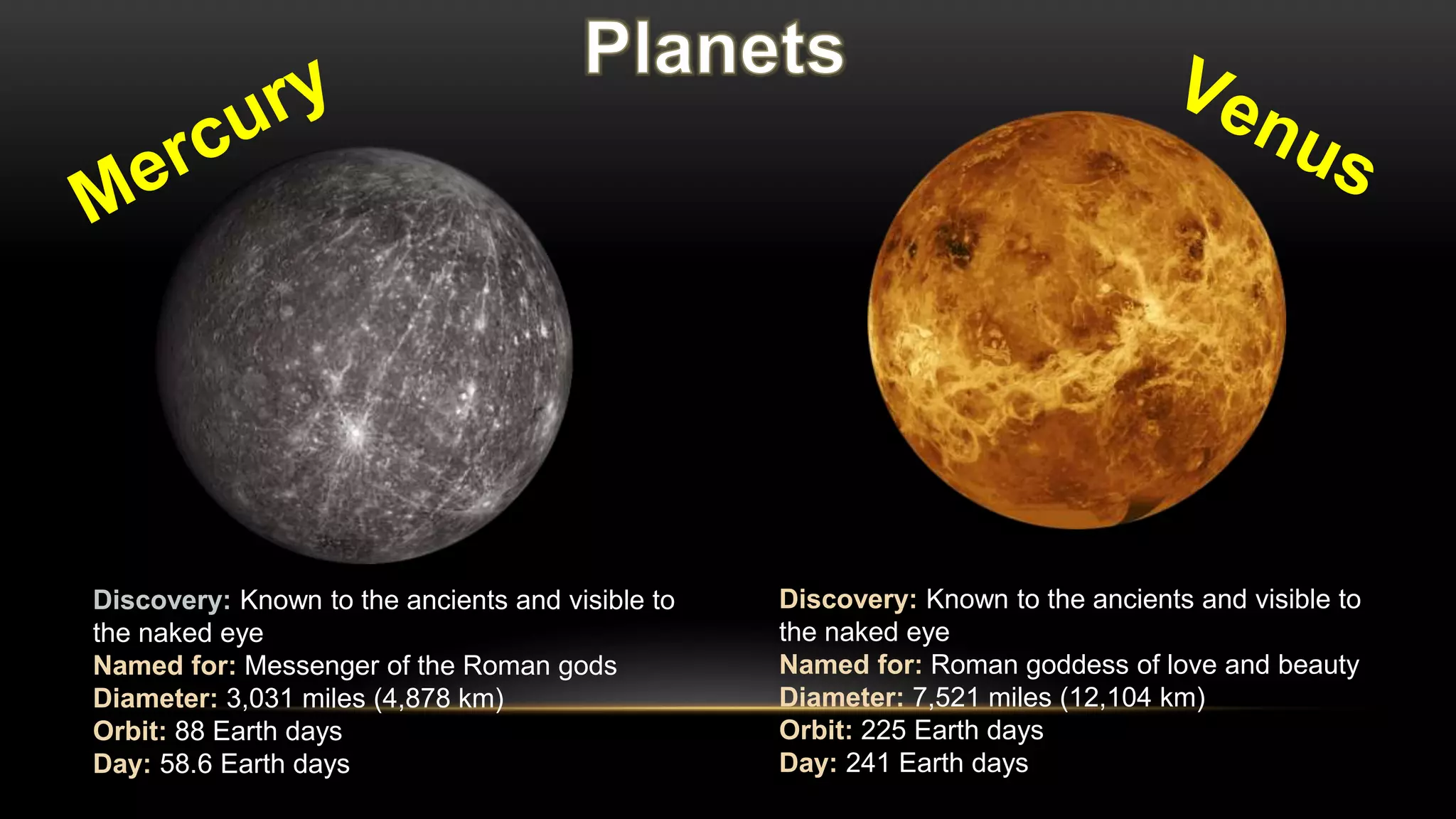
Discovery: Known to the ancients and visible to
the naked eye
Named for: Messenger of the Roman gods
Diameter: 3,031 miles (4,878 km)
Orbit: 88 Earth days
Day: 58.6 Earth days
Discovery: Known to the ancients and visible to
the naked eye
Named for: Roman goddess of love and beauty
Diameter: 7,521 miles (12,104 km)
Orbit: 225 Earth days
Day: 241 Earth days
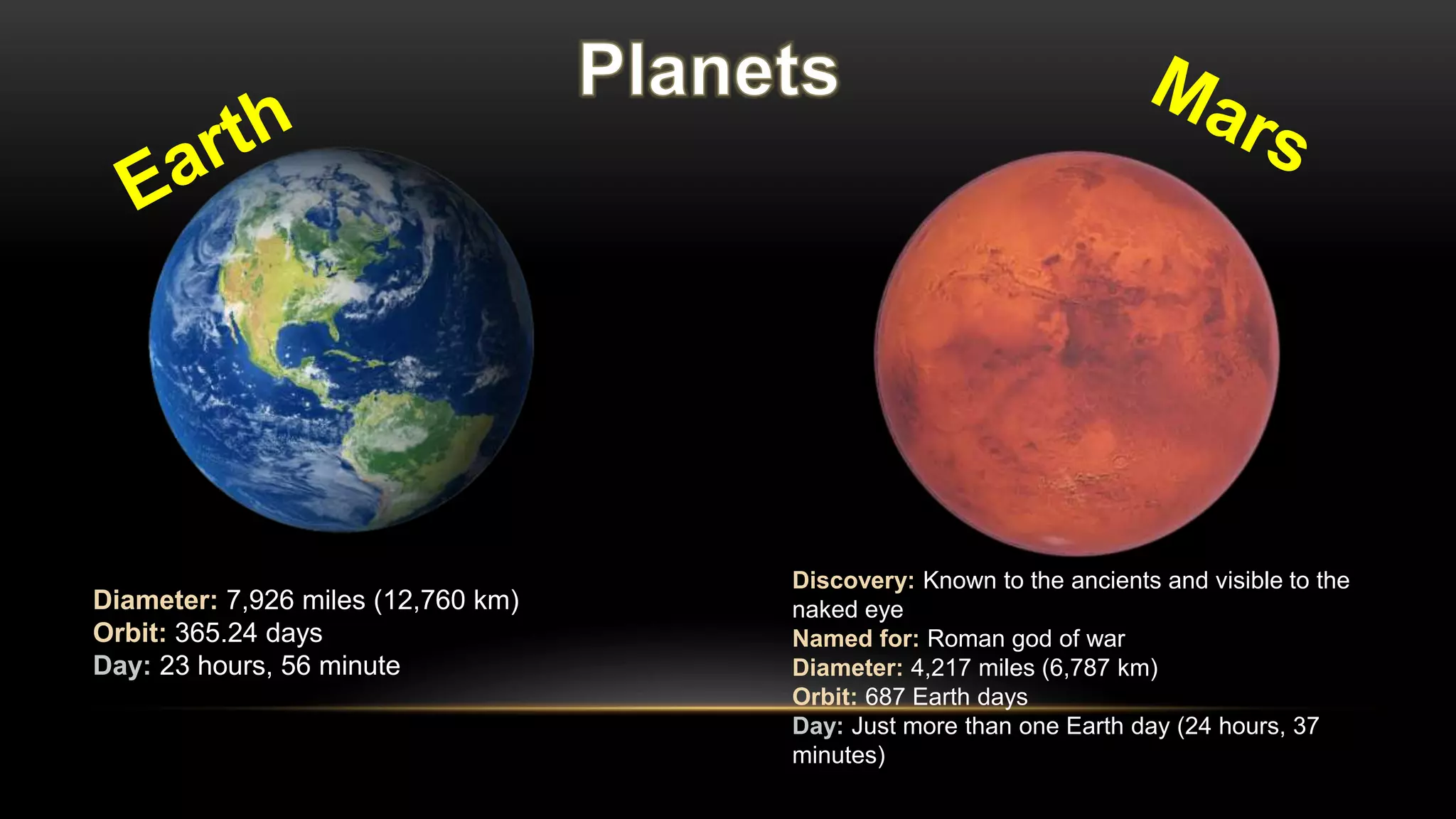
Diameter: 7,926 miles (12,760 km)
Orbit: 365.24 days
Day: 23 hours, 56 minute
Discovery: Known to the ancients and visible to the
naked eye
Named for: Roman god of war
Diameter: 4,217 miles (6,787 km)
Orbit: 687 Earth days
Day: Just more than one Earth day (24 hours, 37
minutes)
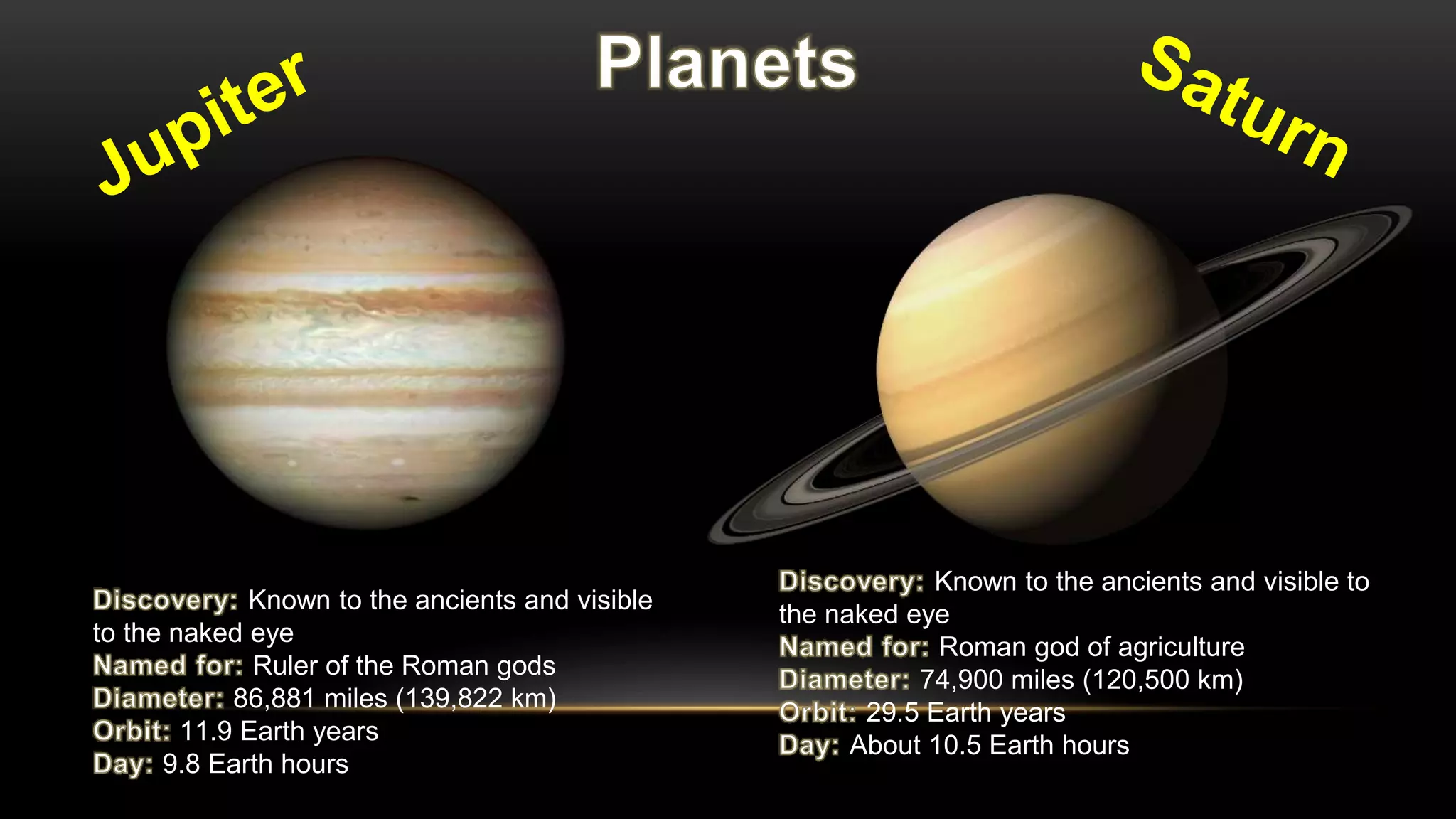
Known to the ancients and visible
to the naked eye
Ruler of the Roman gods
86,881 miles (139,822 km)
11.9 Earth years
9.8 Earth hours
Known to the ancients and visible to
the naked eye
Roman god of agriculture
74,900 miles (120,500 km)
29.5 Earth years
About 10.5 Earth hours
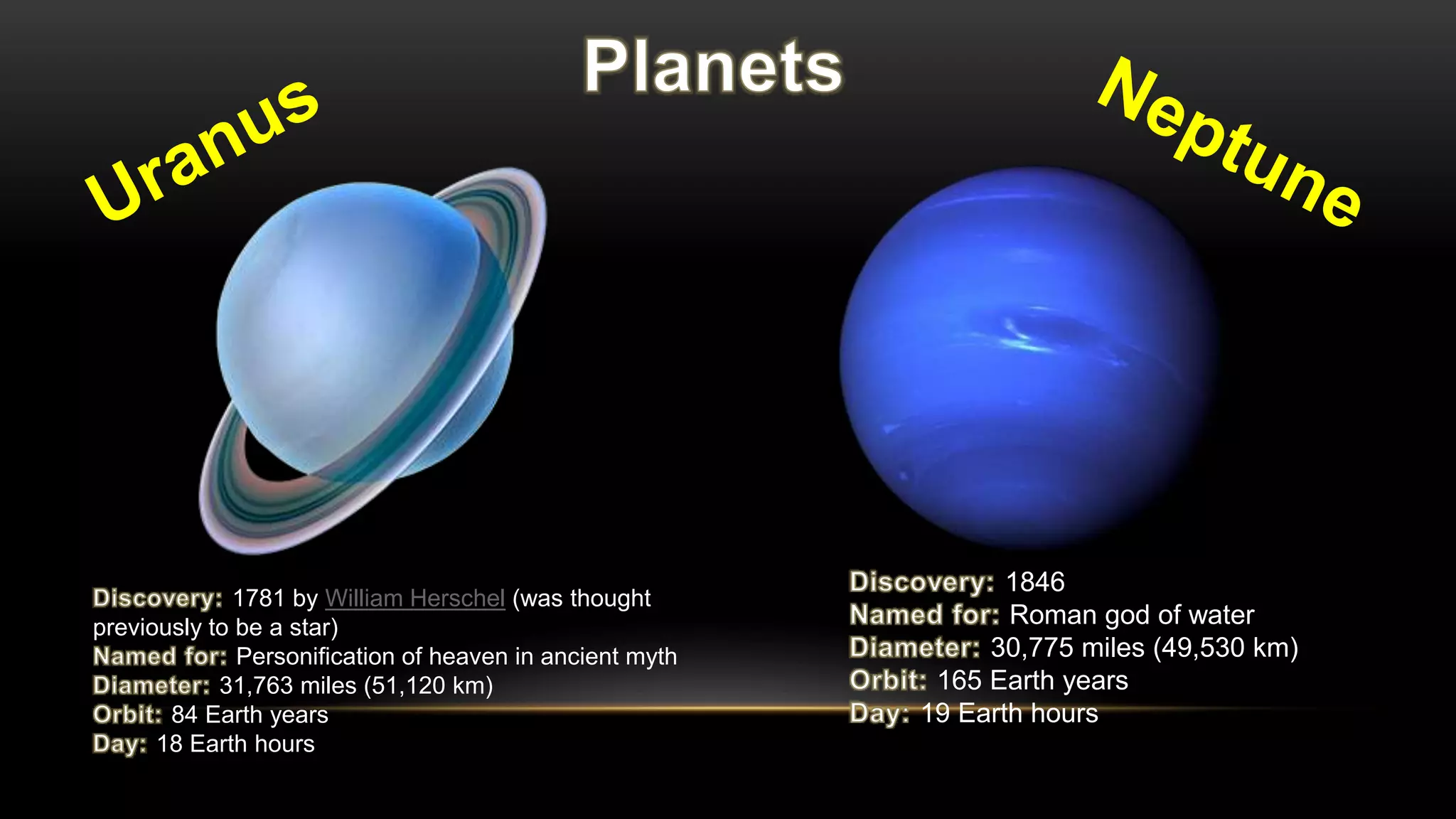
1781 by William Herschel (was thought
previously to be a star)
Personification of heaven in ancient myth
31,763 miles (51,120 km)
84 Earth years
18 Earth hours
1846
Roman god of water
30,775 miles (49,530 km)
165 Earth years
19 Earth hours
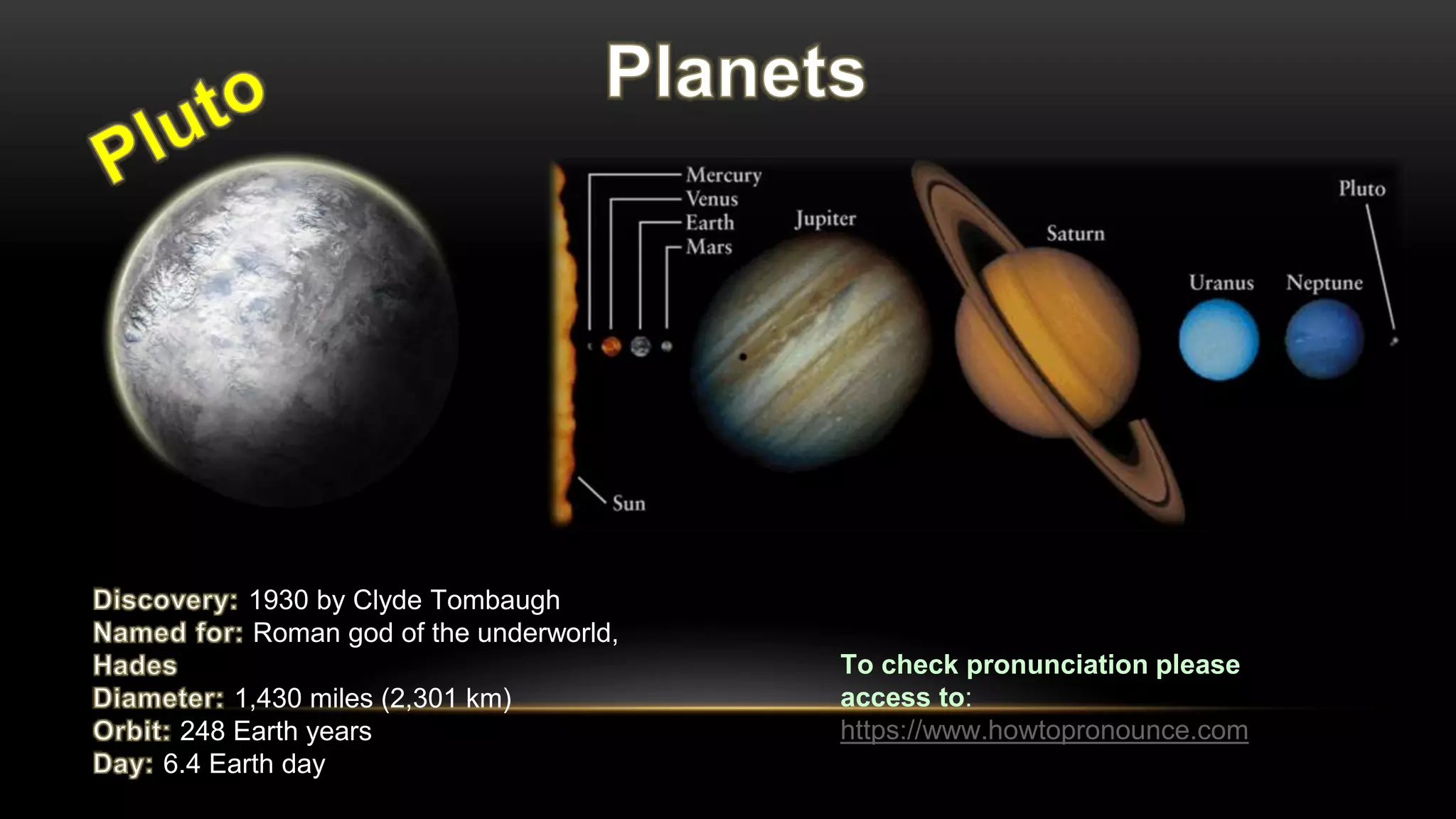
1930 by Clyde Tombaugh
Roman god of the underworld,
1,430 miles (2,301 km)
248 Earth years
6.4 Earth day
To check pronunciation please
access to:
https://www.howtopronounce.com
• To extend vocabulary and practice pronunciation please check the following links!
• http://www.shertonenglish.com/resources/es/vocabulary/the-universe.php
• http://www.english-for-students.com/Vocabulary-Universe.html
• https://quizlet.com/5571985/universe-vocabulary-words-flash-cards/
• https://quizlet.com/121672427/solar-sytem-flash-cards/
Time expressions are used to express the
frequency of an action.
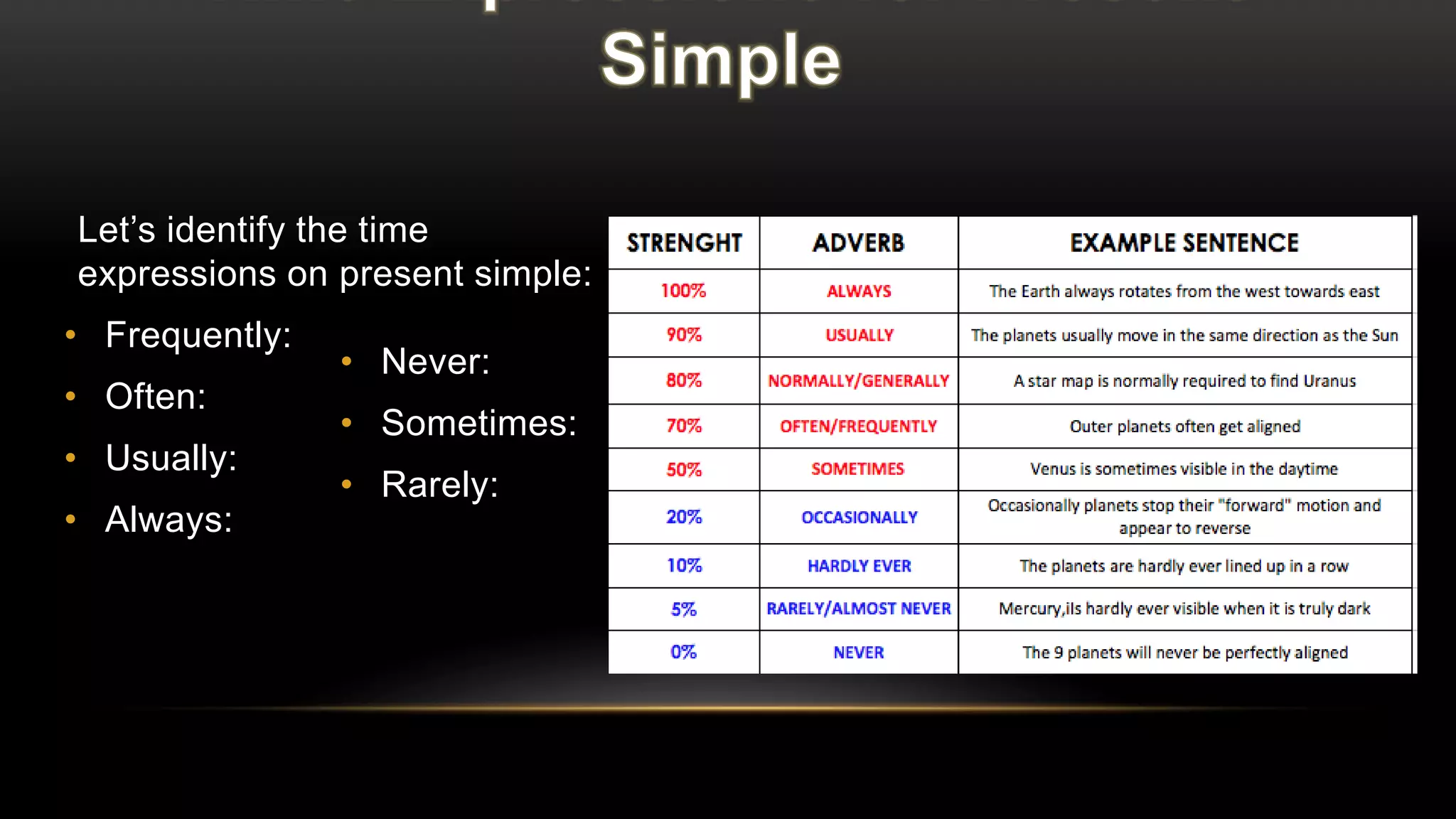
Let’s identify the time
expressions on present simple:
• Frequently:
• Often:
• Usually:
• Always:
• Never:
• Sometimes:
• Rarely:
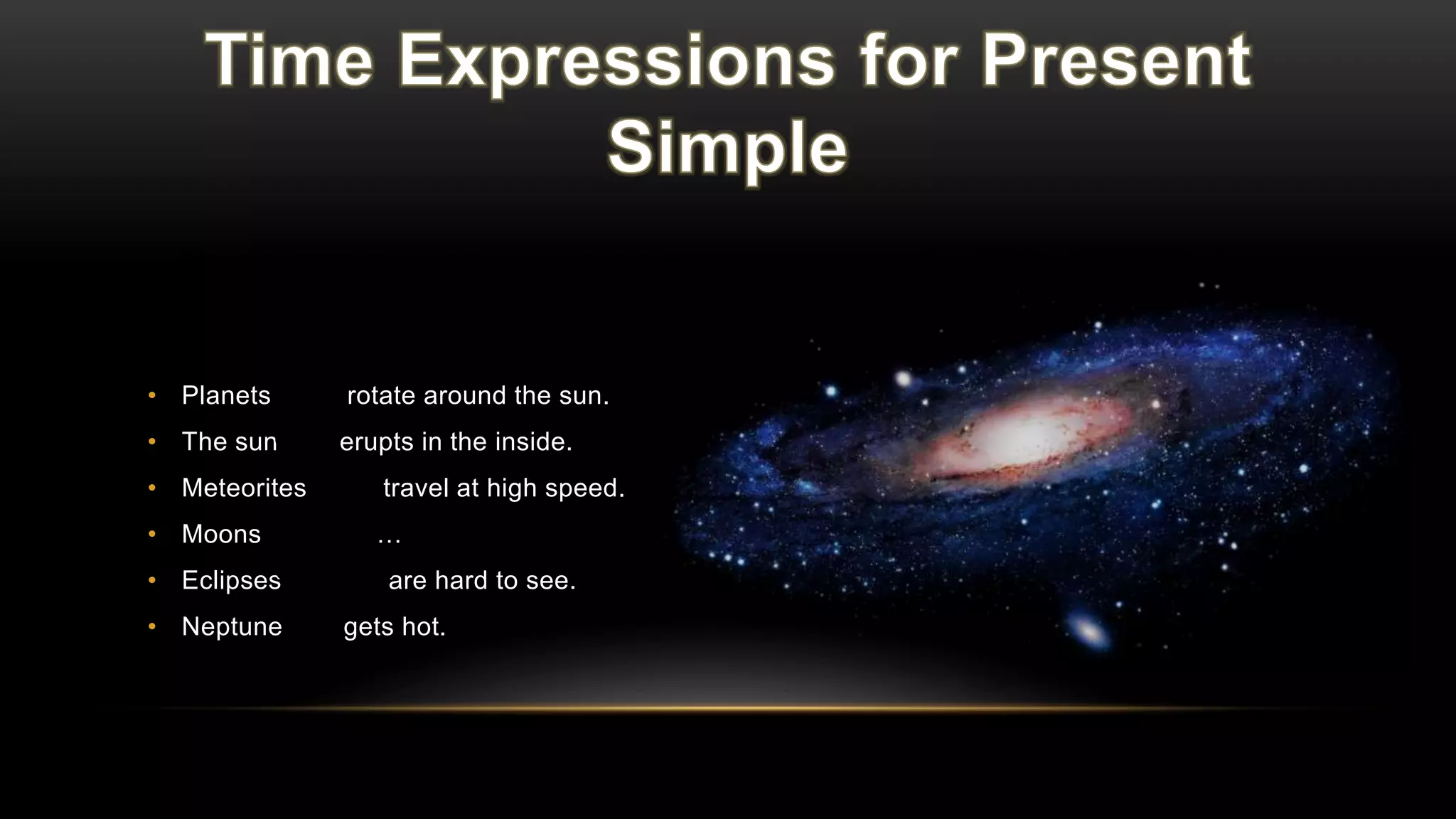
• Planets rotate around the sun.
• The sun erupts in the inside.
• Meteorites travel at high speed.
• Moons …
• Eclipses are hard to see.
• Neptune gets hot.
always
often
usually
frequently
sometimes
never
Read the following sentences and identify the time expressions, then click to check your
answers
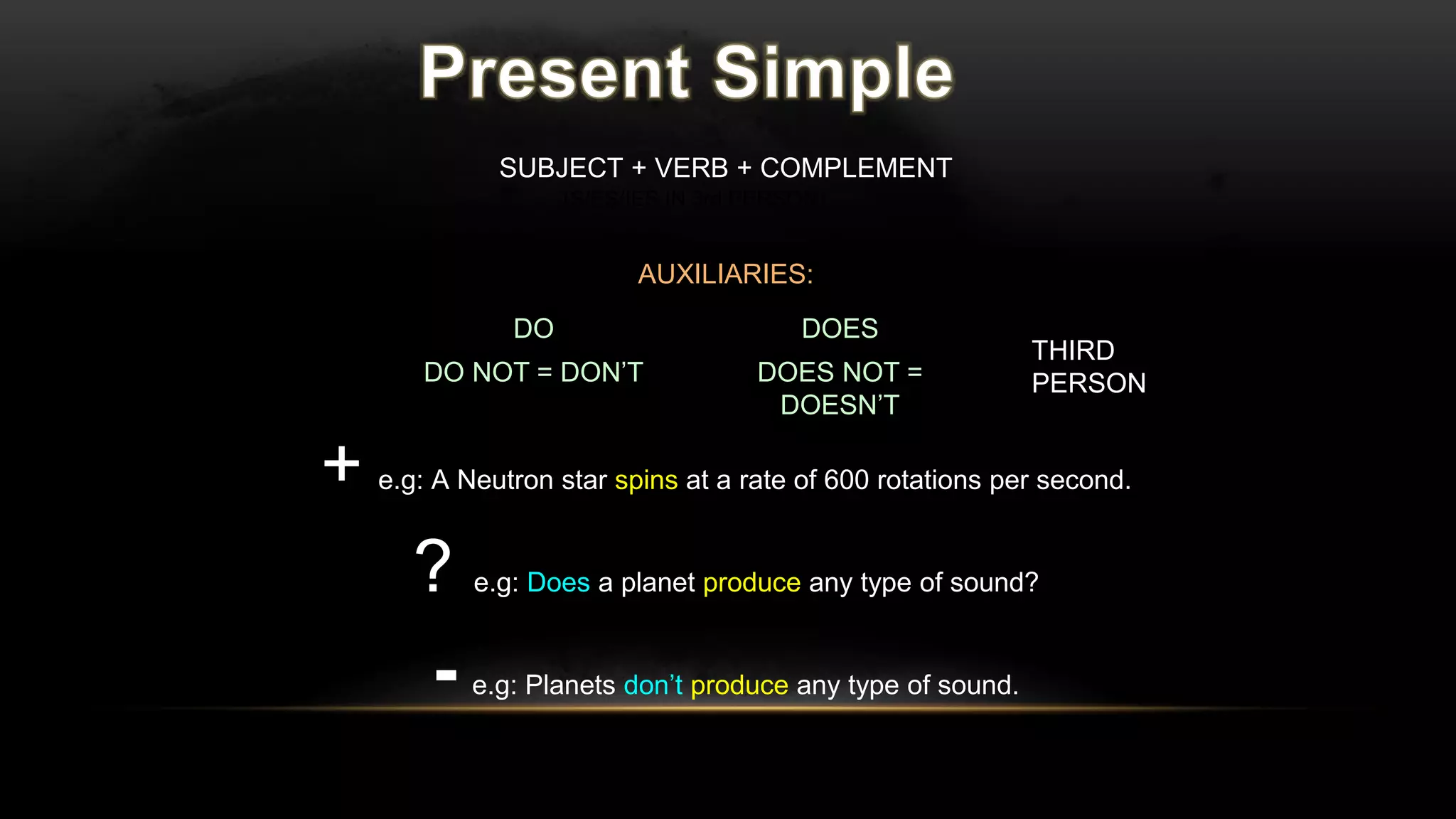
SUBJECT + VERB + COMPLEMENT
AUXILIARIES:
+ e.g: A Neutron star spins at a rate of 600 rotations per second.
? e.g: Does a planet produce any type of sound?
- e.g: Planets don’t produce any type of sound.
(S/ES/IES IN 3rd PERSON)
DO DOES
DO NOT = DON’T DOES NOT =
DOESN’T
} THIRD
PERSON
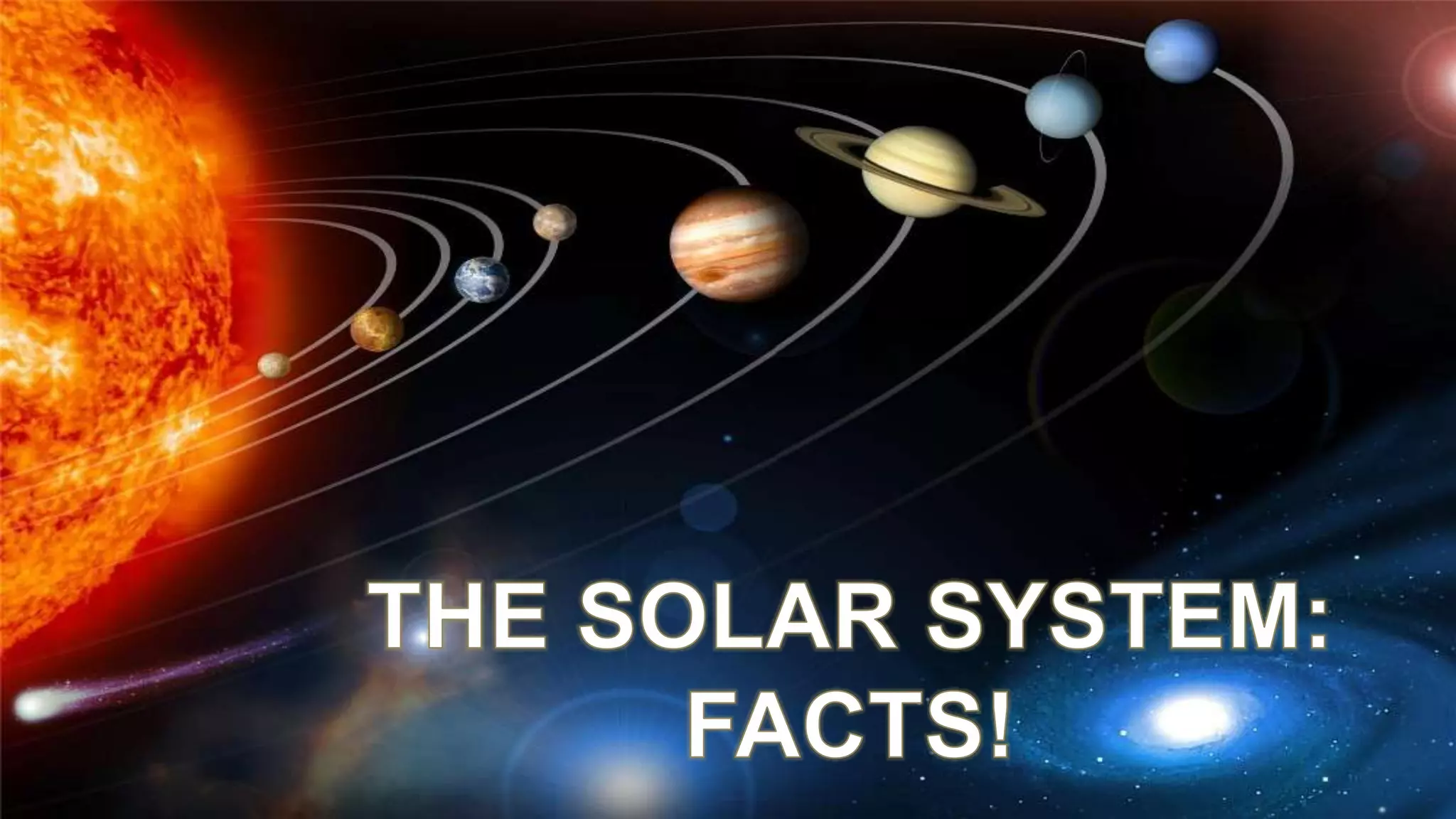
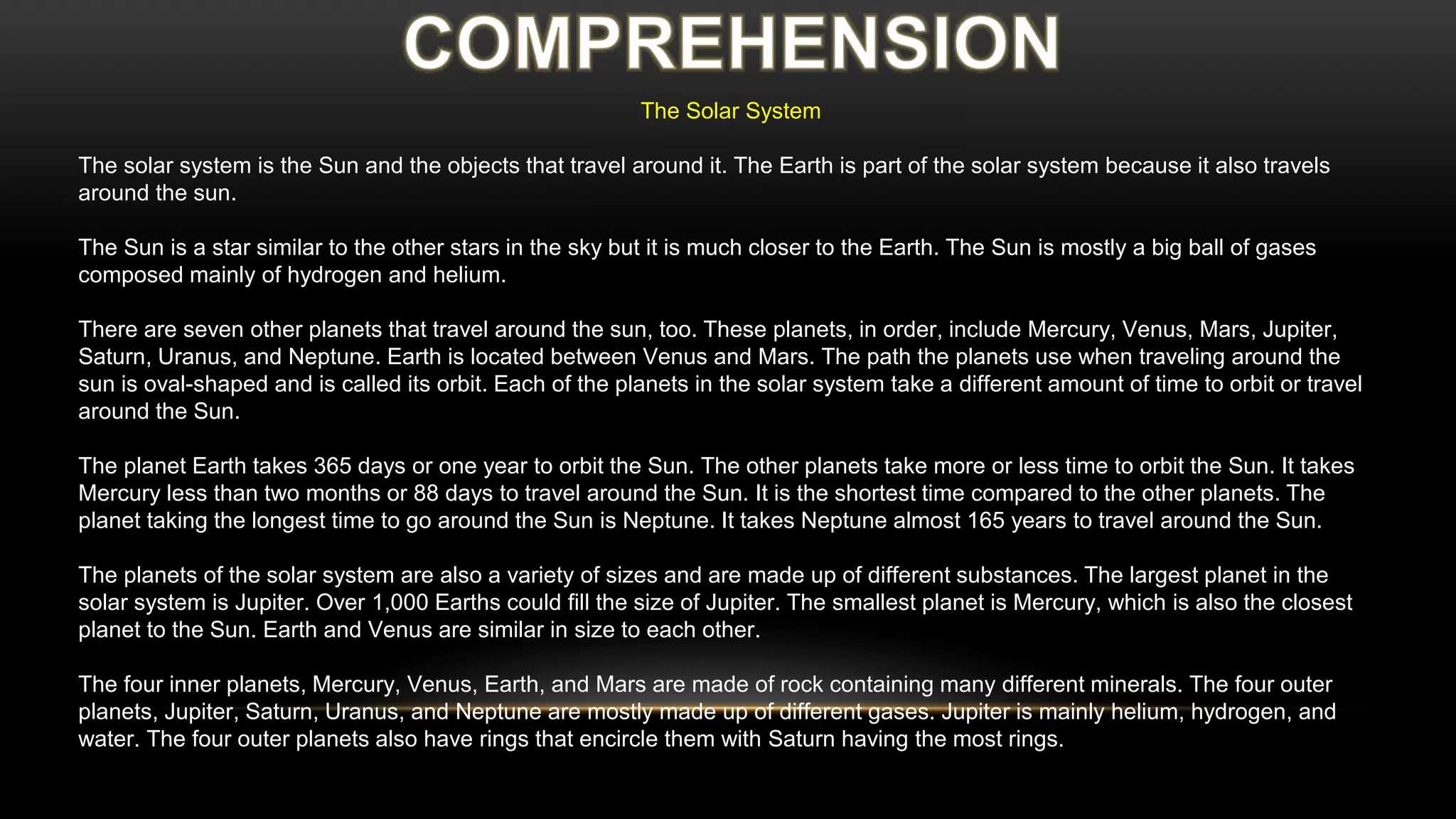
The Solar System
The solar system is the Sun and the objects that travel around it. The Earth is part of the solar system because it also travels
around the sun.
The Sun is a star similar to the other stars in the sky but it is much closer to the Earth. The Sun is mostly a big ball of gases
composed mainly of hydrogen and helium.
There are seven other planets that travel around the sun, too. These planets, in order, include Mercury, Venus, Mars, Jupiter,
Saturn, Uranus, and Neptune. Earth is located between Venus and Mars. The path the planets use when traveling around the
sun is oval-shaped and is called its orbit. Each of the planets in the solar system take a different amount of time to orbit or travel
around the Sun.
The planet Earth takes 365 days or one year to orbit the Sun. The other planets take more or less time to orbit the Sun. It takes
Mercury less than two months or 88 days to travel around the Sun. It is the shortest time compared to the other planets. The
planet taking the longest time to go around the Sun is Neptune. It takes Neptune almost 165 years to travel around the Sun.
The planets of the solar system are also a variety of sizes and are made up of different substances. The largest planet in the
solar system is Jupiter. Over 1,000 Earths could fill the size of Jupiter. The smallest planet is Mercury, which is also the closest
planet to the Sun. Earth and Venus are similar in size to each other.
The four inner planets, Mercury, Venus, Earth, and Mars are made of rock containing many different minerals. The four outer
planets, Jupiter, Saturn, Uranus, and Neptune are mostly made up of different gases. Jupiter is mainly helium, hydrogen, and
water. The four outer planets also have rings that encircle them with Saturn having the most rings.
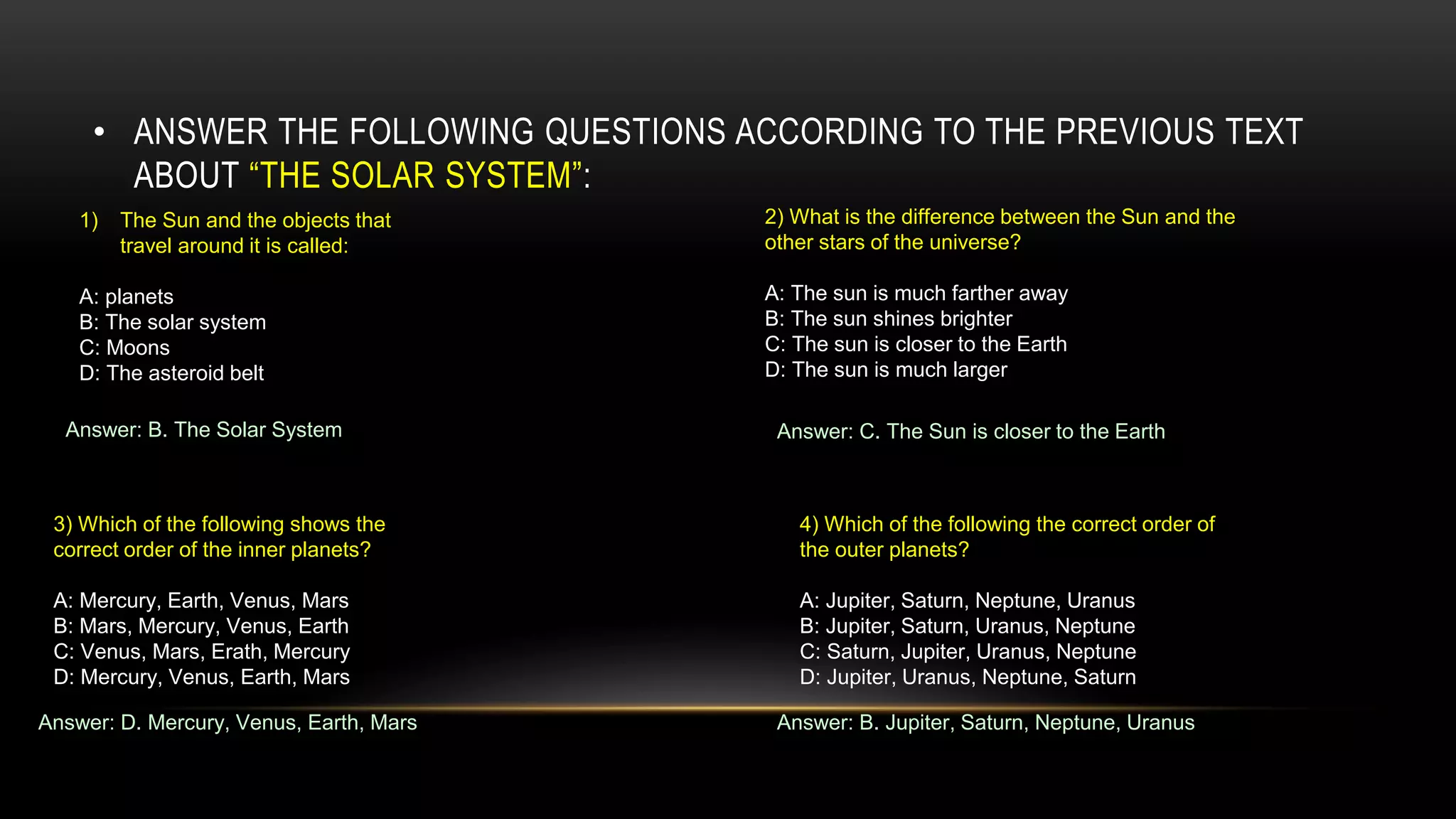
• ANSWER THE FOLLOWING QUESTIONS ACCORDING TO THE PREVIOUS TEXT
ABOUT “THE SOLAR SYSTEM”:
1) The Sun and the objects that
travel around it is called:
A: planets
B: The solar system
C: Moons
D: The asteroid belt
Answer: B. The Solar System
2) What is the difference between the Sun and the
other stars of the universe?
A: The sun is much farther away
B: The sun shines brighter
C: The sun is closer to the Earth
D: The sun is much larger
Answer: C. The Sun is closer to the Earth
3) Which of the following shows the
correct order of the inner planets?
A: Mercury, Earth, Venus, Mars
B: Mars, Mercury, Venus, Earth
C: Venus, Mars, Erath, Mercury
D: Mercury, Venus, Earth, Mars
Answer: D. Mercury, Venus, Earth, Mars
4) Which of the following the correct order of
the outer planets?
A: Jupiter, Saturn, Neptune, Uranus
B: Jupiter, Saturn, Uranus, Neptune
C: Saturn, Jupiter, Uranus, Neptune
D: Jupiter, Uranus, Neptune, Saturn
Answer: B. Jupiter, Saturn, Neptune, Uranus
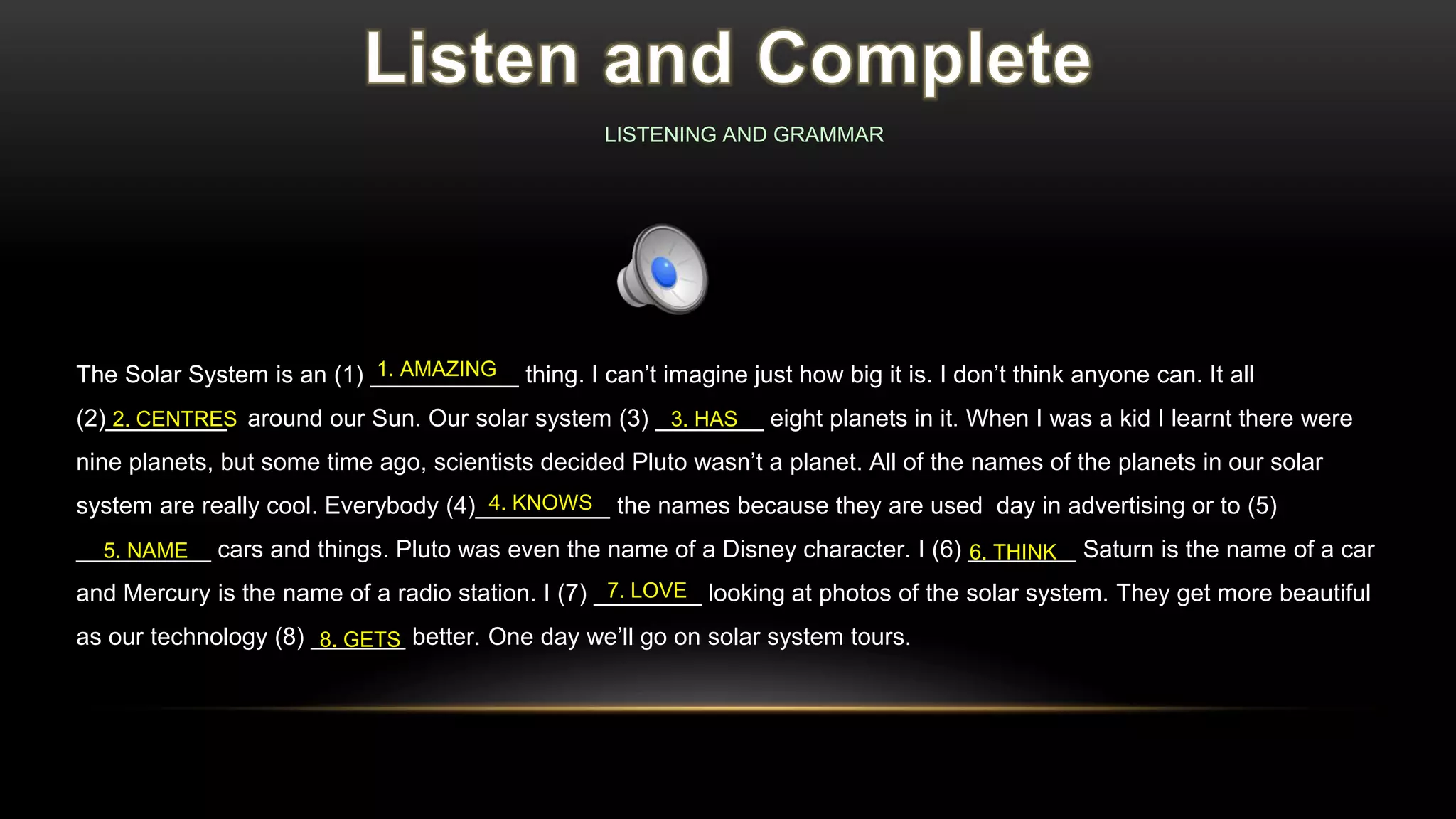
The Solar System is an (1) ___________ thing. I can’t imagine just how big it is. I don’t think anyone can. It all
(2)_________ around our Sun. Our solar system (3) ________ eight planets in it. When I was a kid I learnt there were
nine planets, but some time ago, scientists decided Pluto wasn’t a planet. All of the names of the planets in our solar
system are really cool. Everybody (4)__________ the names because they are used day in advertising or to (5)
__________ cars and things. Pluto was even the name of a Disney character. I (6) ________ Saturn is the name of a car
and Mercury is the name of a radio station. I (7) ________ looking at photos of the solar system. They get more beautiful
as our technology (8) _______ better. One day we’ll go on solar system tours.
1. AMAZING
2. CENTRES 3. HAS
4. KNOWS
5. NAME 6. THINK
7. LOVE
8. GETS
LISTENING AND GRAMMAR
Listen A Minute.comListening 9-Page Handout Quizzes on Solar System. (n.d.). Retrieved February 18, 2017, from
http://www.listenaminute.com/s/solar_system.html
The solar system. (n.d). Retrieved February 19, 2017, from
http://www.softschools.com/language_arts/reading_comprehension/science/3/the_solar_system/

Present Simple

  • 2.
    To the presentsimple galaxy! Please enjoy and do your best to practice hard!
  • 3.
    • VOCABULARY: • ACTIVITYFOR VOCABULARY • TIME EXPRESSIONS • TIME EXPRESSIONS - KNOWLEDGE CHECK. • PRESENT SIMPLE IN THE GALAXY • READING • EXERCISES FOR READING • LISTENING • EXERCISES FOR LISTENING AND GRAMMAR
  • 4.
    Lets hit thefirst stage! Now we will identify the main vocabulary related to the solar system!
  • 8.
    Discovery: Known tothe ancients and visible to the naked eye Named for: Messenger of the Roman gods Diameter: 3,031 miles (4,878 km) Orbit: 88 Earth days Day: 58.6 Earth days Discovery: Known to the ancients and visible to the naked eye Named for: Roman goddess of love and beauty Diameter: 7,521 miles (12,104 km) Orbit: 225 Earth days Day: 241 Earth days
  • 9.
    Diameter: 7,926 miles(12,760 km) Orbit: 365.24 days Day: 23 hours, 56 minute Discovery: Known to the ancients and visible to the naked eye Named for: Roman god of war Diameter: 4,217 miles (6,787 km) Orbit: 687 Earth days Day: Just more than one Earth day (24 hours, 37 minutes)
  • 10.
    Known to theancients and visible to the naked eye Ruler of the Roman gods 86,881 miles (139,822 km) 11.9 Earth years 9.8 Earth hours Known to the ancients and visible to the naked eye Roman god of agriculture 74,900 miles (120,500 km) 29.5 Earth years About 10.5 Earth hours
  • 11.
    1781 by WilliamHerschel (was thought previously to be a star) Personification of heaven in ancient myth 31,763 miles (51,120 km) 84 Earth years 18 Earth hours 1846 Roman god of water 30,775 miles (49,530 km) 165 Earth years 19 Earth hours
  • 12.
    1930 by ClydeTombaugh Roman god of the underworld, 1,430 miles (2,301 km) 248 Earth years 6.4 Earth day To check pronunciation please access to: https://www.howtopronounce.com
  • 13.
    • To extendvocabulary and practice pronunciation please check the following links! • http://www.shertonenglish.com/resources/es/vocabulary/the-universe.php • http://www.english-for-students.com/Vocabulary-Universe.html • https://quizlet.com/5571985/universe-vocabulary-words-flash-cards/ • https://quizlet.com/121672427/solar-sytem-flash-cards/
  • 14.
    Time expressions areused to express the frequency of an action.
  • 15.
    Let’s identify thetime expressions on present simple: • Frequently: • Often: • Usually: • Always: • Never: • Sometimes: • Rarely:
  • 16.
    • Planets rotatearound the sun. • The sun erupts in the inside. • Meteorites travel at high speed. • Moons … • Eclipses are hard to see. • Neptune gets hot. always often usually frequently sometimes never Read the following sentences and identify the time expressions, then click to check your answers
  • 17.
    SUBJECT + VERB+ COMPLEMENT AUXILIARIES: + e.g: A Neutron star spins at a rate of 600 rotations per second. ? e.g: Does a planet produce any type of sound? - e.g: Planets don’t produce any type of sound. (S/ES/IES IN 3rd PERSON) DO DOES DO NOT = DON’T DOES NOT = DOESN’T } THIRD PERSON
  • 18.
    The Solar System Thesolar system is the Sun and the objects that travel around it. The Earth is part of the solar system because it also travels around the sun. The Sun is a star similar to the other stars in the sky but it is much closer to the Earth. The Sun is mostly a big ball of gases composed mainly of hydrogen and helium. There are seven other planets that travel around the sun, too. These planets, in order, include Mercury, Venus, Mars, Jupiter, Saturn, Uranus, and Neptune. Earth is located between Venus and Mars. The path the planets use when traveling around the sun is oval-shaped and is called its orbit. Each of the planets in the solar system take a different amount of time to orbit or travel around the Sun. The planet Earth takes 365 days or one year to orbit the Sun. The other planets take more or less time to orbit the Sun. It takes Mercury less than two months or 88 days to travel around the Sun. It is the shortest time compared to the other planets. The planet taking the longest time to go around the Sun is Neptune. It takes Neptune almost 165 years to travel around the Sun. The planets of the solar system are also a variety of sizes and are made up of different substances. The largest planet in the solar system is Jupiter. Over 1,000 Earths could fill the size of Jupiter. The smallest planet is Mercury, which is also the closest planet to the Sun. Earth and Venus are similar in size to each other. The four inner planets, Mercury, Venus, Earth, and Mars are made of rock containing many different minerals. The four outer planets, Jupiter, Saturn, Uranus, and Neptune are mostly made up of different gases. Jupiter is mainly helium, hydrogen, and water. The four outer planets also have rings that encircle them with Saturn having the most rings.
  • 19.
    • ANSWER THEFOLLOWING QUESTIONS ACCORDING TO THE PREVIOUS TEXT ABOUT “THE SOLAR SYSTEM”: 1) The Sun and the objects that travel around it is called: A: planets B: The solar system C: Moons D: The asteroid belt Answer: B. The Solar System 2) What is the difference between the Sun and the other stars of the universe? A: The sun is much farther away B: The sun shines brighter C: The sun is closer to the Earth D: The sun is much larger Answer: C. The Sun is closer to the Earth 3) Which of the following shows the correct order of the inner planets? A: Mercury, Earth, Venus, Mars B: Mars, Mercury, Venus, Earth C: Venus, Mars, Erath, Mercury D: Mercury, Venus, Earth, Mars Answer: D. Mercury, Venus, Earth, Mars 4) Which of the following the correct order of the outer planets? A: Jupiter, Saturn, Neptune, Uranus B: Jupiter, Saturn, Uranus, Neptune C: Saturn, Jupiter, Uranus, Neptune D: Jupiter, Uranus, Neptune, Saturn Answer: B. Jupiter, Saturn, Neptune, Uranus
  • 20.
    The Solar Systemis an (1) ___________ thing. I can’t imagine just how big it is. I don’t think anyone can. It all (2)_________ around our Sun. Our solar system (3) ________ eight planets in it. When I was a kid I learnt there were nine planets, but some time ago, scientists decided Pluto wasn’t a planet. All of the names of the planets in our solar system are really cool. Everybody (4)__________ the names because they are used day in advertising or to (5) __________ cars and things. Pluto was even the name of a Disney character. I (6) ________ Saturn is the name of a car and Mercury is the name of a radio station. I (7) ________ looking at photos of the solar system. They get more beautiful as our technology (8) _______ better. One day we’ll go on solar system tours. 1. AMAZING 2. CENTRES 3. HAS 4. KNOWS 5. NAME 6. THINK 7. LOVE 8. GETS LISTENING AND GRAMMAR
  • 21.
    Listen A Minute.comListening9-Page Handout Quizzes on Solar System. (n.d.). Retrieved February 18, 2017, from http://www.listenaminute.com/s/solar_system.html The solar system. (n.d). Retrieved February 19, 2017, from http://www.softschools.com/language_arts/reading_comprehension/science/3/the_solar_system/