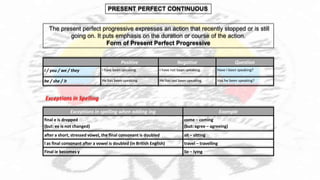
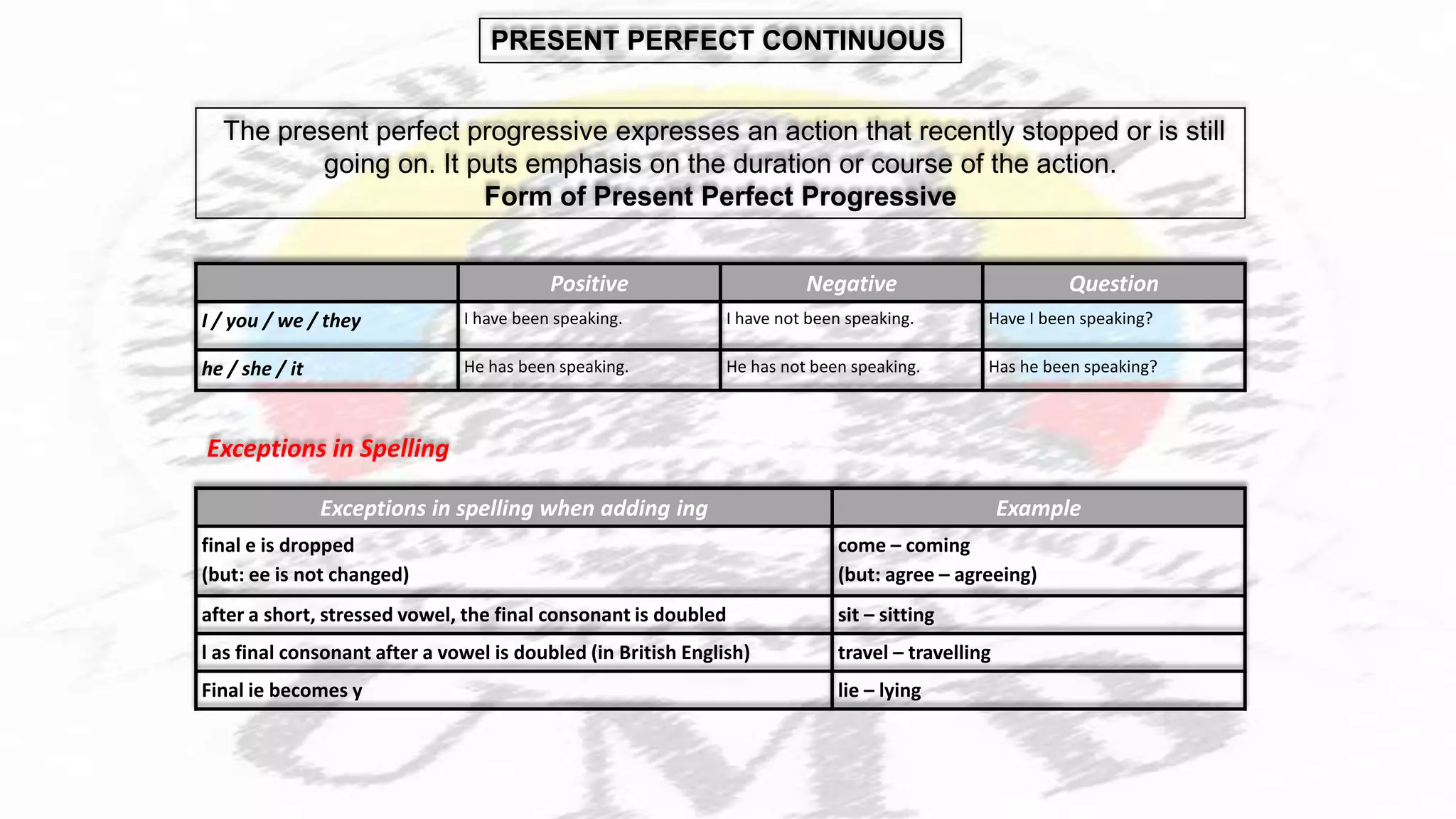
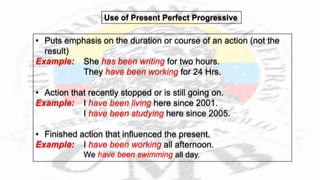
The present perfect progressive tense expresses actions that either recently stopped or are still ongoing, with emphasis on the duration of the action. It is formed using some form of "have/has been" plus the present participle of the verb. There are some spelling exceptions when adding "-ing" to verbs ending in "e", consonant doubling after short vowels, and changing "ie" to "y". The present perfect progressive is used to describe actions that have recently stopped or are still ongoing, with examples given about writing, working, living, studying, and swimming.