4.7 Present Perfect Progressive
vs. Present Perfect
Page 101
PRESENTPERFECT
PROGRESSIVE
The present perfect progressive expresses
the duration of present activities. The
activity began in the past and is still in
progress.
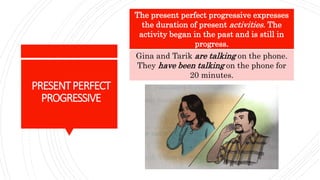
Gina and Tarik are talking on the phone.
They have been talking on the phone for
20 minutes.
PRESENTPERFECT
PROGRESSIVE
When you use the present perfect
progressive in this way, it is
generally with for or since.
They have been talking on the phone
for 20 minutes.
Ms. Agard has been teaching
English since 1972.
PRESENTPERFECT
PROGRESSIVEand
PRESENTPERFECT
When you use for or since, the
present perfect progressive and the
present perfect have the same
meaning.
They have been talking on the phone
for 20 minutes.
=
They have talked on the phone for
20 minutes.
Ms. Agard has been teaching
English since 1972.
=
Ms. Agard has taught English since
1972.
PRESENTPERFECT
PROGRESSIVEand
PRESENTPERFECT
withNOFORORSINCE:
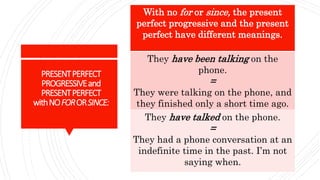
With no for or since, the present
perfect progressive and the present
perfect have different meanings.
They have been talking on the
phone.
=
They were talking on the phone, and
they finished only a short time ago.
They have talked on the phone.
=
They had a phone conversation at an
indefinite time in the past. I’m not
saying when.
PRESENTPERFECT
PROGRESSIVEand
PRESENTPERFECT
withNOFORORSINCE:
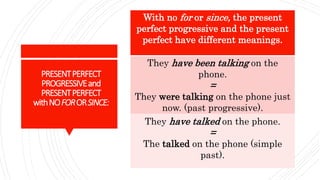
With no for or since, the present
perfect progressive and the present
perfect have different meanings.
They have been talking on the
phone.
=
They were talking on the phone just
now. (past progressive).
They have talked on the phone.
=
The talked on the phone (simple
past).
REMEMBERTHAT
NON-ACTIONVERBS
ARENOTUSEDIN
THEPROGRESSIVE
TENSES:
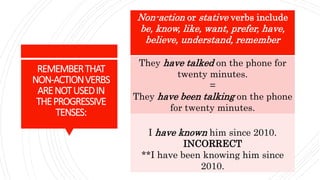
Non-action or stative verbs include
be, know, like, want, prefer, have,
believe, understand, remember
They have talked on the phone for
twenty minutes.
=
They have been talking on the phone
for twenty minutes.
I have known him since 2010.
INCORRECT
**I have been knowing him since
2010.

4 7 present perfect progressive vs present perfect

  • 1.
    4.7 Present PerfectProgressive vs. Present Perfect Page 101
  • 2.
    PRESENTPERFECT PROGRESSIVE The present perfectprogressive expresses the duration of present activities. The activity began in the past and is still in progress. Gina and Tarik are talking on the phone. They have been talking on the phone for 20 minutes.
  • 3.
    PRESENTPERFECT PROGRESSIVE When you usethe present perfect progressive in this way, it is generally with for or since. They have been talking on the phone for 20 minutes. Ms. Agard has been teaching English since 1972.
  • 4.
    PRESENTPERFECT PROGRESSIVEand PRESENTPERFECT When you usefor or since, the present perfect progressive and the present perfect have the same meaning. They have been talking on the phone for 20 minutes. = They have talked on the phone for 20 minutes. Ms. Agard has been teaching English since 1972. = Ms. Agard has taught English since 1972.
  • 5.
    PRESENTPERFECT PROGRESSIVEand PRESENTPERFECT withNOFORORSINCE: With no foror since, the present perfect progressive and the present perfect have different meanings. They have been talking on the phone. = They were talking on the phone, and they finished only a short time ago. They have talked on the phone. = They had a phone conversation at an indefinite time in the past. I’m not saying when.
  • 6.
    PRESENTPERFECT PROGRESSIVEand PRESENTPERFECT withNOFORORSINCE: With no foror since, the present perfect progressive and the present perfect have different meanings. They have been talking on the phone. = They were talking on the phone just now. (past progressive). They have talked on the phone. = The talked on the phone (simple past).
  • 7.
    REMEMBERTHAT NON-ACTIONVERBS ARENOTUSEDIN THEPROGRESSIVE TENSES: Non-action or stativeverbs include be, know, like, want, prefer, have, believe, understand, remember They have talked on the phone for twenty minutes. = They have been talking on the phone for twenty minutes. I have known him since 2010. INCORRECT **I have been knowing him since 2010.