Present Perfect Continuous 
(I have been doing)
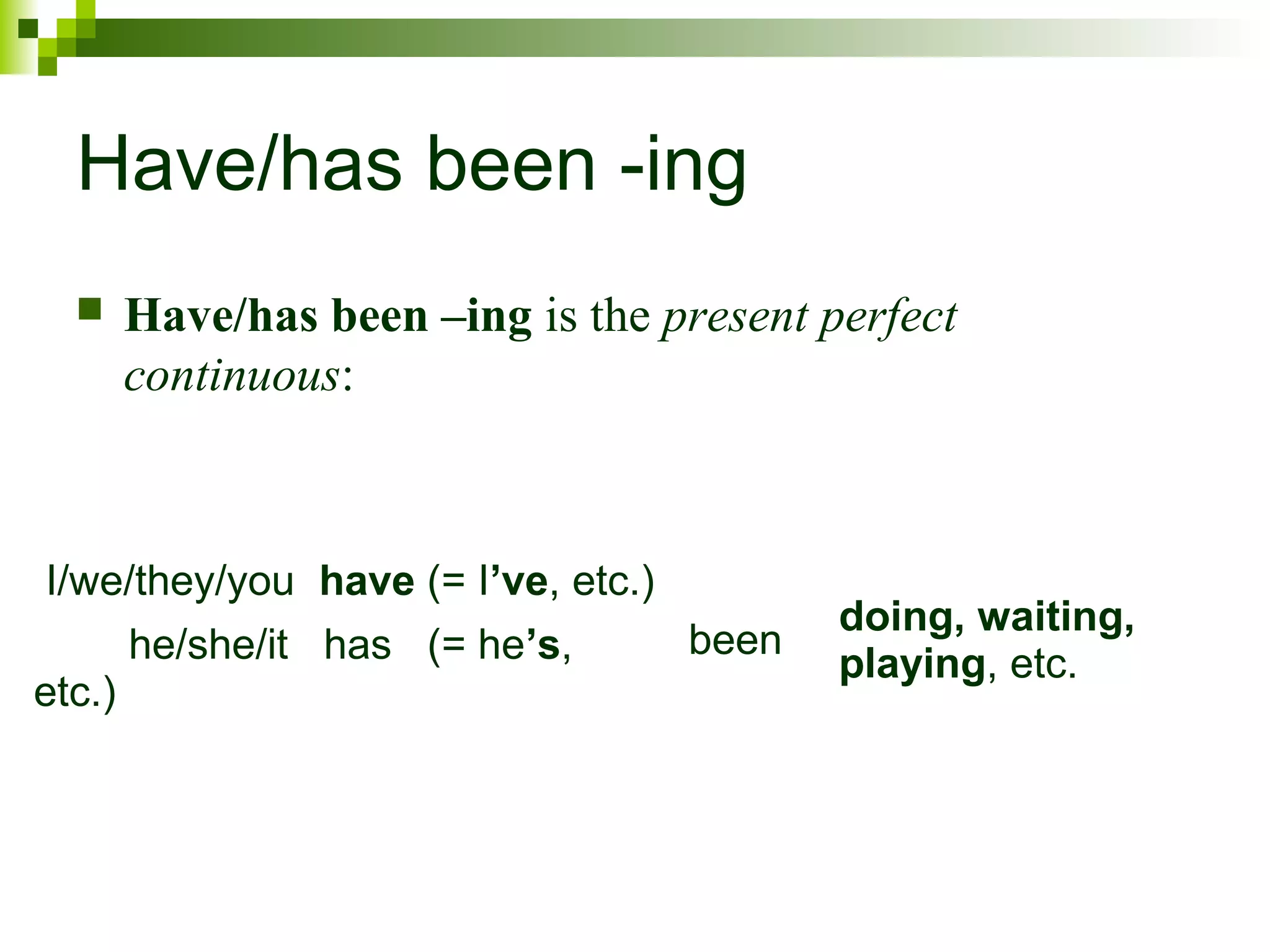
Have/has been -ing 
 Have/has been –ing is the present perfect 
continuous: 
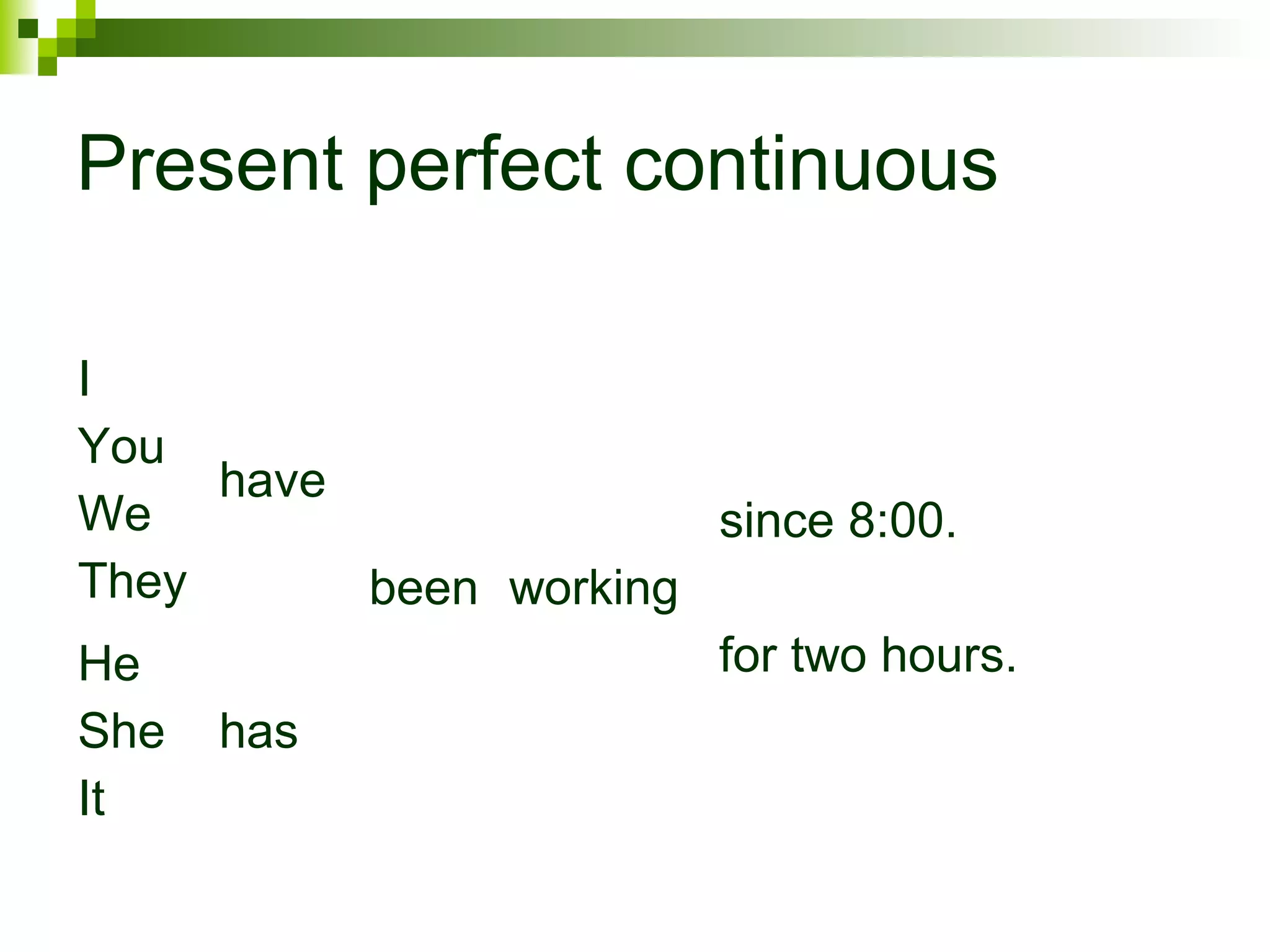
I/we/they/you have (= I’ve, etc.) 
been doing, waiting, 
he/she/it has (= he’s, playing, etc. 
etc.)
Present perfect continuous 
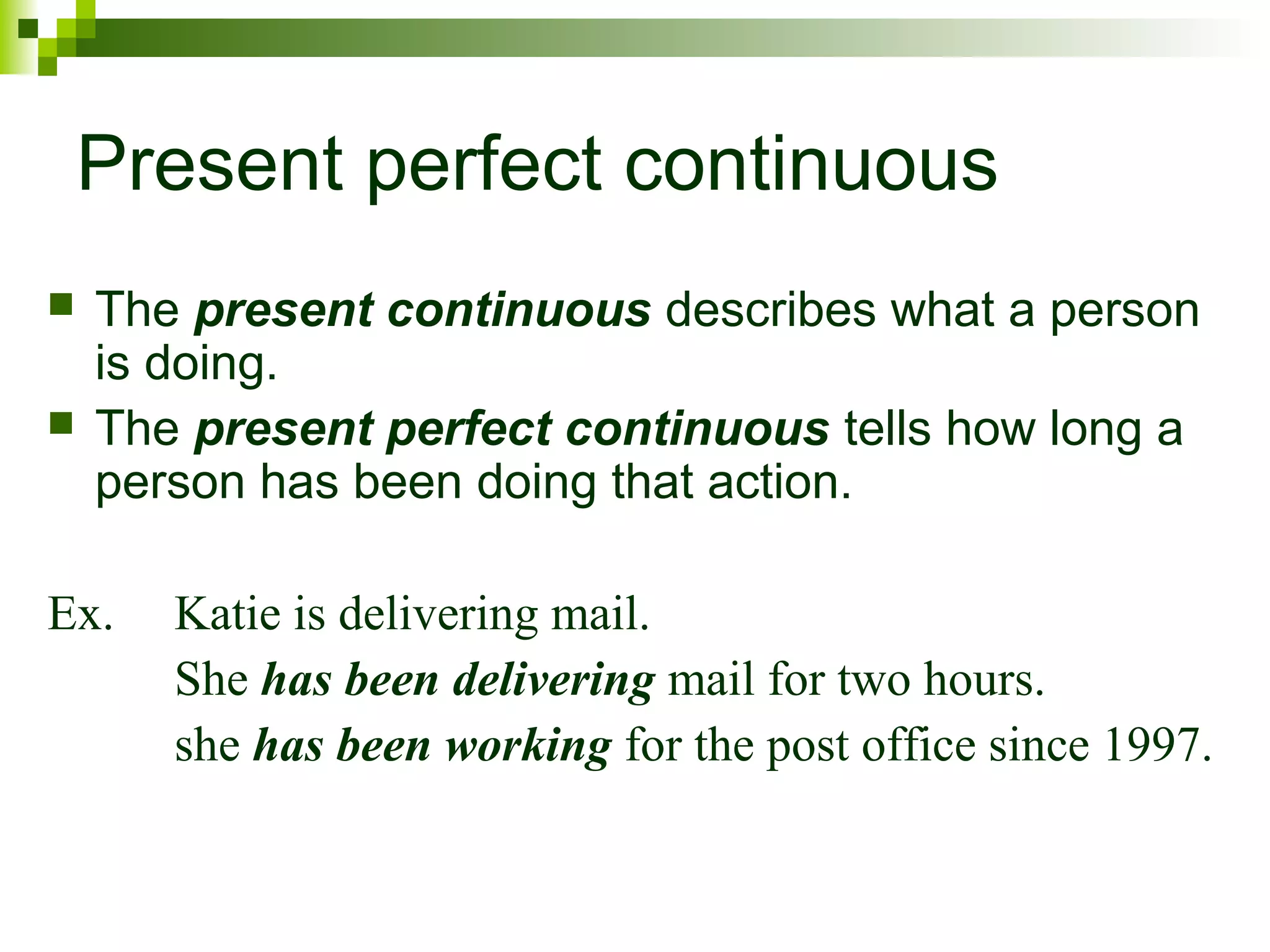
 The present continuous describes what a person 
is doing. 
 The present perfect continuous tells how long a 
person has been doing that action. 
Ex. Katie is delivering mail. 
She has been delivering mail for two hours. 
she has been working for the post office since 1997.
Present perfect continuous 
 The present perfect continuous talks 
about an action that started in the past 
and continues in the present. The action is 
not yet complete. It tells how long the 
action has been in progress.
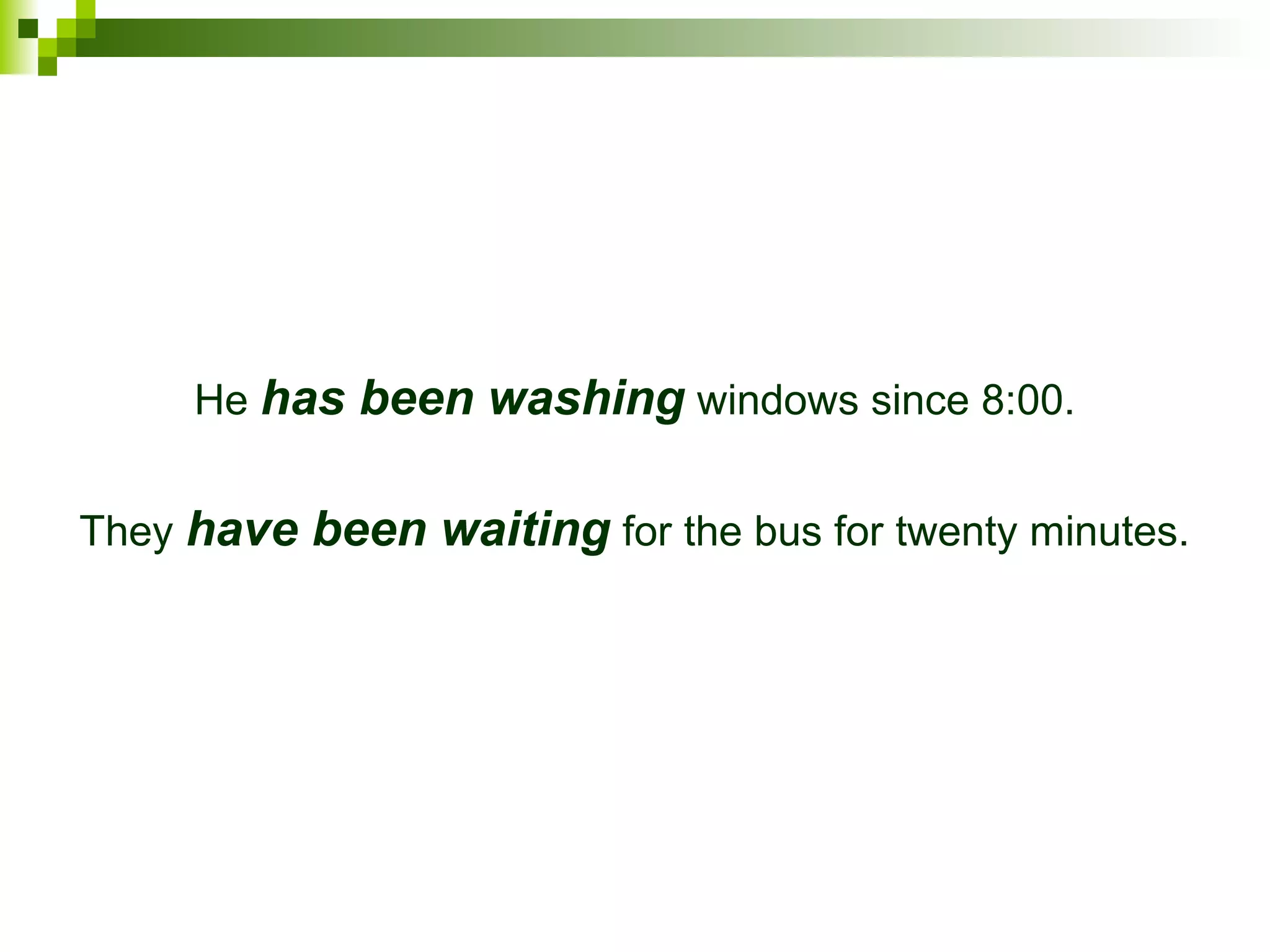
He has been washing windows since 8:00. 
They have been waiting for the bus for twenty minutes.
Present perfect continuous 
I 
You 
We 
They 
have 
been working 
since 8:00. 
He for two hours. 
She 
has 
It
Since & For 
You can use the present perfect continuous for 
actions that are repeated over a period of time: 
 Debbie is a very good tennis player. She’s been 
playing since she was eight. 
 Every morning they meet in the same café. 
They’ve been going there for years.
For and since 
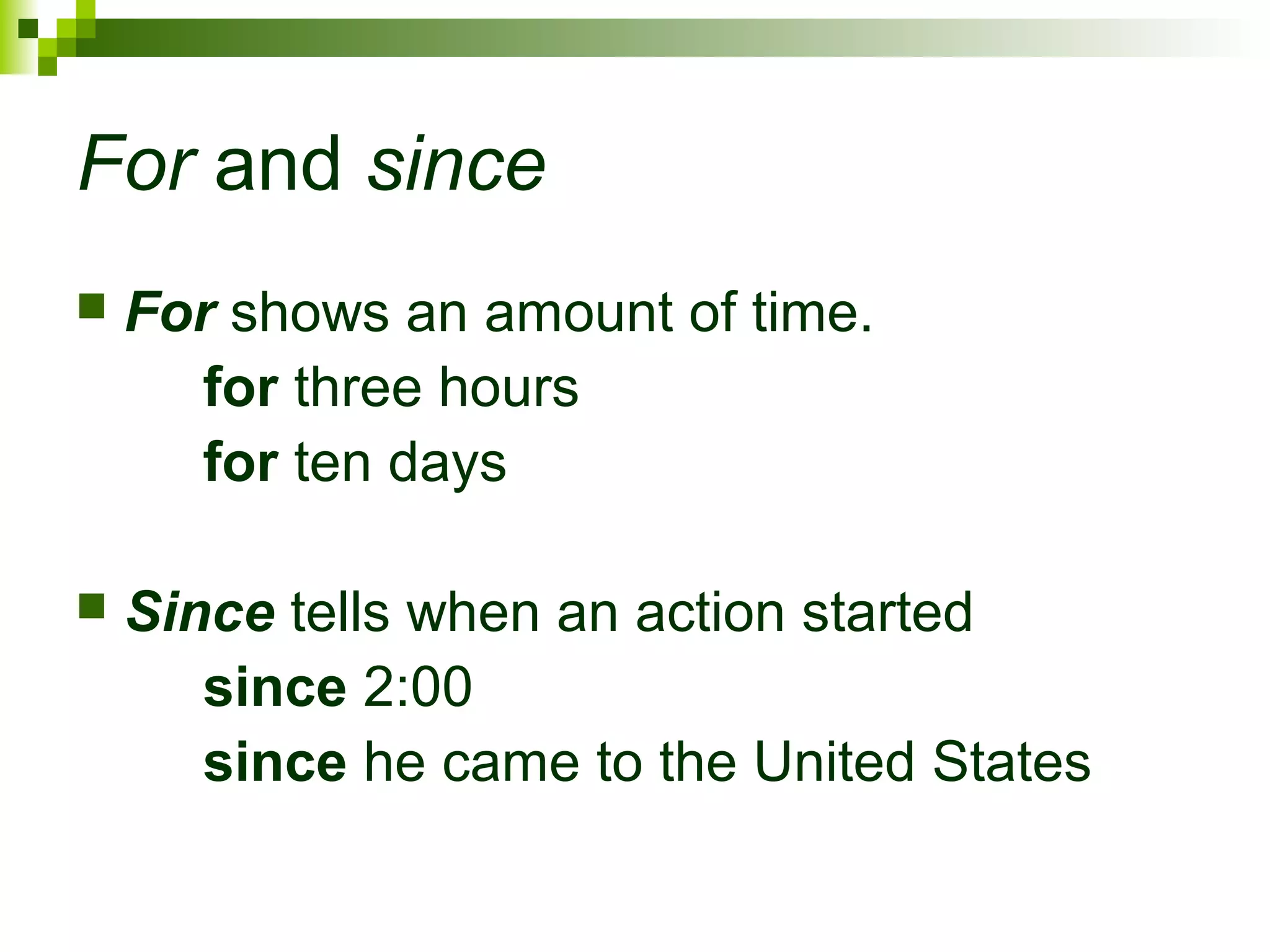
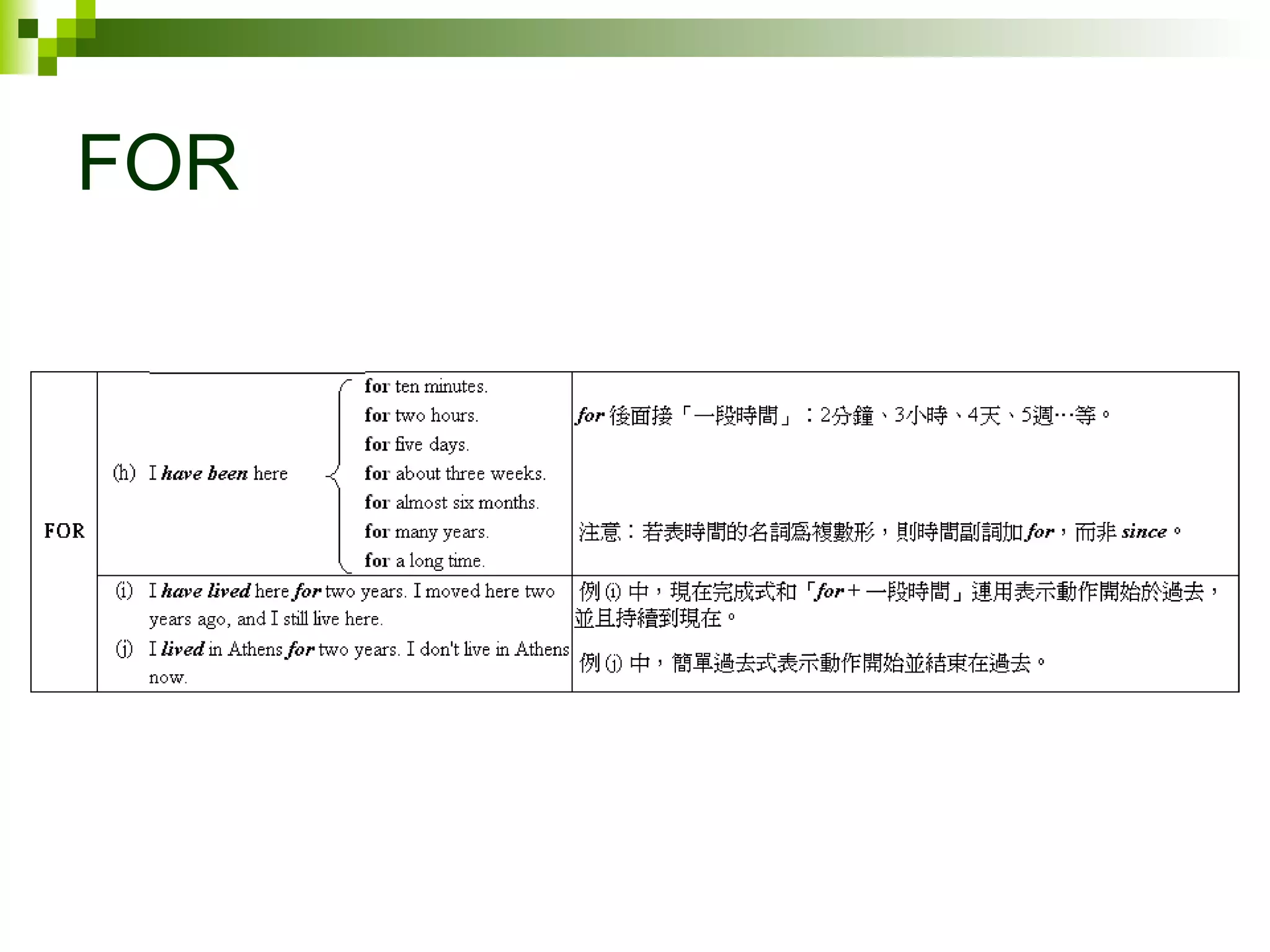
 For shows an amount of time. 
for three hours 
for ten days 
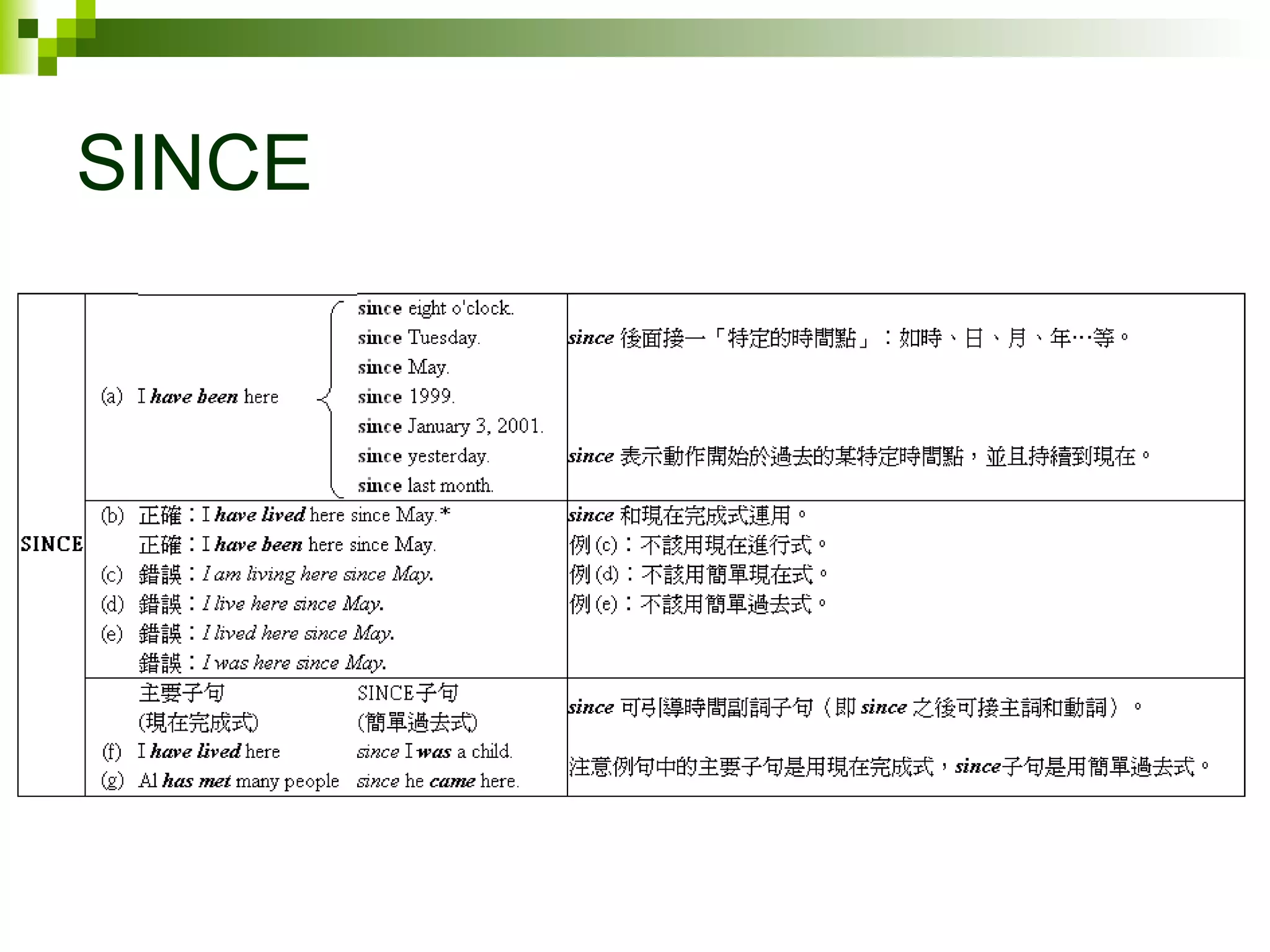
 Since tells when an action started 
since 2:00 
since he came to the United States
For and since 
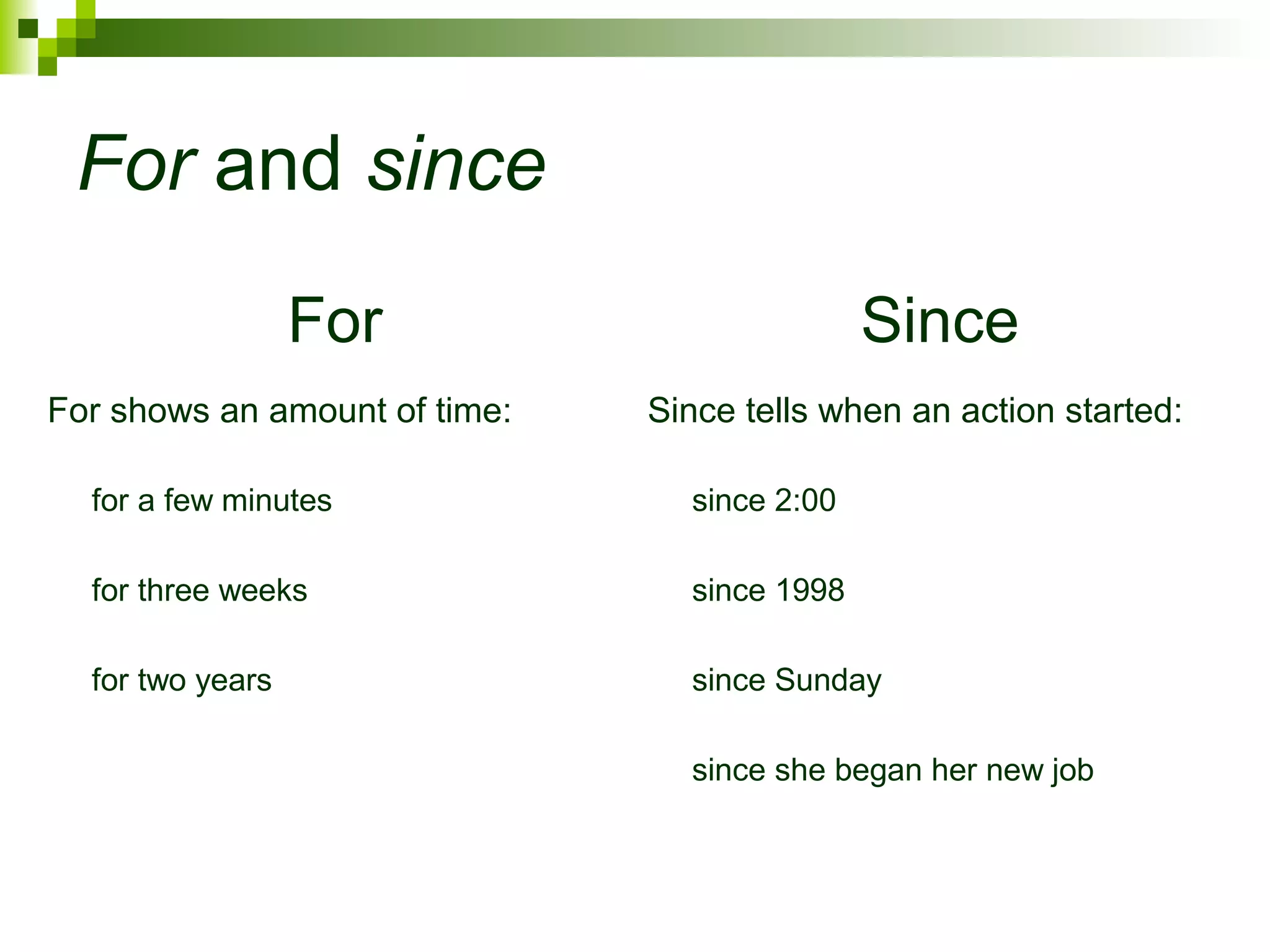
For Since 
For shows an amount of time: Since tells when an action started: 
for a few minutes since 2:00 
for three weeks since 1998 
for two years since Sunday 
since she began her new job
SINCE
FOR
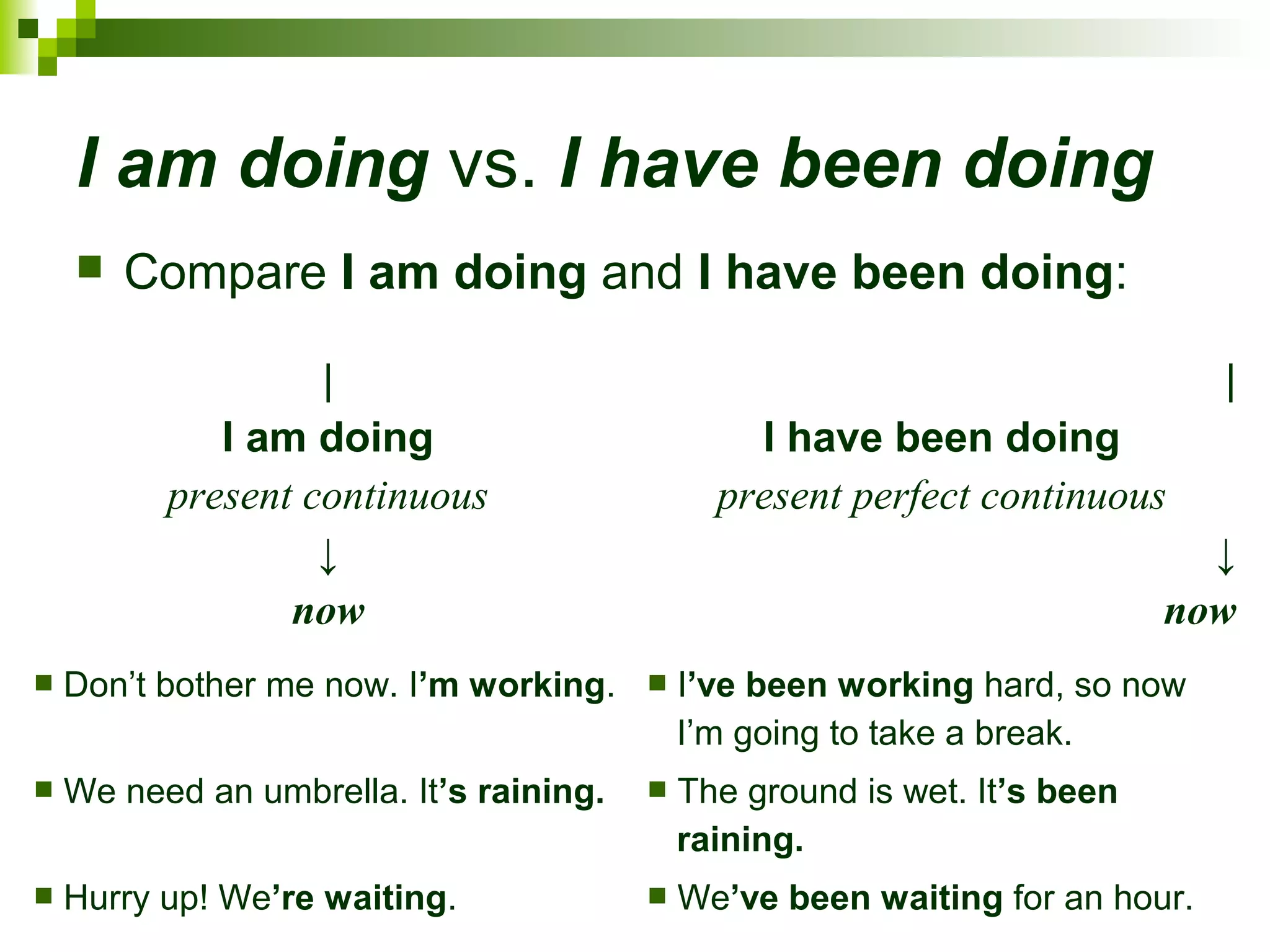
I am doing vs. I have been doing 
 Compare I am doing and I have been doing: 
∣ 
I am doing 
present continuous 
↓ 
now 
∣ 
I have been doing 
present perfect continuous 
↓ 
now 
 Don’t bother me now. I’m working.  I’ve been working hard, so now 
I’m going to take a break. 
 We need an umbrella. It’s raining.  The ground is wet. It’s been 
raining. 
 Hurry up! We’re waiting.  We’ve been waiting for an hour.
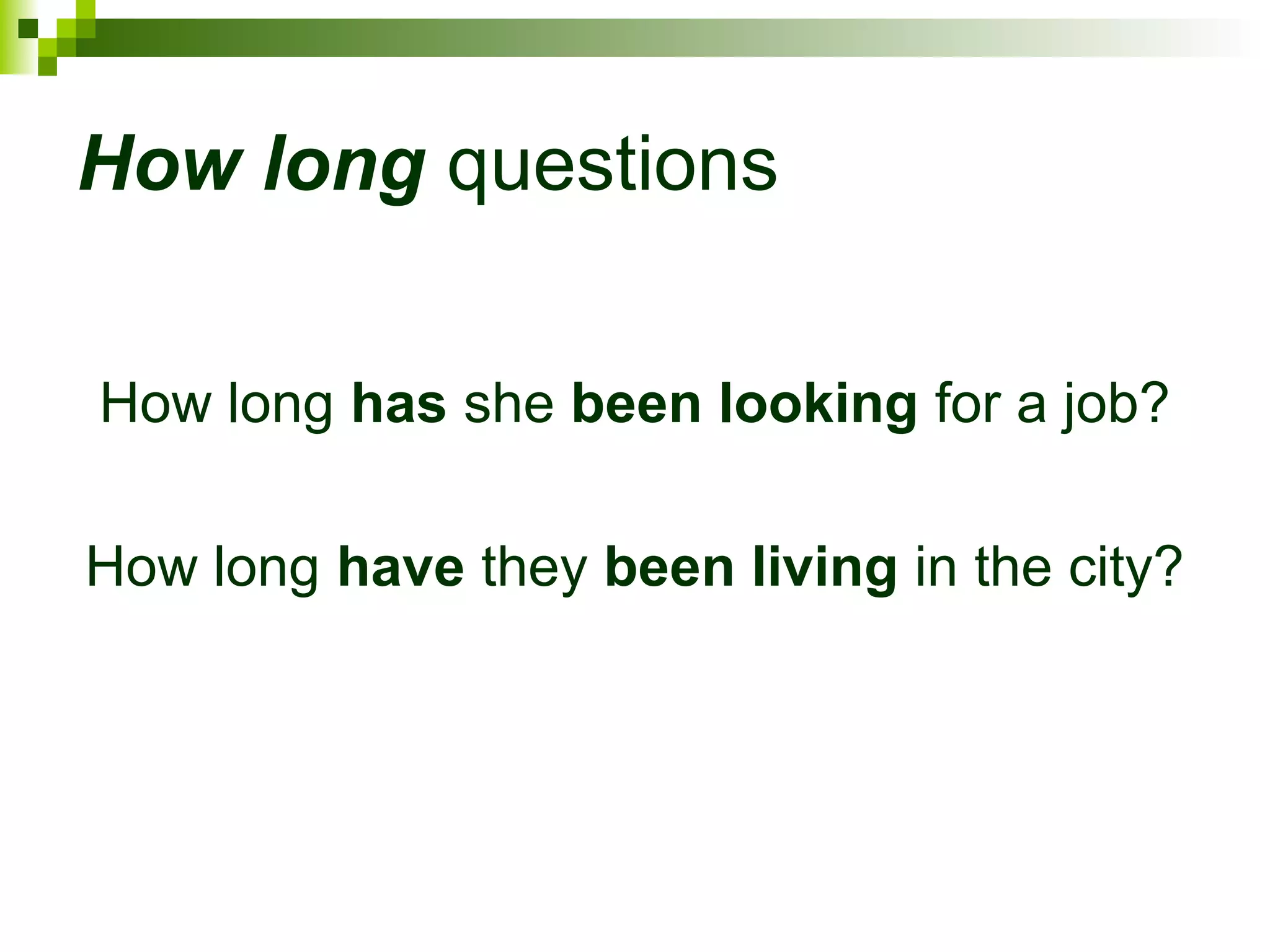
How long questions 
How long has she been looking for a job? 
How long have they been living in the city?
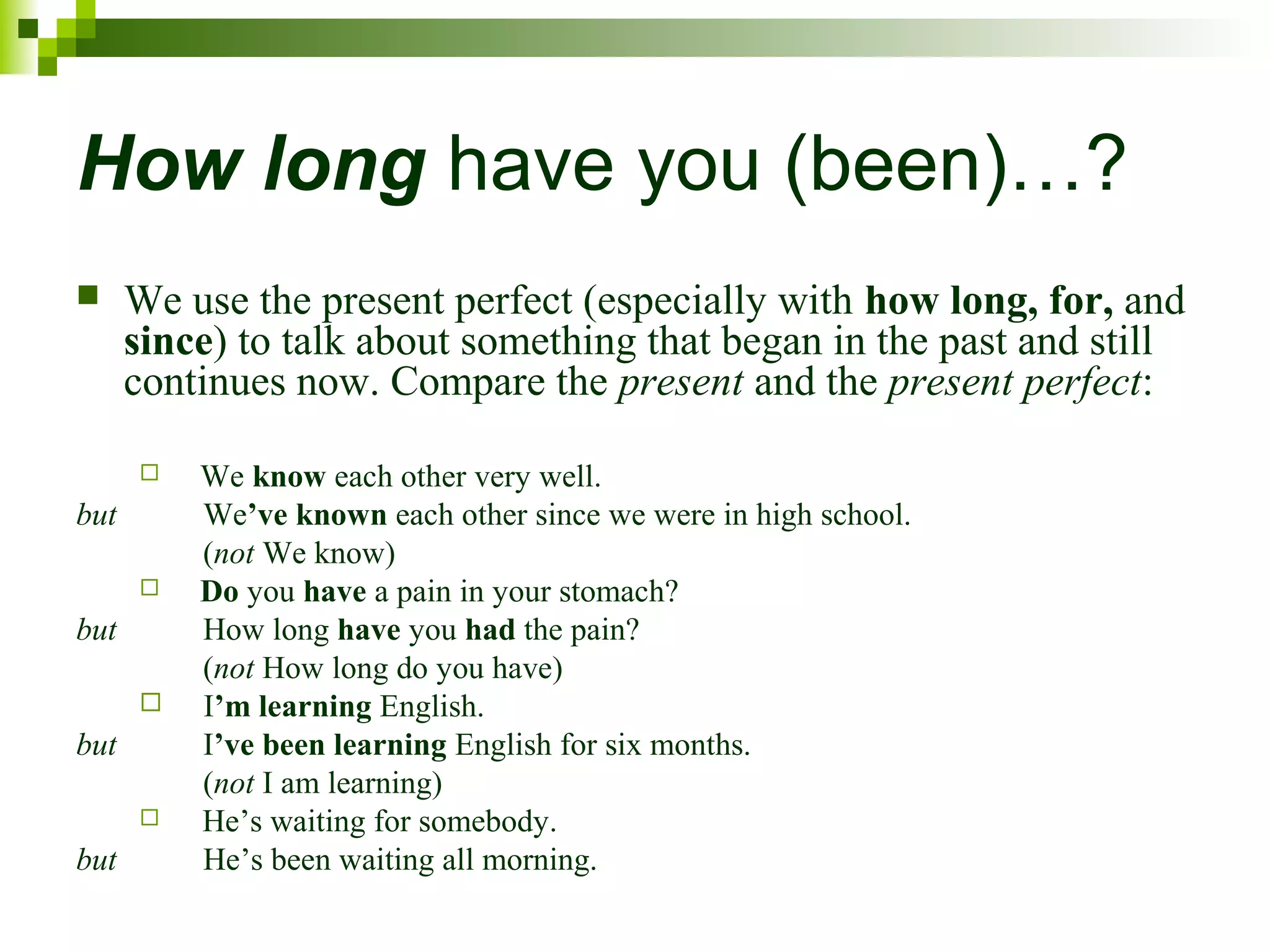
How long have you (been)…? 
 We use the present perfect (especially with how long, for, and 
since) to talk about something that began in the past and still 
continues now. Compare the present and the present perfect: 
 We know each other very well. 
but We’ve known each other since we were in high school. 
(not We know) 
 Do you have a pain in your stomach? 
but How long have you had the pain? 
(not How long do you have) 
 I’m learning English. 
but I’ve been learning English for six months. 
(not I am learning) 
 He’s waiting for somebody. 
but He’s been waiting all morning.
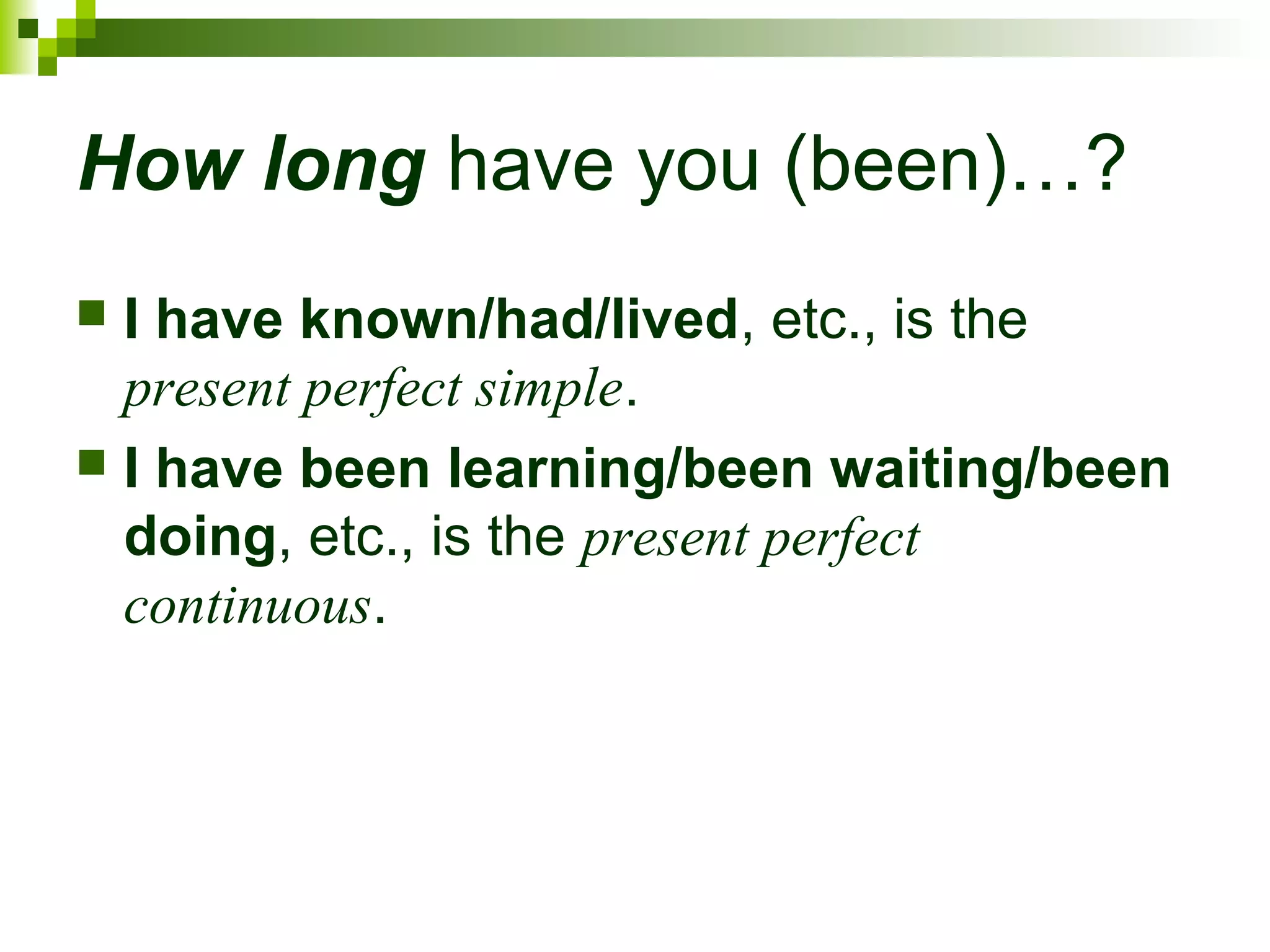
How long have you (been)…? 
 I have known/had/lived, etc., is the 
present perfect simple. 
 I have been learning/been waiting/been 
doing, etc., is the present perfect 
continuous.
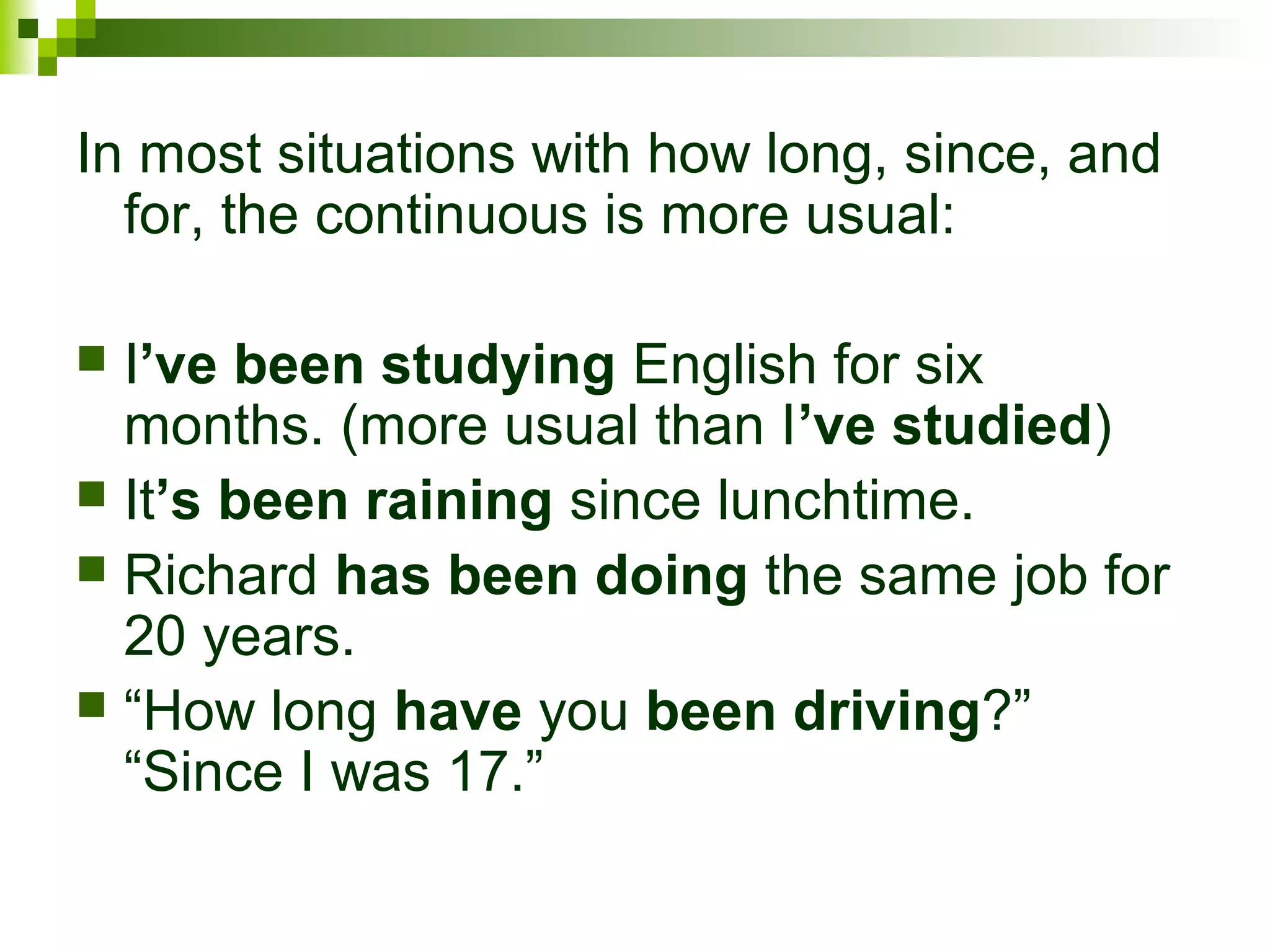
In most situations with how long, since, and 
for, the continuous is more usual: 
 I’ve been studying English for six 
months. (more usual than I’ve studied) 
 It’s been raining since lunchtime. 
 Richard has been doing the same job for 
20 years. 
 “How long have you been driving?” 
“Since I was 17.”
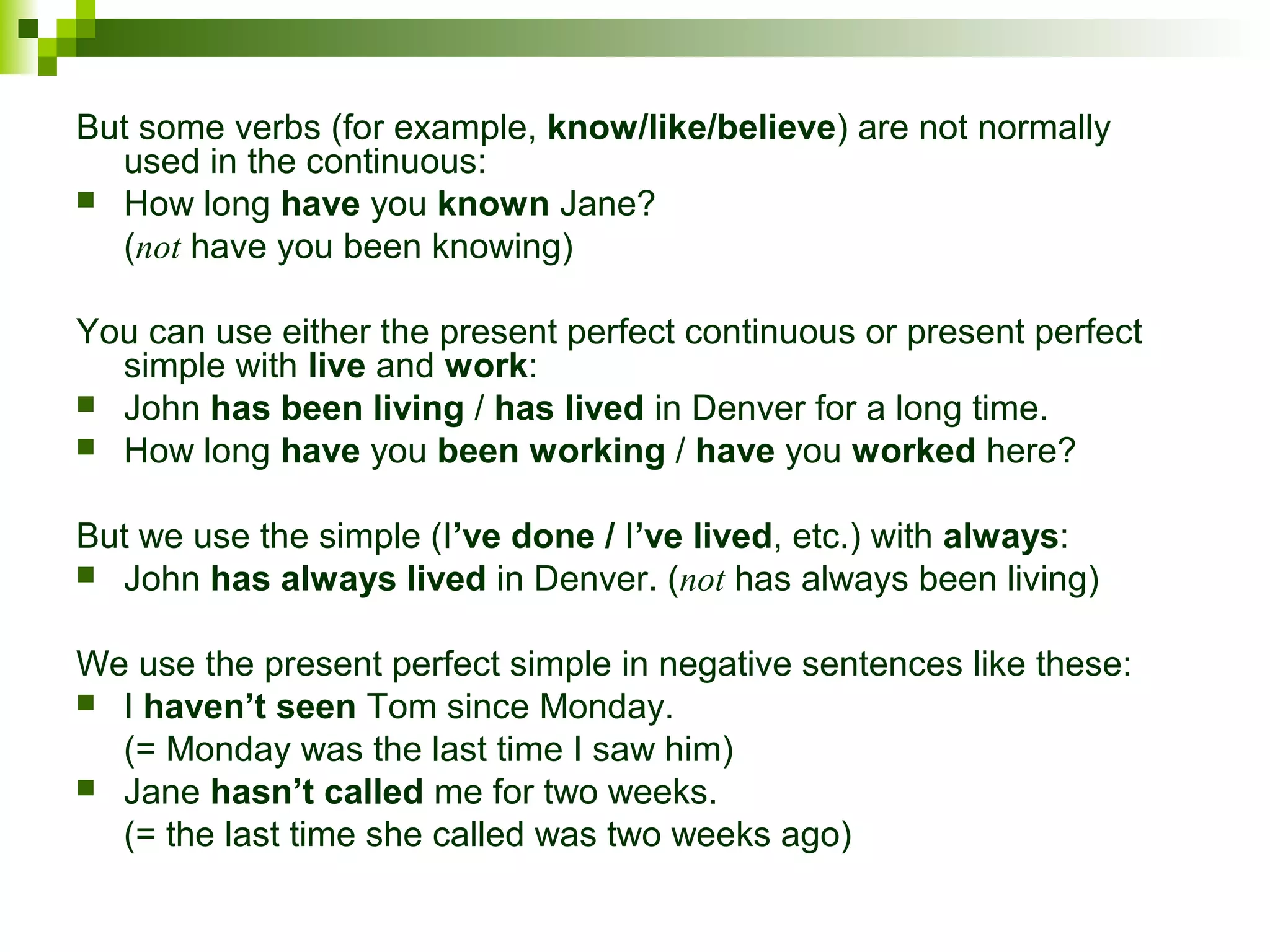
But some verbs (for example, know/like/believe) are not normally 
used in the continuous: 
 How long have you known Jane? 
(not have you been knowing) 
You can use either the present perfect continuous or present perfect 
simple with live and work: 
 John has been living / has lived in Denver for a long time. 
 How long have you been working / have you worked here? 
But we use the simple (I’ve done / I’ve lived, etc.) with always: 
 John has always lived in Denver. (not has always been living) 
We use the present perfect simple in negative sentences like these: 
 I haven’t seen Tom since Monday. 
(= Monday was the last time I saw him) 
 Jane hasn’t called me for two weeks. 
(= the last time she called was two weeks ago)

Present perfect continuous

  • 1.
    Present Perfect Continuous (I have been doing)
  • 2.
    Have/has been -ing  Have/has been –ing is the present perfect continuous: I/we/they/you have (= I’ve, etc.) been doing, waiting, he/she/it has (= he’s, playing, etc. etc.)
  • 3.
    Present perfect continuous  The present continuous describes what a person is doing.  The present perfect continuous tells how long a person has been doing that action. Ex. Katie is delivering mail. She has been delivering mail for two hours. she has been working for the post office since 1997.
  • 4.
    Present perfect continuous  The present perfect continuous talks about an action that started in the past and continues in the present. The action is not yet complete. It tells how long the action has been in progress.
  • 5.
    He has beenwashing windows since 8:00. They have been waiting for the bus for twenty minutes.
  • 6.
    Present perfect continuous I You We They have been working since 8:00. He for two hours. She has It
  • 7.
    Since & For You can use the present perfect continuous for actions that are repeated over a period of time:  Debbie is a very good tennis player. She’s been playing since she was eight.  Every morning they meet in the same café. They’ve been going there for years.
  • 8.
    For and since  For shows an amount of time. for three hours for ten days  Since tells when an action started since 2:00 since he came to the United States
  • 9.
    For and since For Since For shows an amount of time: Since tells when an action started: for a few minutes since 2:00 for three weeks since 1998 for two years since Sunday since she began her new job
  • 10.
  • 11.
  • 12.
    I am doingvs. I have been doing  Compare I am doing and I have been doing: ∣ I am doing present continuous ↓ now ∣ I have been doing present perfect continuous ↓ now  Don’t bother me now. I’m working.  I’ve been working hard, so now I’m going to take a break.  We need an umbrella. It’s raining.  The ground is wet. It’s been raining.  Hurry up! We’re waiting.  We’ve been waiting for an hour.
  • 13.
    How long questions How long has she been looking for a job? How long have they been living in the city?
  • 14.
    How long haveyou (been)…?  We use the present perfect (especially with how long, for, and since) to talk about something that began in the past and still continues now. Compare the present and the present perfect:  We know each other very well. but We’ve known each other since we were in high school. (not We know)  Do you have a pain in your stomach? but How long have you had the pain? (not How long do you have)  I’m learning English. but I’ve been learning English for six months. (not I am learning)  He’s waiting for somebody. but He’s been waiting all morning.
  • 15.
    How long haveyou (been)…?  I have known/had/lived, etc., is the present perfect simple.  I have been learning/been waiting/been doing, etc., is the present perfect continuous.
  • 16.
    In most situationswith how long, since, and for, the continuous is more usual:  I’ve been studying English for six months. (more usual than I’ve studied)  It’s been raining since lunchtime.  Richard has been doing the same job for 20 years.  “How long have you been driving?” “Since I was 17.”
  • 17.
    But some verbs(for example, know/like/believe) are not normally used in the continuous:  How long have you known Jane? (not have you been knowing) You can use either the present perfect continuous or present perfect simple with live and work:  John has been living / has lived in Denver for a long time.  How long have you been working / have you worked here? But we use the simple (I’ve done / I’ve lived, etc.) with always:  John has always lived in Denver. (not has always been living) We use the present perfect simple in negative sentences like these:  I haven’t seen Tom since Monday. (= Monday was the last time I saw him)  Jane hasn’t called me for two weeks. (= the last time she called was two weeks ago)