I N G L Ê S 9 ª C L A S S E
2 . W O M E N O C C U P A T I O N S
Present Perfect
Present Perfect
 Present perfect is a verb tense.
 It is used when we want to describe an action or
event that started at an unspecified time before the
present time (and has just ended); when the exact
time isn’t important.
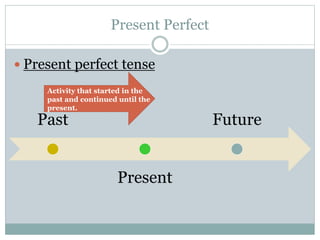
 Present perfect tense
Past
Present
Future
Present Perfect
Activity that started in the
past and continued until the
present.
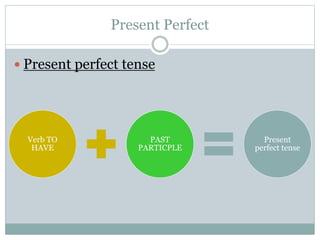
 Present perfect tense
Verb TO
HAVE
PAST
PARTICPLE
Present
perfect tense
Present Perfect
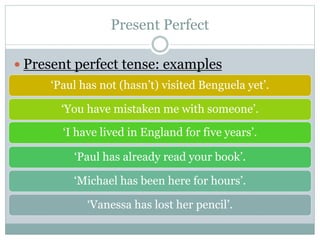
 Present perfect tense: examples
‘Paul has not (hasn’t) visited Benguela yet’.
‘You have mistaken me with someone’.
‘I have lived in England for five years’.
‘Paul has already read your book’.
‘Michael has been here for hours’.
‘Vanessa has lost her pencil’.
Present Perfect

Present perfect

  • 1.
    I N GL Ê S 9 ª C L A S S E 2 . W O M E N O C C U P A T I O N S Present Perfect
  • 2.
    Present Perfect  Presentperfect is a verb tense.  It is used when we want to describe an action or event that started at an unspecified time before the present time (and has just ended); when the exact time isn’t important.
  • 3.
     Present perfecttense Past Present Future Present Perfect Activity that started in the past and continued until the present.
  • 4.
     Present perfecttense Verb TO HAVE PAST PARTICPLE Present perfect tense Present Perfect
  • 5.
     Present perfecttense: examples ‘Paul has not (hasn’t) visited Benguela yet’. ‘You have mistaken me with someone’. ‘I have lived in England for five years’. ‘Paul has already read your book’. ‘Michael has been here for hours’. ‘Vanessa has lost her pencil’. Present Perfect