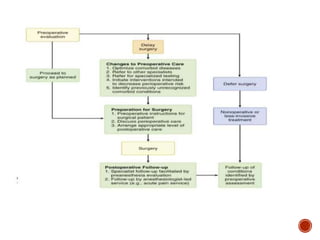
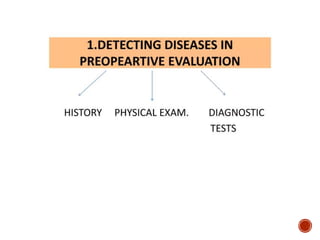
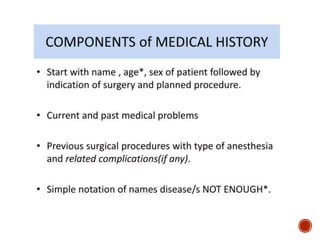
 History and physical examination to determine relevant tests
and consultations
 Guided by patient choice and medical risk factors choose a
plan of care
 Informed consent
 Educate patient about anaesthesia, pain management and
perioperative care
 Reduce patient care costs
What is the risk of proceeding versus the
benefit to the patient?
Can we modify these risks before
surgery?
 Preanesthesia evaluation: process of assessment and
optimization of patient proceeding delivery of anesthesia
carefor surgery and for non surgical procedures.
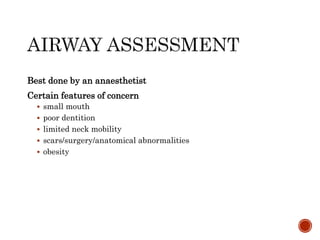
Best done by an anaesthetist
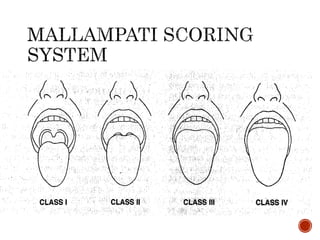
Certain features of concern
 small mouth
 poor dentition
 limited neck mobility
 scars/surgery/anatomical abnormalities
 obesity
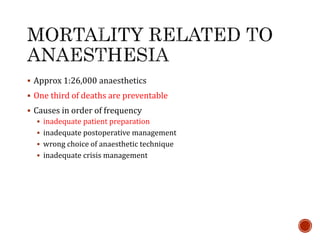
 Approx 1:26,000 anaesthetics
 One third of deaths are preventable
 Causes in order of frequency
 inadequate patient preparation
 inadequate postoperative management
 wrong choice of anaesthetic technique
 inadequate crisis management
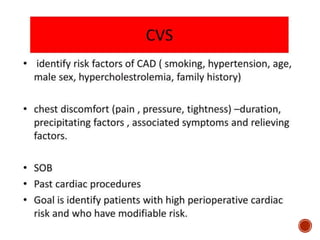
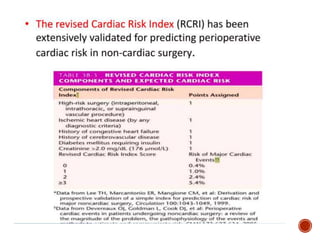
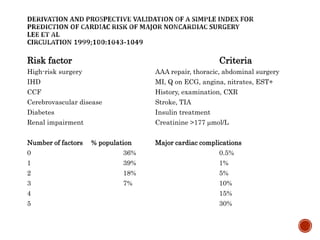
Risk factor Criteria
High-risk surgery AAA repair, thoracic, abdominal surgery
IHD MI, Q on ECG, angina, nitrates, EST+
CCF History, examination, CXR
Cerebrovascular disease Stroke, TIA
Diabetes Insulin treatment
Renal impairment Creatinine >177 mol/L
Number of factors % population Major cardiac complications
0 36% 0.5%
1 39% 1%
2 18% 5%
3 7% 10%
4 15%
5 30%
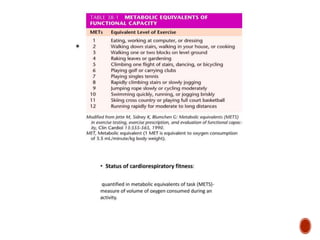
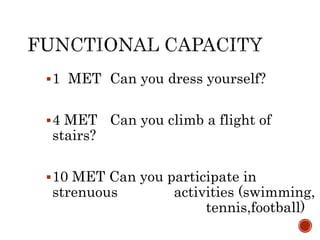
1 MET Can you dress yourself?
4 MET Can you climb a flight of
stairs?
10 MET Can you participate in
strenuous activities (swimming,
tennis,football)
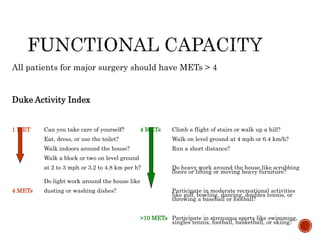
All patients for major surgery should have METs > 4
Duke Activity Index
1 MET Can you take care of yourself? 4 METs Climb a flight of stairs or walk up a hill?
Eat, dress, or use the toilet? Walk on level ground at 4 mph or 6.4 km/h?
Walk indoors around the house? Run a short distance?
Walk a block or two on level ground
at 2 to 3 mph or 3.2 to 4.8 km per h? Do heavy work around the house like scrubbing
floors or lifting or moving heavy furniture?
Do light work around the house like
4 METs dusting or washing dishes? Participate in moderate recreational activities
like golf, bowling, dancing, doubles tennis, or
throwing a baseball or football?
>10 METs Participate in strenuous sports like swimming,
singles tennis, football, basketball, or skiing?
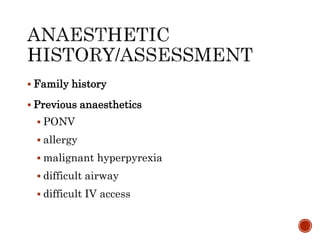
 Family history
 Previous anaesthetics
 PONV
 allergy
 malignant hyperpyrexia
 difficult airway
 difficult IV access
Very useful, often forgotten
 Current medications
 ALLERGY
 Medic alert bracelets
 Smoking/alcohol history
 Other drugs of abuse!
 Take all usual medications
 Antihypertensives
 Beta blockers
 Statins
 Think about discontinuing/replacing
 Aspirin
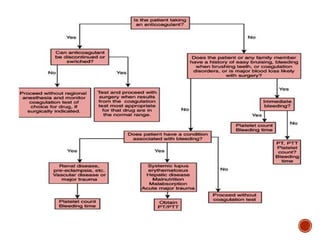
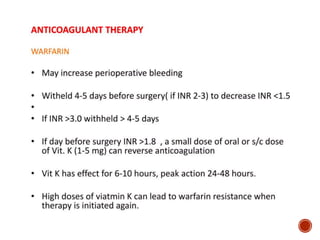
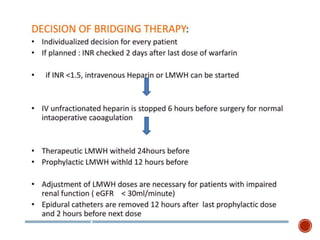
 Anticoagulants
 Diabetic medications
 MAOIs
 History and physical most important assessors of
disease and risk
 ASA and functional status good predictors of risk
 Lab tests have some usefulness
 add little in low risk patients
 may add false + ves
 add expense

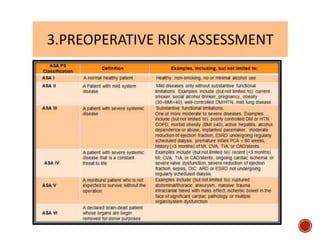
PRE-OPERATIVE RISK ASSESSMENT PATIENTS.
  • 2.
     History andphysical examination to determine relevant tests and consultations  Guided by patient choice and medical risk factors choose a plan of care  Informed consent  Educate patient about anaesthesia, pain management and perioperative care  Reduce patient care costs
  • 3.
    What is therisk of proceeding versus the benefit to the patient? Can we modify these risks before surgery?
  • 4.
     Preanesthesia evaluation:process of assessment and optimization of patient proceeding delivery of anesthesia carefor surgery and for non surgical procedures.
  • 15.
    Best done byan anaesthetist Certain features of concern  small mouth  poor dentition  limited neck mobility  scars/surgery/anatomical abnormalities  obesity
  • 53.
     Approx 1:26,000anaesthetics  One third of deaths are preventable  Causes in order of frequency  inadequate patient preparation  inadequate postoperative management  wrong choice of anaesthetic technique  inadequate crisis management
  • 54.
    Risk factor Criteria High-risksurgery AAA repair, thoracic, abdominal surgery IHD MI, Q on ECG, angina, nitrates, EST+ CCF History, examination, CXR Cerebrovascular disease Stroke, TIA Diabetes Insulin treatment Renal impairment Creatinine >177 mol/L Number of factors % population Major cardiac complications 0 36% 0.5% 1 39% 1% 2 18% 5% 3 7% 10% 4 15% 5 30%
  • 55.
    1 MET Canyou dress yourself? 4 MET Can you climb a flight of stairs? 10 MET Can you participate in strenuous activities (swimming, tennis,football)
  • 56.
    All patients formajor surgery should have METs > 4 Duke Activity Index 1 MET Can you take care of yourself? 4 METs Climb a flight of stairs or walk up a hill? Eat, dress, or use the toilet? Walk on level ground at 4 mph or 6.4 km/h? Walk indoors around the house? Run a short distance? Walk a block or two on level ground at 2 to 3 mph or 3.2 to 4.8 km per h? Do heavy work around the house like scrubbing floors or lifting or moving heavy furniture? Do light work around the house like 4 METs dusting or washing dishes? Participate in moderate recreational activities like golf, bowling, dancing, doubles tennis, or throwing a baseball or football? >10 METs Participate in strenuous sports like swimming, singles tennis, football, basketball, or skiing?
  • 57.
     Family history Previous anaesthetics  PONV  allergy  malignant hyperpyrexia  difficult airway  difficult IV access
  • 58.
    Very useful, oftenforgotten  Current medications  ALLERGY  Medic alert bracelets  Smoking/alcohol history  Other drugs of abuse!
  • 59.
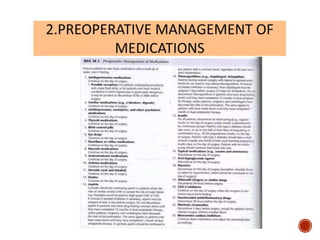
     Take allusual medications  Antihypertensives  Beta blockers  Statins  Think about discontinuing/replacing  Aspirin  Anticoagulants  Diabetic medications  MAOIs
  • 60.
     History andphysical most important assessors of disease and risk  ASA and functional status good predictors of risk  Lab tests have some usefulness  add little in low risk patients  may add false + ves  add expense