Preliminary Preparation
COOKING
Preliminary preparation of food is very essential to prepare
healthy delicious dishes.
The efficiency of a cook depends on how he/she organizes
work in the kitchen. If pre-preparation is thoroughly and
systematically done then the service will be carried out
smoothly.
This French term meaning “everything put in place,” has
become almost a professional pass-word in kitchen, because
it is important for the success of the establishment.
Pre-preparation saves time and energy.
The following steps should be followed before the actual
cooking.
· Assemble tools required.
· Collect ingredients needed for cooking
· Wash, trim, cut, prepare, and measure raw materials.
· Check equipment before cooking.
Cleaning/Washing:
 All raw
ingredients should be washed and cleaned before
cooking to ensure microbiological safety of food.
 All vegetables should be washed thoroughly before
peeling or cutting.
 Dry ingredients like cereals and pulses should be
cleaned to remove dirt, stones and foreign matter
before cooking.
Peeling:
 Most of the vegetables and fruits are peeled
before the preparation of recipe.
 The outer skin will be peeled using a peeler or
knife.
 Care should be taken to peel the skin very thin
because most of the nutrients are under the skin
of the fruits and vegetables.
 Certain vegetables like potatoes can also be
peeled after boiling.
 Tomato skin can be peeled after blanching.
Grinding:
 Grinding reduces the food to a fine form.
 Dry grinding helps to get masala powders and
wet grinding helps to get chutneys and batters
for idli, dosai and adai.
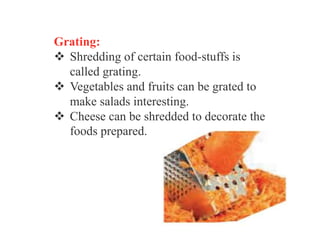
Grating:
 Shredding of certain food-stuffs is
called grating.
 Vegetables and fruits can be grated to
make salads interesting.
 Cheese can be shredded to decorate the
foods prepared.
 Soaking:
 Foodstuffs are generally soaked to make them
soft as it helps to make cooking faster and
grinding easier.
 Cereals and pulses are soaked for grinding
and cooking.
 It enhances nutritional value and helps in
removing the toxic substances.
 It also saves time and fuel.
Germination:
Germination is the process of a seed to cause
sprout or form new tissue following
metabolism.
In order to sprout seeds like ragi, green gram,
cow pea and bengal gram soak in water for 8
hours and drain water and cover it in a
muslin cloth and keep it in the room
temperature for another 8 hours.
Sprouting of seeds can be seen.
This process enhances the nutritive value by
increase in vitamin , folic acid and malting of
sugar take place.
 Blanching:
 Vegetables and fruits are immersed in boiling
water for a few min-utes and then in cold
water.
 This is called blanching.
 Balancing used in food preservation as it
inactivates the enzymes that cause food
spoilage.
 This method is also used to loosen the skin of
fruits to peel them easily and used for purees
and canned foods.
Marinating:
 Food is soaked in a marinade to add flavour
and tenderize it.
 A marinade is a combination of oil,
flavouring agents and acid.
 Eg: Meat, fish, and vegetables
Basic Cuts and Shapes
Cutting food products into uniform shapes and sizes
is important for two reasons:
1. It ensures even cooking.
2. It enhances the appearance of the product
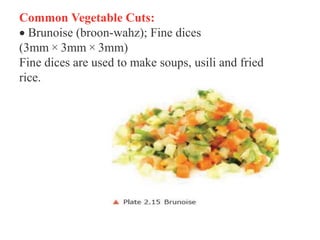
Common Vegetable Cuts:
 Brunoise (broon-wahz); Fine dices
(3mm × 3mm × 3mm)
Fine dices are used to make soups, usili and fried
rice.
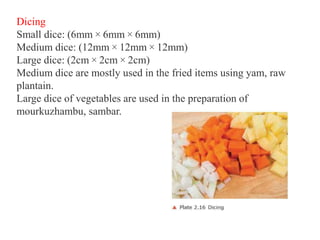
Dicing
Small dice: (6mm × 6mm × 6mm)
Medium dice: (12mm × 12mm × 12mm)
Large dice: (2cm × 2cm × 2cm)
Medium dice are mostly used in the fried items using yam, raw
plantain.
Large dice of vegetables are used in the preparation of
mourkuzhambu, sambar.
Julienne (or allumette): (3mm × 3mm × 6cm)
Julienne cuts are used in the preparation of salads and
noodles
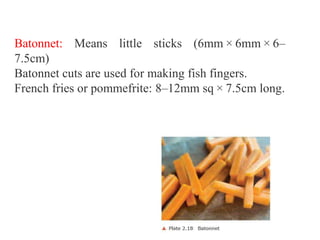
Batonnet: Means little sticks (6mm × 6mm × 6–
7.5cm)
Batonnet cuts are used for making fish fingers.
French fries or pommefrite: 8–12mm sq × 7.5cm long.
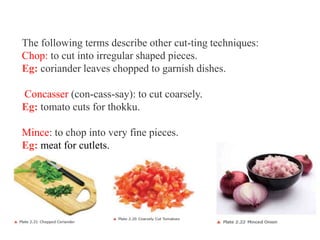
The following terms describe other cut-ting techniques:
Chop: to cut into irregular shaped pieces.
Eg: coriander leaves chopped to garnish dishes.
Concasser (con-cass-say): to cut coarsely.
Eg: tomato cuts for thokku.
Mince: to chop into very fine pieces.
Eg: meat for cutlets.
Preliminary Preparation.pptx

Preliminary Preparation.pptx

  • 1.
  • 2.
    Preliminary preparation offood is very essential to prepare healthy delicious dishes. The efficiency of a cook depends on how he/she organizes work in the kitchen. If pre-preparation is thoroughly and systematically done then the service will be carried out smoothly. This French term meaning “everything put in place,” has become almost a professional pass-word in kitchen, because it is important for the success of the establishment. Pre-preparation saves time and energy. The following steps should be followed before the actual cooking. · Assemble tools required. · Collect ingredients needed for cooking · Wash, trim, cut, prepare, and measure raw materials. · Check equipment before cooking.
  • 3.
    Cleaning/Washing:  All raw ingredientsshould be washed and cleaned before cooking to ensure microbiological safety of food.  All vegetables should be washed thoroughly before peeling or cutting.  Dry ingredients like cereals and pulses should be cleaned to remove dirt, stones and foreign matter before cooking.
  • 4.
    Peeling:  Most ofthe vegetables and fruits are peeled before the preparation of recipe.  The outer skin will be peeled using a peeler or knife.  Care should be taken to peel the skin very thin because most of the nutrients are under the skin of the fruits and vegetables.  Certain vegetables like potatoes can also be peeled after boiling.  Tomato skin can be peeled after blanching.
  • 5.
    Grinding:  Grinding reducesthe food to a fine form.  Dry grinding helps to get masala powders and wet grinding helps to get chutneys and batters for idli, dosai and adai.
  • 6.
    Grating:  Shredding ofcertain food-stuffs is called grating.  Vegetables and fruits can be grated to make salads interesting.  Cheese can be shredded to decorate the foods prepared.
  • 7.
     Soaking:  Foodstuffsare generally soaked to make them soft as it helps to make cooking faster and grinding easier.  Cereals and pulses are soaked for grinding and cooking.  It enhances nutritional value and helps in removing the toxic substances.  It also saves time and fuel.
  • 8.
    Germination: Germination is theprocess of a seed to cause sprout or form new tissue following metabolism. In order to sprout seeds like ragi, green gram, cow pea and bengal gram soak in water for 8 hours and drain water and cover it in a muslin cloth and keep it in the room temperature for another 8 hours. Sprouting of seeds can be seen. This process enhances the nutritive value by increase in vitamin , folic acid and malting of sugar take place.
  • 9.
     Blanching:  Vegetablesand fruits are immersed in boiling water for a few min-utes and then in cold water.  This is called blanching.  Balancing used in food preservation as it inactivates the enzymes that cause food spoilage.  This method is also used to loosen the skin of fruits to peel them easily and used for purees and canned foods.
  • 10.
    Marinating:  Food issoaked in a marinade to add flavour and tenderize it.  A marinade is a combination of oil, flavouring agents and acid.  Eg: Meat, fish, and vegetables
  • 12.
    Basic Cuts andShapes Cutting food products into uniform shapes and sizes is important for two reasons: 1. It ensures even cooking. 2. It enhances the appearance of the product
  • 13.
    Common Vegetable Cuts: Brunoise (broon-wahz); Fine dices (3mm × 3mm × 3mm) Fine dices are used to make soups, usili and fried rice.
  • 14.
    Dicing Small dice: (6mm× 6mm × 6mm) Medium dice: (12mm × 12mm × 12mm) Large dice: (2cm × 2cm × 2cm) Medium dice are mostly used in the fried items using yam, raw plantain. Large dice of vegetables are used in the preparation of mourkuzhambu, sambar.
  • 15.
    Julienne (or allumette):(3mm × 3mm × 6cm) Julienne cuts are used in the preparation of salads and noodles
  • 16.
    Batonnet: Means littlesticks (6mm × 6mm × 6– 7.5cm) Batonnet cuts are used for making fish fingers. French fries or pommefrite: 8–12mm sq × 7.5cm long.
  • 17.
    The following termsdescribe other cut-ting techniques: Chop: to cut into irregular shaped pieces. Eg: coriander leaves chopped to garnish dishes. Concasser (con-cass-say): to cut coarsely. Eg: tomato cuts for thokku. Mince: to chop into very fine pieces. Eg: meat for cutlets.