Fermented foods
(soy products)
Fermented foods
 Fermented foods are defined as foods or
beverages produced through controlled microbial
growth and the conversion of food components
through enzymatic reaction.
 Common fermented foods such as curd, idly
,dosa, dhokla, kanji, kimchi, yoghurt etc.
 Fermented process can be classified based on
the microorganism used in their manufacture by
the primary metabolites these microbes produce
or by the type of food used as the starting
material.
Importance of fermented foods
 Fermented foods can be associate with lots of
positive health effects
* Improves gut health
* Stronger immunity
* increased availability of beneficial nutrients
* Improved digestive health
 Fermented foods has many functions such as adding
new favors and texture to food ,to extending the shelf
life of food.
 Fermented foods are classified into 2 types:- alcoholic
and Latic acid fermentation.
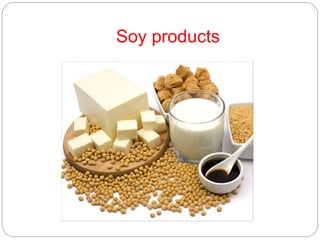
Soy products
PRODUCTS OF SOY
 SOY SAUCE
 TAMARI SAUCE
 MISO
 TEMPEH
 NATTO
 SOYBEAN CHEESE
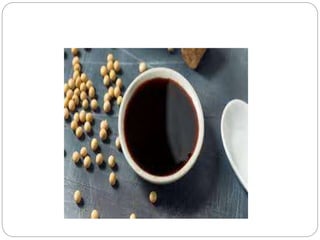
SOY SAUCE
 A condiment produces from the fermented paste
of boiled
soya bean, roasted grains, brine and Aspergillus
sojae.
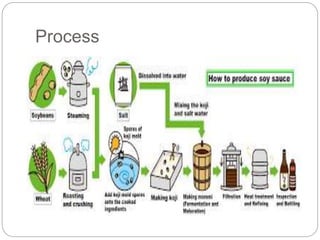
 The natural brewing of soya sauce are
* Koji making
* brine fermentation
* refining
Process
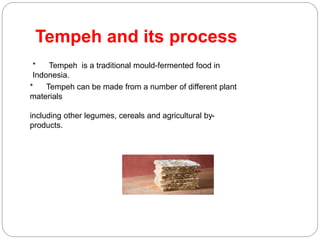
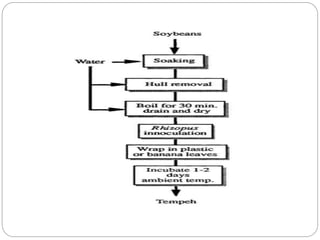
Tempeh and its process
* Tempeh is a traditional mould-fermented food in
Indonesia.
* Tempeh can be made from a number of different plant
materials
including other legumes, cereals and agricultural by-
products.
 With the growth of the bacterium Klebsiella
pneumoniae
during fermentation.
 The usual source of this vitamin in the diet is
animal products and it has been suggested that tempeh
could be an important source of B12 for people
subsisting on a largely vegetarian diet.
 Tempeh bongkrek has been associated with
occasional serious out-breaks of food poisoning due
to the bacterium Burkholderia cocovenenans growing
in the product and elaborating the toxins bongkrekic
acid and toxoflavin.
Fermented foods.pptx

Fermented foods.pptx

  • 1.
  • 2.
    Fermented foods  Fermentedfoods are defined as foods or beverages produced through controlled microbial growth and the conversion of food components through enzymatic reaction.  Common fermented foods such as curd, idly ,dosa, dhokla, kanji, kimchi, yoghurt etc.  Fermented process can be classified based on the microorganism used in their manufacture by the primary metabolites these microbes produce or by the type of food used as the starting material.
  • 3.
    Importance of fermentedfoods  Fermented foods can be associate with lots of positive health effects * Improves gut health * Stronger immunity * increased availability of beneficial nutrients * Improved digestive health  Fermented foods has many functions such as adding new favors and texture to food ,to extending the shelf life of food.  Fermented foods are classified into 2 types:- alcoholic and Latic acid fermentation.
  • 4.
  • 5.
    PRODUCTS OF SOY SOY SAUCE  TAMARI SAUCE  MISO  TEMPEH  NATTO  SOYBEAN CHEESE
  • 7.
    SOY SAUCE  Acondiment produces from the fermented paste of boiled soya bean, roasted grains, brine and Aspergillus sojae.  The natural brewing of soya sauce are * Koji making * brine fermentation * refining
  • 8.
  • 9.
    Tempeh and itsprocess * Tempeh is a traditional mould-fermented food in Indonesia. * Tempeh can be made from a number of different plant materials including other legumes, cereals and agricultural by- products.
  • 10.
     With thegrowth of the bacterium Klebsiella pneumoniae during fermentation.  The usual source of this vitamin in the diet is animal products and it has been suggested that tempeh could be an important source of B12 for people subsisting on a largely vegetarian diet.  Tempeh bongkrek has been associated with occasional serious out-breaks of food poisoning due to the bacterium Burkholderia cocovenenans growing in the product and elaborating the toxins bongkrekic acid and toxoflavin.