BAKERY AND CONFECTIONARY
CHOUX PASTRY
CHOUX PASTRY:
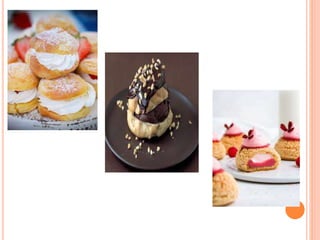
 Choux pastry is a hollow shell which is crisp while
eating.
 It can be piped in different shapes and filled with cream,
custard and coated with melted chocolate, glace or
fondant icing and also with nuts.
PRINCIPLES:
 Collect the quality of raw material.
 Weigh the ingredients accurately.
 Take thick bottom bowl and heat the water and fat. Don’t
allow to boil.
 Sift the flour twice. While sifting, the small air cells are
incorporated and it helps rise the pastry when baking.
 Beat the egg just before mixing with the mixture and add
gradually with continuing beating.
 Maintain the correct consistency.
 The tray should be greased and dusted with flour or use
butter paper.
 Pipe this as to the required sizes.
 Bake at the high temperature till it reaches the optimum
rise and then reduce the temperature.
 Allow the
 Bake till the structure is set of firm and the shell becomes
crisp.
 Don’t shake the tray during baking. If it happens the
shell will becomes flat.
 It can be stored for one week.
FAULTS:
Soggy:
 Too much egg
 Improper heating of water
 Less quality of flour
 Loe making temoerature
Heavy:
 Too much of fat
 Overheating of water
 Too strong flour
 Less quality of egg
 Not enough beating
 Egg added when mixture is too hot
 Too low baking temperature
Not crisp:
 Too much liquid
 Improper cooking
 Low baking temperature
 Uneven baking time
Shrinkage:
 Very strong flour
 Too much water
 Too much egg used
 Butter too loose
 Shake the tray or oven during baking
 Too high temperature
CHOUX PASTRY.pptx

CHOUX PASTRY.pptx

  • 1.
  • 2.
    CHOUX PASTRY:  Chouxpastry is a hollow shell which is crisp while eating.  It can be piped in different shapes and filled with cream, custard and coated with melted chocolate, glace or fondant icing and also with nuts.
  • 4.
    PRINCIPLES:  Collect thequality of raw material.  Weigh the ingredients accurately.  Take thick bottom bowl and heat the water and fat. Don’t allow to boil.  Sift the flour twice. While sifting, the small air cells are incorporated and it helps rise the pastry when baking.  Beat the egg just before mixing with the mixture and add gradually with continuing beating.  Maintain the correct consistency.
  • 5.
     The trayshould be greased and dusted with flour or use butter paper.  Pipe this as to the required sizes.  Bake at the high temperature till it reaches the optimum rise and then reduce the temperature.  Allow the  Bake till the structure is set of firm and the shell becomes crisp.  Don’t shake the tray during baking. If it happens the shell will becomes flat.  It can be stored for one week.
  • 6.
    FAULTS: Soggy:  Too muchegg  Improper heating of water  Less quality of flour  Loe making temoerature Heavy:  Too much of fat  Overheating of water  Too strong flour  Less quality of egg
  • 7.
     Not enoughbeating  Egg added when mixture is too hot  Too low baking temperature Not crisp:  Too much liquid  Improper cooking  Low baking temperature  Uneven baking time
  • 8.
    Shrinkage:  Very strongflour  Too much water  Too much egg used  Butter too loose  Shake the tray or oven during baking  Too high temperature