GI problems in pregnancy
       Dr Rania Abd El Hamid Hussein
                  MBBSch
     Master’s degree in Internal Medicine
     Doctor in Nutrition and Public Health
       Assistant Professor of Nutrition
     Faculty of Applied Medical Sciences
                     KAU


                Dr Rania Hussein
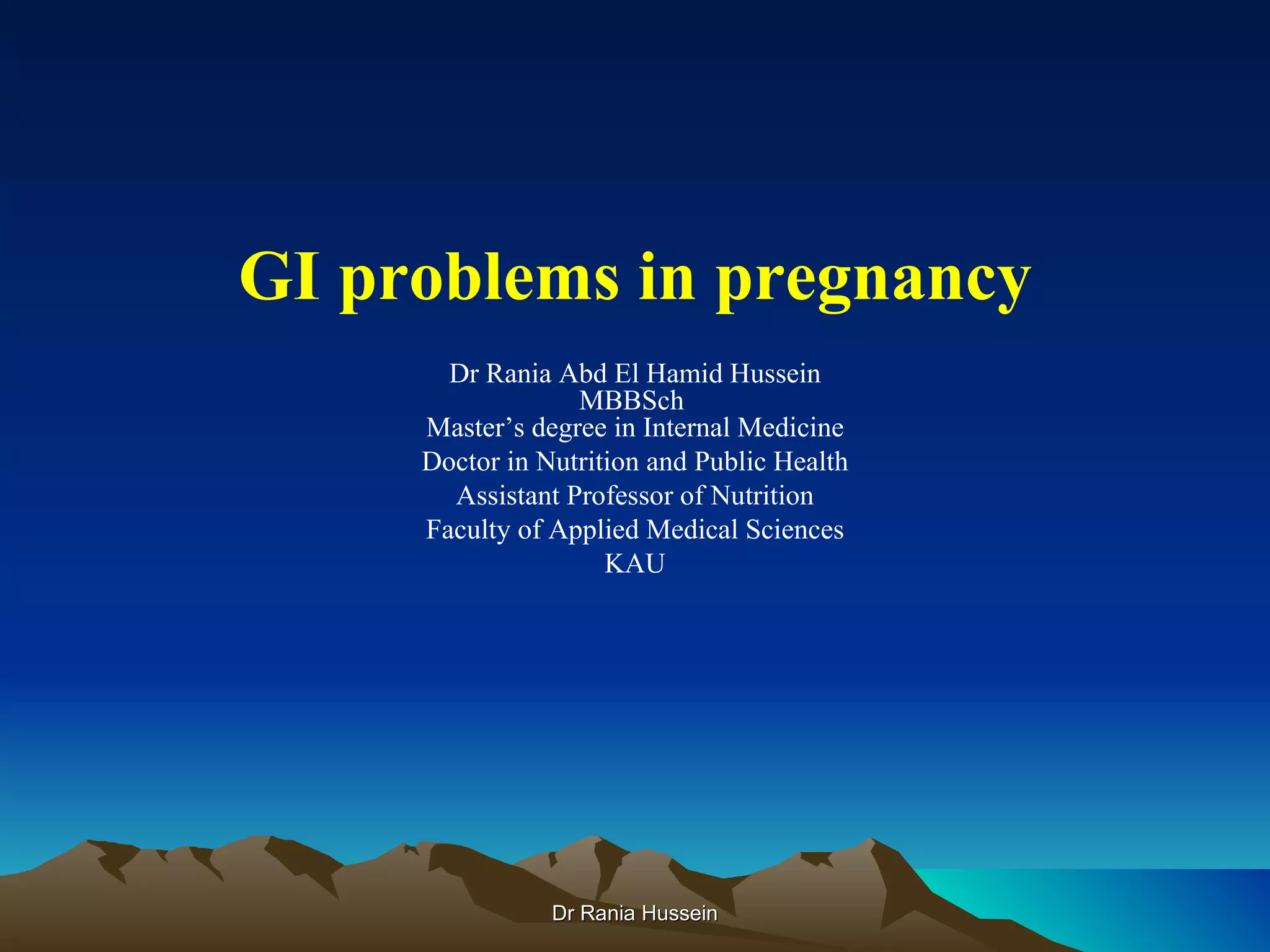
Nausea and vomiting:
morning sickness

• Occur early in pregnancy: 6
  weeks after the start of last
  menstrual period and last for 6
  weeks
• The cause may be hormonal
  changes during early pregnancy


                    Dr Rania Hussein
Treatment

1. Keep stomach filled but not overfilled
2. Eat small frequent meals
3. Separate consumption of fluids and
   solid foods.
4. Consume easily digested foods
5. Avoid strong-flavored foods
6. When nauseated , do not drink fluids,
   but eat toast or crackers.


                       Dr Rania Hussein
Heart burn
It is caused by:
• Relaxation of muscles →↓ gastric
     emptying → esophageal
     regurgitation.
• In late pregnancy, the pregnant
     uterus compresses the diaphragm .
Treatment:
5. Eating small frequent meals
6. Avoiding lying down soon after
     meals
7. Antacids can be used

                       Dr Rania Hussein
Constipation
It is caused by:
2. ↓ physical activity
3. ↓ intestinal motility
4. ↓water intake
5. ↓ fiber intake in diet
6. The enlarging uterus exerts
     pressure on the bowel

                    Dr Rania Hussein
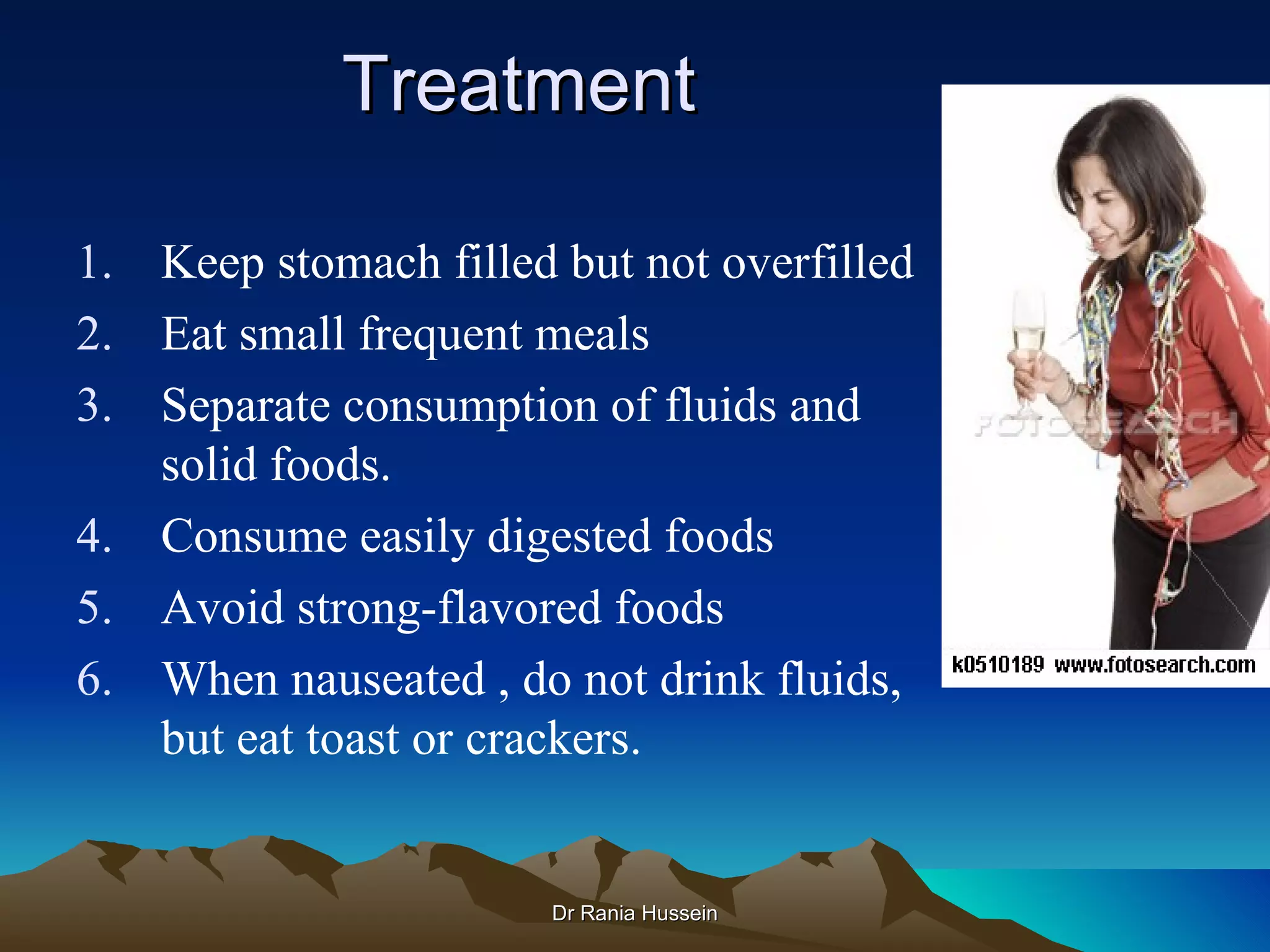
Treatment of constipation
1. Adequate fluid intake
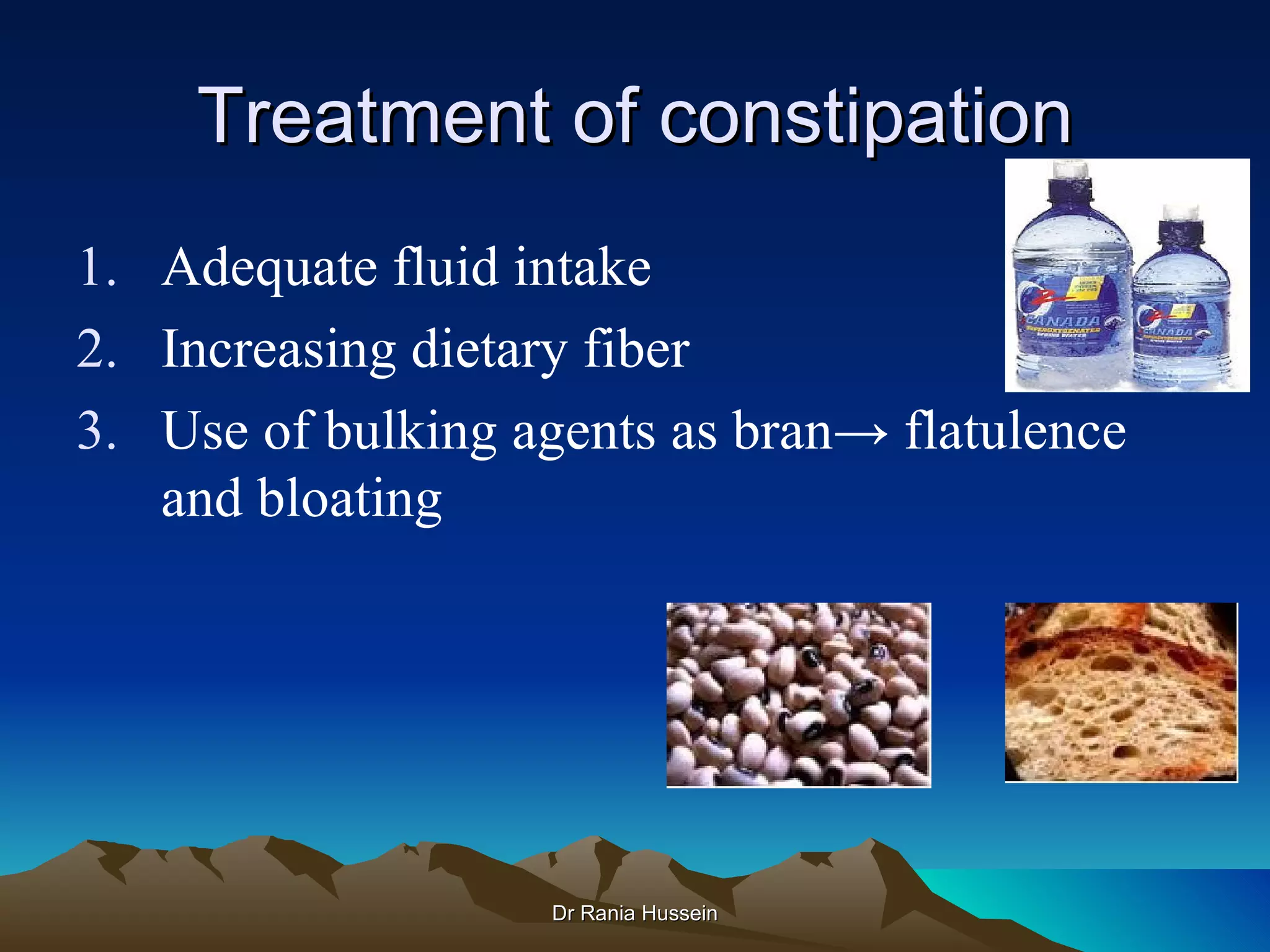
2. Increasing dietary fiber
3. Use of bulking agents as bran→ flatulence
   and bloating


                   Dr Rania Hussein
Craving and aversion
• Craving and aversion are powerful urges to
  consume or not consume particular foods or
  beverages, including foods that were neither
  craved nor considered avulsive before.
• Food craving may range from pickles to ice
  cream.
• Food aversion are usually to coffee and meat.


                    Dr Rania Hussein
• Pica is the ingestion of non food substances as
  clay.
• May be due to the body’s search for a source
  of nutrients it is lacking.


                     Dr Rania Hussein
Exercise during pregnancy


         Dr Rania Hussein
Benefits
• A positive self image
• Maintenance of fitness
• Shorter labor, and fewer surgical
  interventions


                   Dr Rania Hussein
Recommendations

1. Avoidance of activities with excessive twists
   and turns, or those that may cause
   abdominal trauma.
2. A carbohydrate snack before exercise to
   sustain blood glucose.


                    Dr Rania Hussein
High Risk Pregnancy


       Dr Rania Hussein
Maternal and family conditions
•   Age: adolescent – older gravida
•   Low SE socioeconomic status
•   History of poor pregnancy outcome
•   Short inter pregnancy interval
•   High parity


                    Dr Rania Hussein
Maternal health problems and
Prenatal complicated pregnancy
•   Obesity, underweight, or poor gestational weight
    gain
•   Hyperemesis gravidarum
•   Multiple fetuses
•   Anemia
•   Hypertensive disorders of pregnancy
•   DM
•   Viral infections (HIV, Rubella)


                       Dr Rania Hussein
Maternal behavior
1.   Cigarette smoking
2.   Alcohol consumption
3.   Caffeine intake
4.   Vegeterianism


                    Dr Rania Hussein
Maternal age

1. Adolescent
2. Older gravida


              Dr Rania Hussein
Pregnancy in
 Adolescence


         Dr Rania Hussein
1.   ↓ nutrient stores
     and ↑ nutritional needs :
•  Adolescents are still in growth phase →
   Competition for nutrients between
   mother and fetus →↓ placental blood
   flow → premature or low birth weight
   babies.
2. Smaller pelvis of the young adolescent
   mother → cephalopelvic disproportion
   → difficulties in delivery


                      Dr Rania Hussein
2. Is likely to be poor

2. → ↓ intake of nutrients → ↓ prepregnancy
   weight and ↓ gestational weight
3. Late entry to prenatal care


                   Dr Rania Hussein
Consequences of pregnancy in
adolescence
1.   Preterm delivery
2.   Low birth weight infant
3.   Difficult labor and delivery
4.   Pregnancy- induced hypertension


                    Dr Rania Hussein
Recommended energy and nutrient
intake for the pregnant adolescent
Energy levels greater than the additional
  300Kcal/day are recommended.
RDA for protein is increased by 15 g/day
Iron, Folate, and calcium supplementation
  should be recommended routinely


                    Dr Rania Hussein
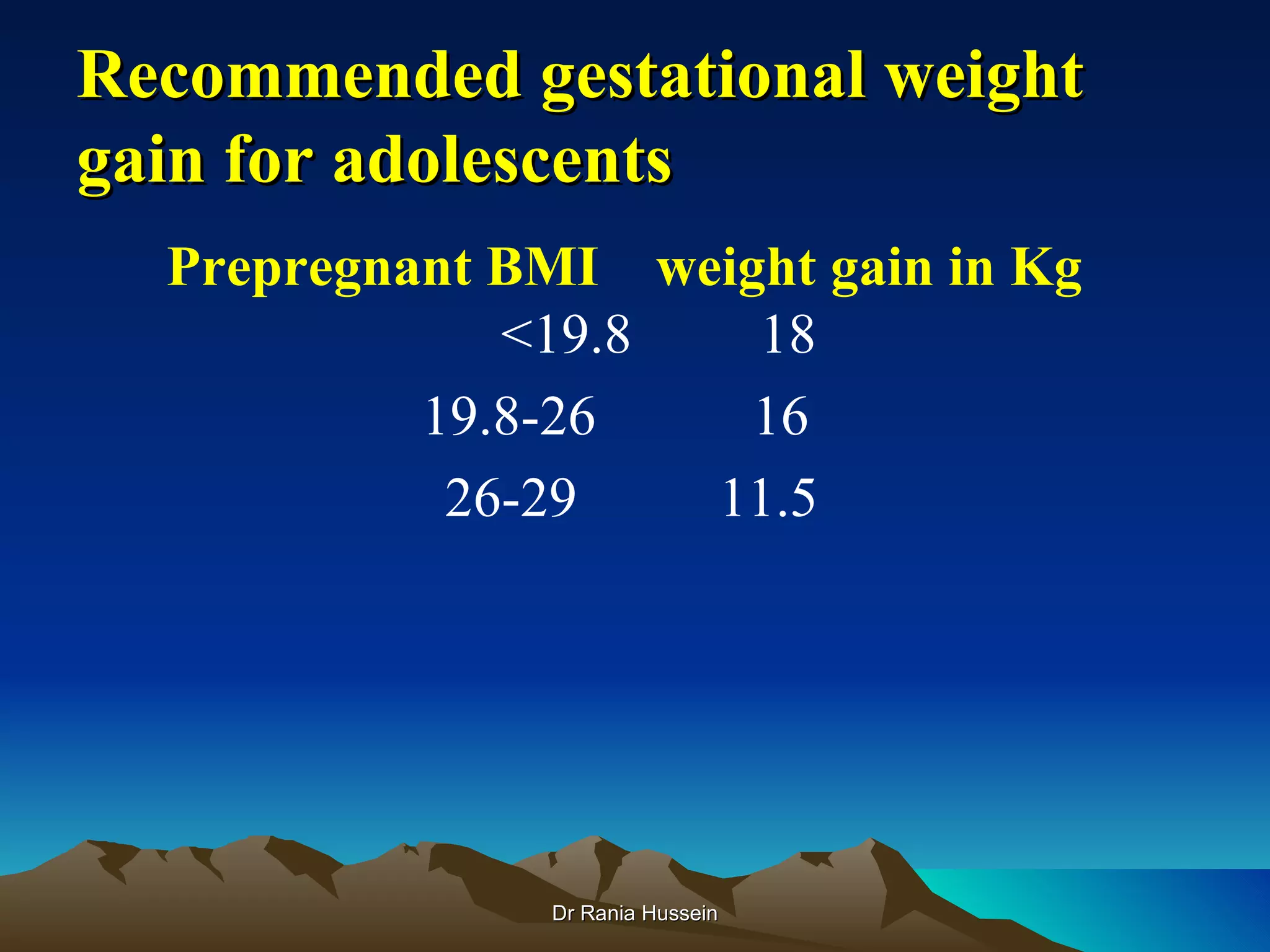
Recommended gestational weight
gain for adolescents
  Prepregnant BMI weight gain in Kg
              <19.8   18
           19.8-26    16
            26-29   11.5


               Dr Rania Hussein
Taking care of the pregnant
adolescent

          1. Family should be supportive
             and more sympathetic
          2. Ensure prenatal and postnatal
             care


                Dr Rania Hussein
Older gravida (35 years and older )
Risks:
2. Multiple fetuses
3. Medical conditions : DM, cardiovascular diseases,
    obesity, tumors
4. Down syndrome
5. Preterm infants
6. Low birth weight infants
7. Maternal and perinatal mortality


                      Dr Rania Hussein
Socioeconomic status
They include:
2. Social status
3. Income
4. Education
5. Employment
6. Marital status
7. Availability of health care systems

                    Dr Rania Hussein
Consequences of low
        socioeconomic status
↓ maternal weight gain →
• Preterm infants
• Low birth weight infants


                  Dr Rania Hussein
Maternal obesity and underweight


            Dr Rania Hussein
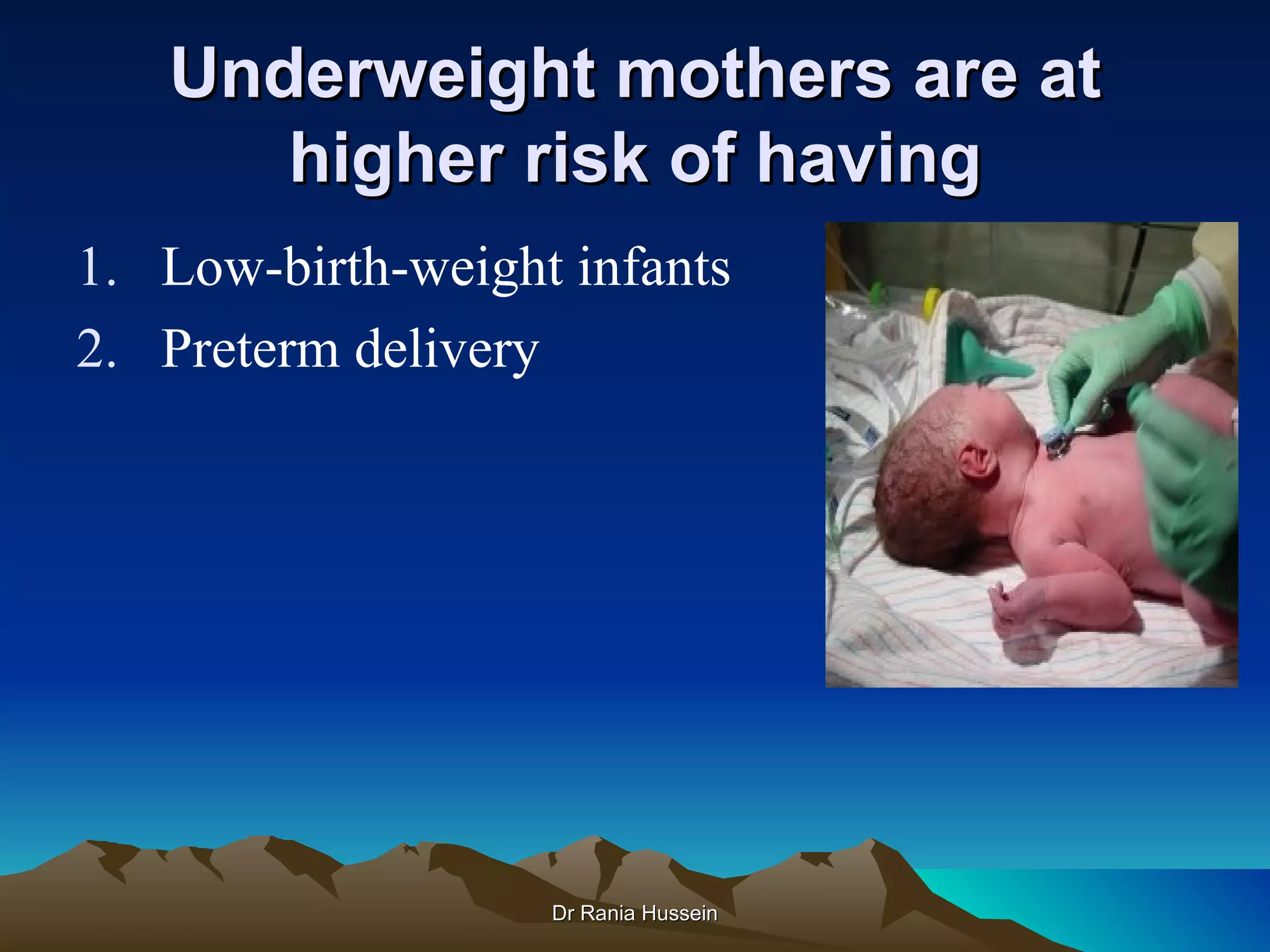
Underweight mothers are at
      higher risk of having
1. Low-birth-weight infants
2. Preterm delivery


                   Dr Rania Hussein
Obese women are at a greater
           risk of having
•    Hypertension.
•    Diabetes.
•    Complications during labor: Fetal
     macrosomia and shoulder dystocia
•    Thromboembolism
•    Obesity may double the risk of NTD


                     Dr Rania Hussein
Multiple births
Consequences:
2. Preterm infants
3. Low birth weight infants
Energy and nutrient requirements are increased
Weight gain should exceed that of single
   pregnancies (about 22 Kg weight gain in
   twin pregnancy)


                    Dr Rania Hussein
Hyperemesis gravidarum
• It is a nutritionally debilitating condition
  characterized by intractable vomiting that
  develops during the first 22 weeks of
  gestation.
• Cause is unknown , but may be due to
  hormonal changes during pregnancy.


                     Dr Rania Hussein
Complications include;
2. Weight loss, dehydration, electrolyte
   imbalance
3. Fetal growth restriction
4. Utilization of body fats and proteins,
   ketonemia→ this impairs neurologic
   development of the fetus


                     Dr Rania Hussein
Treatment
1. Hospitalization
2. Intravenous fluids to correct dehydration and
   electrolyte imbalance
3. Correction of ketonemia
4. Oral intake is slowly introduced (small
   frequent meals low in fat, high in
   carbohydrates, with liquids consumed at
   different times)

                    Dr Rania Hussein
If the woman fails to respond to oral feeding,
   food is introduced either through a commercial
   formula via tube into the stomach (enteral
   feeding), or nutrient needs are given by
   intravenous infusion (parenteral nutrition)


                    Dr Rania Hussein
Diabetes mellitus in pregnancy


            Dr Rania Hussein
• It is a chronic disorder in which blood levels
  of glucose are elevated.
• The cause is either insulin deficiency or
  resistance,
• Net result is hyperglycemia.


                     Dr Rania Hussein
Types of DM are:
• Type 1 Insulin dependant diabetes
• Type 2 Non insulin dependant diabetes
• Gestational diabetes


                   Dr Rania Hussein
In all types of Diabetes in Pregnancy

↑maternal blood glucose → blood glucose passes
 to the fetus → fetal pancreatic insulin
 secretion → ↑ protein and fat synthesis in
 fetus→ macrosomia


                   Dr Rania Hussein
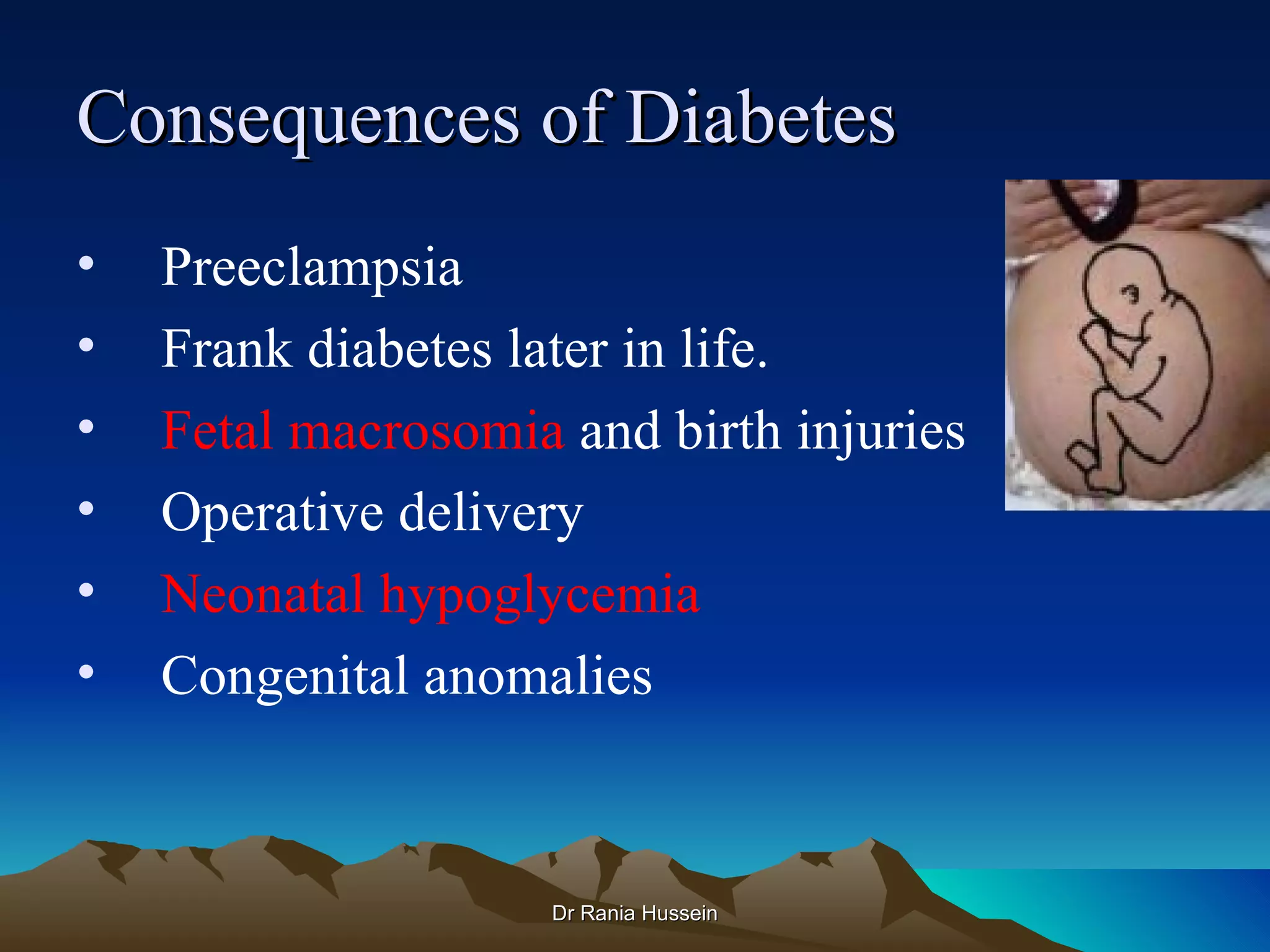
Consequences of Diabetes
•   Preeclampsia
•   Frank diabetes later in life.
•   Fetal macrosomia and birth injuries
•   Operative delivery
•   Neonatal hypoglycemia
•   Congenital anomalies


                    Dr Rania Hussein
In pregestational diabetes,
• Insulin requirements ↓in the first half of
  pregnancy, as the fetus uses some of mother’s
  glucose.
• Insulin requirements↑ In the second half of
  pregnancy, due to hormonal changes.


                    Dr Rania Hussein
Gestational Diabetes: GD
•   Intolerance to carbohydrates, first
    recognized in pregnancy.
•   Late in the 2nd trimester.
•   Carbohydrate tolerance is normal
    before pregnancy and after
    delivery.


                     Dr Rania Hussein
Nutrition goals in the management of
gestational diabetes
1. Provide necessary nutrients to the fetus and
   mother
2. Maintain normal blood glucose
   (euglycemia), and prevent ketosis
3. Achieve appropriate weight gain


                    Dr Rania Hussein
Screening for diabetes
• Initial screening is done between 24 and 28 weeks of
  gestation.
• Rescreening at 32 weeks gestation is recommended
• Screening is done to the following groups:
     -25 years of age or older
    - <25 years + obese
    - Family history of diabetes in first degree
    relatives
   - If a mother shows any symptoms or signs of
   diabetes at any stage of pregnancy.


                        Dr Rania Hussein
Treatment of Gestational diabetes
1. Dietary changes,
2. Moderate exercise
3. Blood glucose monitored daily


                   Dr Rania Hussein
Hypertension during pregnancy
       Blood pressure >140/90                300

                                             280

                                             260

                                             240
                                                   290

                                                   270

                                                   250

                                                   230
                                             220
                                                   210


•   ↑ risk of preeclampsia, preterm
                                             200
                                                   190
                                             180
                                                   170
                                             160
                                                   150
                                             140
                                                   130
                                             120


    delivery, fetal growth restriction
                                                   110
                                             100
                                                   90
                                              80
                                                   70
                                              60
                                                   50
                                              40
                                                   30
                                              20


•
                                                   10


    2 types:
•   Gestational hypertension: detected for
    the first time after mid pregnancy
•   Chronic hypertension: detected before
    pregnancy


                     Dr Rania Hussein
Preeclampisa
1. Pregnancy-specific syndrome observed after 20 th
   week
2. Blood pressure >140/90
3. Proteinurea


•   Eclampsia= preeclampsia + seizures

•   Risk factors for preeclampsia: maternal obesity,
    diabetes, chronic hypertension

                        Dr Rania Hussein
Role of diet in preeclampsia:
• Calcium supplementation ↓ BP
• Mg supplements and antioxidants (Vit A and
  E) can prevent preeclampsia
• Adequate dietary protein intake to replace the
  losses in urine.


                     Dr Rania Hussein
Substance use and abuse in
        pregnancy


          Dr Rania Hussein
Cigarette smoking
• CO+ Hb= carboxyhemoglobin→↓ available
  sites for oxygen binding → fetal hypoxia, and
  fetal growth restriction
• ↓ absorption and availability of some nutrients:
  vit C, Iron, Zinc, folic acid


                     Dr Rania Hussein
Alcohol consumption
•   Alcohol is directly toxic to the embryo and
    fetus ( it crosses the placenta, while fetal
    organs are still immature)
•   The mother is usually undernourished
•   It ↓ absorption and utilization of some
    nutrients


                     Dr Rania Hussein
Consequences of alcohol
           consumption
Fetal alcohol syndrome:
• Mental retardation
• Growth retardation
• Facial abnormalities
• Nervous, cardiac, and genitourinary system
  impairment


                    Dr Rania Hussein
Caffeine intake
1. ↑ urinary excretion of Ca and thiamin
2. ↓absorption of Zn and Fe.
3. ↑ heart rate and blood pressure
4. gastric reflux


                    Dr Rania Hussein
Recommendations
• Limitation of substance use
• Multivitamin and mineral supplementation


                   Dr Rania Hussein
References
• Brown JE, Isaacs J, Wooldridge N, Krinke B,
  Murtaugh M. Nutrition through the lifecycle,
  2007 . 3rd ed. Wadsworth publishing.
• Mahan LK, Escott- Stamp S. krause’s food,
  and nutrition therapy 2008. 12th ed. Saunders
  Elsevier. Canada.


                    dr Rania Hussein

pregnancy tips

  • 1.
    GI problems inpregnancy Dr Rania Abd El Hamid Hussein MBBSch Master’s degree in Internal Medicine Doctor in Nutrition and Public Health Assistant Professor of Nutrition Faculty of Applied Medical Sciences KAU Dr Rania Hussein
  • 2.
    Nausea and vomiting: morningsickness • Occur early in pregnancy: 6 weeks after the start of last menstrual period and last for 6 weeks • The cause may be hormonal changes during early pregnancy Dr Rania Hussein
  • 3.
    Treatment 1. Keep stomachfilled but not overfilled 2. Eat small frequent meals 3. Separate consumption of fluids and solid foods. 4. Consume easily digested foods 5. Avoid strong-flavored foods 6. When nauseated , do not drink fluids, but eat toast or crackers. Dr Rania Hussein
  • 4.
    Heart burn It iscaused by: • Relaxation of muscles →↓ gastric emptying → esophageal regurgitation. • In late pregnancy, the pregnant uterus compresses the diaphragm . Treatment: 5. Eating small frequent meals 6. Avoiding lying down soon after meals 7. Antacids can be used Dr Rania Hussein
  • 5.
    Constipation It is causedby: 2. ↓ physical activity 3. ↓ intestinal motility 4. ↓water intake 5. ↓ fiber intake in diet 6. The enlarging uterus exerts pressure on the bowel Dr Rania Hussein
  • 6.
    Treatment of constipation 1.Adequate fluid intake 2. Increasing dietary fiber 3. Use of bulking agents as bran→ flatulence and bloating Dr Rania Hussein
  • 7.
    Craving and aversion •Craving and aversion are powerful urges to consume or not consume particular foods or beverages, including foods that were neither craved nor considered avulsive before. • Food craving may range from pickles to ice cream. • Food aversion are usually to coffee and meat. Dr Rania Hussein
  • 8.
    • Pica isthe ingestion of non food substances as clay. • May be due to the body’s search for a source of nutrients it is lacking. Dr Rania Hussein
  • 9.
  • 10.
    Benefits • A positiveself image • Maintenance of fitness • Shorter labor, and fewer surgical interventions Dr Rania Hussein
  • 11.
    Recommendations 1. Avoidance ofactivities with excessive twists and turns, or those that may cause abdominal trauma. 2. A carbohydrate snack before exercise to sustain blood glucose. Dr Rania Hussein
  • 12.
    High Risk Pregnancy Dr Rania Hussein
  • 13.
    Maternal and familyconditions • Age: adolescent – older gravida • Low SE socioeconomic status • History of poor pregnancy outcome • Short inter pregnancy interval • High parity Dr Rania Hussein
  • 14.
    Maternal health problemsand Prenatal complicated pregnancy • Obesity, underweight, or poor gestational weight gain • Hyperemesis gravidarum • Multiple fetuses • Anemia • Hypertensive disorders of pregnancy • DM • Viral infections (HIV, Rubella) Dr Rania Hussein
  • 15.
    Maternal behavior 1. Cigarette smoking 2. Alcohol consumption 3. Caffeine intake 4. Vegeterianism Dr Rania Hussein
  • 16.
    Maternal age 1. Adolescent 2.Older gravida Dr Rania Hussein
  • 17.
    Pregnancy in Adolescence Dr Rania Hussein
  • 18.
    1. ↓ nutrient stores and ↑ nutritional needs : • Adolescents are still in growth phase → Competition for nutrients between mother and fetus →↓ placental blood flow → premature or low birth weight babies. 2. Smaller pelvis of the young adolescent mother → cephalopelvic disproportion → difficulties in delivery Dr Rania Hussein
  • 19.
    2. Is likelyto be poor 2. → ↓ intake of nutrients → ↓ prepregnancy weight and ↓ gestational weight 3. Late entry to prenatal care Dr Rania Hussein
  • 20.
    Consequences of pregnancyin adolescence 1. Preterm delivery 2. Low birth weight infant 3. Difficult labor and delivery 4. Pregnancy- induced hypertension Dr Rania Hussein
  • 21.
    Recommended energy andnutrient intake for the pregnant adolescent Energy levels greater than the additional 300Kcal/day are recommended. RDA for protein is increased by 15 g/day Iron, Folate, and calcium supplementation should be recommended routinely Dr Rania Hussein
  • 22.
    Recommended gestational weight gainfor adolescents Prepregnant BMI weight gain in Kg <19.8 18 19.8-26 16 26-29 11.5 Dr Rania Hussein
  • 23.
    Taking care ofthe pregnant adolescent 1. Family should be supportive and more sympathetic 2. Ensure prenatal and postnatal care Dr Rania Hussein
  • 24.
    Older gravida (35years and older ) Risks: 2. Multiple fetuses 3. Medical conditions : DM, cardiovascular diseases, obesity, tumors 4. Down syndrome 5. Preterm infants 6. Low birth weight infants 7. Maternal and perinatal mortality Dr Rania Hussein
  • 25.
    Socioeconomic status They include: 2.Social status 3. Income 4. Education 5. Employment 6. Marital status 7. Availability of health care systems Dr Rania Hussein
  • 26.
    Consequences of low socioeconomic status ↓ maternal weight gain → • Preterm infants • Low birth weight infants Dr Rania Hussein
  • 27.
    Maternal obesity andunderweight Dr Rania Hussein
  • 28.
    Underweight mothers areat higher risk of having 1. Low-birth-weight infants 2. Preterm delivery Dr Rania Hussein
  • 29.
    Obese women areat a greater risk of having • Hypertension. • Diabetes. • Complications during labor: Fetal macrosomia and shoulder dystocia • Thromboembolism • Obesity may double the risk of NTD Dr Rania Hussein
  • 30.
    Multiple births Consequences: 2. Preterminfants 3. Low birth weight infants Energy and nutrient requirements are increased Weight gain should exceed that of single pregnancies (about 22 Kg weight gain in twin pregnancy) Dr Rania Hussein
  • 31.
    Hyperemesis gravidarum • Itis a nutritionally debilitating condition characterized by intractable vomiting that develops during the first 22 weeks of gestation. • Cause is unknown , but may be due to hormonal changes during pregnancy. Dr Rania Hussein
  • 32.
    Complications include; 2. Weightloss, dehydration, electrolyte imbalance 3. Fetal growth restriction 4. Utilization of body fats and proteins, ketonemia→ this impairs neurologic development of the fetus Dr Rania Hussein
  • 33.
    Treatment 1. Hospitalization 2. Intravenousfluids to correct dehydration and electrolyte imbalance 3. Correction of ketonemia 4. Oral intake is slowly introduced (small frequent meals low in fat, high in carbohydrates, with liquids consumed at different times) Dr Rania Hussein
  • 34.
    If the womanfails to respond to oral feeding, food is introduced either through a commercial formula via tube into the stomach (enteral feeding), or nutrient needs are given by intravenous infusion (parenteral nutrition) Dr Rania Hussein
  • 35.
    Diabetes mellitus inpregnancy Dr Rania Hussein
  • 36.
    • It isa chronic disorder in which blood levels of glucose are elevated. • The cause is either insulin deficiency or resistance, • Net result is hyperglycemia. Dr Rania Hussein
  • 37.
    Types of DMare: • Type 1 Insulin dependant diabetes • Type 2 Non insulin dependant diabetes • Gestational diabetes Dr Rania Hussein
  • 38.
    In all typesof Diabetes in Pregnancy ↑maternal blood glucose → blood glucose passes to the fetus → fetal pancreatic insulin secretion → ↑ protein and fat synthesis in fetus→ macrosomia Dr Rania Hussein
  • 39.
    Consequences of Diabetes • Preeclampsia • Frank diabetes later in life. • Fetal macrosomia and birth injuries • Operative delivery • Neonatal hypoglycemia • Congenital anomalies Dr Rania Hussein
  • 40.
    In pregestational diabetes, •Insulin requirements ↓in the first half of pregnancy, as the fetus uses some of mother’s glucose. • Insulin requirements↑ In the second half of pregnancy, due to hormonal changes. Dr Rania Hussein
  • 41.
    Gestational Diabetes: GD • Intolerance to carbohydrates, first recognized in pregnancy. • Late in the 2nd trimester. • Carbohydrate tolerance is normal before pregnancy and after delivery. Dr Rania Hussein
  • 42.
    Nutrition goals inthe management of gestational diabetes 1. Provide necessary nutrients to the fetus and mother 2. Maintain normal blood glucose (euglycemia), and prevent ketosis 3. Achieve appropriate weight gain Dr Rania Hussein
  • 43.
    Screening for diabetes •Initial screening is done between 24 and 28 weeks of gestation. • Rescreening at 32 weeks gestation is recommended • Screening is done to the following groups: -25 years of age or older - <25 years + obese - Family history of diabetes in first degree relatives - If a mother shows any symptoms or signs of diabetes at any stage of pregnancy. Dr Rania Hussein
  • 44.
    Treatment of Gestationaldiabetes 1. Dietary changes, 2. Moderate exercise 3. Blood glucose monitored daily Dr Rania Hussein
  • 45.
    Hypertension during pregnancy Blood pressure >140/90 300 280 260 240 290 270 250 230 220 210 • ↑ risk of preeclampsia, preterm 200 190 180 170 160 150 140 130 120 delivery, fetal growth restriction 110 100 90 80 70 60 50 40 30 20 • 10 2 types: • Gestational hypertension: detected for the first time after mid pregnancy • Chronic hypertension: detected before pregnancy Dr Rania Hussein
  • 46.
    Preeclampisa 1. Pregnancy-specific syndromeobserved after 20 th week 2. Blood pressure >140/90 3. Proteinurea • Eclampsia= preeclampsia + seizures • Risk factors for preeclampsia: maternal obesity, diabetes, chronic hypertension Dr Rania Hussein
  • 47.
    Role of dietin preeclampsia: • Calcium supplementation ↓ BP • Mg supplements and antioxidants (Vit A and E) can prevent preeclampsia • Adequate dietary protein intake to replace the losses in urine. Dr Rania Hussein
  • 48.
    Substance use andabuse in pregnancy Dr Rania Hussein
  • 49.
    Cigarette smoking • CO+Hb= carboxyhemoglobin→↓ available sites for oxygen binding → fetal hypoxia, and fetal growth restriction • ↓ absorption and availability of some nutrients: vit C, Iron, Zinc, folic acid Dr Rania Hussein
  • 50.
    Alcohol consumption • Alcohol is directly toxic to the embryo and fetus ( it crosses the placenta, while fetal organs are still immature) • The mother is usually undernourished • It ↓ absorption and utilization of some nutrients Dr Rania Hussein
  • 51.
    Consequences of alcohol consumption Fetal alcohol syndrome: • Mental retardation • Growth retardation • Facial abnormalities • Nervous, cardiac, and genitourinary system impairment Dr Rania Hussein
  • 52.
    Caffeine intake 1. ↑urinary excretion of Ca and thiamin 2. ↓absorption of Zn and Fe. 3. ↑ heart rate and blood pressure 4. gastric reflux Dr Rania Hussein
  • 53.
    Recommendations • Limitation ofsubstance use • Multivitamin and mineral supplementation Dr Rania Hussein
  • 54.
    References • Brown JE,Isaacs J, Wooldridge N, Krinke B, Murtaugh M. Nutrition through the lifecycle, 2007 . 3rd ed. Wadsworth publishing. • Mahan LK, Escott- Stamp S. krause’s food, and nutrition therapy 2008. 12th ed. Saunders Elsevier. Canada. dr Rania Hussein