A PREDICTIVE
ANALYTICS PRIMER
by Thomas H. Davenport
PREDICT THE FUTURE USING
DATA FROM THE PAST
This is what organizations do everyday.
PREDICTIVE ANALYTICS
Predictive Analytics consists of some of the following:
1. Customer Lifetime Value Measure
2. Product Recommendation Capability
3. What ad to place on what publisher’s site.
4. Forecast next quarter’s sale.
The quantitative analysis isn’t magic—but it is
normally done with a lot of past data, a little
statistical wizardry, and some important
assumptions. Let’s talk about each of these.
1. THE DATA
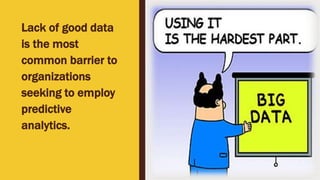
Lack of good data
is the most
common barrier to
organizations
seeking to employ
predictive
analytics.
2. THE STATISTICS
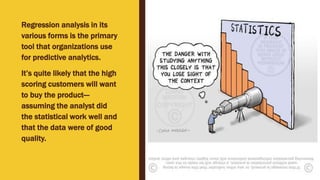
Regression analysis in its
various forms is the primary
tool that organizations use
for predictive analytics.
It’s quite likely that the high
scoring customers will want
to buy the product—
assuming the analyst did
the statistical work well and
that the data were of good
quality.
3. THE ASSUMPTIONS
The other key factor in
any predictive model—
the assumptions that
underlie it.
The big assumption in
predictive analytics is
that the future will
continue to be like the
past.
What makes assumptions invalid?
■ The most common reason is time.
■ If your model was created several years ago, it may no longer accurately predict
current behavior.
■ The greater the elapsed time, the more likely customer behavior has changed.
■ Another reason a predictive model’s assumptions may no longer be valid is if the
analyst didn’t include a key variable in the model, and that variable has changed
substantially over time.
■ The great—and scary—example here is the financial crisis of 2008-9.
Financial Crisis of 2008-09
What was the major reason?
It was caused largely by invalid models predicting how likely
mortgage customers were to repay their loans. The models
didn’t include the possibility that housing prices might stop
rising, and even that they might fall. When they did start
falling, it turned out that the models became poor predictors
of mortgage repayment. In essence, the fact that housing
prices would always rise was a hidden assumption in the
models.
Even with those cautions, it’s still pretty amazing that
we can use analytics to predict the future. All we have
to do is gather the right data, do the right type of
statistical model, and be careful of our assumptions.
THANK YOU
By Astha Jagetiya
(astha.jagetiya@gmail.com)

predictive analytics

  • 1.
  • 2.
    PREDICT THE FUTUREUSING DATA FROM THE PAST This is what organizations do everyday.
  • 3.
    PREDICTIVE ANALYTICS Predictive Analyticsconsists of some of the following: 1. Customer Lifetime Value Measure 2. Product Recommendation Capability 3. What ad to place on what publisher’s site. 4. Forecast next quarter’s sale.
  • 4.
    The quantitative analysisisn’t magic—but it is normally done with a lot of past data, a little statistical wizardry, and some important assumptions. Let’s talk about each of these.
  • 5.
  • 6.
    Lack of gooddata is the most common barrier to organizations seeking to employ predictive analytics.
  • 7.
  • 8.
    Regression analysis inits various forms is the primary tool that organizations use for predictive analytics. It’s quite likely that the high scoring customers will want to buy the product— assuming the analyst did the statistical work well and that the data were of good quality.
  • 9.
  • 10.
    The other keyfactor in any predictive model— the assumptions that underlie it. The big assumption in predictive analytics is that the future will continue to be like the past.
  • 11.
    What makes assumptionsinvalid? ■ The most common reason is time. ■ If your model was created several years ago, it may no longer accurately predict current behavior. ■ The greater the elapsed time, the more likely customer behavior has changed. ■ Another reason a predictive model’s assumptions may no longer be valid is if the analyst didn’t include a key variable in the model, and that variable has changed substantially over time. ■ The great—and scary—example here is the financial crisis of 2008-9.
  • 12.
  • 13.
    What was themajor reason? It was caused largely by invalid models predicting how likely mortgage customers were to repay their loans. The models didn’t include the possibility that housing prices might stop rising, and even that they might fall. When they did start falling, it turned out that the models became poor predictors of mortgage repayment. In essence, the fact that housing prices would always rise was a hidden assumption in the models.
  • 14.
    Even with thosecautions, it’s still pretty amazing that we can use analytics to predict the future. All we have to do is gather the right data, do the right type of statistical model, and be careful of our assumptions.
  • 15.
    THANK YOU By AsthaJagetiya (astha.jagetiya@gmail.com)