Starting in your own backyard
What is a “Precinct?”
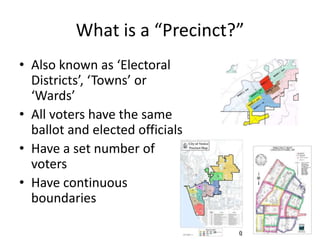
• Also known as ‘Electoral
  Districts’, ‘Towns’ or
  ‘Wards’
• All voters have the same
  ballot and elected officials
• Have a set number of
  voters
• Have continuous
  boundaries
What is a “Precinct?”
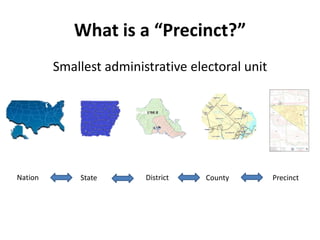
         Smallest administrative electoral unit


Nation       State       District   County        Precinct
Campaigning and Party Building
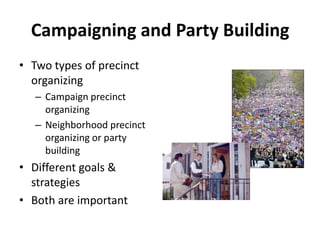
• Two types of precinct
  organizing
   – Campaign precinct
     organizing
   – Neighborhood precinct
     organizing or party
     building
• Different goals &
  strategies
• Both are important
Campaign Precinct Organizing
• Short term: June through November of
  election years
• Organized by campaign staff
• Focused on winning a particular election
• Centered around a candidate

                  Campaign Organizing Strengths
 1. Professionally staffed
 2. Controlled message
 3. Access to campaign resources (media, volunteers, etc)
Neighborhood Precinct Organizing
• Long term: Not limited by election calendar
• Focused on long range goals
• Organized by local volunteers


               Neighborhood Organizing Strengths
 1. Familiarity
 2. Continuity
 3. Access to community resources
A Mutually Beneficial Partnership

        Campaigns             This
• Bring an influx of money    helps…
and people
• Get new people involved
locally                         Neighborhood Precinct
                                     Organizations
                              • Create a permanent
                  Which       volunteer pool
                  benefits…   • Build institutional
                              knowledge about an area
Get Started
•   Know the players
•   Know the rules
•   Know the numbers
•   Set your goals
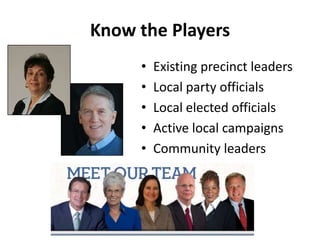
Know the Players
     •   Existing precinct leaders
     •   Local party officials
     •   Local elected officials
     •   Active local campaigns
     •   Community leaders
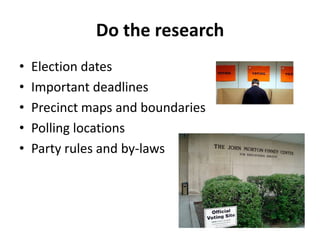
Do the research
•   Election dates
•   Important deadlines
•   Precinct maps and boundaries
•   Polling locations
•   Party rules and by-laws
Know the Numbers
       • Voter registration
       • Voter turnout
       • Democratic
         performance
       • Other demographic
         info
       • Individual voter history
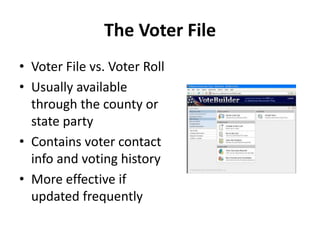
The Voter File
• Voter File vs. Voter Roll
• Usually available
  through the county or
  state party
• Contains voter contact
  info and voting history
• More effective if
  updated frequently
Setting Your Goals
• Important first step
  – Focuses and motivates volunteers
  – Helps develop strategies, tactics and timelines
  – Helps gain institutional party support
• Potential goals
  – Increase Democratic voter registration X%
  – Increase Democratic Performance X%
  – Get X% of district voters to vote early
  – Build a community of party activists
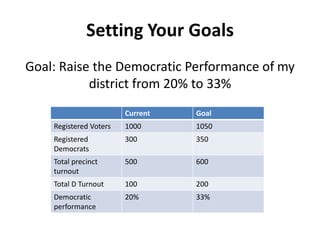
Setting Your Goals
Goal: Raise the Democratic Performance of my
           district from 20% to 33%
                        Current   Goal
    Registered Voters   1000      1050
    Registered          300       350
    Democrats
    Total precinct      500       600
    turnout
    Total D Turnout     100       200
    Democratic          20%       33%
    performance
Good Advice
The only way I know how
to organize people is to
talk to one person, then
talk to another person,
then talk to another
person…
                            --César Chávez
Making a List
       First: Relational - Family, Friends, Neighbors

• Start close to home — literally
• Friends, co-workers, neighbors
• Utilize social networks
  – The best recruiters are current volunteers


                 Primary Motivation:
            Personal ties to the one asking
Making a List:
                 Second: The Voter File

• Contact info & voting history of your precinct
• Which strangers on your block vote in every
  election?
• Which ones vote in Democratic Primaries?
• Bulk of your list


                Primary Motivation:
            Sense of civic or partisan duty
Making a List:
           Third: Public Displays of Affiliation

• Look for signs, stickers, statements
• Displays political passions publicly
• Caution: It’s easier to wear a button than to
  act on it


                Primary Motivation
          Passion for an issue or candidate
Let’s Get Together
• Community is about face time
  – See each other
  – See the context
  – See the plan
• Invite your list over
  – Lit drop invitations to your list
  – Call to follow up
  – Informal, intimate, neighborly setting
    to gather
Delegate!
• Invest your team members
  into the plan
                              Common Precinct Roles
• Ask each person for an     • Block Captain
  individual commitment      • Data Director
                             • Research Director
• People can take on         • Early Vote Coordinator
  multiple roles             • Poll Captain
                             • Social Chair
• Everyone belongs to a
  block team
Always Be Recruiting
    Build volunteer recruitment into all your
               precinct activities
– Canvassing
– Socials
– Conduct new recruitment drives every 6
months
Keep Them Coming Back
•   Your team is valuable — Let them know!
•   Always provide the context for any action
•   Specific tasks and clear goals
•   Keep it social, keep it fun

                Remember what
               motivated them to
               come the first time.

Precinct Organizing

  • 1.
    Starting in yourown backyard
  • 2.
    What is a“Precinct?” • Also known as ‘Electoral Districts’, ‘Towns’ or ‘Wards’ • All voters have the same ballot and elected officials • Have a set number of voters • Have continuous boundaries
  • 3.
    What is a“Precinct?” Smallest administrative electoral unit Nation State District County Precinct
  • 4.
    Campaigning and PartyBuilding • Two types of precinct organizing – Campaign precinct organizing – Neighborhood precinct organizing or party building • Different goals & strategies • Both are important
  • 5.
    Campaign Precinct Organizing •Short term: June through November of election years • Organized by campaign staff • Focused on winning a particular election • Centered around a candidate Campaign Organizing Strengths 1. Professionally staffed 2. Controlled message 3. Access to campaign resources (media, volunteers, etc)
  • 6.
    Neighborhood Precinct Organizing •Long term: Not limited by election calendar • Focused on long range goals • Organized by local volunteers Neighborhood Organizing Strengths 1. Familiarity 2. Continuity 3. Access to community resources
  • 7.
    A Mutually BeneficialPartnership Campaigns This • Bring an influx of money helps… and people • Get new people involved locally Neighborhood Precinct Organizations • Create a permanent Which volunteer pool benefits… • Build institutional knowledge about an area
  • 8.
    Get Started • Know the players • Know the rules • Know the numbers • Set your goals
  • 9.
    Know the Players • Existing precinct leaders • Local party officials • Local elected officials • Active local campaigns • Community leaders
  • 10.
    Do the research • Election dates • Important deadlines • Precinct maps and boundaries • Polling locations • Party rules and by-laws
  • 11.
    Know the Numbers • Voter registration • Voter turnout • Democratic performance • Other demographic info • Individual voter history
  • 12.
    The Voter File •Voter File vs. Voter Roll • Usually available through the county or state party • Contains voter contact info and voting history • More effective if updated frequently
  • 13.
    Setting Your Goals •Important first step – Focuses and motivates volunteers – Helps develop strategies, tactics and timelines – Helps gain institutional party support • Potential goals – Increase Democratic voter registration X% – Increase Democratic Performance X% – Get X% of district voters to vote early – Build a community of party activists
  • 14.
    Setting Your Goals Goal:Raise the Democratic Performance of my district from 20% to 33% Current Goal Registered Voters 1000 1050 Registered 300 350 Democrats Total precinct 500 600 turnout Total D Turnout 100 200 Democratic 20% 33% performance
  • 15.
    Good Advice The onlyway I know how to organize people is to talk to one person, then talk to another person, then talk to another person… --César Chávez
  • 16.
    Making a List First: Relational - Family, Friends, Neighbors • Start close to home — literally • Friends, co-workers, neighbors • Utilize social networks – The best recruiters are current volunteers Primary Motivation: Personal ties to the one asking
  • 17.
    Making a List: Second: The Voter File • Contact info & voting history of your precinct • Which strangers on your block vote in every election? • Which ones vote in Democratic Primaries? • Bulk of your list Primary Motivation: Sense of civic or partisan duty
  • 18.
    Making a List: Third: Public Displays of Affiliation • Look for signs, stickers, statements • Displays political passions publicly • Caution: It’s easier to wear a button than to act on it Primary Motivation Passion for an issue or candidate
  • 19.
    Let’s Get Together •Community is about face time – See each other – See the context – See the plan • Invite your list over – Lit drop invitations to your list – Call to follow up – Informal, intimate, neighborly setting to gather
  • 20.
    Delegate! • Invest yourteam members into the plan Common Precinct Roles • Ask each person for an • Block Captain individual commitment • Data Director • Research Director • People can take on • Early Vote Coordinator multiple roles • Poll Captain • Social Chair • Everyone belongs to a block team
  • 21.
    Always Be Recruiting Build volunteer recruitment into all your precinct activities – Canvassing – Socials – Conduct new recruitment drives every 6 months
  • 22.
    Keep Them ComingBack • Your team is valuable — Let them know! • Always provide the context for any action • Specific tasks and clear goals • Keep it social, keep it fun Remember what motivated them to come the first time.