Aligning the early years on a continuum of birth
  through grade 3 learning and development
   Focusing on the support of every child’s
    growth and development from birth to third
    grade


   Looking at the diversity of programs,
    purposes, and philosophies that serve
    children and families from birth to age 8


   Promoting success by ensuring access,
    quality, continuity, family involvement
   The Achievement Gap


   Pre K Fade Out


   Lack of shared belief about the purpose of
    early learning programs


   Research
   Expanded policies at the federal, state, and local
    levels that address access, funding, transitions,
    and require collaboration for all children and
    families


   Established standards that reflect high
    expectations and that cross both programs and
    age levels birth through third grade


   Alignment of curriculum, assessment, instruction
    so that children are supported in their learning
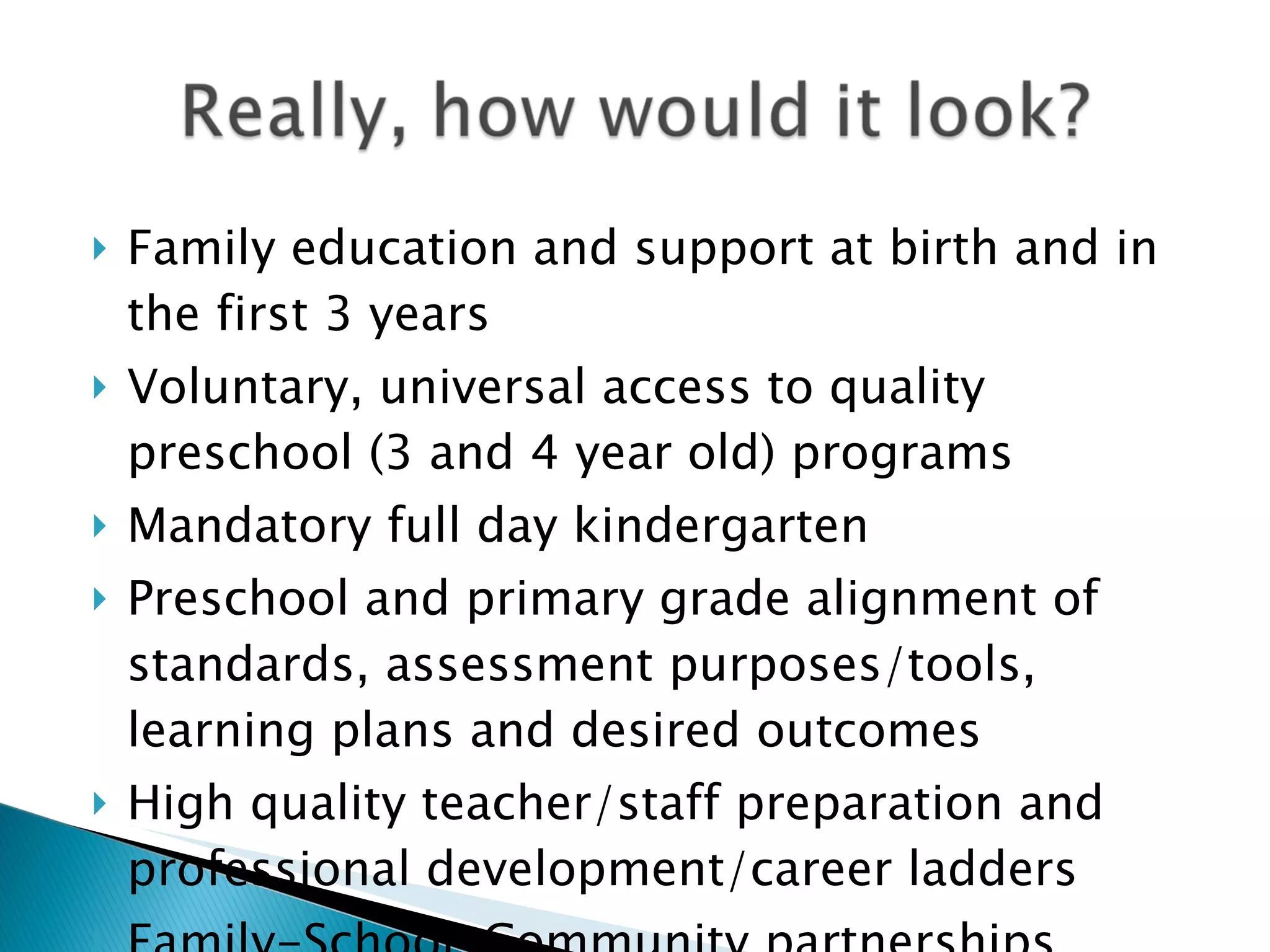
   Family education and support at birth and in
    the first 3 years
   Voluntary, universal access to quality
    preschool (3 and 4 year old) programs
   Mandatory full day kindergarten
   Preschool and primary grade alignment of
    standards, assessment purposes/tools,
    learning plans and desired outcomes
   High quality teacher/staff preparation and
    professional development/career ladders
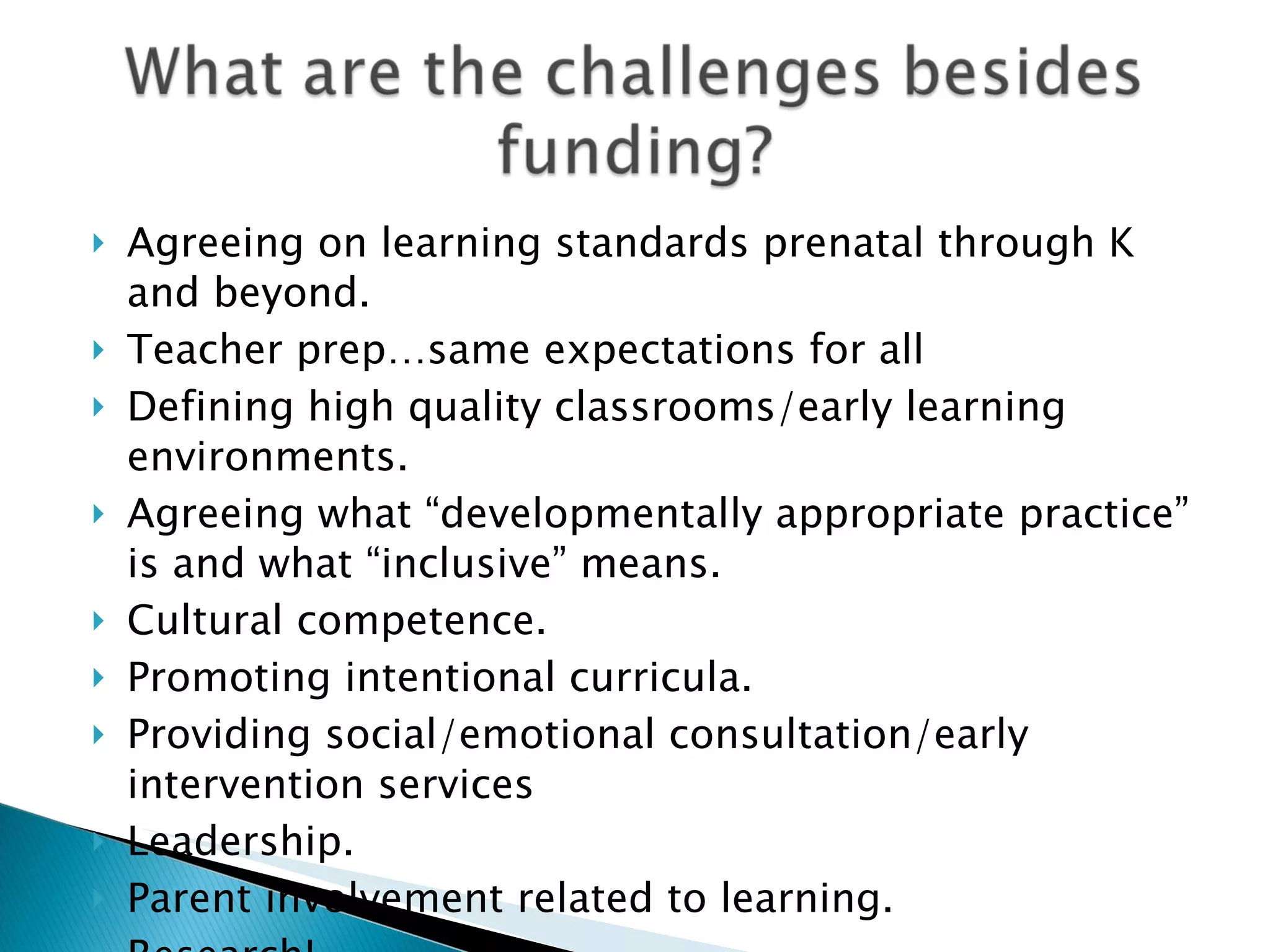
   Agreeing on learning standards prenatal through K
    and beyond.
   Teacher prep…same expectations for all
   Defining high quality classrooms/early learning
    environments.
   Agreeing what “developmentally appropriate practice”
    is and what “inclusive” means.
   Cultural competence.
   Promoting intentional curricula.
   Providing social/emotional consultation/early
    intervention services
   Leadership.
   Parent involvement related to learning.
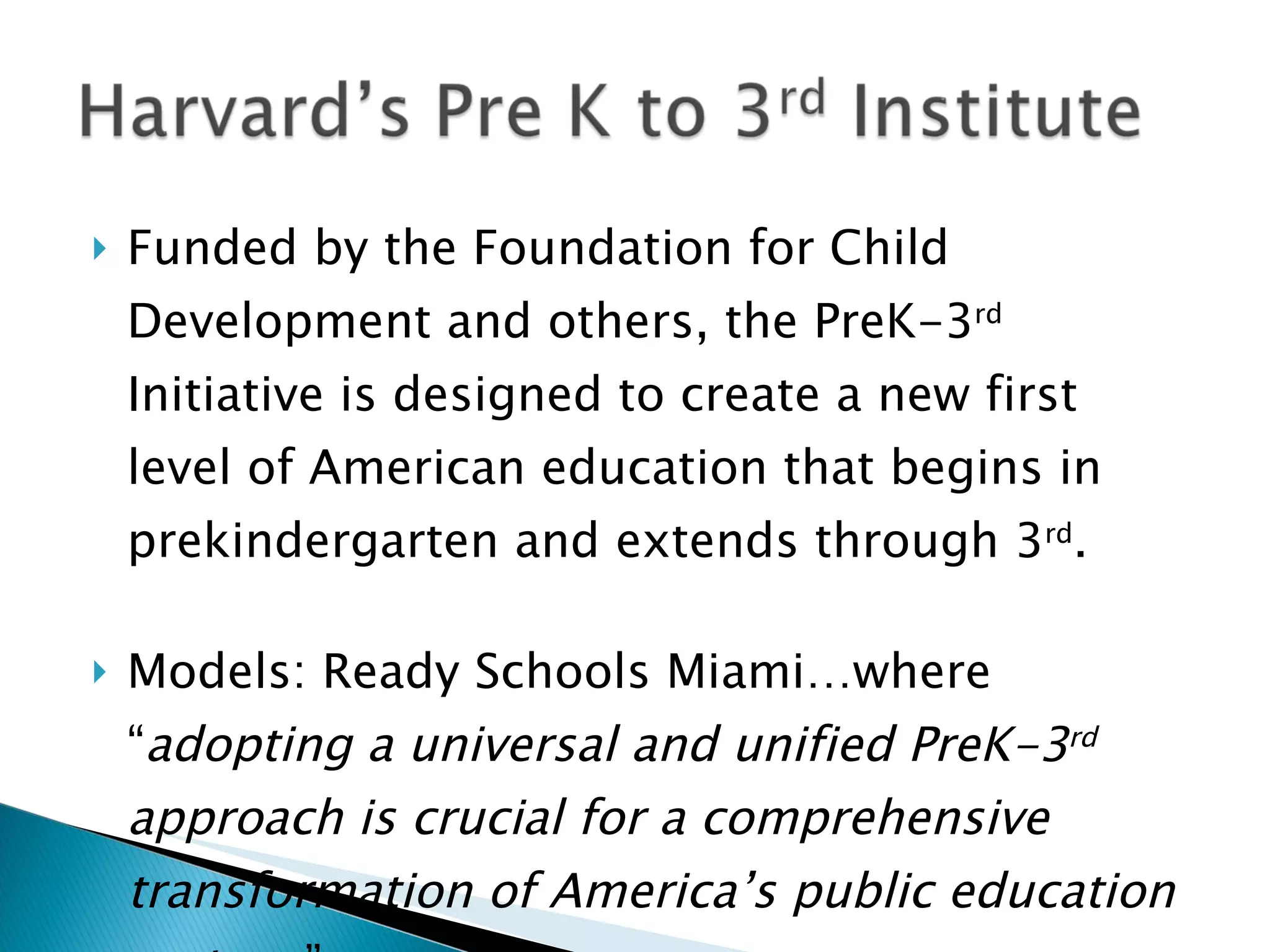
   Funded by the Foundation for Child
    Development and others, the PreK-3rd
    Initiative is designed to create a new first
    level of American education that begins in
    prekindergarten and extends through 3rd.

   Models: Ready Schools Miami…where
    “adopting a universal and unified PreK-3rd
    approach is crucial for a comprehensive
    transformation of America’s public education
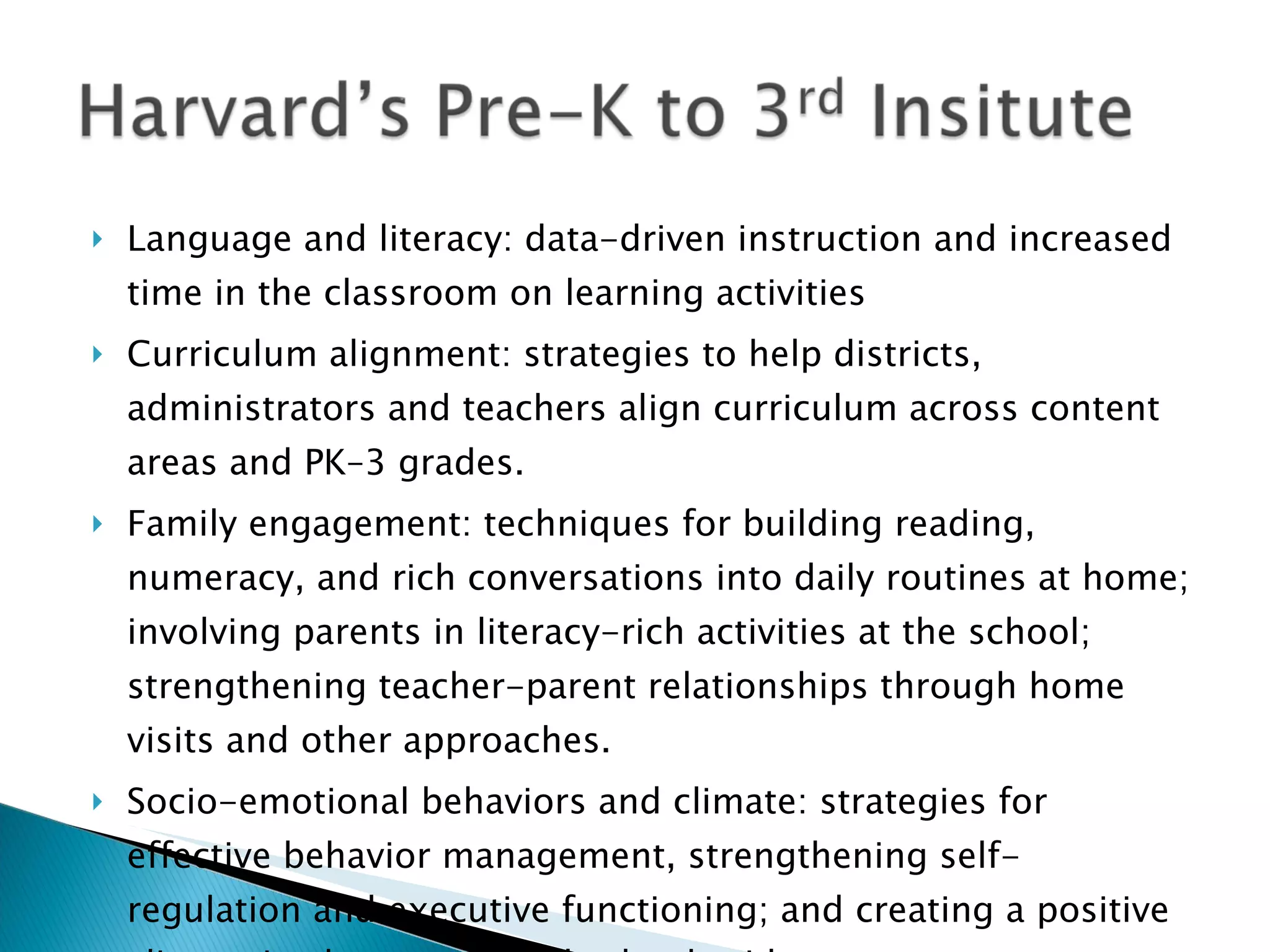
   Language and literacy: data-driven instruction and increased
    time in the classroom on learning activities
   Curriculum alignment: strategies to help districts,
    administrators and teachers align curriculum across content
    areas and PK–3 grades.
   Family engagement: techniques for building reading,
    numeracy, and rich conversations into daily routines at home;
    involving parents in literacy-rich activities at the school;
    strengthening teacher-parent relationships through home
    visits and other approaches.
   Socio-emotional behaviors and climate: strategies for
    effective behavior management, strengthening self-
    regulation and executive functioning; and creating a positive
   After-school: strategies for integrating in-school curricula
    with after-school practices, increasing participation in out-
    of-school programs, and partnerships with community
    providers of after-school activities. 


   Alignment across PK to third grade: best practices for
    developing common planning time across grades, integrating
    data on children’s learning and behavior across grades.


   Integration: successful techniques for effectively layering
    interventions over time and for integrating school, family,
    and after-school interventions around important goals such
    as increased vocabulary.
   Individual efforts to align pre-K with
    elementary (i.e. Whatcom Day Academy)


   Nooksack Valley Collaboration for Children
    (horizontal and vertical alignment)


   Gates School District Early Learning
    Leadership Grant…and school district-OC
    partnerships
   High Scope Perry Preschool Project
   The Carolina Abecedarian Project
   Chicago Parent Child Centers
   Early Childhood Longitudinal Study-
    Kindergarten Cohort
   National Head Start/Public School Early
    Childhood Transition Demonstration Project
   Early Language and Literacy Studies (Heath,
    Wells, National Research Council, etc.)

Pre K To 3 Rev

  • 1.
    Aligning the earlyyears on a continuum of birth through grade 3 learning and development
  • 2.
    Focusing on the support of every child’s growth and development from birth to third grade  Looking at the diversity of programs, purposes, and philosophies that serve children and families from birth to age 8  Promoting success by ensuring access, quality, continuity, family involvement
  • 3.
    The Achievement Gap  Pre K Fade Out  Lack of shared belief about the purpose of early learning programs  Research
  • 4.
    Expanded policies at the federal, state, and local levels that address access, funding, transitions, and require collaboration for all children and families  Established standards that reflect high expectations and that cross both programs and age levels birth through third grade  Alignment of curriculum, assessment, instruction so that children are supported in their learning
  • 5.
    Family education and support at birth and in the first 3 years  Voluntary, universal access to quality preschool (3 and 4 year old) programs  Mandatory full day kindergarten  Preschool and primary grade alignment of standards, assessment purposes/tools, learning plans and desired outcomes  High quality teacher/staff preparation and professional development/career ladders
  • 6.
    Agreeing on learning standards prenatal through K and beyond.  Teacher prep…same expectations for all  Defining high quality classrooms/early learning environments.  Agreeing what “developmentally appropriate practice” is and what “inclusive” means.  Cultural competence.  Promoting intentional curricula.  Providing social/emotional consultation/early intervention services  Leadership.  Parent involvement related to learning.
  • 7.
    Funded by the Foundation for Child Development and others, the PreK-3rd Initiative is designed to create a new first level of American education that begins in prekindergarten and extends through 3rd.  Models: Ready Schools Miami…where “adopting a universal and unified PreK-3rd approach is crucial for a comprehensive transformation of America’s public education
  • 8.
    Language and literacy: data-driven instruction and increased time in the classroom on learning activities  Curriculum alignment: strategies to help districts, administrators and teachers align curriculum across content areas and PK–3 grades.  Family engagement: techniques for building reading, numeracy, and rich conversations into daily routines at home; involving parents in literacy-rich activities at the school; strengthening teacher-parent relationships through home visits and other approaches.  Socio-emotional behaviors and climate: strategies for effective behavior management, strengthening self- regulation and executive functioning; and creating a positive
  • 9.
    After-school: strategies for integrating in-school curricula with after-school practices, increasing participation in out- of-school programs, and partnerships with community providers of after-school activities.   Alignment across PK to third grade: best practices for developing common planning time across grades, integrating data on children’s learning and behavior across grades.  Integration: successful techniques for effectively layering interventions over time and for integrating school, family, and after-school interventions around important goals such as increased vocabulary.
  • 10.
    Individual efforts to align pre-K with elementary (i.e. Whatcom Day Academy)  Nooksack Valley Collaboration for Children (horizontal and vertical alignment)  Gates School District Early Learning Leadership Grant…and school district-OC partnerships
  • 11.
    High Scope Perry Preschool Project  The Carolina Abecedarian Project  Chicago Parent Child Centers  Early Childhood Longitudinal Study- Kindergarten Cohort  National Head Start/Public School Early Childhood Transition Demonstration Project  Early Language and Literacy Studies (Heath, Wells, National Research Council, etc.)