Presented by: Billy F. Salamero
MAED - EM
"we shall not have much reason to complain of
the narrowness of our minds, if we will but
employ them about what may be of use to us"
2
"our business is not to know all things, but
those which concern our conduct."
3
Pragmatism is derived from the Greek word 'Pragma'
which means work, practice, action or activity
It is a philosophy of practical experience.
according to this ideology great importance is laid upon
practicability and utility.
4
Pragmatism is also known as
Experimentalism or consequentialism.
It is called Experimentalism because
Pragmatists believe experiment as the only
criterion of Truth.
5
 Gives importance to action
 Gives importance to experience
 Believes in change
 No belief in permanent values
 Gives emphasis on experimentation
 A practical philosophy
 A humanistic philosophy
 Pragmatists believe on present
6
BASIC PRINCIPLES OF PRAGMATISM
 Believe that growth and development
takes place through interaction and
environment
 Emphasis on means not on ‘end’
• Pragmatists also hold that whatever was true
yesterday, need not be the same today
7
8
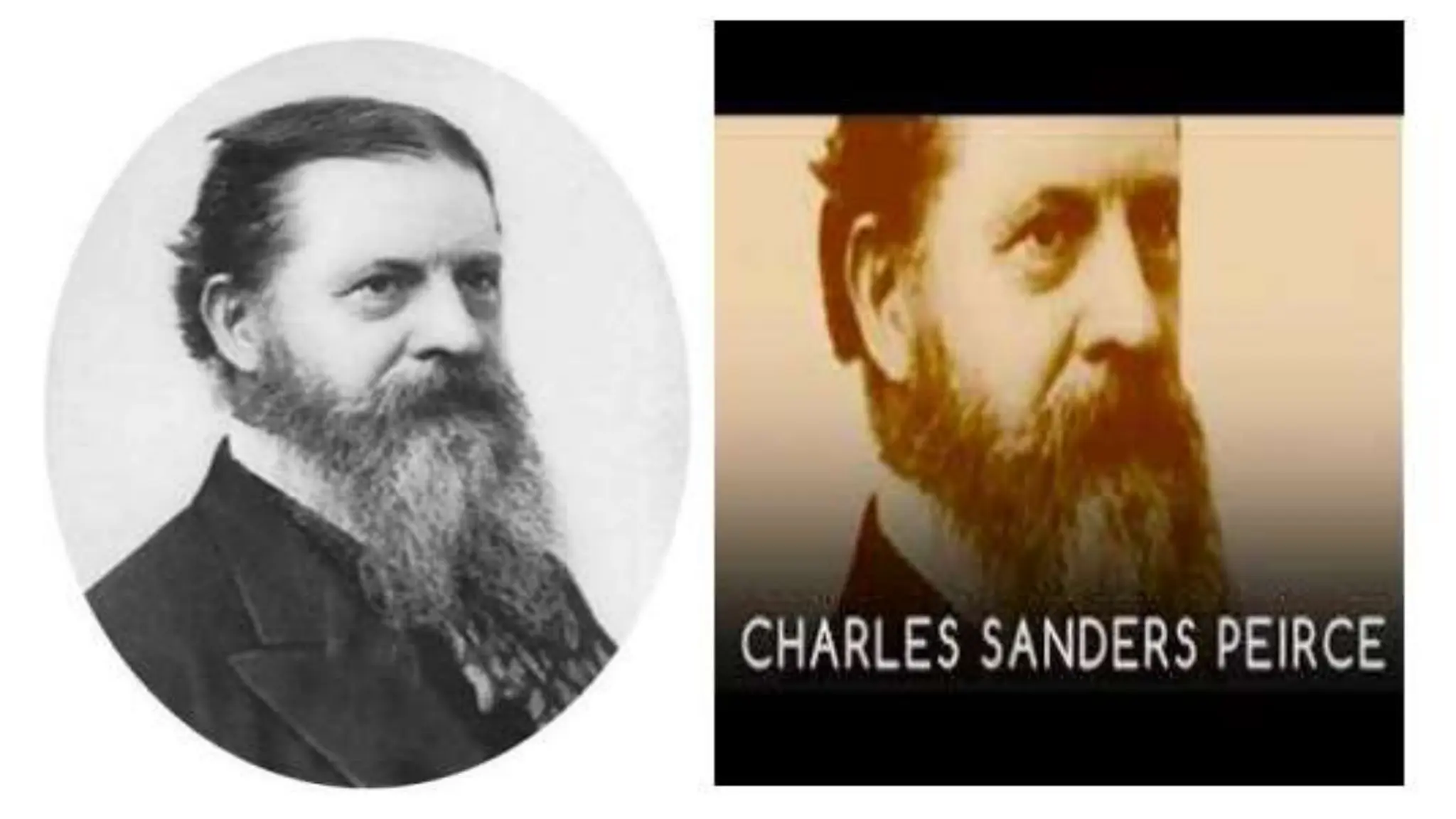
• CHARLES SANDER PEIRCE
• Father of PRAGMATISM
• Coined the term pragmatism
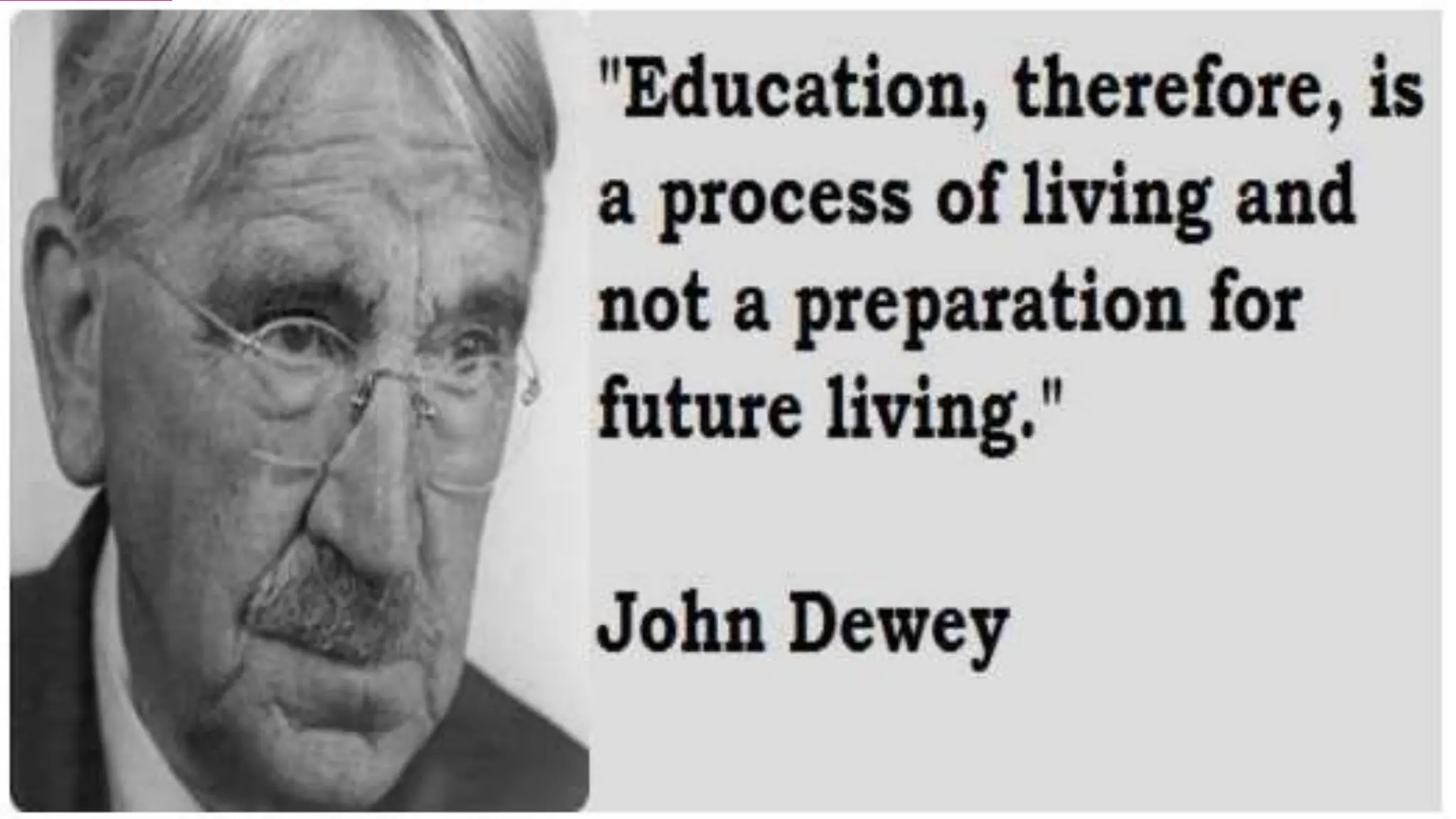
• JOHN DEWEY
• Father of Modern Experiencial
Education
• He rejected traditional method of
teaching
• WILIAM JAMES
• Exponent of pragmatism
• GEORGE HERBERT MEAD.
Pragmatism supports for progressive trends in
education. Pragmatism has influenced the
modern education greatly.
11
According to pragmatism “activity” lies at the
center of all educative process. Education is a
continuous process which is progressive and
flexible.
12
It stands for freedom and worth of the
individual. It works on the principle of
democracy and education as a social necessity.
13
According to this school of thought education
should help an individual to meet human needs
& solve problems and thereby enable an
individual to lead a happy life.
14
• Creation of new values.
• Activity & experience
• Personal and social adjustment.
• Reconstruction of experience.
• All round development
15
16
Pragmatism has no fixed aims or goals of
education. According to Ross the general
education aim of pragmatism is “creation
of new values”
17
Activity & experience are essential to create
new values. Therefore the educational
system aims at providing the learner,
physical, intellectual, moral and aesthetic
activities.
18
Pragmatism lays stress on an individual
solving problems of life.
Hence the aim of education should be the
formulation and cultivation of a dynamic
adoptable, resourceful and enterprising
mind.
19
Pragmatism emphasizes adaptation to
environment, construction and re-
construction of experience and
development of capacities to control the
environment.
20
The most important aim of education is “all
around development”. An individual must
develop physically, mentally, socially,
morally and aesthetically.
21
Pragmatist do not advocate a fixed curriculum in
advance. Only an outline of the activities may be
kept in mind at the start of the program.
Curriculum should be evolved according to the
requirement of situations. Thus pragmatism
advocates a flexible curriculum. Hence the nature
of the learner has to be taken into consideration.
22
Pragmatism focuses on including multiple
activities of life for the inclusion into the
curriculum. Pragmatism does not include cultural
activities in the curriculum.
It emphasizes only the utilitarian aspect and
therefore, neglects subjects such as poetry and
art.
23
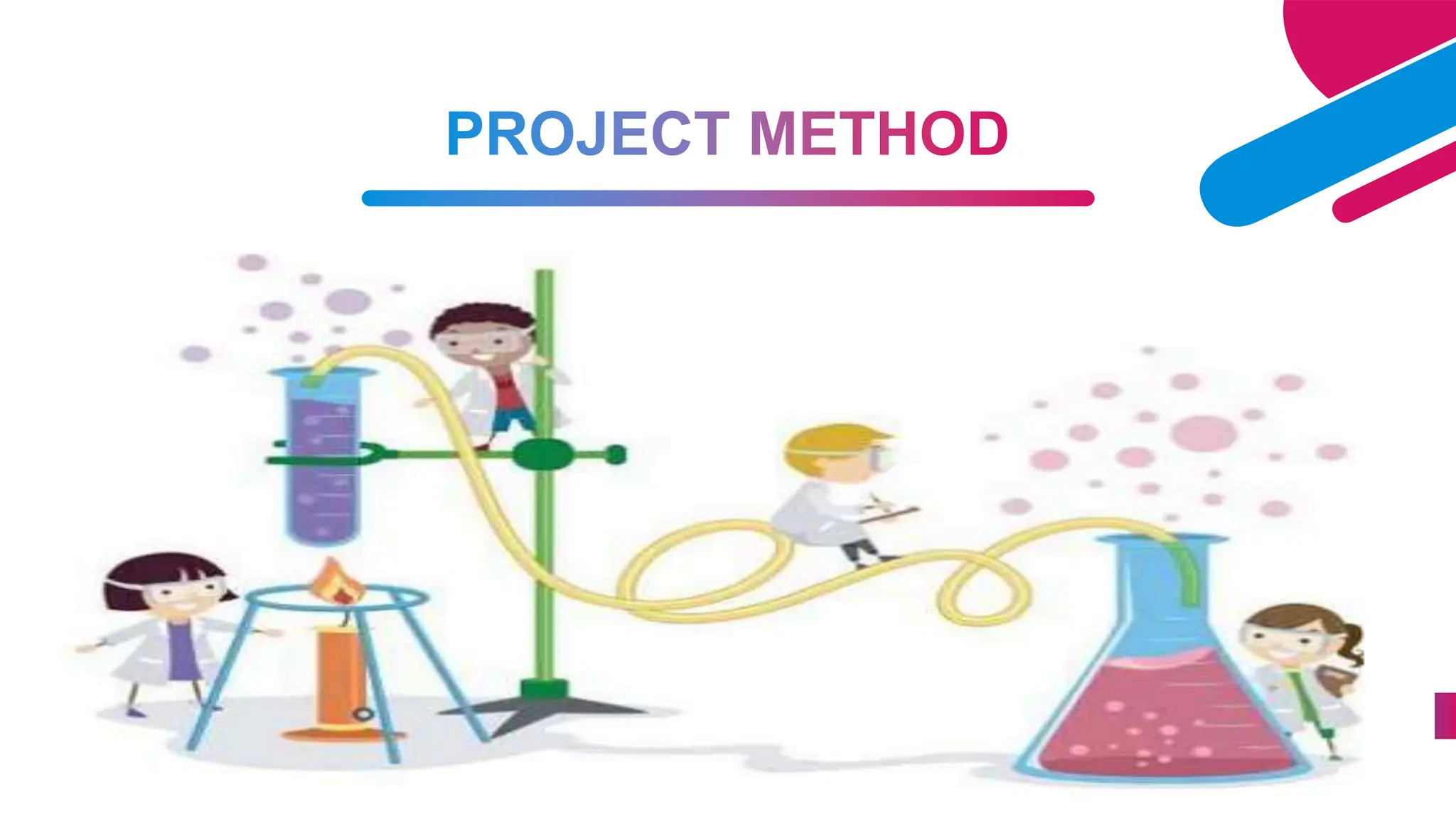
• LEARNING BY DOING
• PROVISION OF REAL LIFE SITUATION.
• PROJECT METHOD
24
Pragmatism believes in experimenting with new
methods of teaching. These methods of teaching
are devised by the teacher in the light of real life
situations.
Education is not teaching but to encourage
learning through self – effort and creative
activity, and knowledge is not obtained through
book but by actually doing things.
25
Pragmatism stresses on action rather
than reflection. The learner has to be
put in to the real situation which will
result in purposeful creative activity
and problematic acts.
26
• Project method is the most important
contribution of pragmatism. It is referred to as
the “problematic act carried to completion in its
natural setting”.
• The learner is given a real and purposeful
activity to carry out. • In doing so the learner
acquires principles, skills and methods
incidentally.
27
• The learner is given a real and purposeful
activity to carry out.
• In doing so the learner acquires principles,
skills and methods incidentally.
28
29
Thus the learner obtains knowledge and
skills from the experiences gained in the
accomplishment of that task.
30
Pragmatist opine that purposeful and co-
operative activities, carried on in a free and
happy environment, are conducive to good
discipline.
Such activities inculcate virtues like
tolerance, mutual respect, self-control,
initiative and originality among the learners
thus leading to character building.
31
This aspect may also be called as “self-
discipline”. Discipline in such cases are not
imposed from any external authority.
Pragmatism promotes social discipline through
participation in cooperative activities in the
school. Thus the learner imbibes virtues like
tolerance, mutual respect, sympathy, initiative
and service of humanity.
32
The main function of a pragmatic teacher is to
create a real life situation in which some
problems may emerge and guide the child in
solving the problems.
Thus the teacher puts the pupil in the position
of a discoverer and experimenter. Thus the
teacher is required to provide opportunities for
activity and learning.
33
The teacher is a friend and a helper and a
person who provides opportunities for
experimentation.
34
• Pragmatism has had a profound impact on education,
emphasizing practical, experiential, and adaptable
learning.
• It promotes the development of new values and
encourages individual growth.
• Pragmatism has brought democracy into education and
prepares students to face real-life challenges.

PRAGMATISM SCHOOL OF PHILOSOPHY.pptx

  • 1.
    Presented by: BillyF. Salamero MAED - EM
  • 2.
    "we shall nothave much reason to complain of the narrowness of our minds, if we will but employ them about what may be of use to us" 2
  • 3.
    "our business isnot to know all things, but those which concern our conduct." 3
  • 4.
    Pragmatism is derivedfrom the Greek word 'Pragma' which means work, practice, action or activity It is a philosophy of practical experience. according to this ideology great importance is laid upon practicability and utility. 4
  • 5.
    Pragmatism is alsoknown as Experimentalism or consequentialism. It is called Experimentalism because Pragmatists believe experiment as the only criterion of Truth. 5
  • 6.
     Gives importanceto action  Gives importance to experience  Believes in change  No belief in permanent values  Gives emphasis on experimentation  A practical philosophy  A humanistic philosophy  Pragmatists believe on present 6 BASIC PRINCIPLES OF PRAGMATISM  Believe that growth and development takes place through interaction and environment  Emphasis on means not on ‘end’
  • 7.
    • Pragmatists alsohold that whatever was true yesterday, need not be the same today 7
  • 8.
    8 • CHARLES SANDERPEIRCE • Father of PRAGMATISM • Coined the term pragmatism • JOHN DEWEY • Father of Modern Experiencial Education • He rejected traditional method of teaching • WILIAM JAMES • Exponent of pragmatism • GEORGE HERBERT MEAD.
  • 11.
    Pragmatism supports forprogressive trends in education. Pragmatism has influenced the modern education greatly. 11
  • 12.
    According to pragmatism“activity” lies at the center of all educative process. Education is a continuous process which is progressive and flexible. 12
  • 13.
    It stands forfreedom and worth of the individual. It works on the principle of democracy and education as a social necessity. 13
  • 14.
    According to thisschool of thought education should help an individual to meet human needs & solve problems and thereby enable an individual to lead a happy life. 14
  • 15.
    • Creation ofnew values. • Activity & experience • Personal and social adjustment. • Reconstruction of experience. • All round development 15
  • 16.
    16 Pragmatism has nofixed aims or goals of education. According to Ross the general education aim of pragmatism is “creation of new values”
  • 17.
    17 Activity & experienceare essential to create new values. Therefore the educational system aims at providing the learner, physical, intellectual, moral and aesthetic activities.
  • 18.
    18 Pragmatism lays stresson an individual solving problems of life. Hence the aim of education should be the formulation and cultivation of a dynamic adoptable, resourceful and enterprising mind.
  • 19.
    19 Pragmatism emphasizes adaptationto environment, construction and re- construction of experience and development of capacities to control the environment.
  • 20.
    20 The most importantaim of education is “all around development”. An individual must develop physically, mentally, socially, morally and aesthetically.
  • 21.
    21 Pragmatist do notadvocate a fixed curriculum in advance. Only an outline of the activities may be kept in mind at the start of the program. Curriculum should be evolved according to the requirement of situations. Thus pragmatism advocates a flexible curriculum. Hence the nature of the learner has to be taken into consideration.
  • 22.
    22 Pragmatism focuses onincluding multiple activities of life for the inclusion into the curriculum. Pragmatism does not include cultural activities in the curriculum. It emphasizes only the utilitarian aspect and therefore, neglects subjects such as poetry and art.
  • 23.
    23 • LEARNING BYDOING • PROVISION OF REAL LIFE SITUATION. • PROJECT METHOD
  • 24.
    24 Pragmatism believes inexperimenting with new methods of teaching. These methods of teaching are devised by the teacher in the light of real life situations. Education is not teaching but to encourage learning through self – effort and creative activity, and knowledge is not obtained through book but by actually doing things.
  • 25.
    25 Pragmatism stresses onaction rather than reflection. The learner has to be put in to the real situation which will result in purposeful creative activity and problematic acts.
  • 26.
    26 • Project methodis the most important contribution of pragmatism. It is referred to as the “problematic act carried to completion in its natural setting”. • The learner is given a real and purposeful activity to carry out. • In doing so the learner acquires principles, skills and methods incidentally.
  • 27.
    27 • The learneris given a real and purposeful activity to carry out. • In doing so the learner acquires principles, skills and methods incidentally.
  • 28.
  • 29.
    29 Thus the learnerobtains knowledge and skills from the experiences gained in the accomplishment of that task.
  • 30.
    30 Pragmatist opine thatpurposeful and co- operative activities, carried on in a free and happy environment, are conducive to good discipline. Such activities inculcate virtues like tolerance, mutual respect, self-control, initiative and originality among the learners thus leading to character building.
  • 31.
    31 This aspect mayalso be called as “self- discipline”. Discipline in such cases are not imposed from any external authority. Pragmatism promotes social discipline through participation in cooperative activities in the school. Thus the learner imbibes virtues like tolerance, mutual respect, sympathy, initiative and service of humanity.
  • 32.
    32 The main functionof a pragmatic teacher is to create a real life situation in which some problems may emerge and guide the child in solving the problems. Thus the teacher puts the pupil in the position of a discoverer and experimenter. Thus the teacher is required to provide opportunities for activity and learning.
  • 33.
    33 The teacher isa friend and a helper and a person who provides opportunities for experimentation.
  • 34.
    34 • Pragmatism hashad a profound impact on education, emphasizing practical, experiential, and adaptable learning. • It promotes the development of new values and encourages individual growth. • Pragmatism has brought democracy into education and prepares students to face real-life challenges.

Editor's Notes

  • #7 Pragma – “Activity” or “Practice” emphasizes the importance of teaching practical, useful knowledge and skills that can adapt to the evolving needs of students and the world they live in, rather than focusing on fixed theories or absolute truths that may not be directly applicable to their lives. Pragmatism does not see truth as an absolute, it suggests that truth is relative and can vary depending on the context, perspective, and situation. What may be considered true in one situation or for one individual may not hold the same truth value in another context or for someone else. Key proponents C.B. Pierce, John Dewey, William James, and others.
  • #13 Pragma – “Activity” or “Practice” emphasizes the importance of teaching practical, useful knowledge and skills that can adapt to the evolving needs of students and the world they live in, rather than focusing on fixed theories or absolute truths that may not be directly applicable to their lives. Pragmatism does not see truth as an absolute, it suggests that truth is relative and can vary depending on the context, perspective, and situation. What may be considered true in one situation or for one individual may not hold the same truth value in another context or for someone else. Key proponents C.B. Pierce, John Dewey, William James, and others.
  • #14 Pragma – “Activity” or “Practice” emphasizes the importance of teaching practical, useful knowledge and skills that can adapt to the evolving needs of students and the world they live in, rather than focusing on fixed theories or absolute truths that may not be directly applicable to their lives. Pragmatism does not see truth as an absolute, it suggests that truth is relative and can vary depending on the context, perspective, and situation. What may be considered true in one situation or for one individual may not hold the same truth value in another context or for someone else. Key proponents C.B. Pierce, John Dewey, William James, and others.
  • #15 Pragma – “Activity” or “Practice” emphasizes the importance of teaching practical, useful knowledge and skills that can adapt to the evolving needs of students and the world they live in, rather than focusing on fixed theories or absolute truths that may not be directly applicable to their lives. Pragmatism does not see truth as an absolute, it suggests that truth is relative and can vary depending on the context, perspective, and situation. What may be considered true in one situation or for one individual may not hold the same truth value in another context or for someone else. Key proponents C.B. Pierce, John Dewey, William James, and others.
  • #16 emphasize the need for educational systems and practices to be flexible, student-centered, and responsive to the ever-changing nature of life. believe that education should address the fundamental biological needs of students. This includes providing them with the knowledge and skills necessary for physical well-being and survival. For example, it involves teaching students about health, nutrition, safety, and other aspects of personal well-being. Meeting these biological needs is seen as a foundational step in preparing students for a productive life. education should not be limited to the acquisition of academic knowledge but should also encompass physical, emotional, social, and ethical development. All-round development ensures that students are well-prepared for various aspects of life.