TOPIC: PROGMATISM
HAFIZ SAFI ULLAH
MS 2ND, INTERNATIONAL ISLMAIC UNIVERSITY ,Islamabad
7/13/2020 1PROGMATISM
Etymology of Progmatism
• The term pragmatism has been derived from the
Greek term pragma which means use.
• Pragmatism as a philosophical tradition began in the
United States around 1870. Charles Sanders Peirce,
generally considered to be its founder.
7/13/2020 PROGMATISM 2
Main concepts of Pragmatism
7/13/2020 PROGMATISM 3
1) Pluralism.
2) Emphasis on change.
3) Utilitarianism.
4) Pragmatists are utilitarian.
5) Changing aims and values.
6) Individualism. Pragmatists are individualists.
7) Emphasis on social aspects.
8) Experimentalism.
views of pragmatists:
1. Reality is changing: (is what works)
2. Thoughts must produce actions: (not in mind only
3. Product of practical life: ( through experiences it will
created)
4. Only experiences are real: ( which is experiences)
5. Focus on problem solving, use of knowledge in daily life
6. Apply personal or realistic experiences
7/13/2020 PROGMATISM 4
Type Of Pragmatism
1) Experimentalism.
2) Experimental pragmatism
3) Nominalistic pragmatism
4) Biological pragmatism
7/13/2020 PROGMATISM 5
CONTINUE….
7. Attainable standards:
8. Practical people:
9. Apply personal or realistic experiences
10. Attainable standards: (Emphasis on actions).
11. Also called Instrumentalism ( ideas are tools).
12. Also called Experimentalism ( thoughts are tested).
13. Influence on education (practical and utilitarian
philosophy).
7/13/2020 PROGMATISM 6
CONTINUE…
14. Activity based education:
15. Purposeful education:
16. Create self-confidence (workshop or laboratory).
17. Emerges from educational practice: ( thoughts actions).
18. Pragmatism is based on the psychology of individual
differences (according to aptitudes and abilities of the
individual).
19. Individual should be developed in society:
20. Democracy in education (technique of managing their
own affairs in the school).
7/13/2020 PROGMATISM 7
Aims of education according to pragmatists:
1. Based on actions, Needs/not permanent, must be general)
All the aims of education must be concerned with the present
and the future,
2. Provide real life experience:
3. No fixed aims of education in advance:
4. Crate values in children
5. Needs of a child and society
6. Can solve present day problems
7. Creation of a Resourceful mind
8. Dynamic personality changing with environment
7/13/2020 PROGMATISM 8
Curriculum
1. Subjects having utility to students:
2. Interests of a child at different stages:
3. Subjects who solve practical problems of life:
4. Fully prepared child for every environment:
5. Unity of knowledge and skills (integrated knowledge)
6. Activity based philosophy:
7. Do rather than to know:
8. Textbooks have secondly importance:
9. Projects based on tasks which are real, purposeful
and related with life should be given to students:
7/13/2020 PROGMATISM 9
Role of a teacher
1. Stands in midway
2. Helper role
3. Suggest problems and then students
should solve it
4. Make students for real life and for community
5. Punishments have no role (no external, free, real
activities).
7/13/2020 PROGMATISM 10
Educational Methods
The pragmatic methods of education are based on psychology and
sociology, ( active participation, dynamic and changeable).
1. Method adopted must be dynamic and changeable
2. Active participation
3. formulate Project Method,
Raise the standard of teaching
4. Developing the ability of independent cogitation( (‫تدبر‬
5. Child’s interests, desires and inclinations
6. Leaner should learn from his own experience
7/13/2020 PROGMATISM 11
CONTINUE….
7. leaner’s own efforts
8. After motivation, learner will need encouragement
to gain knowledge
9. Teacher will create circumstances to face the
situation
10. Teacher will teach how to face the situation, how to
tackle the problems
11. In the project method the leaner is presented with a
problem in the form of a project
7/13/2020 PROGMATISM 12
CONTINUE…
12. Inspired to solve the problem, natural environment,
importance of the project,
13. early stages of growth the child is faced with simpler
problems, may grow difficult with age.
14. step 1: objectives of the project:
step 2: tell him the ways to achieving it.
15. formulate a project for achieving it
16. success or failure of the project is evaluated
7/13/2020 PROGMATISM 13
Advantages
1. Active participation
2. Self-development and self-discipline
3. Social and civic qualities
4. Natural, purposeful and highly motivating
7/13/2020 PROGMATISM 14
Discipline
1. child should take Benefits from social
environment
2. Discipline
3. Group activity/purposive activity
4. New discipline/self-discipline
5. Foundation of child character
7/13/2020 PROGMATISM 15
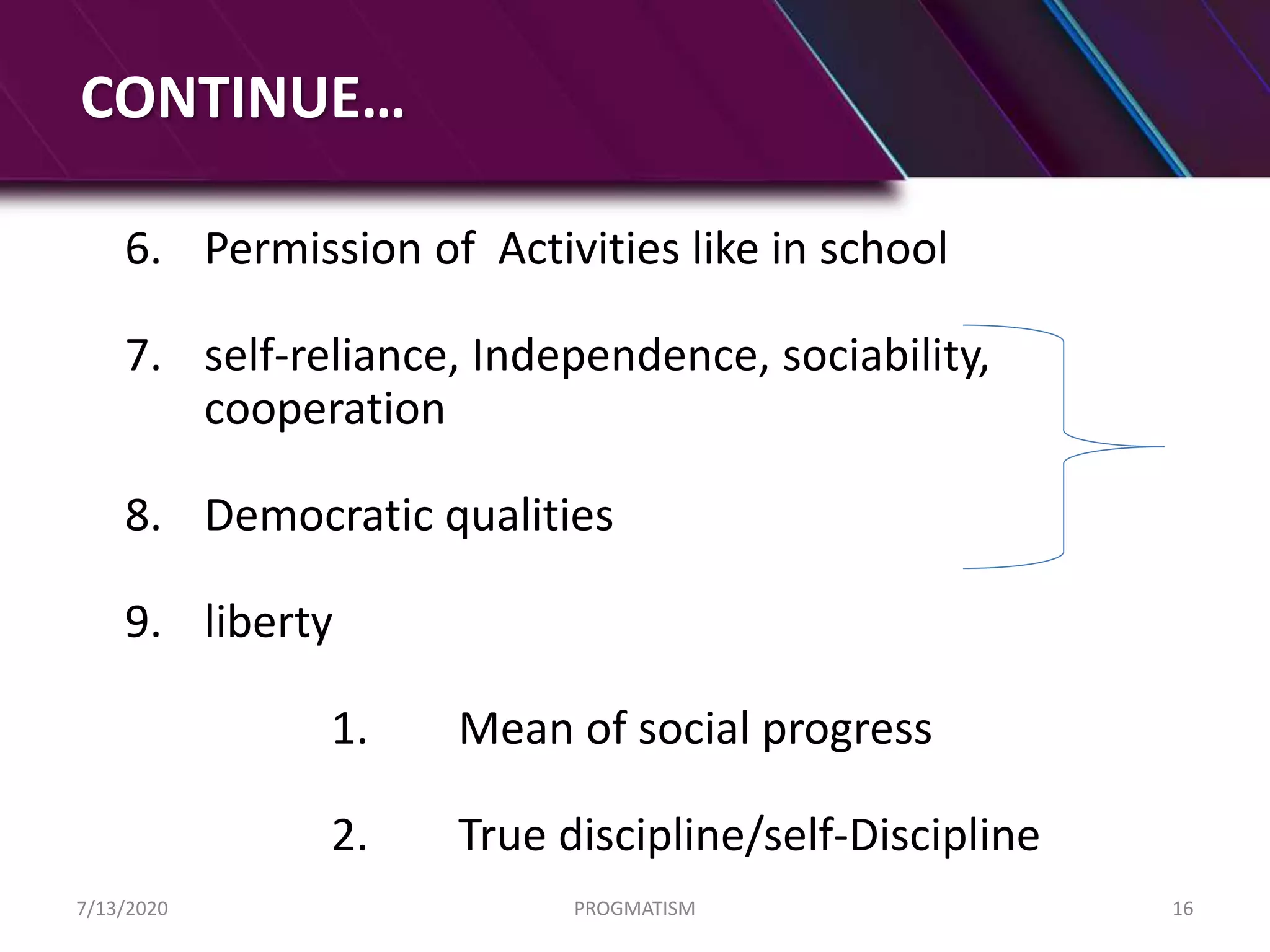
CONTINUE…
6. Permission of Activities like in school
7. self-reliance, Independence, sociability,
cooperation
8. Democratic qualities
9. liberty
1. Mean of social progress
2. True discipline/self-Discipline
7/13/2020 PROGMATISM 16
CONTINUE…
10. Not from outside/From inner side of Educator
11. Aim of discipline Social consciousness
12. social responsibility disciplined person/Try to
new ways all the above depends on liberty
13. Self-discipline
14. social obligations
7/13/2020 PROGMATISM 17
7/13/2020 PROGMATISM 18

Hafiz safi ullah, progmatism

  • 1.
    TOPIC: PROGMATISM HAFIZ SAFIULLAH MS 2ND, INTERNATIONAL ISLMAIC UNIVERSITY ,Islamabad 7/13/2020 1PROGMATISM
  • 2.
    Etymology of Progmatism •The term pragmatism has been derived from the Greek term pragma which means use. • Pragmatism as a philosophical tradition began in the United States around 1870. Charles Sanders Peirce, generally considered to be its founder. 7/13/2020 PROGMATISM 2
  • 3.
    Main concepts ofPragmatism 7/13/2020 PROGMATISM 3 1) Pluralism. 2) Emphasis on change. 3) Utilitarianism. 4) Pragmatists are utilitarian. 5) Changing aims and values. 6) Individualism. Pragmatists are individualists. 7) Emphasis on social aspects. 8) Experimentalism.
  • 4.
    views of pragmatists: 1.Reality is changing: (is what works) 2. Thoughts must produce actions: (not in mind only 3. Product of practical life: ( through experiences it will created) 4. Only experiences are real: ( which is experiences) 5. Focus on problem solving, use of knowledge in daily life 6. Apply personal or realistic experiences 7/13/2020 PROGMATISM 4
  • 5.
    Type Of Pragmatism 1)Experimentalism. 2) Experimental pragmatism 3) Nominalistic pragmatism 4) Biological pragmatism 7/13/2020 PROGMATISM 5
  • 6.
    CONTINUE…. 7. Attainable standards: 8.Practical people: 9. Apply personal or realistic experiences 10. Attainable standards: (Emphasis on actions). 11. Also called Instrumentalism ( ideas are tools). 12. Also called Experimentalism ( thoughts are tested). 13. Influence on education (practical and utilitarian philosophy). 7/13/2020 PROGMATISM 6
  • 7.
    CONTINUE… 14. Activity basededucation: 15. Purposeful education: 16. Create self-confidence (workshop or laboratory). 17. Emerges from educational practice: ( thoughts actions). 18. Pragmatism is based on the psychology of individual differences (according to aptitudes and abilities of the individual). 19. Individual should be developed in society: 20. Democracy in education (technique of managing their own affairs in the school). 7/13/2020 PROGMATISM 7
  • 8.
    Aims of educationaccording to pragmatists: 1. Based on actions, Needs/not permanent, must be general) All the aims of education must be concerned with the present and the future, 2. Provide real life experience: 3. No fixed aims of education in advance: 4. Crate values in children 5. Needs of a child and society 6. Can solve present day problems 7. Creation of a Resourceful mind 8. Dynamic personality changing with environment 7/13/2020 PROGMATISM 8
  • 9.
    Curriculum 1. Subjects havingutility to students: 2. Interests of a child at different stages: 3. Subjects who solve practical problems of life: 4. Fully prepared child for every environment: 5. Unity of knowledge and skills (integrated knowledge) 6. Activity based philosophy: 7. Do rather than to know: 8. Textbooks have secondly importance: 9. Projects based on tasks which are real, purposeful and related with life should be given to students: 7/13/2020 PROGMATISM 9
  • 10.
    Role of ateacher 1. Stands in midway 2. Helper role 3. Suggest problems and then students should solve it 4. Make students for real life and for community 5. Punishments have no role (no external, free, real activities). 7/13/2020 PROGMATISM 10
  • 11.
    Educational Methods The pragmaticmethods of education are based on psychology and sociology, ( active participation, dynamic and changeable). 1. Method adopted must be dynamic and changeable 2. Active participation 3. formulate Project Method, Raise the standard of teaching 4. Developing the ability of independent cogitation( (‫تدبر‬ 5. Child’s interests, desires and inclinations 6. Leaner should learn from his own experience 7/13/2020 PROGMATISM 11
  • 12.
    CONTINUE…. 7. leaner’s ownefforts 8. After motivation, learner will need encouragement to gain knowledge 9. Teacher will create circumstances to face the situation 10. Teacher will teach how to face the situation, how to tackle the problems 11. In the project method the leaner is presented with a problem in the form of a project 7/13/2020 PROGMATISM 12
  • 13.
    CONTINUE… 12. Inspired tosolve the problem, natural environment, importance of the project, 13. early stages of growth the child is faced with simpler problems, may grow difficult with age. 14. step 1: objectives of the project: step 2: tell him the ways to achieving it. 15. formulate a project for achieving it 16. success or failure of the project is evaluated 7/13/2020 PROGMATISM 13
  • 14.
    Advantages 1. Active participation 2.Self-development and self-discipline 3. Social and civic qualities 4. Natural, purposeful and highly motivating 7/13/2020 PROGMATISM 14
  • 15.
    Discipline 1. child shouldtake Benefits from social environment 2. Discipline 3. Group activity/purposive activity 4. New discipline/self-discipline 5. Foundation of child character 7/13/2020 PROGMATISM 15
  • 16.
    CONTINUE… 6. Permission ofActivities like in school 7. self-reliance, Independence, sociability, cooperation 8. Democratic qualities 9. liberty 1. Mean of social progress 2. True discipline/self-Discipline 7/13/2020 PROGMATISM 16
  • 17.
    CONTINUE… 10. Not fromoutside/From inner side of Educator 11. Aim of discipline Social consciousness 12. social responsibility disciplined person/Try to new ways all the above depends on liberty 13. Self-discipline 14. social obligations 7/13/2020 PROGMATISM 17
  • 18.