George Yule
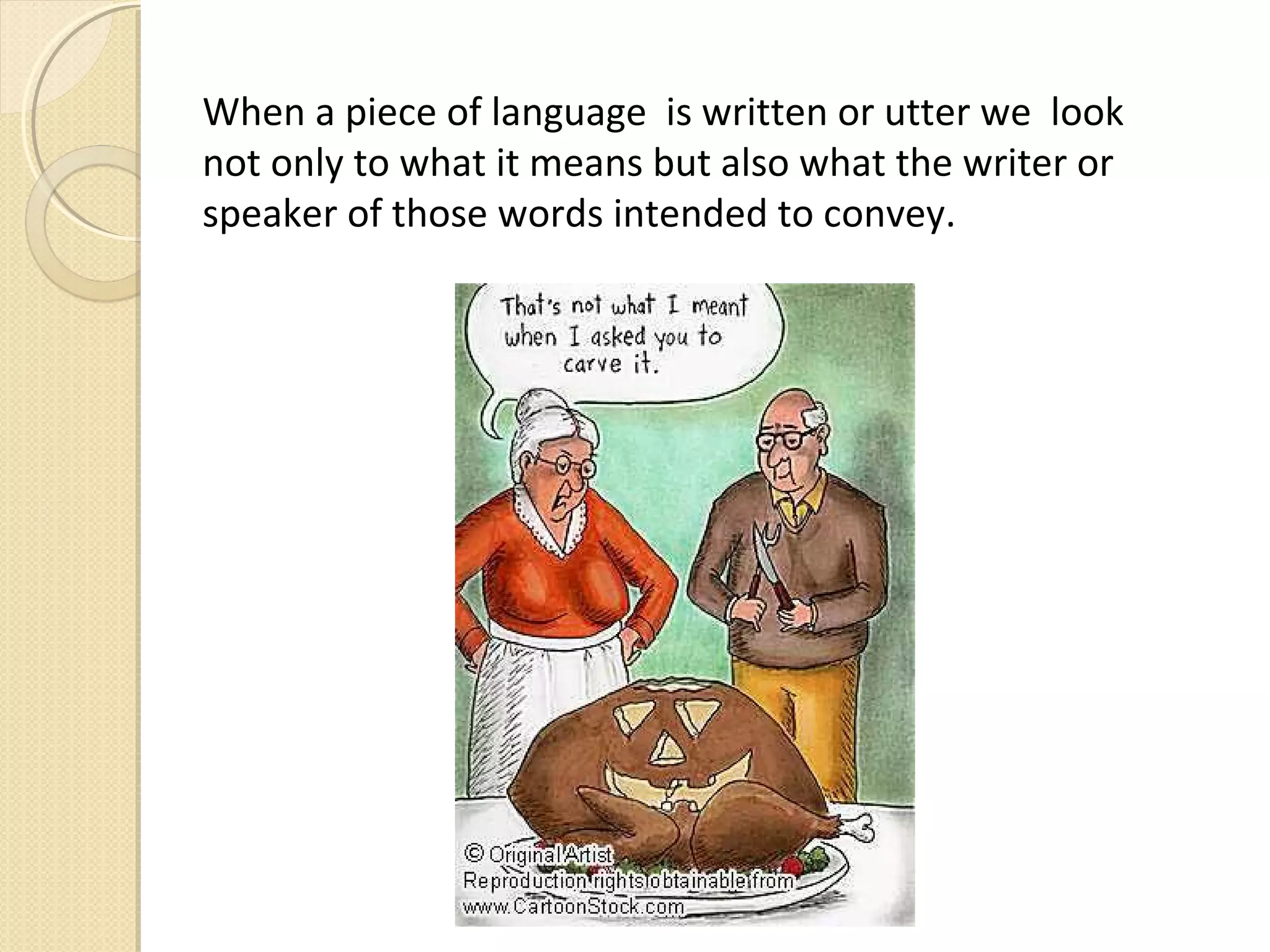
When a piece of language is written or utter we look
not only to what it means but also what the writer or
speaker of those words intended to convey.
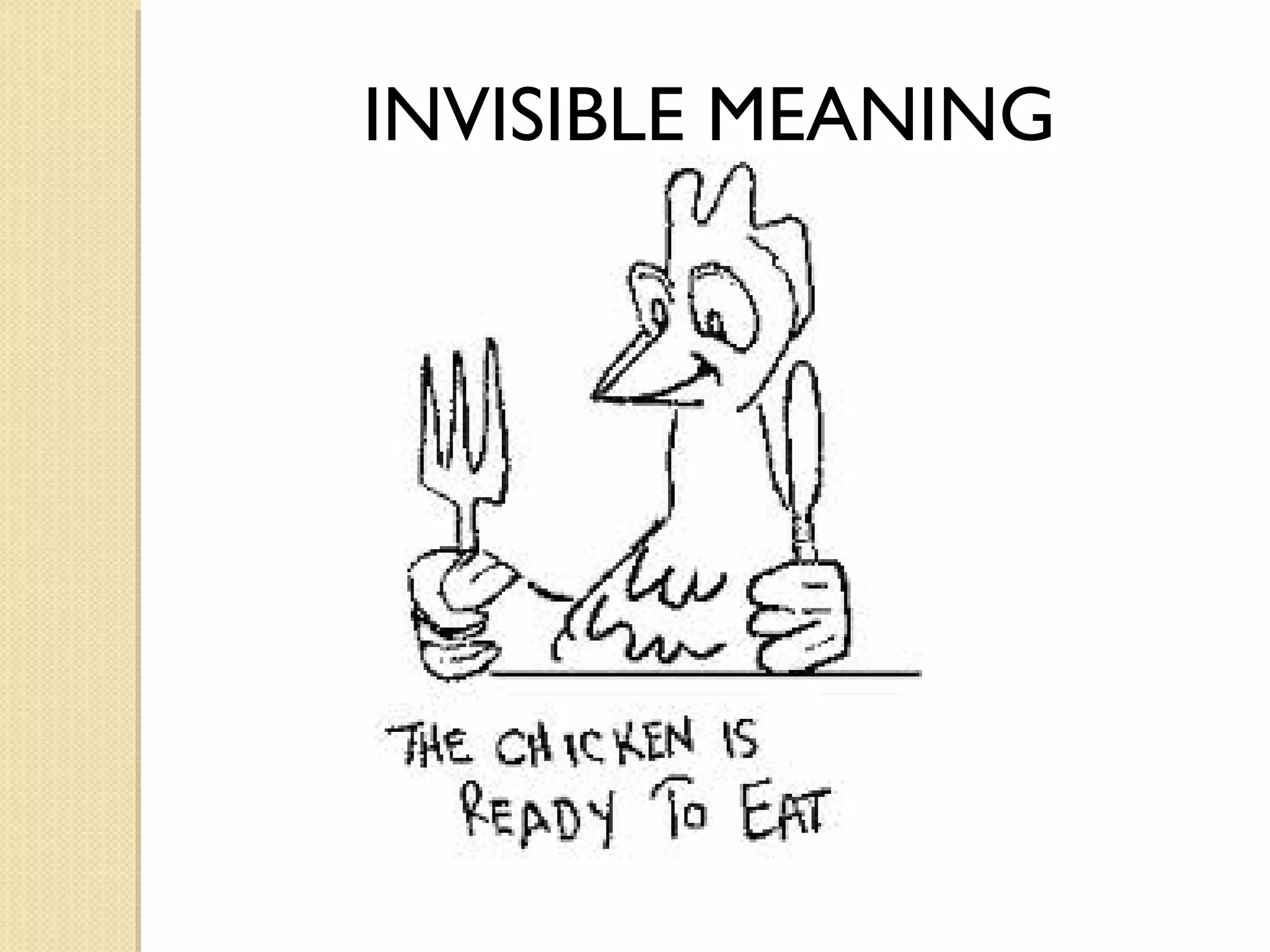
INVISIBLE MEANING
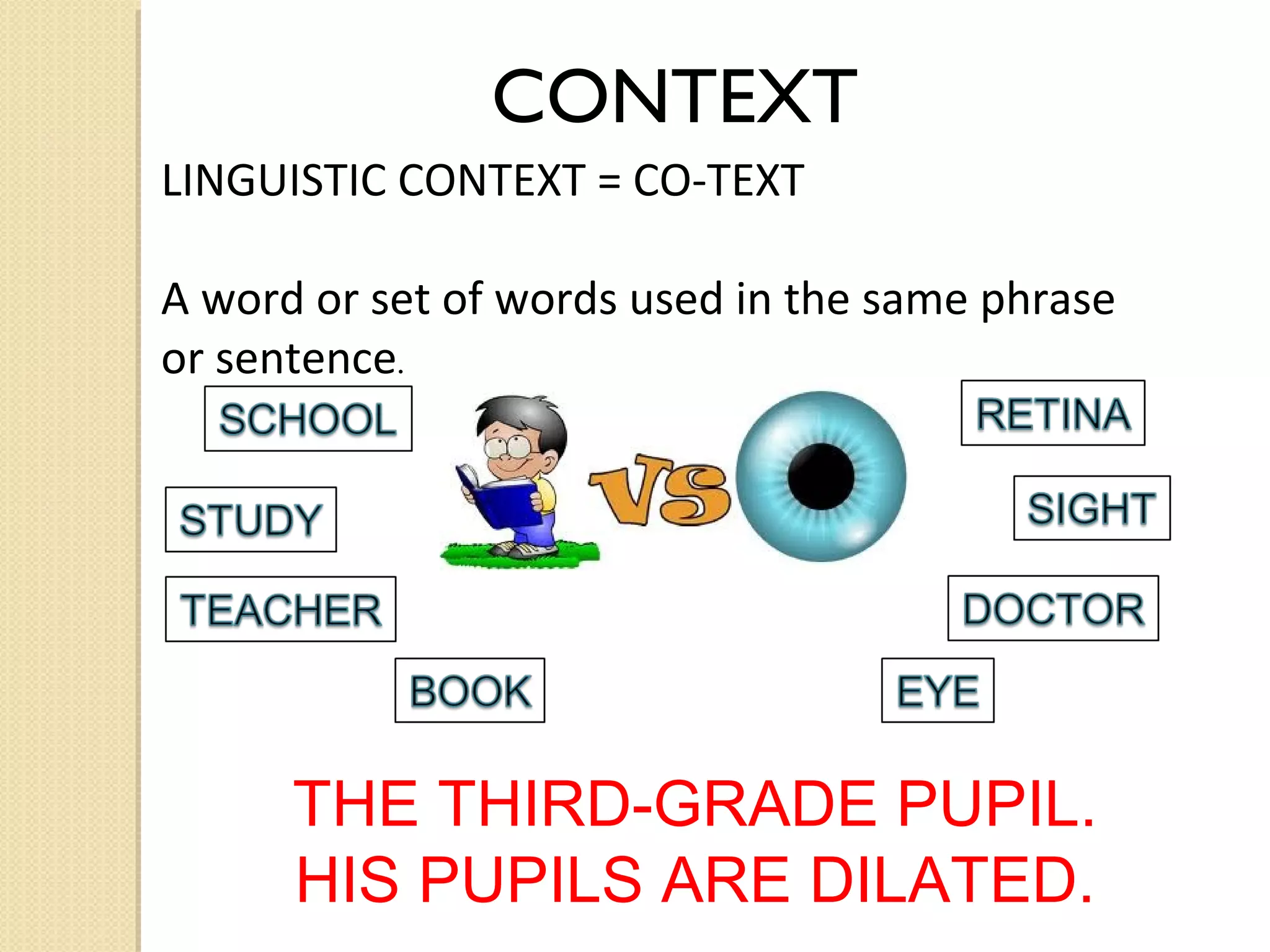
CONTEXT
LINGUISTIC CONTEXT = CO-TEXT
A word or set of words used in the same phrase
or sentence.

THE THIRD-GRADE PUPIL.
HIS PUPILS ARE DILATED.
DEIXIS
There are words that cannot be
interpreted unless the context is known.
Deictic expressions
Person deixis (I, you, he, she, it)
Place deixis (here, there, this, that,
Time deixis (now, then, yesterday, tonight)

Free beer tomorrow!
REFERENCE
Is an act by which a speaker or writer uses
language to enable a listener or reader to
identify something
We can use names associated with things
to refer to people and names of people to
refer to things e.g. we can say Where’s
the fresh salad sitting? She is sitting
behind the door. Can I have a look at your
Vince?
ANAPHORA
Subsequent reference to an already introduced
entity.
e.g:
1)
A: Can I borrow your book?
B: Yeah, it’s on the table
2)
I was waiting for the bus, but he just drove by
without stopping.
PRESUPPOSITION
What a speaker assumes is true or is known by the
hearer.
e.g:
1) Your brother is wating for you.
2) When did you stop smoking cigars?
Constancy under negation test:
My car is a wreck.
My car is not a wreck.
Presupposition: I have a car.
SPEECH ACTS
We can usually recognized the type of "act"
performed by the speaker in uttering a sentence.
  
•requesting
•comanding
•questioning
•informing

•DIRECT

SPEECH ACT :   Did he....?.  Are they....? or Can you....?
•INDIRECT SPEECH ACT:  you left the door open. (and it's pretty
cold outside).
POLITENESS
Your

face in pragmatics is your public selfimage.

•

FACE- THREATENING ACT:  Give me that paper!

•

FACE SAVING ACT: Could you pass me that paper,
please?
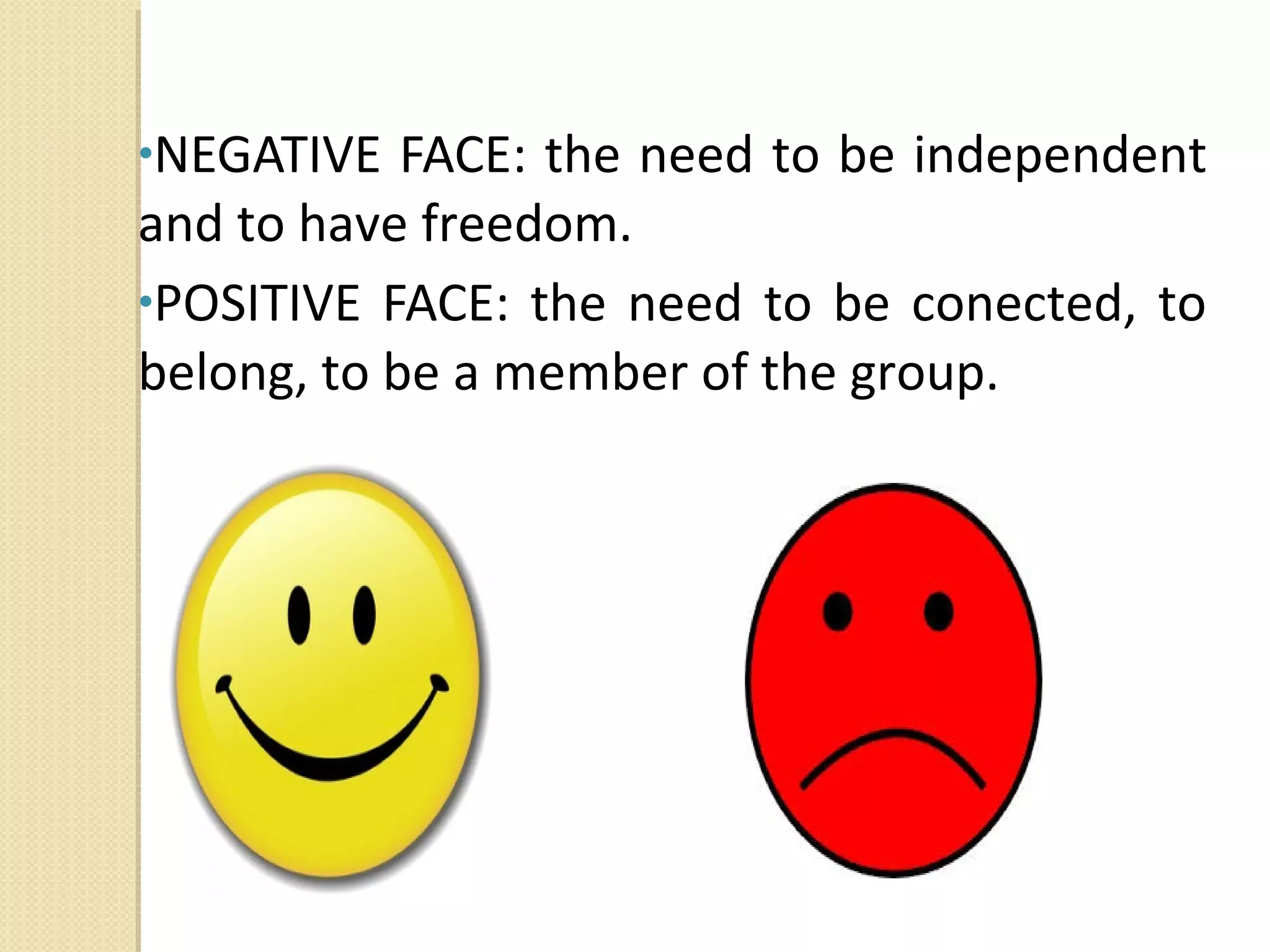
•NEGATIVE

FACE: the need to be independent
and to have freedom.
•POSITIVE FACE: the need to be conected, to
belong, to be a member of the group.
George Yule
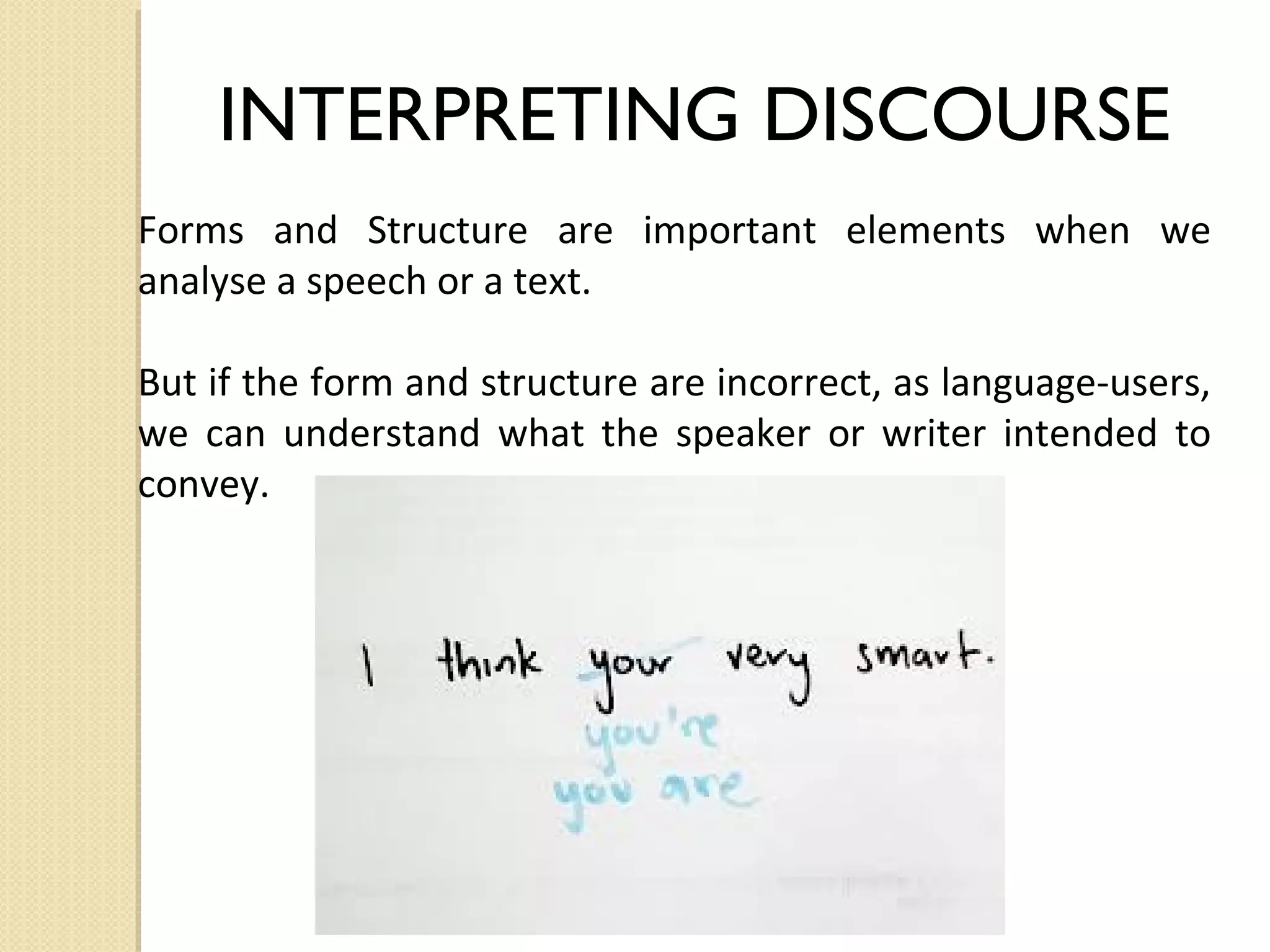
INTERPRETING DISCOURSE
Forms and Structure are important elements when we
analyse a speech or a text.
But if the form and structure are incorrect, as language-users,
we can understand what the speaker or writer intended to
convey.
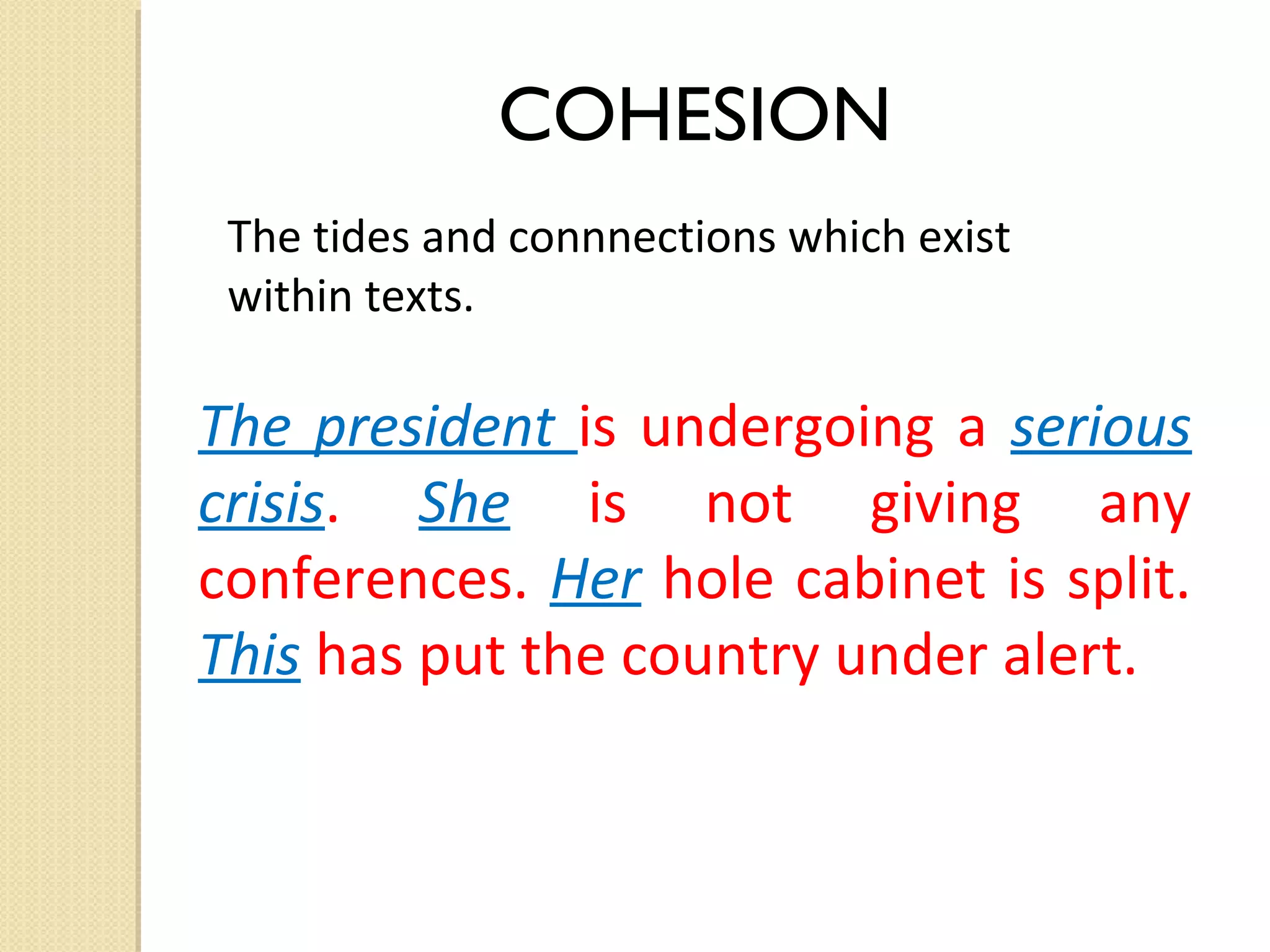
COHESION
The tides and connnections which exist
within texts.

The president is undergoing a serious
crisis. She is not giving any
conferences. Her hole cabinet is split.
This has put the country under alert.
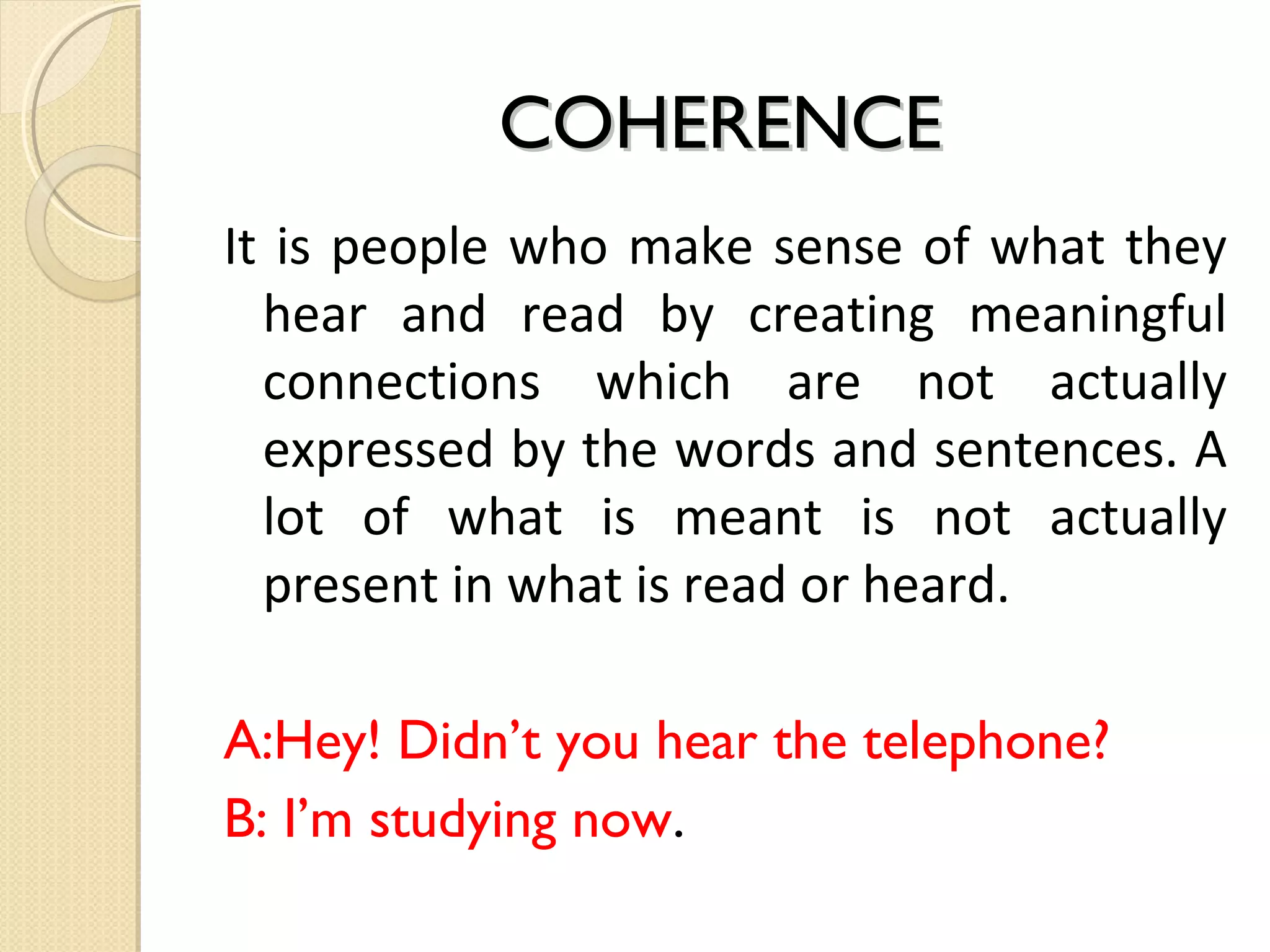
COHERENCE
It is people who make sense of what they
hear and read by creating meaningful
connections which are not actually
expressed by the words and sentences. A
lot of what is meant is not actually
present in what is read or heard.
A:Hey! Didn’t you hear the telephone?
B: I’m studying now.
SPEECH EVENTS
Where language is used for example a

debate, interview, discussion.
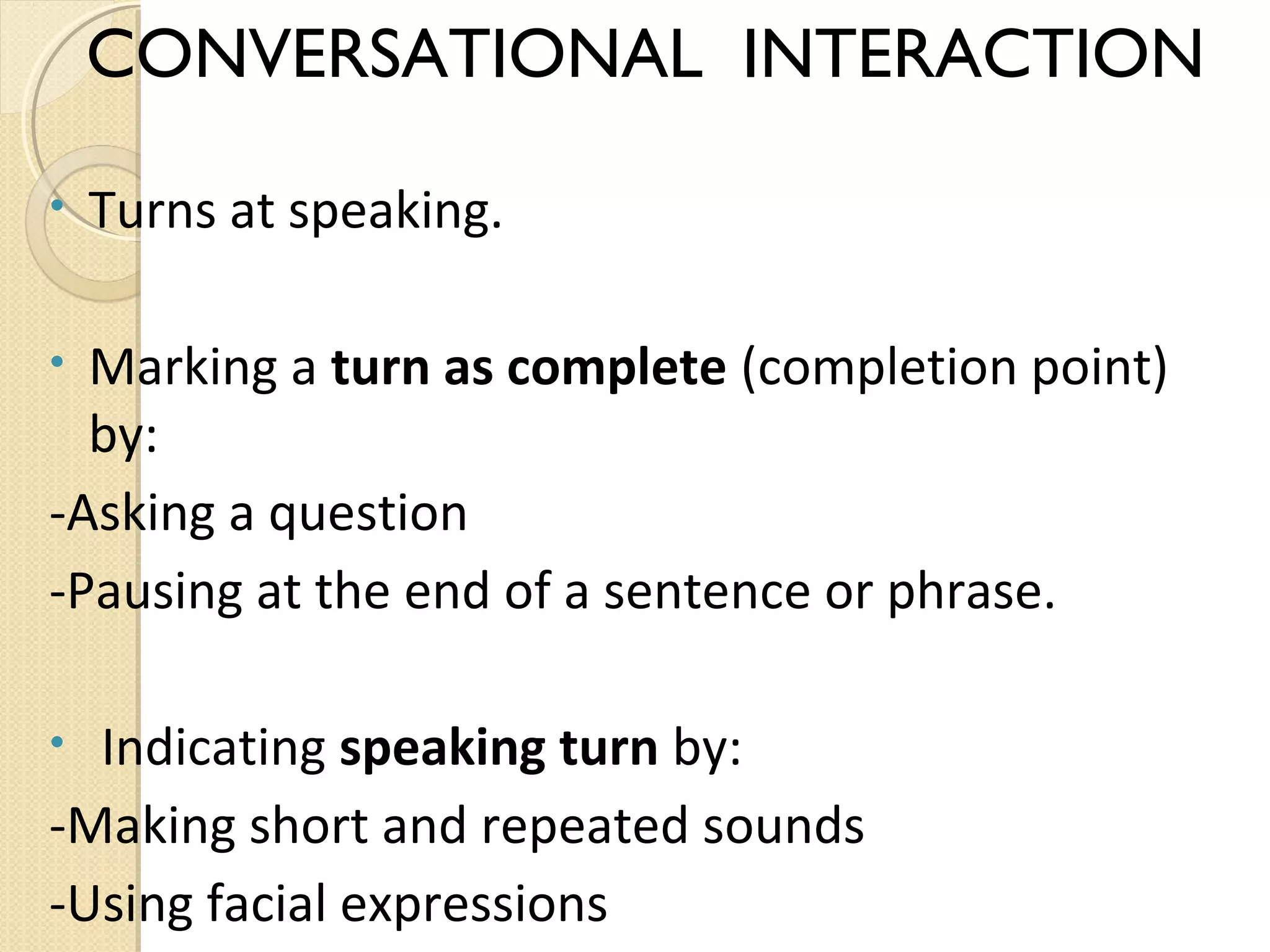
CONVERSATIONAL INTERACTION
•

Turns at speaking.

Marking a turn as complete (completion point)
by:
-Asking a question
-Pausing at the end of a sentence or phrase.
•

Indicating speaking turn by:
-Making short and repeated sounds
-Using facial expressions
•
Conversational styles and strategies of
participation:
*Rudeness (cutting in on another speaker)
*Shyness( waiting to take a turn)
*“long-winded”
speakers
(avoiding
completion points):

normal

A: That’s their favorite restaurant because they…
enjoy French food and when they were…in France
they coudn’t believe it that….you know that they
had…that they had had better meals back home.
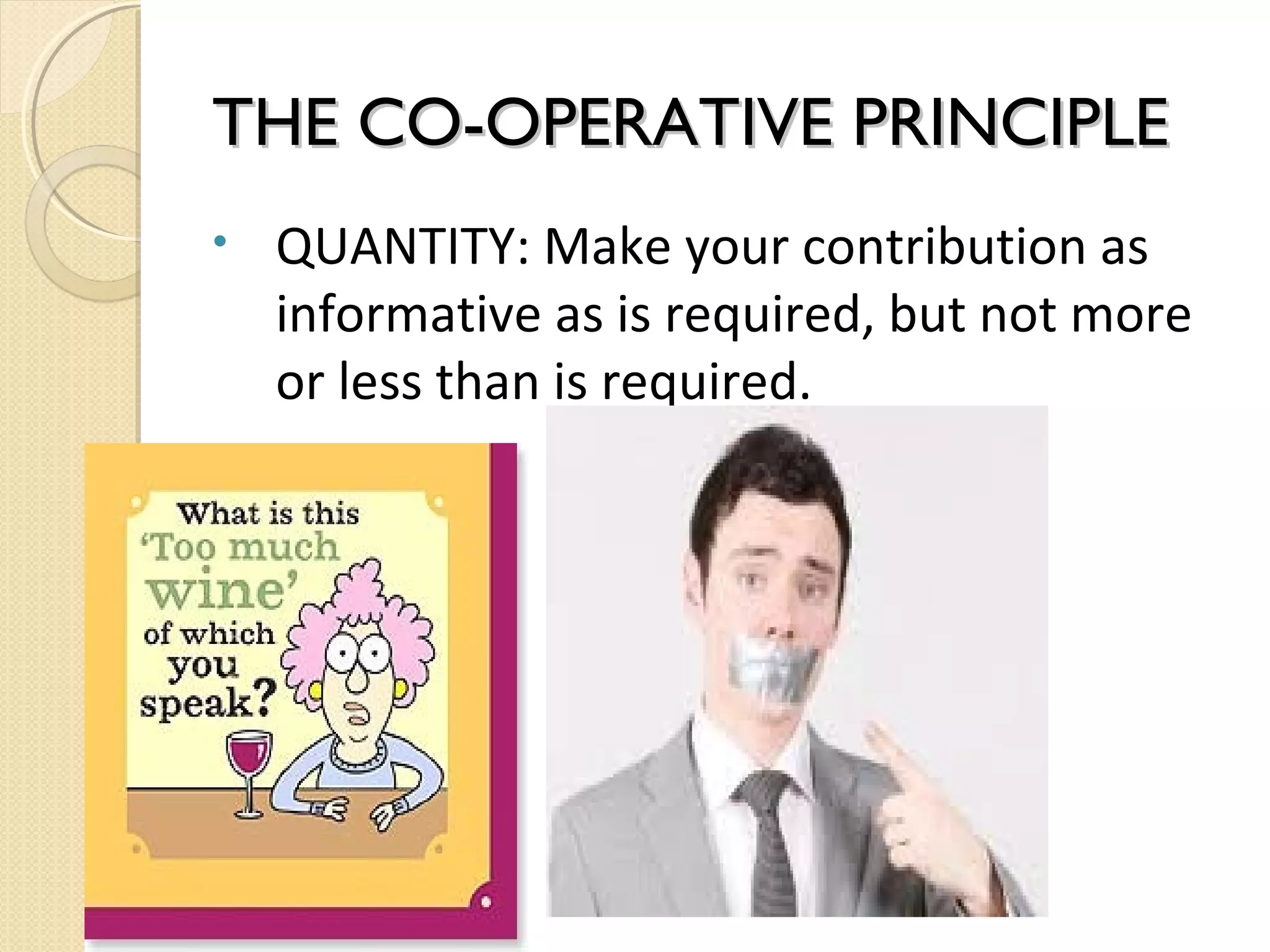
THE CO-OPERATIVE PRINCIPLE
•

QUANTITY: Make your contribution as
informative as is required, but not more
or less than is required.
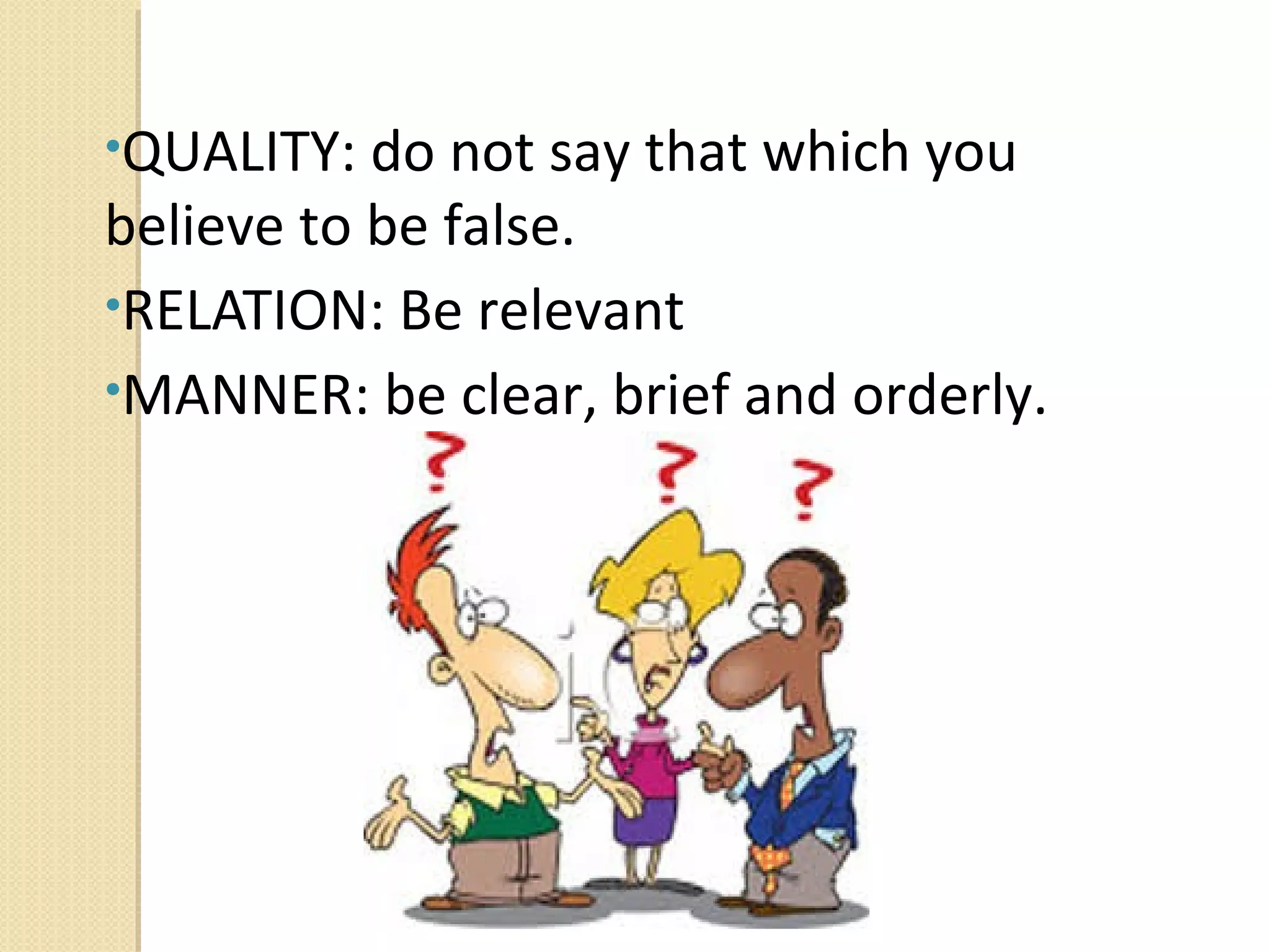
•QUALITY: do not say that which you

believe to be false.
•RELATION: Be relevant
•MANNER: be clear, brief and orderly.
by
Ferrufino, Daniela
Martinez, Maria Ines
Martinez, Carlos
Siares, Alejandra
Linguistics – 2013
Instituto Franklin

Pragmatics final

  • 1.
  • 2.
    When a pieceof language is written or utter we look not only to what it means but also what the writer or speaker of those words intended to convey.
  • 3.
  • 4.
    CONTEXT LINGUISTIC CONTEXT =CO-TEXT A word or set of words used in the same phrase or sentence. THE THIRD-GRADE PUPIL. HIS PUPILS ARE DILATED.
  • 5.
    DEIXIS There are wordsthat cannot be interpreted unless the context is known. Deictic expressions Person deixis (I, you, he, she, it) Place deixis (here, there, this, that, Time deixis (now, then, yesterday, tonight) Free beer tomorrow!
  • 6.
    REFERENCE Is an actby which a speaker or writer uses language to enable a listener or reader to identify something We can use names associated with things to refer to people and names of people to refer to things e.g. we can say Where’s the fresh salad sitting? She is sitting behind the door. Can I have a look at your Vince?
  • 7.
    ANAPHORA Subsequent reference toan already introduced entity. e.g: 1) A: Can I borrow your book? B: Yeah, it’s on the table 2) I was waiting for the bus, but he just drove by without stopping.
  • 8.
    PRESUPPOSITION What a speakerassumes is true or is known by the hearer. e.g: 1) Your brother is wating for you. 2) When did you stop smoking cigars? Constancy under negation test: My car is a wreck. My car is not a wreck. Presupposition: I have a car.
  • 9.
    SPEECH ACTS We canusually recognized the type of "act" performed by the speaker in uttering a sentence.    •requesting •comanding •questioning •informing •DIRECT SPEECH ACT :   Did he....?.  Are they....? or Can you....? •INDIRECT SPEECH ACT:  you left the door open. (and it's pretty cold outside).
  • 10.
    POLITENESS Your face in pragmaticsis your public selfimage. • FACE- THREATENING ACT:  Give me that paper! • FACE SAVING ACT: Could you pass me that paper, please?
  • 11.
    •NEGATIVE FACE: the needto be independent and to have freedom. •POSITIVE FACE: the need to be conected, to belong, to be a member of the group.
  • 12.
  • 13.
    INTERPRETING DISCOURSE Forms andStructure are important elements when we analyse a speech or a text. But if the form and structure are incorrect, as language-users, we can understand what the speaker or writer intended to convey.
  • 14.
    COHESION The tides andconnnections which exist within texts. The president is undergoing a serious crisis. She is not giving any conferences. Her hole cabinet is split. This has put the country under alert.
  • 15.
    COHERENCE It is peoplewho make sense of what they hear and read by creating meaningful connections which are not actually expressed by the words and sentences. A lot of what is meant is not actually present in what is read or heard. A:Hey! Didn’t you hear the telephone? B: I’m studying now.
  • 16.
    SPEECH EVENTS Where languageis used for example a debate, interview, discussion.
  • 17.
    CONVERSATIONAL INTERACTION • Turns atspeaking. Marking a turn as complete (completion point) by: -Asking a question -Pausing at the end of a sentence or phrase. • Indicating speaking turn by: -Making short and repeated sounds -Using facial expressions •
  • 18.
    Conversational styles andstrategies of participation: *Rudeness (cutting in on another speaker) *Shyness( waiting to take a turn) *“long-winded” speakers (avoiding completion points): normal A: That’s their favorite restaurant because they… enjoy French food and when they were…in France they coudn’t believe it that….you know that they had…that they had had better meals back home.
  • 19.
    THE CO-OPERATIVE PRINCIPLE • QUANTITY:Make your contribution as informative as is required, but not more or less than is required.
  • 20.
    •QUALITY: do notsay that which you believe to be false. •RELATION: Be relevant •MANNER: be clear, brief and orderly.
  • 21.
    by Ferrufino, Daniela Martinez, MariaInes Martinez, Carlos Siares, Alejandra Linguistics – 2013 Instituto Franklin