SESSION ID:
#RSAC
Rich Mogull
PRAGMATIC SECURITY
AUTOMATION FOR CLOUD
CSV-R04
Analyst/VP of Product
Securosis/DisruptOPS
rmogull@disruptops.com
@rmogull
#RSAC
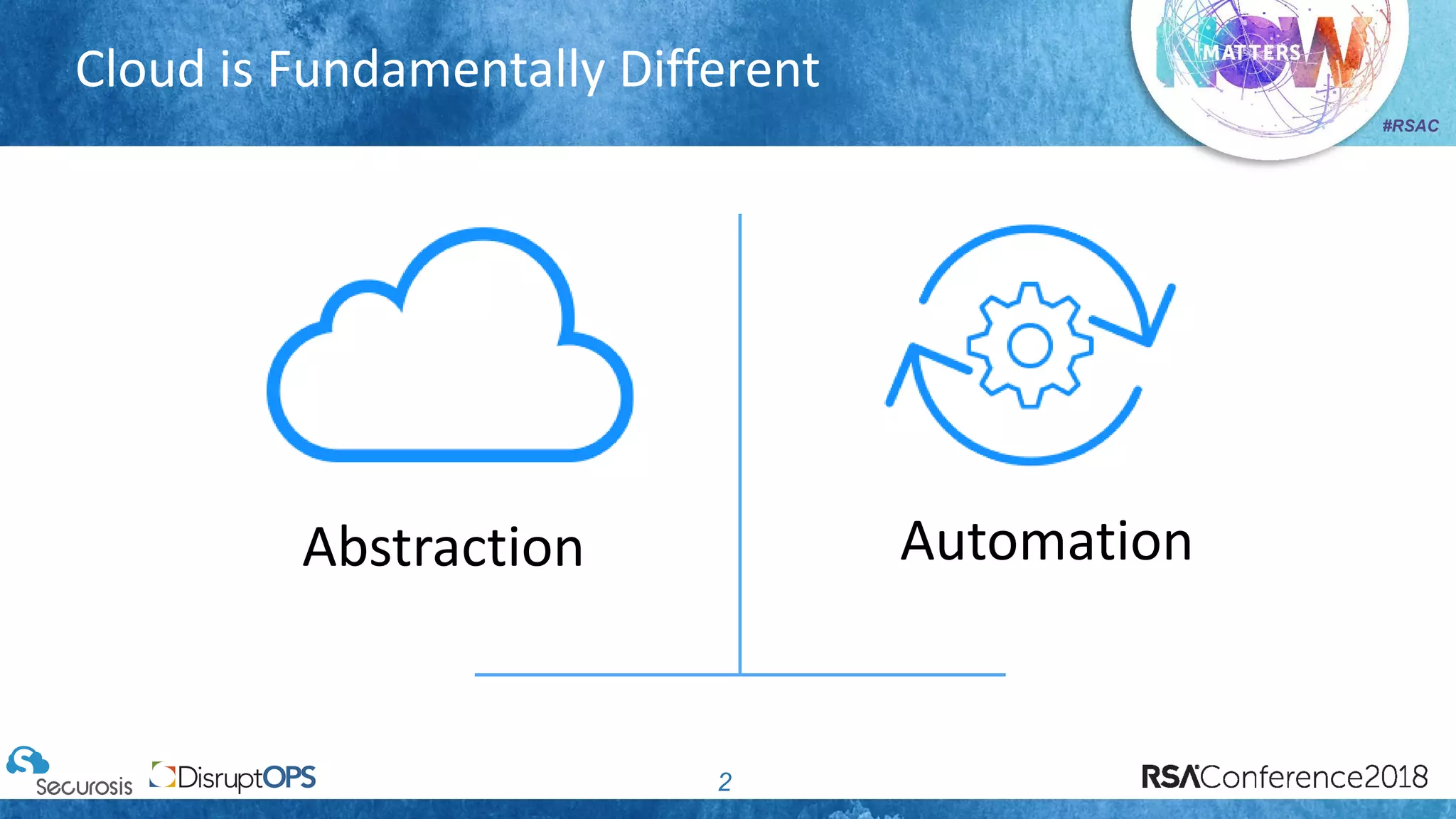
Cloud is Fundamentally Different
2
Abstraction Automation
#RSAC
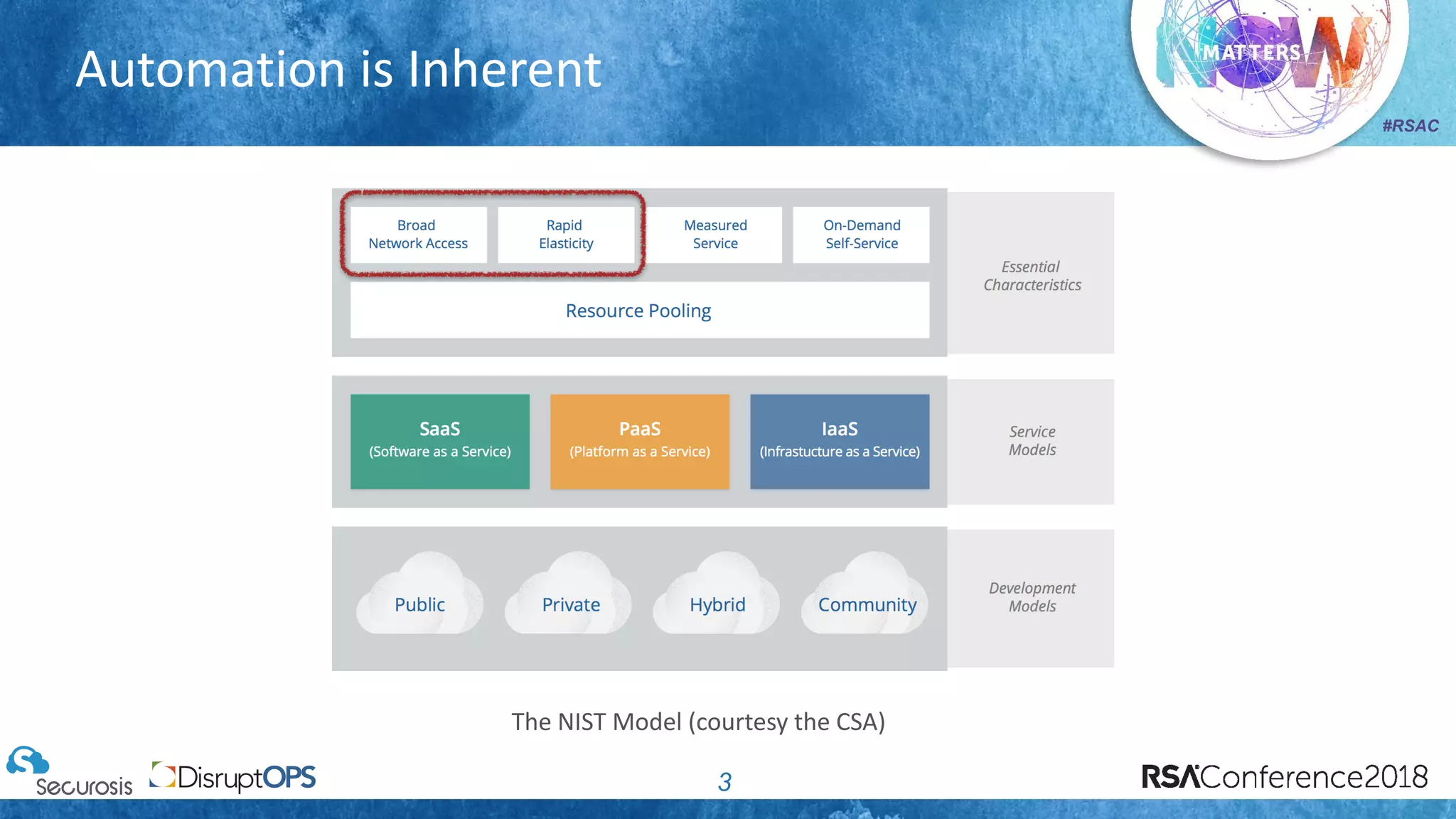
Automation is Inherent
3
The NIST Model (courtesy the CSA)
#RSAC
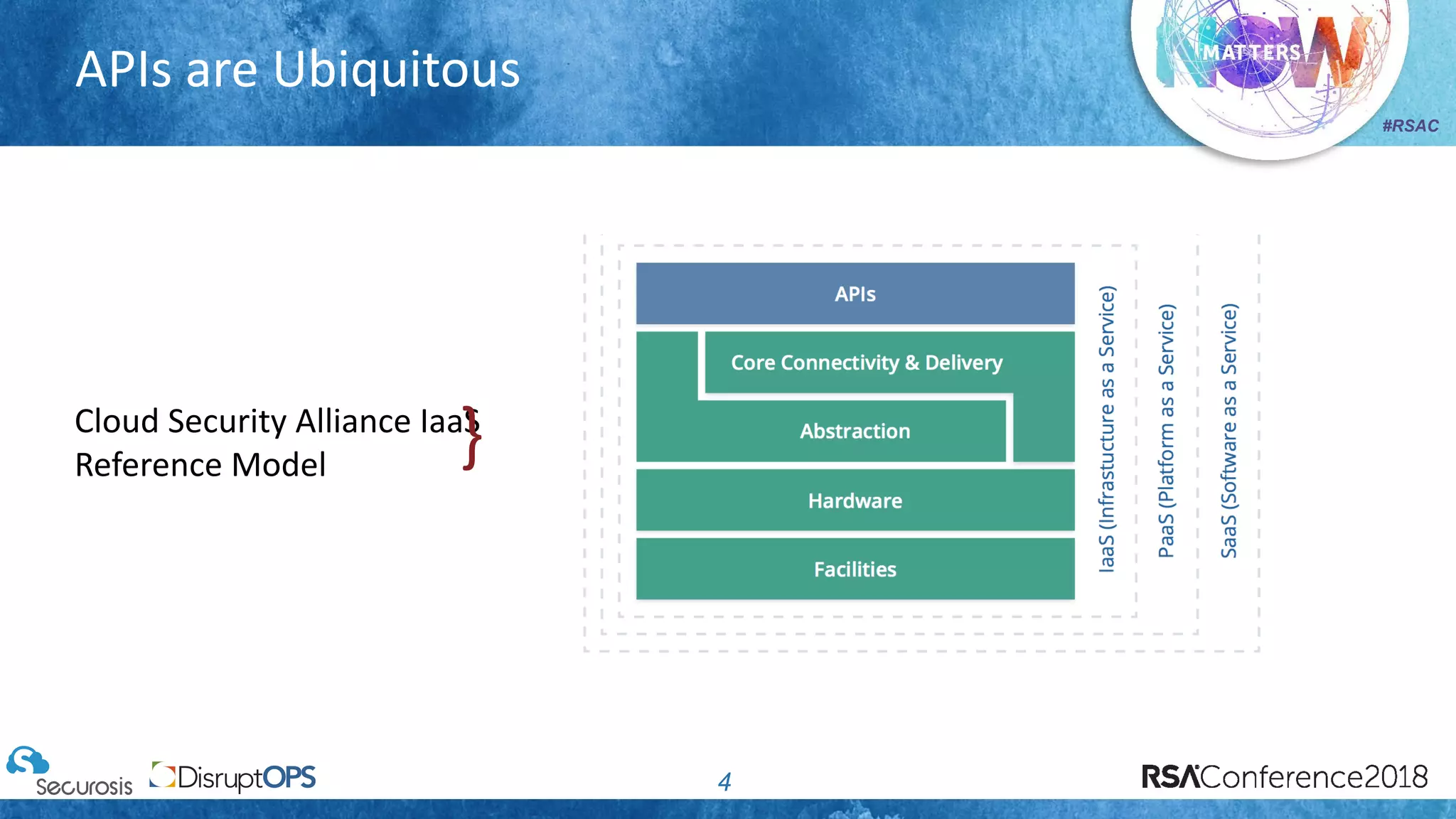
APIs are Ubiquitous
4
Cloud Security Alliance IaaS
Reference Model }
#RSAC
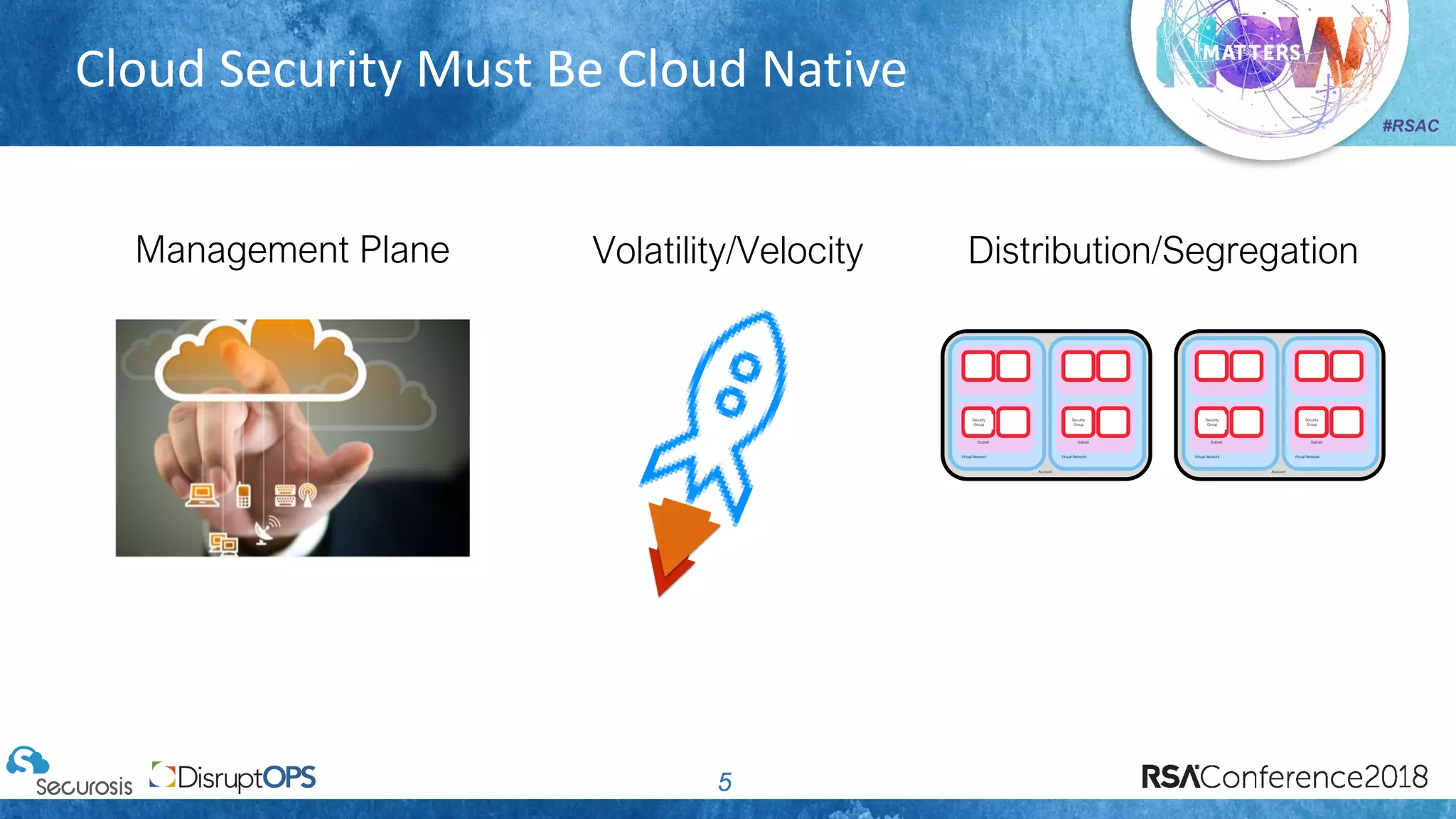
Cloud Security Must Be Cloud Native
5
Management Plane Volatility/Velocity Distribution/Segregation
Account
Virtual Network
Subnet
Security
Group
Virtual Network
Subnet
Security
Group
Account
Virtual Network
Subnet
Security
Group
Virtual Network
Subnet
Security
Group
#RSAC
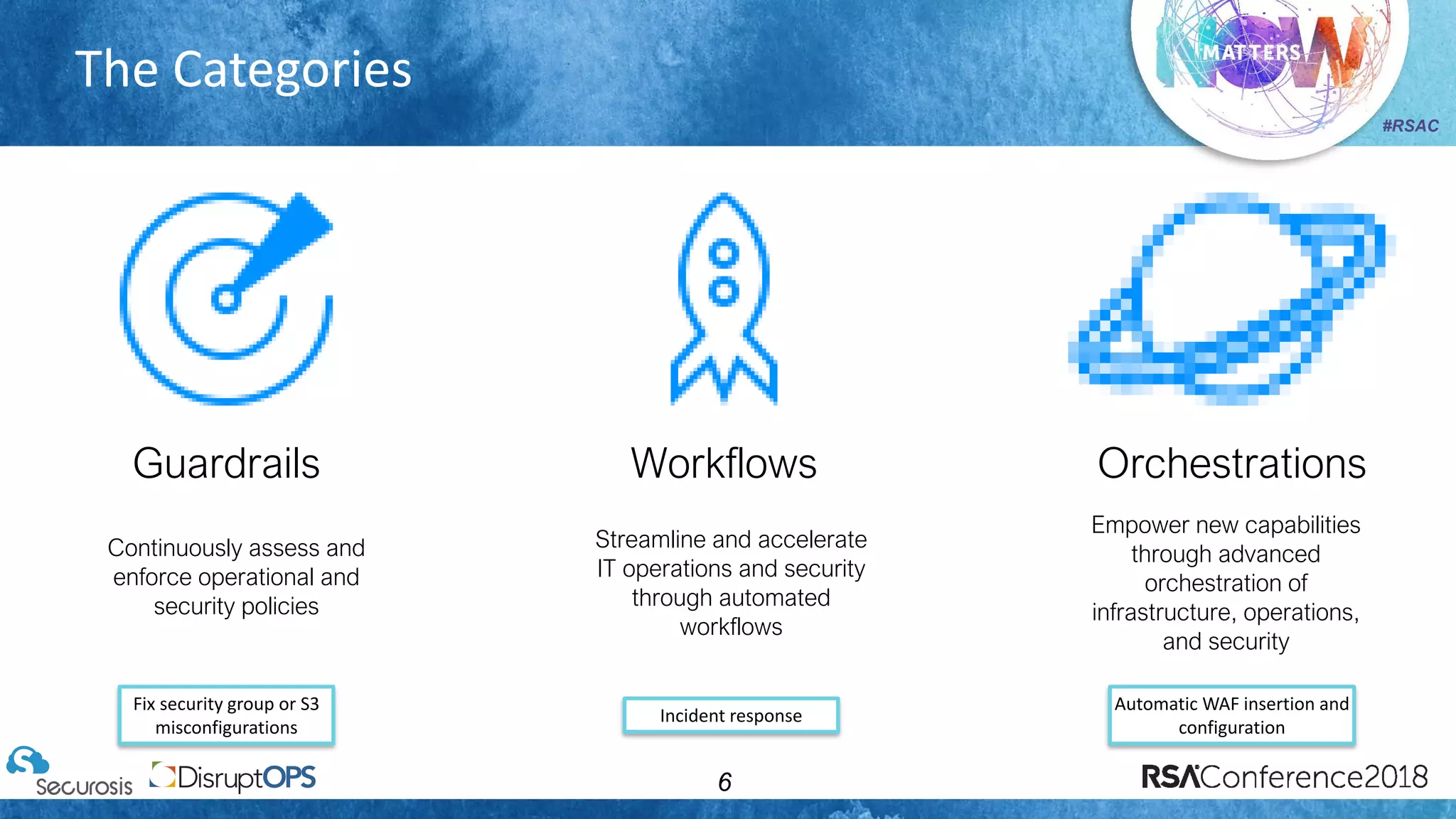
The Categories
6
Guardrails Workflows Orchestrations
Continuously assess and
enforce operational and
security policies
Streamline and accelerate
IT operations and security
through automated
workflows
Empower new capabilities
through advanced
orchestration of
infrastructure, operations,
and security
Fix security group or S3
misconfigurations
Incident response
Automatic WAF insertion and
configuration
#RSAC
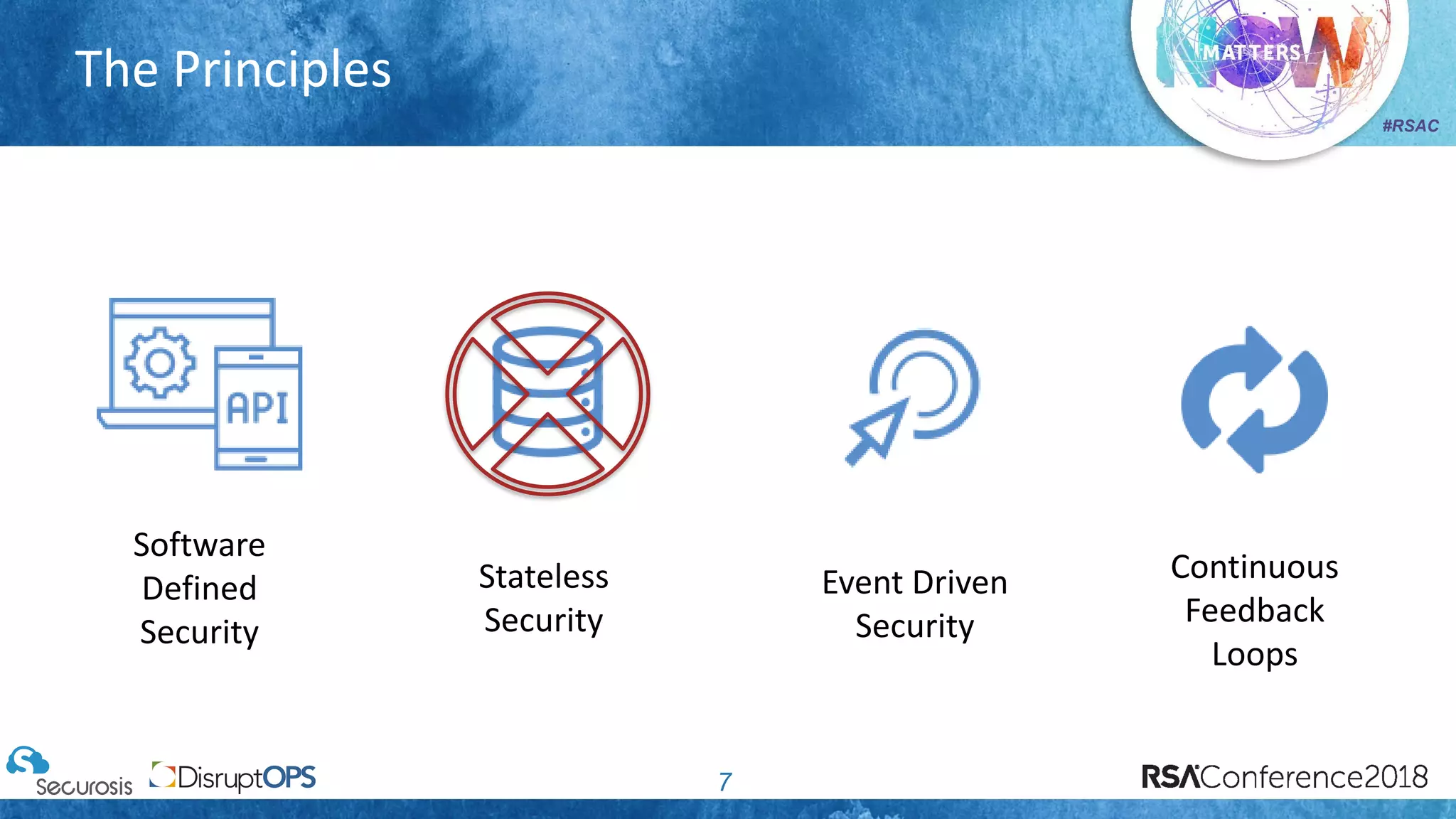
The Principles
7
Software
Defined
Security
Stateless
Security
Event Driven
Security
Continuous
Feedback
Loops
#RSAC
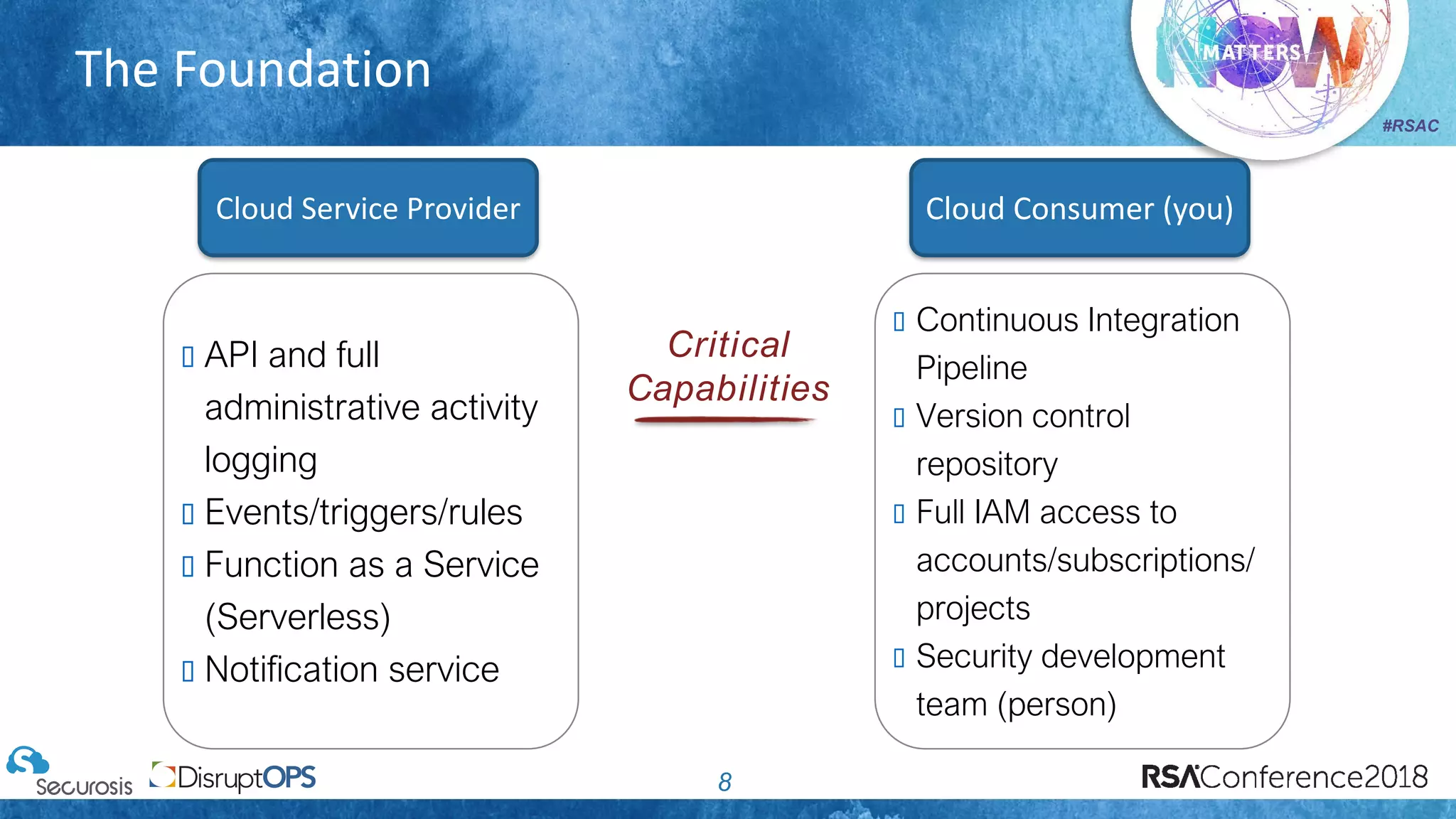
The Foundation
8
Cloud Service Provider Cloud Consumer (you)
‣ API and full
administrative activity
logging
‣ Events/triggers/rules
‣ Function as a Service
(Serverless)
‣ Notification service
‣ Continuous Integration
Pipeline
‣ Version control
repository
‣ Full IAM access to
accounts/subscriptions/
projects
‣ Security development
team (person)
Critical
Capabilities
#RSAC
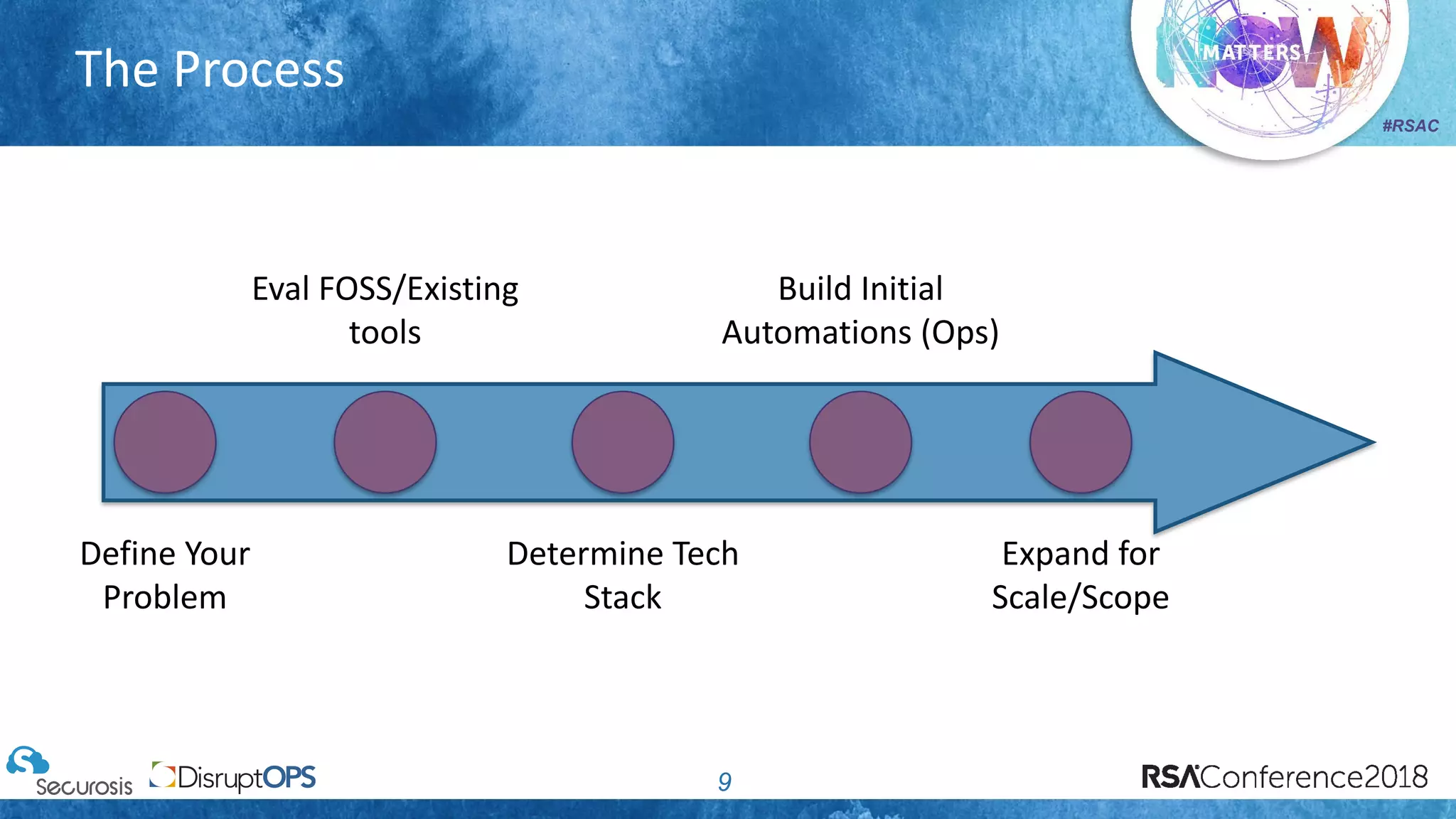
The Process
9
Define Your
Problem
Eval FOSS/Existing
tools
Determine Tech
Stack
Build Initial
Automations (Ops)
Expand for
Scale/Scope
#RSAC
Things We Are Skipping (for time)
10
How to configure all the core
monitoring/logging
Setting up IAM and permissions
The details of implementation on Azure and
GCP
We will list the core capabilities, but can’t cover
all 3 with real examples in 45 minutes
#RSAC
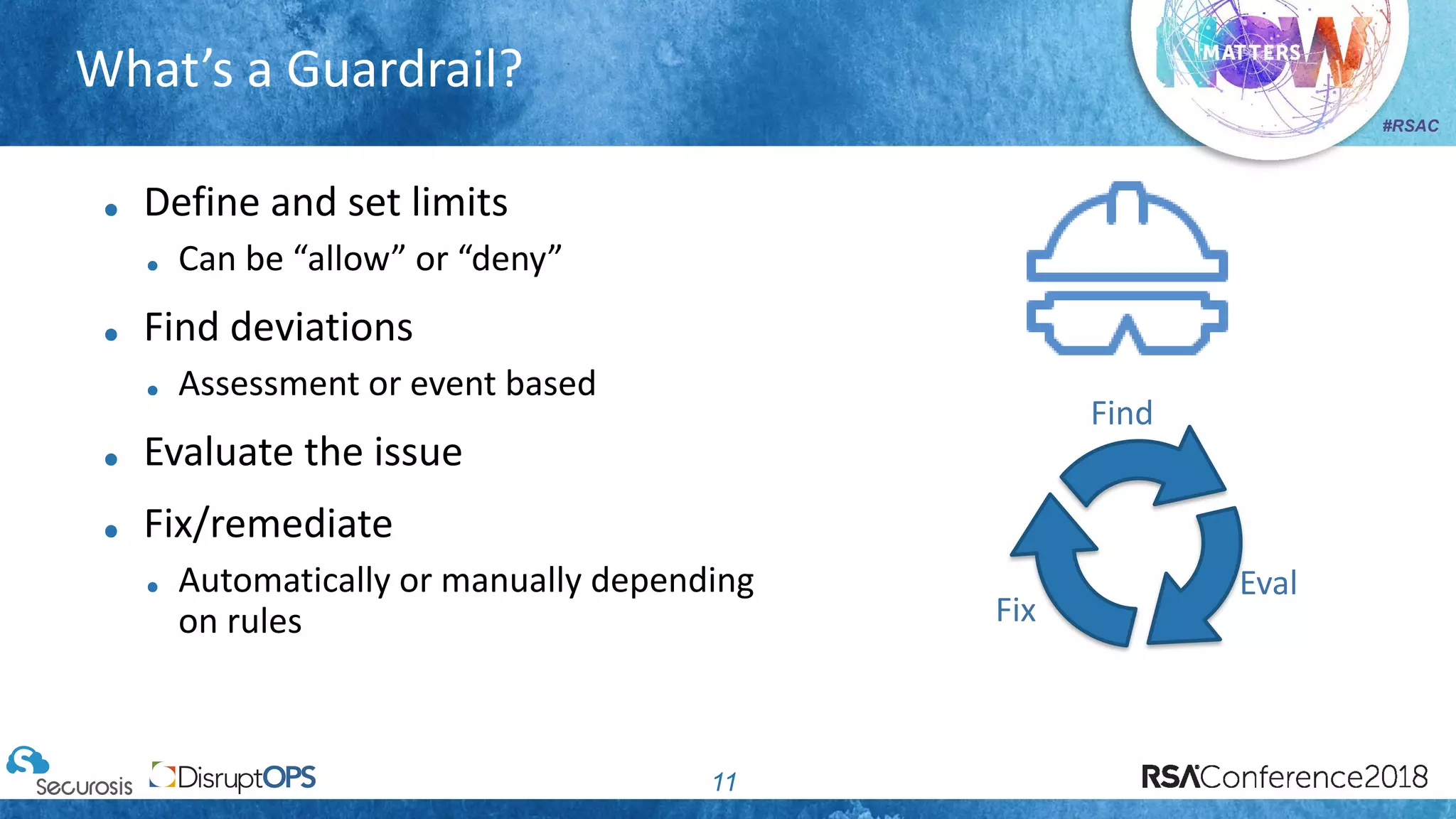
What’s a Guardrail?
11
Define and set limits
Can be “allow” or “deny”
Find deviations
Assessment or event based
Evaluate the issue
Fix/remediate
Automatically or manually depending
on rules
Find
Eval
Fix
#RSAC
Example Guardrails
12
If you find a public S3 bucket, restrict it to
our known network addresses
Unless it is approved or tagged
Don’t allow internal security groups with
all ports and protocols open in Prod
But allow in Dev
Require MFA for API access for any user
that needs MFA for console access
Create our baseline IAM policies and
roles for all new accounts
Based on the environment
Validate that monitoring and alerting is
properly configured
And fix if not
Disable access keys that haven’t been used
in 90 days
Find instances with an IAM role that allows
power user or greater access via API
Restrict the privileges
Identify all cross-network peering from
accounts we don’t own
Then check the security group permissions
#RSAC
What Makes a Good Guardrail?
13
Accounts for different environments
At least Dev vs. Prod
Handles exceptions
And is capable of remembering them
Understands state and context
Doesn’t bog down the alert queue
Can remediate automatically
Either completely, or after manual approval
Ops communications/notifications
Education, not Blamification
#RSAC
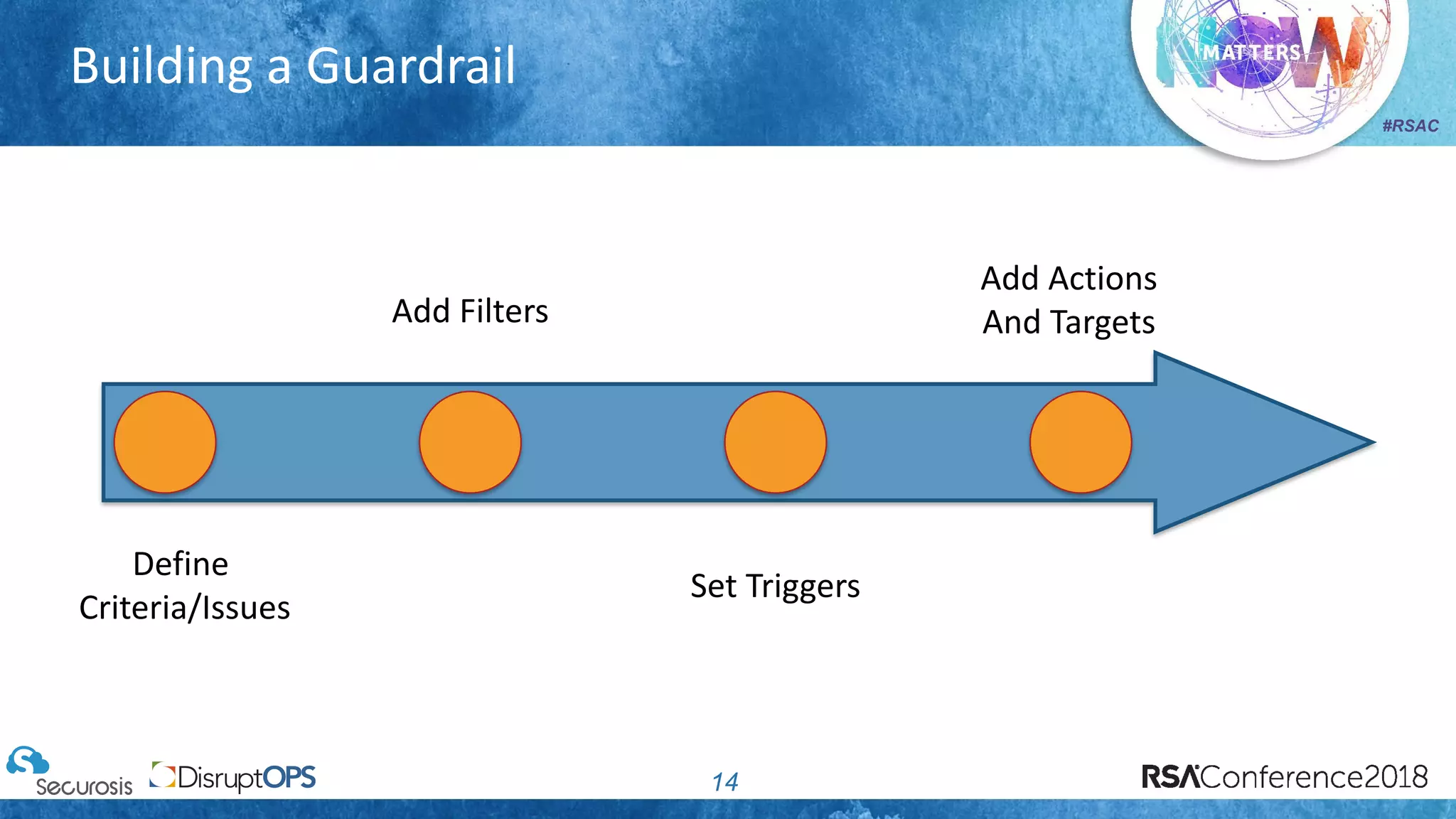
Building a Guardrail
14
Define
Criteria/Issues
Add Filters
Set Triggers
Add Actions
And Targets
#RSAC
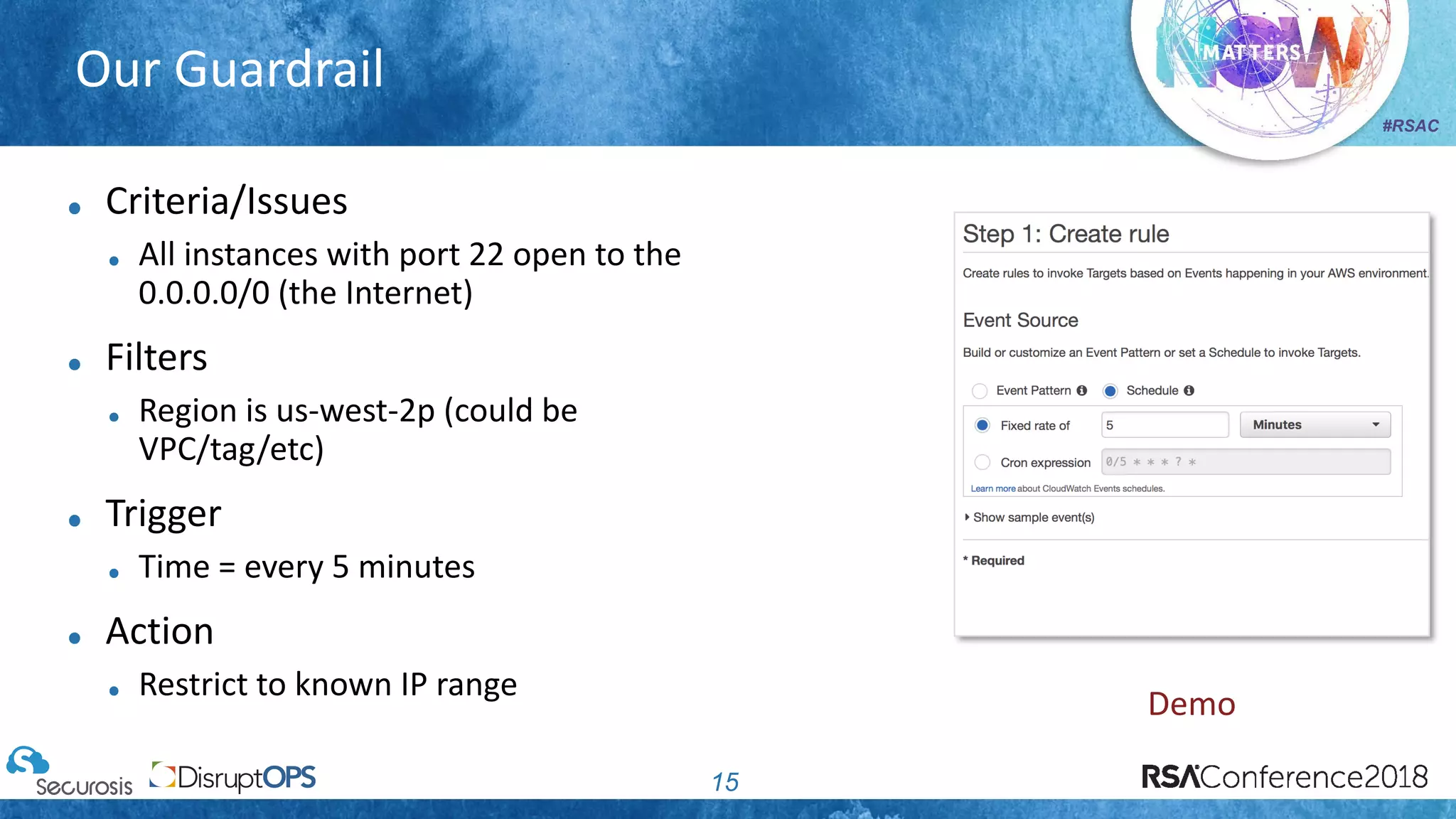
Our Guardrail
15
Criteria/Issues
All instances with port 22 open to the
0.0.0.0/0 (the Internet)
Filters
Region is us-west-2p (could be
VPC/tag/etc)
Trigger
Time = every 5 minutes
Action
Restrict to known IP range
Demo
#RSAC
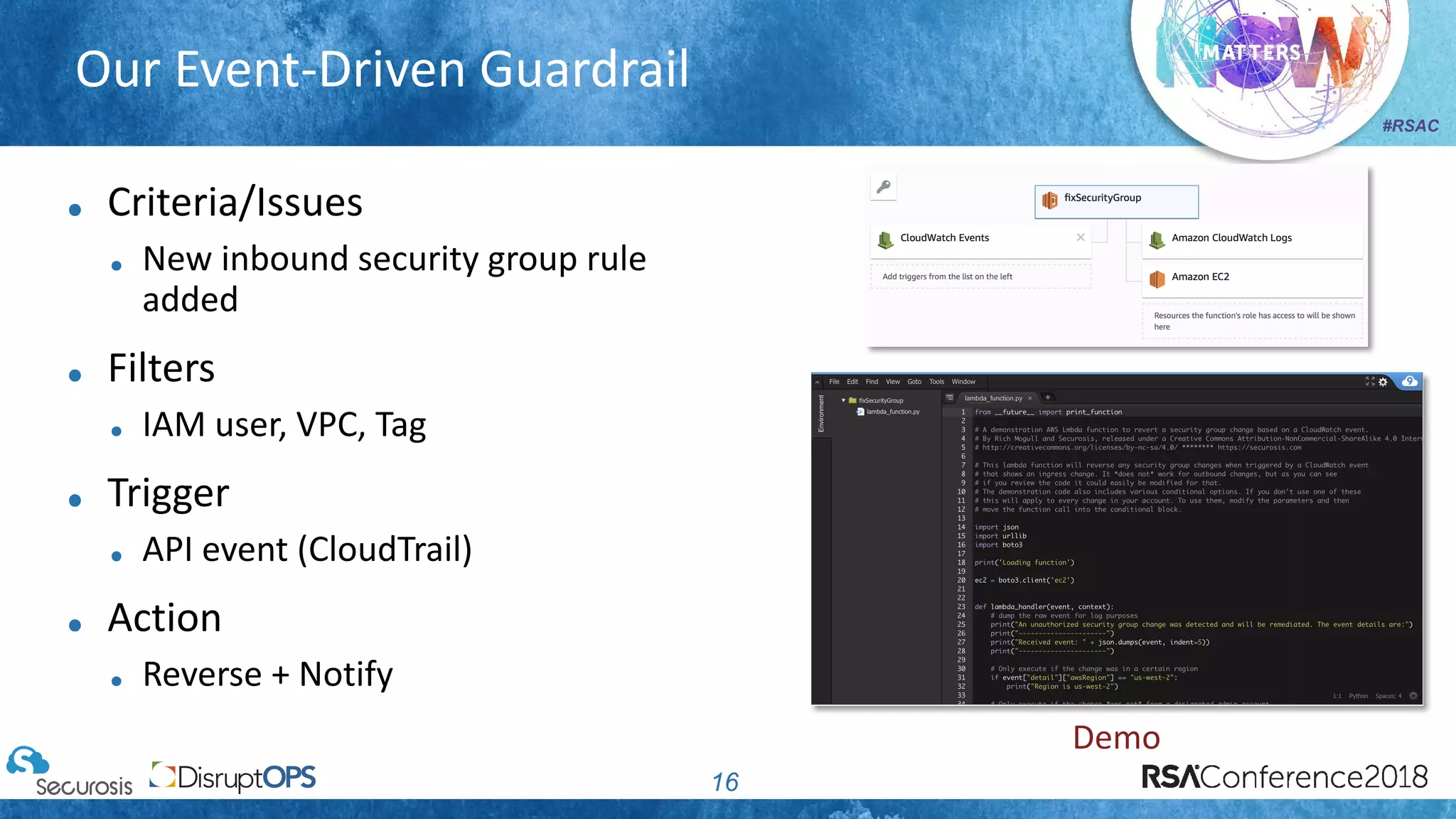
Our Event-Driven Guardrail
16
Criteria/Issues
New inbound security group rule
added
Filters
IAM user, VPC, Tag
Trigger
API event (CloudTrail)
Action
Reverse + Notify
Demo
#RSAC
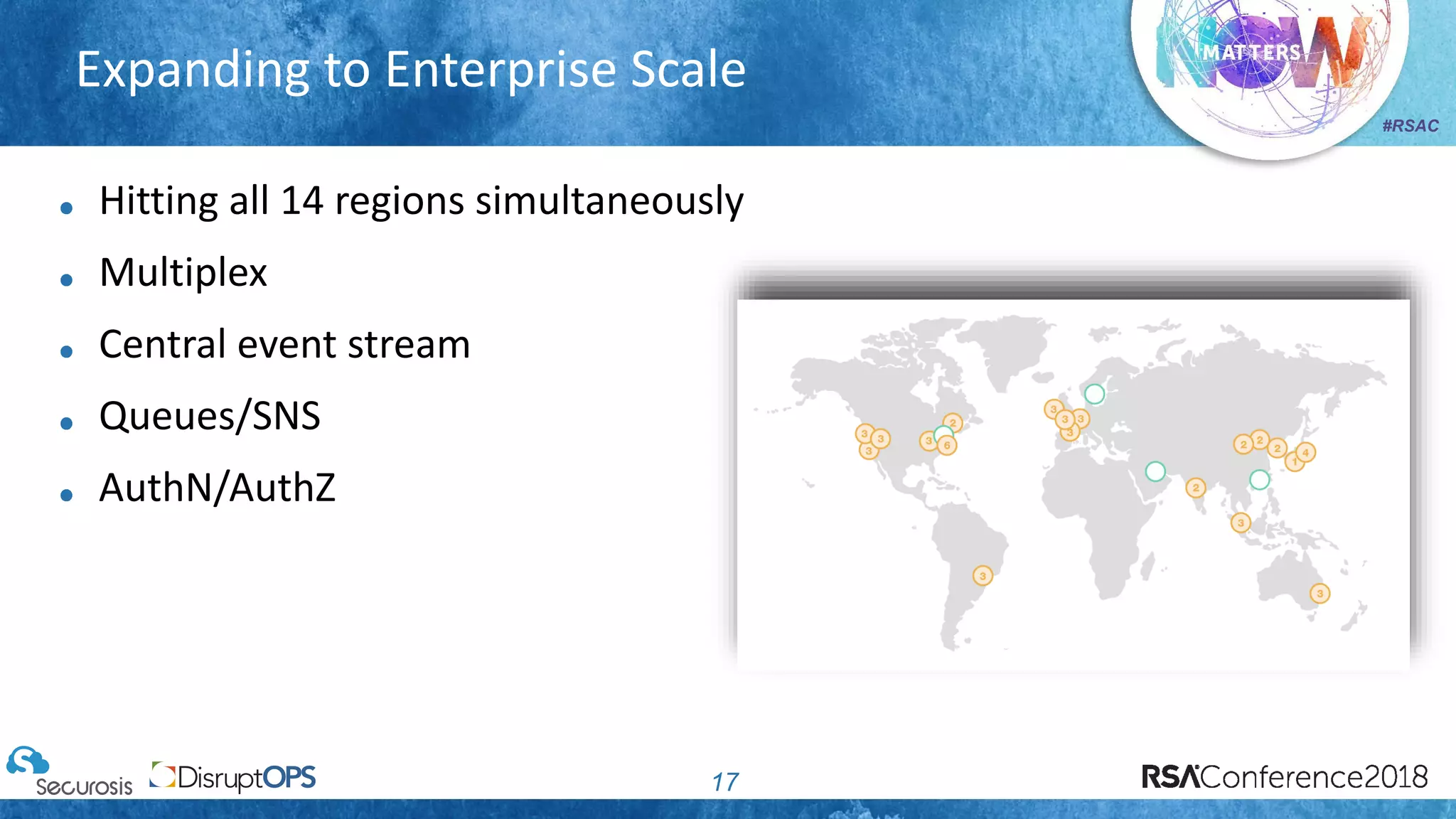
Expanding to Enterprise Scale
17
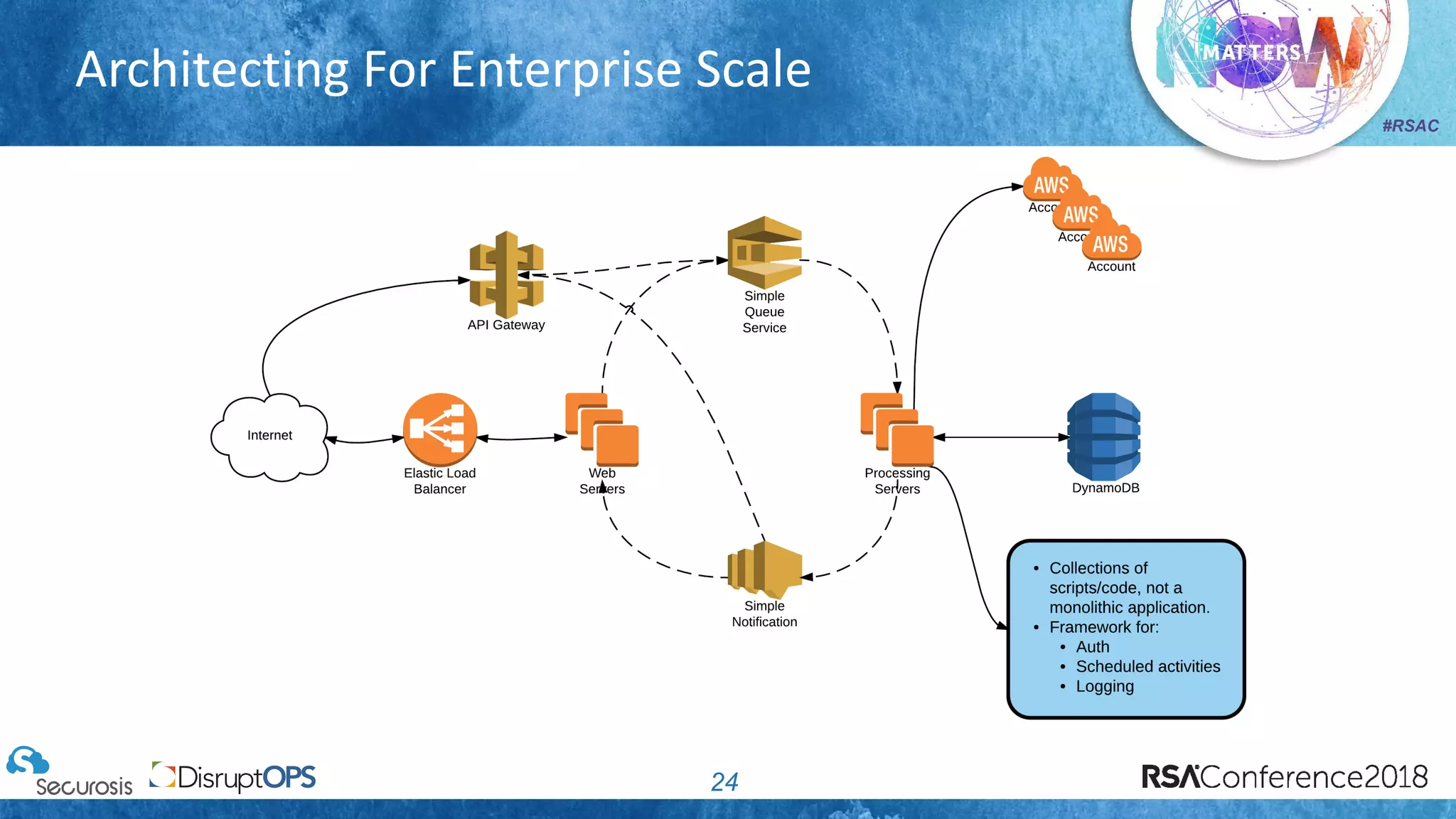
Hitting all 14 regions simultaneously
Multiplex
Central event stream
Queues/SNS
AuthN/AuthZ
#RSAC
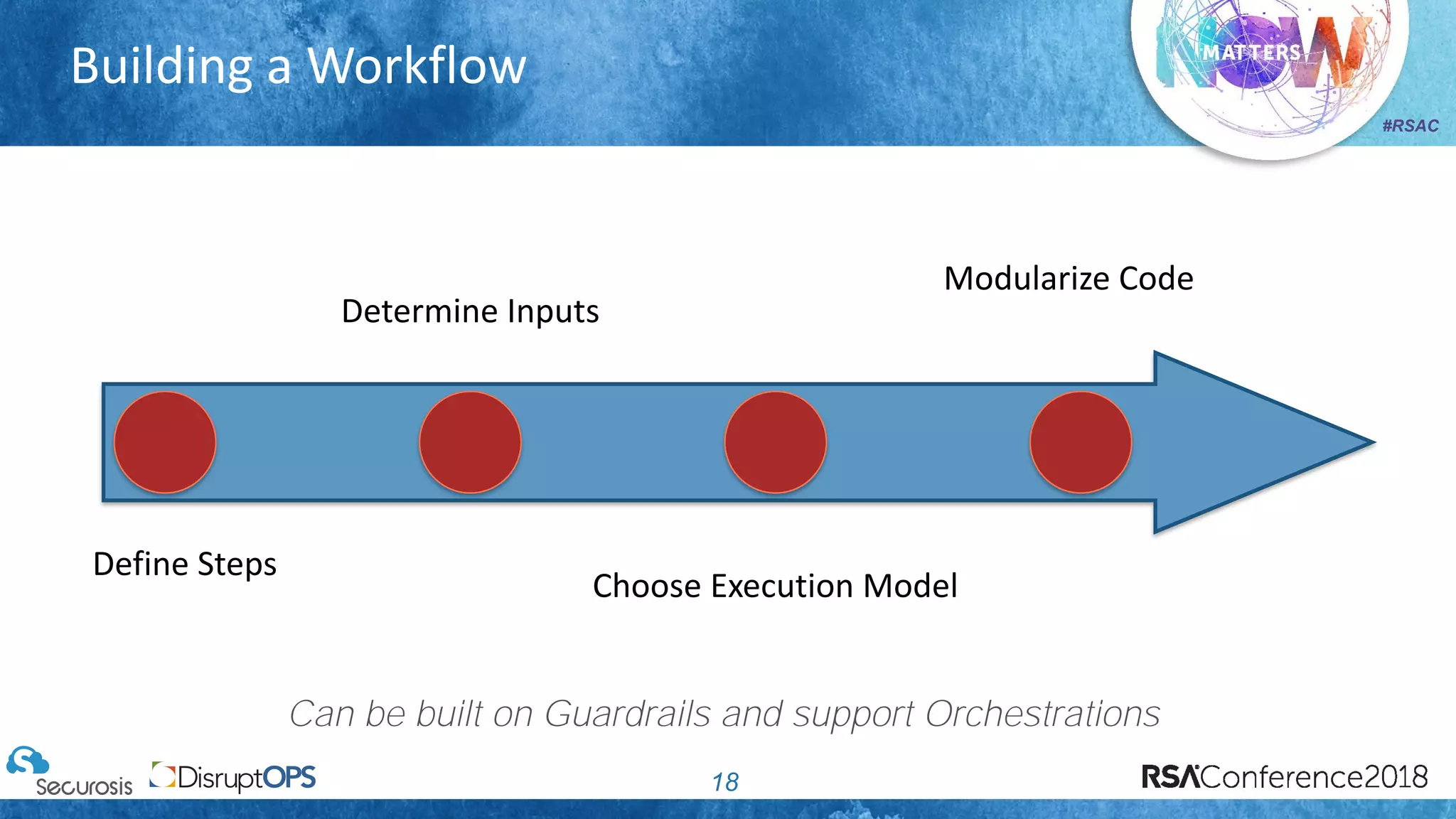
Building a Workflow
18
Define Steps
Determine Inputs
Choose Execution Model
Modularize Code
Can be built on Guardrails and support Orchestrations
#RSAC
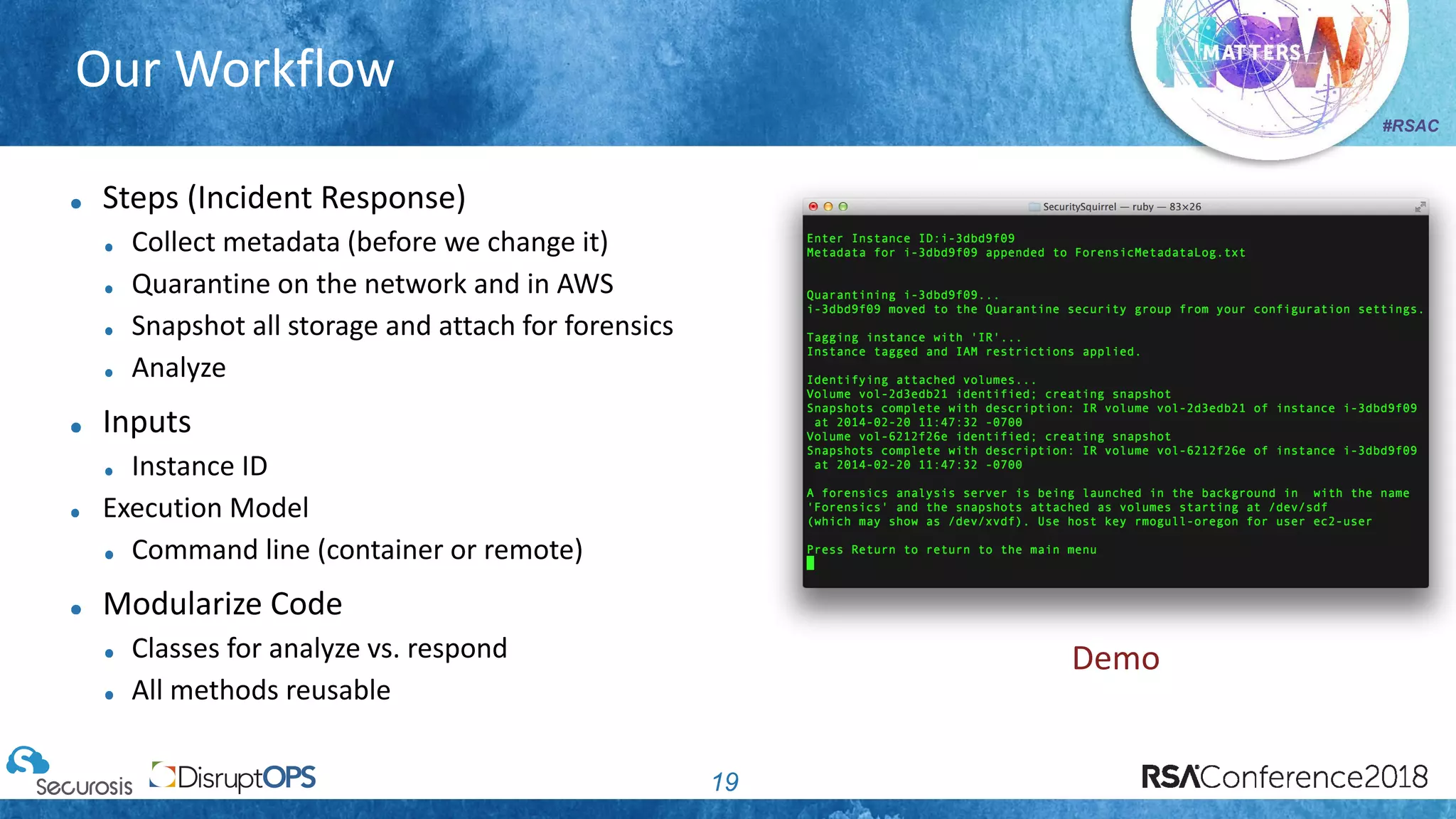
Our Workflow
19
Steps (Incident Response)
Collect metadata (before we change it)
Quarantine on the network and in AWS
Snapshot all storage and attach for forensics
Analyze
Inputs
Instance ID
Execution Model
Command line (container or remote)
Modularize Code
Classes for analyze vs. respond
All methods reusable
Demo
#RSAC
Workflows Advice
20
Workflows are to speed up common, manual tasks
Guardrails are for automated enforcement
The line between a guardrail action and an Workflows is
often thin
Execution environment matters
Lambda vs. containers vs. your laptop
Use your pipeline
Continuous integration servers (Jenkins) make great
platforms for repeat automation, not just security testing
Make a static console
E.g. S3 + API Gateway + SQS
#RSAC
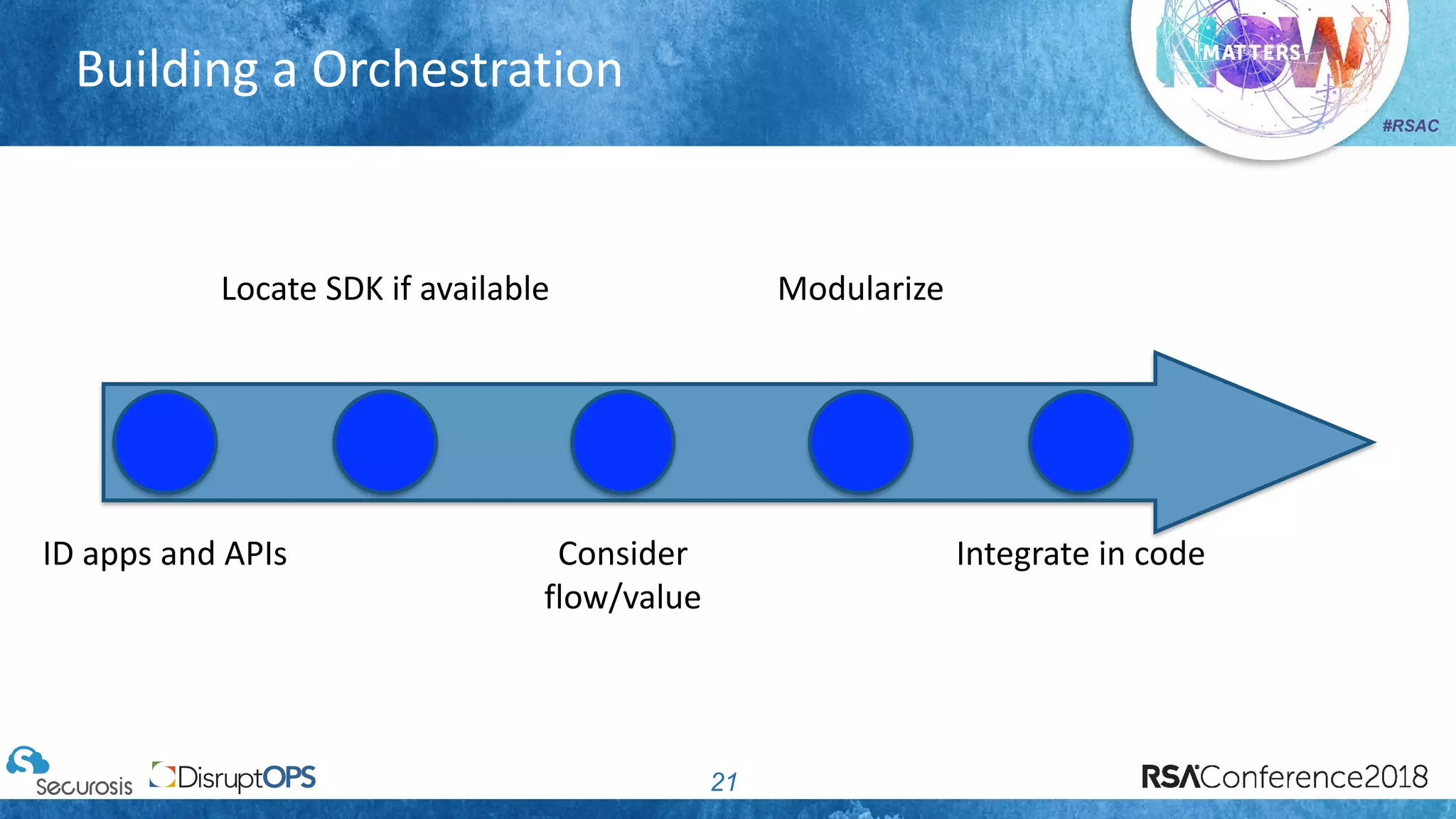
Building a Orchestration
21
ID apps and APIs
Locate SDK if available
Consider
flow/value
Modularize
Integrate in code
#RSAC
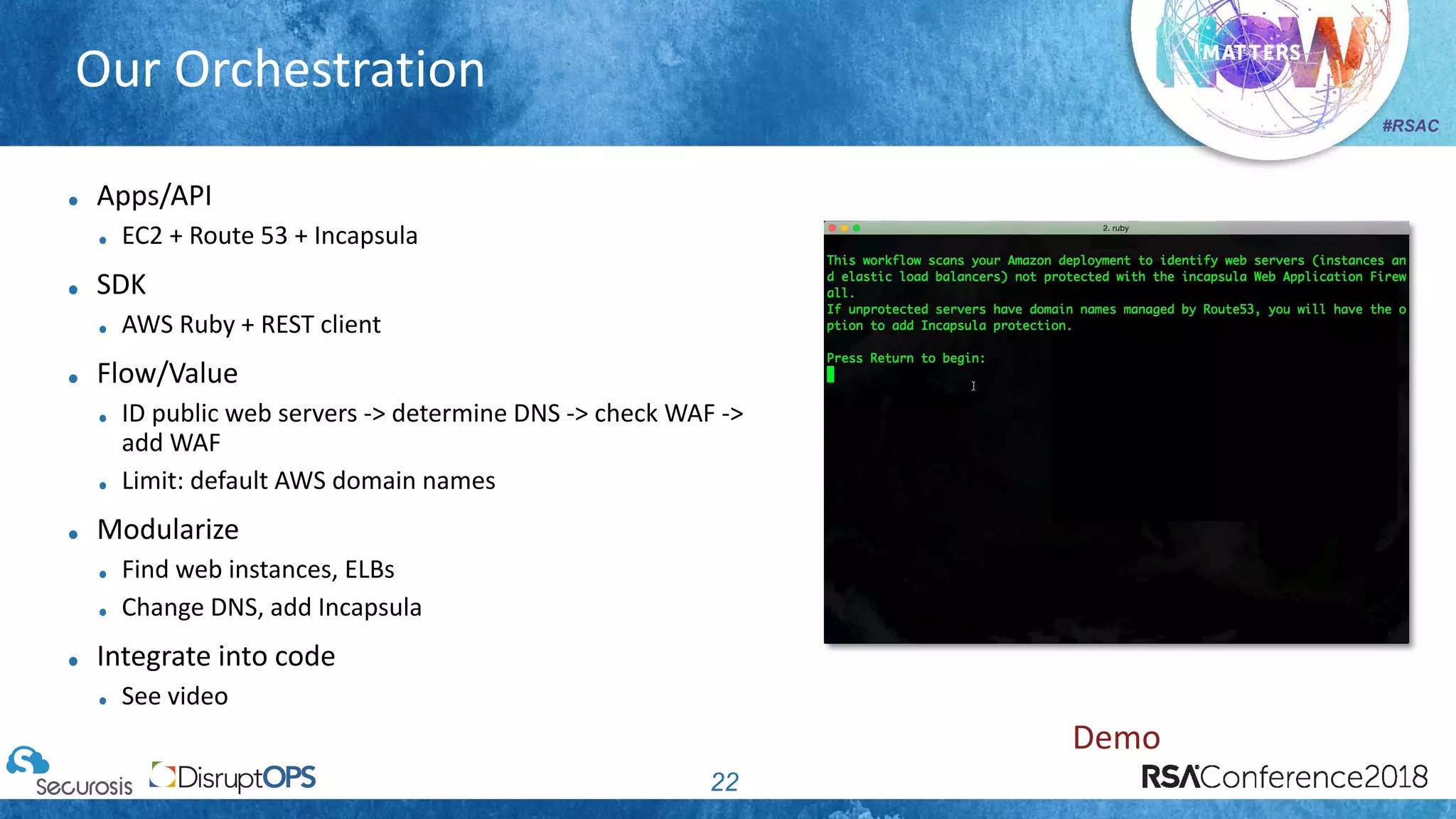
Our Orchestration
22
Apps/API
EC2 + Route 53 + Incapsula
SDK
AWS Ruby + REST client
Flow/Value
ID public web servers -> determine DNS -> check WAF ->
add WAF
Limit: default AWS domain names
Modularize
Find web instances, ELBs
Change DNS, add Incapsula
Integrate into code
See video
Demo
#RSAC
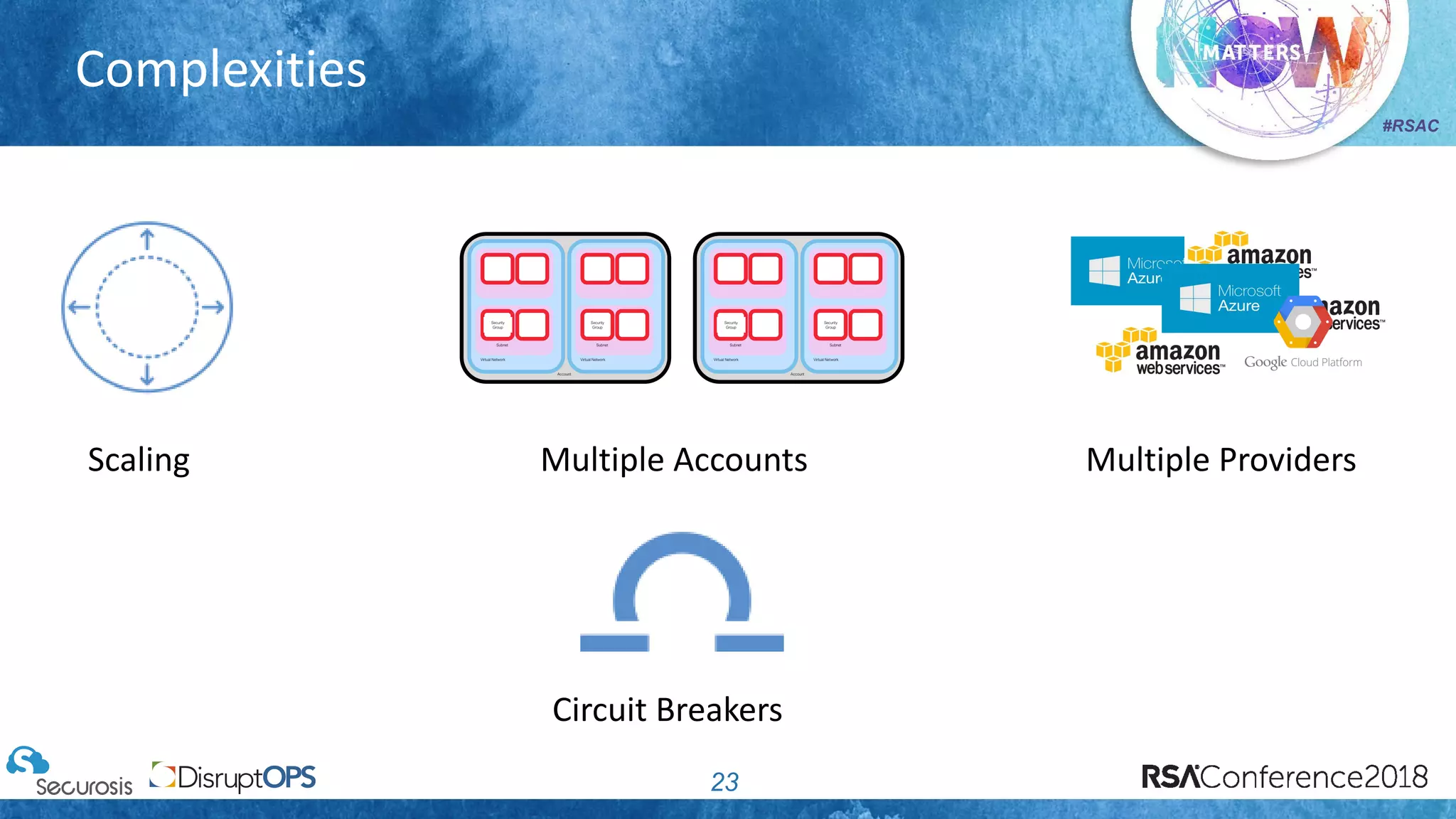
Complexities
23
Account
Virtual Network
Subnet
Security
Group
Virtual Network
Subnet
Security
Group
Account
Virtual Network
Subnet
Security
Group
Virtual Network
Subnet
Security
Group
Scaling Multiple Accounts Multiple Providers
Circuit Breakers
#RSAC
Architecting For Enterprise Scale
24
#RSAC
Where to Start
25
Start with something simple
Build it in one account/subscription/project
Event + Notification is super easy to start
Then go with your first FaaS
Desktop first, then FaaS for execution environment
Build a library
Experiment with execution environments, but standardize quickly
Add enterprise scaling capabilities
Will depend on your execution environment/model
Build it in the cloud and leverage PaaS options
Make sure you use CI/CD for long term management
SESSION ID:
#RSAC
Rich Mogull
PRAGMATIC SECURITY
AUTOMATION FOR CLOUD
CSV-R04
Analyst/VP of Product
Securosis/DisruptOPS
rmogull@disruptops.com
@rmogull

Pragmatic Security Automation for Cloud

  • 1.
    SESSION ID: #RSAC Rich Mogull PRAGMATICSECURITY AUTOMATION FOR CLOUD CSV-R04 Analyst/VP of Product Securosis/DisruptOPS rmogull@disruptops.com @rmogull
  • 2.
    #RSAC Cloud is FundamentallyDifferent 2 Abstraction Automation
  • 3.
    #RSAC Automation is Inherent 3 TheNIST Model (courtesy the CSA)
  • 4.
    #RSAC APIs are Ubiquitous 4 CloudSecurity Alliance IaaS Reference Model }
  • 5.
    #RSAC Cloud Security MustBe Cloud Native 5 Management Plane Volatility/Velocity Distribution/Segregation Account Virtual Network Subnet Security Group Virtual Network Subnet Security Group Account Virtual Network Subnet Security Group Virtual Network Subnet Security Group
  • 6.
    #RSAC The Categories 6 Guardrails WorkflowsOrchestrations Continuously assess and enforce operational and security policies Streamline and accelerate IT operations and security through automated workflows Empower new capabilities through advanced orchestration of infrastructure, operations, and security Fix security group or S3 misconfigurations Incident response Automatic WAF insertion and configuration
  • 7.
  • 8.
    #RSAC The Foundation 8 Cloud ServiceProvider Cloud Consumer (you) ‣ API and full administrative activity logging ‣ Events/triggers/rules ‣ Function as a Service (Serverless) ‣ Notification service ‣ Continuous Integration Pipeline ‣ Version control repository ‣ Full IAM access to accounts/subscriptions/ projects ‣ Security development team (person) Critical Capabilities
  • 9.
    #RSAC The Process 9 Define Your Problem EvalFOSS/Existing tools Determine Tech Stack Build Initial Automations (Ops) Expand for Scale/Scope
  • 10.
    #RSAC Things We AreSkipping (for time) 10 How to configure all the core monitoring/logging Setting up IAM and permissions The details of implementation on Azure and GCP We will list the core capabilities, but can’t cover all 3 with real examples in 45 minutes
  • 11.
    #RSAC What’s a Guardrail? 11 Defineand set limits Can be “allow” or “deny” Find deviations Assessment or event based Evaluate the issue Fix/remediate Automatically or manually depending on rules Find Eval Fix
  • 12.
    #RSAC Example Guardrails 12 If youfind a public S3 bucket, restrict it to our known network addresses Unless it is approved or tagged Don’t allow internal security groups with all ports and protocols open in Prod But allow in Dev Require MFA for API access for any user that needs MFA for console access Create our baseline IAM policies and roles for all new accounts Based on the environment Validate that monitoring and alerting is properly configured And fix if not Disable access keys that haven’t been used in 90 days Find instances with an IAM role that allows power user or greater access via API Restrict the privileges Identify all cross-network peering from accounts we don’t own Then check the security group permissions
  • 13.
    #RSAC What Makes aGood Guardrail? 13 Accounts for different environments At least Dev vs. Prod Handles exceptions And is capable of remembering them Understands state and context Doesn’t bog down the alert queue Can remediate automatically Either completely, or after manual approval Ops communications/notifications Education, not Blamification
  • 14.
    #RSAC Building a Guardrail 14 Define Criteria/Issues AddFilters Set Triggers Add Actions And Targets
  • 15.
    #RSAC Our Guardrail 15 Criteria/Issues All instanceswith port 22 open to the 0.0.0.0/0 (the Internet) Filters Region is us-west-2p (could be VPC/tag/etc) Trigger Time = every 5 minutes Action Restrict to known IP range Demo
  • 16.
    #RSAC Our Event-Driven Guardrail 16 Criteria/Issues Newinbound security group rule added Filters IAM user, VPC, Tag Trigger API event (CloudTrail) Action Reverse + Notify Demo
  • 17.
    #RSAC Expanding to EnterpriseScale 17 Hitting all 14 regions simultaneously Multiplex Central event stream Queues/SNS AuthN/AuthZ
  • 18.
    #RSAC Building a Workflow 18 DefineSteps Determine Inputs Choose Execution Model Modularize Code Can be built on Guardrails and support Orchestrations
  • 19.
    #RSAC Our Workflow 19 Steps (IncidentResponse) Collect metadata (before we change it) Quarantine on the network and in AWS Snapshot all storage and attach for forensics Analyze Inputs Instance ID Execution Model Command line (container or remote) Modularize Code Classes for analyze vs. respond All methods reusable Demo
  • 20.
    #RSAC Workflows Advice 20 Workflows areto speed up common, manual tasks Guardrails are for automated enforcement The line between a guardrail action and an Workflows is often thin Execution environment matters Lambda vs. containers vs. your laptop Use your pipeline Continuous integration servers (Jenkins) make great platforms for repeat automation, not just security testing Make a static console E.g. S3 + API Gateway + SQS
  • 21.
    #RSAC Building a Orchestration 21 IDapps and APIs Locate SDK if available Consider flow/value Modularize Integrate in code
  • 22.
    #RSAC Our Orchestration 22 Apps/API EC2 +Route 53 + Incapsula SDK AWS Ruby + REST client Flow/Value ID public web servers -> determine DNS -> check WAF -> add WAF Limit: default AWS domain names Modularize Find web instances, ELBs Change DNS, add Incapsula Integrate into code See video Demo
  • 23.
    #RSAC Complexities 23 Account Virtual Network Subnet Security Group Virtual Network Subnet Security Group Account VirtualNetwork Subnet Security Group Virtual Network Subnet Security Group Scaling Multiple Accounts Multiple Providers Circuit Breakers
  • 24.
  • 25.
    #RSAC Where to Start 25 Startwith something simple Build it in one account/subscription/project Event + Notification is super easy to start Then go with your first FaaS Desktop first, then FaaS for execution environment Build a library Experiment with execution environments, but standardize quickly Add enterprise scaling capabilities Will depend on your execution environment/model Build it in the cloud and leverage PaaS options Make sure you use CI/CD for long term management
  • 26.
    SESSION ID: #RSAC Rich Mogull PRAGMATICSECURITY AUTOMATION FOR CLOUD CSV-R04 Analyst/VP of Product Securosis/DisruptOPS rmogull@disruptops.com @rmogull